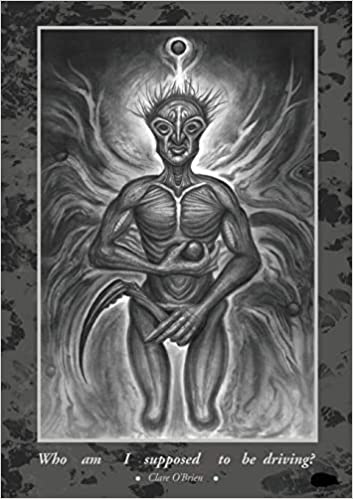
Clare O’Brien (Bio courtesy of Amazon)
has worked as a schoolteacher, a journalist, PR to a Scottish politician and PA to an American rock star. Originally a Londoner, she now lives beside a sea-loch in Scotland, which suits her much better. Her poetry has appeared in anthologies including Heather: An Anthology of Scottish Writing and Art (Alice Louise Lannon, 2022) The Sea Is Here (Unimpatient, 2020), The Anthology Of Contemporary Gothic Verse (Emma Press, 2019), Songs To Learn And Sing (Hedgehog Poetry Press, 2018), The Powers Of Nature (White Craw Publishing 2017) and in journals such as Mslexia, Northwords Now, Lunate and The Ekphrastic Review. A new phase poet, she also writes short fiction and is working on an experimental novel entitled Light Switch.
The Interview
1. How did you decide on the order of the poems in your book?
That was easy – its the chronological order of the albums I chose to be the subjects for the 13 poems. The collection was a response to a call from Hedgehog Poetry for a “baker’s dozen” of linked poems on a single theme. I chose to make them ekphrastic poems in response to 13 of David Bowie’s albums.
2. Why Bowie?
Because he was the first musician I ever saw play live, back in 1973 when I was 15, and like so many other weird kids at the time, I was changed and in some measure, saved by it.
Because I grew up a few miles down the road from where he grew up in south London and my friend’s big sister once babysat for him.
Because he’d been an artistic influence, a sort of ghost friend in my head, all my life, on and off. And in some obscure way, I wanted to give something back.
3. How were you saved by his live performance?
I was one of the weird kids in my year at school. Introverted, a bit rebellious, with a vivid imagination. I’d been playing the “Ziggy Stardust” album over and over, and seeing that show – it was my first ever rock show, and on Bowie’s home turf in south London – made me feel that it was OK to be different, to be a bit of a freak compared to the sociable and sporty types I was at school with. It made me feel better about myself, and it kind of gave me permission to experiment with life a bit.
4. How important is the theme of dancing that weaves its way through your poetry?
I’d not been conscious of the way images of dance recur in this collection, but you;re abolutely right. Tanks for pointing it out! In the first poem, Your Face In Mine, the “dancing girl” is the ballet dancer Hermione Farthingale who dumped Bowie in 1969 for a role in a film, ‘Song Of Norway’. He was still little known, and the end of the affair inspired several early songs. He revisited that episode much later in his life by weaing a ‘Song Of Norway’ Tshirt in the video for ‘Where Are We Now’.
In Standing Cinema, the word’s playful. On ‘Hunky Dory’, he’s itching for a change, ducking and diving as he tries to caper his way through to success. But he’s being followed by ghosts. Hence “the past infects your dance”.
Cutting a Zero is assembled from cut-ups. I thought I owed it to Bowie to try using that method at least once for this collection. But one line which resulted, ‘the dance of capital illness’, semed particularly relevant to the subject of the album ‘1. Outside’. Murder and mutilation sold as fine art. It evoked some of the modern relationship between music, art, and money. And all three have been i mportant to Bowie in his life and career.
Then, of course, the poem Get Things Done is a response to Bowie’s album ‘Let’s Dance’: it’s an ironic title for me, though, because the whole album is created with militaristic precision and a kind of haughty display. Hence, ‘locked in cockstep’. It’s almost armour-plated, that album. It dares you to defy it.
5. How important is the use of the second person “you” in the first poem?
Most of them are second-person, directly addressed, I suppose, to Bowie. Those that aren’t are the ones where I felt more disconnected, more like an observer than half of an imaginary conversation. In the first poem I’m talking to a past version of Bowie, one who’s just beginning, just about to invent Major Tom.
6. How important was it to define inner and outer space?
I had to really think hard about this one! Very important, I think, because the whole Major Tom metaphor – and its variant personae, such as Ziggy, Spaceboy and the dead astronaut in the ‘Blackstar’ video – all seemed to me to be about the secret space inside the artist’s mind, turned inside out and projected out into the wider universe. It’s lonely out there floating round your tin can, just as it can be inside your head when you’re writing. And Major Tom and his fictional friends may be about addiction too, but creating can be in itself addictive.
7. What made you pick the title of your book?
Given that every poem in the collection is titled with a phrase from one of the songs on the album in question, I wanted something special for the title of the whole collection.
It’s from an outtake, or perhaps a dry run, for Bowie’s album 1.Outside – what’s known among fans as the “Leon Suites”. If you#d like to head down that particular rabbit hole, there’s all kinds of info about it here: https://facingthestranger.wordpress.com/2020/01/22/inside-outside-an-extended-stay-at-the-leon-suites/
The part I quoted is a spoken word passage – Bowie’s adopting multiple personae, really acting his socks off, and then says “I mean, who am I supposed to be driving? I thought it was apt considering how many personae David Jones, aka Bowie, has “driven” in his career.
8. What do you find appealing about Bowie’s mercurial onstage presence?
The fact that whatever he’s doing – and I’ve never expected to love every genre of music he’s experimented with – he’s never, ever bored me for so much as a second. He’s a thrilling performer.
9. What did you discover when using Bowie’s cut up method for writing songs for writing some of the poems?
I only used the technique for one of the poems, ‘Cutting A Zero’. I’d never written that way before, and I’d always wondered how Bowie managed to be so expressive when he used the technique. What surprised me the most was how well it worked. It’s like collage would be if you were making visual art. Using found materials to make a new piece of work. You just need to manipulate them in the right way and do a bit of editing, to paper over the cracks and make everything interact smoothly.
10. How did his art of blending different genres affect these poems?
I knew I was dealing with a chameleon. His work was always changing, and even now it’s a finite body of work – now we know there won’t be any more – I find the songs have different effects on me depending on the angle from which I approach them, what mood I’m in, what I’m thinking. It’s as though they change depending on how the light hits them, like jewels that have ben skilfully cut and polished. He put so much in them, his art was such a synthesis of different elements, that he still has the power to surprise me. I wanted to get some of that shifting perspective into the poems.
11. Once the reader has read this collection what do you want them to leave with?
A desire to go away and listen to the music! Whether they’re revisiting it or discovering it for the first time.

 Jake the Cat
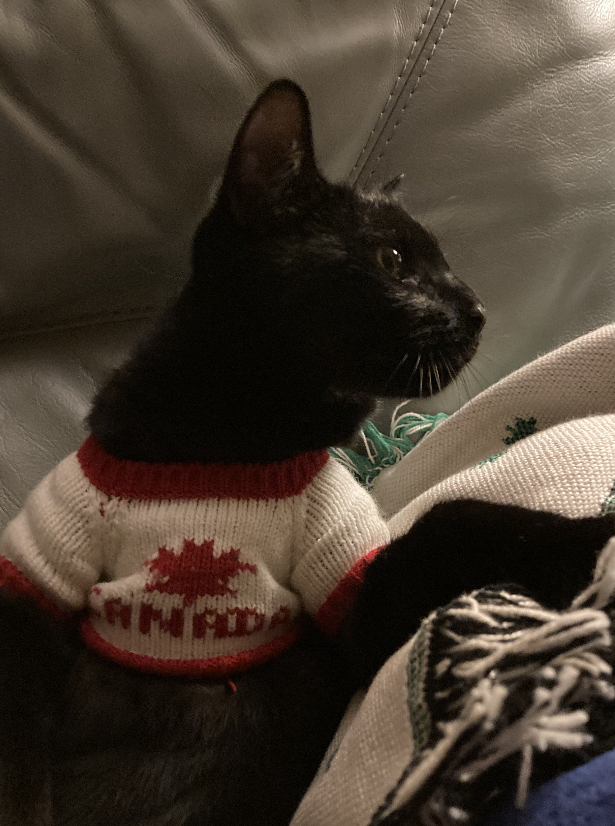
After I have made the bed
Jake leaves me his toy
This is his devotion and gift to me
in the early morning.
Jake leaves me his toy after
I have left for work. Maybe
he is hoping I’ll return?
So, he waits.
I find the toy
Jake has left for me
when I return home
and it reminds me
that I left early in the morning
and he has been home all day
sharing his toy.
-Corinne Walsh
Missy
We knew she hadn’t long to live
when she couldn’t move from the corner
of the kitchen floor the night before
she died, but it was still a shock
when a neighbour knocked on the door
next day to ask if we had a cat,
a white one? Somehow she’d got outside
to the pavement, not the road,
thank goodness. Rescued
by the RSPCA, a tear in her ear,
we never guessed she’d last sixteen years.
Her painful paws couldn’t carry her
any further, her claws spiralled
like fossils, they’d kept growing
as she grew too old to have them cut.
-Peter J. Donnelly
Seven Species
First there was Missy the mongrel
from the RSPCA,
at least 144 in cat years
when she passed away.
Then stray Kitty,
dark as a witch’s cat
with a kink in her tail
who brought in a rat.
Tiger the Tabbie
was chalk to black Lilly’s cheese,
as different as Biscuit, Grandma’s ginger tom
from Heathcliff, her Siamese.
Once white Willow goes
there’ll be no more cats.
I’d have one myself
if I didn’t live in a flat.
-Peter J. Donnelly
Sunil Sharma tries to create a Murakami-laced moment by outlining a late afternoon conversation between strangers. The protagonist, a filmmaker find a subject of instant interest in a coconut-seller who seems unnaturally knowledgeable about Haruki Murakami. He tells an inspiring story of triumphing over evil and disappears completely (with his coconut stall) the next day. Sharma catcher his reader off-guard, drawing them in, warming their hearts and leaving them with a bewildered look on their faces. – Shreya, The Bombay Review
The story appears in The Bombay Review:
Jake the Cat
After I have made the bed
Jake leaves me his toy
This is his devotion and gift to me
in the early morning.
Jake leaves me his toy after
I have left for work. Maybe
he is hoping I’ll return?
So, he waits.
I find the toy
Jake has left for me
when I return home
and it reminds me
that I left early in the morning
and he has been home all day
sharing his toy.
-Corinne Walsh
Missy
We knew she hadn’t long to live
when she couldn’t move from the corner
of the kitchen floor the night before
she died, but it was still a shock
when a neighbour knocked on the door
next day to ask if we had a cat,
a white one? Somehow she’d got outside
to the pavement, not the road,
thank goodness. Rescued
by the RSPCA, a tear in her ear,
we never guessed she’d last sixteen years.
Her painful paws couldn’t carry her
any further, her claws spiralled
like fossils, they’d kept growing
as she grew too old to have them cut.
-Peter J. Donnelly
Seven Species
First there was Missy the mongrel
from the RSPCA,
at least 144 in cat years
when she passed away.
Then stray Kitty,
dark as a witch’s cat
with a kink in her tail
who brought in a rat.
Tiger the Tabbie
was chalk to black Lilly’s cheese,
as different as Biscuit, Grandma’s ginger tom
from Heathcliff, her Siamese.
Once white Willow goes
there’ll be no more cats.
I’d have one myself
if I didn’t live in a flat.
-Peter J. Donnelly
Sunil Sharma tries to create a Murakami-laced moment by outlining a late afternoon conversation between strangers. The protagonist, a filmmaker find a subject of instant interest in a coconut-seller who seems unnaturally knowledgeable about Haruki Murakami. He tells an inspiring story of triumphing over evil and disappears completely (with his coconut stall) the next day. Sharma catcher his reader off-guard, drawing them in, warming their hearts and leaving them with a bewildered look on their faces. – Shreya, The Bombay Review
The story appears in The Bombay Review:
 Cat Called Nothing
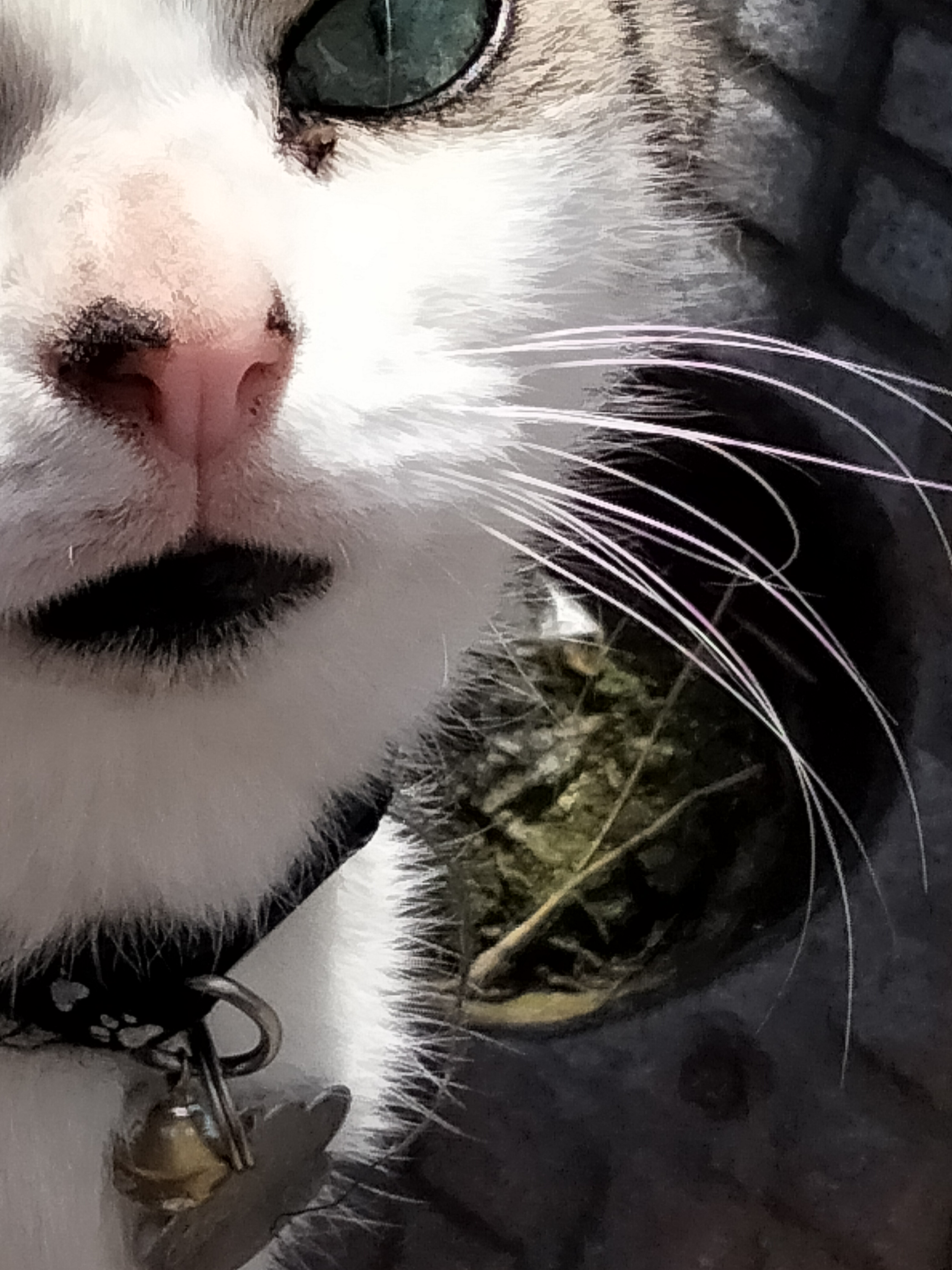
JPS calls me Nothing. (Apologies to Jean-Paul Sartre)
Catness carries being at its heart.
I am condemned to be free.
If I tremble at the slightest noise,
If each creak announces me a look.
This is because I am already in the state
Of being-looked-at.
Catness haunts being. Hell is other people.
Catness lies coiled at the heart of being
like a worm.
Consciousness is a being,
the nature of which is to be conscious
of the Catness of its being.
Bios And Links
-Corinne Walsh
As a small child Corinne Walsh wrote little notes and left them where people might accidentally find them, in mailboxes, in pockets, even under rocks. Composing thoughts and writing down feelings only to cast them out into the world started as a child’s experiment in expression, and 50 years later the habit survives.
-Sunil Sharma
a senior academic and author-freelance journalist from the suburban Mumbai, India. He has published 21 books so far, some of which are solo efforts and some joint. He edits Setu:
Cat Called Nothing
JPS calls me Nothing. (Apologies to Jean-Paul Sartre)
Catness carries being at its heart.
I am condemned to be free.
If I tremble at the slightest noise,
If each creak announces me a look.
This is because I am already in the state
Of being-looked-at.
Catness haunts being. Hell is other people.
Catness lies coiled at the heart of being
like a worm.
Consciousness is a being,
the nature of which is to be conscious
of the Catness of its being.
Bios And Links
-Corinne Walsh
As a small child Corinne Walsh wrote little notes and left them where people might accidentally find them, in mailboxes, in pockets, even under rocks. Composing thoughts and writing down feelings only to cast them out into the world started as a child’s experiment in expression, and 50 years later the habit survives.
-Sunil Sharma
a senior academic and author-freelance journalist from the suburban Mumbai, India. He has published 21 books so far, some of which are solo efforts and some joint. He edits Setu: 


 The Wombwell Rainbow