
The beautifully gracious and wise poetess Gabriela Marie Milton needs no introduction so obviously, there is no room for any doubt that this book is mesmerizingly beautiful and has deeply heartfelt vibes. This book is a cradle of two clusters— Love Poems and Poetic Prose.
A fragment of words from the poetry “Henrhyd Falls (Annwn)” of the Welsh poet “Matthew MC Smith” contained in his poetry book “The Keeper of Aeons” is fit to evince the beauty with which this book shimmers and this shimmer has a thrust to mesmerize its readers:
“glint in glacier-ruins
where minnows flicker
in golden shallows”
The poetess has used personifications, similes, and metaphors in both poetries and poetic prose in different expressions.
She has adorned her few poetries and poetic prose with personifications, similes, and metaphors like a bride with jewel ornaments. Displaying a few jewel ornaments below:
“your voice moves stones in a lonely graveyard
to bury the tears I cry”
“Shadows tremble on the silence of the tombs like
virgins under the touch of their first lover.”
“A pink conch tolls the waves announcing the homecoming of
the chrysanthemums”
“stars rise over old memories of purple seas
like cherry buds”
“when cotton candy sunsets sing
I’ll deliver myself
in the arms of Morpheus
forever
and ever”
“During the nights
in which the moon is glossy and crisp like the crust
of a country bread, the woman’s body gives birth to
mountain chains and fragrant valleys.”
“I know he loved me. Yet his mind was too pedestrian
to understand.”
In the poetic prose “Of Wounds,” the poetess has personified the feelings of humans from a pessimistic angle. Through this personification, she pointed to human vices and the extremities of the adversities pushing humans towards vices. The words she used for pointing to the extremities of the adversities are like melting furnaces for kind hearts.
Quoting below the stanzas consisting of the personification of feelings of humans by the poetess:
“The Envy wears red lipstick and high heels. She
dances naked on a wooden table. At every turn,
she spreads poisonous confetti in the air, and she
lowers her eyes. I try to decipher the meaning of her
gestures. I cannot.”
“The Greed, with her childbearing hips, indulges
herself with poor souls who live at the margins of
the city. The children are hungry, and the mother is
long exhausted. The beds are cold, and the moonlight
enters the rooms through broken windows.”
Contrary to the pessimistic angle of the personified feelings of humans, the poetess has also shed a light on an optimistic angle. Showing below the optimistic face:
“Love and sacrifice are the consummation of all acts
that lead to the warm meal that one hands to an old
man who dwells in the streets during cold winters.
They are the sum of all unknowns. They are the
fingers that draw the light of stars in the darkest of
the skies.”
Each poem is a love poem with an ambiance of its own like chocolate with different flavors.
The poetess in her poetry “The Ides of October” added the flavour of the love of a mother by showing beautifully and in-depth how a woman reaches the seventh sky on giving birth to a baby. Replaying below one of the scenes containing a dialogue spoken by the poetess on the behalf of every mother:
“When I see cocoons of the larvae, I think silk as
soft as the hair of the child.”
The poetess in some of her poetries has added a philosophical flavour. In one such poem “You and I,” the poetess wrapped a new cover printed with her words around the fundamental nature of existence. Showing the cover below:
“a baby star looks down
impermanence of flesh”
In some of the love poetries, the poetess has added a gloomy flavour by including melancholy, hopelessness, helplessness, loneliness, regret, suffering, and tragedy in personal life and by also concealing the portion of the world submerged in the murky sea beneath the layers both through her few words and/or stanzas.
These represent the sensitivity, compassion, and awareness the poetess has.
Quoting below a few words and stanzas representing the sensitivity, compassion, and awareness of the poetess:
“I am neither a gift
nor something you can keep
I am the syllable forgotten on your lip”
“Eyes become the locus where the desert and the sea
meet.”
“I return to find the pardon of the sands
to kiss your dust left on your mother’s hand”
“your tired feet have walked the desert
thorns and thistles scarred your skin
squirming in a mire
enraged by liars
your nights of passions
felt like the apocalypse”
“Your face grows washerwoman skin.”
“kerf cuts your words left in my heart”
“I am as insignificant as a drop of blood floating
through the arteries of night.
Lost at sea the loneliness of sandcastles.”
“Roberto’s guitar sells cheap dreams by the sea
young girls are ready for harvest like flowers of lust”
“For three thousand years, sung by the poets of this
land,
the naked shoulder of the mountain reigned in
stillness.”
“you, my adulterated love
I light your fire
blindfolded I seek a buyer
for all my sins
for this September blood that I resold
and for the girl who once was me”
The poetess has added sensual flavour in some of her poems. She has picturized the sensuality beautifully, however, the expression differs in each sensual poem. Showing below the whole scene picturized in one of the sensual-flavoured poetries “Love Numbers”:
“We laid in the grass, shadows of poppies playing on
our faces with the same rhythmicity of the waves
on tranquil days.
At times we could feel the pulse of the new grains.
The line of my décolleté – as you used to say – nothing
else but the demarcation between inexorable
sins and the blushing tones of the sunsets.”
The poetess has recited a few of the prose in the form of a leaf with very few tiny dews. The leaf is the story and the dew is a tiny tinge of surrealism.
Showing a few words from one of the dewy leaves “Autumn Reflections” below:
“You waited for me at the end of the road. I felt your
hungry fingers unbuttoning my raincoat.
The children approached. Their little voices
pinched my brain like needles. Their thin bodies reflected
in your blue eyes.
I asked:
Can you see the children?
What children?
The children dressed in white. They are in your eyes. Why can’t
you see them?
Your fingers continued to unbutton my raincoat.
Lord, I must have been born on the day of children
who cannot be seen and cannot be heard.
I choked.”
There are a few tiny glints of woman empowerment in this book though but the poetess transmogrified into a tigress in the poetries “On Women’s Writings” and “Feminine Submissiveness.” She in her transmogrified form stripped the critical issues of feminism and woman empowerment nude through her daggering words echoing as bellows and roars from her spirit, influential to ignite the fire in her feminine readers’ hearts to not let any of their glass ceilings go without smashes.
Apart from all the previously mentioned peculiarities, this book has a lot more in it.
This book does not need any recommendation from anyone as the words in this book are fully presentable in themselves.
Bios and Links
Gabriela Marie Milton:
Gabriela Marie Milton i
s the #1 Amazon bestselling poet and an internationally published author. She is a 2022 Pushcart Prize nominee, the author of the #1 best-selling poetry collection Woman: Splendor and Sorrow: | Love Poems and Poetic Prose (Vita Brevis Press, 2021), and the author of Passions: Love Poems and Other Writings (Vita Brevis Press, 2020). She is also the editor of the #1 Amazon bestselling anthology Wounds I Healed: The Poetry of Strong Women (Experiments in Fiction, 2022).
Her poetry and short prose have appeared in various magazines and anthologies. Under the pen name Gabriela M, she was awarded 2019 Author of the Year at Spillwords Press (NYC). Her piece “If I say I love you” was nominated for 2020 Spillwords Press Publication of the Year (Poetic).
On July 6, 2021, she was featured in New York Glamour Magazine. Her interview can be read at the following link:
“Keep going. Greatness always encounters resistance.”- Gabriela Marie Milton
Spriha Kant:
is a poetess and a book reviewer.
Her poetry The Seashell was published online at Imaginary Land Stories for the first time.
The poetries of Spriha have been published in four anthologies till now:
Sing, Do The Birds of Spring
A Whisper Of Your Love
Hard Rain Poetry: Forever Dylan
Bare Bones Writing Issue 1: Fevers of the mind
Spriha has done six book reviews till now:
The Keeper of Aeons by Matthew MC Smith
Nature Speaks of Love and Sorrow by Jeff Flesch
Washed Away: A Collection of Fragments by Shiksha Dheda
Spaces by Clive Gresswell
Silence From the Shadows by Stuart Matthews
Breathe by Helen Laycock
Spriha has collaborated on the poetry The Doorsteps Series with David L O’ Nan.
Spriha has been a part of the two events celebrating the launches of the books till now:
Nature Speaks of Love and Sorrow by Jeff Flesch
As FolkTaleTeller by Paul Brookes
Her poetic quote “An orphic wind storm blew away a sand dune that heaped all our love memories upon one another.” has been published as the epigraph in the book Magkasintahan Volume VI By Poets and Writers from the Philippines under Ukiyoto Publishing in the year 2022.
Spriha has been featured in the two interviews till now:
Quick-9 Interview on feversofthemind.com
#BrokenAsides with Spriha Kant on the brokenspine.co.uk
Spriha has been featured in Creative Achievements in 2022 on thewombwellrainbow.com.
The links to the features of Spriha Kant are:
https://feversofthemind.com/2022/09/13/a-fevers-of-the-mind-quick-9-interview-with-poetess-spriha-kant/
https://thebrokenspine.co.uk/2022/12/07/brokenasides-with-spriha-kant/
#CelebrateYourCreativeAchievementsOf2022 Calling all poets/short prose writers/artworkers between 26-31st December I want to celebrate your creativity over the last year. Please email me a list, plus bio, links and so on. Soon as possible. Today we celebrate the achievements in 2022 of Spriha Kant


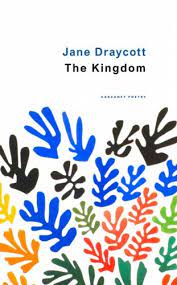 The Kingdom by Jane Draycott. £11.99. Carcanet. ISBN: 978 1 800017 259 3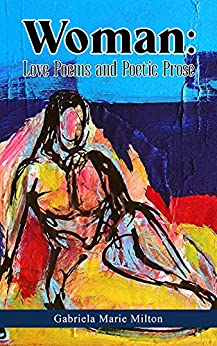






 The Wombwell Rainbow