From Today I have added a new strand of interviews called “On Fiction”. If you know of any writers who may have missed out on an interview because they don’t write poetry please tell them I will interview them about their fiction.

Next post will be the first “On Fiction”

Wombwell Rainbow Interviews: Sue Hubbard

Wombwell Rainbow Interviews

I am honoured and privileged that the following writers local, national and international have agreed to be interviewed by me. I gave the writers two options: an emailed list of questions or a more fluid interview via messenger.
The usual ground is covered about motivation, daily routines and work ethic, but some surprises too. Some of these poets you may know, others may be new to you. I hope you enjoy the experience as much as I do.

4114XsCkJmL._AC_US500_QL65_

Sue Hubbard
http://www.suehubbard.com

Sue Hubbard is a freelance art critic, novelist, award-winning poet, lecturer and broadcaster.

Her poems have been read on Radio 3 and Radio 4 and she has contributed to many arts programmes including Kaleidoscope, Poetry Please, Night Waves and The Verb.

FICTION:

Her latest novel, RAiNSONGS, is due from Duckworth January 2018.

Depth of Field, her first novel, was published in 2000 by Dewi Lewis.
Her short stories, Rothko’s Red, were published by Salt in 2008.
Girl in White was published by Cinnamon Press, 2013_

POETRY:

Twice winner of the London Writers’ competition and a Hawthornden Fellow, she was the Poetry Society’s first-ever Public Art Poet commissioned by the Arts Council and the BFI to create London’s biggest art poem that leads from Waterloo to the IMAX.

Her poetry includes:
Everything Begins with the Skin (Enitharmon 1994).
A selection of poems in Oxford Poets 2000 (Carcanet).
Ghost Station (Salt Publishing 2004),
The Idea of Islands (Occasional Press 2010)
The Forgetting and Remembering of Air (Salt Publishing 2014).

Her work has also appeared in a number of prestigious anthologies and literary magazines including: Encounter, Acumen, Ambit, Poetry Wales, Poetry London, London Magazine, The Independent, The Observer and The Irish Times.

ART:

Sue Hubbard has contributed regularly to a wide range of publications including Time Out, The Independent, The Independent on Sunday, and The New Statesman. She has also written for The Times and The Guardian and numerous art magazines such as Apollo,Tate, Irish Art Review, NY Arts Magazine and the RA magazine, The Los Angeles based contemporary art magazine, Artillery and http://www.3quarksdaily.com. She writes regularly for Elephant Magazine, Artlyst and The London Magazine.

Her selected art writings, Adventures in Art, were published by Damien Hirst’s Other Criteria in 2010

The Interview

1. What inspired you  to write poetry?

I started to write at a very young age. I remember my first poem. I must have been about 11 and it was a school exercise. The poem was called Trees in Winter. In a childish way there was something of Robert Frost about it. I used the natural world, as I still do both in fiction and  poetry, to convey emotion and mood. I realised, though so young, that this poem really mattered to me. That I wanted my teacher to understand the sense of isolation and loneliness the poem was trying to convey.
As I grew older I wrote as a way of trying to make sense of the world. I was also reading a good deal of poetry and living in a remote part of the west country with three small children, whom I ended up bringing up alone. Poetry was a way of sorting out my feelings, of finding a voice at a very difficult time.
Then I realised that I didn’t just want to write for me. I had a very early poem shortlisted in the Bridport competition. That gave me a little confidence to become more serious. I joined my first poetry workshop in Bath, quite a trek from my home, in order to share critical feedback. I wanted to improve. To develop my own voice and share with others who cared about poetry. My first collection, Everything Begins with the Skin, was published by Enitharmon in 1994, while I was doing my MA at UEA and embarking on writing fiction.

2. Who introduced you to poetry?

I have to say my mother. We didn’t have an easy relationship but she did read me poems when I was small. I remember being particularly touched by William Blake’s The Tyger and The Lamb. Later, at school, I was lucky to have good English teachers and to read good poetry.

3. How aware were you of the dominating presence of older poets?

Well at school, the two poets with whom I fell in love were Keats and Gerard Manley Hopkins. We never studied contemporary poets, so I slowly began to discover them for myself. At first it was people like Brian Pattern and Sylvia Plath. I also love Jacques Prévet’s Rapelle-toi Barbara. I loved the romanticism and the rhythm and was attracted to its French tristesse and sort of Juliette Gréco nostalgia!

4. What is your daily writing routine?

Oh how I wish I had one!  I am an art critic and a novelist, as well as a poet. Art criticism demands deadlines (tight ones when I was writing for The Independent and The New Statesman) so I tend to feel I am always in the wrong hat at the wrong time. I try to do residencies whenever I can and take time away from meetings, the internet etc just to walk, read and immerse myself in a piece of writing. That is when I write best, when I have that pristine uninterrupted space that a busy urban life doesn’t really allow. I need that time to recharge emotionally and spiritually, to reconnect with the deepest parts of myself. The part that feeds my work.

5. What motivates you to write?

It’s not straightforward but I think it is first of all a conversation with myself, a way of externalising deep thoughts, feelings and observations, of revealing my true and most fundamental self.  I am also motivated by the thought of a well-read audience. I write poetry and literary fiction and I want to appeal to those who read these forms. Yes, winning competitions is nice – I won the London Writers twice and have done well in other competitions – but poetry is not really about winning but communication. I always want to write a better poem and to touch people. I want to bring a lump to their throats.

6. What is your work ethic?

I work hard – but it is not always on poetry. I am about to publish my fourth collection with Salmon Press (Ireland) in 2020. I don’t, now,  feel compelled to write poems for the sake of it. I’m only interested in the ones that insist on being written. I’m also trying to get on with my fourth novel and that is a hug commitment. Rainsongs was published with Duckworth this spring.

7. How do the writers you read when you were young influence you today?

I earlier mentioned Keats and Gerard Manley Hopkins. I think Keats made me fall in love with the Romantics, while Gerard Manley Hopkins pushed me to think about form and the power of language. I was a generation who grew up with Plath and I found her wonderful but rather overwhelming, as though she had said it all. T. S. Eliot and The Four Quartets provided the spirituality and philosophical questioning I wanted from poetry, as did Rilke.

8. Who of today’s writers do you admire the most and why?

I tend to like Irish and American poets. There is a directness and emotional fearlessness about them that I love, writers such as Eavan Boland and Jorie Graham. Mark Doty and Billy Collins. I am less interested in poetry that is obviously ‘difficult’. I want it to make my heart beat faster, to grab me by the throat. Head and heart, yes. Technique, yes. But in the end, for me, the heart must win.

9. Why do you write?

I think I have answered that question already. To make sense of the world and because explorations with language are how I do it. Being a writer is who I am now, it’s an essential part of my identity. It’s a bit late to change!

10. What would you say to someone who asked you “How do you become a writer?”

There is no one way. As with eggs there are many different recipes. Being a journalist (which I also am) is a very different business to being a poet but I think it has helped my writing. You learn to be succinct and not to be precious.
You have to know why you want to write. There is nothing wrong with writing just for yourself and your friends. I mentor ex-offenders and for many of them it is cathartic. But it you want to be serious you have to, as Beckett famously said: Fail again, fail better. It’s a constant process of learning and trying to get better. It  isn’t easy to write well. And of, course, you have always to be prepared to murder those little darlings.

11. Tell me about the writing projects you have on at the moment.

I am writing an artist’s catalogue for the painter Peter Joyce, who lives in France. Being a poet many artists ask me to write about them. I’m also editing and working on my fourth collection, due out in 2020 and slowly trying to get on with the enormous task of my fourth novel.

Wombwell Rainbow Interviews: Gregory Vincent St. Thomasino

Wombwell Rainbow Interviews

I am honoured and privileged that the following writers local, national and international have agreed to be interviewed by me. I gave the writers two options: an emailed list of questions or a more fluid interview via messenger.
The usual ground is covered about motivation, daily routines and work ethic, but some surprises too. Some of these poets you may know, others may be new to you. I hope you enjoy the experience as much as I do.

41ucW+EbL5L._AC_SY400_

Gregory Vincent St. Thomasino

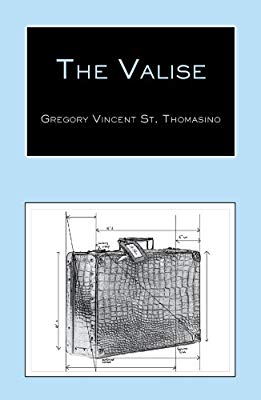
was born in Greenwich Village, New York, and was raised in both the city and in the country across the Hudson River in New Jersey. He was educated at home, eventually to enter Fordham University where he received a degree in philosophy. In 2009 he received the Distinguished Scholar Award from the Doctor of Arts in Leadership program at Franklin Pierce University in New Hampshire. His work has appeared in anthologies including the language art anthology The Dark Would (Apple Pie Editions, 2013) and Stone, River, Sky: An Anthology of Georgia Poems (Negative Capability Press, 2015). His digital poetry has been anthologized in the Brazilian book, Poesia Eletrônica: negociações com os processos digitais [Electronic Poetry: negotiations with digital processes] (Jorge Luiz Antonio, 2008). His play, Come Spring, Comes a Circus, was in October 2013 performed in Tbilisi, Georgia, in the Georgian language, by the Margo Korableva Performance Theatre directed by and with translation by David Chikhladze. His e-chaps include The Logoclasody Manifesto (2008, second edition 2018), Six Comets Are Coming (2009) and The Galloping Man (2010). His most recent volumes are The Valise (Dead Academics Press, 2012), Selected Poems (Poezii ales) with translation in Romanian by poet and scholar Elena Ţăpean (Bibliotheca Universalis, #117, 2017) and Two Short Novels (Douǎ romane scurte) with translation in Romanian by poet and scholar Elena Ţăpean (Bibliotheca Universalis, #118, 2017). The Wet Motorcycle: a selected is forthcoming. Today he lives in Brooklyn Heights, New York, where he works as a private docent.

The Interview

1. What inspired you to write poetry?

It’s a case of unconscious assimilation—I learned to read reading poetry.  I have vivid memories of reading Poe and Dickinson and Cummings, his “anyone lived in a pretty how town.”  I discovered, with this poem, in this poem, something as unlikely as I was.  A child reads without the filters of logic, this state leaves him wide open to any suggestion.  It’s not about understanding things like irony and metaphor and figures of speech and ambiguity and things like double-entendres and paradox.  It’s about learning language and speech.  It’s about saying the words.  And the understanding that language is both a matter of communication and personal (and poetic) expression.

2. Who introduced you to poetry?

My mother.  She put the books in my hands.  (She taught me to read.  She taught me penmanship.)

3. How aware were you of the dominating presence of older poets?

I had a writing mentor, a tutor, and with her the older, dominant poets were Marvell and Yeats and Rilke and Eliot and Pound and Plath and their presence was by way of the books and the recordings.  It wasn’t until I began to publish that I became aware of older poets dominating the scene—dominating in the journals and reading venues and such.

4. What is your daily writing routine?

Wake up the computer, open the files (poems in varying degree of progress) and see what transpires.  And I’ll return, again and again, through the course of the day.

5. What motivates you to write?

Getting it perfect.

6. What is your work ethic?

To always be available.  To never put it off.

7. How do the writers you read when you were young influence you today?

From the perspective of a grammarian, there is an influence, say in the study of the articulation, but otherwise, they do not influence me, certainly not in the way I live my life.  Certainly there is an influence, an information, in the sensibilities—an unconscious assimilation.

8. Who of today’s writers do you admire the most and why?

I admire those who are developing an original narrative voice, who are developing a signature voice and style and technique of their own.

9. Why do you write?

I enjoy it.

10. What would you say to someone who asked you “How do you become a writer?”

One does not become a writer.  What one “becomes” is a poser.

11. Tell me about the writing projects you have on at the moment.

I’m working on my flash-fiction novel, Suicide by Language.  And a string of sonnets entitled, Thinking.

http://suicidebylanguage.blogspot.com

http://www.eratiopostmodernpoetry.com/editor.html

Wombwell Rainbow Interviews: John Doyle

Wombwell Rainbow Interviews

I am honoured and privileged that the following writers local, national and international have agreed to be interviewed by me. I gave the writers two options: an emailed list of questions or a more fluid interview via messenger.
The usual ground is covered about motivation, daily routines and work ethic, but some surprises too. Some of these poets you may know, others may be new to you. I hope you enjoy the experience as much as I do.

41xUNAf-9+L._SX326_BO1,204,203,200_

John Doyle

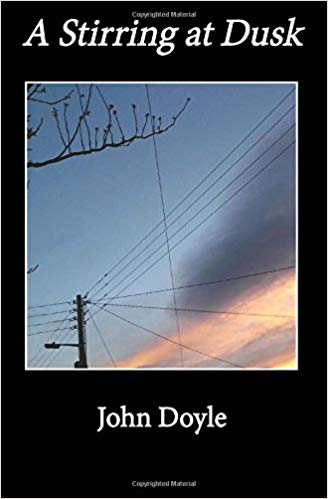
is a poet from County Kildare, Ireland, and wrote intermittently between the mid 90s and late 2000s, until the muse finally decided to be kind to him in 2015 and give him some sense of consistency. He has had two collections published to date 2017’s A Stirring at Dusk, and 2018’s Songs for Boys Called Wendell Gomez both on PSKI’s Porch. He is at present putting the finishing touches to his 3rd and 4th poetry collections, as well as hoping the muse will allow him to enter the big bad world of prose and short stories.

The Interview

1. What inspired you  to write poetry?

I’ve previously been through at least 3 time frames of writing poetry; from about July or August 1995 up to late 1999, a brief return from March to July 2000, and late 2008. During those times (with a few exceptions) I was always writing because perhaps I felt I had to; I’m not sure if there was any bona-fide inspiration there, the kind that encourages a sense of engagement and helps to produce what one might call “agreeable” poetry. When I started writing again in February 2015 (with the help of my parents) the process felt a lot more natural and organic; I suppose a lot of poets will tell you that the poem will often come looking for them, and certainly at that stage (2015)  I had the life experience to be able to write in a more engaging manner than the horrendous uninspired tripe I was writing in my early 20s, so I’m not sure I can describe the inspiration as such, but it was certainly something that felt like a fully fledged relationship with the muse rather than throwing words on a page for the sake of it.

2. Who introduced you to poetry?

Depends what you mean by “introduced”. I would have been aware of poetry from my early teens when I had two really amazing teachers in school (Pat O’Connor and Lauren Barry), but I suppose poetry would have been part of the curriculum anyway, regardless of how fantastic those two teachers were. Around summer 1997 when my writing was really bad I found some volumes of Ted Hughes in the local library in County Kildare, Ireland, where I come from, and at least it helped me understand the necessary structures and sense of narrative poetry needs. Of course at that point my writing didn’t really improve, but at least I had *some* understanding of the component parts. So as regards extra-curricular engagement, I wouldn’t say anyone in particular, just me looking around.

3. How aware were you of the dominating presence of older poets?

In the late 90s it was more local poets, and because I would have had a chip on my shoulder the size of Texas I probably would have felt a lot of bitterness towards some incredibly wonderful writers which is kind of sad really; though at the same time perhaps some of it was justified as the Irish scene can be incredibly in-house and clannish, unlike maybe the U.S.A. where I have met some really open-minded and progressive writers who will do everything to encourage you. Nonetheless, back in the early days I should have been concentrating on improving my own work rather than feeling spite towards other writers, all of whom were much better than me. Thankfully I’ve mellowed (somewhat) since the late 90s…

4. What is your daily writing routine?

Not a routine as such, which I find hard sometimes to structure. More a case that if the poem wants me to write it, it will come looking for me and demand that I do so. This means of course that I could write 10 poems in a few hours that I am incredibly happy with, so sometimes a lack of mechanical structure is perhaps a good thing.

5. What motivates you to write?

Everything. My girlfriend, the world around me, small things that few notice like the sound a locomotive’s engine makes as it passes me, or the fact that it is a Tuesday rather than a Friday; maybe that’s why I am much happier writing now than I was years ago, I can find inspiration in less obvious places.

6. What is your work ethic?

I wish I had a work ethic. Ethics and me are not always on the best of terms.

7. How do the writers you read when you were young influence you today?

For the most part I wasn’t engaging too much with other writers when I wrote at first, be they well known or otherwise. Although I have always had a soft spot for Andrew Marvell even though I generally wouldn’t like “ye olde” poetry; there is a warmth and charisma about Marvell that I’ve always found agreeable, even when I wasn’t writing.

8. Who of today’s writers do you admire the most  and why?

So many of them. Really amazing poets I read online, or poets I would see in book shops and randomly buy their book and impress the ass off me. John Grochalski, Steven Storrie, Duane Vorhees, etc. Alyssa Trivett is an American poet I started reading recently and really amazes me with her beautiful bleak wee-small hours Americana narratives. Although it comes across as cliched, the Bukowski-influenced writers I read online are always the poets I look forward to most; those WordPress websites run by people who do it for no profit – only the love of writing, you really find the most glorious writers there; John Patrick Robbins, Marc Pietrzykowski, and Amos Greig would be other examples of writers and editors I really admire, and people who always helped and encouraged me. Joan McNerney is another example… I could go for hours and I probably will… to quote Paul Weller.

9. Why do you write?

The devil made me do it…

10. What would you say to someone who asked you “How do you become a writer?”

If someone says that, then I figure there is an interest there, and that’s a very good thing; all I can really say is write, then write, then write again, then write some more, then more and more and more. It took me over 20 years from my first poem (a l’il ditty, bless its heart, called Maiden Flight) up to my first book  A Stirring at Dusk being published, so one should never be too rigorous with time-frames, which is not too say there shouldn’t be discipline involved either; like everything in life, you do need standards in some way or another. I always tell people to put everything on paper, no matter how bad their initial piece may seem to them, they have to keep chipping away. I believe that the muse will eventually find them. Patience, gratitude, and sweat are key factors; that may sound mechanical, but I know that from experience. And be thankful of those around you, and those divine or/and scientific forces that surround you as well.

11. Tell me about the writing projects you have on at the moment.

I sent away my third poetry collection to the publisher recently, so hoping to hear some good news soon, and I am also about 90% though my fourth poetry collection, which I am chipping away at. I am trying to write prose and short stories, though it is a much more complicated beast to tame than poetry is, and I am being very hypocritical in terms of telling budding writers that they need discipline, whilst being very lazy about it myself…

Wombwell Rainbow Interviews: Dr Santosh Bakaya 

Wombwell Rainbow Interviews

I am honoured and privileged that the following writers local, national and international have agreed to be interviewed by me. I gave the writers two options: an emailed list of questions or a more fluid interview via messenger.
The usual ground is covered about motivation, daily routines and work ethic, but some surprises too. Some of these poets you may know, others may be new to you. I hope you enjoy the experience as much as I do.

A Skyful of Baloons Santosh Bakaya 02 (1)

Dr Santosh Bakaya

Dr. Santosh Bakaya:  Recipient of the International Reuel Award for Writing and Literature [2014] for her long poem Oh Hark!
and the Universal Inspirational Poet Award, 2016, [conferred jointly by Pentasi B Friendship Poetry group
and the Ghana Government May 2016] has been universally acclaimed for   her poetic biography of Mahatma Gandhi,
Ballad of Bapu.  [Vitasta Publishers, Delhi, 2015]

Some of the other awards that she has received are, The INCREDIBLE WOMAN OF THE YEAR 2015 award [ The Incredible women of India]
AAGMAN TEJASWANI AWARD 2017, [AAGMAN GROUP],
LAASYA 2017 AWARD- A winning woman with beauty, happiness and grace [SUBH Power collage Consultants],
Bharat Nirman Award for Literary Excellence 2017.
She is an academician – poet -essayist – novelist- Ted speaker whose three earlier mystery novels, written as Santosh Magazine
[The Mystery of the Relic, The Mystery of the Jhalana fort and The Mystery of the Pine cottage] for young adults,
were very well received in the earlier 2000s.
Her other books are:
Where are the lilacs? [Poetry, Authorspress, 2016]
Flights from my Terrace, [essays, Authors Press, 2017]

Under the Apple Boughs [Poetry, Authorspress, Delhi 2017]
A Skyful of Balloons [Authorspress, Delhi 2018]
Extensively interviewed and featured in e-zines, world-wide,
she has contributed to  many national and international anthologies.

Translated into many languages, her poems have figured in the highly commendable category in Destiny Poets,
a U. K based poetry website, and appeared in Café Dissensus, learning and Creativity- Silhouette magazine,
in Incredible women of India, in Mind Creative [an Australia based e-zine] In Brian Wrixon’s anthology,
Episteme, [Mumbai], in Setu – a bilingual e-zine published from Pittsburgh,
Our poetry Archive , Songsoptok ,  Raven – cage.
She – The Shakti , Tuck Magazine
and Spillwords. com, where she was  the September – October Author of the month winner, 2017 ,
and also nominated as Author of the year 2017.
Many of her poems are also part of Kiew , an anthology of tree Poems[ ed Virginia Jasmin Pasalo, Philippine]

Her short stories figure in Silhouette 1 and 2, Defiant Dreams, Mock, stalk and Quarrel.
She has co-edited UMBILICAL CHORDS: AN ANTHOLOGY ON PARENTS REMEMBERED,
[Global Fraternity of Poets, Gurgaon, Haryana].
Darkness there but something more. [Blue Pencil 2017]
Cloudburst – The womanly Deluge [Global Fraternity of Poets, Gurgaon, Haryana]

Although hailing from Kashmir, India, she stays in Jaipur, Rajasthan, India with her husband .

1.       What inspired you to write poetry?
It was a girl who joined our school in Sixth Standard, who acted as a catalyst for the eruption of my creative spring, [!] till then lying dormant.  She was obsessed with writing poetry, and I found myself turning green with envy at the prodigious talent of this eleven year old. But then I told myself,” if she can do it, why not I?” So, I made a conscious effort not to turn green , but instead took to turning the white paper black with , what , at hindsight , I realise was  , unadulterated trash , but , to an eleven year old , appeared pure sublimity .

2.       Who introduced you to poetry?
It was my dad who introduced me to poetry. He was not only a professor, but also a poet who wrote some beautiful poetry, in Urdu and English.
Moreover, I recall my dad reciting The Rime of the Ancient mariner, The Pied Piper of Hamelin,
The Owl and the Pussy cat in his very impressive baritone, and the siblings rushing from different rooms to listen to his powerful rendition.
That was my first introduction to poetry.

3.       How aware were you of the dominating presence of older poets?
As a college girl, I was very aware of the dominating presence of older poets. Our house was a bibliophile’s den,
there were books of every variety, and myriad poets were discussed and analysed, because three of the siblings
had literature as a subject in graduation. Furthermore, my dad being a professor of English was very particular
that we should read a lot, and hence , there was no escaping the lure of poets.

4.       What is your daily writing routine?
I do not adhere to any particular routine , but yes , I am an early riser , and it is my habit to go for a walk every morning ,
so when I come back after successfully having removed the sleep kinks from my eyes , and am feeling rejuvenated ,
I invariably pen a poem or a prose piece .Sometimes , when a particular idea strikes me , i pen it down immediately .

5.       What motivates you to write?
I just love nature, and have written numerous poems about trees, the rains, rivers and lakes, snow- capped mountains.
The first ray of the easterly sun, the toothless grin of an old couple and a toddler, the sun reflected in the waves,
pups and kittens gambolling, a cat snoozing on a sun- lit patch have always sent me into a poetic tizzy .
Anything unjust happening around the world , has prodded me into writing poetry or prose .
Where are the lilacs? ,my collection of peace poems , published in 2016 , was a result of my  reaction to the shattering of peace
throughout the world .
I hail from Kashmir in India , the turbulence there makes my heart bleed , and i have written many poems about this lost paradise .

6.       What is your work ethic?
I do not strictly adhere to any work ethic. I write whenever any idea strikes me, and it keeps churning in my mind, till I have put it on paper.
So, I have written while travelling – in bus, train and plane. [No, not in a bullock cart or camel cart yet
, though I have had the privilege of sitting in both!]

7.       How do the writers you read when you were young influence you today?
“Get over your romantic sensibilities, mom,” this is my daughter’s perennial refrain, because I am an unabashed romantic at heart,
and in this era of post- modernistic poetry ,  Keats, Shelley and Wordsworth continue to influence me even now.
My dad, a very popular professor of English, was a great admirer of Edgar Allen Poe, the nonsense verse and limericks of Edward Lear
and the novels of Dickens and Hardy, and I grew up loving them too. He was an authority on Robert Browning,
having written his PhD thesis on his Dramatic Monologues, hence I also became addicted to the Dramatic Monologue at one stage of my life.
The way my dad recited the words from Porphyria’s Lover  still sends shivers up my spine …
‘all her hair
In one, long yellow string I wound
Three times her little throat around
And strangled her.”
I remember my dad using words like enjambment, inner man, and psycho – analysis while explaining Dramatic Monologue to me.
In many of my short stories, I do see glimpses of the dramatic monologue.

8.       Who of today’s writers do you admire the most and why?
Well, there is not just one writer that I admire; there are many, some have mesmerised me by their use of stunning imagery, the poems of some poets have gone straight to the heart by their simple majesty, some poetic devices used by some other poets have intrigued me no end.
Some contemporary Indian writers, writing in English have created a very impressive niche in the world of English literature, and I admire them too.

9.       Why do you write?
Writing is therapeutic, it is cathartic, and gives me a high. Whenever I have completed writing something, the afterglow pervades my entire being and the smile refuses to leave me. If a particular funny scene , catches my fancy , I have to put it on paper , if anything tugs at my heart strings , that too has to be written about , otherwise I will spend the night  tossing and turning in bed , till  I have penned my thoughts .

10.   What would you say to someone who asked you “How do you become a writer?”
If you have a passion, a fertile imagination, a never say die attitude, an exemplary resilience, a very good command over the language you are writing in,
and above all, do not look around for excuses for PROCRASTINATION, you can definitely become a writer.

11.   Tell me about the writing projects you have on at the moment.
Bring out the tall Tales – a collaborative venture with Avijit Sarkar, [Our stories with his illustrations] is with the publisher
and besides this ambitious venture, I have three more projects in the pipeline – my International Reuel award winning long poem, Oh Hark!
[Also Illustrated by Avijit Sarkar], my satirical novel on higher education, and a book of poems, The woman at the water Kiosk and other poems.
My blog link

https://santoshbakaya.blogspot.com

Wombwell Rainbow Interviews: Ceinwen E. Cariad Haydon

Wombwell Rainbow Interviews

I am honoured and privileged that the following writers local, national and international have agreed to be interviewed by me. I gave the writers two options: an emailed list of questions or a more fluid interview via messenger.
The usual ground is covered about motivation, daily routines and work ethic, but some surprises too. Some of these poets you may know, others may be new to you. I hope you enjoy the experience as much as I do.

44824202_745687272440439_1471229833085190144_n (2)

Ceinwen E. Cariad Haydon

Ceinwen lives in Newcastle upon Tyne, UK. After a career as a probation officer, a mental health social worker and a practice educator she is concentrating on writing. She writes short stories and poetry. She has been published in web magazines and print anthologies. These include Fiction on the Web, Literally Stories, Alliterati, Stepaway, Poets Speak (whilst they still can), Three Drops from the Cauldron, Snakeskin, Obsessed with Pipework, The Linnet’s Wing, Blue Nib, Picaroon, Amaryllis, Algebra of Owls, Write to be Counted, The Lake, Ink, Sweat and Tears, Riggwelter, Poetry Shed, Southbank Poetry, Smeuse, Bandit Fiction, Atrium, Marauder, Prole, The Curlew, Mothers Always Write, Muse-Pie Press, Peeking Cat, Confluence, Porridge, Hedgehog, FlashBack Fiction and up-coming in Stonecoast Review. She was Highly Commended in the Blue Nib Chapbook Competition and and won the Hedgehog Press Poetry Competition ‘Songs to Learn and Sing’. [August 2018].
In 2017 she graduated with an MA in Creative Writing from Newcastle University and she is now developing practice as a creative writing facilitator with hard to reach groups. She believes everyone’s voice counts.

The Interview

1. What were the circumstances under which you begin to write poetry?

As I young child I wrote poetry and poured my heart out onto the pages of my diary. This stopped when my mother found the book and was livid. She said that my thoughts were not appropriate for a twelve year old girl and I was punished. After that, I wrote poetry at times of crisis or exceptional happiness in my life, but I took care to hide them before eventually destroying them. This practice continued through my adult life. Writing the poems helped me to process what was happening to me.

2. Who Introduced You to Poetry?

I always loved language and read voraciously, but this was mainly prose. None of my English teachers worked with poetry and apart from a copy of Palgrave’s Golden Treasury at home, my exposure to it was minimal. This carried on as far as my A Level course in English Literature. In 2014 I signed up for a WEA course in Creative Writing run by Ira Lightman. It was here that I started to learn about poetry, amongst other forms. In 2015, post-retirement, I enrolled on a MA course in Creative Writing at Newcastle University I had already had a number of short stories published on-line (Fiction on the Web) and I expected to develop my craft as a prose writer. In the second year, I took a module taught by Tara Bergin, and I fell in love with poetry. My early efforts were embarrassing but gradually, with generous support from tutors and peers, I began to find my voice. Jacob Polley, who supervised my final dissertation was extremely generous with his guidance and encouragement. Since then I have had the privilege of being taught by a number of excellent poets who are also skilled teachers. I also benefit from being part of Carte Blanche, a women’s writing group that meets weekly in term time, in Newcastle. I am constantly learning from this extraordinary community of poets.
3. How aware were you of the dominating presence of older poets?
In one sense very aware, but at the same time everything was new to me. I quickly realised that if I was serious about becoming a writer of poetry (a poet even – although the word scared me), then I had to start reading and listening to make up for my parlous lack of experience.

4. What is your daily writing routine?

It varies enormously, according to what else is happening. That said, I need to write every day for at least an hour and sometimes for most of the day. I am definitely a lark rather than an owl and so, on busy days I try to get some writing time in very early in the morning before everything takes off. On the rare occasions that I do not write for an entire day I feel restless and edgy.
I write best in peace and quiet, free of distractions. For the last few months I have rented a tiny office in our village hall near to my house. This room of my own is wonderful.
I love going to writing workshops to get my ideas flowing. But, I’ve had to accept that I’ll never be a poet who can produced decent work almost fully formed in a brief period of time. I have to keep editing and redrafting. At one point, I was tempted to avoid these situations since I felt that my work was weak. I have to remember, it’s not a competition.
After initial scribblings, I tend to work on the computer much earlier than some people. Partly, this is because my hand writing is appalling but also I find that I can be more analytical with the redrafting/editing if |I do that.

5. What motivates you to write?

At its simplest, to make sense of life, express myself and connect with others. At one level it is a compulsion. When I write I access a mental and emotional space that is the core of who I’ve become. It is here that I process what my life has held/holds, my environment, my links to my fellow humans, my responses to the world. The creative process is absorbing and thrilling and allows me to have some small agency in a chaotic and cruel world. Having discovered it, I have to return here to survive.
In terms of language, I like to re-home words, reclaim them e.g. take sexual language back from being associated with terms of abuse or make words work in new ways in different contexts.
One of my greatest challenges is to learn the craft of compression – concision is the natural antidote to my tendency to be over-wordy, lexically flabby. Learning to use language in a cleaner and more muscular way, helps me to think more clearly too. In these present socio-political and economic times, I need to do this more than ever before.

6. What is your work ethic?

I currently have the luxury of being able to do what I love. I want to honour that and work as hard as I can. I have been helped on this journey by so many people and I hope to give something of that back by supporting others, especially those in challenging circumstances, to find their voice and express themselves through creative language.

7. Who of today’s writers do you admire the most and why?

I love work that speaks of women’s experiences, in the fullest sense. Writing that embraces good behaviour, bad behaviour, sexuality, flawed humanity, strength and struggle, weakness and decay. Work that avoids stereotypes and the madonna/whore dichotomy. Poetry that channels reflection on the big issues through the specific, intimate and domestic engages me profoundly.
I also enjoy many male writers, but most of them already have sufficient exposure, whereas the female voice has often been lost in the noise or actively suppressed.

It is so hard to choose my favourite authors, but the authors/books in this list have all meant a great deal to me over the last couple of years:

Poets:
Helen Farish (Intimates), Sharon Olds, (Stag’s Leap), Ellen Phethean (Portrait of the Quince as an Older Woman), Helen Dunmore (Taken from Inside the Wave), Dai George (The Claim’s Office), Sinead Morrissey (Parallax), Tara Bergin (The Tragic Death of Eleanor Marx), David Morley (The Gypsy and the Poet), Anna Woodford (Birdhouse), Kate Garrett (Land, Sea and Turning), Raine Geoghegan (Apple Water: Povel Panni).
Prose/Poetry:
Lisa Matthews (Callisto)
Prose:
Elizabeth Strout (especially The Burgess Boys, Olive Kitteridge, My Name is Lucy Barton, Anything is Possible), Lydia Davis (Collected Short Stories), Sarah Hall (Madame Zero), Lorrie Moore (Birds of America).

8. What would you say to someone who asked you “How do you become a writer?

Read, read, read and write, write, write. Do both things as widely as possible and start to learn to read as a writer, building up knowledge of how writing works (or not). Learn to be brave and share your work with critical friends. Take their suggestions seriously but also trust your own judgement.
When you do start to submit work for publication accept that rejections are inevitable. Even accomplished and experienced writer receive numbers of them, (so they tell me!) Take the pieces back to the drawing board, redraft if necessary and then resubmit elsewhere. Don’t take rejections personally – they may indicate that a poem isn’t fully realised and needs more work. However, the personal aesthetic tastes of the editor(s), the overall shape/theme of a publication and the nature of other submissions can also lead to good poems being rejected.

9. Tell me about the writing projects you have on at the moment?

I am trying to establish myself as a freelance arts tutor. I have a particular interest in working with people living with dementia and I have some opportunities unfolding at present. These involve using the Timeslips method of group story telling. This approach relies on stimulating the imagination of elders rather than drawing on memory.
I continue to try to find publication opportunities for my poems and I hope that I might be in a position to release a pamphlet before too long. I have a significant number of poems although they do not maintain singular themes.

Musings:

1.
Teachers have given me very good advice:
When writing, recognise what causes you discomfort and go there anyway. That is where the magic happens.
I would also say:
When you write, be fearless with no holds barred, with the caveat that when you offer work for publication, be wise and recognise the potential impact of your words. You are not obliged to modify your work to protect others, however be self-aware, clear and deliberate. Once your poems are ‘out there’, you can’t pull them back.

2.
Overcome the fear that readers will assume that all your work (with its characters, points of view and values), reflects your own behaviour and attitudes. It is worth tearing off this straight-jacket. Whilst most pieces have some relationship to the authors lived experience, many are not strictly autobiographical.

3.
Don’t confuse maintaining the truth/authenticity of a poem (as a work of art), with slavish attendance to factual accuracy. The introduction of fiction and play can make a poem’s tonal voice ‘more true’. Also, attending to poetic form, the sound of words, effective images and rhythms of speech can make that truth more accessible to the reader. These all validate the making of adjustments to the structure and content of the lines in the poem.  Even the central conceit of a poem might be fictional yet allow the poem to communicate something personal and important e.g. a childless woman poet might write in the voice of a mother.

I was honoured, and a bit overwhelmed, to be invited by you to do this interview. I am very much an ‘early career’ poet although I am sixty-six years old. This process gave me chance to reflect, especially on all the support that I’ve received from the poetry community in the North East and on how far I’ve come since 2014. It has been a lovely experience to participate in your project, and I’d like to thank you very much.

Wombwell Rainbow Interviews: Catfish McDaris

Wombwell Rainbow Interviews

I am honoured and privileged that the following writers local, national and international have agreed to be interviewed by me. I gave the writers two options: an emailed list of questions or a more fluid interview via messenger.
The usual ground is covered about motivation, daily routines and work ethic, but some surprises too. Some of these poets you may know, others may be new to you. I hope you enjoy the experience as much as I do.

51GU+lQVYQL._AC_US500_QL65_


Catfish McDaris

Catfish McDaris’ most infamous chapbook is Prying with Jack Micheline and Charles Bukowski. His best readings were in Paris at the Shakespeare and Co. Bookstore and with Jimmy”the ghost of Hendrix”Spencer in NYC on 42nd St. He’s done over 25 chaps in the last 25 years. He’s been in the New York Quarterly, Slipstream, Pearl, Main St. Rag, Café Review, Chiron Review, Zen Tattoo, Wormwood Review, Great Weather For Media, Silver Birch Press, and Graffiti and been nominated for 15 Pushcarts, Best of Net in 2010, 2013, 2014, 2016, and 2017 he won the Uprising Award in 1999, and won the Flash Fiction Contest judged by the U.S. Poet Laureate in 2009. He was in the Louisiana Review, George Mason Univ. Press, and New Coin from Rhodes Univ. in South Africa. He’s recently been translated into Spanish, French, Polish, Swedish, Arabic, Bengali, Mandarin, Yoruba, Tagalog, and Esperanto. His 25 years of published material is in the Special Archives Collection at Marquette Univ. in Milwaukee, Wisconsin. Bukowski’s Indian pal Dave Reeve, editor of Zen Tattoo gave Catfish McDaris his name when he spoke of wanting to quit the post office and start a catfish farm. He spent a summer shark fishing in the Sea of Cortez, built adobe houses, tamed wild horses around the Grand Canyon, worked in a zinc smelter in the panhandle of Texas, and painted flag poles in the wind. He ended at the post office in Milwaukee.

The Interview

1.       What inspired you to write poetry?

Trying to maintain my sanity, while working 34 years at the Main Milwaukee Post Office. Reading while in the army and describing Europe and the artillery. I like double meanings, the magic of words, after over 30 years writing, getting rejects and acceptances; it becomes like a second skin.

2.       Who introduced you to poetry?

Being autodidactic, every writer I’ve ever read leads me to be a storyteller, whether in poems or prose. I loved Bukowski, the Beats, the Asians, the South Americans, Mexicans, Europeans.

3.       How aware were you of the dominating presence of older poets?

Some of the older poets impressed me. I tried to walk in their shoes during the time they lived. That’s extremely difficult. None of them dominated me or my ideas of writing.

4.       What is your daily writing routine?

I take notes at any given moment. Whether it be a thought, a word, a conversation or a character. Then I fit them into the piece that works best. I write every day and night. I may not submit stuff all the time or might just go nuts for a while.

5.       What motivates you to write?

I am a writer. I need no motivation.

6.       What is your work ethic?

I remain my biggest fan and critic. Ethics are mostly disregarded.

7.       How do the writers you read when you were young influence you today?

Everything I’ve ever read influences me. Books are my best friends.

8.       Who of today’s writers do you admire the most
and why?

George Wallace, Marc Pietrzykowski, Mendes Biondo, Marianne Szlyk, Ryan Quinn Flanagan, Guinotte Wise, Ali Znaidi, and myself. Each of these writers is damn good and each are different.

9.       Why do you write?

It’s like breathing.

10.   What would you say to someone who asked you “How do you become a writer?”

Read a lot, write a lot, go to open mics for poems. Submit your work, the net makes it easy.
Never get discouraged. Never.

1. Tell me about the writing projects you have on at the moment.

I’m doing a 200-page collection with Stubborn Mule Press from Devil’s Elbow, Missouri. I’m putting together my half of joint chap with English writer John D. Robinson. I’m 1/3 editor of Ramingo’s Porch and Contributing Odditer to Odd Books from Kolkata, India. My main writing is working on three novels. I’m in the process of moving to Mexico for 2 months at a time, so I work in long hand and stay away from electronics.

Exclusive: Author David Subacci has given me the great honour and privilege to be the first to announce his new poetry collection in the following interview with him.

https://thewombwellrainbow.com/2018/10/28/wombwell-rainbow-interviews-david-subacchi/

Wombwell Rainbow Interviews: David Subacchi

Wombwell Rainbow Interviews

I am honoured and privileged that the following writers local, national and international have agreed to be interviewed by me. I gave the writers two options: an emailed list of questions or a more fluid interview via messenger.
The usual ground is covered about motivation, daily routines and work ethic, but some surprises too. Some of these poets you may know, others may be new to you. I hope you enjoy the experience as much as I do.

WHERE IS WALES 001

David Subacchi

was born in Aberystwyth, Ceredigion in 1955 into a family representing two separate periods of Italian immigration to Wales. His mother’s father Giuseppe (Joe) Chiappa came to Aberystwyth in 1913 as a fifteen year old from the North of Italy quickly learning both Welsh and English. His father Mario Subacchi in later life a gifted and well known woodcarver arrived in the same town in 1947 following military service in Africa in both the Italian and British armies.

It was the death of David’s father in 2011 that inspired him to begin writing poetry seriously. David’s obituaries for his father appeared in The Guardian, The Independent and The Catholic Herald as well as various Welsh Language publications such as Golwg and Y Cymro.

David attended Ardwyn Grammar School, Aberystwyth and read Law at the University of Liverpool before commencing a civil service career of almost 40 years ending with ten years as a Director and Senior Civil Servant and with responsibilities covering most of the UK.

Retirement from his ‘day job’ in 2014 provided the boost to increase his already prodigious output of poetry mainly in English but increasingly in Welsh also.

David quotes his main poetic influences as Wales, Italy and Liverpool, the city he says he fell in love with and has maintained a love affair with to this day. Many of his poems tell the story of his Italian roots through the violence and struggles of warfare and the immigrant life in a new country.

Others are dominated by his upbringing and experiences in the seaside town of Aberystwyth in the 1960s and his constant revisiting of the town in search of the inspiration that it continues to provide.

In the same way the history of Liverpool is told including its politics, sporting heroes and seafaring background.

David has lived in Wrexham in North Wales since 1989 close to Liverpool and the English border. This proximity of a tough no-nonsense Welsh town to England and English influences is another provider of inspiration and features frequently in the themes of his poetry.

David is a member of Wrexham’s Voicebox Poetry Group, Viva Voce Wrexham, Cross Border Poets, Liverpool’s Dead Good Poets, A Lovely Word (Everyman Theatre), Liver Bards, North West Poets, Wirral River Bards, Whitchurch Writers and Chester Poets. He is active with the Theatre Wales network and local community arts networks in Wales. He performs his poetry frequently at live spoken word events and he has appeared twice in his home town at Aberystwyth Arts Centre.

In a very short time David has built up an excellent reputation for the high quality of his reading and performance as well as his poetry.

He has four published poetry collections in English:  ‘First Cut’ (2012) ‘Hiding in Shadows’ (2014), ‘Not Really a Stranger’ (2016) are published by Cestrian Press and ‘A Terrible Beauty – 17 Sonnets for Easter 1916’ (2016) published by DCS Books. David’s poetry has also been published in numerous on line and hard copy poetry magazines internationally. He has contributed to several anthologies.

On 1 March 2017 Gwasg Caer (Cestrian Press) published David’s first collection of poems in the Welsh Language ‘Eglwys Yng Nghremona’ (A Church in Cremona). To date his poetry in Welsh has also appeared in Yr Angor (Aberystwyth), Nene (Rhosllanerchrugog), Y Clawdd (Wrecsam), Barddoniaeth Saith Seren (Wrecsam) and Newyddion Cymuned Offa (Wrecsam). He is a member of the Welsh Language Literary Society ‘Cymdeithas Owain Cyfeiliog’ and is the current holder of the Ceredigion Museum Poetry Prize.

Selected Publications:

First Cut, Poetry Collection by David Subacchi (Cestrian Press, 2012)

Hiding in Shadows, Poetry Collection by David Subacchi (Cestrian Press, 2014)

Not Really a Stranger, Poetry Collection by David Subacchi (Cestrian Press, 2016).

A Terrible Beauty, 17 Sonnets for Easter 1916, Poetry Collection by David Subacchi (DCS Books 2016).

Eglwys Yng Nghremona (A Church in Cremona), poems in the Welsh Language by David Subacchi (Gwasg Caer – Cestrian Press 2017).

A fuller biography of David can be found here:

https://www.writeoutloud.net/profiles/davidsubacchi

The Interview

1. What inspired you to write poetry?

My father’s death in 2011. He was born in Italy and had a huge influence on me. He had endured the horrors of war in North Africa and Italy during WW2 and his story telling of those days is deeply imprinted in my mind. His work was very hands on and physically demanding, so I saw much less of him than my son sees of me today. After he retired, the family thought that he would be unhappy because he never had the time for any hobbies or pastimes. To our delight and surprise, he began wood carving, a skill he had learned at school in Italy in Cremona in the 1930s. Despite having carved very little for a very long time, his work was exceptional and widely praised. My writing is inspired by him and sometimes tinged with sadness because it only blossomed after his death. So I am a latecomer to writing poetry, before 2011 my writing was occasional only and not that good.

2. Who introduced you to poetry?

I studied poetry at school but my introduction to writing poetry came when I joined one of the oldest established a poetry writing clubs in my area  ‘Chester Poets’. The club provided huge encouragement and a positive outlook towards writing. I have never looked back.

3. How aware were you of the dominating presence of older poets?

I was at school in the 1960s and influenced heavily by the Bible, Shakespeare and Dickens. Also T S Eliot, Byron, Blake, Shelley, Keats, Yeats, Auden, Dylan Thomas, R S Thomas, Ted Hughes and Sylvia Plath. I am very aware of the standards that these and other great poets set , but have never allowed their influence to deter me from finding my own style and my own voice.

4. What is your daily writing routine?

I’m mostly an urban poet and a high output poet. I visit the town centre almost every day and spend time writing there in all sorts of ‘hide outs’ – bars, libraries, art galleries etc. I also scan the daily news for events to write about. There are quiet days but also days when I write non-stop.

5. What motivates you to write?

The need for self-expression and self-discovery and the desire to move hearts and minds.

6. What is your work ethic?

Strong. I get uncomfortable when I have not written anything for a day or two. I file, date and record my writing methodically. I never throw away anything I have written. What look a lost cause today often presents possibilities when looked at a day or two later.

7. How do the writers you read when you were young influence you today?

They set standards of expression and showed me how to move the reader emotionally without descending into ranting and raving, over sentimentality or cursing.

8. Who of today’s writers do you admire the most and why?

I am something of a magpie with modern poets, taking a bit here and a bit there, very often from poets I see perform their work or that I meet, so I’m not going to name any, if that is allowed!

9. Why do you write?

Like most writers I am compelled to write by the desire to express my creativity. Also as mentioned above my desire is to move hearts and minds with the poetry I write. My poetry covers a wide range of subjects and is not restricted to any particular theme or topic. I prefer it that way. I have no campaigns or crusades that drive or dominate my writing.

10. What would you say to someone who asked you “How do you become a writer?”

Join a local writers club and interact with other writers. Have realistic expectations about publishing, making money from writing and achieving fame and success in the literary world. Any good writers club will act as a sounding board for your work and a source of good quality, unbiased, sensible advice.

11. Tell me about the writing projects you have on at the moment.

I have a new collection of poems (my sixth) which will be published in the first quarter of 2019. It is called ‘Where is Wales?’ and contains 62 poems on topics related to Wales where I was born and where I live, but typically for me it also contains poetry on many other themes and subjects. I’m very excited about it.

Also I’m writing a lot of poetry based on works of art produced by local artists and I’m reading some of my war poetry at a festival in honour of the World War 1 poet Wilfred Owen and also at another event honouring the role of women in the Great War.


David Subacchi
October 2018

Wombwell Rainbow Interviews: Christena AV Williams whose stage name is Antonia Valaire

Wombwell Rainbow Interviews

I am honoured and privileged that the following writers local, national and international have agreed to be interviewed by me. I gave the writers two options: an emailed list of questions or a more fluid interview via messenger.
The usual ground is covered about motivation, daily routines and work ethic, but some surprises too. Some of these poets you may know, others may be new to you. I hope you enjoy the experience as much as I do.

Antonia Valaire is the correct spelling.

Christena AV Williams

is a multiple award-winning Author, Poet, International Anthologist, Inner child Press International Cultural ambassador, Historian and Philosopher. Her Book, “Pearls among Stones” was awarded Prime Ministers National Youth Awards for excellence in Arts and Culture. Also, Youth empowerment award from Jamaican Youth empowerment through culture, arts and nationalism, (JAYECAN). She is also the author of Black Gold for which her poem, “Stone cold sinner” was a finalist in Hessler street fair poetry Anthology, Cleveland, Ohio and Out from Babylon System: Liberation of Mind.
Some of her publications includes only to name a few are: Gleaner newspaper, Jamaica, Poetry NZ 47, New Zealand, Tuck magazine, Female first write be share be read, 2014 winner, reflection mag, India, shortlisted in Desmond O’ Grady poetry competition in Ireland, shortlisted in jaBlog! Junior authors poetry contest, L3 Magazine, Also among top 30 in World Healing, World Peace poetry anthology by Inner child Press in USA. When she is not writing you will find her volunteering for she is closely linked to organizations such as Manifesto Jamaica, Positive org and JAYECAN.

The Interview

1. When and why did you start writing poetry?

I grew up reading a lot of books because it was all I had. It was not so long ago in my country that kids’ enjoyed reading and we played outdoors making box trucks, kites and playing football and running, however, a part from those I was always a reader. I began writing at age ten and it was done naturally. As I was a child who was very shy and had lot of doubts, fears and felt abandoned by my father who left when I was two years of age. I received a lot of discrimination because of it and so I wanted an outlet to release these hurt and pain. Further reasons were that my family and I were very poor so for three and half years without running water or electricity, house in arrears and many times without food so what we endured made me write even more. As I grew older I became radical because of political uneasiness and injustice in my country. So now I am a poetical activist who saw poetry as a tool of activism and a transporter of education.

2. Who introduced you to poetry?

I would not say introduced more like who strengthened my interest has I was always writing poetry naturally without even knowing what it was. However, I recall listening to the reasoning’s and performance of Rastafari Dub poet and Philosopher Mutabaruka who had me revolutionized. Later, I got deeply inspired and in love when I read poetry from Maya Angelou. I recalled feeling as If she was talking to me face to face, it resonated with me, only few poets can make me cry or touch my soul so deep. So with this over flow of emotions, thoughts and reading enthusiasm therefore led me to the works of Jamaican poet Louise Bennett Coverley who spread our patois(Native language) to the world, Emily Dickson, Langston Hughes, Tupac Shakur, Bob Marley, Tracy Chapman, Cherry Natural, Yasus Afari and Oku Onoura.

3. How aware are you of the dominating presence of older poets traditional and contemporary?

Jamaica is a very highly cultural place with African ancestry, British and other colonial heritages which influences our literary. So while at school you would be required to recite poems. Also, many people where I live always had their radio on so you heard a lot of poets who now are considered legends and veterans in the business. Later in classes such as English language and English literature it was the recommended reads of Chaucer, Keats, William Shakespeare, Wilde, Wordsworth, and Claude Mckay and Derek Walcott.

4. What is your daily writing routine?

I would not say it is my routine but these things I love doing and it encourages my writing. So reading all types of materials, listening roots reggae, neo soul, and afro beat music, watching detective mystery shows like Matlock and Murder she wrote and the Saint. Reasoning with friends and family about issues in my country and the world, then finally, I sit in my room reflecting of what I did, said or what happened overall. I love to self-reflect as it is a purifying process. I can write anywhere on anything. It is not something forced I have to be inspired to write. Poetry is natural for me and it is raw emotions.

5. What motivates you to write?

Writing poetry is a God-given gift so I am always inspired and motivated to do it. It is in my DNA, blood, pumping through my lungs, heart soul, body and Mind. It is just bursting out of me. My motivation is provoked by human injustices, music, aesthetics, art, stereotypes, Individuality, movies, a cocked ear (ease drop) of someone conversations, nature, religion, philosophy, just life itself is a motivation. I am a living, breathing individual who has opinions and views and I want to challenge stagnant regimes and ideologies and it is through this medium utilized to stand my ground. I am young and curious so I want to read a lot, garner knowledge and discuss them with others so I can gain clarity in hope of finding truth. In the end I want to leave a mark that I existed and no one is going to write your narrative. So only I can tell my story that when I leave earth others can read my works same as how I read others feeling inspired and motivated.

6. What is your work ethic?

In everything it requires discipline so I am always researching, surfing the net and social Media for opportunities to be in anthology or on a stage show or some volunteer project. Also, I am always practicing on my phone of audio performances. Writing is hard so I am always reading, writing and practicing for the best version of my work. One has to be mentally tough too because more than likely rejection will be many so I pray Jah for mental health to be fit and secure and of course healthy food to match the ethic.

7. How do the writers you read when you were young influence you today?

They are the foundation so with strong quality writers to emulate one can only be as great as they are or aspire to be. I am definitely empowered and proud of poets who challenge stigmas or stereotypes and break barriers to be heard. So today I am very revolutionary in thoughts and poetry. My body of work when critiqued is said to be very rich, mixed and versatile of multiple varied styles and forms.

8. Who of today’s writers do you admire the most and why?

I love all types of writers. I am very much in tuned with Yasus Afari for informative, wit and sound power. Cherry Natural is a very lyrical lioness, she has a lot of wit about her and her stage performance is definitely something to bask in. Mutabaruka is my all-time favourite poet who disseminate edutainment (education + entertainment) he is very witty, bold, vocal and revolutionary. Other younger poets such as Jah 9 and Chronixx while they are singers I see them as excellent song writers, poets and performers, and Kolade freedom from Nigeria and Orette burke from Jamaica. Lastly, a poet who I hold dearly, Alan Jankowski, May his soul R.I.P.

9. Why I write?

My writing stems from my soul and emerges from my heart
Pumps through my lungs as it aperture through my veins
Bursting out of me, alas, I am free
So all those dreams and pain were real
Can you feel them? Can you relate to them?

Therefore, you wish to know why I write
Poetry is the cotton clouds that evaporate my tears
I write because I am broken
Torn
Ripped

Haunted by things of Hades
So you ask, why I write
I write because it is a reflection of me on paper.

Poem from (Black Gold)

10. What would you say to someone who asked you “How do you become a writer?”

Read, Read, Read a lot, write a lot too, do not be afraid to ask for help for when you realize your weakness, watch other writers on YouTube or if you are ready, join a writers group and ask for advice and critique. Be very strong, committed and discipline. Never stop writing. Success does not come overnight nor was Rome built in day, so practice becomes natural. Being a writer in my opinion is also a spiritual thing so it is your soul that manifest itself so I say secure your soul and let it speak freely.

11. Tell me about the writing projects you have on at the moment.

Currently working on two audio recordings for Drystone Radio, UK, An upcoming programme by Juleus Ghunta, and preparing for Jamaican Poets school and college tour organized by Malachi Smith. For further information about my works it is accessible via

Facebook, Christena Williams, https://www.facebook.com/worldclasspoet

Amazon, Pearls Among Stones, https://www.amazon.com/Pearls-Among-Stones-christena-williams/dp/1507600453

Amazon, Black Gold, https://www.amazon.com/Black-Gold-christena-AV-williams/dp/1987616510

Amazon, Out from Babylon system: Liberation of mind, https://www.amazon.com/Out-Babylon-system-Liberation-Mind/dp/1515138178

Book Review of Out from Babylon system: Liberation of mind, http://jamaica-gleaner.com/article/art-leisure/20180916/book-review-poets-defiance-stirs-imagination
Book Review of Black Gold, http://jamaica-gleaner.com/article/art-leisure/20180819/book-review-cries-anguish-cries-hope-voice-christena-williams

Book Review of Pearls Among Stones, https://readersfavorite.com/book-review/pearls-among-stones

Another Review of Pearls Among Stones, http://jamaica-gleaner.com/gleaner/20140427/arts/arts2.html