Martin Hayes on Paul Brookes new book “Please Take Change”

Paul Brookes’ writing is stark. There isn’t any word pyrotechnics in here. The use of everyday language is, unfortunately, not much used, or even accepted, in a lot of poetry – poets like to show off and dazzle with their use of complicated words and intricate plots laying metaphor on top of metaphor until the meaning of the poem often becomes almost impenetrable. This is not the case with Brookes’ writing. Take this poem –

I Repair

with sellotape and put back on shelves

frail crisp packets that open before sale.


Kinked cans of beans, frozen cardboard boxes

lids open goods inside. Some marked down.


Take delivery, in urgency to unpack, knife

catches corner of a bag of sugar. Sellotape the dribble.


My mam told me don’t buy damaged

cans. It’s not healthy. Once the seal


was broken on her trust she refused

to consider the goods worthwhile.


This is the stock that Paul Brookes deals with. The simplicity of the language describing an everyday routine event – part of the job – adds tremendous power to the poem in my opinion.

Most of the poems are about the workplace – another thing that the poetry world often ignores or finds itself unable to accept. It’s a dirty subject is work done by people with dirty hands – how could they know anything about poetry? Brookes works as a shop assistant – behind a till – though this isn’t the most important thing – it could be any retail store, any call centre, any restaurant or hardware shop where a shop assistant interacts with the public. But they are also far more than just about work – his writing captures the shadows of an event – a transaction – that Brookes has seen actually contains far more than what just happened. And from that you get a unique insight into people’s lives – the minutiae of them – a throwaway comment that Brookes uses to explore the possibilities of, amongst other things, existence, loneliness, poverty, addiction, camaraderie and community. 

A Breathless  

small boy in an angry bird t shirt,

mock flight jacket,

Hawaiian shorts and trainers

bursts into the shop shouting


“What-What-time-is-it?

When-do-you-close?

I’ve got fifty pee.”


I reply that we close at eight,

so he has an hour.


“Just ran all way here.

What can I buy? he answers

mouth before a wall of sweets.


I show him in one corner trays full

of small chocolate eggs at 49p.

“Yes. Yes one of these.”

His delight makes me smile. 

The humour and warmth Brookes has for the ‘customers’ who are members of his community is evident throughout the book. In fact, I think one of the best things about these poems is the sense of community that permeates through them – which in an age where it has become increasingly more difficult to find any sense of community anywhere other than on-line is both heart-warming and uplifting.

A lot of writing is now about isolation and loneliness, finding some kind of identity or meaning in amongst the big cities and masses of people. And you wouldn’t really expect anything less considering that we now live in a post-Thatcherite, post-New Labour society where the dissolving of industry and the replacement of full-time work with zero –hour or part-time ‘hire and fire’ alternatives has caused so many communities to break up into little bits.

Some say that this was just an economic inevitability what with the high wages of the old manufacturing and miner jobs – others are a little more cynical and say that this was engineered, encouraged and goaded into happening so that the working class wouldn’t be able to stick together anymore as the only meaningful opposition to stand against neoliberalism and free market economics – clearing the way forwards for their progress – well, as evidenced by this poem called Caravan, those little bits still exist and they sometimes come together in Paul Brookes’ shop –

Caravan

Three women in the queue

The first empties her packed trolley.


Do you need any carrier bags?

I ask.


Three to start with. I have to sort out

What we’re taking in the caravan.

Why did I buy so much?


Help packing?


Yes please while I empty this.


We’ll do it for you offers one of the other women.

We’d love a caravan holiday. Don’t take up much space.


Five carrier bags full later she says. I’ll have to fetch my car round. I’ll never carry all this.


We’ll carry it for you. We’ve only got these odd goods propose the other two women.


I can’t have you doing that.

Yes you can.


A caravan of women carry bags

out the door.


Please Take Change is full of this life affirming feeling. Even when Brookes deals with the grimmer unluckier or sadder side of life he does so in a considerate way – never judgmental or vindictive and always with humour – dark or otherwise – because that’s the only way how Brookes – and so many more of us – can even hope to survive.

That’s His

We’re together, but not.

If you know what I mean?


No, this is my shopping.

That’s his. It’s all for


in the same bag. He carries

the bags. What I married him for.


Aye he says Fetching and carrying.

I bag ’em up and lug ’em home for her.


She adds we don’t live together.

If you know what I mean.


Old Gent


Regular old gent works his stick

buys a loaf of bread, his stutterful


fingers offer a palmside up

full of change for me to focus


upon and pick out the correct change

whilst his uncut nails tremble.


On one occasion he told me,

“Never get to ninety, lad.”


As usual I loudly and clearly

wish him a grand day.


He pauses then says “I was woken

up this morning to hear my wife had died


in old folks home.”

I say I’m sorry to hear that


give condolences as he pauses

and the queue at my till grows.


The next customer who overheard

says “He needed to tell someone.”


Wombwell Rainbow Interviews: Colin Dardis

Wombwell Rainbow Interviews

I am honoured and privileged that the following writers local, national and international have agreed to be interviewed by me. I gave the writers two options: an emailed list of questions or a more fluid interview via messenger.
The usual ground is covered about motivation, daily routines and work ethic, but some surprises too. Some of these poets you may know, others may be new to you. I hope you enjoy the experience as much as I do.

Cover_Dardis_def_1000x

Colin Dardis

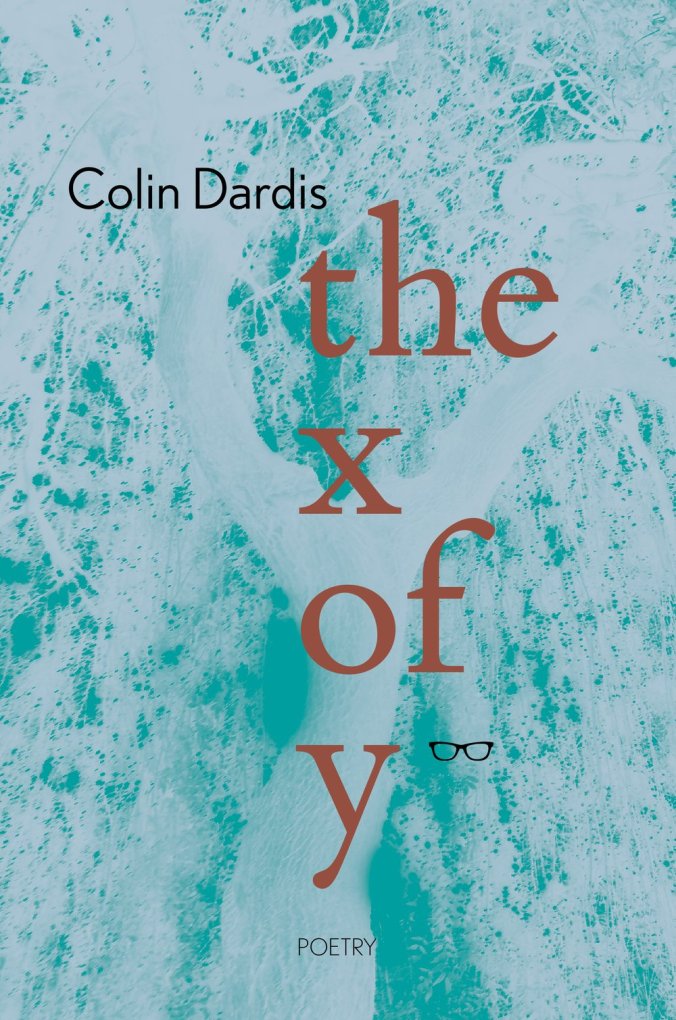
is a poet, editor and arts coordinator from Northern Ireland. His work has been published widely throughout Ireland, the UK and the US. Having had a childhood speech impediment, attending speech therapy classes throughout primary school, Colin s initial interest in language and words grew out of this formative experience. His personal history of depression and mental illness is also an ongoing influence on his work. Known for his devotion to supporting and developing the Northern Irish poetry scene, and one of Eyewear’s Best New British and Irish Poets 2016, the x of y is his debut full-length collection.

The Interview

  1. What were the circumstances under which you began to write poetry?

I remember starting to write poetry for two reasons: one, to make my friends laugh; and two (perhaps the oldest reason of them all), I fancied a girl in my class and was too shy to say anything to her. This is perhaps at the age of 12. I filled pages with naïve notions of young love, or nonsense rhymes, shared with my friends, the more absurd, the better. The earliest poem I remember writing was about an earwig, which entered my brain, causing me to die, and be reincarnated as… an earwig. Needless to say, I won’t be doing a Hollie McNish and putting any of these in my next collection.

2. Who introduced you to poetry?

I was aware of poetry from an early age: throughout primary school, we looked at poems, but often we responded pictorially, rather than with the written word. The first poets I really latched onto were Blake and Yeats, which were on our GCSE syllabus. I will always be grateful to my teachers for being enthusiastic about the subject, and sharing their love of verse. As soon as I got into them, I was writing constantly, and haven’t stopped since I was fifteen.

3. How aware were you of the dominating presence of older poets?

I never really considered the demographics of the poetry world until a few years ago, when I started to get published more and try to get my own collection out. I also actively increased the volume of poetry I read, to help focus and bolster my own output. You learn pretty quickly, especially in the Irish canon, that poetry was/is rather male-dominated. I think most poets don’t really hit their stride until they get to their forties, but I am happy to report there are up-and-coming poets who completely blow that theory apart. And happily, the tide is slowly shifting to support and promote more women writers, thanks to movements such as Fired! and #ReadWomen

4. What is your daily writing routine?

Ah, it would be a luxury to have one at all! I usually write only when an idea enters from the magical ether, and gestates inside the mind, marinating away until it can’t be ignored. Then it’s all hands to the laptop, notepad, mobile, edge of the newspaper, whatever is at hand. I’ve done short stretches of daily writing before, but I find you if you go for a month, you end up with five decent ideas and twenty-five useless ones. My poems are usually short and focused, so I don’t feel the pressure of having to write daily at all.

5. What motivates you to write?

Poetry can be a response to anything at all, and shouldn’t be limited in theme or scope. A news item, an overheard snippet of conversation, a countryside walk, an interesting new word in a novel, all of these can prompt me to get writing. A large part of my writing dealt with my mental health, trying to formulate a picture of what life felt like with depression. I’m trying to look outside of myself more now for ideas, but I still believe in advocating whenever possible.

6. What is your work ethic?

I am the laziest poet in the word, and loathe deadlines. Anything that puts writing into a spreadsheet frame of mind just feels unnatural. I am more motivated to promote other people’s work than my own, oddly enough. I’m not too sure why; some kind of misaligned modesty or embarrassment perhaps. I typically work in a flurry. Only today, in about two hours, I compiled a manuscript of poems for a chapbook contest, collated from poems already written. Most poets would take careful, lengthy consideration over something like that. I work best when reacting spontaneously to something, without too much time to think. Although the wise person leaves a little bit of time at least for analysis and introspection.

7. How do the writers you read when you were young influence you today?

I’m not sure that they do. As an adolescent, I was a voracious reader, but what I was reading wasn’t particularly inspiring or insightful: largely read Hardy Boys novels, Choose Your Own Adventure books, or what we would now call Young Adult fiction. I certainly didn’t read much poetry, regrettably. My father taught English Literature and Philosophy in the Open University, so I  grew up surrounded by books, and was encouraged to visit the library often as a child. I think the fact that I was just subjected to books, any books, was a factor in me becoming a poet. Getting a child to read anything is a positive step, you don’t need to be starting with Proust and Ulysses (both of which were on the lower shelves of my dad’s study).

8. Who of today’s writers do you admire the most and why?

I enjoy and admire Paul Durcan’s easy, conversational tone, shot through with wit. Ross Thompson, a Bangor-based poet, is quite possibly the finest sonnet writer today, look out for his work. I also was fortunate enough to read through the manuscript for Glen Wilson’s forthcoming book from Doire Press. Glen won the Seamus Heaney Award for New Writing in 2017, I think this book is going to be big. Maureen Boyle, Michael Farry, Alice Kinsella, SK Grout, Niamh Boyce, Ruth Carr and Jess Traynor have also had great collections out in the past year or two, to name but a few.

9. Why do you write?

To quote the great Dan Eggs: “Because I’m good at it.” But less facetiously, if I didn’t write, I probably would explode from unexpressed ideas and frustrations. I could take those out elsewhere, through another medium, but I’m not great on the guitar, and I’m gotten rusty with my pencil sketching. Poetry is a way for me to make sense of the world, and my own place within it. Otherwise, I’m pretty much lost.

10. What would you say to someone who asked you “How do you become a writer?”

I would ask, how did you become a human? It’s the same method.

11. Tell me about the writing projects you have on at the moment.

I’ve a Twitter project, starting on the 1st January 2019, called The Lost Stations (https://twitter.com/theloststations ). It’s a novella told through fifteen different locations, and I’m going to be tweeting a bit of it every day for a year. My wife, Geraldine O’Kane, and I will also be continuing to edit and publish work through Poetry NI, including FourXFour Poetry Journal, and hopefully a few other things from Northern Irish poets. Also next year, I want to get down some musical ideas too – more soundscapes and experimental pieces that traditional songs, but perhaps coupled with poetry too. And as always, poems will appear from somewhere to write and redraft. There’s a lot ahead, I’m excited.

Links: http://www.colindardispoet.co.uk     twitter.com/purelypoetry

Wombwell Rainbow Interviews: Emma McGordon

Wombwell Rainbow Interviews

Emma McGordon

The Interview

1. When and why did you start writing poetry?

I wrote my first poem at 7. My parents had been told I’d never be much of a reader or writer. I’d swapped schools as a result and was slowly trying to catch up. I remember the teacher told us we could write describing sentences about Autumn and this was going to be a poem. My handwriting was appalling but she painstakingly got me to read it back to her and then showed the headteacher who said I could type it up. It was a green Amstrad computer – the only one in the school, it took me forever to find the letters but I realised this poem thing was a way that I could communicate what was inside my head, something I’d never had before.
2. So would you say she introduced you to poetry?
She introduced me to the idea of writing in a certain style, but my introduction to poetry came much later. I don’t think I understood at that age that this was a thing that other people did as well.
2.1 How did the poetry community emerge for you?
At 15 I read in a local newspaper that a poet was to lead adult classes at the library. I forged notes to my Physics teacher so i could attend the class on a Wednesday afternoon. The poet was Barry MacSweeney. In my late teens Barry was the only poet I knew and he was my poetry community. He would send me books in the post and we spoke everyday on the phone until his death in 2000.
I stopped writing when I went to university for a time as I found writing academic essays to really kill my creativity. After I graduated I was invited to be part of the Gen Txt tour with penned in the Margins and that was my little community for a while. A real sense of poetry community is a relatively recent thing for me.
2.2 What was Barry’s legacy to you?
Barry’s legacy was that he taught me how to perform. I only saw him perform a few times, but he was incredible. He believed in the theatre of it all and also the importance of the gaps and the silences that allow the words to be
2.3 How did the Gen Txt Community work for you?
Tom Chivers introduced me to a lot of people, such as Les Robinson who was then editor at Tall Lighthouse, he published my pamphlet collection. Seeing how people like Inua Ellams and Joe Dunthorne who were both part of that collective were working showed me what could be archived. I am still a huge fan of all three of these guys and they’ve all gone on to be incredibly successful. It was strange because after that tour I went back to Cumbria and they all lived in London so I did fel very isolated in terms of community and opportunities.
3. How aware are and were you of the dominating presence of poets, traditional and contemporary?
Blake was a big influence in my teens and I would re read Songs of Innocence and Experience over and over.
Emma: What do you mean by dominating presence of poets ?
Paul: Some might say poetry was once dominated by white, male upper class closed coterie.
Emma: ah dominance of male poets – got ya
Yeah, most of the stuff that I was shown at school was white male and I certainly had an idea that that was what a poet was. I had a lot of difficult stuff around my own gender on top of this so it was a thing that I was aware of. MacSweeney introduced me to the work of Anne. Sexton and that was a big moment fir me, though I found it very hard to write after reading her as I was trying to emulate a voice that felt so different to me.
At university there was a section titled ” women poets” which I really hated as I disagreed with the separatist nature of it.
I knew the poem Tiger Tiger from somewhere. I loved the rhythms and images but I don’t actually remember who introduced me. As kids we had a few books that were nursery rhyme books or written in verse and I always liked those. I thin Tiger may have even have been on ine of them.
Its a big leap from Blake to Sexton. Describe the “Big moment” of her.
There were stepping stones in the middle!
But Anne Sexton was just like a voice I didn’t recognise but was desperate to hear
It felt very contemporary even though I 18 years old and reading it 30 years after it was written
i didn’t have access to poetry magazines so i wasn’t reading anything that had been written of that time
Also – the white male poet thing – this is question that needs to be asked of white male poets, as they have a responsibility to acknowledge their priviilage and do somehting about it
apols for typos – my Facebook doesn’t actually let me see what i am typing until I have pressed post
No apols needed. I get the gist. I go through editing when I collate the answers. Its important to get down what you feel. Grammar and spelling is corrected later.
What is your daily writing routine?
Access to work was actually a bigger thing than I realised. I was very isolated and so MacSweeney was a gateway, but of course they were his choices.
I feel very guilty about the lack of a routine
I am much better at being in a routine when I am editing my own work.
Every new year I decided that I will develop a writing routine but I am very bad at self discipline. I am much better now, though at capturing moments when I feel or think about things, there have have been too many occasions when I’ve had a good idea that I have then forgotten through sheer laziness
You’ve acquired a work ethic?
I’ e acquired a deeper commitment to myself as a writer I think. For a long time I found it hard to take myself seriously.
I somehow felt it was fake to get up and sit at a laptop and say I was “writing” especially if there was no deadline for a commission or something
I’ve had imposted and proper job syndrome.
But I’am so much more relaxed about everything in life than I use to be and tgis has allowed me to take myslef more seriously
What motivates you to write?
The opportunity to communicate soemthing that I otherwise wouldn’t know how to voice
I also write a lot if I’ve been reading a lot
it’s like the rhymth and tones and get in my head and i just start adding words to a template
How do the writers you read when you were young influence you today?
I go back to MacSweeney almost as an answer. Like I randomly flick open a book of his and read two lines and take it as advice for the week – which yields some pretty weird results!
I also recently re read some Carol Ann Duffy that I had made very cringe notes in the margins from my early 20s. It’s amazing to see how your reaction to a poem can change over time
Our tastes change.
not so much that, i think i was just a bit clueless and precocious
or university just had me believing some very weird shit
i was obviously writing some wanky essay at the time
Carol Ann Duffy links into my next question: Who of today’s writers do you most admire and why?
I do admire Duffy – I am reading Sincerity at the minute and I was also taught by her. I think Raymond Antrobus is incredible and found myself crying when I was reading his work and also I have a very physical reaction to his words in performance. Joelle Taylor for her sheer passion and honesty, Mark pajak for his ability to contsrct an image that once seen you can’t ever understood why you never saw it, Clare Shaw, kim Moore
for their willingness to share
Andrew MacMilllan for his ability to explode the ordinary
oh, i saw Sam Sax recently too and he was bloody brilliant and had that amazing American way of delivering while appearing to give zero fucks who knew what about and in fact pushing the idea of sharing sexual intimacy with strangers
*who knew what about him
Why do you write, as opposed to doing anything else?
It’s the thing that feels the most familliiar, I guess. It’s both private and public. And somewhere along the line other people told me I was good at it, so I just kept doing it and now it is just a part of who I am
i am also priviliaged that as a a white woman in a western country, my writing can be heard.
What would you say to someone who asks “How do you become a writer.”
the classic advice of read a lot.
keep writing and share that writing with others, it’s only then you know if you’re doing something right
Final Question: Tell me about a writing project that you’re involved in at the moment.
My own writing revolves around a project called The Eve Gene which I am hoping will be a collection. It’s all about mitrchondrial DNA and so references family a lot. I am also just about to start a project with Apples and snakes where I will be running orkshops in a library

Delighted that my new book “Please Take Change” is Featured Book of the Month in December’s Glomag. Thankyou, Glory.

Delighted that my new book “Please Take Change” is Featured Book of the Month in December’s Glomag. Thankyou, Glory.https://view.joomag.com/glomag-glomagdecember2018/0009993001546052854?short

My 2018 Bests

Worth a,gander

wendycatpratt's avatarWendy Pratt

pexels-photo-10967.jpeg Photo by Sebastian Hietsch on Pexels.com

I thought it would be nice to round up the year with what I’ve enjoyed in the arts from people to films, art exhibitions to poetry. So here goes, if you don’t feature, by the way, it’s not because I didn’t like your work, I’ve enjoyed countless books, films, events and exhibitions this year, so thank you for enriching my life!

Best Novel

A tough one, I’ve read many this year. The one that stuck out for me was The North Water, by Ian McGuire, published by Scribner. You can buy it here. This is a terrifying, dark story. I read it almost in one sitting it was so gripping, but more than just a fast, electrifying, gritty plot line is the style of writing, both elegant and satisfying. I’ve just lent it to my husband and am already itching to get…

View original post 748 more words

Wombwell Rainbow Interviews: Thomas Tyrrell

Wombwell Rainbow Interviews

I am honoured and privileged that the following writers local, national and international have agreed to be interviewed by me. I gave the writers two options: an emailed list of questions or a more fluid interview via messenger.

The usual ground is covered about motivation, daily routines and work ethic, but some surprises too. Some of these poets you may know, others may be new to you. I hope you enjoy the experience as much as I do.

Tyrrell performing


Thomas Tyrrell

has a PhD in English Literature from Cardiff University. He is a two-time winner of the Terry Hetherington poetry award for writers in Wales, and his writing has appeared in Spectral Realms, Picaroon, Amaryllis, Wales Arts Review, isacoustic, Lonesome October, The Road Less Travelled, Three Drops From A Cauldron and Words for the Wild.

The Interview

  1. When and why did you start writing poetry?

I decided to write poetry while picking apples on a Waitrose farm in the Autumn of 2008. It’s a job I’ve always loved; a job that lets your mind wander freely while your hands are busy. Robert Frost’s poem, ‘After Apple-Picking’ was running through my head like a earworm pop song, and I was thinking about how much I’d enjoyed reading The Odyssey in sixth-form that year, and I decided I too would write an epic poem. It was an ambition I junked a very short time later, when I realised quite how inadequate my original plan was, but by that time I was enrolled in a local poetry group and busily trying to figure out how iambic pentameter worked. I set myself to memorise Tennyson’s ‘Ulysses’, and it decoded in my head halfway through, one of those beautiful moments where sometime complex suddenly becomes clear. I got hooked, and remained hooked, on the metrical craft of form and metre, and I’m still much more engaged and interested in the writers of the eighteenth and nineteenth centuries than I am with the free verse writers of the present day (which is part of the reason why I went on to do a PhD in the influence of John Milton on eighteenth-century poetry). It was a great liberation for me to experience poetry that didn’t have to be personal, angst-ridden or confessional but was simply a different kind of storytelling, and pleases the ear as much as it does the mind.

2. Who introduced you to poetry?

I don’t think there ever was a particular moment of introduction. My Dad had been reading me ’T’was the Night before Christmas’ every Christmas eve since I was a kid, so I grew up enjoying the rhythms and the textures of words, and I can remember producing some fairly successful primary-school doggerel at times. My introduction to what you might call the poetry scene was a now-defunct poetry group that gathered in the Oxfam Bookshop in Winchester. We’d begin with a mini-lecture and discussion of an established poet, and then we read each other’s work and comment on it. They were very kind to me, because I’m sure I was terribly self-involved and nigh-on unbearable, and it’s pretty much spoiled me for Creative Writing classes ever since. I was also buying up all kinds of secondhand poetry from the bookshops of Winchester—my Byron and Shelley are one volume collected editions from the 1900s with two columns of tiny print per page—and reading voraciously.

3. How aware are and were you of the dominating presence of older poets traditional and contemporary?

Before I started writing poetry seriously, I’d worked through the then-standard GCSE anthology of poets in English Literature classes, so we read Heaney, Armitage, Duffy and Clarke, none of which I really cared for either then or now. The hits were Robert Browning’s ’The Laboratory’, a creepy murder story with an irresistible chanting rhythm, and Gerald Manley Hopkins ‘Inversnaid’, a poem that roils and broils on the tongue like the swirls and eddies of the brook it describes. For most of my developing years, I was obsessed with developing the techniques necessary to sound like the poets of the English tradition: I read Paradise Lost two or three times over, trying to get a grip on the ins and outs of blank verse, which is something no-one ever teaches you in school or university, sadly.

Don Paterson’s Selected Poems was the first modern poetry book I truly loved, particularly ‘Rain’, his astonishing closing poem. Other living poets I enjoy include AE Stallings, Jonathan Edwards, Clive James, Wendy Cope and Andy Croft, as well as ingenious verse translators like Anthony Mortimer and Stanley Mitchell. I like poets with a disciplined sense of form, a lively sense of humour and an engaging variety of subject matter. I try not to feel too daunted either by the past tradition or the bulk of poets writing in the present day; I’ve got a very strong sense of the kind of ‘verse storyteller’ direction I want to go in, and it feels very free and wide open.

4.  Who of today’s writers do you admire the most and why? In this you could expand on why “Rain” is so effective. And give reasons why you enjoy the others.

Rain begins in the simplest way possible:

I love all films that start with rain:
rain, braiding a windowpane
or darkening a hung-out dress
or streaming down her upturned face;

One of my favourite exercises is the invitation to simplicity, to the John Clare-ish enthusiasm to the world about us, that comes from starting a poem with the words ‘I love’. (Mine turned out to be about pencils.) Metrically, too, that first line couldn’t be simpler: iambic tetrameter in words of one syllable. Then the second line breaks with all formality, repeating the rhyme word from the previous line, running the rain / braid stresses together, in the service of a lyrical assonance that couldn’t be achieved in a more regular metre. The half-rhymes between dress and face as well show this is a poem well aware of the old rules, but willing to shirk them in the service of a sweeter lyricism when it becomes available. It ran in my head like an earworm all summer, but I still haven’t laid all its mysteries bare, and I’m not sure I want to. Like much of late Yeats, the feeling it creates is sufficient even without going into the deeper structures of meaning that underlie something like ‘Byzantium’.

5. What is your daily writing routine?

It would be nice to have one! The closest I came to a proper routine was NaPoWriMo this year, where I woke up to a new poetry challenge each morning, thanks to the Poetry School group. I produced an awful lot of terrible doggerel, but three of those poems have since been published, and two more of them are in competitions.

Currently I’ll try to knock out at least 300 words minimum on the novel project and fit in some verse around that, but like a lot of writers I’m deeply perverse when it comes to self-discipline. Switching to pencil and paper often helps unblock things, particularly in the early stages of composition—I’ve been known to scrawl couplets across Amazon parcels and the endpapers of books when the fit’s upon me. Lately I’ve been walking out to Insole Court, a grand Victorian house quite close to me in Cardiff. It’s free to get into and has a beautifully decorated pre-Raphaelite reading room, which makes a great location to work in even if I do keep getting caught up in browsing the bookshelves! If all else fails, I take a notebook out to the pub.

6. How do the writers you read when you were young influence you today?

The writers we read when young create our sensibilities, which is why it’s impossible for me to see a sheep from a distance without thinking of R.S. Thomas, or see daffodils without drawing Wordsworth to mind. I’m sure you’ve noticed in doing these interviews that everyone has different ideas of when you can call yourself a poet, from people who defer the title until they’ve published a book or can make a living from writing (pretty rare, in the case of poets), to people who will adopt it from the moment they write their first poem. My personal notion is that to be a poet, you have to have an understanding of the world that is shaped and mediated by poetry, which is why it’s so important to read as well as write verse.

I read omnivorously when I was young, but in terms of the novel, I was a great devotee of R.S. Stevenson and Arthur Conan Doyle. It’s where some of my enthusiasm for that much-slighted virtue of storytelling comes from, as well as the interest in pirates that first led me to publish in Picaroon.

7. Who of today’s writers do you admire the most and why?

I save admiration for the ones I know, like my friend Rahul Gupta in York, who is labouring over his Arthuriad, an epic poem of an ambition that outsoars anything else this century. A fragment of his “Interlude” was published in Long Poem Magazine a year or so ago.

Poetry editors can be distant & impersonal, so it was very fortunate that I encountered Kate Garrett early in my career when I was looking for a home for my pirate ballads. A lot of submissions guidelines are terribly wishy-washy, so it’s a joy to read something crisp & precisely targeted.

8.  Why do you write, as opposed to doing anything else?

I write because when it’s going well, it’s a purer, more intense form of the buzz you get when you’re reading something so involving that the world drops away from you, & I’ve been hooked on that rush ever since I was a small child. I also write because when I want to tell & retell stories, to share the forgotten narratives behind our common signs & symbols. Where I live in Wales, for instance, hardly anybody knows why there’s a red dragon on the flag or knows the story of Vortigern’s tower, & that’s a bit of ancient British legend I love retelling.

9.


Wombwell Rainbow Interviews: Sean Glatch

Wombwell Rainbow Interviews

I am honoured and privileged that the following writers local, national and international have agreed to be interviewed by me. I gave the writers two options: an emailed list of questions or a more fluid interview via messenger.

The usual ground is covered about motivation, daily routines and work ethic, but some surprises too. Some of these poets you may know, others may be new to you. I hope you enjoy the experience as much as I do.

LND

Sean Glatch

is a poet located in Orlando, FL. He runs weekly poetry workshops at his university and is the literary editor for Tongue Tied Mag. Sean’s work is forthcoming or featured in Rising Phoenix Press, Ghost City Review, Bombus Press, L’Ephemere Review, and 8Poems. He has an obsession with the surreal, the uncanny, and the vaguely familiar. You can find him on twitter @seanyglatch.

He can also be found at 7-weeks.tumblr.com, though it isn’t a place devoted to his work so much as a place where he keeps store of inspiration and sometimes posts poems.

Late Night Drives was self-published and is completely free to download. He doesn’t know if the writing is reflective of who he is now, but it can be downloaded here: https://payhip.com/b/0mrq

The Interview

  1. What inspired you to write poetry?

I think I was 14 at the time I started writing, it was the year when Instagram and Tumblr poetry became a big community and was largely run by teenagers and young adults looking for healthier ways to express themselves online, and I was inspired to be a part of that community because I also liked writing and was looking for safe spaces to express myself. Looking back, I can hardly recognize myself in those poems I wrote – they were largely written for social media and not for myself – but it was that search for a safe space I could express myself in that motivated me to start writing.

  1. Who introduced you to poetry?

I think it was the internet, to be quite honest, and the exposure poetry started getting on social media. I wish I could name someone, a teacher or even just another poet, but my start to poetry definitely wasn’t conventional, and it took a long time for me to get exposed to the right poets and start taking myself seriously as a writer.

  1. How aware were you of the dominating presence of older poets?

When I first started very little, since the community I was in was mostly teenagers. But as I’ve gotten older and more serious as a writer, and as I’ve become more involved in creative writing through lit journals and academia and such, I’ve definitely become a lot more aware of older poets and the general establishment that quietly rules the poetry world.

  1. What is your daily writing routine?

It involves simply sitting in front of a blank page and reflecting. Some days I’ll write on that blank page, some days I’ll simply sit in front of it and let my thoughts wander where they go, but those days I don’t write anything are equally important – perhaps more – because I’m not pressured to put down thoughts I don’t have the words for yet. For myself, anyway, I think experiencing the world and who I am quietly is more important, otherwise I’ll never express myself the way I want to.

  1. What motivates you to write?

I don’t mean to sound dramatic, but I think the whole world inspires me to write. There are so many aspects of the human experience and so many beautiful things in the world I have yet to discover, and I want to write about as much of it as I can.

  1. What is your work ethic?

I think my work ethic is kind of dependent on whether or not I’m inspired by something. Right now I’m writing a lot because I’ve been doing the December Challenge where you write a poem every day, and I had a really good professor last semester who helped me grow a lot in my writing, so I’m definitely riding that wave of growth for as long as I can, but when I’m in dry periods where I’m not particularly inspired by anything I spend a lot of time thinking instead of writing, and a lot more time distracting myself instead of thinking.

  1. How do the writers you read when you were young influence you today?

When I was young I was obsessed with magical realism. Harry Potter, Narnia, The Percy Jackson Series – those books defined a lot of my childhood, and I think a lot of those elements creep into my writing today, from Greek mythology to poems where I’m shapeshifting or a doppelganger or creating something out of nothing.

  1. Who of today’s writers do you admire the most and why?

Oh man, that could turn into a laundry list very quickly, so I’ll try to keep it short. I have endless admiration for Danez Smith, Hanif Abdurraqib, Melissa Lozada-Oliva, Franny Choi, etc. – poets who continue to break boundaries and are finally receiving the recognition they deserve. I’ve gotten to know Lyd Havens a lot better this year and find them to be both a friend and inspiration. Also always inspired by Richard Siken, Margaret Atwood, Tracy K. Smith, sam sax… I’ll quit name dropping and end the list there, but you get the point.

  1. Why do you write, as opposed to doing anything else?

What else would I do? Literature has always been necessary, but now we live in a news cycle that’s so heavy that it’s beginning to break the Earth. If I ever become a doctor or engineer or actor or mathematician or sculptor or whatnot, I will still always be a writer first.

  1. What would you say to someone who asked you “How do you become a writer?”

There’s no one way to be a writer, so if you call yourself a writer, you’re a writer. Not a “soon-to-be” writer, not a “not-yet-established” writer, not an “in-progress” writer, you’re a writer, even if you haven’t yet written a word.

  1. Tell me about the writing projects you have on at the moment.

That’s kind of hard for me to answer – my process is to write first, then go back and look at themes/motifs/ideas and kind of go from there. Once December is over, I’ll go through the 31 poems I wrote and try to get a sense of what is going through my head, put ideas together, and maybe I’ll write additional poems and make it a manuscript or put it out as a chapbook or do something else entirely. But right now, I just want to write – no manuscripts in mind, no journals I’m writing for, no competitions I’m entering, that way I know that I’m the writer behind each poem.


A Cold Soil Waiting by Reuben Woolley

Cracking poetry

Peter Raynard's avatarProletarian Poetry

headlineImage.adapt.1460.high.Syrian_deaths_092915.1443561481518There are so many deaths in Syria that the United Nations stopped counting in 2014 because it could no longer rely on its own data. According to the pro-opposition Syrian Network for Human Rights, 222,114 civilians had been killed between March 2011 and September 2018

I drew a sad child because my brother died. When I am sad I draw.” (11 year old girl, internally displaced in Iraq)

There have been an estimated 85,000 child deaths in Yemen over the past three years due to famine. ‘For children under the age of five this situation is proving a death sentence’ (Bhanu Bhatnagar, Save the Children) 

Child casualties for 2017 in Afghanistan stood at 3,179 (861 killed and 2,318 injured) – a 10% drop from 2016.

We cannot sleep day and night due to the frightening sounds of firing,’ an 11-year-old girl told…

View original post 457 more words

Thank You for Waiting by Simon Armitage

Good stuff.

Peter Raynard's avatarProletarian Poetry

boys and girlsBack home in one of the bars in my local, there was no women’s toilet (this was the mid-80s). The few women who did frequent the smoke room, had to go outside, in all kinds of weather, to the single female toilet in the other bar. At the same time an old school down the road still had signs showing the separate boys’ and girls’ entrances. Society remains divided in many ways, not only in gender. One of the most obvious, yet at the same time, nefarious, regards consumer preference.

Platforms (or are they publishers?), such as Facebook and Twitter, provide their services for free on the basis that its users give away great amounts of personal information. So we now have individual profiling to “guide” us in our purchase choices. You know how it works; you may have been browsing holidays online, then when searching a news item…

View original post 821 more words

Endings and Beginnings: The 2018 Roundup

Latest update from Wendy Pratt.

wendycatpratt's avatarWendy Pratt


So much has happened this year, it’s quite difficult to work out how I fit everything in. I set out in January to spend the year working on myself, as much as I was working on my writing career. I was turning forty and having a bit of a melt down (massive, massive understatement) because this coincided with the decision my husband and I had made way back in 2003, that when I turned forty we’d stop trying to conceive our much wanted family and accept childlessness. In reality we decided after the last disastrous IVF cycle that that would be the last cycle, and we wouldn’t go down the donor or adoption route, but I still clung on a little to the idea. Accepting infertility, embracing childlessness is never easy for anyone. It was especially hard after the incredible journey we had been on before reaching that point. However…

View original post 1,978 more words