On Fiction Wombwell Rainbow Interviews: Martin Gore

Wombwell Rainbow Interviews
I am honoured and privileged that the following writers local, national and international have agreed to be interviewed by me. I gave the writers two options: an emailed list of questions or a more fluid interview via messenger.
The usual ground is covered about motivation, daily routines and work ethic, but some surprises too. Some of these poets you may know, others may be new to you. I hope you enjoy the experience as much as I do.
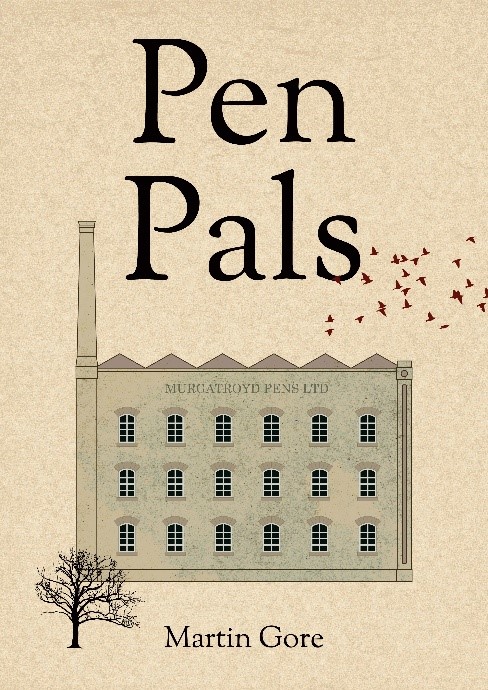
Pen-Pals-cover

Martin Gore

According to his website is:

a 61 year old Accountant who semi-retired to explore his love of creative writing. In hid career he held Board level jobs for over twenty five years, in private, public and third sector organisations. He was born in Coventry, a city then dominated by the car industry and high volume manufacturing. Jaguar, Triumph, Talbot, Rolls Royce, Courtaulds, Massey Ferguson were the major employers, to name but a few.

When he was nine year’s old he told his long suffering mother that as he liked English composition and drama he was going to be a Playwright. She told him that he should work hard at school and get a proper job. He says She was right of course.

He started as an Office Junior at Jaguar in 1973 at eleven pounds sixty four a week. He thus grew up in the strike torn, class divided seventies. Notably in the 1974 miners strike Jaguar were hit by the three day week and worked with lighting from a generator. The Jaguar factory which employed thousands of people in Coventry is now a building site, and the office in the Triumph factory to which he later transferred is now a MacDonald’s.

He has lived in the midlands, the south of England, and now in rural East Yorkshire with Sandra, his wife of thirty six years. He supposes that as such he has a reasonable perspective on our current difficulties as a nation. He takes the view that our current austerity is a consequence of our collective failings in the past rather than a policy, and that the lessons of our history shouldn’t be lost.

He believes we should have less class division in our country, which although less of a factor today still exists in too many areas of life. He think it is fair to say that his own journey from Office Junior to Boardroom could not have happened in his father’s generation, so with every generation we seem to make progress.

But in the seventies he also saw at first hand the damage done by politically driven Trade Unions and ineffectual class ridden management. This division wiped out much of UK manufacturing which is in his view is the root cause of the austerity we know today. He thinks it important to capture this in a fiction novel, and Pen Pals is the result.

The opportunity to rekindle his interest in writing came in 2009, when he wrote his first pantomime Cinderella, for his home group, the Walkington Pantomime Players. He has now written seven, with the eighth, Beauty & the Beast, now in the works. He loves theatre, particularly musical theatre, and completed the Hull Truck Theatre Playwrite course in 2010. His first play, a comedy called He’s Behind You, had its first highly successful showing in January 2016, so he intends to move forward in all three creative areas.

Pen Pals is his first novel, The Road to Cromer Pier, his second.

He says:  “I’m an old fashioned writer. I want you to laugh and to cry. I want you to feel that my stories have a beginning, a middle, and a satisfactory ending. When I write I seem to disappear into another world, and become completely self absorbed. It’s a great feeling.

Live performance is great as you get instant feedback. Sometimes an audience doesn’t find a line funny, and yet something else I write they laugh at. Actors make a huge difference too of course. Every audience has different tastes, some like visual humour, some verbal. Whatever it takes, making people laugh is a really great feeling.

If you are an amdram group looking for a pantomime script then why not get in touch? I only ask for donations to my favourite charity, the excellent Hull Children’s University, if you make a profit. My pantomimes are written for larger groups, but I’m happy to tailor the script to meet your needs, without any charge. Oh and I expect a couple of free tickets of course…


The Road to Cromer Pier will be launched on Friday 29th June, at the premiere of the 2019 Summertime Special Show, and available in paperback and ebook versions. Martin Gore’s website is http://www.martingore.co.uk and he is on Facebook, and Twitter @martingore

The Interview

1. What inspired you  to write fiction?

My love of creative writing started at school, but much more in the line of writing plays. I remember telling my mother that I wanted to be a Playwright when I was around nine year’s old. My father loved musical theatre, so I guess that’s where my enjoyment of live performance comes from. My creative side lay dormant for around thirty years, as I developed a successful career as a Finance Director, and my family grew up. We moved from Coventry to Kent, and then to Yorkshire during that time, so there was no time.

In 2000 I wrote eight chapters of a novel called The Road to Cromer Pier, but wasn’t convinced that it worked, and rather put it to one side.

I became involved in Amdram, as an actor in pantomime originally, and reworded songs to go in the show. Eventually I wrote my first pantomime in 2010, and have now written eight. The pleasure of hearing an audience laugh at what I’d written is just fantastic.

The group began to do comedy plays, and I wrote The Road to Cromer Pier up as a play, but it was heavily laden with characters and too unwieldy to really perform. To improve my skills as a writer, I undertook the Hull Truck Theatre Playwright programme, and in the course of which I wrote Pen Pals as a play. Again it was quite heavy with characters and I parked it.

My career reached a crossroads in 2014, whilst I was Director of Corporate Services at Humberside Probation, which faced impending privatisation. I had the opportunity to take early retirement, at 57. I took the plunge, developing a second career as a non-executive director. I now have three such roles, with the NHS, a major Housing Association and UK Anti Doping.

I’m delighted with my decision as it allowed me the freedom to travel, and to indulge my passion for writing. As I already had two plays, which could act as the framework for novels, I set forth to work these up. Pen Pals was published in June 2016, and The Road to Cromer Pier will be out at the end of June 2019.

2. Who introduced you to fiction?

I don’t actually read too much fiction, mainly biographies. I very much liked Arthur Hailey, because his subjects were so well researched and he really got under the skin of the particular industry that he was writing about.

I have read quite a few Nelson De Milles, Robert Goddard and Robert Ludlum too. I enjoyed Archer’s early stuff such as Kane and Abel, but tend to find that all of these writers become formulaic over time. If I’m on holiday I tend to write rather than read, a habit that I should change no doubt!

3. How aware were you of the dominating presence of older writers?

Not at all really. I’m not really into the classics, I read purely for pleasure, and rather like true stories, hence my fondness for biographies.

4. What is your daily writing routine?

I don’t write daily as I have no deadlines to work to other than those I impose myself, and I have my work commitments to manage. I’m writing to please myself, and as I’m an early riser I write quite sporadically but intensely. On a good day I’m so immersed in my writing that I suddenly find that a couple of hours have gone by, and I’ve almost been in another place. I write in silence, and have a writing shed in the garden, overlooking open fields. If I write on holiday I like to get up early and put myself in front of beautiful scenery. I finished one pantomime in an apartment with stunning views of Lake Como.

5. What motivates you to write?

Pen Pals was written with the underlying purpose of telling of our journey to austerity. Of class ridden managements and militant unions at each others throats, which collectively caused the decimation of thousands of jobs in our country. But it is hopefully written as a human story of the lives and loves of the characters featured, so making it a believable and enjoyable work of fiction.

But as with my plays and pantomimes my pleasure is in the audience reaction. One reviewer of Pen Pals was adopted, and said that I had captured the feelings of an adopted child towards a birth mother perfectly. That sort of comment really motivates me.

6. What is your work ethic?

In spite of writing sporadically I am very capable of setting myself deadlines and hitting them, because that was how I achieved a successful business career. But I do balance my writing life with my working life, and with being a Grandparent, combined with lovely holidays. But I am certainly striving for perfection in my writing, and providing the reader with something that makes them laugh or cry.

7. How do the writers you read when you were young influence you today?

As a child I liked Enid Blyton’s Famous Five and that sort of book, but never really read as much as my mother wanted me to.

8. Who of today’s writers do you admire the most and why?

I would pay tribute to Joanne Harris. Although she is a successful writer she take time to help developing writers. If you ask her a question on twitter she will always give you a reply. I’ve had several useful tips from her, and admire her for her willingness to help.

9. Why do you write?

I like living the lives of my characters, and putting myself in their place. I love the audience reaction to things I write. If I’ve moved them to think, to laugh or to cry then I’ve succeeded.

10. What would you say to someone who asked you “How do you become a writer?”

Well I guess you find a topic which you know about and have a passion for as a starting point. It must be easier to write from personal experience. If I write a play I start with eight segments, one for each scene, eight to a play, and scribble what happens in each scene, with any ideas for sub plot, characters etc. No idea too daft at this time. When the frame is finished writing up the dialogue is pretty easy I find. Developing from a play to a novel rather continues that process a stage further I think. More characters, more expansion of the plot, fleshing out the bones so to speak.

I did do some creative writing classes, but the class were mainly poets, and I didn’t think that I’d learned much. Only recently however, I have realised that I learned some very good stuff there.

11. Tell me about the writing projects you have on at the moment.

The Road to Cromer Pier has virtually completed an exhaustive proof reading process, and will be launched in late June, coinciding with the start of the 2019 Summertime Special Show in Cromer. I’m intending to undertake an intensive promotional campaign during the summer, so other projects are not the immediate priority.

I have refined the play version of The Road to Cromer Pier, which is now available to Amdram groups free of charge, so I’d love to see that getting performed. I’m also writing a pantomime version of Camelot in my spare time. I’ve been asked about writing a sequel to Pen Pals, but I’m not as yet convinced about that. I have another half written comedy play called All Inclusive in the works, and an idea for a novel called Last Hurrah, about a man retiring back to his childhood hometown.

As part of Hull City of Culture 2017, I founded a school’s project called Song for Hull, which resulted in a concert featuring the hospital choir with which I sing, seven primary schools and an audience of nine hundred. The concert will repeat in 2020 with fourteen schools and an audience of eighteen hundred. I intend that it will endure and promote aspiration and self belief in our young people.

I find this article on somatic poetics fascinating because I had not read about it before I interviewed a somatic poet (more of which later)

https://jacket2.org/article/somatic-poetics

Wombwell Rainbow Interviews: Tricia Marcella Cimera

Wombwell Rainbow Interviews

I am honoured and privileged that the following writers local, national and international have agreed to be interviewed by me. I gave the writers two options: an emailed list of questions or a more fluid interview via messenger.

The usual ground is covered about motivation, daily routines and work ethic, but some surprises too. Some of these poets you may know, others may be new to you. I hope you enjoy the experience as much as I do.

Tricia Marcella Cimera

is a Midwestern poet with a worldview. Look for her work in these diverse places: Anti-Heroin Chic, Buddhist Poetry Review, The Ekphrastic Review, Foliate Oak, Failed Haiku, I Am Not A Silent Poet, Mad Swirl, Silver Birch Press, Wild Plum and elsewhere.  She has two micro collections, THE SEA AND A RIVER and BOXBOROUGH POEMS, on the Origami Poems Project website.  Tricia believes there’s no place like her own backyard and has traveled the world.  She lives with her husband and family of animals in Illinois, in a town called St. Charles, near a river named Fox, with a Poetry Box is in her front yard.

Link to THE FOX POETRY BOX, my public art installation:

https://www.facebook.com/FoxPoetryBox

The Interview

1. When and why did you start writing poetry?

Before writing, there was reading.  When I learned how to read (my mother told me that I was convinced it would be too hard to learn; I was a tiny defeatist), another life began for me.  A life of imagination.  I fell madly in love with reading.  And through reading I found poetry.  It entered into the portal of my child mind in various forms such as the great Dr. Seuss.  When I was nine I wrote my first poem that came whooshing out spontaneously after a dinner with my parents and some business associates of my father.  One of the wives told us about her grown daughter being killed in a car accident.  This hit me so hard; after dinner, I sat down and wrote this little poem about grief.  Everyone seemed kind of astounded; the woman who had lost her daughter just wept.  My mother kept that poem for years but it was lost somewhere in time as we moved around.  Poetry then lay dormant in me for a while but returned when I was in high school where I wrote and submitted things to the school literary journal.  It went away yet again but returned full force when I was in my 30s and discovered a local writer’s class at the college.  Along with the class came a professor who encouraged me in a way that every poet should be in their life.  And that meant all the world to me – and my poems.

2. How aware are and were you of the dominating presence of older poets traditional and contemporary?

Aware and intimidated at first.  But with poetry, there are many masters and many forms.  I try and learn from older poets but it’s imperative I listen to my own voice. 

2.1. Who were you intimidated by?

I would say that initially every great poet intimidated me.  People like Ezra Pound, for example.  What did it all mean?  Poets like Emily Dickinson, Jane Kenyon, Leonard Cohen showed me that simple language coupled with deep ideas was something to strive for.  That was poetry too! Again, there are many forms to choose from – that was freeing to me.  MY voice is a form in and of itself.  

3. What is your daily writing routine?

I have no daily routine of actual writing.  Poems are always showing up and percolating throughout the day in my head, I let them gain form, which can take days.  Once I begin putting a poem to paper (computer screen), it generally goes quickly.  I’m a fast reviser.  I’m a big proponent of revising; I think it’s necessary to advocate for the poem, not the ego.  I know there’s a school of thought when it comes to organic outpouring of words to create a poem.  I think a poem deserves to be worked on and lived with.  It makes it no less gritty or tough if that’s what you’re going for.  

4. What motivates you to write?

My imagination, my specific experiences, the world, every art form there is, history, living and dead human beings and animals, the act of remembering – all of it motivates my writing.  Anything and everything can be a poem.  Once I understood this, a door opened.  You really can’t close that particular door once it flies open.  

5. What is your work ethic?

I don’t make a living through my writing so my ‘work ethic’ is fluid and not terribly militant.  Once a poem is begun, however, I feel committed to it and will revise/polish/finish quickly or revisit it as much as necessary until it feels right.  There are those poems, however, that just don’t work.  I don’t entirely abandon them but they are left to. . .sit there, waiting for a line to be used, an idea to be shaped .  Getting back to revision, I suppose that speaks to a work ethic.  As mentioned before, the poem should be served, not the initial delight in creating it.  

6. How do the writers you read when you were young influence you today?

Great question!  The books and stories of my childhood are forever of my beating heart.  I still have one of the first books I received for my 6th birthday – “Hamish Meets Bumpy Mackenzie” by Frances Bowen.  The Narnia Chronicles by C.S. Lewis truly saved my life when my mother was hospitalized for depression (when I was ten).  I return to my childhood books again and again.  “Half Magic” by Edward Eager still entrances me and makes me laugh.  I can’t imagine abandoning any of these fantastic books and their writers.  They are written so well and never talk down to anyone, except maybe those without an imagination.  I believe in magic and hope and weirdness and underdogs because of the books of my youth.   Of all the books I’ve read in my life, they mean the most to me.

7. Whom of today’s writers do you admire the most and why?

I have many favorite writers but I always cite Joyce Carol Oates and Larry McMurtry as two of my most favorite novelists because they both have such amazing  bodies of work.  Everyone calls JCO prolific – because she IS!  She can do it all (gothic, current social mores, retellings of Marilyn Monroe or JonBenet Ramsey, young adult, short stories, etc.) and with such intelligence and depth. She has revisited certain themes in her work for years; dark and psycho-sexual are her trademarks.  As for Larry McMurtry, no one can write a woman like he can.  He has created the most marvelous woman characters.  McMurtry is known for his westerns (Lonesome Dove), yet I haven’t read them!  Because I love his other books so much; I’ve got time.   He makes you fall in love with his people and suddenly, shockingly, someone will die.  I’ve literally let out screams and then cried.  Oh, McMurtry, how could you.  I have to mention Donna Tartt as well – The Secret History is the most amazing book.  I just reread it for the billionth time.  It reminds me so much of Brideshead Revisited; the college students dreamily and beautifully moving through life in a particular time.  Now I realize I haven’t even mentioned poets!  So many – Mark Doty, Sharon Olds, Raymond Carver. . .and always, always, always Leonard Cohen.  Poetry is alive and well.  The social justice poetry in America right now is just sizzling.  The times are right for it.  It’s exciting to read poetry and to write poetry these days.

7.1. Why Leonard Cohen?

Leonard Cohen is the finest.  His poems are so relatable and understandable, yet they are not simple in the least bit.  He references a LOT.   He tells us that we as humans encompass everything.  And he says that with sadness and with hilarity.  I know I’m speaking of Mr. Cohen in the present tense but he lives on, he’s the Master.  I’ve written three poems that he appears in and two of them are especially dear to me; I’m grateful that he shows up.  Anyone reading this – go read Leonard Cohen!  And listen to him as well.  The songs, the voice. . .

8. Why do you write, as opposed to doing anything else?

Writing is the thing I do best, creative-wise. I wish I could paint or play an instrument or sing (I sing with gusto but not well). So I write.

9. What would you say to someone who asked you “How do you become a writer?”

I would advise to Read, Write and Revise. How can you write if you don’t have a love of reading? And when you write, revise! Just a little revision goes a long way.

10. Tell me about the writing projects you have on at the moment.

Poems are always percolating in my mind but the writing projects I have in my life right now are really about other poets.  I maintain and curate a poetry box in my front yard where I display the work of living guest poets, dead poets, as well as songs, art, etc.  My poetry box is called The Fox Poetry Box.  Passer-bys happen upon it during walks; it’s a concrete and organic small literary billboard.  And it has an electronic life as well – the box has its own Facebook page.  In conjunction with The Fox Poetry Box, I created The Tom Park Poetry Prize which was just announced.  It’s named for a most marvelous cat that my husband and I had the privilege of knowing for a year and a half before he recently  passed on.  Tom Park was, as I wrote in the prize announcement, a profile in Courage, Character and Compassion.  Entries are open until April 15th.  Long live Tom Park!  And poetry!

Wombwell Rainbow Interviews: Christina Xiong

Wombwell Rainbow Interviews

I am honoured and privileged that the following writers local, national and international have agreed to be interviewed by me. I gave the writers two options: an emailed list of questions or a more fluid interview via messenger.
The usual ground is covered about motivation, daily routines and work ethic, but some surprises too. Some of these poets you may know, others may be new to you. I hope you enjoy the experience as much as I do.

81K-e0ai4-L._AC_UL872_QL65_
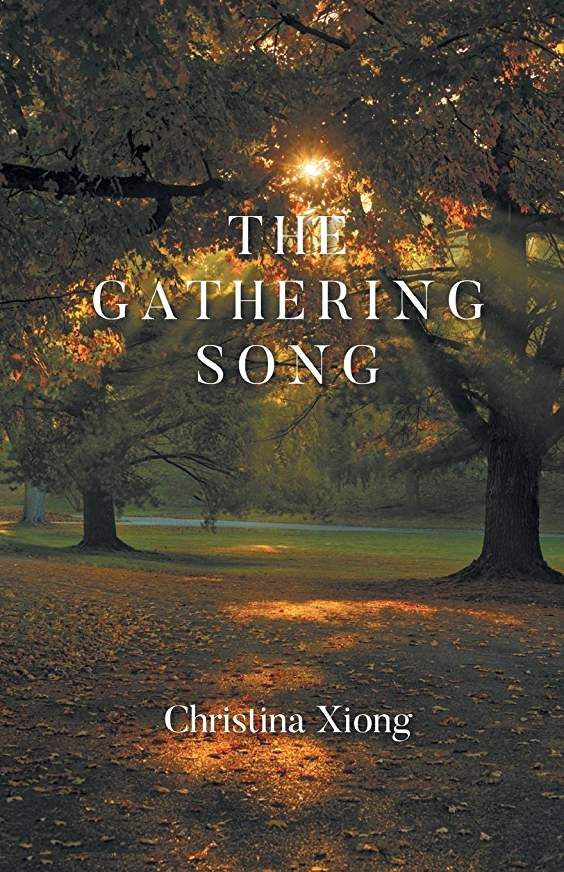
Christina Xiong

According to Amazon, “has been published numerous times, including Slipstream and Wild Goose Poetry Review. Christina holds an MA in English and Creative Writing from Southern New Hampshire University and a BA in Literature and Creative Writing from the University of North Carolina at Asheville. She is a certified Story Medicine facilitator and a certified North Carolina peer support specialist. She lives in the foothills of Western North Carolina with her husband and daughter.”

The Interview

1. When and why did you begin to write poetry?

I began writing poetry as a small child. I started out writing short stories first. I always entered the Young Authors programs in elementary school. But I really began writing, poems almost exclusively, in middle school, where I dealt with horrific bullying. I feel like poetry saved my life (even though that sounds like such a cliché). I had a place to express my frustrations with being an outcast. I used poetry as a confidante partly because I lived in a space where figures of authority rarely intervened in my bullying.
There were times I read my poetry to the class, because a teacher would allow me to do this. The response I got from the other students was some of the only positive feedback I ever received from peers. My seventh grade English teacher also helped me during a particularly bad time. She made the class project a novel, put me in charge of it, and pulled me out of my other classes to work on it.

2. Who introduced you to poetry?

My mother introduced me to poetry and literature. We always had books in our house, and I learned how to read, from my older sister, by the time I was four. One of my aunts was a poet, and she gifted me with Emily Dickinson’s collected poems, which was a formative text for me. My mother gave me an anthology of poems when I was ten-years-old, and that is where I first read Muriel Rukeyser who made me want to be a poet. The poem was “Effort at Speech Between Two People.”

3. How aware were and are you of the dominating presence of older poets?

I had a huge gap between undergraduate and graduate school where I barely wrote, and did not publish. I still feel like a baby poet in some ways, even at thirty-nine. I dropped out of high school at fifteen and have struggled with addiction for much of my life. When I went back to community college, I was twenty-five, and it took me three years to transfer to a university, and three more years to get my BA in Literature and Creative Writing. I worked as a housekeeper at a hotel. I was the first person in my family to receive a college degree.

I started out my education with a preference for reading outside of the white male canon of writers. Poets like Sharon Olds, Rita Dove, Adrienne Rich, Elizabeth Bishop, and Ellen Bryant Voigt definitely influenced me poetically. I went through a rigorous literature program at The University of North Carolina at Asheville but I still had a self-directed path to some extent.
I rarely think of older poets as having a dominating presence. There are so many poets I admire who are a decade younger than me, or even younger. I don’t pay that much attention to who other people say “dominates” the poetry scene. I just enjoy what I like and respect people who do the work.

4. What is your daily writing routine?

I generally don’t write daily. I am a stay-at-home parent to a three-year-old, and my partner works long shifts, twelve or more hours a day, on the days he works. I don’t burn the candle at both ends and sacrifice sleep for my writing because by the end of the day, my brain is depleted from parenting. I also have chronic health conditions I manage, so rest is a priority that I can’t shirk for productivity’s sake.
When I have the opportunity to write, it’s usually because my partner has taken our daughter out of the house for several hours. I usually have a plan in my head for which ideas or pieces I will tackle. I go from one draft to another. Sometimes I revise while my daughter naps or watches a movie, but mostly I just squeeze in writing and editing any time I can. I also like to go to a coffee shop and spend several hours working.

I was able to complete graduate school and write my first chapbook at home because my daughter was very young at the time. She took long naps and spent hours inventing her own games. Now that she is older, I am constantly interacting with her.

5. What motivates you to write?

I don’t feel like I have much of a choice. Writing is just how I survive. I love language and the ways we can manipulate it, especially in poetry. Mostly, I want to connect with readers. I sometimes feel misunderstood by the world, as a highly sensitive person, and in my work, I convey something of my perception to readers. Even when my work is misunderstood, I suppose that, to me, the sense of connection, to be seen/heard is still present.

6. What is your work ethic?

Much of my writing happens off the page. One of my earlier mentors always said we had to live in order to write poems. Parenting, community-building, meditation, and experiencing nature are all ways that I work on my writing off of the page and are an important aspect of my work ethic.

My work ethic, at its best, is also gentleness and tenderness toward myself. I don’t try to force my writing. I am a slow writer. I process events slowly, and I approach them when I am inspired rather than when they first occur, or even when I want to write about them. I have my own voice, but I always want to push myself to explore different techniques and form. I am fascinated with the narrative structure in poems and with using sonic effects in subtle, unpatterned, but trackable, ways. My work ethic is to do what I can with what resources I have. I try not to deplete myself or beat myself up for lack of productivity.

7. How do the writers you read when you were young influence you today?

Muriel Rukeyser’s absolute fire is something I return to again and again when my words are looking a bit dim and washed out to me. Sylvia Plath and Anne Sexton, the way they wrote about women’s bodies, motherhood, and domestic life—it just fills me with the certainty that these are topics that I will continue to write about.

8. Who of today’s writers do you admire the most and why?

I have a deep admiration for so many writers. I recently became obsessed with the work of C. A. Conrad. Their work is clean, associative, sharp, and yet deep, angry— often enraged. C.A. is magic to me, really. I admire their generosity because they are willing to share the (Soma)tic rituals used to create their poems. I am fascinated. I have spent a lot of my life studying, practicing, and creating various rituals.

I also really admire Vanessa Angélica Villareal’s work. Her book, Beast Meridian, made me fall in love with form all over again. Her versatility and willingness to experiment both inspire me and almost give me permission to do the same in my work.

There are so many more poets I admire. For supporting me, showing me how to be a better literary citizen, and their talent—their wonderful poetry, Hannah VanderHart, Heather Derr Smith, and Emily Blair are like my poetry siblings.

9. Why do you write?

For survival, like I stated earlier. Honestly, it is also one of the only things I am good at, besides being an excellent cooker of stews and soups, and good at navigating emotions, but even those skills translate well into poetry.

10. What would you say to someone who asked you “How do you become a writer?”

Read widely. Write. Don’t stop. As someone who stopped writing for long periods due to my struggles with mental health and substances, that’s the most important writing advice I have ever heard. Most people will stop; do not be one who stops!

Find your own voice. Being derivative is how many of us learn, but finding our own voice is how we create memorable and compelling writing.

11. Tell me about the writing projects you have on at the moment.

I am working with Liz Howard on editing an anthology of work called It Will Not Be Simple: Motherhood, Mental Illness, and Trauma. This project has been a long-term work of the heart.

I recently completed and submitted a micro-chapbook of poems about relationships called Ghost Monogamies. Working on the micro-chapbook made me remember how amazing it feels to give myself permission to experiment and play in my work; some of the pieces are hybrid, prose, or more experimental than my usual poems. I also did the artwork, cover design, and layout myself. I hope it gets published, but the joy I felt doing the entire book on my own was so satisfying.

On Fiction Wombwell Rainbow Interviews: Jan Stinchcomb

On Fiction Wombwell Rainbow Interviews

I am honoured and privileged that the following writers local, national and international have agreed to be interviewed by me. I gave the writers two options: an emailed list of questions or a more fluid interview via messenger.

The usual ground is covered about motivation, daily routines and work ethic, but some surprises too. Some of these poets you may know, others may be new to you. I hope you enjoy the experience as much as I do.

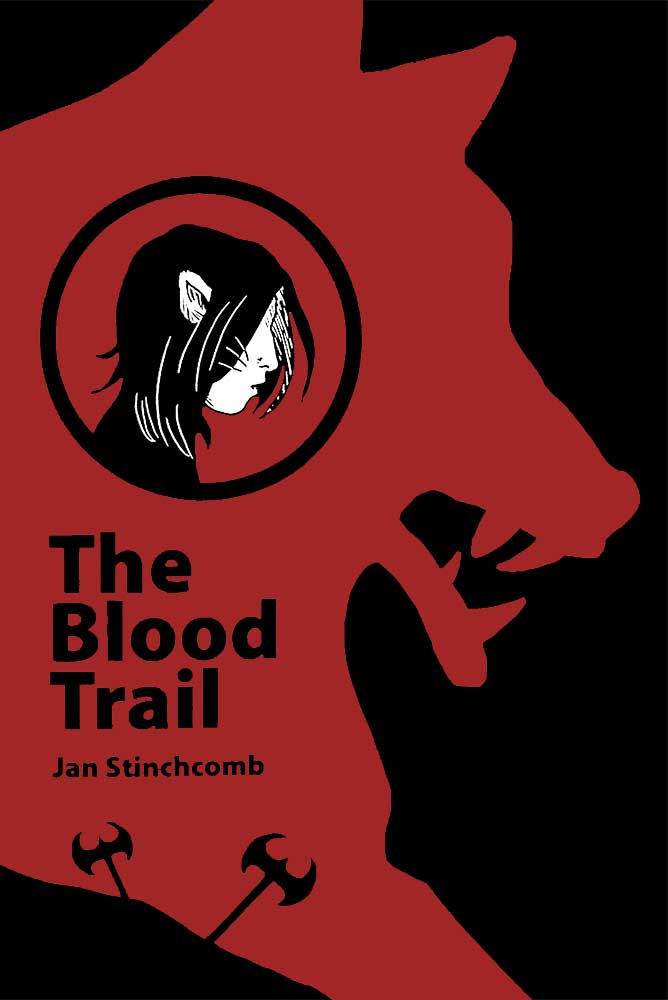
The-Blood-Trail-cvr

Jan Stinchcomb

is the author of The Blood Trail (Red Bird Chapbooks) and Find the Girl (Main Street Rag). Her stories have appeared in Longleaf Review, FlashBack Fiction, Gravel, Monkeybicycle and matchbook, among other places. She has been nominated for the Pushcart Prize and Best of the Net Anthology, was longlisted in the Wigleaf Top 50, and is featured in The Best Small Fictions 2018. Currently living in Southern California with her family, she is a story editor for Paper Darts.

Find her at janstinchcomb.com or on Twitter @janstinchcomb.

To order The Blood Trail:
http://www.redbirdchapbooks.com/content/blood-trail

The Interview

1. When and why did you begin to write flash fiction?

My notes say that back in 2004, when I had a baby and a toddler, I placed 15th in the Writer’s Digest Short Short Story Competition. There were almost 8,000 entries. I got a nice certificate, but what I really gained was a sense of confidence. I knew I could do a lot with only a few words.

2. Who introduced you to flash fiction?

I knew very short stories existed. I had read them. I remembered a tiny Tolstoy piece called “After the Ball” from when I was a graduate student. And then, when I was writing and trying to publish, I kept seeing contests for pieces with a limit of 1,000 words. I loved the discipline this required and the challenge of establishing a complete psychological dynamic without much description or back story. Finally, I began taking online classes with Kathy Fish, a flash master and one of the best teachers out there. She encourages her students to trust the unconscious and to write without self-editing.

3. How aware were you of the dominating presence of older flash writers?

I wasn’t, and this was perhaps a good thing, as my ignorance kept me from getting too intimidated. I simply wasn’t aware of there being a tradition of flash or micro writers. I somehow didn’t know about Lydia Davis, for instance. For me, fiction was composed of the “traditional” short story (roughly 20 pages) and the novel. I didn’t know about people specializing in flash or using it to structure longer works.

4. What is your daily writing routine?

I get the most done early in the morning after my kids have gone off to school but before the whole city is awake and hopping. I love writing early, when everyone else is asleep, both my family members and all the people who live in our building. It’s my personal witching hour.

5. What motivates you to write?

This is my work. I couldn’t get through this life if I didn’t feel I had made something while I was here.

6. What is your work ethic?

I try to write and publish several stories a year, while always aiming to get a longer manuscript picked up. That would be my goal. Sometimes it works out and sometimes it doesn’t. It’s equally important to be an involved member of the writing community. My work at Paper Darts allows me to facilitate the publication of people whose stories deserve to be heard.

7. How do the writers you read when you were young influence you today?

Another great question. I grew up on the classics and eventually majored in Comparative Literature. For years and years all I read were 19th-century novels, plays and longer short stories. I am grateful to have had this education but I sometimes feel far from it. Lately it seems that my interest in popular culture and the horror genre guides my work more than the classics ever did. Kafka and Gogol would be the exception. And Chekhov, always.

Of course, the most important and enduring influence, my Bible, would be the fairy tales, all of them, with an emphasis on Grimm and the Russian tales. And “Red Riding Hood” in all her incarnations. I have an entire bookshelf dedicated to fairy tales, and it has travelled with me to every new address.

8. Who of today’s writers do you admire the most and why?

This is a trick question because I could write several pages of adoring lists. I greatly admire Vi Khi Nao for her originality and her reinvention of language. She works in several genres. R.O. Kwon has debuted with a perfect short novel (The Incendiaries) that somehow contains every important thing in the world.

Long-time favorites include Alyssa Nutting and Karen Russell. Lily Hoang. Carmen Maria Machado. I also love the graphic novels of Emil Ferris and Nick Drnaso.

I am a fan of The Best Small Fictions annual anthologies and the Wigleaf Top 50 List, which is available online. I love all my flash friends and admire anybody who is trying to be a writer.

9. Why do you write?

I could not imagine doing anything else. The years before I was writing are a memory of pure agony. I was strangling myself by not taking the risk and doing the work.

10. What would you say to someone who asked you “How do you become a writer?”

Brace yourself. That’s the first thing I would say. It’s going to be a long and painful road of rejection and self-doubt. Years and years. The good news is that it’s never too late to start and that all experience is valuable.

You need to find other writers. This doesn’t necessarily mean that you have to move to New York or Los Angeles, but you do have to find colleagues. You don’t have to get the MFA but it’s probably a good idea to take a few classes. That’s where you meet the people who will be your colleagues. They’ll be in the critique group you set up outside of class. You have to be around other writers because non-writers have NO idea what you’re trying to do or what kind of life you lead or how your mind works. It’s painful and isolating. I know people have strong views about social media, but literary Twitter has been very helpful for me.

My spouse has been incredibly supportive over the years. If you’re around people who don’t understand this endeavour or undermine you, you need to drop them. Today.

11. Tell me about the writing projects you have on at the moment.

I recently published (February of 2019) a small chapbook of dark fairy tales, The Blood Trail. I have stories coming out in Synaesthesia and Gargoyle. I am shopping around a hybrid novel that is mostly domestic horror, set in Southern California, where I have been living since 2013.

In the past two days I’ve drafted a new flash piece and a new micro. I can’t really complain. Now I have to wait and see which direction our world will take.


Wombwell Rainbow Interviews: Gary Bills

Wombwell Rainbow Interviews

I am honoured and privileged that the following writers local, national and international have agreed to be interviewed by me. I gave the writers two options: an emailed list of questions or a more fluid interview via messenger.

The usual ground is covered about motivation, daily routines and work ethic, but some surprises too. Some of these poets you may know, others may be new to you. I hope you enjoy the experience as much as I do.

Gary Bills

was born in Wordsley, in the West Midlands, and currently lives in Herefordshire.  

He has published two poetry collections, which are The Echo and the Breath (Peterloo Poets, 2001) and The Ridiculous Nests of the Heart (bluechrome, 2003).

In 2005, he edited the anthology, The Review of Contemporary Poetry for bluechrome, sold on behalf of the Stroke Association.

He has won various prizes, including Poetry on the Lake’s Bill Winter Award in 2003, for the best short poem.

Gary is a graduate of Durham University, where he studied English Language and Medieval Literature. He is married to Heather, an artist, and the couple have a teenaged daughter, Isabella.

The Interview

1. When and why did you begin to write poetry?

Well, I first wrote poetry as an exercise at school, and I’d have been about 11 or 12. My efforts made the school magazine, which was gratifying; but I’d been reading poetry fairly regularly from about the age of eight – in fact, I remember reading Burns at that age, and Walter de la Mare, and Yeats – and so it was probably inevitable that I would try to write poetry myself at some point.

2. Who introduced you to poetry?

I think I probably introduced myself – reading anthologies of verse at Lawnswood Primary School, in Wordsley.
3. How aware were and are you of the dominating presence of older poets?

I don’t think I ever thought like that when I was younger. These days, I often get the impression of a youthful band of poets who are very interested in prizes, and themselves and very little else. Older poets, like me – I’m 55 next birthday… well, they can feel left out in the cold at times! It’s great you gave me a nudge, Paul! I’m very grateful!.

4. What is your daily writing routine?

I write for a living, as a journalist, most days. As a poet, and as a novelist – I write when I need to get something down. I can write all day, even for several days, or just for a few hours or so.

5. What motivates you to write?

Sometimes I just hear a line, or a good idea strikes me suddenly, and then I have to write.

6. What is your work ethic?

I don’t have one. Writing is not about rules, I’d say.

7. How do the writers you read when you were young influence you today?

I think I was drawn early on to poets who knew their craft and were capable of writing a musical line – such as WB Yeats. I still believe such things are rather important.

8. Who of today’s writers do you admire the most and why?

I saw James Fenton perform at the Ledbury Poetry Festival a few years ago – I say perform, because he really did perform, putting everything into his reading and engaging with the audience. I wish I could do that! To hear “The Ballad of the Shrieking Man” performed like that was something I shall never forget.

9. Why do you write?

I write, I think, when my subconscious has been brewing something up and finally allows it to enter my ‘normal’ thought patterns. Then I have to get the words down, you see?.

10. What would you say to someone who asked you “How do you become a writer?”

I think I can say no more about that, other than what I’ve said already.

11. Tell me about the writing projects you have on at the moment.

By choice, I publish poetry these days almost exclusively in HQ – a magazine run by a friend, Kevin Bailey. I have a third full collection ready to go, but no publisher at present! My first collection, The Echo and the Breath, came out with Peterloo – and Peterloo is no more, alas! My second collection, The Ridiculous Nests of the Heart, came out with bluechrome – and bluechrome also no longer exists….I’ve been unlucky, you might say.
This said, a novella, “A Letter for Alice“, should be out with a New York-based publisher in April or May, and I’m looking forward to that!


Wombwell Rainbow Interviews: Robin Houghton

Wombwell Rainbow Interviews
I am honoured and privileged that the following writers local, national and international have agreed to be interviewed by me. I gave the writers two options: an emailed list of questions or a more fluid interview via messenger.
The usual ground is covered about motivation, daily routines and work ethic, but some surprises too. Some of these poets you may know, others may be new to you. I hope you enjoy the experience as much as I do.
Basic CMYK
Robin Houghton
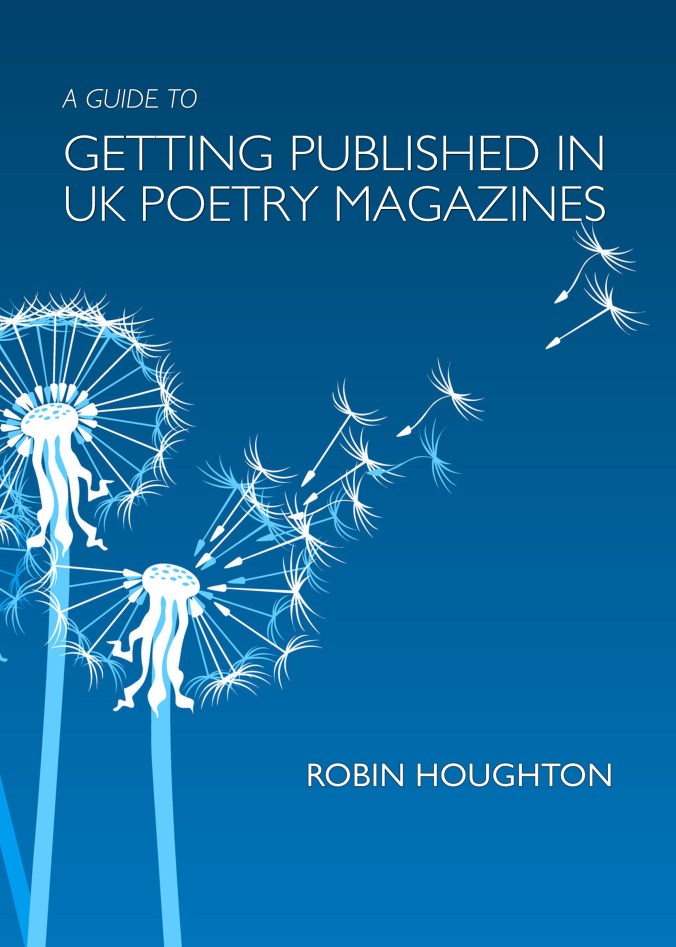
Robin Houghton’s latest pamphlet All the Relevant Gods (2018) was a winner in the Cinnamon Press Pamphlet Competition. She is widely published in magazines and in numerous anthologies including The Best New British and Irish Poets 2017 (Eyewear). She won the New Writer Poetry Competition 2012, the Stanza Competition in 2014 and the Hamish Canham Prize in 2013. Her first poetry pamphlet The Great Vowel Shift (2015) was published by Telltale Press, the poets’ publishing collective she co-founded. She has also self-published a hand-made mini-pamphlet, Foot Wear (2017). A former Nike marketer, for the last eighteen years Robin has worked in online communications and she’s written three commissioned books on blogging, including ‘Blogging for Writers’ (Ilex/Writers’ Digest, 2014). Her most recent publication is a manual for poets called ‘A Guide to Getting Published in UK Poetry Magazines’ (Telltale Press, 2018). Her poetry blog is robinhoughtonpoetry.co.uk
The Interview

1. What inspired you to write poetry?

I think I was more motivated than inspired. I started when I was at school – I got good marks for essays and poems, which I enjoyed, so it made me write more. I didn’t really write poems after I left school, apart from the odd outpouring of angst – which was just for my own benefit, there was nothing crafted about it. It was much later that I went back to writing poetry and finally took it seriously. When I was young I ardently listened to song lyrics and wrote them down – Al Stewart, Paul Simon, Steely Dan – much of which certainly influenced me and in my mind would pass for poetry even now.

2. Who introduced you to poetry?

My English teacher at school, Dr Upadhayay. She got us reading Ted Hughes, Thom Gunn, Stevie Smith, Brian Patten, mid 20th-century poets mostly. We weren’t very responsive in class I’m sad to say, I think she probably had a miserable time teaching us. Especially as we were more interested in learning the lyrics to the latest song by the Osmonds or whatever.

3. How aware were you of the dominating presence of older poets?

Not at all, do older poets dominate? When I was a teenager I assumed all poets were dead, including (to my shame) Ted Hughes, whose work I loved and who I discovered years later had been touring and talking to school groups at around the time that I was discovering him. If I’d known that I would have asked Dr Upadhayay to invite him to our school. These days it’s younger poets that dominate, it seems to me! People in my age group and demographic just aren’t seen as sexy or relevant. Of course there are a few exceptions. I hope that doesn’t sound like a moan – it’s just the way it is! I’ve been a professional marketer for 30 years so I know how things work.

4. What is your daily writing routine?

Oh dear, I can’t say I have one. If I have a project on the go, especially a commission or client work (I’m a commercial writer as well as a poet) then I might be at my computer all day and into the evening. Or when there are deadlines approaching. Other times I may take whole days off. I’m very fortunate in that I can organise my time flexibly. Having worked for myself for nearly twenty years I’m fairly good at understanding what a project is going to entail, prioritising my time, juggling various things and getting on with the work. I don’t tend to write freehand, I much prefer writing on a keyboard.

5. What motivates you to write?

Poetry? Anything that strikes me as interesting could be the starting point for a poem. Sometimes there’s an outside motivator – a competition, a magazine’s theme. I often feel like writing after I’ve been reading poetry, which is one reason I don’t understand people who write poetry but don’t read poetry. I also get ideas while at readings. I’m a bit bad like that – my mind will drift off on an idea for a poem instead of listening to the poet who’s reading. Very rude.

6. What is your work ethic?

I think I covered this in Q4. When I have a job on, I deliver. I don’t miss deadlines. Poetry doesn’t feel like work, because I don’t do it for money, or at least when I do get paid it’s not enough to feel like work. But I do work at it, because the point of it (for me) is to get better at it (see answer to Q9).

7. How do the writers you read when you were young influence you today?

I still go back to Hughes, Larkin, Auden and the like but to be honest I didn’t read widely when I was young. I came to the canon very late and I feel I’m still playing permanent and hopeless catchup. I once sent a manuscript to a poet/editor for critiquing and he told me any mentoring he could offer me would be a very steep learning curve because I have ‘no literary education’. Poetry workshops and courses have opened me up to poets I otherwise wouldn’t know – Cavafy, Tranströmer, Akhmatova for example. And I love the New Yorker poetry podcast where I’ve encountered many US poets.

8. Who of today’s writers do you admire the most and why?

(Presume you mean poets?) This is hard – plenty of names come to mind but not sure I can say why, beyond the fact that I’ve been absorbed, surprised and/or moved by their poems. It’s often individual poems or collections I’ve enjoyed and I couldn’t say there’s anyone whose entire oevre I’m familiar with. And all poets write bad poems occasionally! If I read a poem and think I WISH I’D WRITTEN THAT! then that’s a pretty good marker. Of the big guns Don Paterson, Carol Ann Duffy, Sharon Olds, Alice Oswald come to mind right away, Carol Ann particularly not just for her writing but for all she does for poetry. I’m fascinated by the work of Mary Ruefle. Recently I’ve been enjoying work by Zaffar Kunial, Kei Miller, Lorraine Mariner… beyond that I wouldn’t want to single people out as there are huge tranches of poets writing fine poetry many of whom I admire in various ways.

9. Why do you write?

Poetry? For my own enjoyment, a love of language and the endless quest to help people see and feel things in ways they haven’t before, to bring joy or wonder or anger or some sort of emotion to the reader. It’s also about practising until you get better – the best you can be. For me, I have to think I can get better. When I reach the point where I think I can’t get any better at it, I will stop writing.

10. What would you say to someone who asked you “How do you become a writer?”

I think it starts with a love of reading. You could still write, without reading anything, but it’s by reading you become a more fluent writer – you learn what it takes to communicate ideas, to develop styles, to use the whole armoury of language, irony, humour, nuance and magic at your disposal.

11. Tell me about the writing projects you have on at the moment.

A few months ago I wrote ‘A Guide to Getting Published in UK Poetry Magazines’ and it’s now sold out – crazy! I’ve also just updated my quarterly list of poetry magazines submissions windows, which has become quite a big job. A poet friend tells me I do these kinds of things as displacement activities, and I think he has a point. In January I gave myself ‘permission’ to focus on writing poetry, and so far so good. I’ve got new a pamphlet that I’m hoping will find a publisher. Not sure yet about a full collection, we’ll see.

“Her Power Leaps” and other poems for International Women’s Day

Good thoughts,

Jamie Dedes's avatarJamie Dedes' THE POET BY DAY Webzine

Art is when you hear a knocking from your soul … and you answer.” Terri Guillemets


In solidarity with all women and their children I offer four of my “women poems” written and originally published here and elsewhere between 2011 and 2017

HER POWER LEAPS

she’s present

returned to bite through the umbilical of tradition,
to flick her tongue
and cut loose the animus-god of our parents,
like a panther she roams the earth, she is eve wild in the night,
freeing minds from hard shells
and hearts from the confines of their cages,
she’s entwined in the woodlands of our psyches
and offers her silken locks to the sacred forests of our souls ~
naked but for her righteousness,
she stands in primal light,
in the untrammeled river of dreams
the yin to balance yang
the cup of peace to uncross the swords of war ~
through the eons…

View original post 721 more words