Wombwell Rainbow Interviews
I am honoured and privileged that the following writers local, national and international have agreed to be interviewed by me. I gave the writers two options: an emailed list of questions or a more fluid interview via messenger.
The usual ground is covered about motivation, daily routines and work ethic, but some surprises too. Some of these poets you may know, others may be new to you. I hope you enjoy the experience as much as I do.
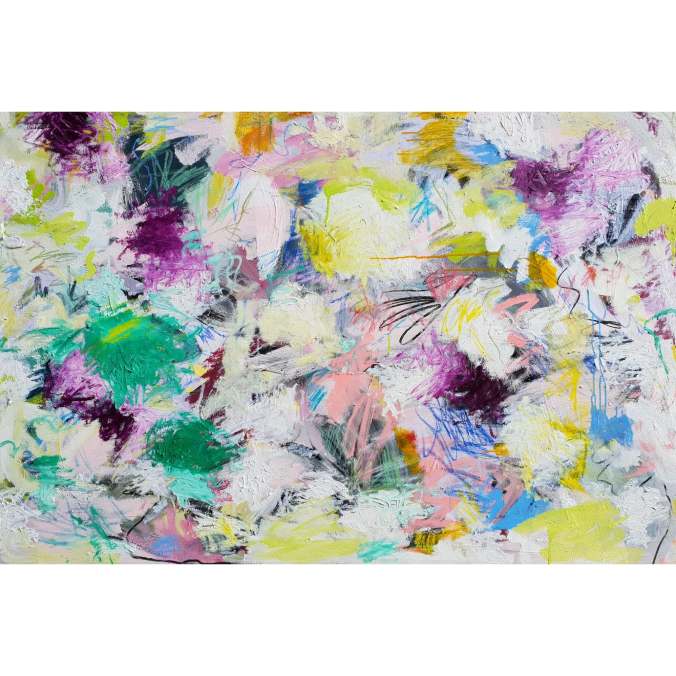
Image for the cover of a future publication
Sven Kretzschmar
was born in the southwest of Germany in 1987. A trained analytic philosopher and literary scholar, he is the former coordinator of the European Federation of Associations and Centres of Irish Studies. He has published poems in Skylight 47, Ropes, Coast to Coast to Coast, The Wild Word, and with the Poetry Jukebox project in Belfast among others. He won the 2018 Creating a Buzz in Strokestown prize for his poem ‘Listen closely’. He is the illustrator of Grimwig and Bert Borrone’s Perpetual Motion, and the chairman of the German-Irish Society Saarland. Sven holds degrees from Saarland University, Germany (BA), the University of Luxembourg (MA), and University College Dublin (MLitt). Academic publications have appeared in Think Pieces. Food for Thought (a festschrift) and are forthcoming in Theoria and Praxis and in the Hungarian Journal for English and American Studies. Sven has worked abroad at the UCD School of Philosophy in Dublin, Ireland, and in the Leuven Centre for Irish Studies in Belgium, engaging in teaching and research about medical ethics as well as Irish literature and early modern London drama. Current academic endeavours focus on Irish poetry and its intersections with philosophy, as well as on the topics of responsibility in medical ethics, and on the philosophy of autobiography.
Sven’s blog, where all his journal and zine publications appear after publication:
https://trackking.wordpress.com/
The Interview
Many thanks for the invitation to this interview, Paul. It was quite a bit of a challenge to not only think about my work, but to consider possible concepts behind it – a challenge indeed, but nevertheless a very welcome and intellectually rewarding one.
1. What inspired you to write poetry?
I do not actually recall what might have been the initial inspiration for me to start writing poetry, but I do remember the reason: it would have been in the 10th grade, I think, when our English teacher gave us the homework task of writing a poem. I was writing rap lyrics at the time, both in English and in German, and about all sorts of topics. I had already developed an interest in American songwriters and German rock bands too, but decided to stick with a UK singer, Ms. Dynamite, for a kind of poetry template. I ended up writing two poems and, as far as I remember, was the only one in class finishing the task.
I took it from there and kept writing. A start into creating poetry had been made, even though it was not yet poetry as literature. Looking at in hindsight, what drove me to write was probably less of a general inspiration, something that would have been there, but probably what was not there. My peers were not writing creatively, were not listening to the music I fancied, and very often did not take an interest in what I was interested in art-wise, so I suppose I wrote out of a feeling of me without the rest of the world (as opposed to the famous ‘me against the rest of the world’ stance). For a while then, I also wrote from a place of worldlessness while I studied analytic philosophy, which is a great thing to do, but it simply did not give me the insights I was expecting from philosophy.
2. Who introduced you to poetry?
Prof. Bert Hornback, whom I met in Saarbrücken, Germany, the great Dickens scholar and friend of such well-known writers like Seamus Heaney and Galway Kinnell introduced me to poetry properly (Bert’s neighbours back in Ann Arbour had been Jane Kenyon and Don Hall, can you imagine!). I was illustrating his first novel, Grimwig, after an undergraduate semester abroad in Dublin. Bert, who, I think, was the first one to invite Heaney over to come and read in the United States, invited me and other students to his flat in Saarbrücken to form a weekly book club. We read modern classics and canonical authors, so that is how I got in touch with the work of established poets. Bert was also the first one to give me some feedback on my own creative writing, which proved indefinitely valuable.
3. How aware were you of the dominating presence of older poets?
I certainly was well aware of Heaney’s presence (although I never conceived of him as ‘dominant’ in whatever way), but other living ‘big shots’ were not so much on my map, not out of ignorance but simply because I had not yet encountered their work. Where I am from, literature is mostly taught with regards to novels and stage plays, due to the fields of expertise of the respective university teachers. (Other reasonable restrictions might play a role too.) In addition, English literature was only part of my minor subject during my undergraduate years, so I learned about the likes of Vona Groarke or Pat Boran only by and by. This was good insofar as I am not ‘starstruck’ – I do not bother about big names or about following in the footsteps of anybody else, nor do I think something a ‘big’ poet does well and successfully must necessarily be the way for me to go. It might well prove a useful orientation though, because they didn’t earn their spurs for nothing, right? What I am interested in is good poetry, and of course some older poets are well-established, because they do just that: they write good poetry. If, however, I come across a non-mainstream poet or a no-name, pretty much somebody like myself, and they have a good poem, I enjoy it as much as I enjoy a good poem from a Nobel laureate or from an Aosdána member.
4. What is your daily writing routine?
To be very frank, I do not have any routine I would be aware of, or at least nothing that would deserve the name. Half of my actual writing of first drafts happens in writing fits, the other half is really sitting down trying to write something with a topic in mind and notes that have been accumulated with regards to said topic. I try to write every evening, sometimes also during the day if I feel like it, but it very much depends on if there are other things I have to give priority to. There is work to be done, there is a social life to keep up with, voluntary work, reading, drinking tea, letting my mind roam, doing some academic research (For fun! Yes, that’s the point where you may finally call me crazy if you wish…) and such important matters like eating and sleeping. It can be tough to squeeze in some writing. Since I do not have a major research project at the moment, I spend most evenings writing and editing drafts (cf. question 11).
5. What motivates you to write?
Expressing my self creatively in ways that I could not do with painting or drawing is certainly one reason. The other very important reason, I suppose, would be to investigate the world that surrounds me, and to make sense of it, particularly because not everything I am interested in could be expressed in a reasonable academic fashion, so in that regard poetry and short prose are the things to do really.
6. What is your work ethic?
This question presupposes that I have something like that…
All jokes aside, I think it is important to continue writing in one way or another, even if you are not satisfied with a particular draft and think working on it any further would lead nowhere anyway. Stripping off the layers, adding words and phrases here and there, rearranging the structure, and basically fiddling around with the whole piece is key to explore what a poem could be, or become, what your preferred form for the poem could be, and how that might contrast to what a new reader would or should encounter when reading that poem first. This can be tedious at times, because you might feel like going nowhere with whatever you are working on, but it is always worth returning to a poem with a fresh look to decide if there is something you can do to make it a good poem or if it might really be a stillborn piece of text. Or if it might work better in a different form (say, as flash fiction). In the meantime, to keep on writing, I tend to other poems if I encounter one where I really cannot move forward at a given time.
7. How do the writers you read when you were young influence you today?
I am still young!!! [fakes offended facial expression and makes exclamatory theatre gestures] Well, at least sort of…
So, there are writers from way back that influence me now and there are influences that I might have encountered just yesterday. Most of the writers from the past happen to be men. I am not sure why that is so. Also, most of them are German, as that is my native language and so, naturally, the language I first started reading in. Ralf Isau, whom I read a lot during adolescence, is probably the first to mention here, as he created fantastic worlds I still like to remember nowadays. Then comes Ian Levinson (whom I read in translation), who fascinated me with his dry and dark humour he uses to deliver social commentary. Max Goldt and Marcus Hammerschmidt are also worth mentioning because I very much drew on their absurd short prose when I started to write prose texts myself. With regards to poetry, Edgar Allan Poe is certainly the first influence I had (I deliberately count out the above-mentioned artist Ms. Dynamite as she’s a singer, although that’s a very technical approach and thus certainly up for grabs and for discussion). A few years after that came Seamus Heaney, and then Louis MacNeice, whose works made me take my own poetry more seriously and made me aware of the fact that it can be something other than just the stuff you jot down for yourself, that it can be actual readable and enjoyable and thought-provoking literature. Other, non-literary, writers worth mentioning are Epicurus and Odo Marquard. Both are philosophers outside the analytic tradition, which makes it strange that I took a fancy to their texts, but then again, you can always approach something through the analytic lens. The analytic approach is by no means the absolutely perfect method, so one should remain open-minded regarding other schools of thought.
8. Who of today’s writers do you admire the most and why?
Geez! How long a list am I allowed to provide here?
I will do it in alphabetical order to not unfairly prioritise anybody, as I think the below writers are all fantastic.
Annemarie Ní Churreáin: She provides comprehensible social and cultural commentaries on what it means to be a woman in 21st century Ireland, and on the developments leading there. In addition, her writing skills are really excellent. If you have not yet read Bloodroot, I recommend you get your hands on the book immediately. A pleasure to read, and one that gets your mind going, exploring the subjects further beyond poetry and into real life.
Dave Lordan: Dave made performance poetry accessible for me. Before that, I didn’t really have an understanding of what it is, also because respective events in Germany often feature performers who clearly work with prose texts, so naturally the term ‘poetry’ was difficult for me to apply here. He pointed out to me there are different approaches to the matter in question. Dave is also a passionate and brilliant creative writing teacher, very approachable and always with some good advice for his students. I have not read one of his full-length collections yet, but have read some very good, well-crafted poetry online, and have him on my reading list for later this year.
Doireann Ní Ghríofa: Isn’t she just great?! Naturally, I wouldn’t be able to read her work in Irish, but her English poetry really gets to me. Like Annemarie, she discusses lots of social and cultural matters in her work, but contrary to the former, her lyrical I seems to speak from a more subjective angel, which, I think, can be particularly well observed in her poems about motherhood. Plus: she wrote the second of the two best inscriptions into my copy of Clasp when I was in Dublin for a book launch. I also enjoy comparing how some of her poems develop over different publications and how she manages to find yet another twist to make the next version of a poem even better.
Elaine Cosgrove: She had me off to a flying start reading her Transmissions. Although many of her subjects seem to have little to do with the things going on in my own life, I feel I can relate a lot to what she is writing. Even when creating images and sceneries I know I have not lived through, she manages to make me think I’ve been there, in that exact spot, had that exact thought etc. That is something I find utterly fascinating. What is more, her poetry is sometimes on the brink to prose, sometimes presented in non-standard, experimental forms – but the wonderful thing is it does not matter, even for my rather traditional reading habits. Her poetry works regardless of all that, readjustment to the next form or typeset happens in the turning of a page.
Francis Harvey: Okay, he is dead, but not for so long, so I take the liberty to count him in. Marvellous landscape and nature poetry delivered with a down-to-earth approach and always the awareness for social contexts that come with living in a certain place (in this case: Connemara). I find his descriptions and images are very often at once subtly moving and very intense. (To that effect, Mark Roper seems to be similar. I have not read enough from him yet, but plan to make good for that in the future.)
Jessica Traynor: Since her first collection, she manages to write very fine lyricism informed by a sharp sense of history and a great social and cultural awareness – but never with a wagging finger. Often enough, you’d also find a fine sense of humour in between the lines and pages, and she is not afraid of approaching themes like witchcraft in a playful and imaginative, yet reasonable and straightforward way, so as a reader I do not shy back thinking this is an odd topic, but recognize it as just the right to do in the case of the respective poems. Jessica seems to have an excellent feeling and understanding of what her poetry needs and how to craft her verses in ways that make sure there is always something interesting and new that makes you want to read on.
Marcus Hammerschmidt: A German author of absurd short prose (in addition to journalism and novels I haven’t read yet). His Waschaktive Substanzen (roughly translates with detergent substances) has been the first book I read after a long while of reading academic philosophy only – and it was pure literary illumination! The book is like a short fiction collection with stories of parents who test-die, or a skeleton child swimming in a lake with no water, of stars above a sports hall – they get stolen over night, dinosaurs and horsetails that decide to become fuel for future cars – which is what the cretaceous age wanted when it prostrated itself. And much more. All of it written in fine and well-accessible prose. How could you not love this kind of literature?!
Max Goldt: Probably one of Germany’s best writers. Intellectually challenging at times, but always in a pleasant way. Writing with a distinct and subtle sense of humour, Goldt is an outstanding narrator who can serve every form from the classic short story to playlets with the kind of ease and perfection that absorbs me from the first sentence. His use of the German language is stunningly perfect, an example for young Bill Shakespeare to follow! We owe to him terms like “Klofußumpuschelung”, a word so beautiful and strange I could not even translate it (K. means the kind of fluffy rug people put halfway around the foot of their toilet bowl in the 80’s and early 90’s). Examples of his stories include a women who gets drunk on the radio once a week and talks about anything and everything then, or a guy who despises summer and thus puts on his winter coat, walks out into the evening heat and almost faints – people are so impressed that they form clubs and societies of summer despisers (to be honest, that would really be the thing for me…). Goldt also writes about absurdities of language use, e.g., ‘exclusive’ offers usually offering nothing near exclusivity, or texts about the pluperfect tense used in Berlin dialect, and all kinds of further enjoyable meditations. He is a precise stylist as well as a lover of free literary forms – a combination you don’t find that often among well-known authors.
Pat Boran: Here’s one who has a way with words for sure. He writes poetry with such lyricism and ease! Pat is a great storyteller with a keen eye on details and message, and a precise measure for where to put which word. Maybe that is due to him being an experienced haiku writer in addition to the more ‘classic’ western tradition he seems to master on the side while editing another fabulous collection of one of the wonderful authors he works with. There is wit and humour and emotional understanding and a sense for science and academic and rational insights all over his poetry, and always in the right place.
Seamus Heaney: Dead, like Harvey, but I still count him among our contemporary poets. Always a difficult read, but certainly very rewarding once one has managed to lay bare the manifold of meanings he hides in his poems. There is a lot I can relate to, not least in his nature poetry. I find it particularly interesting how he overlaps with Odo Marquard regarding some topics. I have written about that in the past and there’s a good chance I will go on to research thematic intersections in their works. With regards to Heaney’s political poetry about the Troubles, I find it very interesting how he deals with questions of moral responsibility – something the moral philosopher in me is keen on researching too at some point.
Vona Groarke: Vona really has a way of surprising her readers. At least she surprises me. Her poetry is full of little twists one wouldn’t expect, but which help to perfect the message. Her images and wordplay come out brilliantly, regardless of the topic. Really a champion of the craft, and a bright and humorous and approachable human.
9. Why do you write, as opposed to doing anything else?
Why do you do anything at all, as opposed to doing nothing? Or: “anything” else, really? Human lives are finite, we are thus not in the position to do anything. Instead, we have to limit ourselves to doing some things. One of my things is writing. I could also kill people, sure, but washing off the blood is a dirty business, and being a killer is also complicated, illegal, and immoral. Writing is only complicated (at least in those parts of the world where I have made a home so far), so in that regard, it is certainly preferable. I could also be a football player, but since I don’t have a fancy in football (not a cliché German in that regard, I admit…), writing, again, is the preferable option – and so on, and so forth.
To give you a serious answer to the above question: I really don’t know. My musical skills are pretty moderate, euphemistically put, but creative as well as intellectual expression has always been of interest. Although I enjoy and engage in drawing and painting too to a certain extent, writing is probably the one thing for me which combines mind, emotions, and aesthetic expression. Not that this description couldn’t be applied to music as well, but as I have said, that’s not my kettle of fish. Using words seems to be the more natural thing for me to do. That is probably as good an answer as I can give here.
10. What would you say to someone who asked you “How do you become a writer?”
It really seems to depend on what one means when using the term ‘writer’. In a very technical sense, I am a writer when I write a shopping list. Am I still a writer when I am not currently engaged in the process of writing? If it’s only about shopping lists, the answer is probably: no. But I would think of people as writers who engage in the practice of writing regularly and with the ambition to showcase at least part of their work and make it available to a broader public. (How broad that public will be regarding a given sort of text is a different matter.) So, to become a writer you need to start writing. You should also develop ideas about what you want to write about, your medium/sort of text, what your style should be (serious, humorous, absurd, to name but a few). However, some of these are very theoretical thoughts and should not be set as absolute goals. A certain level of flexibility and open-mindedness seems unavoidable, I’d say. It might so happen that you are absolutely set on writing flash fiction but are not really capable of doing it. Instead, you might turn out to be really good at writing classic short stories. Enforcing the flash fiction way could then be detrimental to the quality of the overall outcome, so it seems advisable to maintain an open mind to be able to come up with the best possible text. If you want to become not just a writer, but a good writer, it is advisable to listen to honest and constructive criticism. This will certainly be hard at times but will turn out to be very profitable for the quality of your writing. Also, there are a range of established authors from all strands of life and with a vast range of expertise who offer creative writing courses, online as well as in the real world – the likes of Dave Lordan, Kevin Higgins, or Adam Wyeth are those I am aware of spontaneously. Furthermore, the Irish Writers Centre provides a list of writers who are available for support regarding all sorts of literary genres. For those who shy away from social interactions (because they might think: “ugh, humans – how very disgusting!” [poshly taking a nip of sherry]), there are plenty of how-to-write books out there. My recommendation would be Pat Boran’s The Portable Creative Writing Workshop, because it’s hands-on, informative, and comprehensible, but there are plenty of other options there too. And since you have to read a lot to get an idea of all the good writing that is out there, you might as well put a how-to book on your syllabus.
Last but not least – in fact, most essential: keep writing! Practice as often and regularly as possible, otherwise there’s hardly a chance of getting better at it, or as the famous New York poet James Todd Smith put it: “Doin’ it and doin’ it and doin’ it well.” (Okay, calling LL Cool J a poet is a bit over the top, but he has a way with words still. Call it poetic license if you will.)
11. Tell me about the writing projects you have on at the moment.
There are quite a few recent and current projects on my list, some with looming deadlines, some without, and I can work rather freely regarding the latter ones. Aside from the ever-ongoing submissions game involving editorial work on existing material, I am currently preparing a suite of poems to submit to the Writing Home anthology of Dedalus Press. Although I do not currently live in Ireland, I have strong ties with the island, particularly with Dublin, because I have lived there for a couple of years a few years back, and I still hope that someday I can return for good.
The second project is an anthology about the conflict between Palestine and Israel. At this point, I cannot yet tell much about it though, because it is all very much in its early stages.
Thirdly, I have just finished writing a paper about ageing in Seamus Heaney’s last collection, Human Chain, which is to appear in the Hungarian Journal of English and American Studies.
A chap book and a pamphlet are also in the making. Not commissioned though, but for to submit to respective competitions.
Last but not least, and, at this point, quite a fair bit into the future, I intend to brush up my MLitt thesis for potential publication, and to write a PhD thesis dealing with intersections of philosophy and literature.