Uncategorized
Honoured and privileged to be invited to sit for a charcoal willow portrait by amazing artist Andrew Farmer.
Wombwell Rainbow Interviews: Juliette van der Molen
Wombwell Rainbow Interviews
I am honoured and privileged that the following writers local, national and international have agreed to be interviewed by me. I gave the writers two options: an emailed list of questions or a more fluid interview via messenger.
The usual ground is covered about motivation, daily routines and work ethic, but some surprises too. Some of these poets you may know, others may be new to you. I hope you enjoy the experience as much as I do.

Juliette Van Der Molen
Juliette van der Molen is a writer and poet living in the Greater NYC area. She is an intersectional feminist and a member of the LGBTQIA community.
She is the poetry editor for Mookychick Magazine. Her books include: Death Library: The Exquisite Corpse Collection and Mother, May I?.
Her poem Mother, May I? is a nominee for the Pushcart Prize
Her work has also appeared in Burning House Press, Kissing Dynamite, Memoir Mixtapes, Collective Unrest and several other publications.
Forthcoming books include: Anatomy of A Dress (The Hedgehog Poetry Press, December 2019) and Little Ordinary Things (Publisher TBA, February 2020).
You can connect with her on Twitter via @j_vandermolen.
The Interview
1. What inspired you to write poetry?
The subjects that I write about are inspired from my experiences as a survivor of trauma and as a woman in a male dominated society.
I want other people experiencing trauma to know that there is hope on the other side of it and that it is possible to navigate a better life. It’s not easy and my poetry reflects that, but I think the more survivors we have telling their stories the benefit is two-fold. One, we bring even more awareness to things like sexual assault and domestic abuse and call for action to combat them. Two, we create a community where others can join together to find strength and solidarity as they work to escape bad situations or build a new future.
As a woman disenfranchised beneath a patriarchal society I feel it is important to lift my voice in dissent. As an intersectional feminist, I realize that women have layers of struggles that are more complex. These layers can include class, race, sexuality and many other complications. I feel that I have been given privileges due to my access to education and the colour of my skin. These privileges should not entitle me to preferential treatment, but in the world as it exists today, they do. It is my responsibility to use those privileges in a way that can lift others up and demand change. I seek to do that for women in my poetry.
2. Who introduced you to poetry?
At the risk of sounding completely silly, I will say my grandmother. She introduced me to the idea that words could be music through my very first book of nursery rhymes. She was a patron of the arts and really expanded my horizons at a young age. I’ve read poetry off and on throughout my life, but always considered myself a prose writer. I thought poetry was for ‘other people’ and struggled to understand a lot of it for a long time. Poetry felt inaccessible to me and it has only been since I have been brave enough to deconstruct my prose and develop it into poetry that I have come to understand that poetry is vital to my self-expression.
3. How aware were you of the dominating presence of older poets?
I don’t think about this dominating presence much. They exist and I have a respect for the work that has come before me. I also recognize that outside of the classical poetry canon there are many under-represented poets that deserve recognition. I look to the past to understand context and craft as it was created during the space and time of that particular poet. I look to my contemporaries and poets younger than myself to help me understand the possibilities of where poetry can go and how it can impact our society through unique expression.
4. What is your daily writing routine?
This is the part where I’m supposed to tell you that I write every day, right? That’s not the case for me, at all. I write a lot. I scribble down words in a notebook that I carry with me when I ‘feel it’. When I have the energy and the time I sit down at my desk and I dedicate time to writing. I’ve spent my entire adult life, since I was 18, raising children and working to make ends meet. I haven’t been able to devote myself as I would have liked during that time. Some of that has to do with circumstance and some to do with my own self-confidence as a writer, but that is changing.
This fall, I am giving up my career, now that my kids are finished with college and digging in as a writer. This is my time and I’m excited for that. I’m certain that some kind of routine will develop for me, but what I never want is to have a routine that cages me in and creates an atmosphere where I can only write or create under certain conditions. Writing has become like breathing for me now. It seems to happen even without me realizing it at times.
5. What motivates you to write?
My experiences and the world around me motivate me to write. I think it’s important that we have art for current and future generations so they can understand the times that we live in and how we feel about issues. The art we make now will become history and we can either choose to be part of that conversation or be silent. My way of participating is to write poetry.
I’m also motivated because I believe that I have a responsibility to help re-write narratives for women. Sometimes this means taking a critical look at what has come before me and questioning it or stating why I’m not okay with it. Sometimes it means making a statement about the world I would like to live in or see in the future. Today’s social issues and my response to them will be part of the future that I and others live in, so I’m constantly motivated to be part of that forward motion.
6. What is your work ethic?
I do what I have to do to get things done. And while I can be competitive (usually with myself) and put my nose to the grindstone, I also take more care now than ever to aim for a balanced life. That means taking time for self care. But, in the case of writing I’m always working in one way or another. It’s impossible for me to still my mind completely and I don’t mind that. One day I’ll learn to meditate, then we’ll see how things change.
7. How do the writers you read when you were young influence you today?
I read a lot of men growing up. Everything from Shakespeare to Faulkner to Hemingway and in between. They influenced me tremendously, as far as shaping my writing. I was introduced to female writers but mostly as an aside. The experience of my education focused on a male canon of writers influences me today because I have the confidence and life experience to question why that was the best way to learn. I go back and read again the things that I considered great literature as a young woman and I look for the small messages that exist through the construction of male language. I look for why those things bother me and how I want to change old stereotypes and expectations.
8. Who of today’s writers do you admire the most and why?
This is a tough one, there’s so much great writing out there, but I’m convinced a lot of it we never see. There are still so many people with incredible voices and stories to tell that will change the face of the future that don’t have access or the platform they need.
That being said, I’m a huge fan of Kai Naima Williams (He Tried to Drown The Ocean, I Waved) and Carla Cherry (These Pearls Are Real). These women are absolute forces with their powerful voices. They write unflinching poetry that uncovers layers of struggle wrapped in the psyche of women who are disenfranchised and demanding a voice. I couldn’t ever write from their perspective and they do me a service by putting their words out in the world so I can learn about the struggles of others.
Ask me tomorrow, and I’ll give you two more writers. This is the way it goes for me. I’m constantly discovering and re-reading authors I find powerful.
9. Why do you write, as opposed to doing anything else?
Wait. There are other options? Honestly, I didn’t write for almost seven years of my adult life and I completely lost myself. This is the best and most honest way I have of expressing and connecting to myself. Without that, I’m only a shadow self.
10. What would you say to someone who asked you “How do you become a writer?”
Just write. There’s no ‘becoming’. You’re doing it or you’re not doing it. I cringe when I see people calling themselves aspiring writers. I don’t think they give themselves credits. If you want to be a writer— you have to write. That’s all you have to do.
11. Tell me about the writing projects you have on at the moment.
I’m launching a poetry pamphlet in the UK this December with The Hedgehog Poetry Press called “Anatomy of A Dress”. I’m actually going on tour in the north of England starting in November with this book and I couldn’t be more excited. This book challenges a lot of pre-conceived notions about how women dress and what that all means in society.
As far as what I’m currently writing, I have a few manuscripts in progress. “Confess” is about the youngest accused witch involved in the Salem Witch Trials, Dorothy Good. I’m really working to tell a story with this poetry and connect an overarching narrative throughout the book in the vein of what I’ve done with prose. Instead of the poems all being themed around Dorothy and her event, I want to take the reader on a journey through her life from beginning to end. There’s a lot of conjecture, since there isn’t a lot of information to go on in historical records, but I keep digging.
I’m also writing a currently untitled poetry collection about the Swedish artist Hilma af Klint, which involves a lot of research and travel. I’ll be spending some time in Stockholm, which is where she spent most of her life, to try and forge a deeper connection with the poetry. She fascinates me in that she predated Mondriaan and Kandinsky and only now is beginning to emerge as one of the forerunners of abstraction so many years after her death. She was an intense figure and deeply devoted to her spiritual practice of art. Writing this book is a way of honouring her and I look forward to continuing the process.
Finally, I’m at work on my poetry collection called “Patriarchy for Sale”, which is just pretty much what it sounds like. I’m a feminist and I’m mad as hell. I am willing to sell off the patriarchy to the highest bidder, though I doubt anyone wants it. These poems are heavily influenced by current politics, historical struggles and the false idea that we’ve come so far there is no need for feminism. Every day I see evidence that women need to fight for their place in this world and I will continue to do that for myself and on behalf of those who cannot.
Thankyou to Visual Verse for featuring my poem “Brittle”
Ever brilliant late Ken Smith reads his “Fox Running”
“The Annoyance Of Flies” and two more of my poems featured in talented company in The Poet By Day. Thankyou Jamie.
Wombwell Rainbow Interviews: Rochelle Jewel Shapiro
Wombwell Rainbow Interviews
I am honoured and privileged that the following writers local, national and international have agreed to be interviewed by me. I gave the writers two options: an emailed list of questions or a more fluid interview via messenger.
The usual ground is covered about motivation, daily routines and work ethic, but some surprises too. Some of these poets you may know, others may be new to you. I hope you enjoy the experience as much as I do.
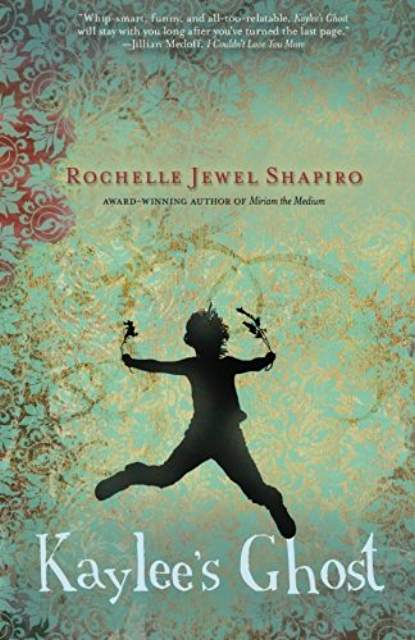
Rochelle Jewel Shapiro
Rochelle Jewel Shapiro’s novel, Miriam The Medium (Simon & Schuster), was nominated for the Harold U. Ribelow Award. Kaylee’s Ghost, her second novel, was an Indie finalist. She’s published essays in NYT (Lives) and Newsweek, and in many anthologies. Her short stories, poetry, and essays have appeared or are many literary magazines such as The Alembic, Amoskeag, California Quarterly (CQ), The Cape Rock, The Coe Review, Compass Rose, Controlled Burn, Front Range Review, The Griffin, Harpur Palate, Inkwell Magazine, The Iowa Review, Los Angeles Review, The MacGuffin, Memoir Journal, Moment, Negative Capability, Pearl, Pembroke, Pennsylvania English, Peregrine, Ragged Sky Press, Rio Grande Review, RiverSedge, Schuylkill Valley Journal Of the Arts, The South Carolina Review, Stand, Studio One, and Thema. Her essay, Eulogy for My Mother won the Branden Memorial Literary Award from Negative Capability. Spry Journal nominated one of her poems for Best or the Net, 2019. She teaches writing at UCLA Extension. https://rochellejshapiro.com @rjshapiro
The Interview
1. Who introduced you to poetry?
Mother Goose. Nursery rhymes were printed on the linoleum of my first bedroom. I’d hop, reciting the rhymes, from Simple Simon to Little Miss Muffet to that rakish Tom, Tom, the Piper’s Son who stole a pig and away he run, reciting the rhymes. Being the youngest of two sisters, one five, the other eight years older than I, and living in an increasingly dangerous neighbourhood, I was alone in my room a lot. Rhyme kept me company.
2. What is your daily writing routine?
I carry a small notebook around with me, jotting down thoughts, sensory images, bits of dialogue, descriptions of people, places, and things. Each night I type all my notes and keep them in a file I call Epic. (A hyperbole, for sure). I date the entries and refer to them when needed. And I read like a poet—taking notes in margins about structure and transitions and whatever else strikes me.
3. What motivates you to write?
The ticking and tocking away of the moments of my life. When I’ve written, it feels as if I’ve really lived those moments and can share them with others. Life feels empty without writing.
4. Who of today’s writers do you admire the most and why?
I admire so many writers that I could fill a book with a list of them. I’ve recently found Australian poets like Ali Whitelock and Anne Casey who I admire–Whitelock for her carefully honed raw emotion and Casey for her harkening back to the classics in musicality and themes. Terrence Hayes’ for his ability to use this august form to cry out against racism. Li-Young Lee’s early work, particularly his collection, The City in Which I love You, that is like the Song of Songs. I could and should go on and on.
5. What would you say to someone who asked you “How do you become a writer?”
I’d tell them to read. Read widely and read well. The novelist / teacher, Sue Miller said,
“If only my students would read a few good books a year, they wouldn’t needs so
many writing classes.”
6. Tell me about the writing projects you have on at the moment.
I am doing a lot of flash fiction, poetry, and essays. But my constant writing project is a poetry collection called “A Poem Must Be Your Mother.” It weaves all the feelings I have about poetry writing and trying to integrate the mother of my early childhood who took gracious care of me with the mother of my teens who began to compete like a jealous sister, to the mother who ruined her brain with drinking. It is my obsession and it’s based on my belief that the fire of your writing comes from writing what you can’t forget.
2019 ~NaPoWriMo ~ Second Week of Poetic Responses to Art and Music ~ Dedication to Mr Paul Brookes of Wombwellrainbow.com and Synaesthetic Artist Mr Sammy-John ~ Making Connections…
Thankyou to Anjum for this account of our second week on the National Poetry Writing Challenge

 Poetry acts like a bridge.I believe it is not for sale It has value for generations gone by and for generations to come. It awakens spirits of drowsy nations, entertains guides and instructs. It is colored and scented as carnations. If poetry is defined as the ‘spontaneous overflow of powerful feelings’ then it would surely be enriched if combined with art color and music. Strangely yet possible in this digital age the ‘connecting bridge’ between Mr Paul Brookes of Wombwellrainbow.com UK the Synaesthetic Artist Mr Sammy-John and Myself, was the social media ‘messenger on line’ Quick communicative connection kept the challenge alive and moving. A new painting a new music symbol title, requiring fresh research was the challenge for me. Before I begin to trace words on paper I visit two great sources of knowledge namely the Divine Knowledge source and the World of Mythology. The beauty of knowledge lies embedded…
View original post 958 more words

 The Wombwell Rainbow