Wombwell Rainbow Interviews: L. Austen Johnston

Wombwell Rainbow Interviews

I am honoured and privileged that the following writers local, national and international have agreed to be interviewed by me. I gave the writers two options: an emailed list of questions or a more fluid interview via messenger.

The usual ground is covered about motivation, daily routines and work ethic, but some surprises too. Some of these poets you may know, others may be new to you. I hope you enjoy the experience as much as I do.
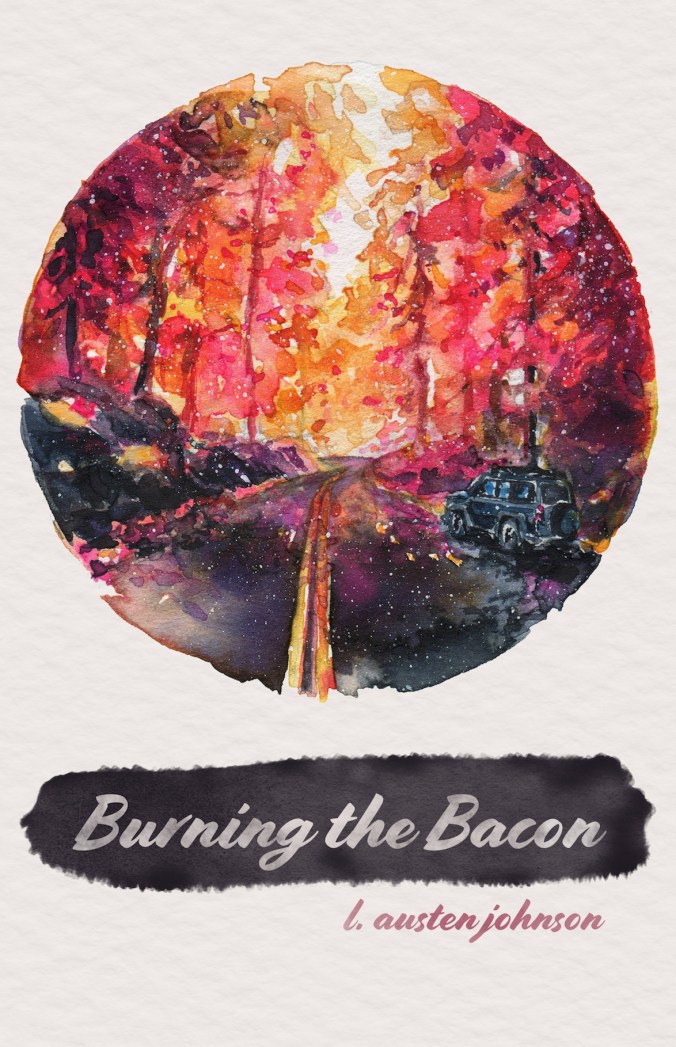
Lausten.jpg

L. Austen Johnston

a debut poet from Virginia and counts herself lucky to be from the lovers’ state. She studied English, Archaeology, and Astronomy in university, which may explain her love for stargazing and time traveling.

She’s an avid reader, a sometimes writer, and an attempter of various art projects. When she’s not in class, you can find her searching for animals to pet, singing off-key in the shower, and learning the art of making the perfect cup of tea.

Website: https://laustenjohnson.com/

Facebook: https://www.facebook.com/laustenjohnson/

Instagram: @girlfriendofbath

Tumblr: @laustenjohnson

Goodreads: https://www.goodreads.com/author/show/17578375.L_Austen_Johnson

Twitter: @laustenjohnson (but I don’t use it much

Link to book: https://www.amazon.com/Burning-Bacon-L-Austen-Johnson-ebook/dp/B07B6RDZ9G

The Interview

1. What inspired you to write poetry?

I started writing when I was in middle school and had no care for whether it was good. (May we all aspire to have a 12-year-old’s confidence in pursuing art.) I continued to write because I felt that I had to. Looking around the world and living in it seems to require some type of reflection. For me, poetry was the place where I could be overly dramatic, process emotion, take on a new character, or even just churn over a turn of phrase or two. I was not and am not always successful, but it’s fun to create images out of words and it’s heart-breaking and exciting and nerve-racking to read other people’s poetry as well.

2. Who introduced you to poetry?

I think the first time I actively tried to write poems, not just scribbling phrases and song lyrics in my diary, was in eighth grade after a teacher gave my class the freedom to do so. We read and wrote and read some more.

3. How aware were you of the dominating presence of older poets?

I ended up getting a Master’s in poetics, so now I definitely have an awareness of the Byrons, Wordworths, and Charles Wrights of the poetry world. I guess it would depend on what you mean by “dominating” and “older.” In academic settings, we’re usually studying writers who are dead—or maybe that’s just my course of study. In high school, I read Dickinson and Eliot, for example. But I think in daily life for most casual poetry readers, those types of authors are not that dominating. When I think “dominating” poets, I think Rupi Kaur, Lang Leav, Amanda Lovelace. I think of young women with a certain type of fanbase dominating book sales and charts and Instagram. I think I find the overabundance of both frustrating. I love me some old dead poetry: I’ve spent days reading Chaucer and Keats and the Brownings. But I recognize that they don’t represent everyone. Maybe people want less aristocracy and easier-to-read diction. Hence “pop poetry.” But now it’s kind of like unless you’re super academic or super relatable to the point of basically just writing good quotes, then you’re not a poetry that’s going to be liked. Maybe we could have something accessible and wordy? Something easy to read by not so easy that readers feel it’s all surface?

4. What is your daily writing routine?

Recently I haven’t been writing poetry as much. When I do, it’s usually a phrase that haunts me when I’m trying to fall asleep that I then have to jot down in Evernote before my brain will be quiet. Other times I just take a pen out and see what happens. Unfortunately, I’m not very routine. I admire those NaNoWriMo types who can set daily word limits, but that’s not what I’ve been doing.

5. What motivates you to write?

I once read “Atlantis: The Lost Sonnet” by Eavan Boland in high school, and my understanding of poetry changed. I started to try to unite the mythic, grandiose poetry (what I saw to be “official” and “historical”) with the personal (what I had been writing but saw to be only “modern” and “immature”). For me, I write to try to find a connection between personal experience and humanity’s experiences. I like using tiny details that should alienate a scene to actually make it feel closer to the reader. And finding how that all interacts is, I think, at the basis of why I write.

6. What is your work ethic?

I’m not quite sure how to answer this. In general? For writing specifically? I have many ideas and don’t always commit myself to bringing them to fruition. But, on the other hand, I have many interests that I dabble in and commit to, like designing book covers and doing marketing consulting and writing lyrics. If something interests me, I will work my very hardest on it. And if I commit to something, I’ll make sure I get it done.

7. How do the writers you read when you were young influence you today?

That one poem by Eavan Boland certainly influences me even though I read it at 15 or 16. I am still quite young (22), so I’m still being influenced. Some authors I read as a college student that influences me are Gwendolyn Brooks, Swinburne, and Yeats. Like many young writers, I had a stage where the confessionalists blew my mind. For me, the days of Plath and (not so much) Bukowski were late high school. I remember reading Plath and being shocked at the closeness and aggression in her poems. One poet I read around that same time was Clementine von Radics, who is a confessionalist, but one I prefer to Bukowski. Her work showed me how to write short, sweet, and to the point while still making it sound nice to the ear and without being too bare of rhetoric. I tried to write like her for a bit at 18 before coming more into my own voice.

8. Who of today’s writers do you admire the most and why?

I admire writers who can be direct and relatable while still being traditionally poetic. To that end, I really enjoyed Home and Other Place I’ve Yet to See by Daniel J Flore, III. And I’ve liked some of Neil Hilborn’s recent collections/performances, though I tend to enjoy written more than spoken pieces better (I can come back to them and digest them visually).

9. What would you say to someone who asked you “How do you become a writer?”

Write. That’s a cheeky comment, but really, if you write and it’s a defining part about you, you’re a writer. Now, to become a published writer, you have to write, edit, edit some more, think about how you want to arrange your pieces into a whole, and then submit to a publisher (or you can do it yourself, but that can be harder). The most important part to transition from being someone who writes for themselves and someone who writes for a (potential) reader to me is editing. Take it from Wordsworth, not me: “Poetry is the spontaneous overflow of powerful feelings: it takes its origin from emotion recollected in tranquility.” To get it good for an audience, you’ve got to master that “recollected in tranquility” part.

10. Tell me about the writing projects you have on at the moment.

I’ve been trying my hand at prose. I’m in the middle of writing a young adult fantasy book based on a Polish folk story called “Unburied Man.” It promises gods, gothic elements, and love. I’ve also started a screenplay about a girl with an ostomy bag navigating the trials and tribulations of high school. As someone with an invisible illness, I think it’s really important to think about how disability can present itself. Chronic illnesses can also change the stakes of some of what we deal with as young adults. Some of the tropes + themes that are normal in media for teens take on increased meaning (think pool parties, finding independence, feeling unsure in your own body). You can follow some updates on these on my tumblr or Instagram.

Wombwell Rainbow Interviews: Karen Jane Cannon

Wombwell Rainbow Interviews

I am honoured and privileged that the following writers local, national and international have agreed to be interviewed by me. I gave the writers two options: an emailed list of questions or a more fluid interview via messenger.
The usual ground is covered about motivation, daily routines and work ethic, but some surprises too. Some of these poets you may know, others may be new to you. I hope you enjoy the experience as much as I do.

Karen Jane Cannon

is a UK poet and author. Her poetry has been published widely in literary journals and anthologies in the UK and USA, including Acumen, Envoi, Mslexia, Orbis, Obsessed with Pipework, The Interpreter’s House, Ink, Sweat & Tears, and Popshot. She was a 2017 finalist in the Mslexia Poetry Competition and was commended for the Flambard Poetry Prize in 2014. Emergency Mints, her debut poetry pamphlet, was published in Spring 2018, by Paper Swans Press

Her novel Powder Monkey (as Karen Sainsbury) was published by Weidenfeld & Nicolson in 2002 and Phoenix in 2003.

Karen is also an award-winning radio playwright. She has an MA with distinction in Creative Writing from Bath Spa University, where she lectured for three years. She is a PhD Candidate at the University of Southampton. Karen is creator of Silent Voices: found poetry of lost women (https://silentvoicespoetry.wordpress.com/)

Welcome

The Interview

1. What inspired you to write poetry?

I started writing poetry when I was very small and was encouraged enormously by various teachers. I entered competitions and read lots of poetry ‘how to’ guides. When I was studying English as an undergraduate, I suddenly became frustrated and frightened by poetry, lost the unselfconscious way of writing I’d had as a teenager—for two decades I didn’t have anything to do with poetry, became totally poetry-phobic. After having several articles published, I started writing radio plays and then a novel, but I felt I wasn’t really a storyteller—fiction seemed too contrived and unreal. I entered quite a bad depression. Felt I had lost my way as a writer and the only way out for me was through rediscovering poetry. I remember picking up Ted Hughes’ Moortown Diary and thinking poetry could be real and earthy and alive. I decided to try and be the thing that terrified me most—a poet! Or at least conquer my fear of it. Orbis published my first poem a year later. In 2017 I was delighted at being a finalist in the Mslexia Poetry Competition. This has really boosted my confidence.

2. Who introduced you to poetry?

I’m not sure. Maybe, I found out by myself, at the library when I was at primary school searching out Walter de la Mare and Kipling. Taking my MA in Creative Writing I was inspired by the work of Philip Gross who taught me for a semester—I really connected with The Wasting Game, but was still suspicious of poetry. Another tutor, Tracy Brain reintroduced me to Sylvia Plath via The Bell Jar, and her love for all things Plath was very contagious.

3. How aware were you of the dominating presence of older poets?

Writing poetry, you are always aware of walking in the footsteps of others. It’s normal for a poet to think, how do I get my voice heard? Why is my voice relevant? I think it’s either huge ego or that persuasive fluttering muse that makes you think your contribution is worthy. As a writer, you have to develop a thick skin and learn to do what makes you happy. Rejection is a healthy part of the writing process—the biggest thing that will make you stop and re-evaluate your work and seek to improve it. The Poetry World is hugely competitive.

Studying English at degree level, I became frustrated by the study of poetry—not being able to get a poem to immediately yield all its secrets. I remember very simplistically thinking, for example, why can’t a poem be just about blackberries?! Why does there have to be a whole subtext behind it?  I was too immature to understand that this is the challenge of any piece of art. Every time you re-examine a text, you read something new into it—that’s what makes a reader return to it years later, why it stays in the head. Every text means something different to every reader. That’s the power and joy of poetry.

4. What is your daily writing routine?

I write daily, every morning, either on new work, editing or submitting. Creativity isn’t something you can control—new poems can magically pop up at any time and need writing down before they vanish. I am very organised when it comes to writing or studying. The rest of my life is somewhat haphazard.

5. What motivates you to write?

Above anything, I am a writer of place. From my first articles, to my plays, novel and poetry, I write landscape, both physical and emotional. That is what motivates me to write. I have always chosen to live in strange and fascinating places, from the second highest village in Scotland, to a village on the edge of Longleat Safari park, going to sleep each night to the sound of roaring lions and howling wolves. I was brought up a mile from the sea in Worthing, West Sussex, and spent much of my childhood either on the beach or on the beautiful South Downs. The sea, its dynamic movement and power, is a great source of inspiration for me. My first pamphlet, Emergency Mints (Paper Swans Press, 2017), is set on the south coast. Now I live in the magical New Forest National Park, a surprising wilderness in the heart of the south of England. The main themes running through my work are loss and motherhood—the two ends of the circle. I am fascinated by maps and boundaries—both real and imaginary—and the industrial footprint left in the landscape. These things all motivate me creatively, but I am motivated also by success and becoming a better poet.

6. What is your work ethic?

I have a hugely strong work ethic when it comes to creativity. I am a perpetual student—it’s important to me to improve and grow as a writer, to hopefully reach my potential. I am in the 2nd year of a part time PhD at the University of Southampton, researching poetry and place. It is a very stretching and rewarding experience. I am very focused. I don’t go on holidays—I go on research trips! My husband is very supportive—on our last ‘holiday’ we ended up down a stone quarry, because I wanted to write about it!

7. How do the writers you read when you were young influence you today?

That’s difficult to gauge. I write about the effects of industry on the landscape and its inhabitants and I wonder if Blake’s Songs of Experience—and the whole Romantic movement— influenced this. I remember being moved by these poems when I was a young teenager, the hopelessness and inevitability of change. Even childhood reading like Enid Blyton has shaped my connection to the countryside. I was obsessed with the War Poets when I was sixteen—maybe they influenced the themes of loss that always run through my work, the long connection between war and poetry is fascinating and paradoxical.

In reality, it was growing up in the 1970s that has influenced my writing more than anything else. The Seventies were a dismal decade to be a child—a time of dissatisfaction and misery. This was represented across popular culture—even sitcoms such as The Likely Lads and Butterflies portrayed an adult world of frustration and yearning. The lingering after-effects of the war, sexual revolution and political turmoil were frightening and unsettling. Nothing was stable—not even the concept of family—no one was happy. Everyone trapped by something—sex, class, respectability.  But, ironically, it was all these things that made me become a writer. I rejected the restraints and limitations of the previous generation and chose my own path.

8. Who of today’s writers do you admire the most and why?

I have spent the last twelve months immersing myself in books on place—from Dorothy Wordsworth’s wonderfully rich journals and Nan Shepherd’s beautiful The Living Mountain, to Roger Deakin’s Waterlog and Wildwood. And of course, Alexandra Harris, Luke Turner, Richard Mabey, Philip Hoare and everything Robert MacFarlane writes! Groundwork, edited by Tim Dee, is an excellent introduction to the genre. These writers share the ability to conjure a place from the page with their knowledge and love for it. They create value.  ‘Local’ doesn’t mean parochial, it reflects the whole. I am also interested in how different genders approach the writing of place.

I have also been reading a lot of ecopoetry—one approach to ecopoetry is of the close observation of place proposed by Linda Russo. This genre needs careful handling as it involves writing with intent, which is problematic. The Ground Aslant, edited by Harriet Tarlo, is an excellent example of how to get it right.

9. Why do you write, as opposed to doing anything else?

I have had ideas about doing other things, but I am only driven to write. I have other useable skills—ones that would pay better—but I have no heart for them. I think I may be quite lazy. As I said above, I have had plays produced and a book published. Poetry uses the least words! What I love about poetry is the journey it takes you on. I read a lot of fiction and I find so many authors only have the one brilliant book in them. Poets by contrast keep growing and expanding.  That’s a huge draw to me. It’s rewarding.

10. What would you say to someone who asked you “How do you become a writer?”

I would say, to be a good writer, you have to be a good reader. To paraphrase Reynolds on art, you gather the pollen to create your own honey. Experiment. Be flexible—you may start off thinking you want to be a poet, but may discover you are an amazing playwright. See where writing takes you. Write with your heart and not with your head. And if you want to improve, get critical feedback. You are unlikely to get this from friends or family. They will either tell you your work is brilliant, or that it’s not their cup of tea! Constructive criticism is invaluable. The Poetry School offers fantastic courses for all levels. And, really importantly, read contemporary work if you want to see your work published—styles change!

11. Tell me about the writing projects you have on at the moment.

I am just finishing my second pamphlet, based around my experience of living 1400 feet up in the Lowther hills of Southern Scotland without electricity in an old leadminer’s cottage. I am working on two full collections—one set on the South coast and its industrial footprint, and a second more experimental work centred around the New Forest, which is part of my PhD. I am loving the writing of all of these book

Wombwell Rainbow Interviews: Heidi Seaborn

Wombwell Rainbow Interviews

I am honoured and privileged that the following writers local, national and international have agreed to be interviewed by me. I gave the writers two options: an emailed list of questions or a more fluid interview via messenger.

The usual ground is covered about motivation, daily routines and work ethic, but some surprises too. Some of these poets you may know, others may be new to you. I hope you enjoy the experience as much as I do.

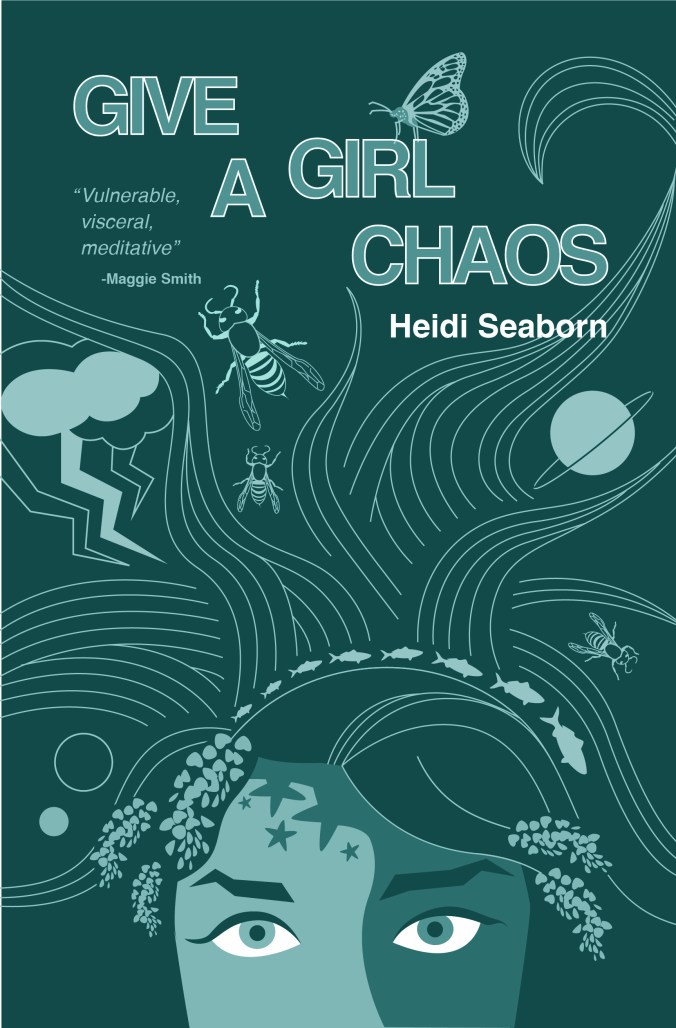
Give a Girl Chaos_front cover

Heidi Seaborn

is Editorial Director for The Adroit Journal, the author of the award-winning debut book of poetry Give a Girl Chaos {see what she can do} (C&R Press/Mastodon Books, 2019) and a New York University MFA candidate. Since Heidi started writing in 2016, she’s won or been shortlisted for over two dozen awards and published by numerous journals and anthologies such as The Missouri Review, Mississippi Review, Penn Review and Tar River. She’s also the author of the chapbook Finding My Way Home (FLP, 2018) and a political poetry pamphlet Body Politic (Mount Analogue Press, 2017). She graduated from Stanford University and is on the Tupelo Press board. http://heidiseabornpoet.com/

The Interview

1. What inspired you to write poetry?

I really have no idea where the original inspiration came from. I wrote as a child, a teenager and then didn’t write for decades. When I returned to poetry a few years ago, it was as a dare to myself: would I be able to write anything at all after all these years?

2. Who introduced you to poetry?

I’m sure it was my mother who read to us every night, mostly stories, but sometimes poems.

3. How aware were you of the dominating presence of older poets?

When I was young and wrote, I found older poets quite helpful until I attended University. That was when I encountered an older poet in the form of my advisor who was so unsupportive of me that I ended up giving up poetry altogether. Now I am an older poet who spends a huge percentage of my time encouraging younger poets through my role as Editorial Director at The Adroit Journal (young staff and young contributors) and within my MFA program where my cohort is generally the age of my children!

4. What is your daily writing routine?

I answer emails, do any of my paid consulting work and then either read, revise, write, edit, submit or market my readings, book, etc. Generally, I spend at least 5 hours a/day on something poetry related.

5. What motivates you to write?

I don’t know if I would describe it as motivation, more inspiration. I find my inspiration everywhere. And then it just needs to land on the page. I am not a journal writer or adhere to a daily schedule. When I need to write, and it does feel urgent, I make the space for it. It is just such a joy, that it doesn’t ever require some sort of trick or motivation ploy.

6. What is your work ethic?

I’ve always had a strong work ethic and I’ve brought that to my work as a poet. It’s the kind of job that is never really done so for me, I really need to step away and do other things to keep my mind fresh.

7. How do the writers you read when you were young influence you today?

Well, given that I took a long break from poetry, I feel that I am still in that mode (especially through my MFA) of reading the important writers and feeling the influence of so many poets. That said, when I was a teenager, I read a lot of Richard Hugo. He was a Pacific Northwest Poet that was very much alive and writing at that time. I admired how he could deftly create a detailed sense of place and people yet hold his language to its simplest form.  It was so intimate. I also adored T.S. Eliot and Marianne Moore for their use of collagist form and layered gesturing.

8. Who of today’s writers do you admire the most and why?

Oh, so many. I’m quite taken with Terrance Hayes for his use of form, and Ocean Vuoung’s beautiful brevity, and yet I simply adore Maggie Nelson’s complexity and density. I really could go on for pages.

9. Why do you write, as opposed to doing anything else?

I’ve done other things. I worked as a global communications executive running sizeable organisations and living all over the world. I enjoyed it but once I started writing poetry in 2016, I knew there was no turning back. This is who I am now and what I do.

10. What would you say to someone who asked you “How do you become a writer?”

Well that’s easy. Read and write and repeat that combination forever.

11. Tell me about the writing projects you have on at the moment.

I have two streams of work that I am writing currently. I am working on a series of persona poems based on an iconic historical figure. I expect this work will form my thesis for next spring and my second collection. Alongside that project, I have been writing poems that reflect on the experience of being a woman aging. And then of course there is whatever else pops to mind. Today it was a political lament!

Wombwell Rainbow Interviews: Travis Lau

Wombwell Rainbow Interviews

I am honoured and privileged that the following writers local, national and international have agreed to be interviewed by me. I gave the writers two options: an emailed list of questions or a more fluid interview via messenger.

The usual ground is covered about motivation, daily routines and work ethic, but some surprises too. Some of these poets you may know, others may be new to you. I hope you enjoy the experience as much as I do.

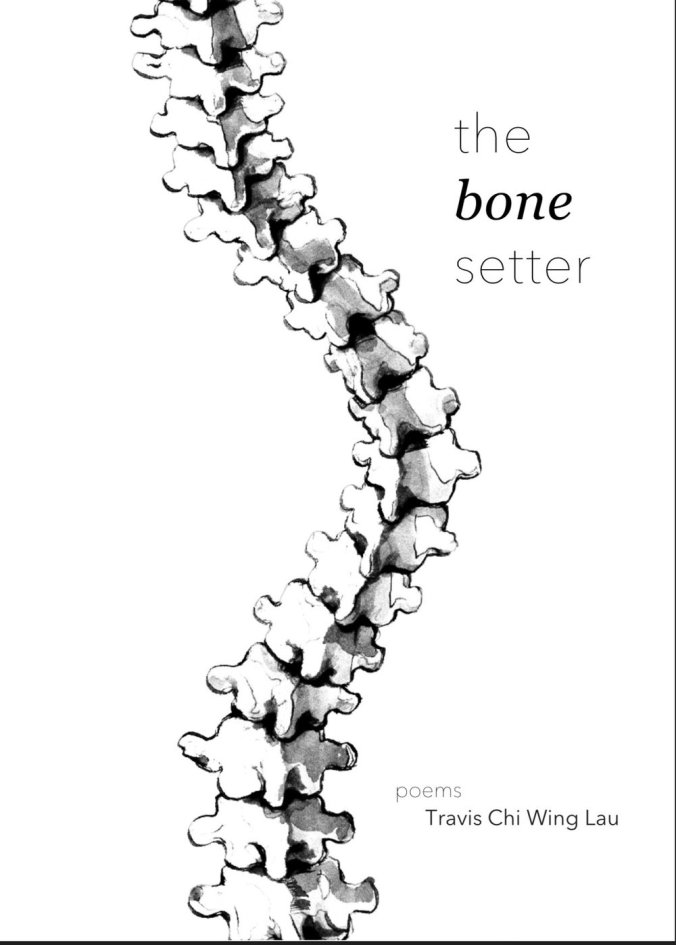
The Bone Setter

Travis Lau

Travis currently resides in Austin and regularly flies to Atlanta to see his family. Outside of his academic work, he enjoys writing poetry, discovering local food, and traveling. He has a rescued grey tabby named (Freddie) Mercury. He has been practicing taiko drumming since 2008 and has played with San Francisco Taiko Dojo, Atlanta Taiko Project, and Philadelphia’s Kyo Daiko.

The Interview

1. What inspired you to write poetry?

In all honesty, I only began writing poetry in my early 20s when I became increasingly exhausted with prose fiction, which I had spent most of my middle and high school days writing. I had been obsessed with high fantasy as a long-time gamer and fiction seemed to be the best place to tell my own stories. But when I arrived in Los Angeles for my undergraduate studies, I found myself more unmoored than I had ever felt in my life. Learning about and coming to terms with my identities—sometimes intersecting, sometimes in tension—involved a great feeling of fracture. Loose, free-verse poems, particularly lyrical fragments, felt like the right form to capture my own sense of dissolution and to begin writing my way toward a new sense of self as it was coming into being. My scoliosis-related disability also began to worsen rapidly around this time, and poetry was not so much a solace as it was a mode of description—of witnessing with intense detail the strange experience of being embodied. If my conditions were chronic and my spinal curvature uncurable (or at great cost), I could better understand them on their own terms and in their own time.

2. Who introduced you to poetry?

I never really grew up reading poetry, but I attribute a lot of my appreciation of what poetry can do to a few unexpected yet formative influences.
My late paternal grandfather (whom I never met) was a polymath—a lawyer by trade but also an English teacher and apothecary—and used to hold a weekly writing group for his friends. Rather than a workshop, this group was structured like a contest: a weekly theme would be selected and each writer would produce a shih (詩) poem, an older Chinese form that involved 5- and 7- character lines with strict tonal limitations. Over the years, my grandfather collected his handwritten poems into a bound volume, which I later discovered in my teens. With my broken Chinese, I still can’t fully appreciate these poems but they represent to me a form of kinship with my grandfather even though we never had the opportunity to meet.

I am particularly thankful to one of my undergraduate mentors, Aaron Gorelik, who first introduced me to LGBTQ poetry in my first year at UCLA. Reading Paul Monette and Timothy Liu, alongside Walt Whitman, Hart Crane, and Frank O’Hara, became some of my first intimate encounters with queer history and the AIDS era. I was drawn to the unique gravity of these sickbed and erotic poems, their affective and political force born out of a difficult grappling with the pleasures and limits of the body. I realized I wanted to write the flesh, my own flesh, in this way: tender, honest, and vulnerable.

3. How aware were you of the dominating presence of older poets?

Because of my limited childhood exposure and my rejection from poetry workshops during college, I never received formal training in poetry beyond the literary studies classroom. With my major’s requirements overwhelming skewed toward canonical white male writers, I think I understood the “dominating presence of older poets” more as the weight of the canon as a deeply political set of choices surrounding what gets to be called literature and what gets to be read and studied. As I try to make up for lost time now by reading the work of older poets to educate myself about the craft, I’ve felt less and less the anxiety of influence but more the possibility of reclaiming and revisiting the supposed territory of older poets—their forms, their approaches, their metaphors. Poetic tradition is an inheritance, and while that inheritance may be deeply problematic as a result of canonicity, I try to think about what we’ve been given and what can be done with and even beyond convention. Also, I think it is equally mistaken to think that movements toward inclusion and diversity within poetry itself have eliminated the problem of certain voices being privileged over others. I’ve tried to think of my own poetic method as one of conversation rather than supersession or outdoing.

4. What is your daily writing routine?

As someone with chronic pain and brain fog, I’ve struggled for years to develop a sustainable writing practice. During graduate school, I turned to mentors and guidebooks for advice, but as many disability scholars have shown, much of the strategies revolve around time management. In graduate school, I also learned about the concept of crip time, which Margaret Price, Alison Kafer, and Ellen Samuels have variously described as a non-normative relationship to linear time, which in the academy, tends toward hyperproductivity. Forcing myself to keep up with the “publish or perish” model was extremely detrimental to my health, and I think even notions of “daily writing routine” can fall into similar traps of ableist expectations that all bodyminds can be trained to comply with timelines that may be harmful to them. While it is often impossible to refuse the demands and deadlines of teaching, research, and service, I’ve also tried to redefine for myself what constitutes “writing” and “productivity” beyond simply word counts or publications, which we are constantly encouraged (especially by social media) to see as the only measures of success. I “write” daily in various forms: informal conversations with students, peers, and friends; reading and annotating sources or related research; sketching out mindmaps and outlines; revisiting and revising old material; collaborating with colleagues. If writing is an accretive process, these are all contributions to that process that ultimately become the final work.

5. What motivates you to write?

In our turbulent political climate, I’ve found a great urgency for poets to write back to power and write for our communities that feel increasingly under threat. I am always surprised to hear some poets describe their work as “apolitical” or outside of politics when the very act itself and the conditions that shape that writing are political. If we are currently what people have described as a “golden age of poetry,” I think it is because voices we haven’t heard are coming to the fore and rewriting narratives we think we know about ourselves, our nation, our future. I’m also extremely grateful to be among the many disabled writers (much love to the #criplit community) who are finally being published and who are being taken seriously for their interventions and innovations in a field still in many ways resistant to taking disability seriously as an identity and an experience.

6. What is your work ethic?

Growing up in an immigrant household made me self-sufficient and driven at a really young age. This helped me succeed in a highly competitive academic environment where I went to school and also made me unafraid of working hard for the things I wanted for myself and my future. But I quickly realized I was becoming a workaholic because of the momentum it created: there was always another thing to pursue, to prepare for, to reach for. I believed for the longest time that to be satisfied with where I was, to stop for any reason would be to become complacent. This would become one of the most toxic and dangerous ideologies that I subscribed to in my early 20s. By keeping myself so busy, I didn’t grapple with the real emotional, physical, and mental costs of maintaining this pace that seemed less and less like it was set by me. I started to feel like I was on everyone else’s time but my own, and when my bodymind finally began to refuse, I realized this was no longer sustainable. I was working against myself, working to avoid having to confront the seismic changes happening to my self-image and my self-worth. I define work ethic quite simply now: it should never be at the expense of your wellbeing.

7. How do the writers you read when you were young influence you today?
Fiction, especially fantasy and science fiction, enabled me to find home when I otherwise didn’t feel like I had one. Having lived abroad most of my childhood, I wanted a place to anchor myself, but because I frequently had to pack up my things and say goodbye to friends almost every year, I found comfort in heroes who made something of their journeys. These characters taught me that home is never a place; rather, it is a complex set of feelings that you can put fold up and put away in your back pocket. These novels also showed me the power of the speculative—that we can imagine better or different futures for ourselves, that these imagined futures can tell us about the limits of our present. If anything, I saw that conditions could change, people could change, worlds could change.

8. Who of today’s writers do you admire the most and why?

As someone arriving late to poetry, I’m discovering so many living poets who have empowered me to embrace my own limited knowledge, to write from my embodied lived experience as a disabled, queer, person of color. I cannot even begin to list the writers who have impacted my work, but a few that I return to consistently are Rafael Campo and Carl Phillips (both taught me how to write about desire and the body), Chen Chen and Jane Hirshfield (both taught me how to write about the quotidian, the joyful), as well as Alexander Chee and Jordy Rosenberg (both taught me how poetic prose can be). All of them taught me how to be generous, how to imagine boldly.

I am also deeply grateful to fellow writers who have taken a chance on my work like Caseyrenée Lopez, Raymond Luczak, Chael Needle, Jay Besemer, Kristina Darling, Kay Ulanday Barrett, Brighde Moffat, Denise Nichole Andrews, Jill Khoury, Jim Ferris, and Nadia Gerassimenko. Also, my co-writer and colleague, Jason Farr, who taught me the incredible joy and potential of collaboration.

9. Why do you write, as opposed to doing anything else?

As a scholar, teacher, and mentor to students, I simply don’t see my writing as separate from these related endeavors of community building and pedagogy. If writing is not just communication but the means by which we exchange ideas, it already feels misguided to see it as an independent act. For a time, I tried to cordon off my poetic practice as a safe space untouched by the other facets of my life. This was brought on by my exhaustion and frustration with the argumentative mood of literary criticism—always about overturning old ideas, forcefully arguing new ones, and performing the role of a disembodied and detached critic. But as I’ve come to understand my own investments and the way other poets have used their work toward larger, more collective aims, I realized that it was actually harming my work not to allow questions I was already asking in my scholarship and teaching to take new forms in my poetry. Poetry offers a unique space for me to speculate and for that speculation to be itself a viable and valuable act. Instead of necessarily having a coherent and clear answer to everything, I can practice living with uncertainty, with gestures toward possibilities that may not yet exist or may not feel real to me yet.

10. What would you say to someone who asked you “How do you become a writer?”

This is already cliché and predictable, but I think it is as simple as calling yourself one. Having been in the academy, I’ve seen how work becomes powerfully intertwined with identity. The idea that you are your work has a powerful effect in creating the illusion that true writers are those who embody fully the work that they produce and are bound to it as an extension of who they are. This may be true, but I also know some writers have stopped writing because they were told they weren’t capable of it or that they didn’t deserve to do it. I’ve also seen writers become so wrapped up in trying to “be a writer” or at least convey the image of a successful writer that it has inhibited them from doing the work they want to do or worse made them do work that they are uninvested in or even antithetical to who they are. That’s not to say you must write what you know or write what you are in every situation. I mean here that the question should not be turned outward. Instead of asking how someone else becomes a writer, it is far more valuable to ask yourself what you yourself need and want as a writer. And that may involve having more questions than answers, but I think that’s where writing comes in: you write your way towards them.

11. Tell me about the writing projects you have on at the moment.

In terms of academic scholarship, I am currently working on a book-length study of the British literary and cultural history of vaccination in the eighteenth and nineteenth centuries entitled Insecure Immunity: Inoculation and Anti-Vaccination in Britain, 1720-1898. I have a tentative second project called A Cripistemology of Pain, which turns to eighteenth- and nineteenth- century literary and philosophical engagements with pain to think about new models of care and interdependency that might intervene in our current opioid crisis.

I am currently trying to find homes for two chapbook manuscripts while working on poems for a third. The first chapbook, Vagaries, is a poetic response to Elaine Scarry’s 1985 The Body in Pain, which famously made the claim that pain destroys language. Building upon my first chaplet, The Bone Setter (Damaged Goods Press, 2019), which focuses on my chiropractic treatment for my scoliosis-related disability, I ask whether or not pain has a form and how pain itself is a language rather than antithetical to it. The second, Parings, is a return to my earlier interests in queer lyric and poems of intimacy. The newest project is actually one of my oldest that I am returning to after many years. Listening to Incense explores how depression shaped and continues to shape my family, particularly the lives of the men.

Wombwell Rainbow Interviews: Stephen Lightbown

Wombwell Rainbow Interviews

I am honoured and privileged that the following writers local, national and international have agreed to be interviewed by me. I gave the writers two options: an emailed list of questions or a more fluid interview via messenger.

The usual ground is covered about motivation, daily routines and work ethic, but some surprises too. Some of these poets you may know, others may be new to you. I hope you enjoy the experience as much as I do.

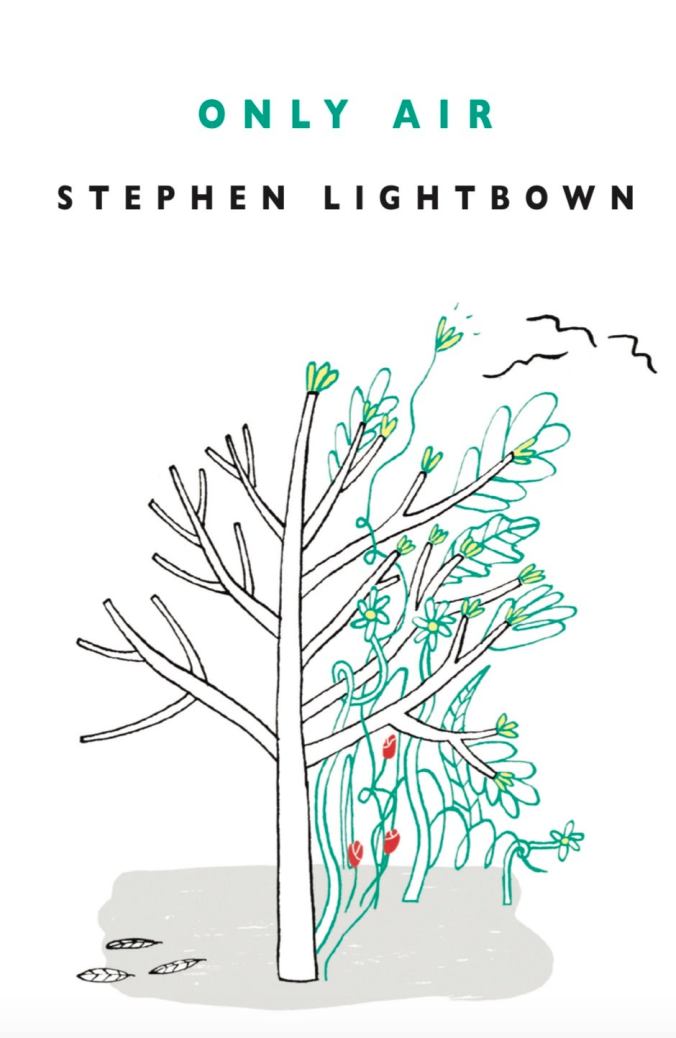
Only Air

Stephen Lightbown

Stephen is a Blackburn born, Bristol based poet and disability rights champion. In 1996, aged 16, he experienced a life-changing accident whilst sledging in the snow and is now paralysed from below the waist. Stephen writes extensively but not exclusively about life as a wheelchair user.  His debut poetry collection, Only Air, was published in 2019 with Burning Eye Books.

Website: www.stephenlightbown.com

Social media: @spokeandpencil

The Interview

1. When and why did you start writing poetry?

The first poem I wrote was strangely enough on a friend’s stag do in Devon in 2012. They had gone kayaking and I wasn’t able to do that so I sat on the beach and wrote a pretty terrible poem about the sea and waves coming to shore like tiny snow capped mountains. It really wasn’t good. I then on and off carried putting things into the note book as they came into my head but didn’t really intend to do anything with it. Then around a year later in 2013 a perfect storm of events happened in my own life. My marriage ended, my step father passed away suddenly and I was in a particularly stressful environment at work. So with plenty of new time on my hands I signed up for a 10 week poetry course through City Lit with Malika Booker in London. It was a beginner’s course but I was probably starting even at a more basic level than that. I didn’t really read poetry at the time, I couldn’t have told you who were contemporary poets and I had no idea about the difference between page and performance poetry. But I wanted to write and I realised I had things I had to say. Over those 10 weeks it became incredibly cathartic and Malika was superb, encouraging us to share poems and I started to realise I was enjoying the experience of reading my poems to an audience even if they were terrible. On the course we were asked to write a letter poem and I chose to write one to my legs. I don’t know why and it was the first time I had written about my spinal injury and my relationship with my body. From that moment I couldn’t stop and here I am six years later with my first collection just published and many book shelves stacked with poetry.

1.1. Why choose poetry to say what you wanted to say?

There was something about the format that appealed. The shorter format rather than writing longer prose interested me as it really concentrated my mind about what it was I wanted to get across. Playing around with imagery, metaphor and surreal language also gave me an outlet to really go beyond what maybe I had originally thought and probe my own preconceived ideas. For instance I’ve written a poem about living in London and feeling angry about how inaccessible it is and my anger is represented by a bear who walks alongside me and just lashes out at random people and objects. Talking about my anger like that helped me to think was I carrying this anger around, was it frustrations at my disability or just these were easy outlets for me to be angry at rather than trying to understand what I could do to move away from these feelings. I was also drawn to confessional poetry and was mesmerised by the way poets like Sylvia Plath and Sharon Olds have been able to tackle issues such as death and loss but through such beautiful language. The challenge of trying to write in that way, even getting anywhere near the way those wonderful poets articulated themselves was something I was really keen to try.

2. Who introduced you to poetry?

My mum. My parents separated when I was a child and me and my two brothers lived with mum. She was brilliant and a wonderful influence. She was able to tap into what each of us needed and would spend time with us on our own helping us to express ourselves. She had seen that I was creative and loved telling stories and reading so around the age of eight she took me with her to see Roger McGough read from one of his new collections in Accrington, Lancashire. I can still remember the feelings I had now being allowed into this magical world, sitting entranced looking over the tops of a room full of adult’s heads listening to this man with a wonderful accent and a ponytail. I didn’t really understand what he was saying but he made my mum laugh and I hadn’t seen that much since dad left and I knew this man at the front of the room was something special.

3. How aware are and were you of the dominating presence of older poets traditional and contemporary?

This is a really interesting question and one that I think could be answered in a number of ways. When I was younger being taught poetry at school the poets would be the usual suspects. At that age though I wasn’t aware of the likes of Byron or Browning being dominating it was just who I thought wrote poetry. Yes I knew it was old but still interesting and beautiful. Yet I also knew it was different to the other kinds of poetry I enjoyed at that age by Michael Rosen or Roald Dahl and his Revolting Rhymes. As I’ve grown older I can definitely look back and see that the poems I was taught or consumed were by white male poets and my early influences of poetry would obviously have been swayed by that. For many years whilst I may have read poetry on and off it was only if someone bought it for me and again as I got older these would have been collections by Roger McGough as already mentioned, John Hegley and John Cooper Clarke. Becoming more contemporary yes but still white and male. If I try and think why this might be I wonder if it is because in the main high street book shops are not stacking shelves with different voices. Is this because this is what people want to buy or is it that people are only buying these because that is what is on offer? I’m aware this is a generalisation and it’s a question I’m not sure I yet have the answer to. As I have consumed more poetry through reading, studying and watching I have been delighted to watch my book shelves grow with many more varied voices of all genders, backgrounds and ages different to mine. I would encourage anyone interested in poetry to look beyond what is offered on high street book shelves and search out independent publishers, smaller book shops, people self publishing and poets reading at open mics who might not yet have had anything in print. You’ll be so glad you did. You might not like it all, but you’ll definitely hear something worth listening to. I also feel this would be a good place to consider the lack of disabled poets both in print and heard at poetry events. As a disabled poet myself I definitely feel there is and should be a space for deaf and disability poetry but our voices are being crowded out and there isn’t an active movement to discover new voices in this area. Some of the reasons may be the subject matter may be considered niche, venues may not have adequate access or poets may not be prolific enough to have material for a full book due to energy levels or managing illness or ill health. But more can definitely be done to give disability poetry the platform it deserves. Yes poets such as Raymond Antrobus and Ilya Kaminsky are getting mainstream attention and rightly so because they are magnificent but there are many many more deaf and disabled poets both from the UK and internationally who poetry lovers should know about.

4. What is your daily writing routine?

I wish I had one. I work most days in the NHS and am out of the house by 7.30am and some days not home again until 7pm. So unfortunately my daily writing routine is answering emails! I do try and read poetry every day though and will always have a collection in my bag and a pile by the side of the bed so I can read at least one poem before I go to sleep. Doing this helps keep my mind active and will always spark an idea or two and they often end up in my phone or a notebook along with all sorts of random musings. If I have the energy when home in the evening I will see if I can write something and some of my favourite things recently have just been to write without over thinking and see what comes out. If I don’t feel like writing something new then I can be in an old poem editing and again that helps to feel like I’m doing something productive. I’ve recently dropped to four days a week and so Friday to Sunday is when I will try and write. If I am short of inspiration then maybe I’ll just write a prompt at the top of a page, set my phone for ten minutes and free write. I’m a big fan of this as often I’ll get to seven or eight minutes in and something will appear that I’ll enjoy and play around with. I much prefer writing in a notebook rather than straight into my phone and on a Friday I just enjoy finding somewhere to sit and writing down observations and then seeing if I can turn them into something. When I do write I prefer to write somewhere quiet, I’m not great with loads of stimulus as am easily distracted. I’ve also loads of things around the house to help act as prompts such as newspaper articles I’ve kept because I liked the words used, fridge magnet words which I might try and jumble up and see what comes out, books with writing prompts and an old dictionaries I’ll randomly flick through and see what jump out. I’m in between projects at the minute so the other thing I’m doing to keep acting is finding open submissions on a theme and then writing to those. This has p-roved quite fruitful and I’ve been lucky this year and have had a number of poems selected for anthologies with themes ranging from nature to running.

5. What motivates you to write?

With my first collection I took the decision I wanted to write about my experiences of being a wheelchair user. Hopefully through my writing I can help to change a few perceptions about what it is like to live a normal life with a disability. In the book I talk about travel, relationships, working, having a family, the strange things people to say to someone with a disability and the frustrations of many places being inaccessible. In many ways it is a celebration of the mundane and this is a conscious thing to have done because I don’t believe this is something that is talked of enough when it comes to disability. So far the response has been great and after every reading someone will come up to me and say I’d made them think about how they perceive people with disabilities in a different way. If I can keep doing that I will be happy.

6. How do the writers you read when you were young influence you today?

One of the biggest things I realised has influenced me is using place and where you are from in your writing. Writers such as the Mersey Beat poets have a very strong connection to Liverpool in their writing. Even though I live in the south now staying connected to the north and my hometown in how I not only write but keeping my accent and staying true to my roots has been really important.

7. Who of today’s writers do you admire the most and why?

There are so many to choose from but I’d like to give a special mention to poets who identify as D/deaf or disabled. I was fortunate enough back in May to travel to San Antonio in Texas to attend Zoeglossia, a new community and conference the celebrates disabled poetry. Writing alongside my fellow attendees was magnificent and I was genuinely moved to be on the other side of the Atlantic but connected by our shared experiences. Following the conference a new anthology, called ‘We Are Not Your Metaphor’ was published with contributions from all the attendees. So I’d like to mention Viktoria Valenzuela, Gaia Celeste Thomas, Elizabeth Theriot, Zoe Stoller, Jessica Suzanne Stokes, Margaret Ricketts, Naomi Ortiz, Raymond Luczak, Stephanie Heit, and Genevieve Arlie. I’d also encourage anyone to find a copy of Stairs and Whispers published by Nine Arches Press. This is a magnificent collection of essays, poems and writings from D/deaf and disabled poets. I wouldn’t want to single any of the contributors out specifically other than just to say I would implore people to search out work from all of these writers.

8. What would you say to someone who asked you “How do you become a writer?”

Just write. Buy yourself a notepad and a pen and write down anything that comes into your head. Find somewhere to sit, buy a cup of coffee and write down your observations and then try and arrange them into something. If you want to write, then do so and with freedom. Don’t feel restricted by form or content, or by wanting to get published or whether anything is any good. Just write because you want to and write for enjoyment. Write on your own, with other people, inside, outside, in the morning, last thing at night. Mix it up and see what happens. After a while you’ll start to see things in your writing that become familiar or themes might start to emerge or ideas and if they do, explore them, play with them and be excited by the results. The other thing I would say is if you want to write, then also read. Read as much as you can. If you read something and you enjoy it ask yourself why? And again, if something moves you, challenges you, makes you angry or you don’t like it, ask yourself why? Then start to incorporate some of these answers into your writing and see what happens.

9. Tell me about the writing projects you have on at the moment.

With the book coming out in March a lot of my focus has been on promoting that and getting out and about doing readings, which I have really enjoyed. However, having a disability has meant I have to manage my energy levels a bit more and so writing new material has taken a little back seat for the time being. However, I’m looking forward to getting back to it and have a few ideas I’d like to play around with. One is expanding some of the themes in the book and seeing if I can write a one person play. I like the idea of having a bit more space to stretch out some of my thinking that I’ve started to explore with poetry. The other idea I have is for a follow up to the book but set in a near future and again exploring some of what is in the book but imagining life with a disability set in a dystopian time. I’ve been enjoying reading near future poetry but haven’t seen disability explored as a theme and what it would be like to survive and exist when things have started to crumble around us. At the moment I’m just reading as much as I can and hoping to start putting something on the page soon.

Taking Back Control, by Marc Woodward

Concrete thoughts

reubenwoolley's avatarI am not a silent poet

When the girls in the pharmacy shake their heads
to say there’s still no sign of your meds
and they’re frightened that old folk may soon be dead
ain’t it wonderful to know
we’ve taken back control?

When the lorries are stopped at the harbour gates
with the food onboard past its sell by date
for the paperwork’s wrong or duties are late
ain’t it heartening to know
we’ve taken back control?

When a man on the radio says apples and pears
will come much cheaper from the Southern Hemisphere
– and if he’s heard of ‘food miles’ he simply doesn’t care,
you’d really like to know
who’s taking back control?

When a visa must be bought for a holiday in Spain
and all the British pensioners are coming home again
while the young Polish grafters have left us to our rain
ain’t it wonderful to know
we’ve taken back…

View original post 73 more words

Wombwell Rainbow Interviews: Catherine Graham

The Wombwell Rainbow Interviews

I am honoured and privileged that the following writers local, national and international have agreed to be interviewed by me. I gave the writers two options: an emailed list of questions or a more fluid interview via messenger.

The usual ground is covered about motivation, daily routines and work ethic, but some surprises too. Some of these poets you may know, others may be new to you. I hope you enjoy the experience as much as I do.

Catherine Graham

is a Toronto-based writer. Her sixth poetry collection The Celery Forest was named a CBC Best Book of the Year and was a finalist for the Fred Cogswell Award for Excellence in Poetry. Her debut novel Quarry won an Independent Publisher Book Awards gold medal for fiction, “The Very Best!” Book Awards for Best Fiction and was a finalist for the Sarton Women’s Book Award for Contemporary Fiction and Fred Kerner Book Award. She teaches creative writing at the University of Toronto where she won an Excellence in Teaching Award and is a previous winner of the Toronto International Festival of Authors’ Poetry NOW. Æther: an out-of-body lyric will be published in 2020 with Wolsak and Wynn. Find her at http://catherinegraham.com/  Follow her on Instagram and Twitter: @catgrahampoet

The Interview

1. What inspired you to write poetry?

The deaths of my parents during my undergraduate years led me to the writing life. My mother died the December of my first year, my father, the September of my last. Overwhelmed with grief, a worried family friend suggested I see a therapist. The therapist suggested I keep a journal to ‘write out my feelings’. This helped but it wasn’t a cure. One day I began playing with words—images, memories of my parents and the limestone quarry we lived beside. Time disappeared. When the engagement with words ended, I knew something out of the ordinary had happened. Eventually I worked up the courage to show that same family friend what I’d written. “These are poems,” she said. From that point on I wanted to know all I could about the art and craft of poetry. It continues to be the creative centre of my life.

2. Who introduced you to poetry?

My mother played nursery rhymes on the piano and we sang them together. I was introduced to poetry through song.

3. How aware were you of the dominating presence of older poet?

I had no concept of becoming a poet, not until the deaths of my parents opened that door and led me there. The poets I was familiar with were dead men with white beards, not young women steeped in grief.

4. What is your daily writing routine?

My writing routine fluctuates with work commitments. In addition to mentoring privately, I teach creative writing at various venues throughout the year: University of Toronto, Humber College (Creative Book Publishing Program), Diaspora Dialogues and Haliburton School of Art and Design. I try to keep my mornings free as I’m closest to the dream world then and my mind is more receptive to playing with words, images and rhythms. Revision comes later in the day when pockets of time open up.

5. What motivates you to write?

The loss of my parents continues to motivate me, the mysteries of life, nature, dreams, people, a trigger that tells me: explore this, engagement with the imagination, leaving the everyday world and finding another one there through words, imagery and music then shaping these discoveries into poems.

6. What is your work ethic?

For me, writing is a way of life. It’s how I move through the world. I’ve come to realize that I’m always at work: thinking, processing, gathering, dreaming, integrating. There is no on/off switch. I wouldn’t want it any other way. The curse is the gift.

7. Who of today’s writers do you admire the most and why?

I admire my creative writing students. They do what all writers do: face the blank page. Although Canadian, I’m greatly influenced by the Northern Irish, Irish and UK writers. Some have become friends like Michael Longley and Kathleen McCracken.

9. Why do you write, as opposed to doing anything else?

I write to be immersed in the imagination, to keep the dead alive, the past in the present. It’s the language of my inner life.

10. What would you say to someone who asked you “How do you become a writer?”

Do you feel compelled to write? Is it essential to your being? If so then read, write and never stop. Make time to be alone, not only to read and write but to connect with the silence inside you, the breeding ground for the imagination. It’s where poems live.

11. Tell me about the writing projects you have on at the moment.

I’m finishing up on my next book: Æther: an out-of-body lyric to be published in 2020 with Wolsak and Wynn. I’m also working on poems for my next full collection, a chapbook with Knife|Fork|Book and some prose, too.

Wombwell Rainbow Interviews: David Russomano

Wombwell Rainbow Interviews

I am honoured and privileged that the following writers local, national and international have agreed to be interviewed by me. I gave the writers two options: an emailed list of questions or a more fluid interview via messenger.

The usual ground is covered about motivation, daily routines and work ethic, but some surprises too. Some of these poets you may know, others may be new to you. I hope you enjoy the experience as much as I do.

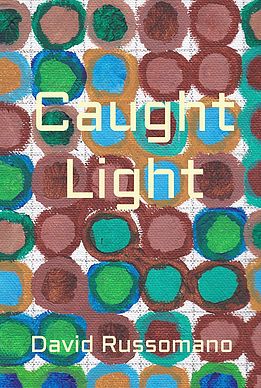
caught-light

David Russomano

David Russomano’s poetry has been nominated for The Pushcart Prize, long-listed for The Brian Dempsey Memorial Prize, and featured in over 40 publications, including The Missouri Review, The Worcester Review, and SoFloPoJo. In 2014, Kingston University awarded him the Faber & Faber Creative Writing MA Prize. He is the author of (Reasons for) Moving [Structo Press] and Caught Light [Friends of Alice]. To learn more, visit https://davidrussomano.wordpress.com/

The Interview

1. When and why did you start writing poetry?

I grew up in a relatively religious family and went to a Christian summer camp for several years when I was younger. There were nightly chapel services and a weekly talent show. It seemed like everyone and their brother could play guitar and I was eager to join in. What was probably one of my first poems was intended to be a song for one of those talent shows, but I couldn’t play the guitar yet and didn’t have the time to get someone else to add music, so I just read it like a poem. Later, in high school, I started a band. I played guitar, sang, and wrote most of the lyrics. I didn’t really start writing poetry as such until I was in college. Even then, as I graduated in 2006, I couldn’t get a decent writing sample together for an MFA program, partially because I hadn’t settled on poetry or fiction. From 2008 to 2011, when I was teaching English abroad, I got some crucial encouragement from co-workers who were also creative writers. I still wanted to pursue further education and settled on poetry because it seemed to come more naturally to me and/or I seemed to be better at it. My fiction hadn’t amounted to much, but I was able to build up enough momentum with my poetry to eventually get into an MA program.

I feel like this has turned into an answer to “How did you end up writing poetry?” as opposed to “why did you start?” Maybe, the short answer is, I don’t know why I started, but hopefully that’s OK.

2. Who introduced you to poetry?

I don’t think anyone’s ever asked me that before. And I don’t think I know the answer. I could tell you who all four of my high school English teachers were and even list off a decent number of the prose books we read, but I couldn’t be sure of a single poet or poem we studied. Nothing sticks out. College was a little different in the sense that I had a few teachers who actually were poets and taught entire courses dedicated to poetry, but it doesn’t seem right to say that they introduced me to poetry. I must’ve already been familiar with it. I think some people have an ‘Aha’ moment where poetry finally clicks for them, but if I had one, I can’t remember it.

2.1. What’s the first poem you can remember?

Man, you seem to ask all of the toughest memory-based questions. Again, I don’t really know. I’m sure that in school, I covered poems like The Red Wheelbarrow, Pied Beauty, God’s Grandeur, Ozymandias, Stopping by Woods on a Snowy Evening, and The Road Not Taken. I imagine there was a Shakespearean sonnet in there somewhere as well. But I couldn’t tell you exactly when I encountered any of these. Of course, before this, there must’ve been some nursery rhymes or children’s books, but none come to mind.

3. How aware are and were you of the dominating presence of older poets traditional and contemporary?

Well, that seems to be at least a two part question. As far as the ‘how aware was I?’ part of the question, I feel like it was all that I was aware of initially. Being introduced to poetry in a school setting, you get saddled with the same set of anthologised poets over and over, at least to some extent. Or, you hear a short list of names and you learn that they’re supposed to be the greats, regardless of whether or not you learn why they’re meant to be great. You don’t look at anything like what could be called ‘lesser known’ poets, presumably because there just isn’t time. In college, I had to have an enormous two volume anthology of poetry and we really didn’t cover very much of it. So, even the big anthologies get pared down to the bare minimum.

But, how aware am I of the dominating presence of older poets now? That’s hard to say. I’m definitely more engaged with poetry at a grassroots level now. I participate in local open mics, which are either run by smaller publishers or poets who have released books with smaller publishers. The poetry I’m reading now is often by the poets I meet or in the little journals I appear in. So, it’s not necessarily that I’m less aware of the big name poets who dominate, as much as I’m more aware of lesser known poets.

I’m not sure exactly how dominated I feel by the lingering presence of older poets one way or the other. There’s certainly a sense of influence, but beyond that, I guess I’d need some more concrete examples to fully understand what you mean by dominating presence.

4. What is your daily writing routine?

Unfortunately, it isn’t daily and it isn’t particularly routine. I work a full-time desk job and I have a young daughter, so I have to squeeze my writing in where/when I can. Usually, when I get a chance to write, it’s in the evening between my daughter’s bedtime and my own. That’s after I’ve prepped my breakfast and lunch for the next day, done the dishes from dinner, and taken care of any other random jobs. Sometimes that leaves me a little time in front of my laptop and sometimes it doesn’t. At the weekends, I try to write a little during her midday nap, but there are often other tasks at hand. Sometimes, I write a little during my lunch break at work. Apart from all of this, I carry a small pocket notebook (a practice I’ve maintained since I became an English major in college) and if any ideas come to me, I try to write them down right away so that I don’t lose them.

5. What motivates you to write?

I feel like I could answer this in two different ways and I’m not sure which would be more true to the spirit of the question.

If you’d like to know what inspires me to write:

Much of my writing is what I think of as reactionary. It draws from things that I’ve personally encountered in my travels and daily life. Other times, an idea comes to me of its own accord and develops into a poem without any basis in my own experience. But, both of these approaches often have a common underlying concern: mortality. For me, my best poems are a matter of life and death. I’m preoccupied with the fact that things wear down, that they have endings, that they’re finite. In that sense, I think that the finite nature of things is a source of inspiration.

On the other hand, if you’d like to know what actually motivates me to do the physical act of writing/typing:

That’s a much harder question. I suppose sometimes, when I know I have an idea, I’m driven by the urge to see it developed into its final form, to see it grow into what I imagine it can be. That’s exciting. Other times, it’s hard. And it’s work. And it’s, hard work. Bukowski was famous for saying “Don’t try”, but I break that rule regularly. So, why do I break that rule? Why bother trying when it all seems to be an uphill slog? I’m not sure. Maybe I’m desperate to justify my own existence with creative output. Maybe I’m also desperate to leave some sort of record or legacy, as cliche as that is. I don’t think I fully understand my own motivations. But I have found that I understand something better when I explain it to someone else, so maybe some of my writing is an attempt to do just that – to turn an idea into something I can actually understand.

6. How do the writers you read when you were young influence you today?

This is somewhat difficult to answer, partially because I don’t think I read anywhere near enough poetry when I was young and partially because I’ve probably forgotten many of the poets that I actually read. But I suppose I can trace many of my current poetic priorities back to what I covered in school. This includes things that I aim for, as well as things that I dislike. For example, I remember covering confessional poets on one hand and Imagism on the other.

Teaching confessional poetry to inexperienced students is dangerous. Kids can get an over-simplified idea of what the confessional poets were doing i.e. my life is bad and I’m going to whine to you about it. This either turns people off to poetry or emboldens them to write bad poetry. Many amateur poets never seem to grow out of this ‘me, me, me’ type of writing, but I strive to avoid it. While many of my poems are inspired by own experiences, the experiences are central and the fact that they happened to me is only peripheral. Imagism helped me understand the importance of elevating the ‘what’ over the ‘who’. “No ideas but in things”, as W.C. Williams said.

Though I don’t necessarily have a good example to hand, I’m sure that I encountered plenty of unintelligible poems in my school days and it didn’t exactly encourage me into the world of verse. I don’t think that poetry should be dumbed down per se and I believe that experimentation can be valid, but there’s nothing to gain from driving readers away with excessively difficult poetry. When people tell me that my work is approachable, I take it as a great compliment. One aspect of my work that I think draws people in and makes them comfortable is its narrative quality.

I’d say the poet from my education who’s most directly influenced me has to be Robert Frost. I respect the way that he brought engaging narratives to life with crisp imagery and fresh figurative language. His influence on my work might not always be obvious, but it probably isn’t hard to miss either.

7. Who of today’s writers do you admire the most and why?

Assuming we’re talking about poets, I’m impressed by anyone who makes a living as anything that could be loosely described as a ‘literary figure’. It’s very difficult to turn poetry into something financially viable, even if you combine it with an academic career and/or writing in other genres (novels, plays, songs, articles, non-fiction, etc.), so I admire anyone who’s been able to pull that off. I also admire people who achieve the rank of poet laureate, like Carol Ann Duffy and Simon Armitage. I know this position is a problematic one, so much so that some poets have actually turned it down, but I think there’s something to be said for any nation that even bothers to preserve such a role and any individual brave enough to be the face/voice of that aspect of a nation’s cultural life. Stylistically, I appreciate Duffy’s ability to utilise single word sentences, using those words almost like a form of punctuation. This lends her work a punchiness that’s very effective. I’ve also been struck by some of Jorie Graham’s work, mainly because it’s so different from my own. I read it and think, “Oh, you’re doing something I might not ever be able to do and you’re doing it very well.” I read two of her collections and found them difficult, but rewarding. On the other hand, I heard her read something from her collection P L A C E and I didn’t enjoy it at all. I guess you can’t expect anyone’s work to be consistent. Beyond that, I hardly feel well-read enough to comment on many contemporary authors’ work or careers. But, there is a man named Aaron Weiss who fronts the band mewithoutYou. I’ll be the first to acknowledge that a songwriter is not the exact same thing as a poet, but Weiss’s lyrics have often impressed me more than most poems I’ve read.

8. What would you say to someone who asked you “How do you become a writer?”

Because this is such a complicated question, I would respond by saying “Be more specific”. When people say that they want to know how to become a writer, they can mean different things. The simplest level of inquiry can be answered in the simplest way. If all you want to know is how to become a writer, then all you have to do is write. In some sense, anyone who writes (creatively and with intent, not just jotting down shopping lists and memos) is by default, a writer. This might seem dismissive, evasive, or banal, but I think that many people don’t realise that THEY’RE ALREADY WRITERS. They’re writing, but they’re waiting for some magical watershed moment before they actually call their work ‘writing’. That magical moment doesn’t exist. Conversely, there are some people who spend an inordinate amount of time thinking and talking about writing, but never actually do it. These people might have great ideas, but they’re not writers. They’re too paralysed by false conceptions of what will legitimise their efforts. Don’t be one of them. If you want to write, start writing. If you’ve got the urge, then bad writing is better than no writing.

Which leads on to the next point. Some people want to know how to become a ‘good’ writer. That is a much harder question. There’s no simple answer. If the person asking me thinks of me as a good writer (whether or not I deserve that accolade) and I can refer to my own experience, I’d say it isn’t so much about becoming a good writer as it is becoming a BETTER writer. There was a definite point in time, I think around the middle of my 2nd year of college/university, when I decided to seriously pursue writing. To that end, I made a few decisions:

  1. In order to be ready for inspiration, I started to carry a small notebook at all times. I’ve been doing it ever since and I’m up to pocket notebook number 40. When you have a great idea and you swear you’ll remember it, but you don’t, it’s an awful feeling. Do what you can to avoid it. I suppose some people use their phones for this now, so do whatever works for you.
  1. It’s been said that you should “write what you know”,  so I told myself that I better make what I know more interesting. That’s why I started travelling and living abroad. Expanding the breadth and depth of your experiential knowledge is extremely beneficial. Of course, nothing is mundane to the well-trained eye, but what training is effective? How can you gain a fresh perspective on what seems stale? Look away, then turn back. It’s not the only method, but it’s worth a try.
  1. Oddly enough, I wasn’t much of a reader in my younger years. I felt like I read too slowly and that discouraged me. But after college courses forced me to read more quickly and I realised I could actually do it, I began to read more voraciously. I took it on as a personal challenge. I wanted to read those who were allegedly great and see what the fuss was all about. I wanted recommendations from friends. I wanted to catch up on what I’d missed. I wanted to give myself a good foundation for my own work. It’s something I’m still working on now.

I’ve also had to develop a healthier attitude towards editing and editors. It’s been said that you should “kill your darlings”, but when I was younger, I wasn’t ready to take this on board. Like many immature writers, I didn’t respond well to critiques of my writing. But, now I have a far greater appreciation of the process. Start with bad work. Don’t be afraid to share it (with people who know what they’re talking about). Listen to them. Edit like your writing life depends on it, because it does. Draft, draft, and re-draft. Rarely, someone will tell you to cut something that you should keep. You have to develop your intuition enough to know when to say no. But most of the time, the editor is right.

I could actually go on, but this response has become ungodly long already.

9. Tell me about the writing projects you have on at the moment.

I’m in the middle of several stalled poems. One of them, an experimental sort of erasure poem, has the potential to turn into something larger, but I’ve been struggling with it on and off for over a year. I hoped to finish it in time for the WWI centenary, but couldn’t pull it together in time. In this piece, or series of pieces, I hope to take the specific words from the specific monument that’s closest to me and reconfigure those words to say something meaningful about the war in general. I may have set the bar to high for myself though. I’m not sure yet.

What I’m really focusing my energy on though is two novels. One of them is a fantasy novel inspired by characters I drew when I was a kid. I go back and forth between wanting to present the story simply, almost as a fairy tale, and wanting to convey it in a more sophisticated way, like within a frame narrative of a father making it up for his child at bed time. My other novel idea is a sort of hard boiled dystopian Sci-Fi detective novel. I keep going back and forth between the two, which means that neither are anywhere near complete, but I’m keen to finish at least one of them.
Wombwell Rainbow Interviews: Amanda Reeves

Wombwell Rainbow Interviews

I am honoured and privileged that the following writers local, national and international have agreed to be interviewed by me. I gave the writers two options: an emailed list of questions or a more fluid interview via messenger.

The usual ground is covered about motivation, daily routines and work ethic, but some surprises too. Some of these poets you may know, others may be new to you. I hope you enjoy the experience as much as I do.

Amandawrites

Amanda Reeves aka Enola Revfore

Born and raised in Dallas Texas, Amanda is a petsitter for Rover.com. She started writing when she was nine years old, and has been writing ever since. She longs to travel, see the world and experience all that she can while writing. She has guest posted for RTOR, and has recently been published in Fevers of the Mind Poetry Digest.

Her website is https://amandareeveswrites.wordpress.com/my-blog/

The Interview

What inspired you to write poetry?

Good question! When I was a kid I use to write my own song lyrics and I would sing them. I was a great singer, but when I sang on stage for the first time in front of a crowd, I hated it and I just wanted it to be over. I got tons of compliments, so I didn’t understand why I felt this way, but I thought about it for a while; I realized that with my lack of people skills, and my constant need to escape, I just wasn’t cut out to be a musician. I mourned this realization for a very long time, but once I accepted it, I focused more on writing poetry and fiction.

Who introduced you to poetry?

I was never actually introduced to poetry, it just came naturally to me. I was never into reading much as a kid, it was all about singing and songwriting. My family, most of my teachers, and various counselors didn’t support my writing because they didn’t like the content. However, I did have a huge crush on Eminem! So I guess if anyone introduced me to poetry, it was him.

How aware were you of the dominating presence of older poets?

Hmmm, I don’t think I was very aware at all. I was very disconnected when I was younger, so I just didn’t care. I was over medicated, over weight, severely suicidal and depressed; and what made things worse is I was in and out of psychiatric hospitals for most of my childhood. I had a lot of trouble in school, so it wasn’t until my early 20’s when I began understand how valuable reading is, especially for writers.

What is your daily writing routine?

It depends, it’s hard to have a time during the day where I’m able to have privacy, so normally I end up writing at midnight and I’m up until 3am.

What motivates you to write?

I guess the simplest way to put it is, I become motivated when my mind begins to turn against me. When I become self loathing and I start to think about how horrible the world is, especially the people on it, when I start to think about how untrustworthy family is, or how much of a mistake I feel I am; I have to write! I create a world I feel I can fit into or don’t exist in, I put some of my darkest thoughts on paper so that I can organize them, be aware of them, then let them go. I can put my words out there for other people to read, so that I know I’m not the only person that feels that way, and others don’t need to feel so alone either. Regardless of how misanthropic I feel most of the time, I do crave human connection.

What is your work ethic?

It varies, I try to finish one project at a time but it usually never turns out that way. I criticize and beat myself up over it pretty hard, but I end up working on multiple projects at a time anyway. Some stories, poems, and articles just sit for a while until I feel motivated to go back to them. I keep going and keep trying, but it’s agonizingly slow. I just have to keep reminding myself that I have to do the best I can, because that’s all anyone has. One thing I’ve learned from many writing groups, I’m not the only writer working on multiple projects and struggling to finish them! Remembering that helps me feel less down on myself.

How do the writers you read when you were young influence you today?

Most of my influences came from musicians, it my teen years I looked up to strong female forces that I wanted to be, but never felt I was capable. A couple of my favorites were Otep and Emilie Autumn, it wasn’t until I was an adult that I found out they were writers as well, and I absolutely loved them!

Who of today’s writers do you admire the most and why?

I admire independent writers who struggle to be recognized for their art. I’ve been told on many occasions that nobody reads anymore and it’s very discouraging, but completely untrue. A lot of people are under educated, yes! I know this because, well…I’m one of them. However, under educated people read too. I’ve met them and if you were to talk to them, you would never actually know how under educated they were. What’s even more surprising is many of them are writers as well! Many of them are mentally ill, many of them struggle with comprehension and retaining information, many of them struggle in different areas of education that American public schooling isn’t willing to provide, but those people still try! I’m one of those people and I read, write and more importantly, I try.

Why do you write, as opposed to doing anything else?

I write because writing is the one thing that has kept me from being illiterate, if I never started writing, I would’ve never started reading. I do get the urge to do arts and crafts occasionally, but writing is the one thing that I’m the most talented at. Plus, as opposed to arts and crafts or playing music, it’s not as costly financially. Not to mention, you can learn so much from writing! If your going to write a historical fiction, you have to learn more about history. If your going to write sci-fi, learning a bit more about science may help you. Writing gives me an opportunity to learn about things that I wasn’t able to learn in school.

What would you say to someone who asked you “How do you become a writer?”

Read, write, and learn as much as possible! If you’re not writing, read. If you don’t know something, then research the topic. That’s really the best advice I can give an aspiring writer.

Tell me about the writing projects you have on at the moment.

Well, my main project is getting decades of poetry published. I’m working on a few essays on the topic of mental health, I have a blog I’m trying to build on, I have some fanfics that I’m working on as well. I don’t care if people look down on fanfiction, personally I think it’s great writing practice!