Wombwell Rainbow Interviews
I am honoured and privileged that the following writers local, national and international have agreed to be interviewed by me. I gave the writers two options: an emailed list of questions or a more fluid interview via messenger.
The usual ground is covered about motivation, daily routines and work ethic, but some surprises too. Some of these poets you may know, others may be new to you. I hope you enjoy the experience as much as I do.


Jason O’Toole,
is a Rhylsing Award nominated poet, musician, and elder advocate. He is the author of two poetry collections published by the Red Salon, Spear of Stars (2018) and Soulless Heavens (2019). Recent work has appeared in Nixes Mate Review, The Scrib Arts Journal, The Wild Word, and Vita Brevis.
The Interview
1. What inspired you to write poetry?
From a young age, poetry has been my way of sharing thoughts and observations that could not otherwise be easily introduced into conversation. As an adult, it’s also how I process trauma and grief, from surviving shoot-outs and seeing horrible events at work, to losing contact with my children in the wake of a divorce. I don’t want to self-obsess and start every poem with “I” though and many of my current poems tell stories about the down-and-out people I encounter throughout my day, whether an addict waiting for her dealer behind a building or a disabled vet whose family never visit.
It wasn’t until I met my fiancé Laura that I was hit by the inspiration to write my first love poem “Half-a-Star” and after I was shared it with her, my heart (or whatever you’d like to call it) softened enough to truly be able to write on a much deeper level. She’s been my muse ever since – which is potentially dangerous as she’s also a psychotherapist.
2. Who introduced you to poetry?
When I entered 4th grade I had a teacher at the Albany Academy named Mrs. Everett. She was from England and “old school” in the best way. We were given short poems to memorize and recite each week such as Carl Sandberg’s “The Fog.” If we got our assignments done, she let us read books from her library, which contained classics such as Malory’s Le Morte d’Arthur.
My family had shelves full of books. My brother and I recognized that these contained the secret to the mystical power that adults had over us. He got started on the science books, and I started reading the philosophy and poetry. I didn’t always understand what I was reading but they felt familiar to me somehow. I kept a dictionary on hand to look up the meaning of words. The first poets that I recall relating best to were e.e. cummings, T.S. Eliot, William Butler Yeats, and A.E. Housman. I also discovered William S. Burroughs way too young.
2.1. Why did you find yourself relating best to “ e.e. cummings, T.S. Eliot, William Butler Yeats, and A.E. Housman.” ?
The accessible avant-gardist e. e. cummings appealed to me as his poems were stripped down to the bone yet impactful and visually appealing. His playful, off-label use of syntax and made-up words opened up possibilities for me as a kid writing my first non-rhyming poems.
T.S Eliot was another poet that every college educated family had hanging around on their shelves. The Waste Land gave me a road map for leaving the 20th Century. It didn’t go anywhere especially good, but how could it. “Well now that’s done: and I’m glad it’s over.”
William Butler Yeats was one of the greatest magickal minds of his time. I didn’t realize this on my first reading of his poems as his occult history was almost entirely glossed over by the academics. As a kid I knew there was something pagan and exciting lurking behind the verse. I also enjoyed reading the Irish folklore he and Lady Gregory preserved. Later I would learn of his run ins with Aleister Crowley and that added to the allure.
A.E. Housman’s A Shropshire Lad was written with the gloomy adolescent male in mind. I memorized several of the poems and drew cartoons to go along with them. When The Smiths came on the scene, I immediately connected with the lyrics on the Hatful of Hollow ep which seemed to have been spawned from a similar maudlin mind.
2.2. Why did you discover “William S. Burroughs way too young”?
My grandparents had friends, Vincent and Brita, who were painters who also owned an enviable art collection which included a Picasso, purchased for half-nothing before he was famous. I would sit and read in their library, and of course the title Naked Lunch jumped out at me. I was in middle school at the time. Maybe 5th grade? The strangest fiction I had read prior to this was Madeleine L’Engle’s Time Quintet and Ursla K. Le Guin’s The Lathe of Heaven. I didn’t quite know what the hell was happening in it, but it was filthy and funny. I was hooked and read almost everything Burroughs wrote before the age of 16. I enjoyed making collage and cut-ups, some of which I published in zines I made with Sam McPheeters, and during high school, Burroughs was one of my main influences along with The Situationists International, Dr. Anton LaVey, and The Church of Subgenius in my visual art, comics, poetry and prose.
3. How aware were you of the dominating presence of older poets?
In my early teens, I’d gone on my own to hear Allen Ginsberg and Anne Waldman read, and having read Burroughs, Kerouac, Corso and others associated with them, knew that I could learn a lot from the Beats. I also knew that I would have to find my own voice. I was in absolutely no rush to do so. Though I have contributed lyrics and vocals on several underground recordings of punk and experimental music and edited Situationist and Punk zines and an academic journal (Dialectical Anthropology) I did not start seriously seeking publication of my poems until 2018. Now I am one of the older poets!
4. What is your daily writing routine?
I never know when I will be struck by the need to write a poem or story. Almost none of my poems are planned. I don’t sit down and say, “I’m going to bang out a poem about a seagull.” I might overhear a phrase in conversation, read a terrible on-line review, or have a traumatic memory resurface. I always keep a notebook on me so I can jot down whatever strikes me as worth recording. Some of these notes wind their way into poems.
Less often I will write short stories, essays, or tinker with one of my novels-in-progress. I find that speculative fiction allows me to hide real stories and people (from my work as an investigator) in plain sight and process some of my worst experiences.
5. What motivates you to write?
Poets and authors have helped me make sense of being human better than any church ever could. I hope I can help others unravel some of the mysteries, complexities and inanities of existence. For some of us, it’s a matter of survival – finding a reason to stay sober, make less terrible choices, and get through another day.
6. What is your work ethic?
Many people complain that they have no time to write. I do my best not to have unmet obligations hanging over me. I pay my bills, get the laundry done, never leave a dish in the sink. I may find other reasons to procrastinate, but at least I won’t waste time worrying about daily chores and it’s easier to write with a clean house.
7. How do the writers you read when you were young influence you today?
I feel a distinct kinship with certain poets and authors. There is a lineage that exists for writers akin to the lineages in religious orders, martial arts schools or royalty. There are poets I read in my teens and twenties who I abhor now, such as Bukowski. I still read him now and again, perhaps as a reminder of what not to be. As for my own tribe, I’ll read Corso and then follow the stream back to Shelley who defined “the pain of bliss” that both poets articulated. I’ll jump from Ignatow’s mountains and bagels, to Williams, “No ideas but in things” to Whitman’s sacred bodies, and to teenage rebel Rimbaud, and then back to where I find – myself.
8. Who of today’s writers do you admire the most and why?
Juleigh Howard-Hobson is a fellow avant-garde traditionalist. Unlike most modern poets, she is also a formalist. Despite poems written in form not being in style, she is prolifically published and has earned awards and several important nominations. She’s also published fiction and non-fiction, all while living off the grid and running a small family farm in the Pacific Northwest. As one of my mentors, Juleigh has been generous with her time and is always willing to share calls for submissions and her extensive knowledge of the small presses and poetry journals.
9. Why do you write, as opposed to doing anything else?
I am a fair guitar player, have managed to sell some of my art in galley shows, and apparently my singing is okay for what it is, but poetry is the one thing I feel I have the ability to be “the best” at if I focus more of my energy on reading, appreciating and writing poetry. It’s sometimes a solitary exercise, but there is a vibrant community out there as well. Now that I’ve been sober for three years and am not a resentment machine, I can get along fairly well with other poets and maybe even be an asset to the community.
10. What would you say to someone who asked you “How do you become a writer?”
I can only answer how one might become a writer like myself. There are many paths, and some are surely more lucrative than my own. First you must be a reader. I don’t trust poets who don’t read other poets. I believe they are only taking selfies with words.
Secondly, you must be a listener and understand that listening isn’t the opposite of talking. It’s an active role. Be a semiotician and try to understand why people are saying what they are saying. Why are they choosing certain words over others? Pay attention to tone of voice, body language and the messages that they are trying to convey with their personal style. This practice of reading the signs that people flash, has the added benefit of anticipating problems, and could save your life!
Get outside, have some adventures, mix it up with people outside of your usual circle, and observe everything. Try to spot the details that others miss. Drive to some town you’ve never been to before and spot what’s different about it from your town. What are the names on the headstones? What are the mom and pop businesses selling? Get out of the car and talk to people and ask them questions and you may learn of local legends, ghost stories, and witch’s graves.
Stay curious and be present in life. Maybe then you’ll have something interesting to tell the rest of us. People love a good story, so you have that in your favour from the start. Go find one.
11. Tell me about the writing projects you have on at the moment.
I am contributing spoken word to recordings with Herr Lounge Corps and we should have an album out before long. I am performing and recording stateside with Alec K. Redfearn, a Providence based composer of weird music. I plan on introducing and editing the collected poems of a certain forgotten female poet and occultist. Some of my weird fiction stories have been published by horror presses and I’m slowly working on a couple of novels. I’m gratified that my poems have been published in journals and anthologies around the world, that I’ve been nominated for the Rhysling Award, and that I have more than enough for a third collection when the time is right. People are reading my writing and are reaching out to tell me what it means to them. For me, that means everything.

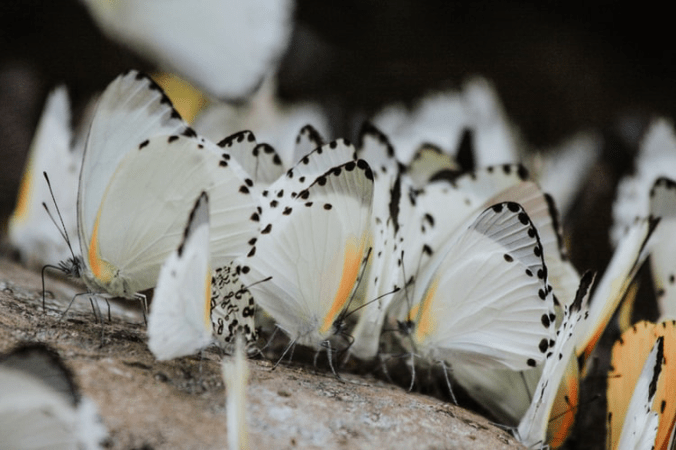 courtesy of Christine Wehrmeier, Unsplash


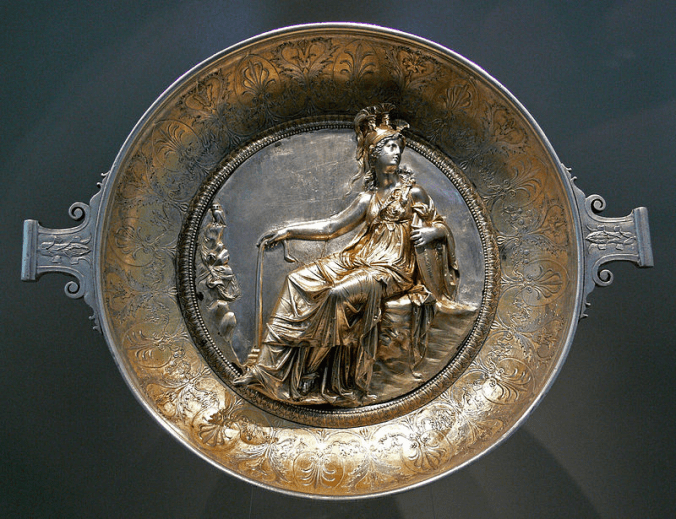 Raised-relief image of Minerva, goddess of wisdom and arts, on a Roman gilt silver bowl, first century BC / Public Domain





 The Wombwell Rainbow