Wombwell Rainbow Book Interviews: “Lyonesse” by Penelope Shuttle

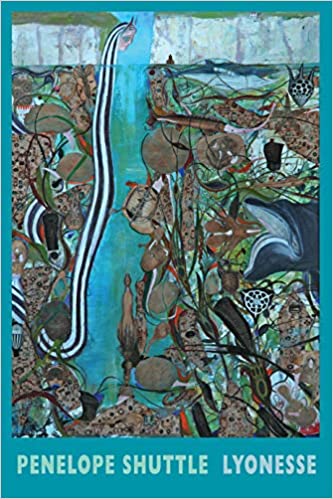
Lyonesse

Penelope Shuttle

lives in Cornwall. Her thirteenth collection, Lyonesse, appears from Bloodaxe, June 2021. Covid/Corvid, a pamphlet written in collaboration with Alyson Hallett, appears from Broken Sleep Books, November 2021. Father Lear, a pamphlet, was published by Poetry Salzburg in June 2020. Shuttle is President of the Falmouth Poetry Group, founded in 1972. She is widely published, and her radio poem, Conversations on a Bench, set in Falmouth, was broadcast on BBC Radio 4 in March 2020. She is currently working on a new collection, History of the Child.

The Interview

1. How did you decide on the order of the poems in the book?

That is a big and essential question.  The main and subsidiary themes of Lyonesse set me writing full-tilt and in three big separate surges over about 18 months I wrote many more poems than a full collection would warrant, and indeed as I wrote I knew that not all would make the final cut, but I felt that in these first and early drafts I had to let everything come through, and deal with it later.  All of this I find exhilarating as a process.  And I got to a place eventually, after much re-drafting of these too many poems, when I then had a longish break from the Lyonesse poems.  This was in order to let the whole absorbing process or matrix settle down, to be able to come back with fresh eyes and make the cuts that I knew would be necessary before I could work on the running order.  When I came back to this still unruly mass of material I soon saw which poems were weaker, which ones repeated what I’d said more trenchantly in other poems, and I dropped these from the book.  I still had far too many poems, and I had a sense  (pun intended) of being inundated with poems about Lyonesse.  I have always found that bringing draft poems to a workshop group, particularly the Falmouth Poetry Group, was a helpful and useful process.  Indeed I’ve been a member of Fpg since it was founded in 1972.  But though single poems were workshopped there with helpful comments, I still felt overwhelmed by the work in progress that was Lyonesse.  So I asked my friend and colleague Katrina Naomi to close-read the manuscript and comment on it.  This proved to be a real turning-point in the process, her insights, comments and suggestions aided  me in cutting out further less-energised poems from the collection, and dropping these poems gave me elbow-room to start, at last!, thinking about the running order.  I took a long time over this, trying this order and that order, and wasn’t satisfied until I decided to put the longish prose-poems called ‘An Account of the Submergence’ at the mid-point of the collection, and not as I had always had it as the opening poem.  This prose poem then acted as the hinge upon which the book turned.  This in turn enabled me to put on either side of ‘An Account…’ two poems which give the phrase ‘land under sea’ in many different tongues.  This central hinge, bracketed with the ‘land under sea’ pieces made a strong structure and the running order then almost fell into place on either side.  I have employed in Lyonesse a number of very short ‘ribbon’ poems throughout (as in Heath, at the suggestion there of editor Jane Comane) and these ‘ribbon’ poems act as little respites in the narrative, and let the reader pause  before plunging back into Lyonesse.  Finding ways to modulate the onward movement of the book was an ever-present concern as I worked on the running order.  It is astonishing how when a poem fits in place it creates a mental, lyrical and narrative harmony and adds to the overall shape of the book, whereas a poem in the wrong place soon tells you ‘I’m in the wrong place and this doesn’t work!’  So I tried always to listen to each individual poem, and sense the rightness or wrongness of the placing.

2. In the preface you talk about getting the “colour palette” right. What did you mean by this?

Cornwall is famous for its painterly light, its colours.  Because Cornwall is a narrow peninsula at the very end of England, it is almost an island, there is sea on all three sides, and this creates our vivid brightness of light and colour, as the light bounces off all that sea, refracting and dazzling and magical.  The colours of Cornwall are predominately, then, green and blue.  But what greens and blues, every modulation and variation of blue and green.  And in the spring the vivid blossoming shrubs add their multiple colours.  As Lyonesse is the submerged land beyond the Isles of Scilly, I am imagining that Lyonesse possessed the same brilliance and variety of light and colour, sea-refracted, sea-rinsed, sea-related as Cornwall does today.  I can’t, alas, draw or paint, but I’m an avid enjoyer of paintings,  and I’ve drawn that element into the poems of sea-sunken Lyonesse, I’m imagining in the poems the colours we might see or glimpse beneath the clear waters, the ruins of palaces and squares, this underwater quivering of Cornwall’s colours.  So the colour-palette is the vocabulary of engagement with the greens and blues that predominate in a maritime county where i climate and atmosphere and light are unique.  I focused also on the colours of gardens, hence roses are mentioned at times, and by weaving colours into and through the poems I hope to give vivid life to the lost land, Lyonesse.  I think in our poems we can usefully aim for a synaesthesia of the senses,  to imbue the vocabulary of our poems with sounds, perfumes, perspectives, say,  inspired by paintings.  Our present historic moment, of corrupt politics, of a sleep-walking electorate, of pandemic, of deliberately-underfunded social services and infrastructures, means that life turns drab, dull, depressed. I’m not immune to feeling depressed at where we are, post-Brexit, in the UK where only man is vile, and so I needed to remind myself of a different palette, to describe, yes, a lost city, but also to describe a living reality, not so much as escapism, for there is grief and deep regret in Lyonesse, but to remind myself that we don’t need to live in accepted ruinous ways.  I suppose it is another approach to ‘you must change your life’.

3. Why do you think so many writers associate water with grief?

Being in grief is an inundation, we are immersed, drowned in grief, and so the element, ‘water’, symbolises that overwhelming oceanic feeling that comes from loss of all kinds.  The association is there with tears, with weeping.  But also water is a cleansing substance, and perhaps the way of moving through grief is to be washed clean of our most intense sadness, enabling us to contain the overflow of our grief.  Perhaps writing about inundation, creating images and patterns, is also a container for grief, or a way of coming to terms with it.  For some religions immersion and baptism enable a new beginning, a new sense of self.  In writing Lyonesse I was aware that the ocean is a powerful player in the collective unconscious.  Early humans lived along shorelines where food was abundant.  Proto-humans came out of the ocean.  A great deal of human emotion is bound up with water, both as a paradigm for grief, for birth and rebirth, and renewal. The images and associations that poets write from are drawn from this process, and from collective unconscious.

4. What is to the significance of the two quotes at the beginning of the book?

During the writing of Lyonesse I became aware that overdosing on research was going to make the book top-heavy, so I kept research to a necessary minimum, to keep the imagination free to work.  I’m quite a fan of the random giving a poet a nudge now and then, and the quotation from The Anathemata by David Jones was a nudge given to me by a random library angel.  I hadn’t re-read ad this amazing key text from David Jones for many years but one day a library angel suggested to me that I might like to re-read it.  Doing so, I discovered that in the voyage described in the early part of the book the ship goes by the coast of Cornwall and the text remembers the sunken land of Lyonesse, with its 140 drowned churches.  This felt like a message from a greatly-admired poet, a thumbs-up, if you like, for Lyonesse.  It also gave impetus to my seeking out elder and alternate names for Lyonesse, as in ‘Leonnoyes’ in The Anathemata.  Lyonesse in the historic record is also referred to as ‘Leonois’ and ‘Lethostow’ and ‘Lyonnaise’. 

The second quote from Mark Goodwin follows this strand of alternate names for Lyonesse, where in his wonderful Cornish-set poem, ‘a St Juliot’ , Mark playfully renames Lyonesse as ‘Lea-on-Ness’.  Mark Goodwin has a strong connection with Cornwall, where he has often walked, and climbed the sea cliffs.  He was a good friend to Peter Redgrove, visiting him in Falmouth, especially in Peter’s last years.  The connection with ‘Lea-on-Ness’ and ‘Lyonesse’ was a meeting-place that, like the quoted lines from David Jones, gave a valued affirmation to my poems, and I wanted to pay tribute to both writers.  Writing playfully is, of course, a very serious business.

5. How important is form for you in poetry?

For a poem to be alive, a living entity, form and content need to be in equilibrium.  Too much form with too little content or a splurge of content without the containment of some form of form?  Neither give us a living poem.  

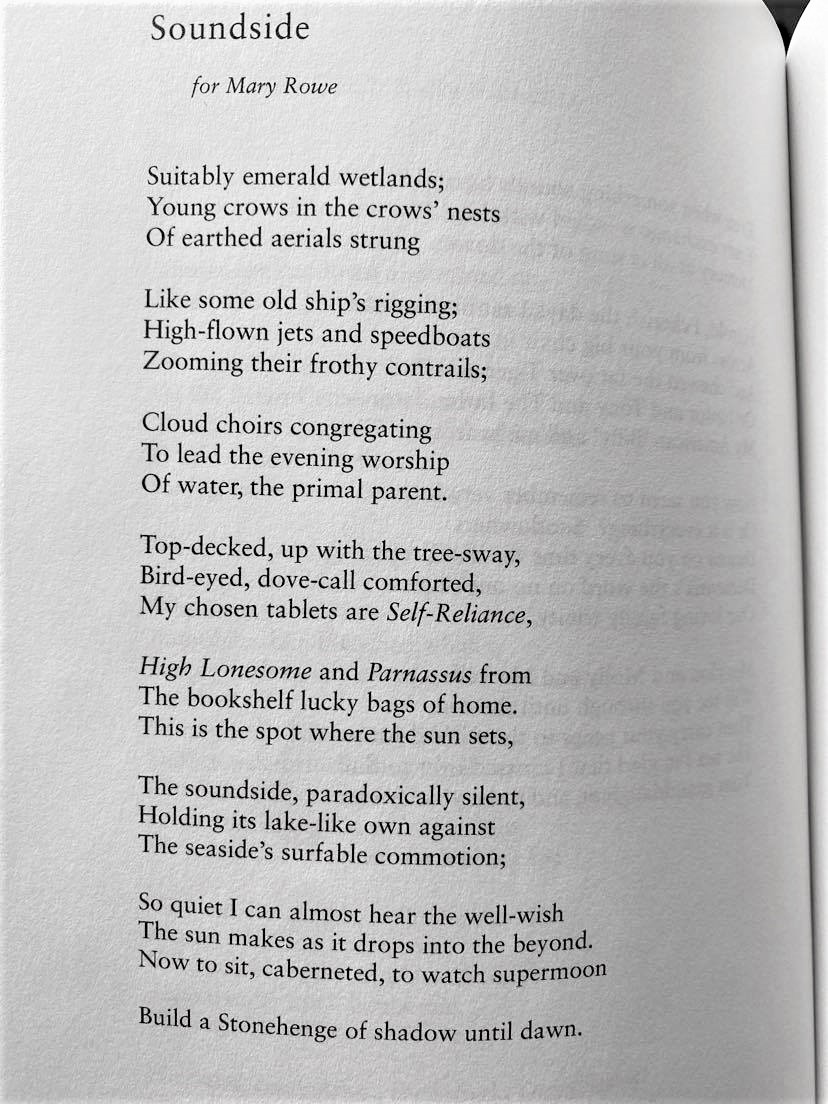
So how do we find that equilibrium between form and content?  For me, it is by paying very close attention to the poem through its drafts and revisions.  What does the poem want to be?  A sonnet? Free-form sonnet, or rhymed sonnet? To be cast in couplets, or in one long energised stanza?  To be long-lined, or very thinly-set on the page.  Poem, are you an ode, or are you a haiku?  How does the poem want to use the white space?  There is a perfect form for each poem, and teasing out that form, being in dialogue with the poem as to its desired form, is how I work with form. Form is essential, gives the language something to push against.  In Lyonesse I have occasionally justified a poem to the right hand margin, a use of form that resulted in this kind of conversation with the poem in the making
Somewhere Seamus Heaney says that every poem has ‘a binding secret’ and I think he means that its secret is the form, the container that makes and keeps the language alive.  A poem needs to do more than sit well-behaved on the page, being passive:  reading a poem is an integrative experience, the poem is a living entity, and the poet’s love for the poem will find the poem the needed form, enabling the ‘inner coherence’ of the poem to flow freely within that form, be it formally-traditional or experimental in the extreme.  There’s much also to be gained from starting at the other end, with form, and seeing if that generates living language, to ascertain if that way of writing permits fidelity to inner experience. 

5.1.What do you mean by “fidelity to lived experience”?

The phrase ‘fidelity to lived experience’ is a quotation from George Whalley’s ‘Poetic Process’.  It is an incredibly thought-provoking book that I go back to many times.  Whalley suggests that in writing poetry a key element very early on in the process is the charge of feeling and value created by the poet’s encounter with reality.  Whalley says that a poem works by ‘communicating feeling of an intricate and ordered kind.’  He uses quantum theory as an analogy through which to understand the coming-into-being of a poem.  Like everything that matters in life, this is complicated!  But by centring the perception of reality at the core of a poem he opens an amazing door of possibilities, and his writings have given me permission to address the oddness. the intensity, and  the relevance of the nature of reality as expressed in poems…And yet reality dissolves when we hold it in language.   So the holding and the dissolving in language is perhaps also the poem.  What is the reality of Lyonesse?   Is it my grief?  Is it the grief of facing human extinction and climate change?  Is it the grief of the twentieth and the twenty-first century, and the sense that human beings have failed at being custodians of the planet, and don’t deserve to survive?  Is it human folly?  It is all of these, though I have studiously avoided polemic and the climate change bandwagon in Lyonesse..    Lyonesse is paradox. Is living in imagination but dead historically.   Why is the world so beautiful and yet so despoiled?  Yet I don’t want to limit myself to theorising about reality, or Lyonesse, I work in language, that is all I can say, language that is allied to my own lived experience.

6. When I read it all the TV images of folk in Hebden Bridge, and a year or so ago when we had a lot of rain in Summer, flood victims kept coming to mind.

That’s interesting. The associations are there, aren’t they?  A few years ago after a lot of extreme rain the Thames at Staines flooded, and streets nearby were flooded, and we were concerned for my mum’s house.  Although she is a way from the river she’s near a stream, and the fear was that the water would come up through drains.  Didn’t happen, but yes, water will go the way it wants.  Inexorable.

7. How important is nature to you in Lyonesse and the sequence that follows it?

We’ve seen how in a crisis of the magnitude of the pandemic how important being out of doors, being in nature has become for people, and I think it is a basic part of being human.  In Lyonesse I imagined the forest being just outside the city, and that the city had gardens and parks.  And yes, evoking and portraying the natural landscape of Lyonesse before the inundation, and  the sea-floor situation of the sunk Lyonesse was an essential thing to do.  Bringing human nature into engagement with wider nature made outer and inner places to explore.  In ‘New Lamps for Old’ nature is woven into memory and the past.  I find it quite difficult to write about nature in relation to the two collections, because I don’t see it as set apart from any of the ongoing experiences I’m writing about, it is woven in, not a separate ‘thing’ I insert into the poems.  It is there in the air the poems breathe.   And often I only discern important threads and themes after the poems are written in first drafts.  The poems in process give me back the purpose and strategy I need to complete them.  So nature is inherent and embedded in the writing.  Is one element more important than another?  I hope all the elements work together to complete the poems.

8. Another theme that runs through it is music, sea shanties, Lully lullay, and so on.

When there’s not a pandemic on, here in Falmouth every June we have an International Sea Shanty Festival, and thousands of people come to enjoy it, you can’t turn a corner in Fal without a group of shanty singers being there singing away.  So they were in my mind.  But more seriously, when Katrina Naomi did a close-reading of an early draft of Lyonesse, among her comments, she flagged up the point that a lot of the titles of the poems were very neutral.  And then I realised, yes,  I’d put quite a lot of holding-pattern titles into Lyonesse.  I thought a lot about livening up the titles and eventually I realised that sea-shanties would give more force to the titles.  I think that musicality is an important part of poetry, it musn’t just be written for the eye, but for the ear.  I listen to music, mostly Radio 3, when I’m working, or reading, in fact I just have it on all day and have done since I was in my 20s, and so I think all that music has soaked into me, and is present in the poems.  And the Lully lullay is from an Old English poem I’ve always loved.  A friend of mine is planning to set some Lyonesse poems to music,  as songs, which will be thrilling.

9. “New Lamps For Old” is very different in tone and texture to “Lyonesse”. There seems to be a lot more journeys recounted and a lot of rain.

Yes, there is rain, and this is our constant companion in Cornwall!  

In ‘New Lamps’ I go back in time to memories of life with Peter, but I’m also writing about my life after Peter.  

A couple of years after his death in 2003 I went back to work as a freelance creative writer, running poetry workshops, tutoring on residential courses, and mentoring individual poets.  I was very involved in the poetry world also as a judge of many poetry competitions.  This work involved a lot of travel, and I also travelled for pleasure, and these journeys have woven themselves into the poems.  

The title ‘New Lamps for Old’ is intended to convey the complex, difficult yet also liberating process of making a new life after a marriage of almost 33 years.  Liberating because Peter had suffered from Parkinson’s Disease in the last years of his life, and so our life in general narrowed down a great deal.  I am thinking in respect of the title that our old life with all its shared illuminations (old lamps) has ended, and I am in the situation of needed to find new lamps, new purpose, new ways of being (involving work and travel and change).  A lot of rain?  Yes, I think there is a strand in the book where I am alone in our house and it is often raining, and I am meditating on change or struggling with fears and sadness.  

So a very transitional feeling comes in at times, and the discoveries of travel, and the sense of poetry as a lifeline through a complicated time. 

I made a lot of new friends via my teaching and travels, and friendship is key to poems in the second volume.  

I think there is much more of the  interior life in ‘New Lamps’, whereas the Lyonesse poems are more extrovert, and the ‘I’ there is at a considerable remove from my own self, an invented ‘I’.  In ‘New Lamps’ the ‘I’ of the poems is  centrally me, speaking my experience.  They are on the brink, often, finding equilibrium,  of charting that journey from bereavement to reflection, to a calmer inwardness.  The ‘Swarthmoor Hall, Ulverston’ sequence, written on a retreat at Swarthmoor Hall, is a meditation written on and around the anniversary of Peter’s death.  It rains in Cumbria a lot, also!

During the writing of these poems I spent periods of time near London, either when working, or visiting family and friends, and so the thread of London poems that appears in my 2017 collection, Will You Walk a Little Faster, continues on into several  poems as London was such a part of my changed life.  Visits to friends in Normandie also feature,  as in ‘Village of La Baleine’.  There are poems drawn from visits to art galleries (Kandinsky at the Tate) (Ruby Loftus…)

So yes, the tone and the texture are very different from Lyonesse, with its oceanic sweep, and its otherworldliness/under the waves-ness, and its slantwise look at climate change…I suppose in a way Lyonesse has more a feeling of theatre about it, where New Lamps poems are often meditative and questioning.  In these poems I am encountering and reporting  processes of widowhood with its new possibilities and old sorrows.  Many of the New Lamps poems are written for sheer pleasure of the thing, of course, as in Ann Boleyn’s Music Book.  But overall the poems try to say, this is where the poet was, thinking/feeling these things, considering her options, welcoming new landscapes, and opening new doors while remembering the door to and of the past.

10. What fascinates you about ekphrastic writing, using paintings as inspirations?

I love going to galleries, and museums.  Visiting a good or sympatico exhibition is like plugging one’s whole spirit into a spirit generator, so that one is rinsed through with art, or energised by a museum’s objects.  Going to an exhibition is also a way of being free from the demands of poetry!  Devoted as I am to those demands, to enter an art exhibition as observer/participant/admirer and to have no professional responsibilities at all, but simply to be there to respond, is a very nourishing experience, and I greatly miss these visits since the pandemic changed things.  I enjoy curatorial text, and often take notes.  In the Kandinsky exhibition I became fascinated with the many different body-languages pf peoples’ responses to these paintings, and I imagined these in the poem as people swimming through the galleries in different ways.  Ruby Loftus, in Dame Laura Knights’ 1942 painting, fascinated me, I felt a real connection with her, and tried to give a sense of her personality in the poem.  So ekphrastic writing offers us the riches of close attention to another art form, of innumerable thresholds into worlds, and personalities.  Sometimes a painting will remind us of things in our own lives.  When I used to run poetry writing workshops I often used postcards from art exhibitions, and sometimes I gave everyone the same image .  I was always struck by how variously each poet responded to the image, some choosing a tiny detail, others giving a comprehensive overview.  An image gives you permission to write, it is a good solution to writers’ block, the fear of the blank page.  But I write poems inspired by paintings because I fall in love with them, or from a feeling that the painting has requested me to write a poem about it.  A kind of imploring, or a temptation.  It has been said often, elsewhere, that going to exhibitions has replaced going to church, and the intensity of feeling that can be experienced from a gallery visit does have a similar resonance.

11. After having read the book what do you wish the reader to leave with?

Readers are individuals so reactions will be as individual. 

 I hope that the reader finds in the book what s/he hoped for, or found something different or unexpected that had meaning for them.  

I hope the reader goes away wanting to write something of their own. 

I hope that the reader enjoys it above all,  gains pleasure from reading the book, pleasure is a very important thing!.  

But one of the best things written about how poems have their effect comes from Paul Valery (in his ‘Poetry and Abstract Thought’):

‘…the poem makes poetry happen in the mind of the reader or listener.  It happens first to the poet, and in the course of writing, the poet eventually makes something, a little machine, one that for the reader produces discoveries, connections, glimmers of expression.  Whatever it does, it can do again and again, as many times as we need it.’

I would love a reader to experience that from reading Lyonesse.

#30DaysWild 1st-30th June. Day Sixteen. Go On A Bughunt. What bugs will you find in this poetry/artwork garden, or park? 30 Days Wild is The Wildlife Trusts’ annual nature challenge where they ask the nation to do one ‘wild’ thing a day every day throughout June. Your daily Random Acts of Wildness can be anything you like – litter-picking, birdwatching, puddle-splashing, you name it! I would love to feature your published/unpublished photos/artworks/writing on your random acts. Please contact me.

Day Sixteen

Go on a bughunt 30 Days Wild

Linda Ludwig DragonflyRachel deering dragonfly

-Linda Ludwig

bee 3

Photo by Marcel Herms

Legends of the Bee

Honey, elixir of dreams.
From Appalachia to Ancient Egypt
symbolic bee of royalty, health,
wealth and purity, good luck charm,
messenger between heaven and earth
for bees are wise. The oldest tribe
on earth, the San people of Africa,
tell the tale of a bee carrying
a praying mantis across the widest
river, exhausted the bee lay
the mantis on a floating flower
planting a seed in its body before
it died. The first human. Humans
and bees entwined for eternity.
In my pocket, I carry three ceramic
bees in a blue pouch.

-Suzy Aspell

Christina butterfly bleached butterfly

butterfly
clings to a bluebell
broken wing


-Christina Chin (A haiga in the inaugural issue of Bleached Butterfly Magazine)


BUTTERFLY

A Butterfly lands on a path,
by happy chance observed.
Foot’s raised and boot’s about to strike
when smallest prayer is heard.

Absurd demise averted.
Sweet insect rises up.
Foot’s much relieved – and Butterfly
resorts to Buttercup.

-Abigail Elizabeth Ottley

wazpz iz
zticky wit zweetiez

(yourz)

zticky with winez
your redz & witez

hangry drunk baztardz
yez haha

iz flying
one by one
by one by one

into earz
wizpering

mine

mine

mine

-Elizabeth A. McGowan

Monarch Butterflies at Watch Hill Light

They have come as far as I have, further,
and lighter, nothing but the breath of themselves,
and now they are going back.

Dozen by half dozen they do not pause,
but throw themselves into today’s stillness
over the ocean, lost to view instantly.

And I, too, will launch myself
over the Atlantic, taking with me
only this light. Walking its beam
into darkness.

Note: Monarch butterflies migrate impossible distances from the northern USA to Mexico. Watch Hill is in Rhode Island, and the light faces due south.

-Jennifer A. McGowan

Bios and Links

-Abigail Elizabeth Ottley

writes poetry and short fiction. Her work has appeared in more than two hundred magazines, journals and anthologies. A former English teacher with a lifelong interest in history, Abigail lives in Penzance where she cares for her very elderly mother and is currently writing her first novel.

-Suzy Aspell

lives in Bedfordshire. Her work has appeared in Sledgehammer Lit and will be published in Spelt Magazine end of June. Suzy wrote and directed plays for the Civic Centre in Tainan, Taiwan, on British pantomime theme. She is working on a pamphlet exploring themes of feminine cultural and historical tradition.  Twitter: @susisu371

-Polly Oliver

is a broadcast journalist, freelance engagement consultant and writer in South Wales.

She writes poems for enjoyment – and when they land in her head. 

Her writing has appeared in various editions published by Back Bough Poetry, as well as the Wombwell Rainbow, The Tide Rises, Falls and has featured as Spillwords Author of the Month.

Pushcart nominated.

-MW Bewick

is a writer and co-founder of the small indie publisher Dunlin Press. He grew up on the edge of the Lake District, lives in Wivenhoe, Essex. He is regularly published in poetry journals, also works as a journalist and sometimes lectures in creative writing. His second collection of poetry, Pomes Flixus, is available at https://dunlinpress.bigcartel.com/

-Annette Skade

is from Manchester, and has lived for many years on the Atlantic coast of Ireland. Most of her recent poems are about the sea, and her coastal community. Her poems are published in Ireland, the U.K., the U.S. and Australia, and her collection Thimblerig was published in 2013. She has just completed a PhD on the poetry of Anne Carson.

http://annetteskade.com/about

-Catherine Graham

is an award-winning novelist and poet. Her sixth poetry collection, The Celery Forest, was named a CBC Best Book of the Year and was a finalist for the Fred Cogswell Award for Excellence in Poetry. Her debut novel Quarry won an Independent Publisher Book Awards gold medal for fiction, “The Very Best!” Book Awards for Best Fiction and was a finalist for the Sarton Women’s Book Award for Contemporary Fiction and Fred Kerner Book Award. She teaches creative writing at the University of Toronto where she won an Excellence in Teaching Award. A previous winner of TIFA’s Poetry NOW, she currently leads their monthly Book Club. Æther: an out-of-body lyric appears in 2020 with Wolsak & Wynn/Buckrider Books. www.catherinegraham.com. Tweets at @catgrahampoet

-Ann Cuthbert

writes and performs, usually with the Tees Women Poets Collective. Her work has been widely published online and in print, most recently in Dreich anthologies, Amethyst Review, Green Ink Poetry and the anthology Hard Times Happen (Black Pear Press.) She was Highly Commended in the 2021 YorkMix Poems for Children competition and her poem video, Dracula’s Café, was shown on BBC Upload Festival 2021. Her poetry chapbook Watching a Heron with Davey is published by Black Light Engine Room Press.

-Dave Green

lives and works in Sheffield.  For 30 years he worked in education with vulnerable and neurodiverse children before belatedly discovering that recent governments may not be prioritizing the marginalized in society.  Now he trains people in positive mental health and how to recover from the pandemic.  He writes poems, paints, chops logs, cycles everywhere and shops local.

#30DaysWild 1st-30th June. Day Fifteen. Watch A Wild Webcam. 30 Days Wild is The Wildlife Trusts’ annual nature challenge where they ask the nation to do one ‘wild’ thing a day every day throughout June. Your daily Random Acts of Wildness can be anything you like – litter-picking, birdwatching, puddle-splashing, you name it! I would love to feature your published/unpublished photos/artworks/writing on your random acts. Please contact me.

Day Fifteen

webcam 30 Days Wild

https://www.wildlifetrusts.org/webcams


https://www.brockholes.org/wildlife-cameras

https://www.norfolkwildlifetrust.org.uk/news-and-articles/wildlife-cameras/view-all-wildlife-cameras


https://www.somersetwildlife.org/swtbarnowls

KESTREL CAM

I had imagined rapid-fire laying
after a heavy gravidity:
one after one after one after one
and a concentrated brooding.

Not one left in its newness, uneasy
whilst the falcon grew round inside,
flew quick flights around the nest-scrape
to ease the next’s passage. One.
After one. After one. Not till the fourth
did the lens fill with the female
covering all dedicatedly, chasing the male away
at food handoff time, tucking her head
this way and that, closing one eye
and sleep-watching. Shifting in high winds
that sang merry hell, spinning her about.
She faced them down, whilst underneath
eggs warmed, rocked, finally cracked open
loosing mouths equally fed, despite
size and age disparity. Feathers grew,
displaced down; soon they fledged.
One. After one. After one.

The last one sickened and failed.
Statistics say three out of four
beats the odds, but my thoughts
hover, play merry hell: a sudden decline,
a shuffling out of lens-reach.
Dying off-camera. Achieving in its last act
near-human privacy. The others flying on.

Note: In the absence of nesting peregrines, http://www.worcester.gov.uk/peregrine/ provided a live link to some city kestrels a few years ago.

-Jennifer A McGowan (first published in Obsessed with Pipework)

Book Review: The Pregnancy Diaries Vol. 1 by Googie McCabe

Content Catnip's avatarContent Catnip

Infused with the vast and never-ending love of a mum for her unborn daughter, The Pregnancy Diaries Volume 1 is an absolutely hilarious, witty and enjoyable romp through pregnancy from conception to birth. Any woman who has given birth (or any supportive man who has gone along for the journey) will be able to relate to this book and thoroughly enjoy it.

Book Review: The Pregnancy Diaries Vol. 1 by Googie McCabe

The wit and self-deprecating humour of this book is laugh out loud funny. In fact I snorted out cups of tea and coffee while reading it. The drawings and words that accompany the week-by-week updates of Googie’s ever-expanding belly, from ‘bean’ to beautiful human being, are filled with an odd kind of joy, combined with visceral pain and laughter.

Book Review: The Pregnancy Diaries Vol. 1 by Googie McCabe

They said about the pregnancy glow…it hasn’t even brushed against me! Where’s the glow goddamit it? Where’s the glow?

The Pregnancy Diaries Vol. 1

This book explodes a lot…

View original post 486 more words

#30DaysWild 1st-30th June. Day Fourteen. Help Create A Hedgehog Highway. 30 Days Wild is The Wildlife Trusts’ annual nature challenge where they ask the nation to do one ‘wild’ thing a day every day throughout June. Your daily Random Acts of Wildness can be anything you like – litter-picking, birdwatching, puddle-splashing, you name it! I would love to feature your published/unpublished photos/artworks/writing on your random acts. Please contact me.

Day Fourteen

hedgehog

HIBERNATION

slow
slow

slow
slow

measure each breath
by the seasons

curl up
into self-tight kernel

don’t let go

-Dr. Jennifer A. McGowan

..hedgehog..

i have been out looking

for you

amongst the knapweed

amongst the flowers

cut those brambles that may stick

to your prickles

we left it longer

the tidying this year

so as not to be a slave to it

and rewards are endless

good it has become a fashion with the climate

changing

it always did make sense to me

others thought not in the past

we have a a past, it keeps reminding me

rewilding.

-sonja benskin mensher

Hognap

I’m a gobbler of slugs,
beetles, caterpillars, snails,
a digger, a climber, a swimmer.
dusk heralds my ‘to do’ time,
spring, summer, autumn.

By Halloween I’m a fat forager
for leaves in suburban gardens,
wilted countryside bracken,
reeds by a bittern’s hiding ground.
I’m a busy builder in a hidden pocket,
maybe a hedgerow, tree root,
under logs, under sheds.

Locate my hibernaculum, if you can,
insulated, watertight, fit for winter torpor,
a refuge for my heartbeat of twenty per minute.

Do not disturb.

-Maggie Mackay

Published in ‘For the Silent’, Indigo Dreams Publishing

16235254887721623525488787162352548879416235254888001623525488807162352548881216235254888181623525488829

-Googie McCabe. 

Who says “Here are some images documenting the interspecies tension between the hedgehogs and the Badgers in my garden. “

The Hedgehog

My brother came back with another’s smell,
so we ate him. Mam would eat all us too,
if we smelt different. Nose, ears keen tell
what cream and brown shapes on our dark pursue.

That was then. Last dark I circled, circled
her. She puffed, snorted loud to keep me off.
Others came. I squeaked at them. Lowered
my head, raised my spines, clucked, one coughed,

I butted his sides. He rolled. They all left.
Afterwards I leave. Sniff long bellies, hard backs
I crack their shells, squelch the soft tasty rest.
Need to eat more. Not fat enough won’t last

Cold time. Found this damp dark in here. It’s why
I chirp and whiffle, splat out quills and sigh.

Bios and links

-Googie McCabe

-Paul Brookes

Born in Poland in the last century, currently living in the UK, where will probably expire at some point. Self-taught ‘artist’,  office worker during day; a doodler and dreamer at night.  Mother of two girls – a future philosopher and a future assassin.

Googie McCabe Doodles of a Nobody — Googie McCabe

Brightwork by Suzannah V Evans (Guillemot Press)

tearsinthefence's avatarTears in the Fence

Amongst the poems, in prose and verse, of her latest pamphletBrightwork– a follow up to last year’s excellentMarine Objects / Some Language– Suzannah V. Evans translates a number of pieces by Francis Ponge, minimally adapting their imagery to the localised milieu of a boatyard. In ‘Rain’, for example, a poem of deft attention and delicate syllabic patterning, the manifold action of rainfall is shifted from Ponge’s Paris courtyard to ‘the boatyard’, while scalar comparisons for water droplets – ‘un grain de blé’, ‘un pois’, ‘une bille’ – are swapped for boatbuilding paraphernalia – ‘pin head’, ‘copper rove’, ‘shackle’. Another poem, ‘Puffin, the little Hillyard’, retitles Ponge’s ‘La Barque’, allowing a new perspective on a classic wooden yacht (and on Ponge’s poem).

Direct homage to Ponge is a savvy move on Evans’s part, allowing a more nuanced appreciation of the qualities of attention she’s cultivating in her…

View original post 758 more words

#30DaysWild 1st-30th June. Day Thirteen. Create A Moth Trap. 30 Days Wild is The Wildlife Trusts’ annual nature challenge where they ask the nation to do one ‘wild’ thing a day every day throughout June. Your daily Random Acts of Wildness can be anything you like – litter-picking, birdwatching, puddle-splashing, you name it! I would love to feature your published/unpublished photos/artworks/writing on your random acts. Please contact me.

Day Thirteen

Moth Trap 30 Days WildDebbie Strange Dying Moth

-Debbie Strange

HEART’S GRAIL

I begged a Robin yesterday
if he had seen a Rose.
He cocked his head
and wryly said
that I should not suppose
a feathered creature
such as he would know
where Beauty grows.

Today, I stopped a Bumble Bee
for, surely, he would see,
from buzzing
back and forth all day,
if rose-buds graced a tree.
But Bumble Bee
just looked aslant
and would not tell me why.
He only said
he’d search the Earth
if I would search the Sky,

THE YOUNG GARDENER MAKES HIS EXCUSES

A weed is not a flower.
But once rooted both will flourish.

Given sunshine and rain
in equal measure
a weed may grow tall as a hollyhock.

Or creep though alleyways or
over fences and walls
as pretty and as modest as aubretia.

A weed may bring its kisses to pavements and ginnels
cover life’s cracks with
coloured stars.

And speedwell, celandine and
doves-foot cranesbill
creeping buttercup and blushing red clover.

Should we not admit these to be
as lovely as the harebell —
though nor scented like the sweet-pea or
the honeysuckle?

Likewise cowslips, the cuckoo flower
snakes head fritillary
pink campion, valerian
shimmering Queen Anne’s lace?

A weed is not a flower; a flower is not a weed.

But the bumble bee sips
where he finds most sweetness
and the butterfly dances after beauty.

What does it signify in love’s high summer
if a whisper is is deemed
secret or lie?

-Abigail Elizabeth Ottley

UNIVERSE

A bee flies through space, loaded
with all it can hold. It does not wonder
at the miracle of itself. Merely persists
in a realm that has never heard a buzz.

This isn’t a metaphor.
There are no turtles all the way down.

Just a bee, finally spotting a place,
landing, pollinating a new planet.

-Jennifer A McGowan

(unpublished)

**************

NEW ENGLAND SHORE POEM

Here’s a real brainteaser:
a honeybee, flying out to sea.
What islands, what nectar,
what ambrosia call?

Sitting on the deck facing the Sound,
the whole raft of imponderables drift by
every six hours. What currents run
beneath the surface; why am I unmarried
at 53; what are the consequences
of freedom; and even, at high tide
when the kids dive in and shout,
what is black and white
and red all over. Shadows progress to shade.
The first leading edge of vapour
drifts in after sunset. The wind dies.
We’ll be socked in soon.
With dark fallen I can’t even see the water,
and all knowledge is revoked.
Minutiae consume me, become ritualized:
running the dustbuster after the dogs;
rearranging the photographs on the fridge;
polishing the leaves on the ficus;
the ceremonial unloading of the dishwasher.

Nestled under the crazy quilt,
I listen to the muteness outside.
The soft, repeated hush of the wavelets—
barely even ripples in this calm. The sudden report
and roll of an acorn on the roof.
Latimer booms in the distance;
the occasional ground swell
triggers a bell-buoy. Everything sleeps,
including me. But my dreams
remain alert and active: they quest
for love and success, light and absolution.
A bright streak in the darkness,
a flash of determined gold.
A honeybee at sea.

-Dr. Jennifer A. McGowan (from her chapbook Sounding)

Bees don’t have weekends
no resting easy for bees
each day is Monday

And a frivolity of verse:

Summer laughed
a humid breeze
the sight of a single rose

lifting her spirits
as a blizzard of bees
busied with purpose

-Kate Jenkinson

Colin Bancroft Moth poem

-Colin Bancroft

-M. W. Berwick from his book “Pomes Flixus” front cover below.

M W Bewick Pomes Flixus

MOTH – a sonnet

Defined by its fatal desire for more
Antennae ragged, blackened with the bright
And white-hot kernel at the candle’s core,
This soft-winged, heat-drunk warrior of light,
Charmed and enflamed by phototaxic lust
Re-gathers all its primitive life force
To smash its quivering body to grey dust
In its addiction-led, predestined course.
And just like them, though my own wing tips burn,
With junkie-like predictability
To your relentless, boiling sun I turn,
Flying towards destruction willingly.
Ash in my hair, my mouth, my bleeding eyes,
Dying to live within your fire the prize.

-Polly Oliver

ChristinaChin silk portière Cantos 2021

Haiga

moth wings
raising the silk portière
summer breeze

~Christina Chin
Cantos 2021

mothth 4mothth 3mothth 2mothth 1mothth 5

-mothth by sonja benskin mesher

Moths by Rachel Neithercut

-Rachel Neithercut as it appears in StreetCake

Papyrus Fragment

A buff-brown moth hovers
on temperature controlled neon,
displays paper thin wings,
ragged margins of ancient grass
speckled with alpha, omega, nu.

It darts, bares a blaze
of underwing to plain sight;
this endless, fragile need
to make a mark,
to come to light.

Restless

A hundred moths made a lattice
on blue-black window pane,
some the size of wrens,
others torn corners of paper:
a nightly frantic race of wings.
You were an erratic pulse,
a low flicker against inner
walls. I took you for an itch
for more, the reason why
I could never keep still

-Annette Skade
From Thimblerig

14463277_10154638723256177_7804934958290103387_n26157751_899422956889654_1732781852374073344_n64913344_2258318620954480_2057297422207418368_n

Mothsmiths by sonja benskin mesher

Moths

In the light hours they burrow.
Walls accept, cracks and

inner crevices welcome.
Something borrowed from another blue,

wind-remnants, a miniature world
tucked in wings, known by rote

from all in flight before them.
Crepe-powder, talc, pollen.

When they succumb to open
they make the house fly.

Catherine Graham (first published in Dusie)

Moths

No pain yet. White cells
move as if in stocking feet,
heel and toe to bone and pancreas.

Lamp-lit, she sits smoking
on the Scotchgarded sofa,
looks out at nothing because it’s dark.

The window is breaking
the sound of waves in the quarry.
The moths keep hitting the glass to get to her.

Catherine Graham, from Winterkill

Moth Resources

Sarah Gillespie’s stunning moth mezzotints on her website: https://www.sarahgillespie.co.uk/editions/page/2/

Night Moth by Sonya Mcghee

-Sonya McGhee

Moth!
There once was a tailor of cloth
Who fought with a wily old moth
He gave it his all
And it bounced off a wall
And landed fair square in his broth

-Graham Bibby

A Turnip Moth

Under I wait till dark. Light lessens. Beak
stab shakes where I am. Dark. Out from Under
chew tender stem. Move back Under when heat
of many Over brightens. Asunder

I dig. Push asunder. Turn and turn and
turn. Under under. Legs tendril lengthen.
Softness to float in the Over expand.
I hear now, inside trembles at sound when

others outside call in dark to know where
they are, and what meals move around the dark
Soft and wet I push asunder to air.
Listen in bright while softness rustles hard.

Even insects remember their young times.
Pests like weeds try to survive humankind.

-Paul Brookes

Bios and Links

-Polly Oliver

is a broadcast journalist, freelance engagement consultant and writer in South Wales.

She writes poems for enjoyment – and when they land in her head. 

Her writing has appeared in various editions published by Back Bough Poetry, as well as the Wombwell Rainbow, The Tide Rises, Falls and has featured as Spillwords Author of the Month.

Pushcart nominated.

-MW Bewick

is a writer and co-founder of the small indie publisher Dunlin Press. He grew up on the edge of the Lake District, lives in Wivenhoe, Essex. He is regularly published in poetry journals, also works as a journalist and sometimes lectures in creative writing. His second collection of poetry, Pomes Flixus, is available at https://dunlinpress.bigcartel.com/

-Annette Skade

is from Manchester, and has lived for many years on the Atlantic coast of Ireland. Most of her recent poems are about the sea, and her coastal community. Her poems are published in Ireland, the U.K., the U.S. and Australia, and her collection Thimblerig was published in 2013. She has just completed a PhD on the poetry of Anne Carson.

About Annette Skade

-Catherine Graham

is an award-winning novelist and poet. Her sixth poetry collection, The Celery Forest, was named a CBC Best Book of the Year and was a finalist for the Fred Cogswell Award for Excellence in Poetry. Her debut novel Quarry won an Independent Publisher Book Awards gold medal for fiction, “The Very Best!” Book Awards for Best Fiction and was a finalist for the Sarton Women’s Book Award for Contemporary Fiction and Fred Kerner Book Award. She teaches creative writing at the University of Toronto where she won an Excellence in Teaching Award. A previous winner of TIFA’s Poetry NOW, she currently leads their monthly Book Club. Æther: an out-of-body lyric appears in 2020 with Wolsak & Wynn/Buckrider Books. www.catherinegraham.com. Tweets at @catgrahampoet

-Ann Cuthbert

writes and performs, usually with the Tees Women Poets Collective. Her work has been widely published online and in print, most recently in Dreich anthologies, Amethyst Review, Green Ink Poetry and the anthology Hard Times Happen (Black Pear Press.) She was Highly Commended in the 2021 YorkMix Poems for Children competition and her poem video, Dracula’s Café, was shown on BBC Upload Festival 2021. Her poetry chapbook Watching a Heron with Davey is published by Black Light Engine Room Press.

-Dave Green

lives and works in Sheffield.  For 30 years he worked in education with vulnerable and neurodiverse children before belatedly discovering that recent governments may not be prioritizing the marginalized in society.  Now he trains people in positive mental health and how to recover from the pandemic.  He writes poems, paints, chops logs, cycles everywhere and shops local.

Drop in by Peter A

Nigel Kent's avatarNigel Kent - Poet and Reviewer

Today I have great pleasure in inviting Peter A to talk about a poem from his moving Art ofInsomnia (Hedgehog Press, 2021)

My debut chapbook Art of Insomnia is personal in a way that is not very typical of my poetry to date. That said, in much of my previous and ongoing work I have tried to deliver an emotional punch where it is justified by the subject matter or theme of the poem.

Art of Insomnia comprises 22 poems written in the nine month period following the unexpected death of my wife; in it I attempt to express the impact of incomprehensible loss and signal the potential for a bearable way forward. The chapbook is divided into four sections and the poem I have selected is the second poem of the third section. Following the second section, which describes a temporary escape from familiar surroundings and people, this…

View original post 175 more words

#30DaysWild 1st-30th June. Day Twelve. Create A Wildlife Map Of Your Garden, Or Local Park. 30 Days Wild is The Wildlife Trusts’ annual nature challenge where they ask the nation to do one ‘wild’ thing a day every day throughout June. Your daily Random Acts of Wildness can be anything you like – litter-picking, birdwatching, puddle-splashing, you name it! I would love to feature your published/unpublished photos/artworks/writing on your random acts. Please contact me.

Day Twelve.

Make A Map Of Local Wildlife 30 Days Wild

Moura

Wild flowers in my late father’s garden

by Elizabeth Moura

To Each Their Own

The gardener looked at the flower
Thinking how pretty it would look next to her roses

The mathematician looked at the flower
Noticing its unique symmetry

The Christian looked at the flower
Observing God in it

The environmentalist looked at the flower
Concerned for its future

The teacher looked at the flower
And devised a lesson for her class

The businessman looked at the flower
Calculating how much money he could sell it for

The criminal looked at the flower
While plotting to steal it

The archaeologist looked at the flower
Longing to dig it up to see what was in the earth beneath

The artist looked at the flower
As she painted a beautiful picture of it

The romantic looked at the flower
Wanting to pick it for his beloved

The poet looked at the flower
And wrote this

-Neal Zetter

Mapping the garden, June

Two blackbirds seek their latest fledglings.
Orange beak perches on highest viewpoint eucalyptus.
His calls pierce while brown mother quarters broadbean
rows, (both calm enough, no cats about) clucks
as she goes. Two dunnocks flit from hedge to feeder.
They’re tending a new nest, have trilled one brood
to flying. Snails cluster under damp rims of plantpots
I’d forgotten. Dimly overgrown until I spot spikes
of purple, three common orchids –how they settled
there, a mystery. A jackdaw glides in, flight feathers
flittering, attacks the fat balls hanging near bride-month
philadelphus, clings on, sways as suet sprays. Round
the corner by the trellis, bees infiltrate mottled foxgloves,
buzz overpowered by next door’s Stihl saw. Mice stay
hidden, newts submerged. There are rats under the shed.

-Ann Cuthbert

wren by Dave Green

-Wren by Dave Green


On The Wildlife of My Garden

“Not ready for you.” I tell the moles
in my garden.
Say nay to the white ants labouring
over a piping of their tortuous tunnel.

So much I can tell the grasshopper
and pretend,
my sanity is lost midst our lingua franca.
I shake my head instead.

The growth of wild verdancy
where our family’
adopted vacancy bares the summer’s teeth –
uneven, sweaty, sappy, sharp shiny denture.

Here, one hedgehog pursues
the mystery of the obscure millipedes.
The black-naped orioles
sing the ballads of unknown winged mates.

I ignore all these,
map the landscape of death
in the atlas of my reverie.
The roadkills roam there. I drive my sighs
on blind rage over the truths again, again.

-Kushal Poddar

FB_IMG_1622964404315

red poinsettias
leaning on my window
now in the moonlight

~ Christina Chin
Meguro International Haiku


Wildlife Map

Flying ants birthed out backyard concrete cracks,
Abandoned wasp homes hang on thinning thread
in our garage rafters. Slugs silver tracks
sticky gleams glint polished chrome, lead

solder awaits coloured glass, to be carved,
follow shape of these sacred slug windows
lifted into place dictate colour chart
of beams stride over thresholds, bright glows.

Fledglings step or are pushed over the brink,
by anxious mams wanting an empty nest.
Fall into soft jaws of cats as gifts, hint
live and warm compliment of the highest

brought into the home for the owners screams
to register a culture shock of extremes.

-Paul Brookes

Bios and Links

-Ann Cuthbert

writes and performs, usually with the Tees Women Poets Collective. Her work has been widely published online and in print, most recently in Dreich anthologies, Amethyst Review, Green Ink Poetry and the anthology Hard Times Happen (Black Pear Press.) She was Highly Commended in the 2021 YorkMix Poems for Children competition and her poem video, Dracula’s Café, was shown on BBC Upload Festival 2021. Her poetry chapbook Watching a Heron with Davey is published by Black Light Engine Room Press.

-Dave Green

lives and works in Sheffield.  For 30 years he worked in education with vulnerable and neurodiverse children before belatedly discovering that recent governments may not be prioritizing the marginalized in society.  Now he trains people in positive mental health and how to recover from the pandemic.  He writes poems, paints, chops logs, cycles everywhere and shops local.