Author: The Wombwell Rainbow
The Wombwell Rainbow Presents The Whiskey Tree Wave 2 Interviews: Robert Edge

TWT Wave 2 can be purchased here:
Robert Edge
Discovering dyslexia in adulthood, Robert began an English degree as a “Fuck You” to childhood education. An MRes followed to create: The Fairly Good Samaritan. (a work in progress novel). Poetry informs his prose to develop a linguistical-style allowing shorter snapshots of the world, while evoking emotional responses, whether grief, laughter or ideally both. @robertedge.bsky.social
The Interview
1 How did you decide on what poems to send?
I’ve never written prescriptively so what I sent was exactly what I wrote for the brief.
2 What poetic form did it take, and why?
Free verse, I think I just decide what I want to say and say it. That’s not to say I don’t conform just that conformity needs to be found by accident.
3 How did you use the whiteness of the page in your poem?
I hadn’t considered it, I have in the past whilst studying form but I’m very nature before nurture if that doesn’t make me sound like a pretentious prick.
4 How did you decide on the title of your poem?
The title imagines that the loss of humanity would be the best gift we could give to nature.
Nature is something I feel humans see far too often as something to battle against.
5 Imagery, or narrative. Which was more important to you in writing the poem?
Depends.
6 What do you think of where your poem is placed in the collection?
I’m just happy to have it published.
7 Once they have read your poem, what do you hope the reader will leave with?
An understanding that we are the worst thing that could have happened to nature, that we consume like locusts and very rarely give anything back unless it benefits us as a species. If the reader can see that in themselves, maybe they would be more mindful of their footprints.
The Wombwell Rainbow Presents The Whiskey Tree Wave 2 Interviews: Briony Collins

TWT Wave 2 can be purchased here: https://shorturl.at/ezFNn
Briony Collins
is an award-winning writer and publisher. She has three books with Broken Sleep – Blame it on Me, All That Glisters, and The Birds, The Rabbits, The Trees – and Whisper Network (Bangor University) and cactus land (Atomic Bohemian). In 2025, her debut novel and two poetry books are forthcoming. http://www.brionycollins.co.u
The Interview
1 How did you decide on what poems to send?
To be absolutely transparent, a lot of my choices with this project came down to time. I’m currently a full-time PhD student coming to the end of my studies, and I have been working full-time across two jobs since March 2024, in addition to running my own press. I went into my drafts folder on my laptop to try and find something with potential for this brief. I was very fortunate in that I found three poems, and spent a weekend revising and editing them to work with each Untamed anthology. I think this is why ‘Ecotone’ sits in conversation with the other pieces I have coming out with Wave 2, so it will be exciting when they can all be read together.
2 What poetic form did it take, and why?
I have moved away from punctuation in poetry lately. I like the dream-like quality that the open-ended lines evoke, each hanging on the page without a clear stopping point. I think it works well with ‘Ecotone’.
3 How did you use the whiteness of the page in your poem?
I didn’t really think about it. By considering how I wanted the lines to sit on the page, the whiteness around them was more a by-product of this than an active choice.
4 How did you decide on the title of your poem?
It’s a cool word! I like using cool words for titles! But, more seriously, I like the idea of a slow transition between spaces that it signifies. It reminds me of waking up and falling asleep — that liminal space between consciousness and dreams.
5 Imagery, or narrative. Which was more important to you in writing the poem?
It’s hard to say. For me, it’s sort of like asking spoon or soup? I need the spoon to eat the soup. I need the imagery to relay the narrative. I spend a lot of time working on imagery in my poems, but I’m also not interested in purely descriptive writing. I want my writing to mean something to me, to say something about myself. Imagery is the tool to achieve this and is essential to narrative in my work.
6 What do you think of where your poem is placed in the collection?
I think it’s perfect. Both James McConachie (before) and Barney Ashton Bullock (after) sit either side of ‘Ecotone’, and both mention fog in their first lines. Fog to me speaks of transition too, and navigating fog can be quite instinctual, as we don’t always know what’s on the other side. I like my poem sitting in the middle of this fog, wondering what awaits.
7 Once they have read your poem, what do you hope the reader will leave with?
The desire to keep reading and re-reading Untamed Nature!
The Wombwell Rainbow Presents The Whiskey Tree Wave 2 Interviews: Robert Frede Kenter


TWT Wave 2 can be purchased here:https://shorturl.at/ezFNn
Robert Frede Kenter
Robert is widely published; a forthcoming book, FATHER TECTONIC, is avail Feb 2025 from Ethel Zine Press. Robert is EIC/publisher, Ice Floe Press. Bluesky: @rfredekenter.bsky.social, IG: r.f.k.vispocityshuffle, icefloe22; Twitter: @frede_kenter Website: http://www.icefloepress.net
The Interview
1 How did you decide on what poems to send?
Through a negotiated settlement with my brain.
2 What poetic form did it take, and why?
Prose poems; in this particular segment of the Whiskey Tree project. To me the concept of nature rewilding lend to a focal lens on a wider horizontal, spiraling cinema of affect, image associations, building blocks of parallel and dialectical revenge scenarios. Revenant ghost takes, afterimages.
3 How did you use the whiteness of the page in your poem?
The blank page absorbs and swirls like a super saturated outtake of the transformation of trees into pulp/ then / paper which historically has led to mercury-contamination of local lakes and rivers.
4 How did you decide on the title of your poem?
Double/entendre…between an emotionally emitted restlessness and the name of a flower.
5 Imagery, or narrative. Which was more important to you in writing the poem?
The narrative is a world(s) built from accretion of relational images: from historical architecture to the spine of my father, entrapment specimen in an interior dialogic relationship.
6 What do you think of where your poem is placed in the collection?
I like where “Impatience” is placed; near the end, with other poems before and after it that seem very much like call-response pieces, though we had not shown each other our work ahead of time; a sort of zeitgeist osmosis in compilation of theme.
7 Once they have read your poem, what do you hope the reader will leave with?
I hope the reader enters the world, and when they leave, find some trace of its materiality affixed to a coat, a favorite trouser leg, a vision on a coffee table, perhaps about to vanish. Robert Frede Kenter is multiple pushcart & BOTN nominee, a writer, editor & visual artist utilizing intersections of form, theme, performance, language, to interrogate historical/personal & cultural issues & deconstruct norms.
The Wombwell Rainbow Presents The Whiskey Tree Wave 2 Interviews: Lucy Heuschen
TWT Wave 2 can be purchased here: https://shorturl.at/ezFNn
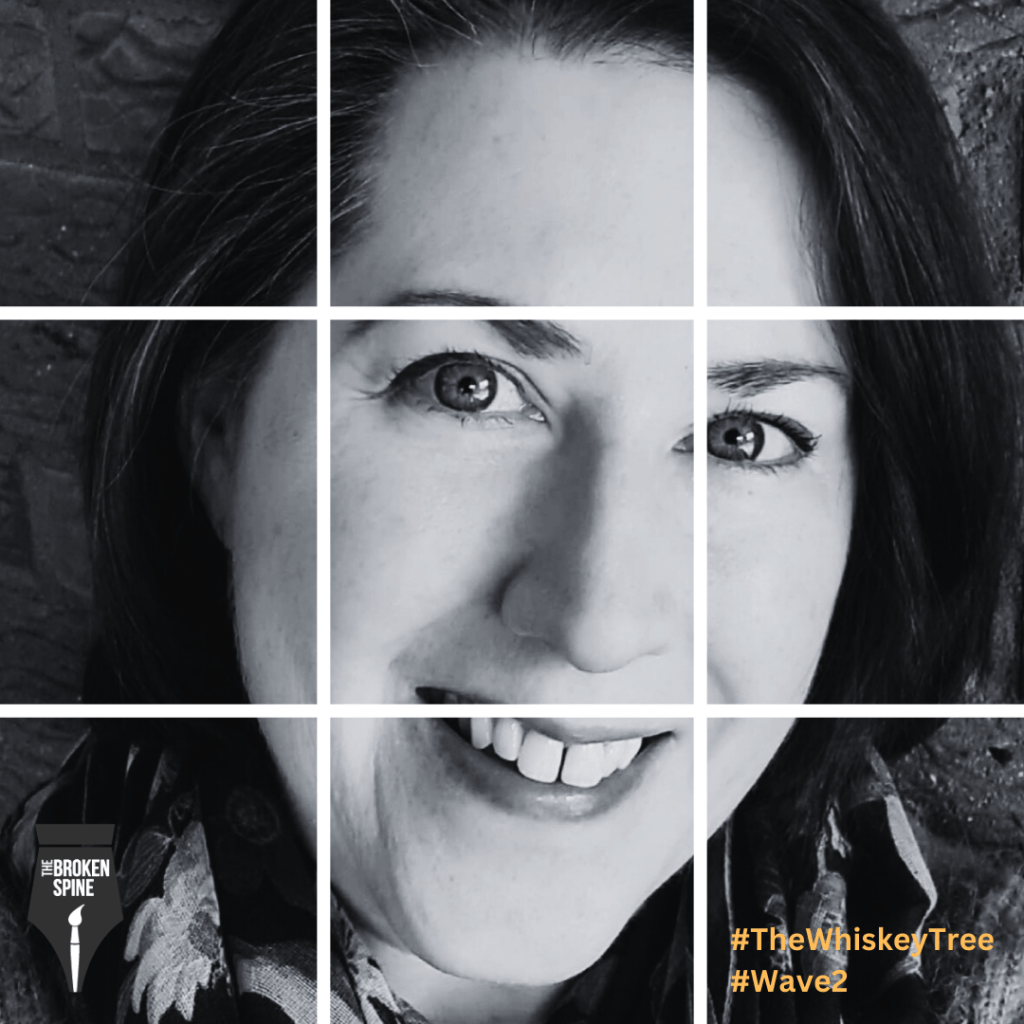
Lucy Heuschen
is a Pushcart-nominated poet and author of two chapbooks and a forthcoming collection. Lucy’s poems appear in Dream Catcher, The Orphic Review, Lighthouse, Obsessed With Pipework, The High Window, Skylight 47, The Storms and Ink Sweat & Tears. She was commended in the Poetry Society’s Stanza Competition 2024.
BlueSky: @PetiteCreature1.bsky.social
Website: http://www.lucyheuschen.co.uk
The Interview
1 How did you decide on what poems to send?
I wrote pieces especially for this brief rather than selecting from existing drafts. Since I worked closely with Alan on my chapbook “Loggerheads”, which won The Broken Spine Chapbook Competition and was published by The Broken Spine earlier in 2024, I had a good idea of the kind of work he might find appealing. Also, the brief Alan gave his poets for this project was brilliant. To be bold and uninhibited, to break the rules and explore what lies beyond – an irresistible invitation for any poet!
2 What poetic form did it take, and why?
I tend to write fairly short poems of one page or less. I enjoy form and do write poems in strict form sometimes, if that serves the poem. For this project, I focused on intensity and atmosphere over any particular form or structure.
3 How did you use the whiteness of the page in your poem?
I used the whiteness to convey the water in which the mysterious goddess Aerfen lurks. As the poem progresses, the water intrudes more, becoming more aggressive, consuming the human element (the words). The girl is stranded in the final lines – an offering of desperation into the whiteness / the water / the void.
4 How did you decide on the title of your poem?
That was easy, because it was all about the goddess Aerfen. She is the heart of it. It is said that in Roman times, people would make sacrifices to Aerfen in the River Dee ahead of a battle, hoping to ensure victory.
5 Imagery, or narrative. Which was more important to you in writing the poem?
The narrative of the poem is very simple, which enabled me to focus on strong word choices and imagery.
What do you think of where your poem is placed in the collection?
I wasn’t expecting my poem to be first up so it was a surprise when I opened the manuscript! It is an honour to kick off this remarkable project. I hope it is a striking introduction to the collection and sets the scene for the anthology.
7 Once they have read your poem, what do you hope the reader will leave with?
Maybe an appreciation of the dangers our girls and women still face as they move through this world of ours.
The Wombwell Rainbow Presents The Whiskey Tree Wave 2 Interviews: Damien B. Donnelly
TWT Wave 2 may be purchased here: https://shorturl.at/ezFNn
Damien B. Donnelly
is the author of 2 pamphlets, a micro-collection and full collection, Enough! published by Hedgehog. He’s the host/producer of Eat the Storms, poetry podcast, and editor-in-chief of The Storms journal. His work appears in various anthologies. His 2nd collection was published in 2024 with Turas Press.
X @deuxiemepeau Bluesky @eatthestorms.com Instagram @damiboy
The Interview
1 How did you decide on what poems to send?
I picked the ones that challenged me the most to write. The ask was to be untamed, in both content and creation. This wasn’t a process of flow, it was a journey into the dig, digging into the theme and digging into how I write. I wanted to push myself into a place of discomfort, a place unfamiliar and see how I could write my way through it.
2 What poetic form did it take, and why?
It was free form and it had to be. The poem is, in its essence, beyond restraint, a chorus of coincidence instead of curated notes. It is based on an actual walk through a wood in County Monaghan, in Ireland, in November. It was a place where sound betrayed logic, I heard the sea in the rustle of leaves still holding on, snakes hissed under the rusting of fallen leaves, crisp under foot but I was nowhere near the sea and far from a single snake, thanks to St. Patrick! There was a lake, a shimmer of light in place of sound, hotel-sheet still, and I wanted some of the lines to have that quality, pulled so tight while others felt cracked, submerged. I wanted it to feel as random as the wild.
3 How did you use the whiteness of the page in your poem?
I hope the whiteness allows the poem to spread itself snake-like across the page, it twists at its own will, it has breaks, things missing, broken bits nature had already digested and other spaces to regurgitate them later. The white spaces also become the route the wind takes through the words. You can look down on the page itself as if you are looking down on the wood from above, lines of trees next to open spaces where others have been felled, have fallen, have refused to grown to man’s plan. You can plant the seed but the wood is forever unwilling to be tamed. I wanted it to be something big, heavy, clunky.
4 How did you decide on the title of your poem?
The poem is a song of the wild, a song of a wild thing so there is nothing gentle to the title, it has its own crunch but there is also a playfulness to it as it falls from the tongue with its use of alliteration while I hope the onomatopoeia in the poem itself brings to life the sound of the wind, its snake-like hissing. It was an orchestration of both, though the conductor, nature itself, carved the narrative.
5 Imagery, or narrative. Which was more important to you in writing the poem?
The poem is loaded with images but I realise, however detailed I become with the image, the reader will make their own visions, that’s the journey into a poem or a story, when the author hands over the ownership and the reader builds their own scenes in which it all takes place. As the writer, I see it, but it is my vision. A piece of writing, when read by many, finds itself forming its own world in the minds of many consciousnesses and none of these worlds are truly alike.
6 What do you think of where your poem is placed in the collection?
I am in awe of all my fellow contributors as much as I was in awe of all who made Wave 1 so remarkable. To be anywhere in here, with these names, with these writers, is an honour. The curation tells a story from beginning to end, it is an anthology but it has its threads and I love how Jen’s ‘trees whisper’ into mine and how the final ‘Fall’ of my poem blends seamlessly into the ‘washed greens’ of the next, how the crunch of mine rubs against the ‘brutal cleave of salt’ of Lesley’s Earth’s Gift.
7 Once they have read your poem, what do you hope the reader will leave with?
To go out and listen, to hear nature, to fall into its harmonies and tremble at the breath of its roar. The world, even when sleeping, is never silent, even the lake, at point of freezing, can be heard almost shuffling itself into solid structure, as if it never knew the flow of liquid. And we are losing it, every day, more and more. This is not the place of permanence we once imagined. Catch it before it falls from grasp.
The Wombwell Rainbow Presents The Whiskey Tree Wave 2 Interviews: Lesley Curwen


TWT Wave 2 can be purchased here: https://shorturl.at/ezFNn
Lesley Curwen
is a poet, broadcaster and sailor from Plymouth. She won the Molecules Unlimited poetry competition, and in 2024, Hedgehog Press published her pamphlet Rescue Lines, and Dreich published an eco-chapbook, Sticky with Miles. She has been nominated for Pushcart Prize and Best of the Net. @elcurwen, X and Insta @elcurwen.bskyb.social http://www.lesleycurwenpoet.com
The Interview
1 How did you decide on what poems to send?
I looked at the many poems I have written about nature and environmental decline, and chose one which asks for the reader to think differently about something very humble and common, sand, how it is formed and what it has been through before we carelessly walk on it. The poem contrasts the desirable seaglass that catches beachcombers’ eyes, either the simple beauty of pebbles and sand.
2 What poetic form did it take, and why?
It started out as a shapeless mass of ideas, then gained a kind of momentum as the story of sand’s beginnings took off. I ended up putting it in tercets with a final couplet and suddenly it was a sonnet, though the volta comes very early in the poem.
3 How did you use the whiteness of the page in your poem?
I suppose the poem could have been a block of text, a sonnet with no white space, but as the poem is an argument against the easy and heterodox view, the uneasy, restless shape of the tercet worked better, and the last two lines seemed to belong on their own, to give them the final word. Having said that, I always torture myself that my endings are too obvious and wrapped-up, a hangover from a lifetime as a reporter where it was a requirement of the job.
4 How did you decide on the title of your poem?
It took a while- there were some titles that mentioned seaglass. But in the end it seemed that the key thought was that even the humblest stuff beneath our feet has its own history, is a gift from nature, to be perceived and appreciated.
5 Imagery, or narrative. Which was more important to you in writing the poem?
The first line came first, about the attraction of seaglass, which I confess, I do collect myself. After that, the narrative and it’s momentum was intensely important. The rest of the imagery folded around it.
6 What do you think of where your poem is placed in the collection?
It is in the middle, which is fine with me, though I suspect my poem will be overshadowed by the work before and after it, from my hugely talented colleagues.
7 Once they have read your poem, what do you hope the reader will leave with?
A new perception every time they visit a beach, thinking of the untamed crash and thunder of waves which once beat stone and cliff to the softness of sand they walk on.
The Wombwell Rainbow Presents The Whiskey Tree Wave 2 Interviews: James McConachie
TWT Wave 2 can be purchased here: https://shorturl.at/ezFNn
James McConachie
Writing from rural Spain, James has poetry published by Iambapoet, Black Bough, Eat the Storms, The Madrid Review, Modron Magazine and essays/short stories for the Dark Mountain Project. His poems have been nominated for the Pushcart prize and Best of the Net. His debut collection, ‘Consolamentum’ was published in October 2024 by Black Bough Poetry.
Bluesky: @jamesmcconachie1.bsky.socialX:@jamesmcconachi1Instagram: @jaimemacabeoFacebook: https://www.facebook.com/share/12Bw2pTLCeR/?mibextid=wwXIfr
The Interview
1 How did you decide on what poems to send?
I actually wrote the poem in response to the prompt/concept of untamed nature.
2 What poetic form did it take, and why?
Like much of my poetry it has a formless form, if that makes any sense. I tend to use lots of internal rhyme which I always think of as like a spring, coiled up through the poem to hold it under a kind of tension. In this poem, like many others, I ended on a couplet with slant rhyme at the end. I know this is unfashionable, but I always come back to Heaney’s ‘Mid- Term Break: ‘No gaudy scars, the bumper knocked him clear./A four-foot box, a foot for every year.’ which is some finely delivered poetic wallop, something I admire and aspire to produce. I once described this as ‘The hammer that knocks the nail in’ with someone who disagreed, suggesting it was a form of lyrical comfort for the reader in contrast to the disconsolate theme. I’m going with the hammer.
3 How did you use the whiteness of the page in your poem?
Hmmm. I didn’t really, beyond two stanzas of 9 lines. The break between stanzas isn’t clear as it runs on with an enjambment.
4 How did you decide on the title of your poem?
I never overthink titles, which might be lazy of me, as I often use a Spanish word, or in this case the Catalan word for an almond orchard. I suppose it reflects my ‘lived reality’, as they say.
5 Imagery, or narrative. Which was more important to you in writing the poem?
I really wanted to convey the speed with which nature reclaims neglected farmland here and how magical that can be, so I was trying, with images, to conjure up a great, beguiling density of life.
6 What do you think of where your poem is placed in the collection?
Another thing I try not to over think. It sits nicely between slightly contrasting poems, I think.
7 Once they have read your poem, what do you hope the reader will leave with?
Well, it’s an optimistic poem, when so many of mine are not, so I hope it transmits that. It might be ephemeral, but the power of nature to quickly reinhabit human spaces is an optimistic observation, I hope.
The Wombwell Rainbow Presents The Whiskey Tree Wave 2 Interviews: Romina Ramos

Romina Ramos
is a Portuguese poet, whose work mostly examines complicated familial relationships, and interrogates themes of identity, belonging and dislocation. They’ve been shortlisted for the #Merky Books New Writer’s Prize and The Bridport prize for poetry, and won the Carcanet prize for poetry. They are editor in chief for Worktown Words, Live From Worktown’s creative writing magazine and co-founder and host of Natter, a monthly night providing a platform for creatives of all levels to share their work in a warm and supportive environment.
The Interview
1 How did you decide on what poems to send?
Some I wrote specifically one was edited to fit theme.
2 What poetic form did it take, and why?
I don’t tend to play with form too much unless it serves a meaningful purpose to the poem, in the case of these submissions I wrote mainly in short stanzas.
3 How did you use the whiteness of the page in your poem?
I didn’t.
4 How did you decide on the title of your poem?
My titles usually come from a word or feeling within the poem.
5 Imagery, or narrative. Which was more important to you in writing the poem?
Both, I think one serves the other. Effective imagery can help drive the narrative forward.
6 What do you think of where your poem is placed in the collection?
I think it has married well with the other surrounding poems.
7 Once they have read your poem, what do you hope the reader will leave with?
For some maybe nostalgia, for others maybe curiosity.
You can purchase TWT Wave 2, here: https://shorturl.at/ezFNn
#ekphrastichallenge2025 Who is up for the challenge this year? Inspired by at 2 artworks a day at the moment in April. Can you write a draft poem/short prose or even another artwork for each of the thirty days in April? What follows is what previous participants have said:
“It was a joyful, enriching experience and an honor to appear in your beautiful Wombwell Rainbow alongside such talented artists and poets. I’m grateful to Paul & participating artists & poets for inspiring me out of a writing slump…”
“I was struck by how often we mirrored each other, like Matisse & Picasso painting uncannily similar subjects despite being separated by geography & war. I’ve loved the collective energy!”

