Here are the contribution details:
https://open.substack.com/pub/the880/p/contributions?utm_campaign=post&utm_medium=web
Author: The Wombwell Rainbow
#thestarbeckorion final issue of 2024 #7 is themed #NotAdvent. Closing date 7th December. Featuring your poems/short stories/artworks about loss and missing. The opposite of advent. Email me your contributions.
#thestarbeckorion final issue of 2024 #7 is themed #NotAdvent. Closing date 7th December. Featuring your poems/short stories/artworks about loss and missing. The opposite of advent. Email me your contributions. Here are the contribution details:
https://open.substack.com/pub/the880/p/contributions?utm_source=share&utm_medium=android&r=33jsyn
Karen Pierce Gonzalez Reviews: Shiftings by Jenny Wong
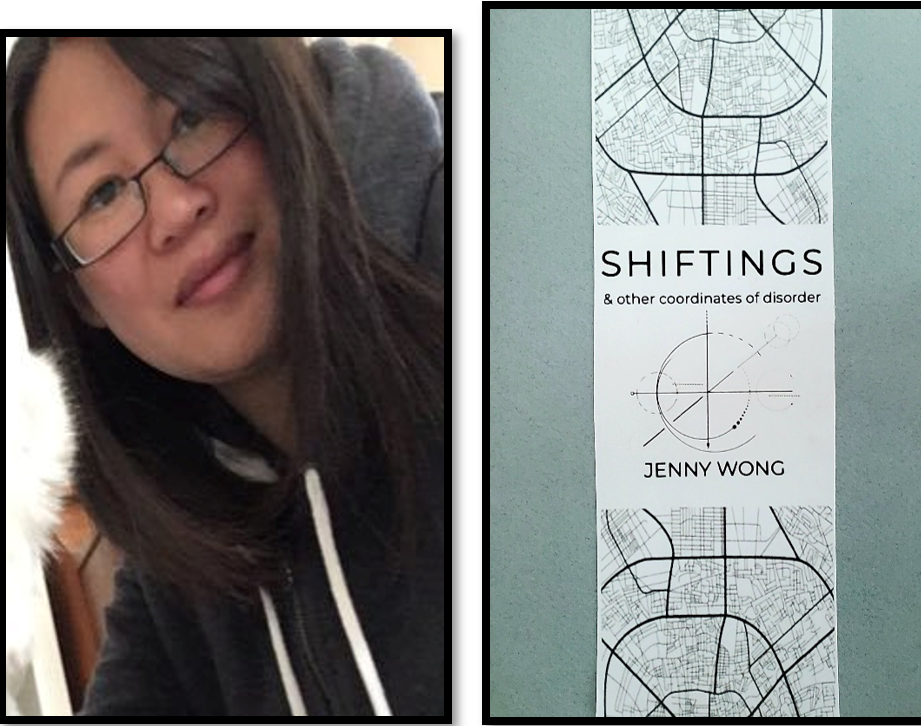
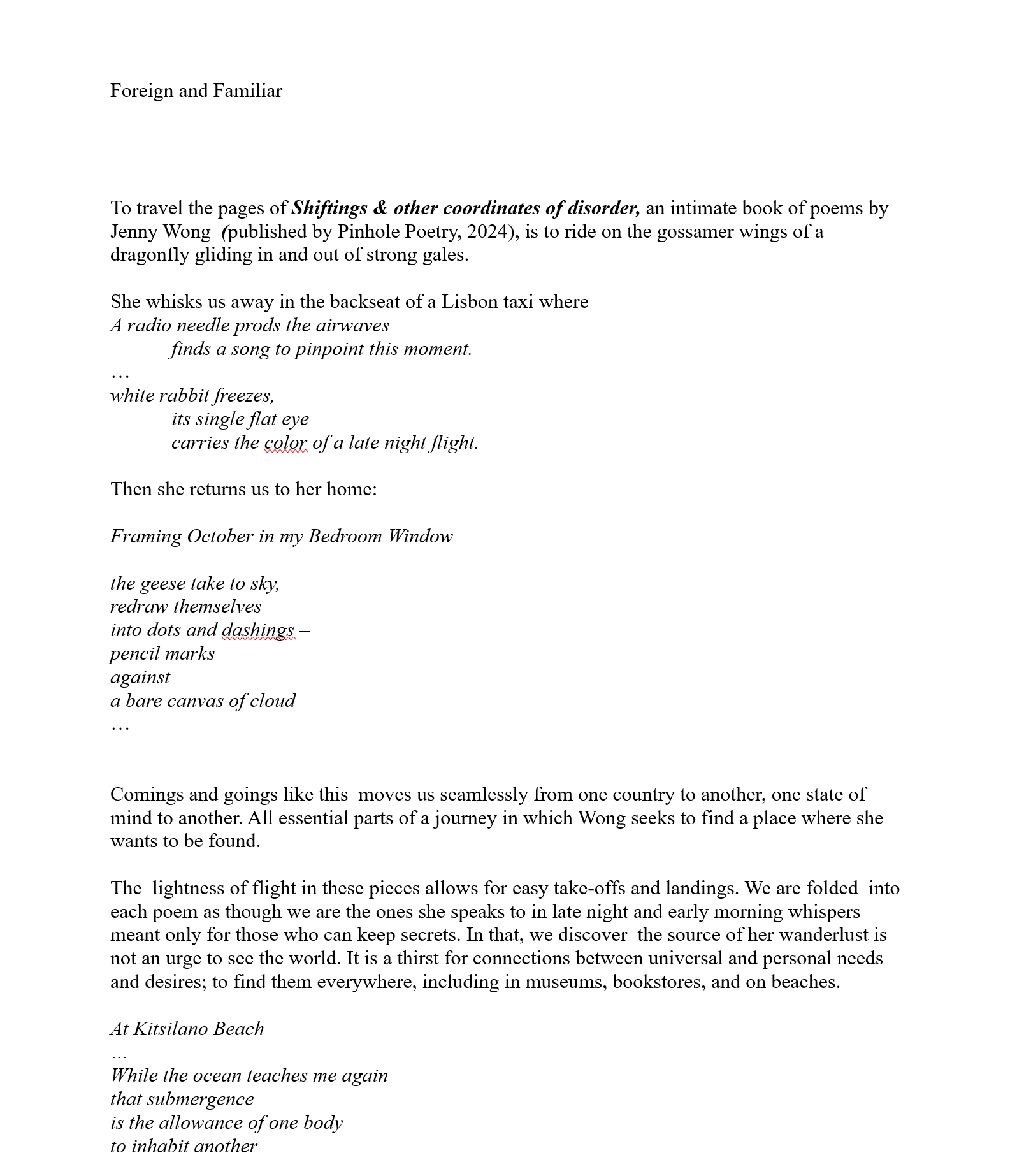
More about Jenny Wong opencorners.ca/about
Shiftings & other coordinates of disorder https://pinholepoetry.ca/
Reviewer: Karen Pierce Gonzalez, Coyote in the Basket of My Ribs, RavenSong, Down River with Li Po. Editor, FolkHeart Press
Wombwell Rainbow Book Interviews: The Lost Art Of Ironing by Kelly Davis, Glory Days by Kerry Darbishire and Kelly Davis
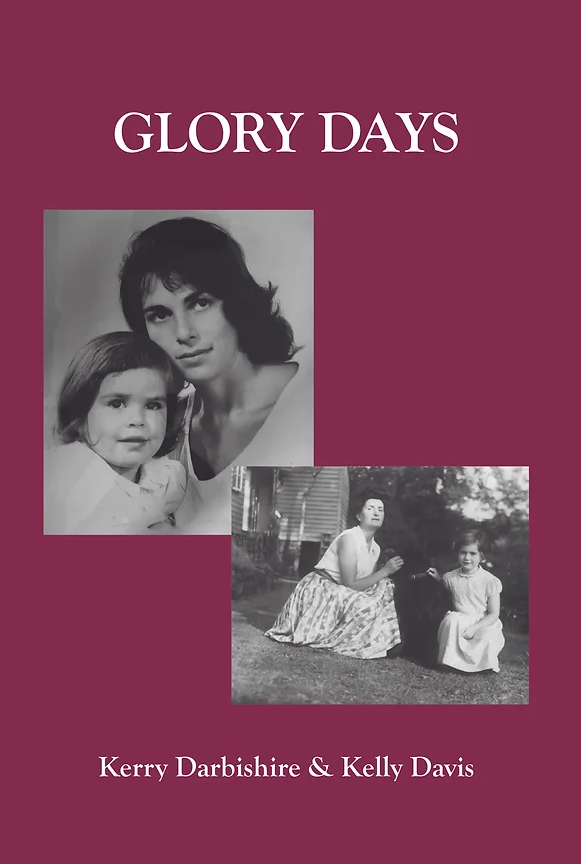

Kelly Davis
lives in Maryport, on the West Cumbrian coast, and works as a freelance editor. Her poetry has been widely anthologised and published in magazines such as Mslexia, Magma, London Grip and Shooter.In 2021 she came second in the Borderlines Poetry Competition and was longlisted for the Erbacce Press Poetry Competition. She has twice been shortlisted for the Aesthetica Creative Writing Award and she appears in the Best New British and Irish Poets 2019-2021 anthology (Black Spring Press). In 2021, she collaborated with Kerry Darbishire on their poetry pamphlet Glory Days (Hen Run).www.kellydavis.co.uk
The Interview
Q:1. When and why did you start writing poetry?
I always loved poems and rhymes as a child and I was lucky enough to have a father who read me Thomas Malory’s Le Morte d’Arthur when I was very young. I know I started writing my own poetry in 1972, aged thirteen, because I still have the book in which I painstakingly wrote my first few poems in calligraphic script. Like many teenagers, I mainly used poetry as an outlet for difficult emotions. Expressing grief and anger in words, and particularly in poems, made me feel better – perhaps because it helped me understand my feelings and gain some distance from them.
Q:1.1. What was it about Malory’s poem that stayed with you?
I think the tragic love triangle between Arthur, Guinevere and Lancelot. I was too young to understand it at the time but I somehow sensed the enormity of the betrayal.
Q:2. So you would say this action of your father introduced you to poetry
I think it was less about poetry at that stage and more about the beauty of Malory’s words and the power of the narrative. Many of my poems have a storytelling element so perhaps that early introduction to Malory’s epic somehow fed into my development as a poet.
Q:3. How did you decide on the order of the poems in both of your books?
My first pamphlet, Glory Days (Hen Run, Grey Hen Press, 2021), was a ‘poetic conversation’ with Kerry Darbishire about the stages in a woman’s life, and our relationships with our charismatic mothers. It was relatively simple to arrange the poems, beginning with memories of our teenage years, followed by finding love, then the experience of motherhood, coming to terms with getting older, and thoughts about our own mothers aging. Finally, there were some poems about losing our mothers. Thankfully, my mum is still alive but Kerry wrote very movingly about the things her mother left behind – a house full of memories and the dried flowers she left in her diary.
Arranging the poems in The Lost Art of Ironing (Hedgehog Poetry Press) was much trickier. This newly published solo collection has several themes and deals with other women’s lives as well as my own. I always knew I wanted the book to open with ‘To My Hands’, which is really my life story in a single poem and I was originally going to follow it with other poems expanding on particular aspects of my life. However, I sent the draft manuscript to Brian Patten (a long-standing friend and one of my all-time favourite poets). He was kind enough to read it and he thought the poem about Emily Dickinson was one of the strongest and should appear near the front. Once I’d moved that one, I realised that it would be much better to start with other women’s lives and go back to the autobiographical ones later. This arrangement somehow opens the collection out, making it more resonant for a wider audience. In the later part of the book there are certain poems that had to follow each other – for instance, the ones about my Jewish family history. ‘Prove your identity’ hints at later events, mentioning the necklace owned by my great-grandmother which features in the next poem. It also refers to my grandfather leaving Lithuania ‘in time’. This statement is unpacked in the third poem in this little sequence, ‘Trying to Edit the Holocaust’. I wanted to end the book with my modern versions of five Shakespeare sonnets. I love the sonnet form – and the themes of time, mortality and digital technology run through the whole collection – so the book ends with a final rhyming couplet:
‘At last we know that love is what life’s for,
and life is short – so we love even more.’
Q:4. How aware are and were you of the dominating presence of older poets traditional and contemporary?
I suppose the short answer is ‘very aware’. I studied English Literature at St Anne’s College, Oxford, and gained a pretty good knowledge of ‘the canon’, starting with Anglo-Saxon and Chaucer and covering a
range of Elizabethan, Restoration, Victorian and Georgian poets. I was there in the late seventies and the course was still very traditional then, ending with Yeats and Eliot. I had to go to another college to study the American poet Marianne Moore! My favourite women poets were Emily Dickinson and Sylvia Plath
and I loved the Metaphysical poets, particularly Donne, Marvell and Herbert. Outside university, I remember being electrified by seeing Ted Hughes read at a pub in Hampstead; and seeing the Liverpool poets (Roger McGough, Brian Patten and Adrian Henri) made me realise that poetry could break out of the rarefied realm of libraries and lecture halls – and speak to everyone. I love the idea of poets being in conversation with each other across the centuries, and ‘The Lost Art of Ironing’ includes poetic responses to Keats, Eliot, Anne Sexton and Shakespeare.
Q:4.1. What made Emily Dickinson, Sylvia Plath and Donne, Marvell and Herbert your favourites?
In my poem about Emily Dickinson, I explain why I love her poetry:
‘I’d ask her to tell me her secret,
how to distil 200 words into 20,
how to capture a truth
before it slipped away – ‘
It’s also her incredible precision and fearlessness, when writing about huge subjects. I think ‘I heard a fly buzz – when I died’ is one of the best poems ever written about the process of dying.
Sylvia Plath was also fearless and said things no woman poet had said before, smashing taboos and sometimes using shocking language and images, as in ‘Lady Lazarus’. But she could also be tender and lyrical, as in ‘Morning Song’.
With John Donne, I loved the way he used bizarre metaphors, like a pair of compasses or a fly, to talk about love. His brilliant intellect was always at the mercy of his emotions, which gave his poems a sense of tension and struggle. Andrew Marvell created a feast for the senses, in a poem like ‘The Garden’, and also used the power of argument brilliantly in ‘To His Coy Mistress’. George Herbert was the most overtly religious – but, again, his passion came through in poems like ‘Prayer’ and ‘The Collar’.
Q:4.1. What “electrified” you about Ted Hughes reading?
The reading was in a small upstairs room and I was sitting quite close to him, looking up at his craggy face and listening to his deep, powerful voice. He had a very strong presence. At one point he read a poem called ‘February 7th’, about delivering a dead lamb, and the visceral language just floored me. I was left shaking, feeling as if I’d been in front of a firing squad. It was a revelation – that poetry could have such an impact.
4.1.1. How is “the visceral” important in your own poetry?
I want to write poems that deal honestly with the messiness of life – the guts, as well as the head and the heart – so I’ve sometimes written about subjects like sex and menstruation, which used to be seen as
inappropriate in more censorious times. I think poetry can make us more aware of our shared humanity. We all inhabit bodies, and experience the world through our physical senses. Poetry often has an impact on the reader through the shock of recognition.
Q:5. What is your daily writing routine?
I wish I had one! I still work from home as a freelance editor (https://www.kellydavis.co.uk/) and I help run the West Cumbria Refugee Support Network (https://wcrsn.org.uk/) so my poetry writing has to fit in when time allows. Occasionally I experience something that inspires a poem. If that happens I try to get a rough draft typed on my laptop straight away. Then I go back to edit it several times, at intervals. When I no longer feel the urge to make changes, I feel the poem is finished – and ready to share with others. I might road-test it at an open mic – and get feedback from poets I know and respect. I occasionally attend workshops and I have found the January Writing Hour (hosted by Kim Moore and Clare Shaw) a great source of inspiration.
Q:6. How does the natural world feature in your poetry?
I rarely write descriptive nature poems and I certainly wouldn’t call myself a nature poet. Most of my work focuses on human relationships but I’m also interested in the way human beings interact with the natural world. I grew up in London and my husband sometimes teases me about my ignorance of wild flowers, birds, and so on – hence the opening of my poem ‘Cutting Through the Fields’…
‘Today I surprised you / by recognising a yellowhammer’s call’.
In a poem from Glory Days, called ‘Walking in the Languedoc’, the autumnal landscape reflects my feelings as a post-menopausal woman. I liken the vines to ‘aged ballerinas in green tutus’, whose ‘grapes are long gone’. I’m not sure whether that’s personification or pathetic fallacy or both! But it’s my kind of nature poetry.
Q:7. How did you choose the titles for your books?
With ‘Glory Days’, I looked through the manuscript and noticed that my poem ‘Walking in the Languedoc’ ended with two particularly musical and evocative lines:
‘Their grapes are long gone
but the scent of their glory days remains.’
I loved the sound of ‘Glory Days’ and the phrase seemed to reflect our colourful, charismatic mothers, who are celebrated in several of the poems. I suggested to Kerry Darbishire that we should use it as a title for our pamphlet and she agreed. Neither of us realised that Bruce Springsteen had previously written a famous song called ‘Glory Days’! A male poet told me that title had already been ‘taken by the Boss’ but I don’t regret using it for our pamphlet.
For my solo collection, I knew ‘The Lost Art of Ironing’ was a key poem. It mentions women ‘creating order from heaps of chaos’ in the war years, and my mother-in-law using ironing to express her love for her children. As I worked on the book, I realised that my work as an editor featured in some of the poems and I felt that ironing could also be used as a metaphor for editing, in the sense of ‘smoothing’ something that is creased and crumpled. Then, by a stroke of luck, I found the perfect cover image – a painting by Edgar Degas called ‘Woman Ironing’. The title of the collection makes a lot of people smile, as many of us gave up ironing years ago, but it’s also quite poignant, as it makes one think of previous generations – and the losses as well as the gains.
Q:8. How important is poetic form in these collections?
I mainly write free verse, with stanza breaks that correspond to changes in the line of thought or
mood or narrative, but I occasionally use a more traditional form, like a Petrarchan sonnet (‘That Summer’) in Glory Days or the five Shakespearean sonnets at the end of The Lost Art of Ironing. Readers may also spot a couple of prose poems – ‘Snapshot’, which describes a childhood memory, and ‘Meeting in Deep Time’, about editing my husband’s book on Lakeland geology. In the latter poem, the prose form seemed to suit the flowing lava and geological strata I was describing. My new collection also includes a specular (‘mirror’) poem, ‘White Gladioli’, where the second half of the poem reverses the order of the lines in the first half. This poem is about a memory of a tragic accident – and it’s a bit like a film unspooling and rewinding (a metaphor I used overtly in another poem, ‘9th September 1972’). In recent
years, I’ve become more aware of the power of repetition, rhyme and a good line break. To sum up, the content of a poem (thought/emotion/narrative) always takes priority – but I think my best poems are the ones where form and content fit perfectly and reinforce each other.
Q:9. How do the writers you read when you were young influence your work today?
When I was young I read more fiction than poetry. I fell in love with the Narnia books and once spent quite a while in an old wardrobe with my best friend, trying to get to Lantern Waste! After that, books like ‘Lord of the Rings’ and ‘Gormenghast’ sparked my imagination, interspersed with Laura Ingalls Wilder’s tales of pioneer life in America. I was struck by the ability of these authors to paint pictures with words, to take me into other worlds and experiences. I try to do that in some of my poems, whether it’s taking the
reader into someone else’s life (like the woman who sat for Leonardo’s Mona Lisa) or back into one of my own memories (like watching Borg and Nastase play tennis at Wimbledon in 1976). I also loved Shakespeare from a young age – and I think his powerful imagery and use of iambic pentameter have found their way into some of my poetry.
Q:10. Who of today’s writers do you admire the most and why?
I’ve been lucky enough to meet some of the poets I most admire – at readings and workshops. Kim Moore has been a big influence on my writing. I think she goes from strength to strength, in terms of shining a light on the darker aspects of male/female relationships and making every word count in her poems. Her last collection, All the Men I Never Married, has had a big impact – and rightly so. She’s also a very generous mentor. Several poems in The Lost Art of Ironing were first drafted in her workshops. Another, very different, poet I admire is Alison Brackenbury. Her delicate, beautifully structured poems draw on her rural upbringing and family history. I love the way she often uses rhyme sparingly and to great effect. There are really too many wonderful contemporary poets to list – but a couple of others that stand out for me are Imtiaz Dharker (who brilliantly fuses Asian and Celtic culture) and John McCullough, who can be playful, funny, whimsical, touching, shocking and everything in between. John often shares his amazing work on social media and it always stops me in my tracks.
Q:11. How important is a “sense of place” in your writing?
I grew up in London and came to live in Maryport, a small fishing town on the West Cumbrian coast, 35 years ago. I love living by the Solway Firth, looking across to southern Scotland, and I have written several poems about this place. West Cumbria is a ‘poor relation’ of the Lake District, with a lot of poverty and deprivation, but it has its own spare beauty. Glory Days includes a poem called ‘Liminal’, written during the pandemic, which has the following stanza:
‘A place of sand and marram grass,
mauve thistles and natterjack toads.
Flat and calm, with southern Scotland
visible across a silver strip of sea.
A liminal space, reflecting
the limbo we are in.’
Q:12. Why do you write?
I write because I feel the need to express myself creatively and communicate with my fellow human beings. It gives me great joy and satisfaction when a poem falls into place – ‘the best words in the best order’ as Coleridge put it. It’s wonderful when someone tells me that one of my poems
has moved them in some way or resonated with their own experience.
Q:13. Why is family history in your poetry important for you?
I think we are all, to some extent, shaped by our families – for good or ill. I had a very happy upbringing, and I have a particularly close relationship with my mother, but all my family members are aware of our history as members of the Jewish diaspora. If my grandfather hadn’t left Lithuania when he did, he would have perished in the Holocaust, and none of us would exist. That is quite a salutary thought. My family also suffered a tragic loss on a family holiday in 1972, when my three-year-old sister drowned. It took me a long time to write about these very painful events but I think the poems dealing with them are among the most powerful ones I’ve written. When people come up to me after readings, those are the poems they often want to ask me about. Sometimes poems about grief and loss can be strangely healing.
Q:14. How did you collaborate with Kerry on “Glory Days’
It was a very easy, joyful collaboration. We already knew each other through workshops and poetry residentials in Cumbria – and we saw that Mark Davidson at Hedgehog Poetry was running a competition for ‘poetry conversation’ pamphlets. It turned out that we both had quite a few poems about our mothers and about the stages in a woman’s life – and I was delighted when Kerry invited me to collaborate with her. We started sending each other poems and they seemed to fit together very naturally. In the end, our pamphlet ‘Glory Days’ wasn’t selected for that competition but we both really liked it and wanted to find another home for it. Kerry showed the ms to Joy Howard at Grey Hen Press, who specialises in poetry by women over sixty. Fortunately, Joy liked it and agreed to publish it under her Hen Run imprint. She helped us arrive at the final order, gave us a few edits on individual poems, and published it in 2021. Kerry and I did several readings together (both in person and online) and I think audience members enjoyed the fact that we had different voices and styles but similar concerns as women poets, and the book really was ‘a poetic conversation’.
Q:15. What literary projects are you on with at the moment?
I have a pamphlet of poems about my father, which I’ve submitted to a few competitions. I also recently sent in an illustrated pamphlet about insects, animals and birds; and Kerry and I have been working on another collaborative pamphlet about food, cooking and kitchen implements. Meanwhile, I’m still working as a freelance editor. I mainly work on memoirs these days, but someone has just asked me to edit a poetry collection and I’m looking forward to doing that.
Q:16. Once they have read your book what do you hope the reader will leave with?
I hope some of the poems will stay with readers – because they find them particularly moving or insightful or they echo their own feelings or experiences in some way. There are some funny and uplifting poems, between the harder-hitting ones, which should make the collection enjoyable. There are also certain themes, such as the role of digital technology in our lives and the way the Internet has changed our relationship with time, memory and mortality, which I hope will lead people to think more about these subjects. More than anything, I would like readers to feel that they have been on a journey with me – and that the journey has been worthwhile.
Thanks again for spending time interviewing me about my poetry, Paul. Your website is a very valuable resource for anyone with an interest in contemporary poetry and I feel honoured to be included alongside many poets I admire a great deal.
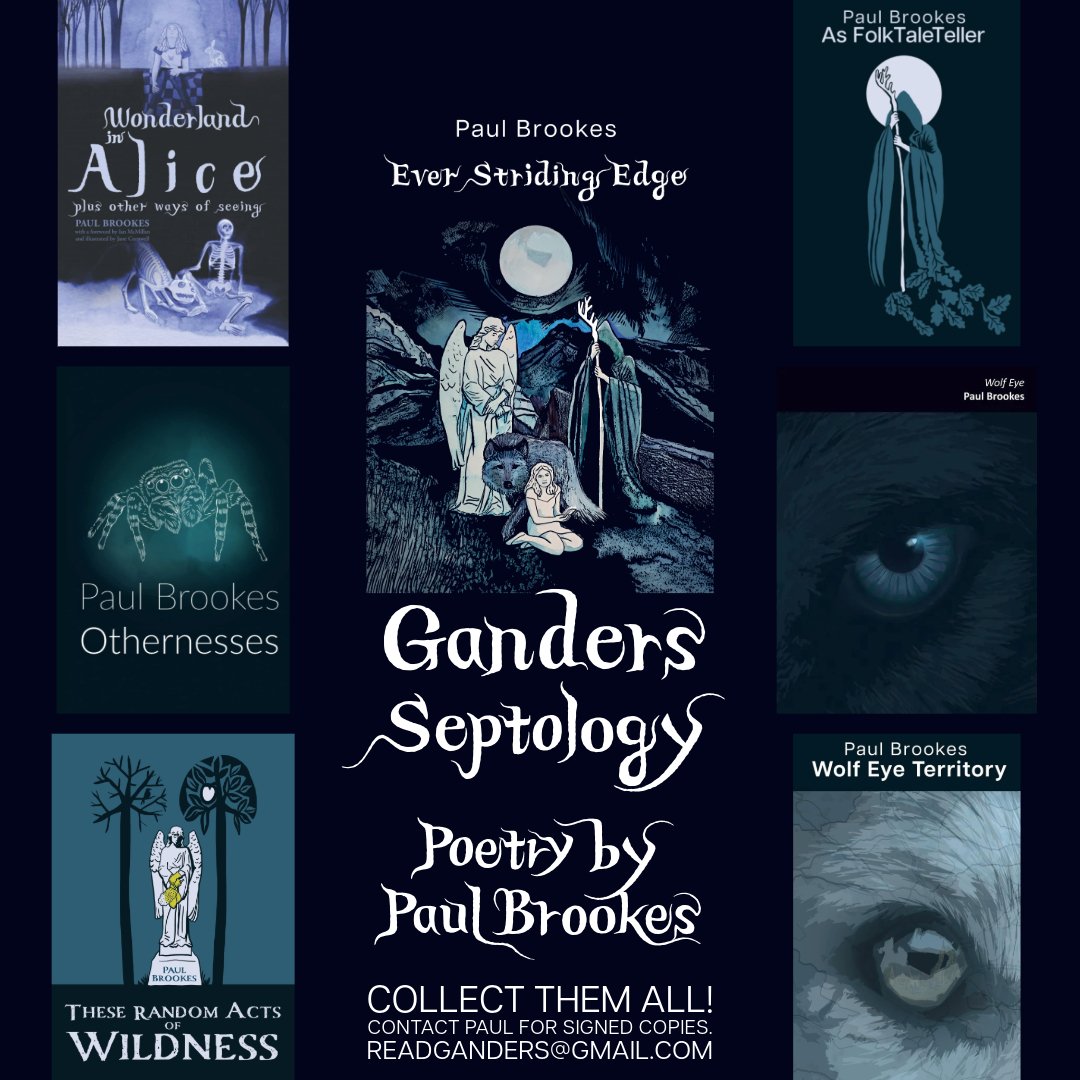
My “Ganders” Septology showing the astounding artwork of Jane Cornwell.
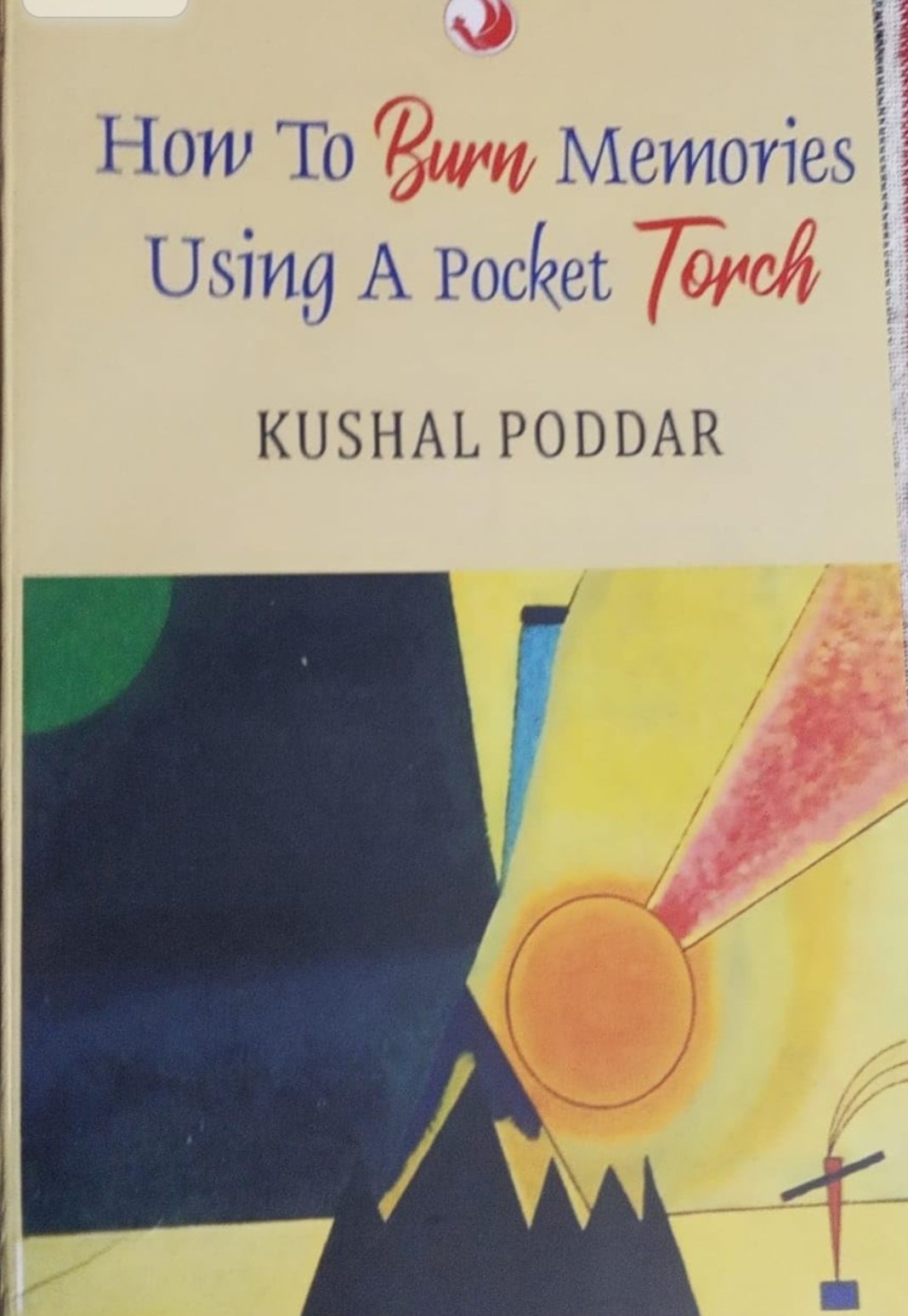
Wombwell Rainbow Book Interviews: How to Burn Memories Using A Pocket Torch by Kushal Poddar
Kushal Poddar
The Interview
Q:1. How did you decide on the order of the poems in your book?
They are more or less date wise. I often wondered if we write a single poem in parts throughout our lifetimes. Hence I often gather poems in the very order they were first drafted.
Q:1.1. Like a diary?
A journal, annotated observations of surroundings and news. Of course, the commentary climbs and crosses the wall between the world we see and the world we imagine.
Q:2. How important is form in these poetic “observations”?
I have been using both blank verse and free verse, rely on slant rhymes and ears for beats and meters , but barring a few sonnets I don’t bind my poems in strict forms.
Q:2.1. What appeals to you about the sonnet?
Sonnets provide a song to the neatness. I mean, the form is, unless you consider the deconstruction and modern variations like those written by Rita Dove, tight and gives you a sense of the undulation of iamb, and this neatness you carry with you when you are not writing a Sonnet. Even when you are free-versing you have a rooted sense of beats.
Q2.1.1. What do you mean by “rooted sense of beats”?
Beats and rhythms are everywhere. A musician hears them in the flow of water, wind passing through the leaves, dogs barking. Sonnet helped me, and I guess, listening to instrumental music in the background while writing too, to hear the echo of the rhythm and apply that in my word processing.
Q:3. How does the natural world feature in your poetry?
They are in seriatim- follow the events of my life and life at large as I witness, as I live.
Q:3.1. Autobiographical. If the natural world happens in the moments you live, it is included?
Nature, Paul, as Harold Proshansky would have pointed out, changes human mind, mind’s tolerance and impatience. I write outdoor mostly. The stories that are not mere personal are observed in the park, road or by the riverside.
Now here is a two fold impact. I try to stay a neutral observer in the field watching human nature and the nature outside, and yet I myself become one dot in the cycle. Nature impacts my mood as well. I see the same event with either cheery or gloomy eyes depending on my mood.
Q:3.1.1: “park, road and riverside” describe a vital sense of place in your poetry. How important is this to you?
When I began writing in English it was traversing beyond my boundary, but I carried the dirt of my land within me. The sense of place becomes stronger as I age. Now I journey back to my city with the cairns, words and cultures from everywhere.
Q:4. When writing a poem what do you do to dislocate the reader’s perceptions to make them see the events you describe differently?
Perception, Paul, is a closed door compartment, a vault. It is a frame we put around a new artwork. I believe in avoiding sweeping statements even like theine just uttered. In writing, even in a medium as emotional as poetry I try to adhere to show more, tell less. It doesn’t dislocate a reader, rather a reader accepts it in his vault. A poem is a thousand poems according to thousand readers
Q:5. How does living in a city reflect in your poetry?
I see village people coming in search of something, and I observe their tiredness, dreams, frustration etc. I go into a village with naive eyes and see the skin of reality, its green and beauty. I know what lies beneath but as a city dweller I have the advantage of being overwhelmed by what lies on top.
Q:5.1. Being “overwhelmed” is an “advantage.” How so?
It lets you feel effervescent, lets you detail the shine and the goodness instead of the pull of darkness that you may feel and that may drain all the words.
Q:6. Why is surrealism important to your poetry?
Surrealism stretches the possibilities beyond and beneath at once. It dives deep into our subconscious, tweaks our id and manipulates our ego. Surrealism flies on the far side of reality. It is an echo of reality and yet it adds to the same.
Q:7. Once they have read your book what do you hope the reader will leave with?
I hope my readers find an alternative reality or at least wings to fly beyond their own or gears to dive deep into their mind after reading my books.
Wombwell Rainbow Book Interviews: Velvel’s Violin by Jacqueline Saphra

Jacqueline Saphra
is T.S. Eliot Prize nominated, award-winning poet, a playwright, editor, agitator, teacher and organiser. She is the author of ten stage plays, four chapbooks and five collections. Jacqueline is a keen performer and collaborator, working with composers, musicians, visual artists and other poets. She offers mentoring and teaches poetry in all kinds of settings including The Arvon Foundation and The Poetry School.
Her fifth collection Velvel’s Violin is out from Nine Arches Press.
The Interview
Q:1. How did you decide on the order of the poems in your book ?
Just like an individual poem, a book goes through many formal changes in its development. Once I had a critical mass of poems ready for the book, I laid them out on the floor and tried to make some kind of sense of them. I put them together as a single document with no breaks, looking for poems that juxtaposed, connected and bounced off one another and (unusually) shared the manuscript with my husband. It quickly became apparent to both of us that there was too much complexity in this book and somehow it needed more space. I came up with the idea of using, as headings, excerpts some of the poems I’d been reading over the previous few years that had been influential on the book. This helped me to give the sections a kind of cohesion. I tried several different groupings and once I’d arrived at something I thought was workable, I drafted in my daughter Tamar, who is, handily, a dramaturg and theatre director and has an understanding of structure and narrative. She helped me take some poems out, add some poems I’d dismissed, and make sense of the sections. Of course sections are interesting in a poetry book, because the content of many poems can cross over from one section into another. So this became an endlessly reiterated and painstaking process of shifting poems around until they found their positions. Eventually, after editorial meetings and correspondence over a period of months with Jane Commane, my editor, the book reached a point where moving any one poem to another place had a disruptive ripple effect on all the others and upset the balance. That was how I knew the book was done. Although there was a very, very late change in the final manuscript when I suddenly realised the final two poems needed to be swapped around. That was a surprise! The same kind of surprise, in fact, that you sometimes get when writing an individual poem.
Q:2. How was the book shaped by current as well as past war and conflict?
I have always liked historical narratives because however terrible the stories might be, they are over! Notwithstanding, I had always intended and understood from the early days of writing this collection, that the past and present constantly bleed into each other and we fail repeatedly to learn from past conflicts. Just as I was building momentum in the writing of the book,, the Russian invasion of Ukraine really sharpened and focused this view. It became impossible to carry on working on ‘Velvel’s Violin’ without letting the new, devastating war in Europe become part of it. Our current geo-political disturbances, ongoing wars in many different countries and our so-called ‘migrant crisis’ are also a big presence. My own relatives were murdered in concentration camps because they were not given sanctuary in other countries; there are so many parallels with our current moment. You’ll notice that ‘Prologue’, the first poem in the book, is focused on a profound sense of temporal dislocation. During the writing process, in my dreams, my nightmares, my work and my life, I was longer located in either past or present. Time became confusing, fluid and endlessly malleable.
Q:3. How important is music in your collection?
Well, it is called ‘Velvel’s Violin’, and there is a painting by Marc Chagall, the ‘Violiniste Vert’ from 1947 on on the cover. The title poem, is about a violin that was buried at the start of World War Two and never recovered by its owner, who was murdered by the Nazis. I’m a big fan of Sholem Aleichem, the Yiddish short story writer and playwright, who wrote some unforgettable short stories set in the Eastern European shtetls (Jewish villages) in the early part of the nineteenth century. In fact his stories of Tevye the Dairyman, unsparing in the way that they describe the grinding poverty of the everyday lives of most Jews, were the inspiration for the somewhat sanitised musical‘ Fiddler on the Roof’ (which I’ve always loved). The title of the musical was probably inspired by Chagall’s paintings of violinists. Jews in The Pale of Settlement were forbidden to take up most professions but they were allowed to become musicians – and Jewish musicians, unlike most Jews, were permitted to travel. The lucky ones (often from Odessa), if talented enough, could make a good living as violinists and of course the instrument is small and portable. I myself learned the violin as a child and as you’ll see from the poem ‘Peace be Upon You’, I wasn’t great at it, but it felt meaningful and connective in some way. Klezmer music and the mournful sound of classical violin definitely formed the soundtrack in my consciousness while I was writing the book. A long time after writing it, I understood that the burial of the violin in the title poem represents to me the many buried victims, and all those voices that were silenced by the Nazis and their collaborators.
Q:4. What is the significance of poetic form in the collection?
There are some given forms in the book – but mostly I didn’t find even the sonnet, my go-to form for dealing with hot subject matter, particularly helpful. It was as if the constraints of form couldn’t hold the immensity of the material. The poems needed their own forms and often spilled over in unexpected ways.
Q:4.1. How did it spill “over in unexpected ways.”?
‘Remains: Berlin 1945’ is a poem based on the end of the second volume of Volker Ullrich’s biography, ‘Hitler: the Descent’ was so filled with horror it took many drafts for it to find the scattered and uneven form.
‘1939’ was a piece I couldn’t corral into a poem shape – although I tried – and became a kind of hybrid form, what I often describe as a proem: something with the distilled quality of a poem but the appearance of prose.
“Going to Bed with Hitler’ became little squares of prose poems coming one after the other – again, a way of making sense of the senseless.
Q:5. How important is food in your book?
I’d say food is and has always been a big part of Jewish life. Useful as a cultural marker for both the observant and the unobservant. We always celebrate with food (or fast) and food has vast symbolic meaning – bread, wine and the seder plate with its metaphorically laden items: the egg, the matzo (unleavened bread), the charoset (mortar for slaves to build the pyramids). ‘Yom Kippur’ is of course all about fasting and how it concentrates the mind, and ’The Trains, Again’ explores the Sephardi (as opposed to Ashkenazi) traditional foods and their place in family life. So I’d say food is not a major component in the book but there is a nod to it in various places as being significant.
Q:6. Travel, especially by train is a running theme throughout. How deliberate was this?
The trains were not a motif I particularly thought of before I wrote the book, but trains of course exist in Jewish history as very significant, especially in relation to the Holocaust so I am not surprised they keep coming up. They exist both in literal, historical terms and also in the subconscious as mostly taking Jewish people to concentration camps and death, but also as a means to escape. When I wrote ’The Trains Again’ I was recalling a friend and I discussing the almost unbelievable sight of refugees being carried into Berlin to safety rather than out of Berlin towards annihilation. I was surprised how often trains appeared and thought of using that motif in the title although the violin won out in the end.
Q:7. Once they have read your book, what do you hope the reader will leave with?
This is a difficult question to answer as I wouldn’t presume to assume or know or even hope. The poem is always in the eye of the of the beholder. But I suppose I can allow myself to dream that the reader will come away feeling galvanised to make a better, more just and peaceful world and to take some responsibility for being a part of that. As Rabbi Tarfon put it – millennia ago – in the epigraph at the start of the collection ‘You are not obligated to finish the work, but neither are you free to abandon it.’
Jacqueline’s fifth collection Velvel’s Violin is out from Nine Arches Press.
Thankyou, Susan. I am humbled by your magnificent reading of my words.
My Available Poetry Collections, So Far
The Fabulous Invention Of Barnsley, (Dearne Community Arts, 1993).
A World Where (Nixes Mate Press, 2017)
She Needs That Edge (Nixes Mate Press, 2018)
The Spermbot Blues (OpPRESS, 2017),
Please Take Change (Cyberwit.net, 2018)
As Folk Over Yonder (Afterworld Books, 2019).
GANDERS: SEVEN CONNECTED BOOKS
Wonderland in Alice plus other ways of seeing (JCSudio Press, 2021)
As Folktaleteller (ImpSpired, 2022),
Othernesses (JCStudio Press, 2023)
Random Acts of Wildness (Glass Head, Press, 2023)
Wolf Eye, (Red Ceilings Press, 2023),
Wolf Eye Territory,(ImpSpired, 2024).
Forthcoming Ever Striding Edge, (Dark Winter Press, 2024).
Delighted and honoured to receive this review 9f “Wolf Eye” from the prolific Christine Tabaka.
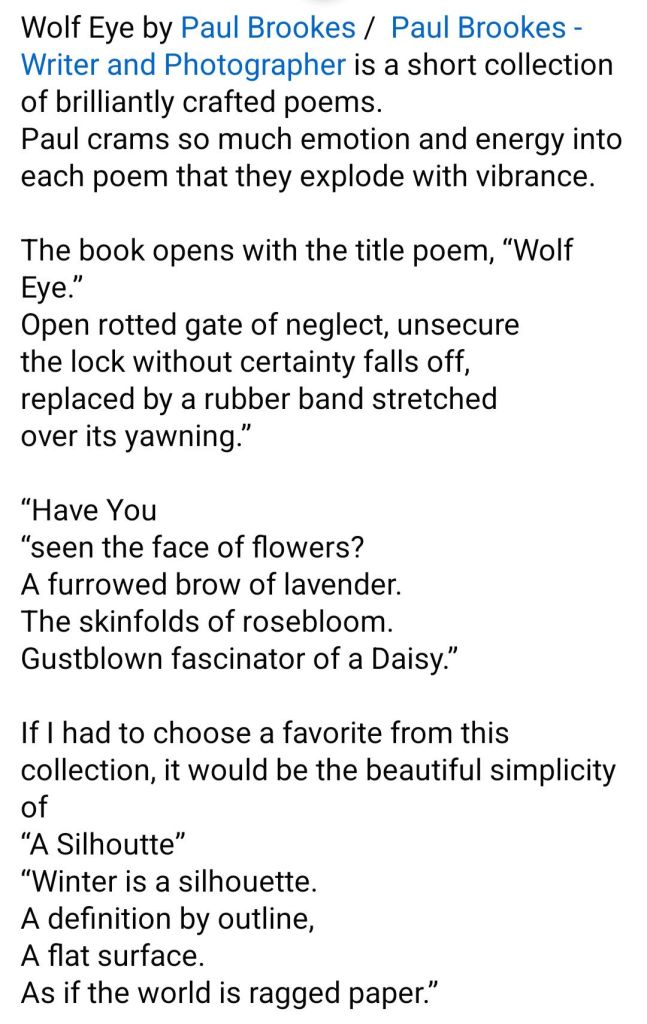
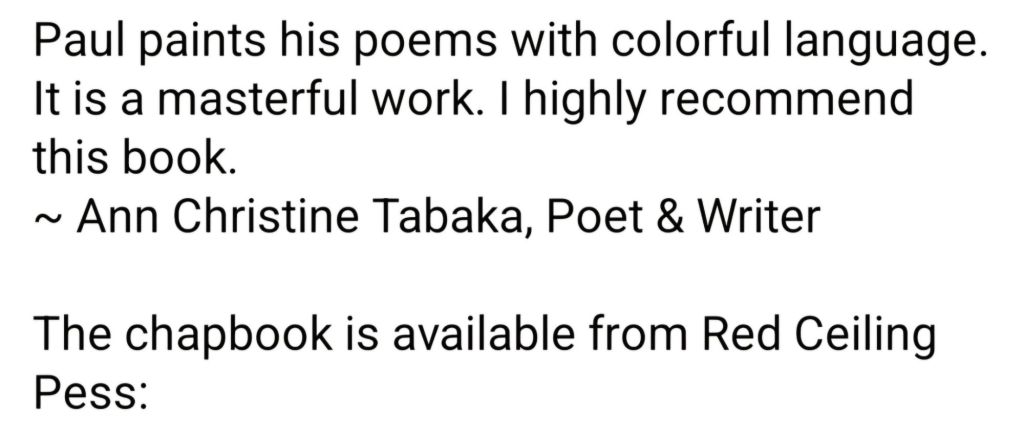
https://www.theredceilingspress.co.uk/product-page/wolf-eye-paul-brookes
Ann Christine Tabaka – poet
Website: https://annchristinetabaka.com
Linktree: https://linktr.ee/christinetabaka *(all my sites listed in one place)
Ann Christine Tabaka was nominated for the 2017 & 2023 Pushcart Prize in Poetry; nominated for the 2023 Dwarf Stars award of the Science Fiction and Fantasy Poetry Association; winner of Spillwords Press 2020 Publication of the Year; featured in the “Who’s Who of Emerging Writers” 2020 and 2021. Selected as a Judge for the Soundwaves Poetry Contest of Northern Ireland 2023. She is the author of 17 poetry books, and 1 short story book. Her most recent credits are: The Phoenix; Eclipse Lit, Carolina Muse, Sand Hills Literary Magazine, Ephemeral Literary Review, The Elevation Review, North Dakota Quarterly.
*(a complete list of publications is available upon request)
 The Wombwell Rainbow