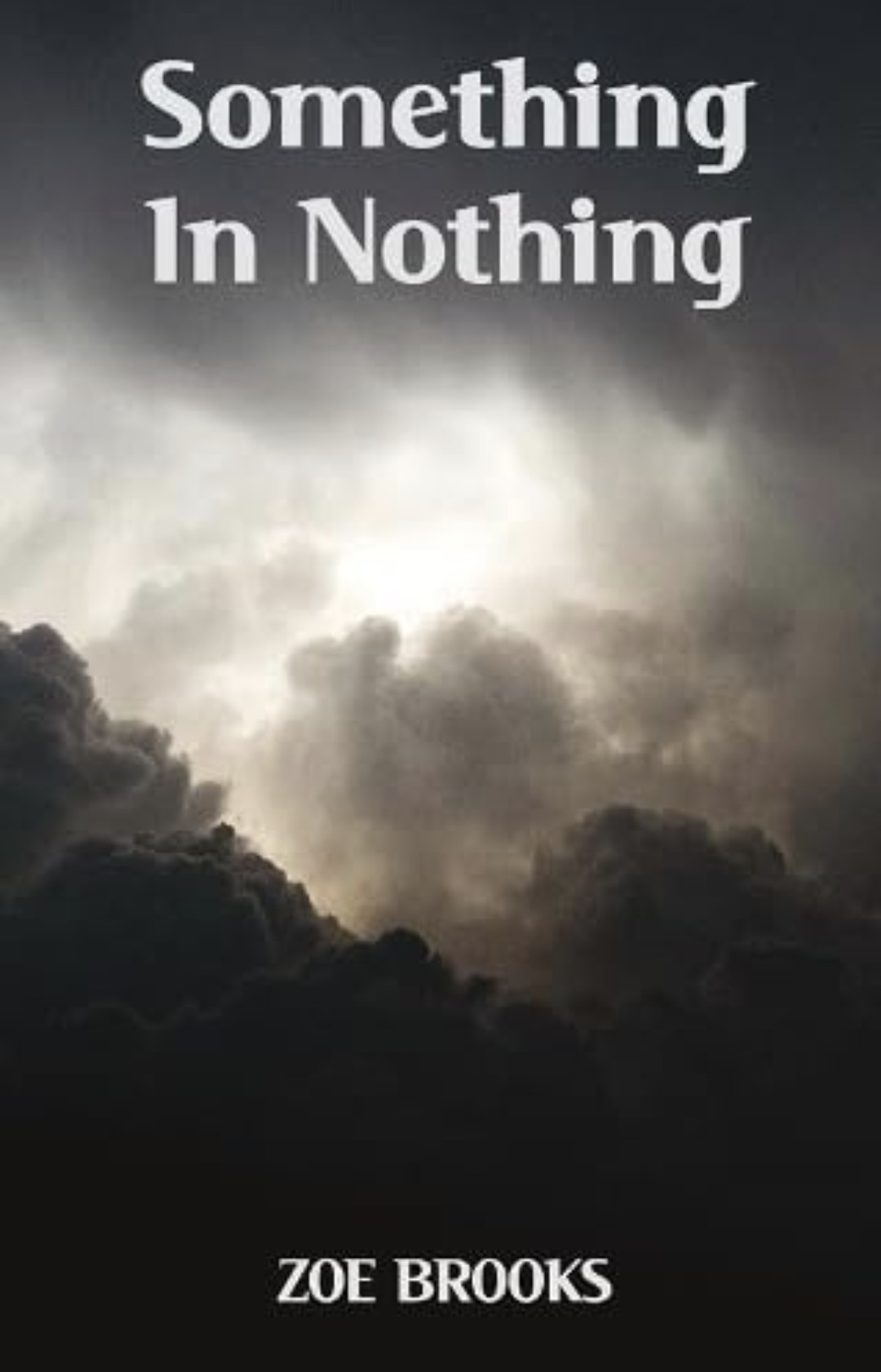
The Bio
Zoe Brooks lives in Gloucestershire, England. Her long poem for voices Fool’s Paradise won the Electronic Publishing Industry Coalition award for best poetry ebook 2013. Her collection Owl Unbound was published by Indigo Dreams Publishing in October 2020 and Fool’s Paradise was published as a print book by Black Eyes Publishing in 2022.
She has been widely published in print and online magazines. My poems have appeared in a number of anthologies, including Wagtail: The Roma Women’s Poetry Anthology (Butcher’s Dog) and Contemporary Surrealist and Magic Realist Poetry (Lamar University Press).
She is a director of the Cheltenham Poetry Festival, leading on the Festival’s year-round online programme. She has given readings at many poetry events, both online and in-person. (Bio kindly used from Amazon)
The Books
To buy her books (pub 2020) click here. https://zoebrookspoetry.bigcartel.com/products Website: https://www.zoebrookspoet.co.uk/
The Free Online Launch 31st March
Zoe would love for you to attend the online launch of this new book:
The link to get free tickets is: https://www.ticketsource.co.uk/cheltenhampoetryfestival/t-oejjzkp
THE INTERVIEW
Q:1. How did you decide on how the poems were ordered?
The collection is a story, made up of the narratives of various fairytale characters, so to some degree that made it easier. There is a beginning, middle and end in the story. But as you know, stories are not necessarily told in chronological order. You may introduce a character and then tell their backstory, as I do with the older woman character. I needed to ensure that each character’s thread worked with each other’s as the story progresses to the end. I also wanted to weave a number of themes into the collection – for example the theme of gardening, so that when a gardening image appears it echoes in the mind of the reader. In order to manage all this I created a spreadsheet with poems listed down one side and characters and themes along the top. Then I laid all the poems on my floor and started gathering them up, playing with the order until I was happy.
Q:1.1. Why choose poetry instead of prose to tell the story?
One reason for me writing poetry rather than prose is that poetry is designed (mine is certainly) to work both on the page and read out loud. I refer to myself as a writer and performer of poetry. The oral tradition, with the importance of the sound of words, is particularly strong in poetry and very important to me.
A second reason is the use of metaphor in poetry. In a way the whole collection is a metaphor about something very real. The fairytale characters are metaphors and the use of both fairy tales and metaphors help with tackling very difficult subjects.
Of course these are my takes on poetry and prose and other people will have other views.
Q:1.1.1. What makes the oral tradition and the spoken word important to you?
I grew up with it and in it. I belonged to an arts centre for young people in Cheltenham where we wrote and performed poetry. Later I was in Michael Horovitz’s Grandchildren of Albion. I read as part of the Michael’s New Departures/Poetry Olympics. So from the word go I was writing for the voice.
I always read a new poem out loud to check if it works. If I stumble, I know something’s wrong. How I structure my poem on the page is partly a way of indicating how the poem should sound.
That brings me to the heart of my answer. Poetry for me is about communication through sound – like music it has rhythm, pacing and cadences.
Q:2. How did you choose the title of your book?
One of the first poems I wrote in the collection was “Baba Yaga’s Cottage”, which has the lines:
Something is there in the forest
– something and nothing.
For that is what Baba Yaga has
– something that is nothing.
I pick up the something and nothing phrase and transform it in the poem “Tapestry 1”, which ends with the line:
the hole that is something in nothing.
I like to use a phrase in common use and twist it like this, turning the rather dismissive phrase “something and nothing” into something sinister – the implied threat of “something in nothing.” It is a good way of making the reader think twice about what they are reading.
The “something in nothing” of the poem is evil and death hiding in plain sight.
Q:3. As this is the third of your poetry books, that I know of, what kind of development can you see?
I find it difficult to see development because of the way I wrote my three books. I wrote some of the poems in my first collection after I had begun the second and third books. I take many years to write books and move between different projects. Of course I change during the course of writing a collection, developing the approach to fit the aim of the book. All three books have very different approaches and structure.
Q:3.1. How does your approach and structure to book three differ from books one and two?
Owl Unbound (my first print book) was very much a collection of freestanding poems, as are most collections. Fool’s Paradise (the second book) was a long poem written for several voices. On the page Fool’s Paradise looks like a play and indeed it has been described as a verse play. Although I never visualised it on a stage it would have worked as a radio play perhaps. Something In Nothing is a collection of poems, but it has a narrative that links the poems, so in a way Something In Nothing structurally is a hybrid of the two. Another aspect of Something In Nothing that is different from the other two books is that it has a narrator’s voice, similar to that in fiction. At times it directly addresses the reader.
Q:4. How important is poetic form for the shape of poems in “Something in Nothing”?
The form of the individual poems in Something in Nothing is pretty consistent. It is influenced by a number of factors: the first being that the poems are designed to be read both on the page and out loud and so the line breaks are used as a means of showing where to breathe, where to pause (evenly slightly). This tends to mean that I prefer shorter lines.
A major influence is of course fairy tales and nursery rhymes. The latter is the first poetry form that our generation experienced and therefore there is something primal about it and many people share. Throughout the collection there are poems that reference nursery rhymes – in terms of structure, rhythms and phrases.
The forms I use hopefully make the poems appear accessible to the reader, as I very much want the collection to have a readership that perhaps goes beyond the normal contemporary poetry one. Once the reader has started reading, they will find that there is a complexity which is built up through the collection.
Q:5. Why did you choose the story of Bluebeard to anchor it all?
The fairy tale of Bluebeard is not as well known as many other tales, partly because of its dark nature. The collection uses fairy tales to look at the issue of evil and how we deny its existence. That is after all what we are doing when we tell fairy tales to children: they say don’t take sweets from strangers, don’t trust even people you know, there are danger and evil people in the world. Fairy tales afford a safe place to teach children these lessons.
The reason for my choice of a story about a serial killer of women and his potential victim to anchor Something In Nothing lies in what partly inspired me, if “inspire” is the right word. When I was a teenager I knew a young woman who was murdered by a serial killer. That made me particularly aware, but I think most women have that awareness of danger.
Q:6. In the Afterword you see fairy tales as metaphorical what place do images have in your poetry?
Fairy tales are not specific – they have various devices to ensure we know this, for example they start “Once upon a time…” and “in a land far away”. But in Something In Nothing I am placing fairytale characters in a contemporary setting, in the real world. To create that reality I use images: they ground the story in specifics. In the poem “The Woman’s Cottage” – Impressions we see the cottage for the first time through the eyes of The Luminous Girl who is observing a collection of objects. In “Bluebeard’s Garden”we see named dying plants. The town is described in some detail – its parks, its cathedral, the docks, the river estuary. I very much want that tension of fairy tale and reality in the collection. I want the reader to feel that they are not part of Bluebeard’s and Baba Yaga’s world, but they could be.
Of course images can become metaphors, especially if you layer images over the course of a book. A dead rose bush in Beauty’s garden is both a real plant and a metaphor for decay and loss.
Q:7. After they have read or heard it what do you want the reader or audience to leave with?
That is a difficult question! A poem exists somewhere between the poet and the reader or listener. Sometimes they will find something in my poem that I was not aware of. I find it fascinating the way different readers bring their own experiences to the poems.
Since you first asked me this question I have begun to get readers’ feedback. What has surprised me is that repeatedly readers comment that the collection is compelling, even that they couldn’t put it down. I suppose this because of the narrative nature of the work.
But to answer your question directly I would say that n these difficult times we need to illuminate what is hiding in the dark, not look away. Something In Nothing tries to do that and to encourage readers to look both outwards and into themselves. But I do not want them to just look at the dark, the word “illuminate” is important here. We need light to see the dark. The collection ends with the poem “Into the Light”: that’s important.
 The Wombwell Rainbow
Hi Paul
Thanks for this, but there’s a problem with Amazon sales link. They seem to not be sending books out until Sept God knows why. They take the money though!
It’s best if people buy from Waterstones or Indogo dreams or indeed me.
Thanks Zoe
New collection Something In Nothing. Launch 31st March
To buy my books (pub 2020) click here. https://zoebrookspoetry.bigcartel.com/products Website: https://www.zoebrookspoet.co.uk/
Thank you, Zoe. Updated.