The High Window Reviews

The High Window Review's avatarThe High Window

reviewer

*****

Donald Gardner: New and Selected Poems 1966 – 2020Christopher Jackson:An Equal Light  David Kinloch: Greengown, New and Selected Poems  Oisín Breen: Lilies on the Deathbed of Étain and Other Poems

*****
New and Selected Poems 1966 – 2020 by Donald Gardner.  £22.92. London: Grey Suit Editions. ISBN: 978-1903006252. Reviewed by Derek Coyle

don gard

The cosmopolitan character of Donald Gardner’s verse was there from the start, a cosmopolitanism of location as well as of mind. The book opens with Mexico City, where we find the speaker a stranger in a strange place. As a white male he feels the need to apologize for Vietnam, ‘but not pay more than five pesos,’ noting ‘starving tenements’,

But taking a sudden corner
I give the driver all my change
and am not longer English or American.
I am the rain that beats my…

View original post 3,729 more words

Poetry Showcase: Luis Cuauhtémoc Berriozábal (March 2023)

davidlonan1's avatarFevers of the Mind

What is its Name?

A shadow is a shadow
but what is its name?
I call mine Bubba Ho-Tep
like that Bruce Campbell film.

A cloud is a cloud,
but what is its name?
The one above me I have
named Predator 2.

What would you call those
spy balloons over North
America? I call each one
The Spy Who Loved Me.

I feel so deflated some
days that I do not have
the mind coordination
to come up with any name. 

August 4, 1993: The Ryan Express vs. Robin Ventura

What were you thinking, Robin Ventura, charging the Ryan Express after being hit by a pitch? If not, for that charge to the mound, my brother Juan would not have made that frame, the photo cut out from the sports page. Ryan had you in a headlock with his fist about to give you one of the many noogies…

View original post 431 more words

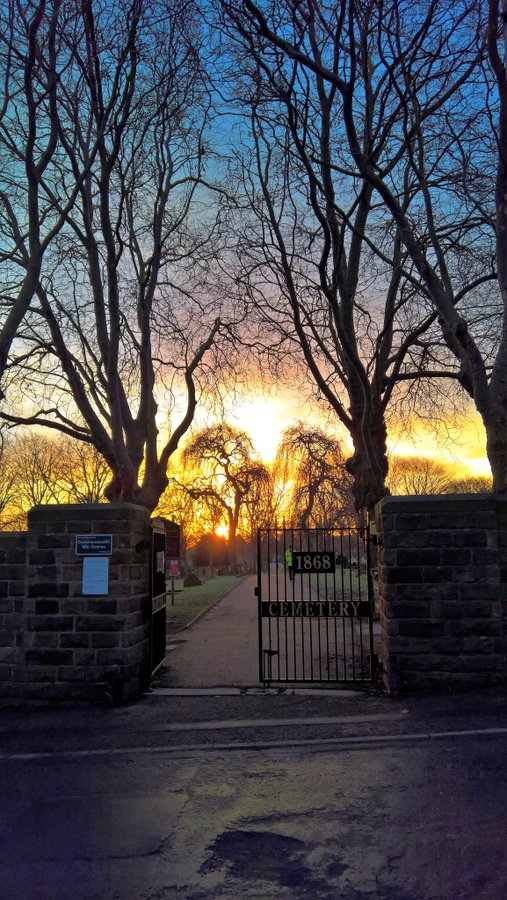
“Created Responses To This Day” Nolcha Fox responds to some days  of my This Day images. I would love to feature your responses too.

The sun

sets barren branches on fire.
It won’t give up the day
without a fight.

Ghosts dance

at the winter ball,
each grave alight
with fireflies,
until the sunrise
hastens them
to bed.

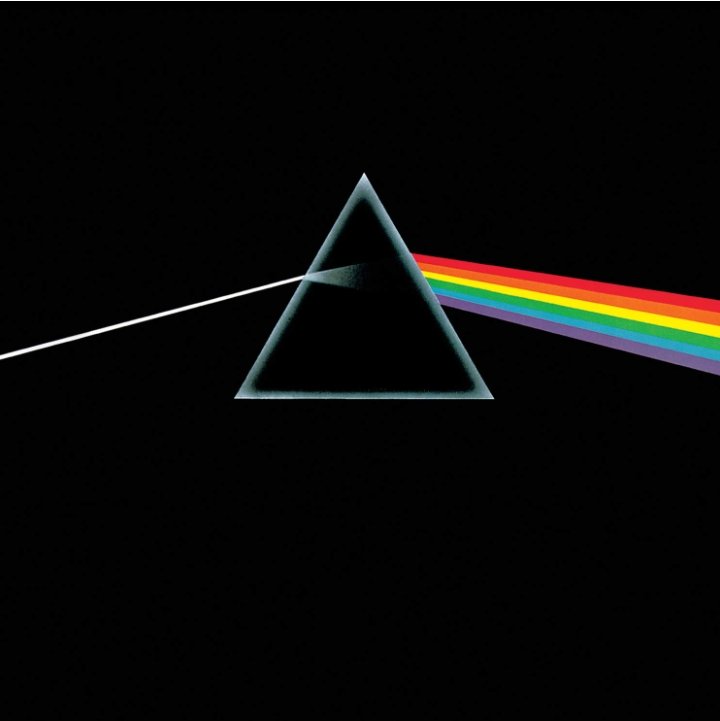
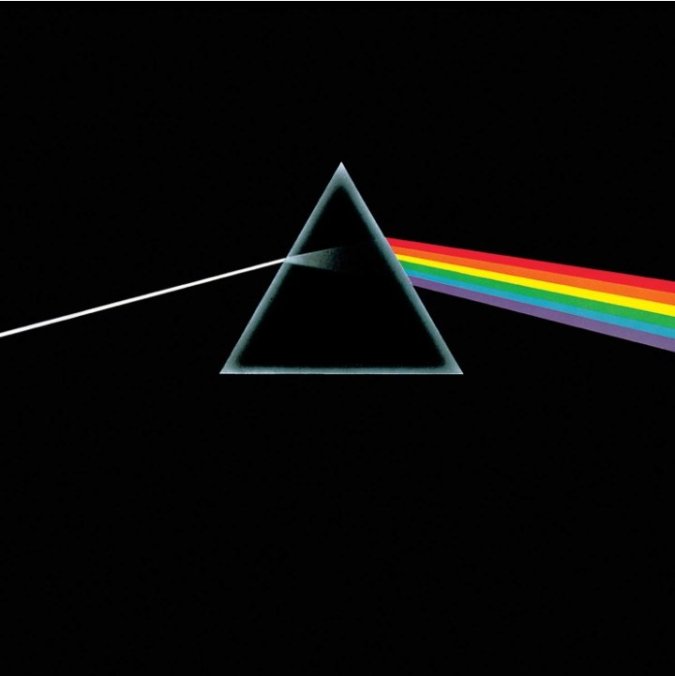
Pink Floyd’s “Dark Side Of The Moon” was released in America on 1st March 1973. I was ten. It still influences my writing. I will feature your draft or published/unpublished poetry/short prose/artworks about this album. Please include a short third person bio.

Dark Side of the Moon Chapter


This short chapter is from the as-yet-unpublished book on the lyrics of Roger Waters.  I’ve included an abstract of the book first; it should be noted that this is chapter three, so there are some references to earlier points.


ABSTRACT


            On July 6, 1977, Roger Waters, singer and songwriter of the immensely popular band Pink Floyd, spat on a fan at the band’s last show of its concert tour in support of the album Animals. Waters’ descent into alienation that led to this event is emblematic of rock’n’roll’s repudiation of its ideals through its actions. When he spat on that fan, he was also spitting on himself and his generation, a generation that had once apparently espoused radical ideals and that had once apparently demanded authentic experience or, what Karl Marx had called, “life-activity.” Rock and the Baby Boomer generation’s embrace of capitalism and the celebrity culture of the media had created an alienated culture. With no connection to his labor, his music, his audience, or himself, Waters became as he wrote in his song “Wish You Were Here”: “just another lost soul swimming in a fishbowl year after year.” Waters’ response was more mediation. Many critics see a fatalism in his work, but even early in his career, Waters was obsessed with authentic experience. After the spitting incident Waters wrote The Wall about how he and his generation had gotten to this point. Waters is not fatalistic in his lyrics; rather, he demands authenticity from himself and our culture, a search for a shared humanity.


Chapter Three

“New Car, Caviar, Four Star Day Dream”

Success and the Dark Side


Waters continued to write about connections on 1973’s Dark Side of the Moon. The song “Us and Them,” about as emblematic a song as there could be, for the theme of empathy versus alientation is about the imaginary differences we place on each other— “Us and them / And after all we’re only ordinary men” —and where those differences lead us. When we lose empathy for our fellow man, when we raise barriers between us, when we alienate each other, we end up with a heartless world of haves and have-nots, a situation detrimental to both. It’s interesting, however, in this song, that some entities—such as governments and corporations—create these differences on purpose, so as to use the common man for mercenary or economic purposes. This alienation is created, then, consciously. “Me and you,” writes Waters to the listener, attempting to connect us again, “And after all it’s not what we would choose to do.” But we do it anyway because of mechanistic, militaristic and markets forces. Waters, here, assumes the listener feels the same way he does, an assumption grounded in his nostalgic view of his days performing at the UFO Club.

If there is no “us” and no “them,” then what are we fighting for? Waters argues that we’re fighting due to arbitrary differences, alienation consciously fostered by those in control (who he would later in his career refer to as “The Powers That Be”) maintain hegemonic power and to gain even more power and wealth. That is, in a capitalist society, those in power can recognize the alienating effect of their economic force over others. The powerful thrust alienation upon the powerless. “Forward he cried / From the rear / And the front rank died / And the general sat / And the lines on the map / Moved from side to side.” The differences created by the “general” are just as arbitrary as those “lines on the map.” And it’s our own greed that drives us in this case to accept this alienation from each other: “With / Without / And who’ll deny that’s what the fighting’s all about?” Thus, the alienation takes on a Marxian tone as we are taught to want more than the next person—who, we are taught, doesn’t deserve as much. These divisions have long-reaching effects that go beyond their “uses,” which is why we can be so unfeeling about “them”—because we’ve got “ours.”  “Get out of the way, it’s a busy day / I’ve got things on my mind / For want of the price of tea and a slice / The old man died.” If the “old man” were one of “us,” it would be far more difficult to allow him to suffer. But, because of the arbitrary divisions we create, because we view him as one of “them,” we can. And do. And in the end, the alienation means that we are all “Down and out / It can’t be helped that there’s a lot of it about.” There is no more agency to alter our condition; the alienation becomes a given (“It can’t be helped . . . ”). This disconnection, in which we deny the humanity of the “other,” is a loss of humanity both for us and them.

Ironically, given the Marxian views expressed on Dark Side and “Us and Them” in particular, the album’s success would drive Waters to distance himself from those Marxian ideals. The album, mainly on the strength of FM DJs playing the song “Money,” shot to number one in America and, eventually, became one of the best-selling albums of all time. As of 1998, the album had sold over sixteen million copies (Fitch, Pink Floyd Encyclopedia 78). There is of course more irony in this, as Waters was decrying the demonstrations of ostentatious wealth in the song. “New car, caviar, four-star-daydream /. Think I’ll buy me a football team.” However, many fans, through the lens of celebrity culture (“alienated fame”) saw the song as a rock star celebration of monetary debauchery. It became what theorist Linda Hutcheon might call a complicitous critique, a piece of work designed to critique a system that instead leads people to celebrate that system[1]. That “Us and Them” follows directly on the album suggests that the two were of a piece. One (a glorification of money) leads inevitably to the other (a loss of humanity and empathy). On the radio, however, the song stands alone. Regardless, suddenly Pink Floyd were superstars and millionaires.

Still, the band did make conscious attempts to avoid celebrity (as opposed to fame). Like Ted Williams, in Joseph Epstein’s earlier example, the band—and particularly Waters—gave few interviews and refused to cultivate their celebrity. Blake calls this “Floyd’s refusal to play the media game” (217). The band remained anonymous, even to their fans. “[O]ne beneficial aspect of the press ban would be the shielding of their individual personalities from the public eye, facilitating a degree of privacy that few other rock superstars have ever enjoyed,” writes Nicolas Schaffner (193). The band had earned fame but preferred a lack of actual celebrity. However, it would be naïve to assume that nothing had changed, and it’s here that Waters seemed to distance himself from his ideals. Blake quotes Waters on the sudden transition: “’I have to accept that, at that point, I became a capitalist,’ admitted Waters in 2004. ‘I could no longer pretend that I was a true Socialist.’ He salved his left-wing conscience by eventually siphoning a percentage of his earnings into a charitable trust” (Blake 212).  Schaffner quotes Waters on this subject as well: “You go through this thing where you think of all the good you could do by giving [the money] away. But, in the end, you decide to keep it!” (Schaffner 190). In a way, Waters here can be seen as a symbol of the whole of rock’n’roll as musicians were no longer the voice of revolution. They had allowed themselves to be commodified. Marc Eliot writes about rock music in the early 1970s:

Rock and roll had done a 360 degree turn [sic] to become the leading voice of the commercial mainstream. All that rock had originally represented—social integration, teenage rebellion, the value of the working class—had been transmogrified by the calculated manipulation of the corporate machine. Rock stars no longer symbolized the counterculture. They were, instead, the very icons of material extravagance; their self-indulgent music, dress and style of living in marked contrast to the mass audience they no longer cared to represent (183).


As such, Waters’ (retrospective) realization of his disavowal of his idealistic and rebellious roots could also serve to represent a generation who, a mere decade after espousing a denunciation of capitalism would soon elect, by wide margins, both Ronald Reagan and Margaret Thatcher, in part because of their promises to do away with the welfare state. As we shall see, Waters’ unconscious guilt over this disavowal would drive him even further into a state of alienation.

There is a different sort of alienation, however, in Dark Side’s “Brain Damage,” wherein Waters gets more personal about severed connections. When he sings in the 2nd person, “And if the cloud bursts, thunder in your ear / You shout, and no one seems to hear / And if the band you’re in starts playing different tunes / I’ll see you on the dark side of the moon,” he’s referring to himself, Barrett, and the listener. In terms of Barrett, the line hearkens back to when the band was connected to each other, jamming on stage in those early days. That the band sings “different tunes” seems to suggest that it’s Floyd, not Barrett, who changed. But when speaking to the audience, Waters is also celebrating those early moments when he felt that connection to that audience, a bond that is becoming more and more tenuous. He’s desperately trying to rediscover that connection—that authenticity—that has somehow been lost, in an effort to reaffirm his own humanity as well as the humanity of his listeners. “The line ‘I’ll see you on the dark side of the moon’ is me speaking to the listener, saying ‘I know you have these bad feelings and impulses, because I do too; and one of the ways I can make direct contact with you is to share the fact that I feel bad sometimes,” revealed Waters (qtd. in MacDonald, 194). Therefore, in an almost ironic way, Waters uses the despair that he feels, his sense of isolation, his fears, to try to make a bond that, in his earlier work, had been taken for granted. In other words, Waters attempts to use our shared alienation to bring us back together.


ABOUT THE AUTHOR

Jim Speese is a writer and instructor of English at Albright College, and the lead singer and songwriter of the band Cloud Party with which he’s released five albums. He holds a PhD in post-World War II American literature from Lehigh University.

His fiction is published in Brushfire, Pennsylvania Literary Journal, Potato Soup Journal, Umbrella Factory Magazine, Voices de la Luna, and Wrath-Bearing Tree. His short story “The Confession of Monsignor Vorges” was published in Potato Soup Journal’s Best of 2021 anthology. His short story “The Unfinished Works of James Conlan” was included in the book The Anthology of Babel, published by Punctum books in 2021.

He has also taught at Lehigh University, Drew University, Desales College, Penn State University. He lived in and worked for Yellowstone National Park for four years and spent three months hiking the Appalachian Trail. He plays and coaches volleyball, and is working on a novel. He lives in a cabin in the mountains of Pennsylvania.

http://www.cloudpartymusic.com


[1] I have used Hutcheon’s brilliant concept of a complicitous critique throughout my work. To understand the concept, one only has to watch a segment on Fox News on how media sexualizes everything, while it shows sexually charged images. One segment criticized “spring break” in Miami, while showing images of wet t-shirt contests and half naked women. Another example is the film The Wolf of Wall Street, which also, like “Money,” critiques ostentatious wealth. But often my film students who love the movie admit that it makes them feel like they want to be rich, regardless of the “message.”

#TheWombwellRainbow #PoeticFormsChallenge. It is weekly. Week Twenty Seven form is a #Huitain. I will post the challenge to create a first draft of a poetic form by the following late Sunday. Please email your first draft to me, including an updated short, third person bio and a short prose piece about the challenges you faced and how you overcame them. Except when I’m working at the supermarket I am always ready to help those that get stuck. I will blog my progress throughout the week. Hopefully it may help the stumped. Also below please find links to helpful websites.

Guidelines for the huitain:

8-line stanza
ababbcbc rhyme scheme
Usually 8 to 10 syllables per line

My thanks again to writers digest  for this information

Helpful Links

https://www.poetrymagnumopus.com/topic/690-the-ballade-family-of-forms-including-huitain-dizain-chant-royal/


Huitain Poem Type

Huitain

Cunning and Art: Review of Leásungspell, by Bob Beagrie

Research English At Durham's avatarREAD: Research in English At Durham

Whitby Abbey at sunset Whitby Abbey at Sunset, by Ackers72 (Own work) [CC BY-SA 3.0], via Wikimedia CommonsSet in 657AD, moving between Hartlepool and Whitby, and drawing on Old English, modern English and Northumbrian dialect, Bob Beagrie’s new epic poem,Leásungspell, takes readers on a historical, geographical and literary journey. Reviewer Jamie McKinstry enjoyed the voyage.

A fool sees not the same tree that a wise man sees

This quotation from William Blake prefaces Part Four of Bob Beagrie’s magnificent Leásungspell, which was recently performed at Durham Book Festival. Bob Beagrie is a poet, playright, and senior lecturer in Creative Writing at Teesside University. He has published six collections of poetry, including The Seer Sung Husband and Sampo: Heading Further North.

Front cover of Leasungspell, by Bob BeagrieLeásungspell is a new epic poem which tells the tale of Oswin, a monk from the monastery of Herutea (Hartlepool) travelling to Streonshalh (Whitby), carrying secret letters…

View original post 846 more words

Poetry Showcase: Lynn White (March 2023)

davidlonan1's avatarFevers of the Mind

A Model Woman

She set out to become a model woman.
It was what her mother taught her.
But her mother’s models 
were rooted in the past,
mannequins really
and no longer in vogue,
so her attempts were confused.
Conformity was the issue
but to which age,
which youth
should she conform
now or then.
It took her a long time,
a lifetime.
A lifetime
of making up,
of trying on and discarding,
a lifetime of self discovery,
a lifetime
to throw away the wigs
and become herself.

First published in Nine Muses Press, November 7 2019A Question of Identity On her 90th birthday she looked in the mirror and tried to identify the face looking back. She felt the same as ever but the face, that was the mystery how could she connect the two, how she felt and how she looked. Perhaps a mystic would tell her…

View original post 554 more words

Poetry Showcase: Nolcha Fox

davidlonan1's avatarFevers of the Mind

***
One tiny step,

one little slip, to fall, to fail, 
flailing, fragile, frail frame, 
a shattered sense, a souvenir 
of shattered bone.

***
(This poem was published in my book, "Memory is that raccoon")A broken jar

to store the body of loss,
the coffee laced with sugar and shock,
the wrenched wild wings,
dried blood tears of sunsets past,
to leak the waning fading blue,
to hold what’s left of you.

***
What Has Passed

What has ended my desire
to do when I’m too weak, to be what I am not?
Ritual is writing through the pain.
I know that I don’t know to stop until my body shatters.
The instruments of self-deception disappear
as sun-kissed skin slips into velvet darkened dress.
There is space, there is an honest sweetness in the bitter.

***
(This poem was published on Medusa's Kitchen, and was inspired by…

View original post 200 more words

Maths poetry

Jane Dougherty's avatarJane Dougherty Writes

Paul Brookes’ chosen form last week was maths poetry in its different manifestations. Using a straightforward sequence of 1, 1, 2, 5, 8, 13 etc words or syllables doesn’t appeal to me much, but I had already been impressed with Marian Christie’s poem that merged the ideas behind Fibonacci sequence poetry and the trimeric, in particular the tide-like back and forth of the lines, overstitching, until the words ebb away completely. It gives a purpose to the diminishing (or increasing) length of the lines, an effect you don’t get with forms like the nonet that simply count syllables. I have written quite a few poems using this idea, and find it almost hypnotic.

The hares are running

The hares are running in the meadow again,
boxing for joy, for spring,
among new daffodils,
bending in
the
wind,

boxing for joy, for spring
is stirring blood,
wild and
fur-
fierce.

Among…

View original post 197 more words

#TheWombwellRainbow #Poeticformschallenge last week was #MathsPoetry. Enjoy examples by Marian Christie, Robert Frede Kenter, Lesley Curwen, Tim Fellows and Jane Dougherty and read how they felt when writing one.

A poem for Robert

How
a
song, a
piano,
harmonica or
guitar lifts the bleak, dejected
afternoon; thrills, imparting joy as our precious bond.

How Did It Go?

Almost every day Robert Frede Kenter shares a musical interlude with us on Twitter (frequently more than one). Sometimes I hum along to old favourites, but often the musicians or melodies are new to me. As well as broadening my musical knowledge and appreciation, his posts are like a gentle hug and always lift my mood. This little poem is written to express my gratitude.

It’s a Fibonacci poem by syllable count, with the added constraint that the number of letters in each word is defined by the decimal expansion of pi (March 14, 3/14, is Pi Day). This required me to juggle two sequences simultaneously: the Fibonacci sequence for the syllables per line
1 1 2 3 5 8 13…
and the expansion of pi for the letters per word
3.14159265358 97932384…

And thank you, Paul, for sharing the delights and challenges of mathematical poetry through this #poeticformschallenge! You and Robert both do so much for the poetry community – we are all grateful. 🙏🏼 🙏🏼

Marian Christi

Two Fibonacci Poems

Raft

I
Felt
Alone
Tree like in winter
Without any leaves to sing with
I brought the light from the cabin to the wooded darkness &
Darkness is the holy fortune
Still like the fallen
Watch over me
Destiny
Of stars
Moon
Light

Fluttering Curtain

met
you
head on
the music of
all that we ask for
melodic notes jumping around
us we were dancing
the music of
meeting
head
on

TWO VISUAL MATH POEMS


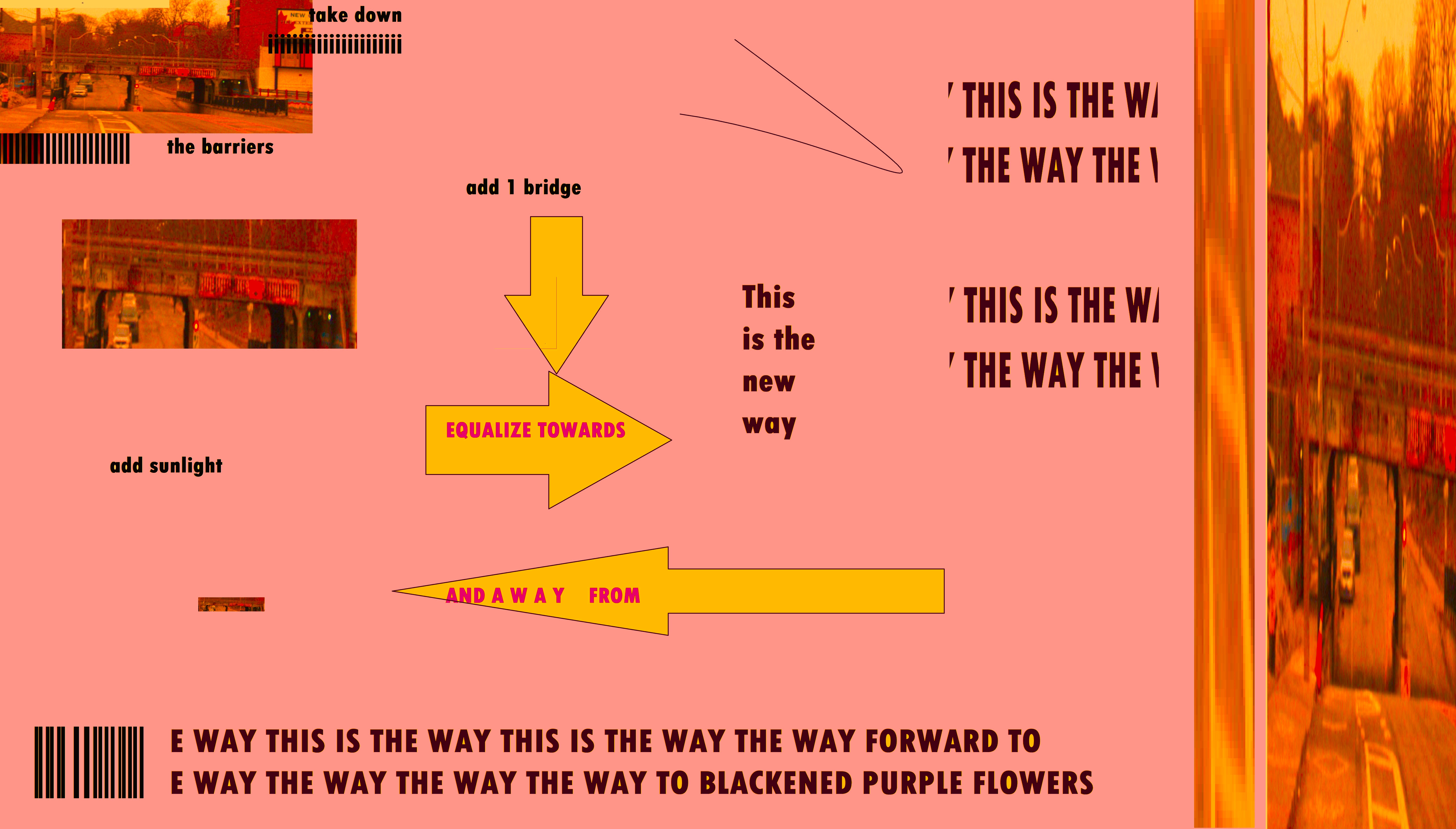
THIS IS THE WAY: AN EQUATION TRIANGLE POEM

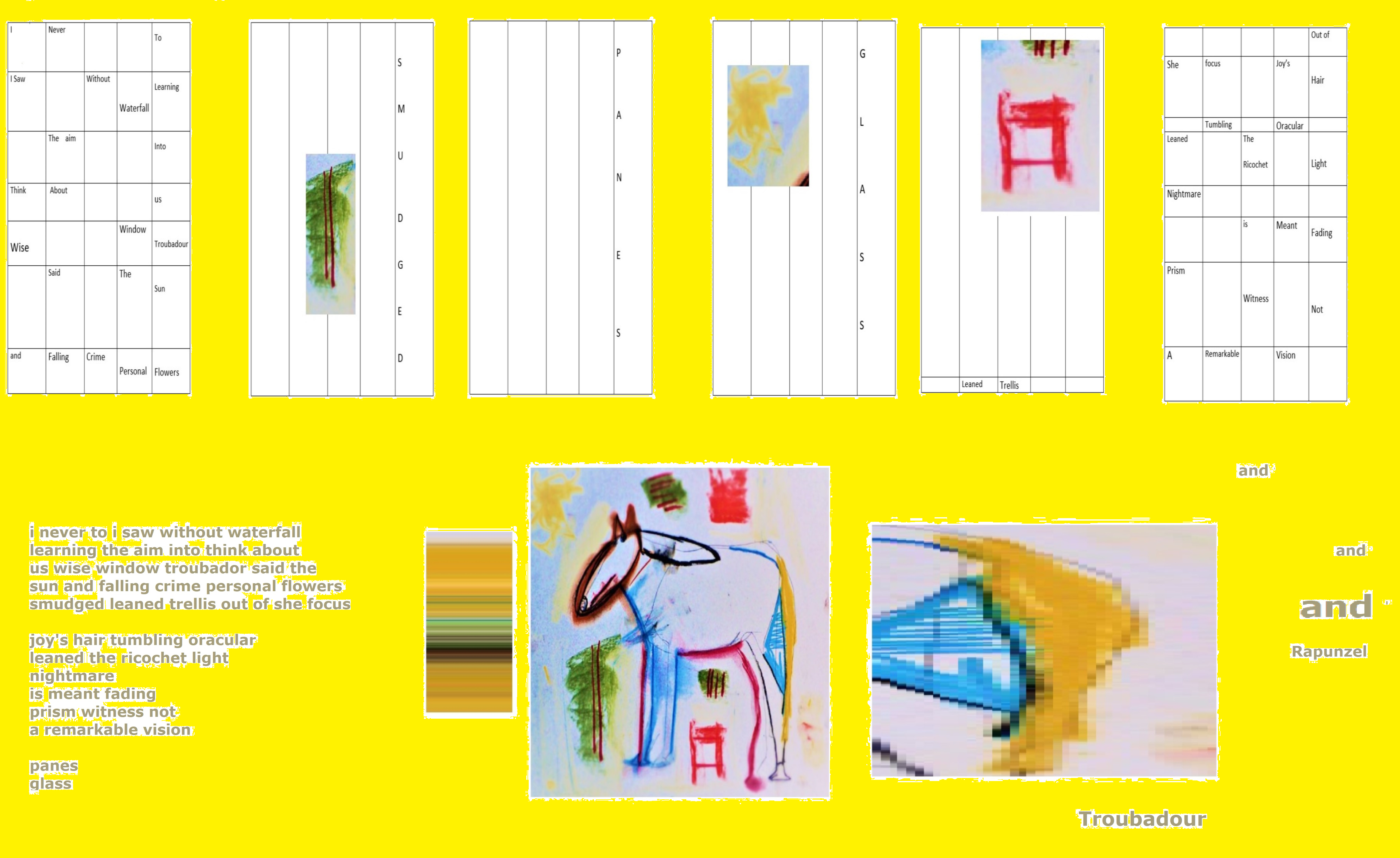
Rapunzel and the Troubadour – A Routes Thru Poem (For Marian C.)

How Did It Go?

This was an exhilarating prompt – Maths week at constraint/forms. I worked on a bunch of different math-poems throughout the week and chose 4 of them to share. Big thanks to Marian Christie and her work on and writing about science – poetry -maths. There is so much territory to mine here and I will surely be continuing to read and to write and explore these intersections.

Robert Frede Kenter

(A Fibonacci poem)

Progression

sad

heart

thuds fast

no rein applied

gallops then races flat out

who ever thought speed would rise with age

reminding us of how it was to run like stink, oblivious to risks

like cardiac arrest, cracked femur, smashed specs or nose whose odds are never
reckoned when our brains are in their prime

Lesley Curwen

Hares are running

hares are running in the meadow again,
boxing for joy, for spring,
among new daffodils,
bending in
the
wind,

boxing for joy, for spring
is stirring blood,
wild and
fur-
fierce.

Among new daffodils,
long ears
sift
sounds,

bending in
harmony
with

the
wind.

These winter days

These winter days are never silent
never still with flocks of homing birds
and trees that rustle handfuls of dead leaves.

These winter nights enrobe the rustling leaves
with hoar frost crisp as ice and silent
as the unseen swooping wings of night birds.

I hear them calling in the dark, the birds
that hunt the night fields. Filtered through the leaves,
moonlight streams, silver as the sea and silent,

but no birds stir the leaves in this silent moonlight.

How did it go?

Well! I think. Using a straightforward sequence of 1, 1, 2, 5, 8, 13 etc words or syllables doesn’t appeal to me much, but I had already been impressed with Marian Christie’s poem that merged the ideas behind Fibonacci sequence poetry and the trimeric, in particular the tide-like back and forth of the lines, overstitching, until the words ebb away completely. It gives a purpose to the diminishing (or increasing) length of the lines, an effect you don’t get with forms like the nonet that simply count syllables. I have written quite a few poems using this idea, and find it almost hypnotic.
The tritina is a form I’ve used before but hadn’t considered it as mathematical in any way, but that probably just reflects my ignorance of maths. The repeated end words, I found, risk creating a rather forced effect, particularly as the last word of one stanza is repeated in the first line of the following one. Also, the use of all three end words in the last line is hard to manage without it sounding like an afterthought or a make-weight. I’m certain it’s possible to write a good poem using this form. It’s a challenge, but that’s what we’re here for.

Jane Dougherty


1.4142135623746…
So.

They said I was
irrational;
that I was wasting
my time
seeking
something where I
would spend my whole life
as some kind of heroic failure,
laughing stock,
lost in numbers,
an infinity of digits with no pattern
but as time passes
I find I just can’t stop…

Pie

No matter how big your family
you can never get
an equal slice of Pi

Square

They took him to the square;
the centre of a town
in France, a small scared boy
in soldiers’ clothes who ran
and then, by order of
the King, they mowed him down.

The Trap

Web
lies
waiting
poised to host
a careless victim;
struggling in vain to save its life.
Would I watch, wondering whether I should intervene
if anything were caught within that sticky trap, break apart the web, or simply snap
the thinnest threads that hold the insect in its place, to free it from its jail, liberate
before Arachne wins the deadly race, but perhaps
its translucent wings are broken,
and, deprived of all
nutrition,
spider
would
die.

How Did It Go?

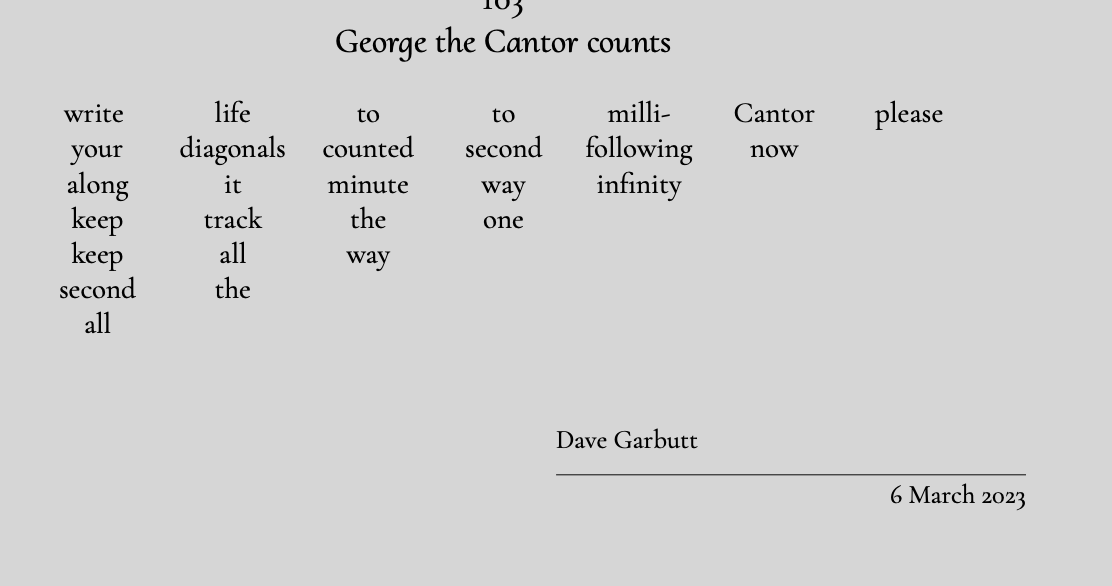
As a mathematician by training, I had to have a go at a few of these. The Fibonacci spider poem was also published on Wombwell Rainbow in 2021 as an Ekphrastic Challenge poem. It was National Pie Week in the UK this week, too.

Tim Fellows

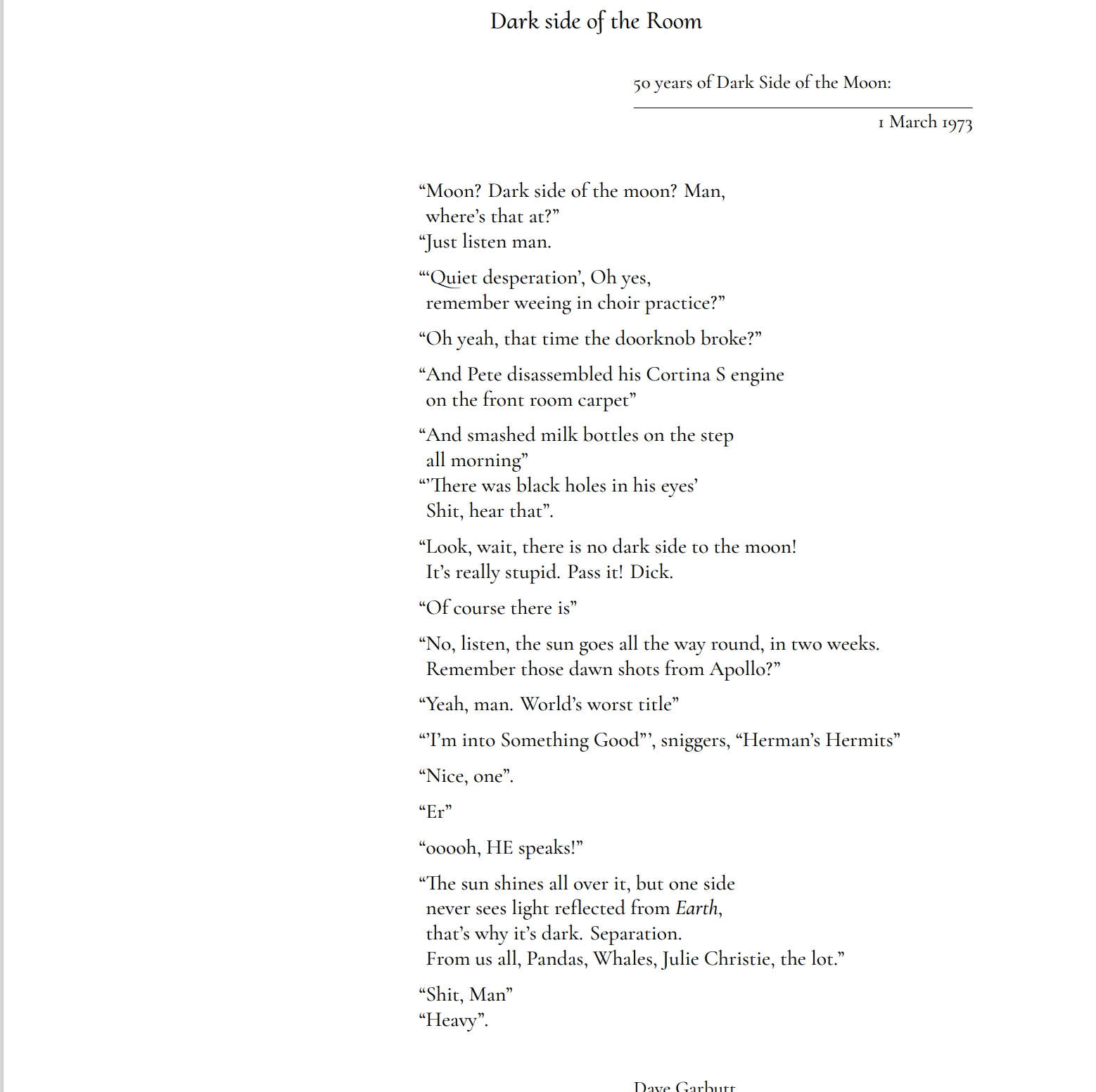
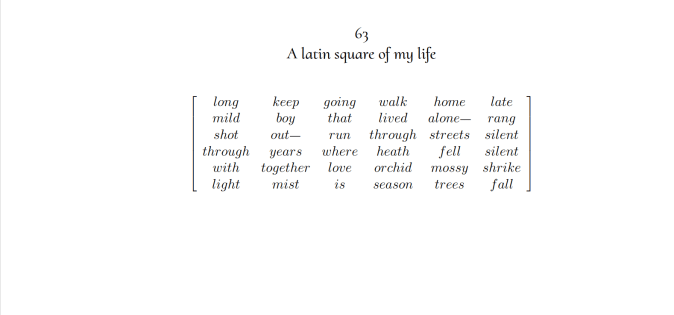
Dave Garbutt

Bio and Links 

Marian Christie

was born in Zimbabwe and travelled widely before moving to her current home in Kent, southeast England. Publications include a chapbook, Fractal Poems (Penteract Press), and a collection of essays, From Fibs to Fractals: exploring mathematical forms in poetry (Beir Bua Press). Her new collection, Triangles, is available for pre-order from Penteract Press.
Marian blogs at http://www.marianchristiepoetry.net and is on Twitter @marian_v_o.

Robert Frede Kenter

is a writer, visual artist, editor, designer, widely published. Work recently in The Book of Penteract (Penteract Press, 2022); visual poetry is forthcoming in a new anthology from Steel Incisors (2023). Poems recently in Storms Journal, Acropolis, Visual Verse, Anti-Heroin Chic, Fevers Of.  Robert is publisher, EIC and midwife at www.icefloepress.net.