Drop in by Peter Clive

Nigel Kent's avatarNigel Kent - Poet and Reviewer

What better way to start the 2023 than with a drop in by a poet who cares deeply about protection of the environment, Peter Clive.

As I write this, while recovering from the hangover I inflicted on myself at a New Year’s party celebrating the start of 2023, Europe is experiencing temperature anomalies that are alarming meteorologists and climate scientists. Records are falling across the continent as temperatures that exceed the average for this time of year by 15 Celsius degrees or more are measured. Although we are still in the depths of winter, the weather is unseasonally warm. And if we were to add these increments of 15 Celsius degree or more to the temperatures we expect for summer, the result is deeply unsettling. The party’s over, and has been for some time, and the longer we delude ourselves and remain indifferent to the consequences of our recklessness…

View original post 1,431 more words

That Infinite Showplace: Rilke in Paris 1902-1914

martyn crucefix's avatarMartyn Crucefix

NB This review first appeared in a shortened form on the Agenda Magazine website.

Rilke in Paris, Rainer Maria Rilke & Maurice Betz, tr. Will Stone (French original 1941; Pushkin Press, 2019).

The argument of Maurice Betz’s memoir on Rilke’s various residencies in Paris between 1902 and 1914 is that the young poet’s experience of the French capital is what turned him into a great poet. Betz worked closely with Rilke on French translations of his work (particularly his novel The Notebooks of Malte Laurids Brigge (1910)). Will Stone’s excellent translation of Betz’s 1941 book, Rilke a Paris, elegantly encompasses its wide range of tones from biographical precision, to gossipy excitement and critical analysis. The book particularly focuses on Rilke’s struggle over a period of eight years to complete the novel which is autobiographical in so many ways, as Betz puts it “in effect a transcription of his…

View original post 1,296 more words

A New Look at Rilke’s ‘Duino Elegies’

martyn crucefix's avatarMartyn Crucefix

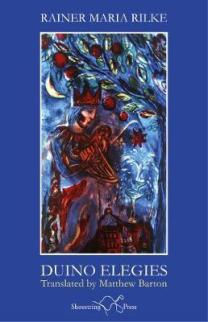
Duino Elegies, Rainer Maria Rilke, tr. Matthew Barton (Shoestring Press, 2019).

9781912524389Matthew Barton himself raises the question as to whether anything could “possibly justify yet another English version” of Rilke’s Duino Elegies (1922). As someone who has contributed his own translation of the work (published by Enitharmon Press in 2006), I know the feeling of throwing a pebble into a landslide. But – as Barton also argues – it is at least our own pebble and Rilke’s work both allows and demands further translation and discussion; it is without doubt complex, profound and obscure enough. Perhaps the question for the would-be translator is more about the time and energy spent on such a widely available text when other works by other poets languish untranslated. But for Barton – as I guess it was for me – it is a personal issue and we are assuredly thankful to those…

View original post 1,218 more words

On Translating Rilke’s ‘Duino Elegies’

martyn crucefix's avatarMartyn Crucefix

Idris Parry writes in the current PN Review (March/April 2015) comparing Rilke’s Duino Elegies with the Sonnets to Orpheus. The poet always spoke of the sonnets as subsidiary to the elegies, but Parry argues that while the elegies “talk about” the poet’s task, the sonnets perform it. I’d agree and, in translating both in the last 20 years or so, I have come to prefer the vivid enactments of the sonnets. Parry explores Rilke’s response to Rodin in Paris in 1902. What struck Rilke was Rodin’s “dark patience which makes him [as creative artist] almost anonymous”. What the young poet learned was to pursue an “unhurried and uncommitted exposure to experience” (Parry’s words). This is opposed to impatience which is (contra-Keats) an irritable reaching after clarity: “making up your mind before the event instead of letting the event shape your mind” (Parry again).

Rilke’s “praise” is just this acceptance…

View original post 1,624 more words

Five New Rilke Translations in ‘The Fortnightly Review’

martyn crucefix's avatarMartyn Crucefix

Wishing all my blog readers this season’s greetings.

Quite unseasonally perhaps, here is an image of a gazelle – gazella dorcas – the kind of one Rilke is writing about in my translation below, with that ‘listening, alert’ look. The other extraordinary image that Rilke imcludes here is of the hind legs: ‘as if each shapely leg / were a shotgun, loaded with leap after leap’. This is one of the New Poems, written by Rilke under the influence of the sculptor, Auguste Rodin. Rilke learned from Rodin’s insistence on ‘looking’ closely at a subject, as well as his impressive work ethic!

Enchanted one: how could the harmony
of two chosen words ever match the rhyme
that comes and goes within you? The way
branch and lyre start from your brow like a sign

and every part of you is like a lover’s song,
the words falling tenderly as…

View original post 116 more words

Charlie Louth’s Rilke + new Rilke Translations (Part II)

martyn crucefix's avatarMartyn Crucefix

This is the second and final part of an uncut version of my recent review of Charlie Louth’s excellent book on Rilke, Rilke: the Life of the Work (OUP, 2020). A shorter version of this review appeared in the latest Agenda magazine, ‘Altered Distances’ (Vol 54, Nos. 1/2). Many thanks to the editor, Patricia McCarthy for asking me to write it. As I mentioned last week, much of my time through lockdown has been taken up with translation. One of these projects is a commission by Pushkin Press to complete a new selection and translation of the work of Rainer Maria Rilke, scheduled to appear in 2023. Some of you will be aware of my earlier published versions of the Duino Elegies and the Sonnets to Orpheus (both available from Enitharmon Press). This new project will contain selections from those sequences and a significant number of earlier poems – from…

View original post 2,353 more words

Charlie Louth’s Rilke + new Rilke translations

martyn crucefix's avatarMartyn Crucefix

As I mentioned in my last blog post, much of my time through lockdown and in the last few months has been taken up with translation. One of these projects is as daunting as it is exciting. Pushkin Press have commissioned me to complete a new selection and translation of the work of Rainer Maria Rilke to appear in 2023. Some of you will be aware of my earlier published versions of the Duino Elegies and the Sonnets to Orpheus (both available from Enitharmon Press). The new project will contain selections from those sequences and a good selection of earlier poems, including from the New Poems. As well as trying out a few of my new translations in this post (and the following one), the body of it is an uncut version of my recent review of Charlie Louth’s excellent book on Rilke, Rilke: the Life of the Work

View original post 1,670 more words

Ian Parks and his Version of the North.

strangealliances's avatarStrange Alliances

Versions of the North. Book Cover

Ian Parks has just edited ‘Versions of the North’ published by Five Leaves. It is, as Ian points out in the interview, the first poetry anthology to come out of Yorkshire for nearly thirty years. Born and bred in the Midlands, I am guilty of only considering the obvious, when it comes to poets who have emerged from ‘up North’.

The anthology was enlightening and a delightful read, because I was able to easily engage with the poetry. This does not mean that the poetry is simplistic; far from it. Every word counts and each word is used in a way that must be savoured.

The Exile's House Book Cover

Tell me about your background and the influence it has had on your career.

I was born in 1959 in Mexborough, which is a small mining town in South Yorkshire. Mexborough was, and still is to an extent, defined by mining. It was quite a prosperous town in the 1930s and…

View original post 4,000 more words

The High Window: Reviews

The High Window Review's avatarThe High Window

reviewer

*****

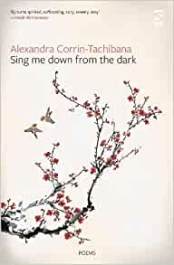
Alexandra Corrin-Tachibana: Sing me down from the dark • Penny Sharman:Catching the Heather Robin Thomas: The Weather on the Moon

*****

Penny Sharman and Alexandra Corrin-Tachibana
Reviewed Carla Scarano D’Antonio

Sharman   Alexandra Corrin-Tachibana Catching the Heather by Penny Sharman. £10.  Cerasus Poetry. ISBN 97984436600042. Also available to purchase from the author at https://pennysharman.co.uk/

Artistic photography and poetry coalesce in Penny Sharman’s collection. The ephemerality of the heather covering that ground that she catches at certain moments of the year when it stretches its ‘hues across Tame valley’ communicates a sense of resilience and confidence in the power of nature despite the fact that ‘human feet/plunder’ the land. The pictures illustrate the poems in a subtle way, sometimes more directly, at other times adding layers to what is voiced in words. The observation of nature and the presence of birds, flowers and trees are paramount and…

View original post 2,388 more words

OPOI reviews of John F. Deane. Clare Best and Mark Wynne

Matthew Paul's avatarMatthew Paul: Poetry & Stuff

The last batch of one-point-of-interest reviews for 2022 were published on Sphinx yesterday, here. They include my reviews of pamphlets by: John F. Deane, here; Clare Best, here; and Mark Wynne, here.

As ever, though, there are lots of reviews, by and of a diverse range of voices, to enjoy and pique your interest.

Thanks for reading my blog in 2022 and happy New Year!

View original post