#NaNoWriMo Day Twenty-Three of a new challenge I have called #AFirstDraft to write a haibun/haiku or other poetic form novel or prose novel over the month. Please join Gayle J. Greenlea, Anjum Wasim Dar and myself in writing first draft of a novel over the next Thirty Days. I will feature your first, or how many more drafts of your novel day by day until the end of November.

DSCF0644 Trigger Warning PEOPLE OF A SENSITIVE NATURE ARE ADVISED THAT THE FOLLOWING EXTRACTS EXPLORE FAMILY DYSFUNCTION AND ABUSE ISSUES Zero Gravity Excerpt for 23 November, 2021 <chapter> Two continued “That’s enough,” Ryan said crossly. I didn’t come here to measure our dicks.” “Not what it looked like when I walked in,” Owen shook his head with a lopsided grin and took an appreciative sip from his glass. So why did you come?” Owen asked. “And I use that verb in the most generic sense. At least I hope I do.” Ignoring the remark, Ryan resettled himself into the leather chair and looked up at Owen. “Because I fucked up. And I need your help. You know Hilary better than anyone.” -Gayle J. Greenlea. YOU’RE THE DEAD TO ME Fourth week -A Waning – Day Two Rode Tom Treddlehoyle’s donkey backwards, spoke Sam Barn’s lingo. Call me Kes. -Paul Brookes Bios And Links -Gayle J. Greenlea is an American-Australian poet and counselor for survivors of sexual and gender-related violence. Her poem, Wonderland”, received the Australian Poetry Prod Award in 2011. She shortlisted and longlisted for the Fish Poetry Prize in 2013, and debuted her first novel, Zero Gravity, at the KGB Literary Bar in Manhattan in 2016. Her work has been published in St. Julian Press, Rebelle Society, A Time to Speak, Headline Poetry and Press, The Wombwell Rainbow, Fevers of the Mind, Kalonopia and The Australian Health Review.

#NaNoWriMo Day Twenty-Two of a new challenge I have called #AFirstDraft to write a haibun/haiku or other poetic form novel or prose novel over the month. Please join Gayle J. Greenlea, Anjum Wasim Dar and myself in writing first draft of a novel over the next Thirty Days. I will feature your first, or how many more drafts of your novel day by day until the end of November.

DSCF0644 Trigger Warning PEOPLE OF A SENSITIVE NATURE ARE ADVISED THAT THE FOLLOWING EXTRACTS EXPLORE FAMILY DYSFUNCTION AND ABUSE ISSUES Zero Gravity Excerpt for 22 November, 2021 <chapter> Two continued “Why now? Feeling a sudden urge for repentance? Or perhaps you’ve come to pay back the money you owe me?” Ryan had the grace to cringe at that. “You know how it is, the music industry.” He shrugged as if everyone understood how untenable the career of a musician was – at least from an economic perspective. “Thought you were a computer wizard now, graphic designer or some such.” Owen reached into the freezer and withdrew a handful of ice. “Yeah, well, freelancing’s not that different from gigging. It’s still the music industry. The clients are slow in coming.” “That’s because you have to go out and get them, Ryan. Or haven’t you mastered getting out of bed before noon, yet?” Owen took the few steps necessary to cross the room and dropped the ice into the two glasses. -Gayle J. Greenlea. YOU’RE THE DEAD TO ME Fourth week -A Waning – Day One Slept in Joe Edwards cup and saucer. Fought brigands atop our black rock. -Paul Brookes Bios And Links -Gayle J. Greenlea is an American-Australian poet and counselor for survivors of sexual and gender-related violence. Her poem, Wonderland”, received the Australian Poetry Prod Award in 2011. She shortlisted and longlisted for the Fish Poetry Prize in 2013, and debuted her first novel, Zero Gravity, at the KGB Literary Bar in Manhattan in 2016. Her work has been published in St. Julian Press, Rebelle Society, A Time to Speak, Headline Poetry and Press, The Wombwell Rainbow, Fevers of the Mind, Kalonopia and The Australian Health Review.

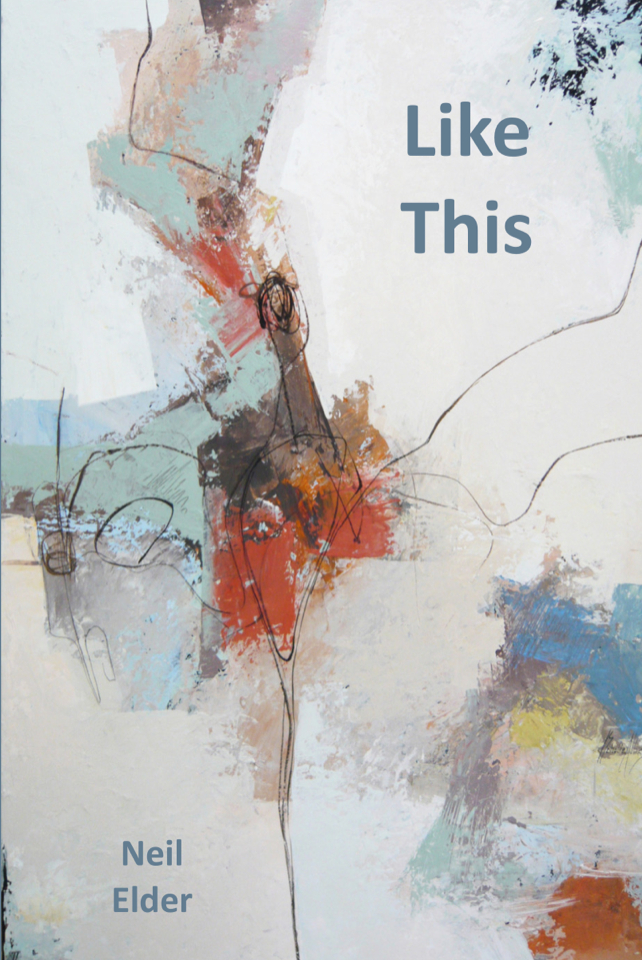
Wombwell Rainbow Ongoing Book Interview: “Like This” by Neil Elder. Question 1.


-Neil Elder

has been published in a number of leading journals and magazines. His latest work is Like This from 4Word Press. His first pamphlet Codes of Conduct (Cinnamon Press) was shortlisted for a Saboteur Award, his debut collection won the Cinnamon Press Debut Prize. He explores the gaps between what we think we know about ourselves and others, and what we really know. He occasionlally blogs at  https://neilelderpoetry.wordpress.com/

The Interview

Q:1: How did you decide on the order of the poems in your book?

The first two poems might serve to set the tone of the book – and so I went for a couple that I am particularly confident of, and that establish a couple of the themes that might crop up in the collection. Equally I want the last poem to feel like a satisfactory and strong finish. I then look for poems that chime with one another, but also try to vary the short with the longer poems. Essentially I want to move seamlessly through the work – no great lurches in style or pitch, and yet managing to keep things moving along. I think one can over-think it, and unless the poems have a particular narrative arc then I am not sure what odds it makes. I have published work where the sequence of the poems is vital, but in Like This the poems can stand alone. And I think Paul Farley is right in ‘Phone Books’ when he compares the phone book to a book of poetry, “A book you can open somewhere in the middle / like cities themselves, like books of poetry.”. How many people read a collection of poems in chronological order?

******

More answers tomorrow.

Wombwell Rainbow Ongoing Book Interview: “Bloom” by Sarah Westcott. Question 2.

Bloom

-Sarah Westcott

grew up in north Devon and lives on the edge of London. Her first pamphlet, Inklings, was a Poetry Book Society pamphlet choice and Slant Light (Pavilion Poetry, 2016), was highly commended in the Forward Prize. Her second collection, Bloom, also with Pavilion Poetry, was published this year. Sarah was a news journalist for twenty years and now works as a freelance tutor and writer. Work has appeared on beermats, billboards and buses, baked into sourdough bread and installed in a nature reserve, triggered by footsteps.

Q:2. How important is nature in your poetry??

Nature is around and within us; language is nature too. The poem is a kind of sensory organ that noses about, a tool to filter the non-human world through language; a way of reaching or rooting into that vexed space between human and non-human that we innately recognise as part of us.

There is a beautiful quote from John Clare in which he says ‘I found the poems in the fields, and only wrote them down’. I don’t mean to say I wander around in fields collecting poems like butterflies (although that does sound quite idyllic) but I find inspiration where we live on the edge of London. It is quite a traffic-heavy environment but it is also where the city begins to unravel into something less tightly packed and built-upon. I can look out of the window and see the Dartford Crossing and also the office blocks of London. I went purposefully and a bit self-consciously to encounter Nature in the North Kent marshes and was amazed to hear nightingales singing in the middle of the day. But in the poems, as in my own experience, the beyond-human comes in as a protagonist itself, more than a setting.I think it has seeped into me and is the poem as much as I am, if that makes sense.

Our garden, the skies over it, and the small river that runs near, the patch of ancient woodland, Greenwich Park, the roadside verges with lizards and vetch, all these places are in me, and in the poems. A lot of the time, in the first lockdown last Spring, I looked out of the window at the beauty of the world, especially in the early evening. I was behind glass but I could feel and smell the intensity, the conditional fragility of the trees, pear blossom, bird song, sirens.

*******

The best place to buy a signed copy is to contact her directly (send a DM on twitter) or email Sarah.westcott@tiscali.co.uk

*******

More answers tomorrow.
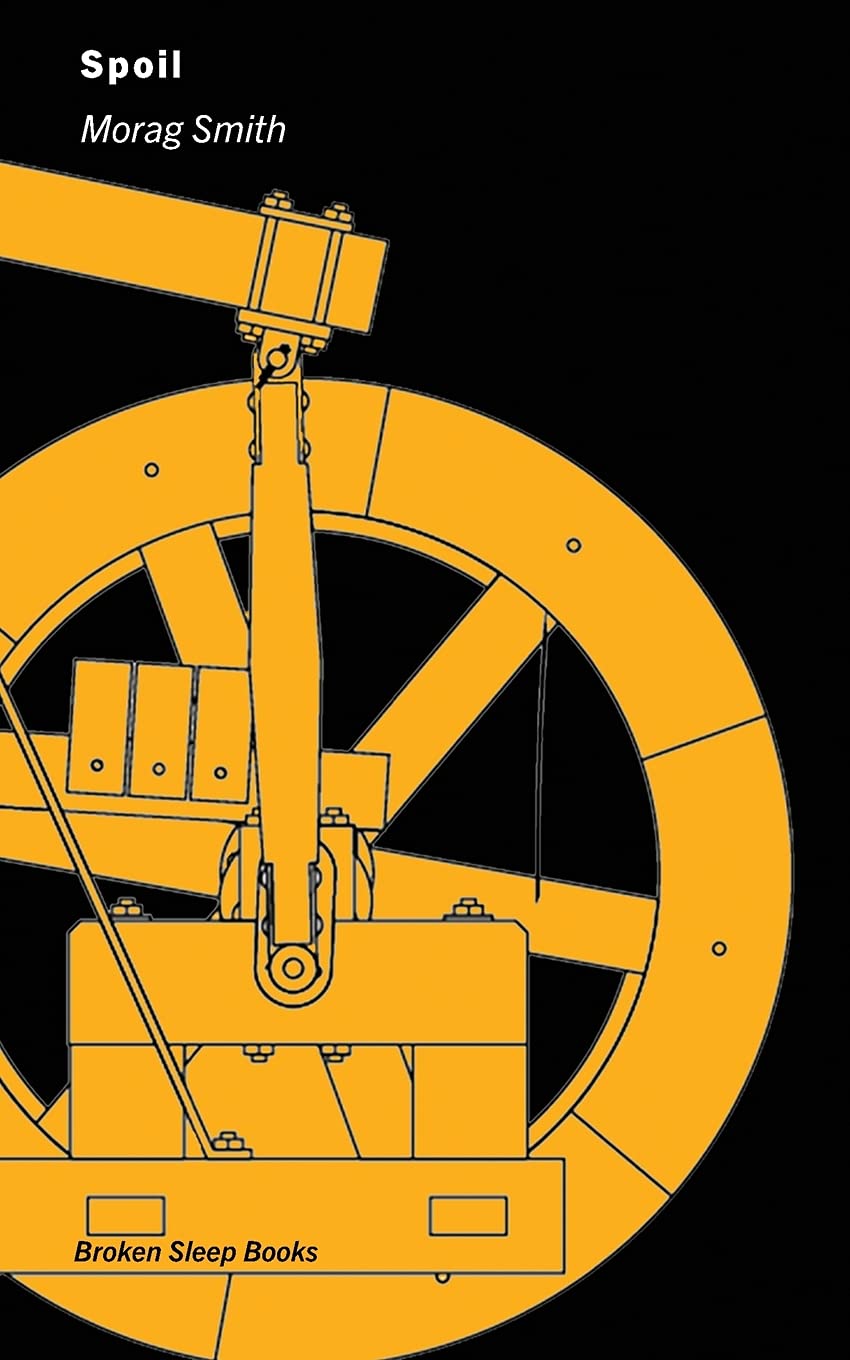
Wombwell Rainbow Ongoing Book Interview: “Spoil” by Morag Smith. Question 1.

this  is the link

https://www.brokensleepbooks.com/product-page/morag-smith-spoil?fbclid=IwAR0aMNZOoIKgql0pIKtSrsE1Y50rfuERQ7IT1s_HsEeMXtikCapNBzv5ero

-Morag Smith

is a Cornish poet, painter, writer, and performer. She graduated in 2020 with a first in Creative Writing from Falmouth University, winning a prize for her dissertation. In 2018 she won the Cornwall Contemporary Poetry Festival, Shorelines competition. Her pamphlet, Spoil, was published by Broken Sleep Books in October 2021. Her poetry is published in various literary journals including International Times, as well as the eco-anthology, Warming! As a New Traveller she brought her children up close to nature, in trucks, caravans, and houses. She writes about her experiences, about our ravaged landscape, and bears witness to the poverty of British people. At the moment she is publishing a book of poetry about plastic pollution in our oceans, a collaboration with artist Jasmine Davies, and the Clean Ocean Sailing charity.

The Interview

Q:1. How did you decide on the order of the poems in your book?

Spoil looks at my own history within the landscape of Cornwall and Cornish history as a landscape within me, it is chronological. It starts with the Nebra Sky Disc, the oldest map in the world, its tin and gold from Cornwall, the minerals magnetised back to their birthplace, as I was to Heligan. Spoil is the map and the journey. I am the soil and the story.

*******

More answers tomorrow.

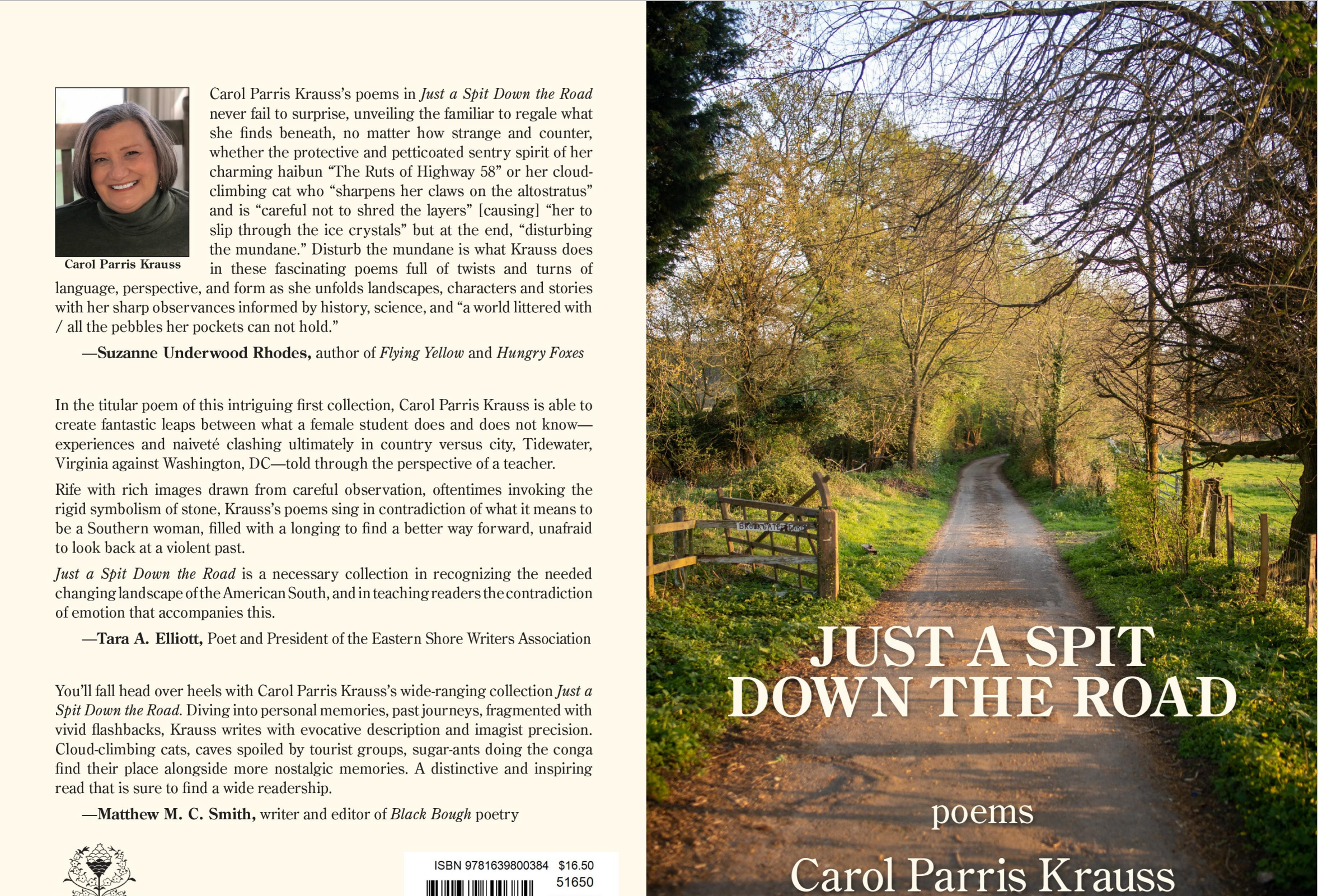
Wombwell Rainbow Ongoing Book Interview: “Just A Spit Down The Road” by Carol Parris Krauss. Question 4.

just a spit cover by carol parris krauss

-Carol Parris Krauss

lives in the Tidewater region of Virginia. Her work is distinctly Southern, with a strong sense of time and place. This high school English teacher is a watcher, and is not afraid to tackle current issues and concerns.

Carol serves as a reader for Full House Literary Magazine .

As a heads up here is a link to the 2019 interview I did with Carol: https://thewombwellrainbow.com/2019/02/25/wombwell-rainbow-interviews-carol-parris-krauss/

Q:4. How do you recognise truth in poetry?

I recognize the truth and the lies in poetry. I think the reader chooses what they see depending on their personal experience, just as the writer chooses when they create and compose.

*******

More answers tomorrow.

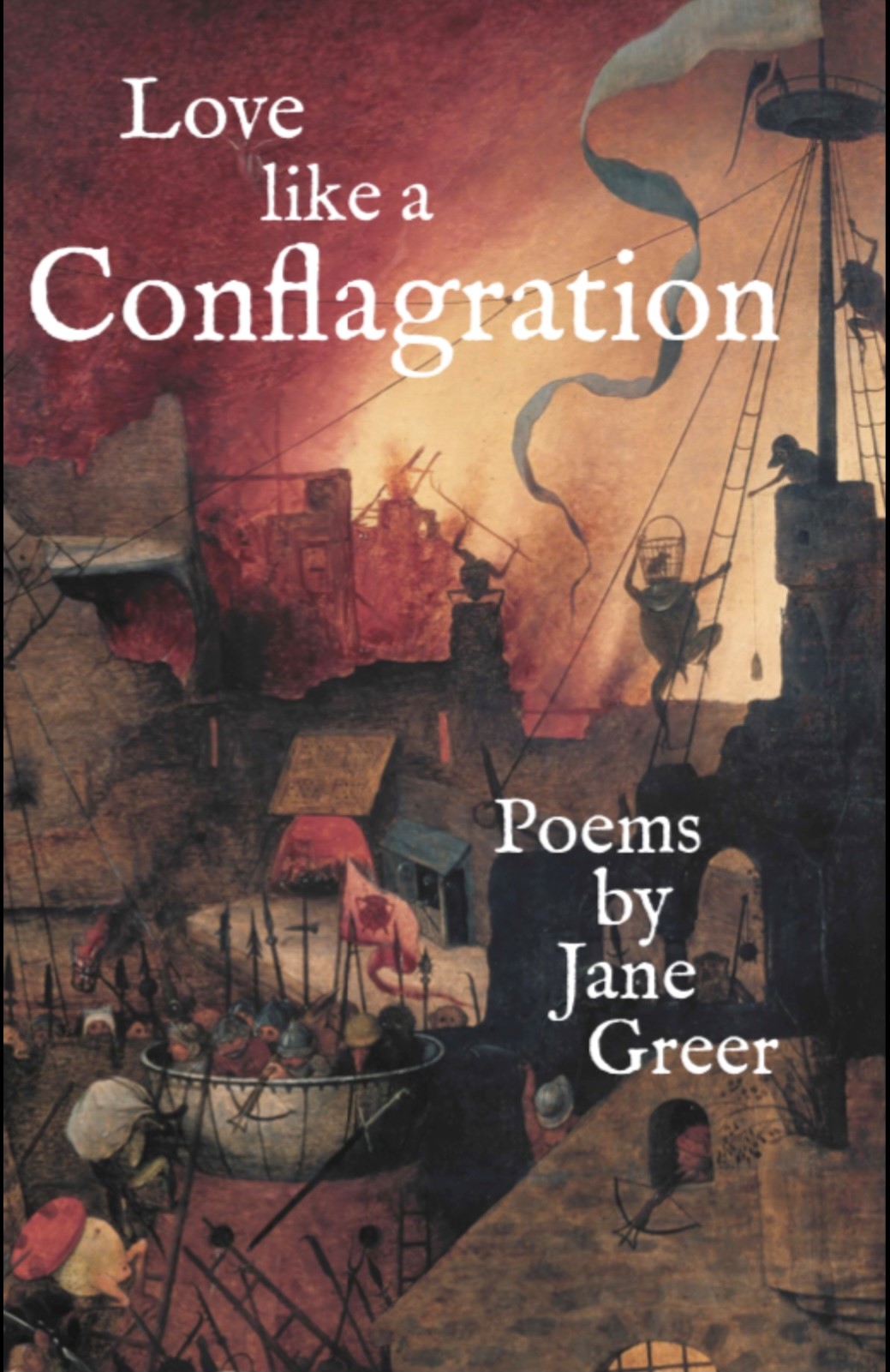
Wombwell Rainbow Ongoing Book Interviews: “Love Like A Conflagration” by Jane Greer. Question 2.

love like a conflagration by jane greer

-Jane Greer

published and edited Plains Poetry Journal in the 80s and 90s. Harry Duncan’s Cummington Press published her first poetry collection, Bathsheba on the Third Day, in 1986. Lambing Press published her second collection, Love like a Conflagration, in 2020 and will publish her third in 2022. Greer lives in North Dakota. 

Lambing Press:

Amazon:

The Interview:

Q: 2: How important is nature in your poetry?

Nature features prominently in my poetry—as a metaphor for human nature. (The job of poetry is to heal what’s broken, to uncover meaning and relationship.) Seasonal change has strong effects on human emotions: my poems explore why. And birds of all sorts often crop up in my poems because birds are such wonderful mirrors of the human psyche. 

*******

More answers tomorrow.

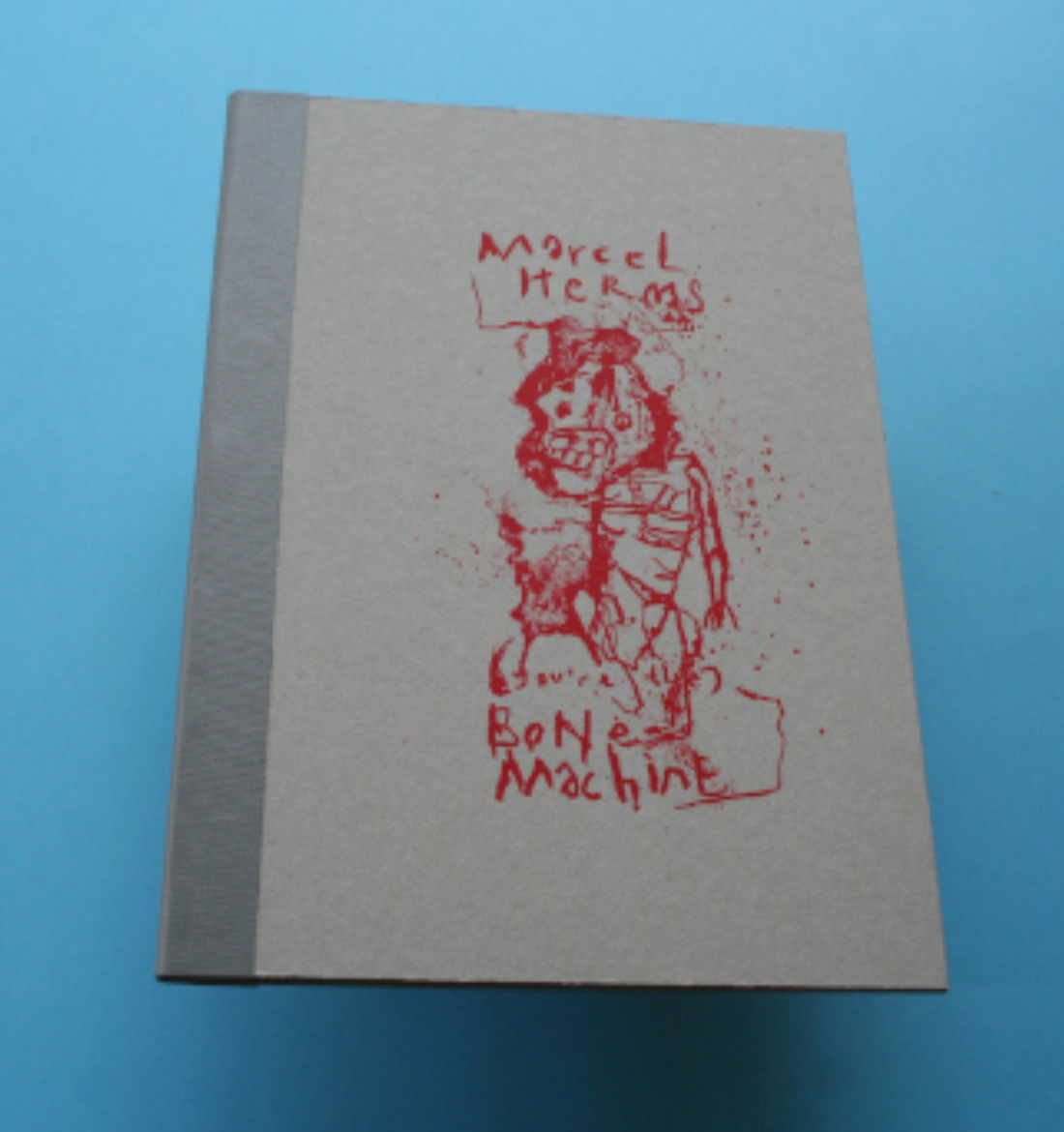
Wombwell Rainbow Ongoing Book Interview: “you’re the Bone Machine” by Marcel Herms. Question 4.

bone machine cover Marcel Herms

-Marcel Herms

is a Dutch visual artist. He is also one of the two men behind the publishing house Petrichor. Freedom is very important in the visual work of Marcel Herms. In his paintings he can express who he really is in complete freedom. Without the social barriers of everyday life. There is a strong relationship with music. Like music, Herms’ art is about autonomy, freedom, passion, color and rhythm. You can hear the rhythm of the colors, the rhythm of the brushstrokes, the raging cry of the pencil, the subtle melody of a collage. The figures in his paintings rotate around you in shock, they are heavily abstracted, making it unclear what they are doing. Sometimes they look like people, monsters, children or animals, or something in between. Sometimes they disappear to be replaced immediately or to take on a different guise. The paintings invite the viewer to join this journey. Free-spirited. He collaborated with many different authors, poets, visual artists and audio artists from around the world and his work was published by many different publishers. http://marcelherms.nl

The Interview

Q:4: After having looked through the book what do you wish the viewer to leave with?

To be honest, when making my art (and therefore also with this book) I’m not so concerned with what the viewer/reader will think of it. But I hope that the viewer is intrigued by the interplay of the drawings and the underlying images/text and the unexpected effects that arise as a result. That’s what I really like about it: it’s a surprise on every page how that turns out.

*******

The book may be purchased here: https://uitgeverijpetrichor.nl/product/youre-the-bone-machine/

*******

More answers tomorrow.

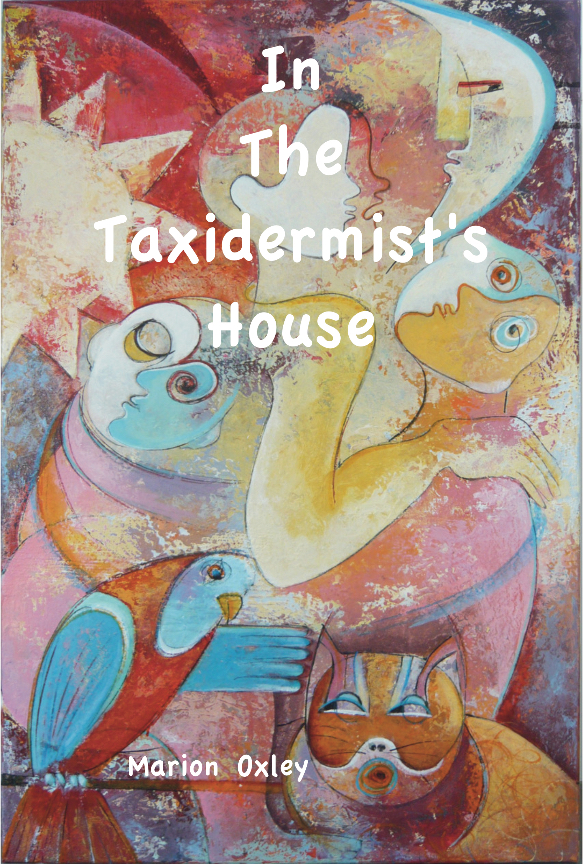
Wombwell Rainbow A Growing Into Book Reviews : “In The Taxidermist’s House” by Marion Oxley

After much chewing the cud, my weekly book reviews will become “growing intos”, so I will add a comment, a deliberation over the weeks until I am satisfied, for the moment that I have said enough. It is my organic process of assessment. Returning to the poetry is part of it. It is how I read. 

InTheTaxidermists-House marion oxley

An ecopoetic and zoopoetic powerhouse of a 28 poem collection. Her final poem “journey of the light travellers” is an empathic devastating critique of wind farms. “Woodlice” is from the insects point of view and, for me, captures it perfectly.

A lot of the poems enact transformation, metamorphosis “They come/the seekers of freedom/shedding the skin of crowds//Emerge/displaced and solitary/haunters of canal paths/

Wombwell Rainbow Ongoing Book Interviews: “Love Like A Conflagration” by Jane Greer. Question 1.

love like a conflagration by jane greer

-Jane Greer

published and edited Plains Poetry Journal in the 80s and 90s. Harry Duncan’s Cummington Press published her first poetry collection, Bathsheba on the Third Day, in 1986. Lambing Press published her second collection, Love like a Conflagration, in 2020 and will publish her third in 2022. Greer lives in North Dakota. 

Lambing Press:

Amazon:

The Interview

Q:1. How did you decide on the order of the poems in the book?

I don’t believe that the order of the poems in most collections has much significance. In most collections, the order is not organic to the work; it’s imposed after creation. Order can bring pleasure and surprise—Psalm 23 comes immediately after Psalm 22!—but it’s not essential

Each of my poems (collected in no particular order over many years) is its own universe. “Ordering” them daunts me, but it seems to be expected, so I do my best. 

Love like a Conflagration is really two books. The first half is newer poems, and the second half is a republication of my 1986 collection, Bathsheba on the Third Day. Bathsheba was first published in a limited edition of 300 copies, hand-set and hand-printed by Harry Duncan at The Cummington Press. He was a legend. I was so new and ignorant that I didn’t fully realize at the time what it meant to be published by Harry Duncan. As I recall, he suggested the order of the poems in Bathsheba and I was relieved that he did so. 

In the front half of Conflagration, I had, from the beginning, wanted “Micha-el” first, as a standalone. I think it’s one of the best poems in the book. When Modern Age published it in 2019, people on Twitter really seemed to like it. And it subtly encapsulates themes I had discovered running through the entire collection: desire, transgression, repentance, salvation. A line in “Micha-el” became the collection’s title. The rest of the poems in the front of the book seemed to fall, very roughly, into pre-repentance and post-repentance themes, so that’s how I arranged them. It was all I could think of—but it seems to work.

*******

More answers tomorrow.