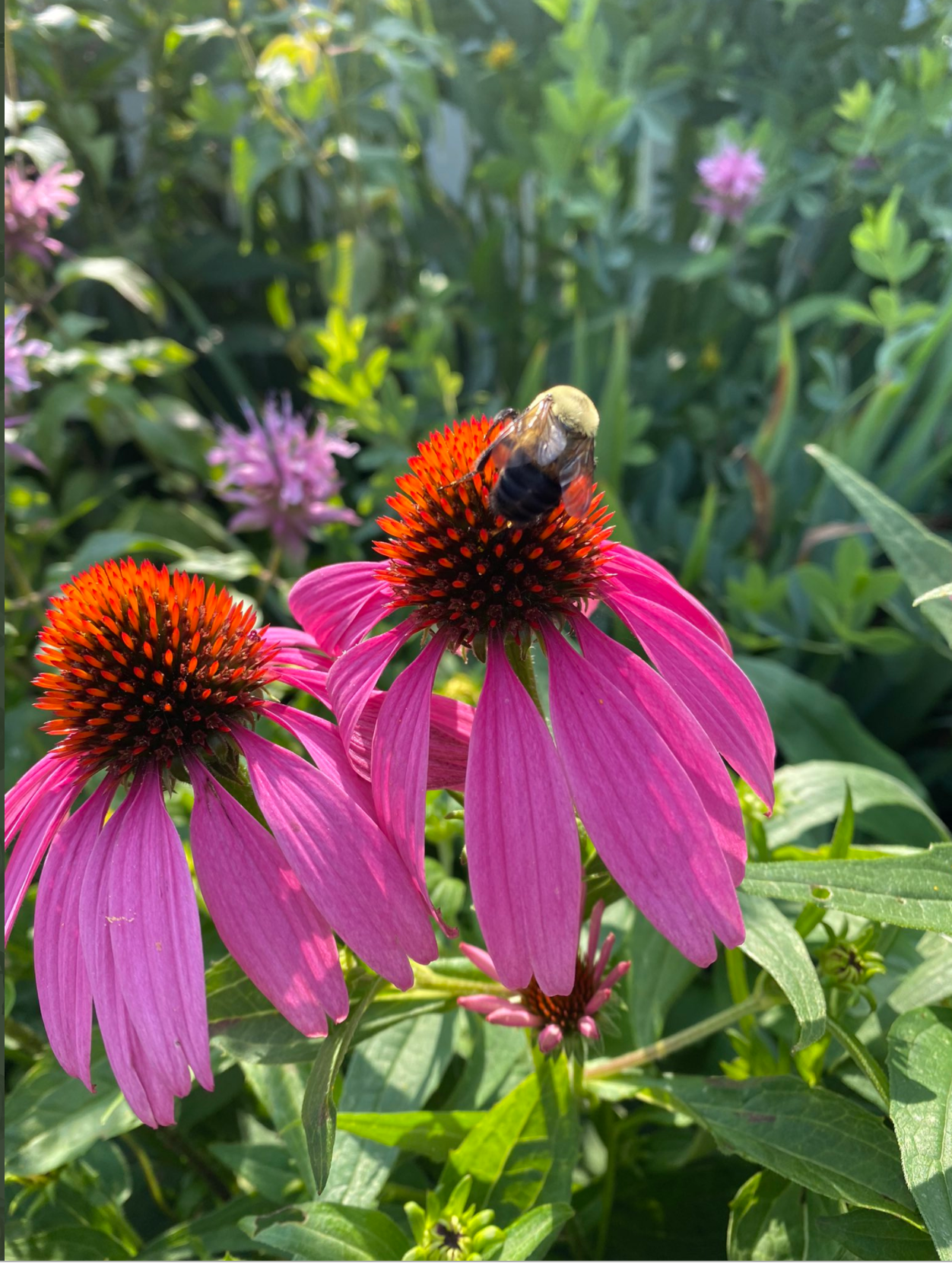
#BeesNeedsWeek #BeeTheChange 12th-18th. Friday is “Think Carefully About Whether To Use Pesticides” I will feature any work that is inspired by the information within. I welcome written/artwork/photos submissions on any of the following themes Five Simple Actions: Monday: Grow More Flowers, Shrubs, And Trees, Tuesday: Cut Your Grass Less Often, Wednesday: Let Your Garden Grow Wild, Thursday: Don’t Disturb Insect Nest And Hibernation Spots, Friday: Think Carefully About Whether To Use Pesticides, and two additional ones, Saturday: Score Your Garden With Bee Kind Sunday: Make Space For Bumblebee Nests

Think carefully about whether to use pesticides especially where pollinators are active or nesting or where plants are in flower. Consider control methods appropriate to your situation and only use pesticides if absolutely necessary. Many people choose to avoid chemicals and adopt methods like physically removing pests or using barriers to deter them. If you choose to use a pesticide, always follow the label instructions.

Gardeners, allotment holders and amenity managers

Only use pesticides if absolutely necessary or use non-chemical alternatives where possible. In particular, avoid using pesticides on flowering plants or where pollinators are active or nesting. You could protect your plants by removing pests by hand or building barriers around vulnerable plants, such as netting or cardboard barriers, or by companion planting such as marigolds to ward off aphids.

Farmers, growers and large-scale amenity managers

For a balanced approach to managing pests on a larger scale, you should increase use of Integrated Pest Management (IPM). You could also consider husbandry methods such as organic farming if they suit your business needs and circumstances. IPM entails the use of a range of approaches to prevent or suppress harmful organisms. These may include: crop rotation; appropriate cultivation techniques; balanced fertilisation, liming and irrigation; hygiene measures; protecting beneficial organisms; and using resistant or tolerant cultivars and certified seed and planting material.

Good practice in relation to pest control includes the following actions:

• Monitor your crops regularly to identify any pest problems, and take action as necessary based on the results;
• Use pest thresholds, where possible, to determine the need for plant protection measures. Take action only when the thresholds have been exceeded;
• When measures are really needed use biological, physical and other non-chemical methods where possible;
• Where pesticides have to be used, choose products that are as specific as possible and have the least side effects. Plan to use as little as possible and only what you need.

Further advice:

For further advice on IPM please visit: Linking Environment and Farming (LEAF)The Voluntary Initiative or The Agricultural and Horticultural Development Board

Organic farming limits the use of pesticides, encouraging the use of alternative non-chemical methods. These include rotation of crops, increasing genetic diversity, use of resistant crops and biological pest control.

For further advice on organic farming go to:

The Soil Association and the Organic Farmers and Growers.

Note: Government experts and a wide range of interested parties have helped to inform the development of these actions and the supporting advice. It is intended as good practice advice and should not be regarded as official guidance. The Bees’ Needs is hosted by The Bumblebee Conservation Trust on behalf of Defra in support of the emerging National Pollinator Strategy. The Bumblebee Conservation Trust does not own or endorse any content other than as a contributing stakeholder to the National Pollinator Strategy along with many other organisations and individuals.

Contact us at: pollinatorstrategy@defra.gsi.gov.uk
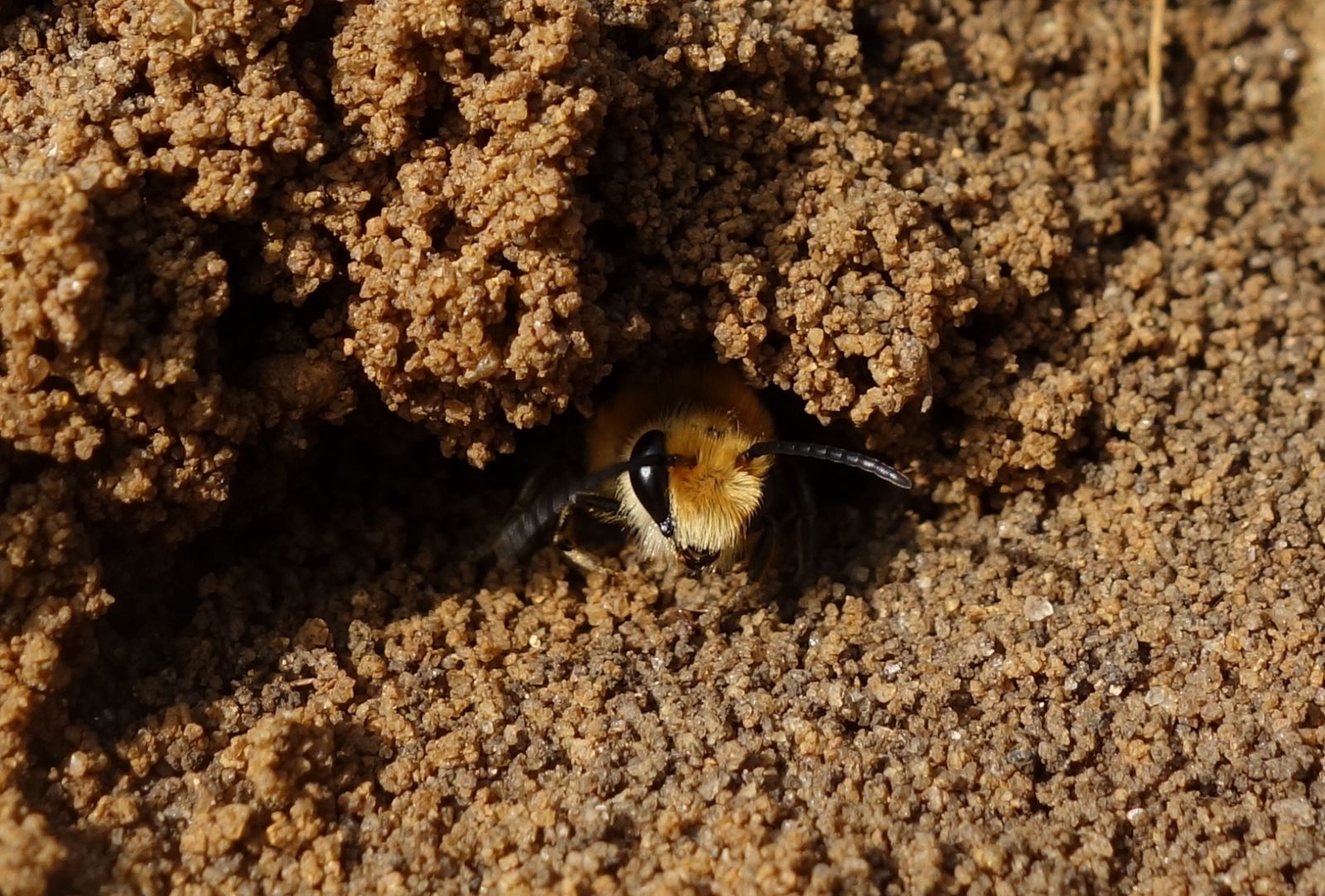
#BeesNeedsWeek #BeeTheChange 12th-18th. Thursday is “Don’t Disturb Insect Nest And Hibernation Spots” I will feature any work that is inspired by the information within. I welcome written/artwork/photos submissions on any of the following themes Five Simple Actions: Monday: Grow More Flowers, Shrubs, And Trees, Tuesday: Cut Your Grass Less Often, Wednesday: Let Your Garden Grow Wild, Thursday: Don’t Disturb Insect Nest And Hibernation Spots, Friday: Think Carefully About Whether To Use Pesticides, and two additional ones, Saturday: Score Your Garden With Bee Kind Sunday: Make Space For Bumblebee Nests

bee home

According to the Bumblebee Conservation Trust

“Avoid disturbing or destroying nesting or hibernating insects, in places like grass margins, bare soil, hedgerows, trees, dead wood or walls.

As well as making sure there are adequate food resources throughout the year for insect pollinators, it is also important to make sure they can nest in safety so that they and the next generation can survive overwinter, to start again in the following spring.

Most wild bees are not aggressive if they or their nests are left undisturbed. Some bumblebees nest underground in small mammal holes, under sheds and in heaps of compost or leaves which tend to be dry and dark. Others make nests above ground in thick grass or in trees. You can read lots more about bumblebee nests by clicking here.

The many different species of solitary bees have particular nesting requirements. A few species will make their nests in your lawn and many others favour bare patches of compacted soil, especially if sloping and with a southern aspect, where they can dig vertical nest tunnels.

In addition, some solitary bees nest above ground and you can provide them with hollow reeds, canes or twigs, or wooden blocks with holes of different sizes drilled into them (2mm to 10mm), or buy commercially available bee hotels, and hang them somewhere warm, sunny and sheltered about 1-2 m above the ground.

Note: Government experts and a wide range of interested parties have helped to inform the development of these actions and the supporting advice. It is intended as good practice advice and should not be regarded as official guidance. The Bees’ Needs is hosted by The Bumblebee Conservation Trust on behalf of Defra in support of the emerging National Pollinator Strategy. The Bumblebee Conservation Trust does not own or endorse any content other than as a contributing stakeholder to the National Pollinator Strategy along with many other organisations and individuals.

Contact us at: pollinatorstrategy@defra.gsi.gov.uk

Recent Reading July 2021 Part 1

Billy Mills's avatarElliptical Movements

Fetch Your Mother’s Heart, lisa luxx, Out Spoken Press, 2021, ISBN: 9781838021177, £10.00

The Yak Dilemma, Supriya Kaur Dhaliwal, Makina Books, 2021, ISBN: 9781527271654, £10.00

Affiliation, Mira Mattar, Sad Press, 2021, ISBN: 978-1912802395, £6.00

Notes on Sanskrit and Correspondences, by Nisha Ramayya, Oystercatcher Press, 2015 and 2016, £5.00 each

Heredity/Astynomeby Naush Sabah, Broken Sleep/Legitimate Snack, 2020, No price given, possibly out of print

Fetch Your Mother’s Heart by lisa luxx, a poet whose work is completely new to me, is a study in the relationship between desire and violence, and the possibility of community in the point of intersection. The source moments are outlined in an introduction, and range from the suicide of a close friend to the Lebanese October Revolution, in which luxx seems to have been a participant. Organised in chapters, each one circling around a central theme, the book draws on both…

View original post 2,963 more words

#BeesNeedsWeek #BeeTheChange 12th-18th. Wednesday is “Let Your Garden Grow Wild” The video below explains. I will feature any work that is inspired by this video. I welcome written/artwork/photos submissions on any of the following themes Five Simple Actions: Monday: Grow More Flowers, Shrubs, And Trees, Tuesday: Cut Your Grass Less Often, Wednesday: Let Your Garden Grow Wild, Thursday: Don’t Disturb Insect Nest And Hibernation Spots, Friday: Think Carefully About Whether To Use Pesticides, and two additional ones, Saturday: Score Your Garden With Bee Kind Sunday: Make Space For Bumblebee Nests

garden run wild

Photo by Glynn Young

#BeesNeedsWeek #BeeTheChange 12th-18th. Tuesday is Cut Your Grass Less Often. How would this help bees? The video below explains. I will feature any work that is inspired by this video. I welcome written/artwork/photos submissions on any of the following themes Five Simple Actions: Monday: Grow More Flowers, Shrubs, And Trees, Tuesday: Cut Your Grass Less Often, Wednesday: Let Your Garden Grow Wild, Thursday: Don’t Disturb Insect Nest And Hibernation Spots, Friday: Think Carefully About Whether To Use Pesticides, and two additional ones, Saturday: Score Your Garden With Bee Kind Sunday: Make Space For Bumblebee Nests


Cut grass less often and ideally remove the cuttings to allow plants to flower.

Native flowering plants in grass areas, field corners, verges and specially sown flower-rich habitats support the greatest diversity of insect pollinators by providing nectar and pollen resources, places to nest or breed and leaves for caterpillars. Hence it’s important to get the management right.

Bathe Now in Pearls — 17Numa

I’m thrilled to share that five of my poems have been published in Sahitya Barta released out of Bangladesh. Big thank you to Ariful Islam for including my work in his venue. “Holy Trinity,” “Of Godhead and Gravestones,” “Casting Cards,” “Give & Take,” and “Narrow” can be read here… https://www.sahityabarta.com/p/1823

Bathe Now in Pearls — 17Numa

Poem of the Week on Bella Caledonia — Matt Abbott Poet

My new poem ‘The Viaduct’ is Poem of the Week on Bella Caledonia.

Poem of the Week on Bella Caledonia — Matt Abbott Poet

Summer reading — Anthony Wilson

https://open.spotify.com/embed/playlist/3NVV7CI7iQxvh9PxryYh9V?si=6e582e98f48845c9

To continue this season of not, where I have been reposting old blog posts and links to some others, I present below two free downloads which are buried on this site and which you might have missed. The first is to my pamphlet of poems The Year of Drinking Water, which I published in 2007 […]

Summer reading — Anthony Wilson

Poetry and innovation — Thom Sullivan

‘Poetry is the artform that allies what we say with the way we say it. Language is the material of poetry, whereas the material of the novel is character and story. If a thing has been said it doesn’t need to be said again. If a thing hasn’t been said – if a poem attempts […]

Poetry and innovation — Thom Sullivan

Eva Wong Nava reviews ‘Spirits for Sale’ — Selected Works of Jordan Trethewey

A review of “Spirits for Sale” by Singapore author and publisher Eva Wong Nava: Just in time for Halloween, ‘Spirits for Sale,’ a book of Tanka poems by Jordan Trethewey with artwork by Marcel Herms, is a dead giveaway inspired by the supernatural and paranormal artefacts found on sale online. I was spooked by the […]

Eva Wong Nava reviews ‘Spirits for Sale’ — Selected Works of Jordan Trethewey