Fry is a poet living on the south coast of England.
Originally from Swansea.
Wales was and still remains, a huge influence on everything.
Published in 4 issues of Black Bough Poetry, The Hellebore Press and Re-Side.
A regular contributor to #TopTweetTuesday
He spends most of his time honing his craft.
Fascinated by the Pagans of Albion, quantum physics and the synchronicity of the universe.
seekingthedarklight Twitter@thnargg
The Interview
1. When and why did you start writing poetry?
I wrote my first poem two years ago, it was a strange and slightly uncomfortable experience. I picked up a pen and a notebook and wrote a poem – just like that. Although I read all the time, I didn’t often read poetry and certainly had no plans to write any. Looking back it is less surprising…. After 40 years working in social care (mental health), there was a big gap in my life. For a long time I had been searching for a way to channel my thoughts and feelings, to speak about what was important. Above all I wanted to paint. I spent a lot of money – well more than I could afford, on paints and brushes. The trouble was I couldn’t paint. I knew it all along. Even a kind, non-critical soul would turn away from my efforts. But poetry is a wonderful medium. If you have the imagination and can hear the song, you can do what you want with it. So I started to paint with words – films and pictures, landscapes and emotions. From the beginning I decided that the most important thing for me was to have my own voice, so I struggled on through, building on my mistakes and making my own way. I have no problem with learning from others, but I worried that if this happened too early in the process I might lose my way. So for the first year I deliberately refrained from reading any poetry then, as my confidence grew, I started reading other poets’ work and everything opened up for me. Finding Black Bough Poetry on Twitter was a milestone and I started to submit my work to them. Matt Smith (editor) was very helpful and encouraging. As a result my work was lifted to another level.
2. Who introduced you to poetry?
For a start school in the 60’s was very different from now. For me it was not a place of learning, but more like a boxing ring with no referee. Poetry, like other learning, was of the self service variety. My parents loved literature of all kinds. There was a large bookcase in the corner of our living room holding books of and books about poetry. War poets, political poets, classical poets, romantic poets, modern poets, angry poets and nonsense poets.
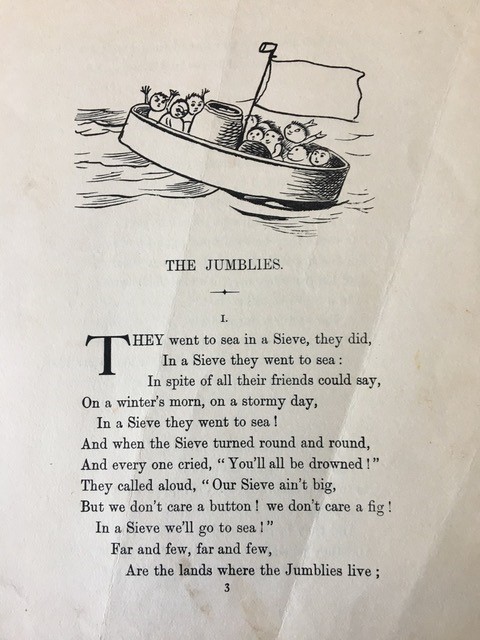
My two favourite books when I was very young were The Hunting of the Snark by Lewis Carol and Nonsense Poems by Edward Lear. My Dad read them to me late at night (7pm!), I lay in the shadows just out of the light. The combination of beautiful illustrations and the funny but scary poems has never left me. The power of poetry to transport you to other lands holds equally well for the the very young and the old.
3. How aware are and were you of the dominating presence of older poets traditional and contemporary?
As an older poet only recently taken to the writing scene, I am very struck by the turbulence and excitment washing through the online poetry community. All types of writers – young and old, angry and calm, complex and basic, exist and interact together.
Like the music scene in the 60s and 70s convention is being ignored and writers are expressing themselves through a variety of experimental poetry. Now we can see the personalities and differing approaches that form the basis of a lot of modern writing. Some poets are experienced, published and confident while others tentatively post their early efforts. The ability to self publish, enter competitions and send poems to an ever growing resource of online magazines means that communities coalesce around different publications and forums each with their own cultures, rules and mores.
I would hazard a guess that mainstream poets who are published and recognised by a wider society still have a heavy presence, but I believe that this is in decline with smaller ‘zines are having an enormous influence. The internet and its influencers mean that people who would have been pursuing more solitary paths are now more dominant and their influence the greater for it. Rules are being routinely broken, and conventions ignored.
What appears to be far more persuasive are issues pertaining to sexual rights, mental health and other groups who have been traditionally disadvantaged in society. We now live in such interesting times where individuals can join with like minded groups and publish their thoughts and ideas as poetry, photography, prose and art where otheir very presence is a statement of who and what they are.
So, in answer to your question, I believe that the former influence of older more established poets is in slow but definite decline.
4. What is your daily writing routine?
Having spent many decades as a manager in an extremely fraught and pressured working environment, I have completely abandoned any hint of routine. In this aspect I am now a free spirit and writing poetry is part and parcel of this new freedom. I capture ideas or odd lines from wherever they present. I then desperately try to remember them until I can write myself a note. After that when I have a free moment I will start to sketch out a story line. Depending on the subject I may do some research and that adds to my notes.
I work the rough poem until it has some shape and I can see where it is taking me. Poetry has a life of it’s own and goes where it will. I rarely end up with the poetry I was expecting and sometimes I get very unexpected results. Music and place always add to the mix. Myth and story are also great influencers. There are times when the flow is right and the process is quick and relatively easy. Other times every word has to struggle out. I find that however finished the work is, it always has to cook for hours or days. Sometimes for weeks. Then the edits become more obvious to my thinking and my writing process. If I read an old poem I always end up revising it. I spend a lot of time thinking and writing. If I am caught up in a strong poem, I can spend hours working on it. So no routine but a very recognisable process.
5. What subjects motivate you to write?
I am especially drawn to the eternal mysteries of time and space, origins and the nature of all sentient beings. I have written a lot about our pagan times. This is because I sense a closeness to the land and its seasons, which most of us have now lost.
What fascinates me is that we have an imperfect history covering the last 5 thousand years or so, but modern humans have been here for over 250,000 years. So if you think that the Neolithic farmers were ancient then you’re barely scratching the surface.
All that time a tiny population of humans travelled the world, vulnerable to disease and predation. Living through the extremes of heat and ice they prospered and endured. And they settled in such diverse habitats, adapting and crafting their myths and legends.
Poetry is a vehicle that will carry the deepest or most mundane of thoughts onto the page. The smell of rain on dry grass, a few bars of music or the edge of a passing conversation. A TV programme or the news.
So I say, write about everything, explore your emotions and in the process try to seek an inner peace.
We live amidst mysteries that would break us apart, if we just began to suspect a fraction of the truth that’s out there.
I am coming to the conclusion that the universe itself is probably sentient.
So if you don’t yet understand trees or the other creatures that we share this planet with, then the stars will have to wait.
*******
This was the final question he answered. In a later DM to me on Twitter he told me:
BTW The interview isn’t dead in the water. I’ve been having a serious struggle with not believing in my work and so it follows that I have little of relevance to say. I’m getting over that now and would like to continue if that is ok with you. Sorry this was always a self confidence thing Dai
We never did continue, to my ever present shame.
A Message From Margaret Royall
Hello Paul,
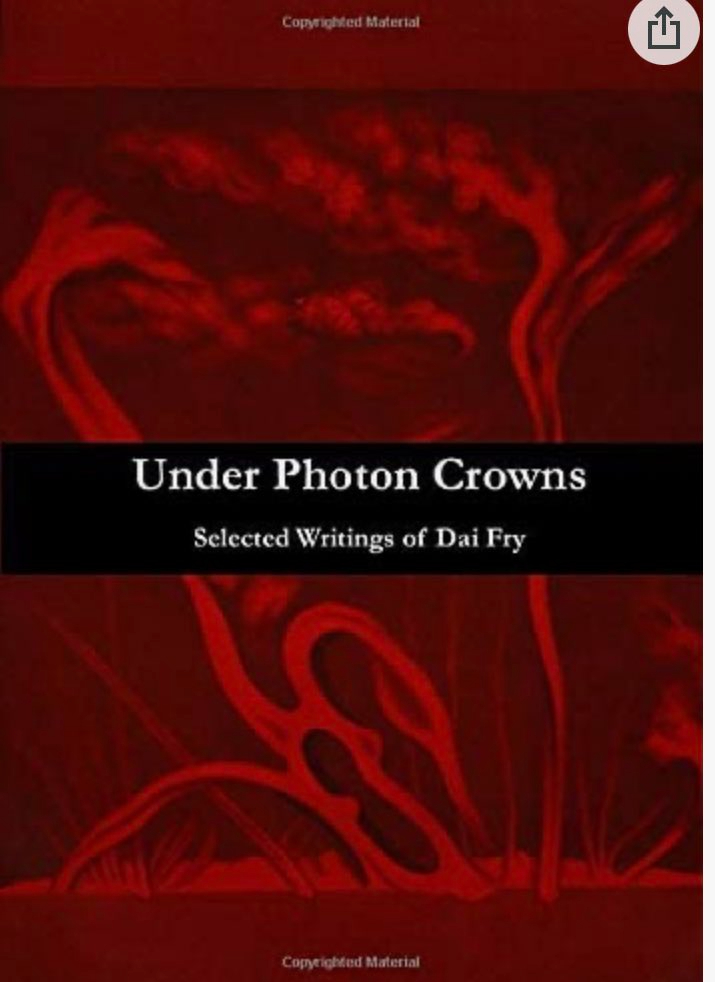
how very sad to hear of Dai’s passing. A great loss to the poetry world. I have always admired his imaginative writing so much. At least his book Photon Crowns has been published recently – that is a wonderful legacy. I send my condolences to his family, friends and to those in the poetry community who knew him well in person better than me. His brilliant words will be greatly missed!
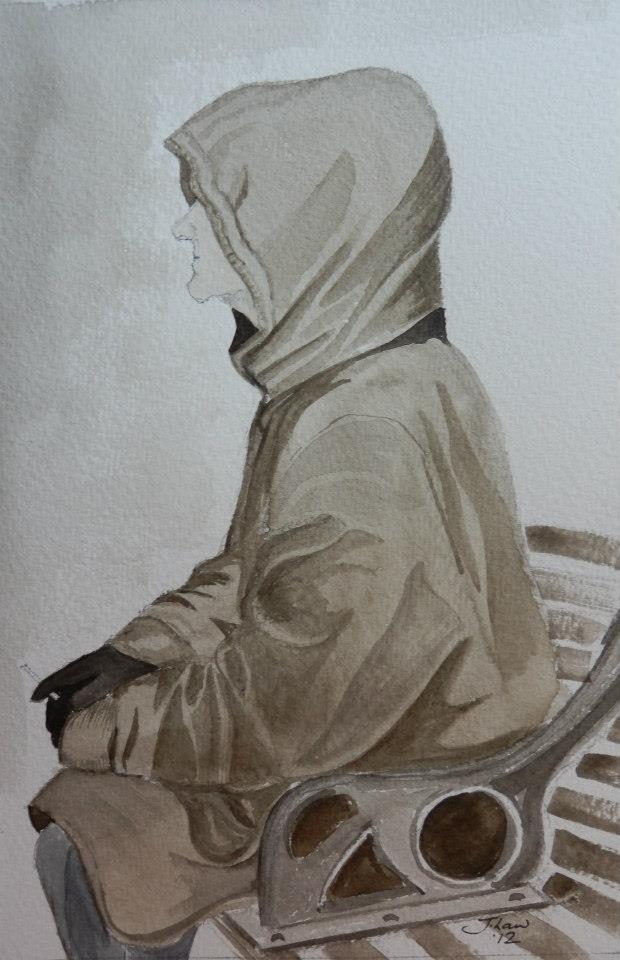
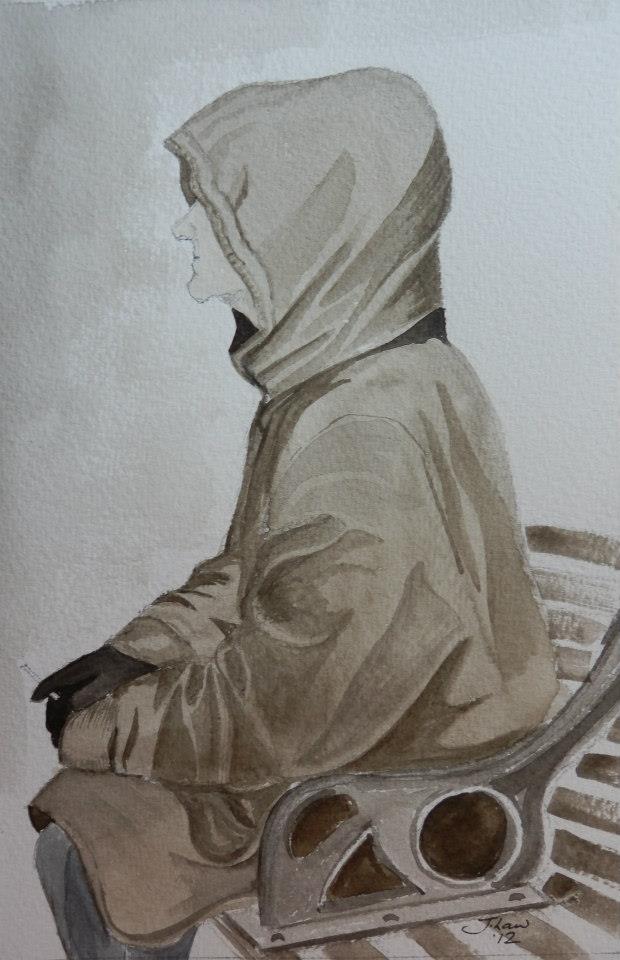
Old lady who’s homeless who goes into spoons for a coffee every night by John Law
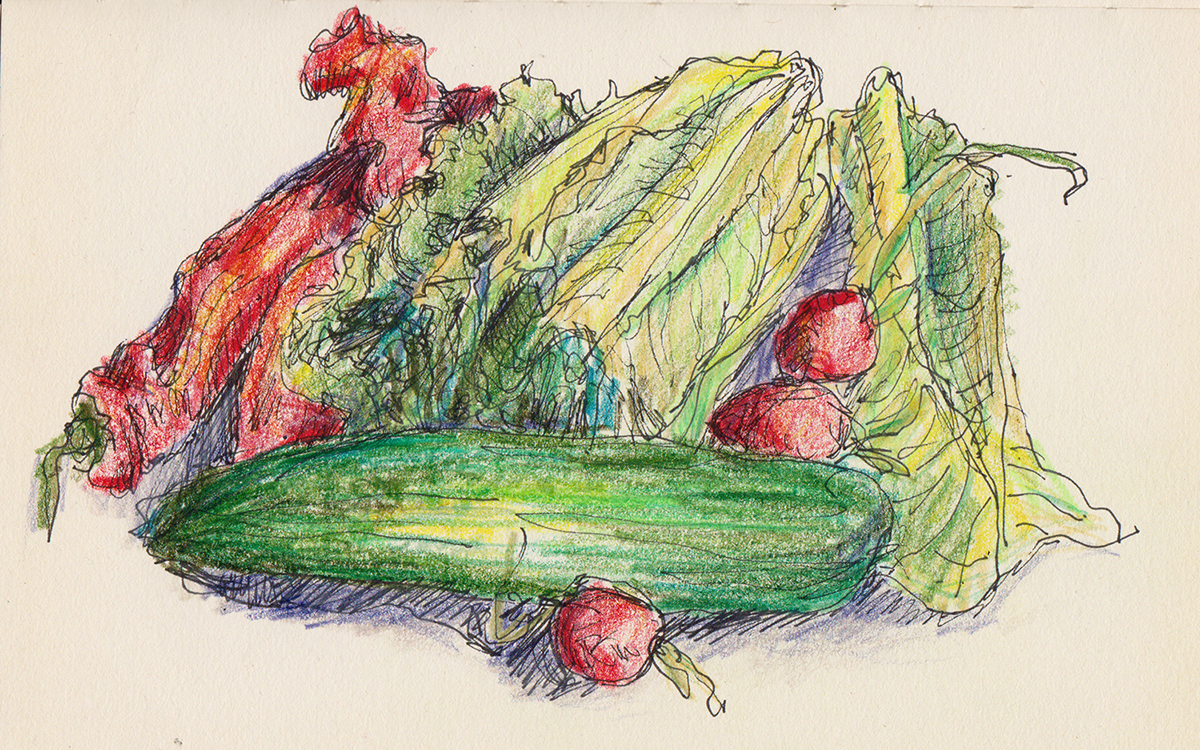
The lad was sad, so sad Because vegetables was all he had Grow on the sill to his tiny pad
He wished, oh how he wished He had some coin for meat or fish Something to make a filling dish
But his mind was set, firmly set He would give something to the homeless old lady he’d met She smiled like his nan and called him pet
So he gave her a salad to eat Then offered his bed, so she wouldn’t sleep on the street Don’t want to burden, she said, but thought him sweet, so sweet
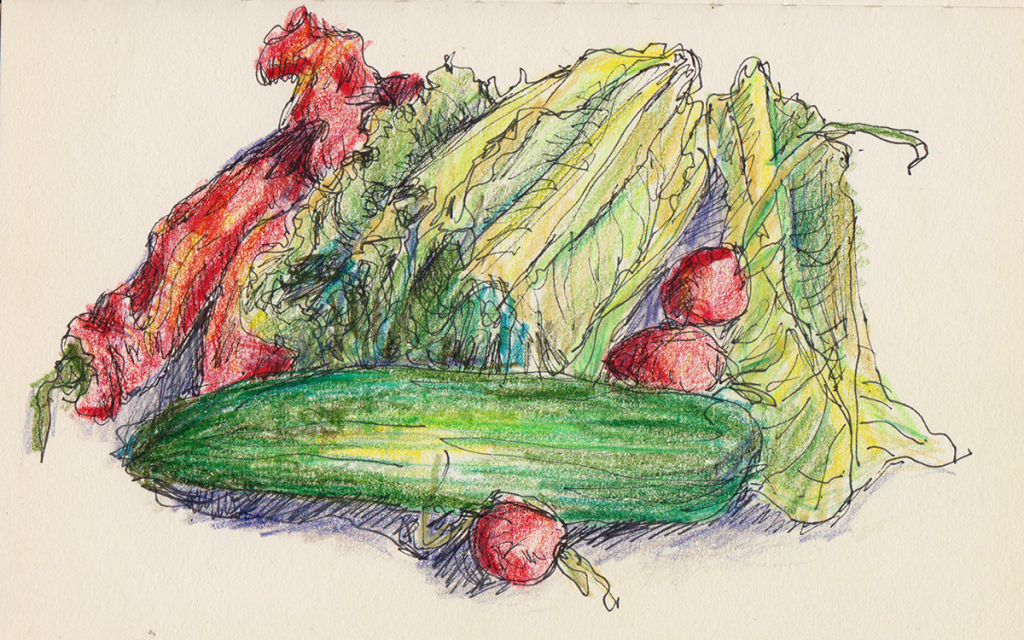
For today’s poem, I used all three artworks for inspiration. You can see them all here, and read all the contributions.
Salad days
Salad days, green and full of sap, and all the summer stretches through green boughs to a mellow field of buttercup sun at sunset and again at morning.
Colours fade and loves; we wilt in the heat, and the frost bites.
No ruse can stop the slide into the dark, but if we keep tight hold of the best of days and the heart of things, we can slide together with grace and just a hint of regret.
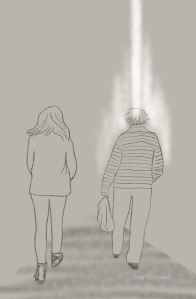
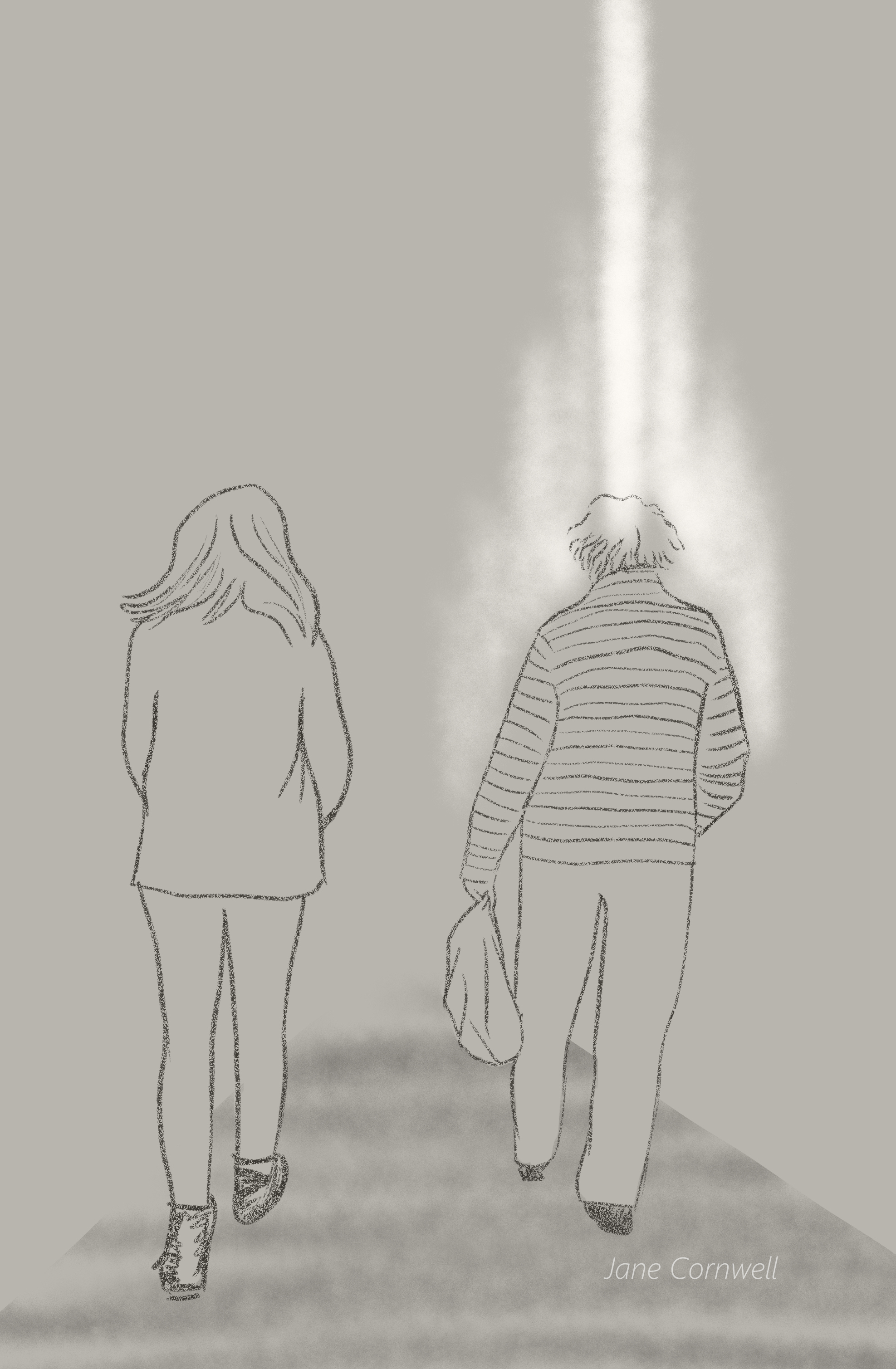
The morning glowed, spring-scented, the air seemed full of promise, contented they talked of ordinary things, the commonplace– conversation as comfortable as their pace– the children, the news, that new restaurant—Thai– that they never got to try–
Yet does he walk beside her— there where the branches stir? The pace still comfortable, the air still aglow? There’s a sparkle on the water, catching the flow of currents and light. Yet only one shadow, no talk– the birds keep her company on her walk.
For Paul Brookes’ Ekphrastic Challenge, Day 22. I gave this a slight edit. Last week a woman at the park told me she missed her walking companion, her husband, who died this past year. I thought of her when I saw this image. You can see all the art and read the poems here.
Old Lady who’s homeless who goes into Spoons on an evening for a coffee
-John Law
-Jane Cornwell
Word Salad
The lad was sad, so sad Because vegetables was all he had Grow on the sill to his tiny pad
He wished, oh how he wished He had some coin for meat or fish Something to make a filling dish
But his mind was set, firmly set He would give something to the homeless old lady he’d met She smiled like his nan and called him pet
So he gave her a salad to eat Then offered his bed, so she wouldn’t sleep on the street Don’t want to burden, she said, but thought him sweet, so sweet
If it takes you, I want it to be like this whet-glass morning on the water. What just split the old belly of the clouds out there is a scalpel as sharp and as silver as the one tucked up asleep not yet knowing your name. The well-honed sun knows you and renames you as she has done for thirty thousand mornings slipping her needles of I am into the dark tunnel of your eye, gate just creaking. We flare back into ourselves each time we crack the ark. Some days you might need a reminder that isn’t about waking up, but is, and you see that alchemy on the boardwalk usually after rain. From the tight grey sheet spills a streaming, sudden gout of light. At the slice, all hunch untethers from a spine, there’s a sharpening of resolve. Someone pauses, bathed in a squint of bright, then steps on quick I am I am I am I am not even knowing they’ve been cut. If it takes you, I want it to be like this. -Ankh Spice
Apparition
(Inspired by Jane Cornwell’s 22nd Painting)
The foggy street scurries beneath their feet. Two of them walking, the daughter in cardigan and pullover and jeans, and her hands bunched in and pendulating as one, her father quivers, an apparent apparition.
The morning looks for more people, albeit this, a plague year, the emptiness is full of people gone, inverted hallucinations of those who live.
I know them. I must be one of them. I call my daughter, “Holla. It is okay to feel sad before the day reels.”
-Kushal Poddar
Tracing Footsteps (inspired by JC22)
He was dressed every morning in running shoes, comfortable pants, a jacket and his signature leather belt, ushered to a breakfast he never ate, set free to roam.
Most afternoons I knew he could be found pacing the halls, searching for an escape hatch. We walked together, checking the same locked doors, again and again, looking for secret passageways. He was notorious for setting off alarms.
The promise of ice cream or music served as temporary distraction, but he always returned to his search, tracing footsteps through hallways that never became familiar.
Every visit, he would ask me, “when are we leaving?”. I would tell him thirty minutes. It was a lie I told him to keep him happy, a lie that chipped away pieces of my heart. He would never go home again.
-Susan Richardson
They walk away
(JC22)
Two of my own species, seen from behind Down a grey corridor- a little light reflects here They walk away, what they leave, what they find What they lose, what they approach, nothing is clear
The man, the woman – is it two women though? Dressed in everyday drab. No season for style Who will await them, where will they go? If I saw their faces would they know how to smile?
This grey corridor is closed, it is empty like a heart In a world, in this world, in a year, in this year They walk away, together they seem, but also apart One holds the bag they give you to carry memory and a tear
Two of my own. Grown weary with departure They walk away. Walk wary, this is a year of rupture.
-Jayaprakash Satyamurphy
Inspired by Jane Cornwell’s image, JC22
The Walk
The morning glowed, spring-scented, the air seemed full of promise, contented they talked of ordinary things, the commonplace– conversation as comfortable as their pace– the children, the news, that new restaurant—Thai– that they never got to try–
Yet does he walk beside her— there where the branches stir? The pace still comfortable, the air still aglow? There’s a sparkle on the water, catching the flow of currents and light. Yet only one shadow, no talks– the birds keep her company on her walks.
-Merril D Smith
Strange
It’s strange
to know that you’re not there at the end of the line with comforting words and questions about the children.
I wish that I were eight again, looking round and thinking you had gone, then a wave of relief as you re-appeared.
There’s no magic number of seconds that can tick over, after which it won’t matter any more. No soothing words of comfort
when you don’t believe in afterlife. It makes you envy those who do.
Now that is strange.
-Tim Fellows
Salad days Inspired by all three artworks
Salad days, green and full of sap, and all the summer stretches through green boughs to a mellow field of buttercup sun at sunset and again at morning.
Colours fade and loves; we wilt in the heat and the frost bites. No ruse can stop the slide into the dark, but if we keep tight hold of the best of days and the heart of things, we can slide together with grace and just a hint of regret.
-Jane Dougherty
A Salad
is all it was. After he ate salad. The light struck him on the head. Homeless. Salad made her lose, made her mad, so nights into Spoons for coffee and tea.
Lettuce, cucumber and tomatoes killed him as sure as this bench is a good bed. They attract the light you see, filled his head with it so no room in his head.
She will never eat salad again. Would not have it in loved marriage home they shared. Salad made her lose home. As if grief could. Times she told them at work, till work declared.
Odd we don’t want to see it as it is. Blame is placed on seeming slightest distress.
-Paul Brookes
Bios and Links
-John Law
“Am 68. Live in Mexborough. Retired teacher. Artist; musician; poet. Recently included in ‘Viral Verses’ poetry volume. Married. 2 kids; 3 grandkids.”
-Jane Cornwell
likes drawing and painting children, animals, landscapes and food. She specialises in watercolour, mixed media, coloured pencil, lino cut and print, textile design. Jane can help you out with adobe indesign for your layout needs, photoshop and adobe illustrator. She graduated with a ba(hons) design from Glasgow School of art, age 20.
She has exhibited with the rsw at the national gallery of scotland, SSA, Knock Castle Gallery, Glasgow Group, Paisley Art Institute, MacMillan Exhibition at Bonhams, Edinburgh, The House For An Art Lover, Pittenweem Arts Festival, Compass Gallery, The Revive Show, East Linton Art Exhibition and Strathkelvin Annual Art Exhibition.
is a poet and writer from Chesterfield whose poetry is heavily influenced by his background in the Derbyshire coalfields – family, mining, politics, and that mix of industry and countryside that so many mining areas had. People can email me at timothyjfellows@gmail.com for a copy of the pamphlet or visit http://timfellows13.blogspot.com for recent poems
-Jayaprakash Satyamurthy
is a writer based in Bangalore, India. His books include the novella Strength Of Water (2019) and the poetry collection Broken Cup (2020). He used to write horror, but now it’s anyone’s guess.
-Anjum Wasim Dar
Born in Srinagar (Indian Occupied )Kashmir,Migrant Pakistani.Educated at St Anne’s Presentation Convent Rawalpindi. MA in English MA in History ( Ancient Indo-Pak Elective) CPE Cert.of Proficiency in English Cambridge UK. -Dip.TEFL AIOU Open Uni. Islamabad Pakistan.Writing poems articles and stories since 1980.Published Poet.Awarded Poet of Merit Bronze Medal 2000 USA .Worked as Creative Writer Teacher Trainer. Educational Consultant by Profession.Published http://Poet.Author of 3 Adventure Novels (Series) 7 Times Winner NANOWRIMO 2011- 2019.
-Jane Dougherty
writes novels, short stories and lots of poems. Among her publications is her first chapbook of poetry, thicker than water. She is also a regular contributor to Visual Verse and the Ekphrastic Review. You can find her on twitter @MJDougherty33 and on her blog https://janedougherty.wordpress.com/
-Redcat
RedCat’s love for music and dance sings clearly in The Poet’s Symphony (Raw Earth Ink, 2020). Passion for rhythms and rhymes, syllabic feets and metres. All born out of childhood and adolescence spent reading, singing, dancing and acting.
Her writing spans love, life, mythology, environment, depression and surviving trauma.
Originally from the deep woods, this fiery redhead now makes home in Stockholm, Sweden, where you might normally run into her dancing the night away in one of the city’s techno clubs.
is a historian and poet. She lives in southern New Jersey, where she is inspired by her walks along the Delaware River. She’s the author of several books on history, gender, and sexuality. Her poetry has been published in journals and anthologies, including Black Bough Poetry, Nightingale and Sparrow, Anti-Heroin Chic, and Fevers of the Mind.
-Tony Walker
By day Tony climbs the greasy pole of clinical hierarchy. Not yet at the top but high enough to feel the pole sway and have his grip challenged by the envious wind of achievement. Looking down on the pates and gazes of his own history, at times he feels dizzy with lonely pride. By night he takes solace, swapping scalpel for scripts and begins his training and climbing again, in the creative world of writing. His writing is an attempt to unify the twenty-four hours. @surgicalscribe seeks to connect the clinical and creative arts of surgery, science and writing. Hoping to do for medicine and surgery through creative writing what Prof Cox has done for physics with television.
So, he practices his art.
-Ankh Spice
is a sea-obsessed poet from Aotearoa. His work has been widely published internationally, in print and online, and has twice been nominated for the Pushcart Prize. He’s a co-editor at Ice Floe Press and a poetry contributing editor at Barren Magazine. You’ll find him and a lot of sea photography on Twitter @SeaGoatScreams or on Facebook @AnkhSpiceSeaGoatScreamsPoetry.
-Simon Williams
lives and works in Edinburgh, where running clears his head and creates space for ideas. He publishes short stories and poems on www.simonsalento.com
Paul Brookes
Paul is a shop assistant, who lives in a cat house full of teddy bears. His first play was performed at The Gulbenkian Theatre, Hull. His chapbooks include The Fabulous Invention Of Barnsley, (Dearne Community Arts, 1993). The Headpoke and Firewedding (Alien Buddha Press, 2017), A World Where and She Needs That Edge (Nixes Mate Press, 2017, 2018) The Spermbot Blues (OpPRESS, 2017), Port Of Souls (Alien Buddha Press, 2018), Please Take Change (Cyberwit.net, 2018), Stubborn Sod, with Marcel Herms (artist) (Alien Buddha Press, 2019), As Folk Over Yonder ( Afterworld Books, 2019). Forthcoming Khoshhali with Hiva Moazed (artist), Our Ghost’s Holiday (Final book of threesome “A Pagan’s Year”) . He is a contributing writer of Literati Magazine and Editor of Wombwell Rainbow Interviews. Had work broadcast on BBC Radio 3 The Verb and videos of his Self Isolation sonnet sequence featured by Barnsley Museums and Hear My Voice Barnsley. He also does photography commissions and his family history articles have appeared in The Liverpool Family History magazine.
I once asked Dai for an up to date short, third person bio:
Dai Fry is a poet living on the south coast of England. Originally from Swansea. Wales was and still is a huge influence on everything. My pen is my brush. Twitter: @thnargg Web: https://t.co/sjO4FFS6vc
GAMMA-ALPHA-LIGHT Friday, 8 May 2020 10:50 Under glass I stretch, out life, not to smell tree sap or leaf. Or breezing wind. Catch rain that drops on tipped toe tongues.
No horizons lead crystal walls. And beyond, tangled imaginations, a hunger of beasts.
I see my knees and look in vain, for the grazing of a life not lived.
Under glass, dry tears, await night’s shadow to take the trees away. Now danger only song in this apocalyptic dark.
Hunters eyes dwell beyond the confines, of my glass walls. I read and watch, food bottled and tinned.
I gather up fear, a glowing landscape into which I can never venture.
SHIVA’S DANCE Saturday, 9 May 2020 10:44 All stones, a conglomeration of illusion and desire. All dawns, pre-set to rise and fall breathe and grow and yet… all are followed by a drowning sun.
Not a stone story or tellers myth. For souls so bound in greed and gold. My house is as opium dreams… in these whispers of life.
No movement, in still darkling corners where life and dust move so slowly that luxing shadows
OF CATS AND GODS Sunday, 10 May 2020 14:21 It is told in the oldest book that all cats must have two dreams. The second a tale of the fertile crescent, land of Nebuchadnezzar. A place of long ago.
Only to leave, for reasons of their own. On a great adventure. Maybe they first travelled on Abraham’s road to Canaan.
Before they became gods, and tellers of riddles, on the banks of that north flowing river.
“Where one gives birth to the other, who in turn gives birth to the first”
HIDDEN PATTERNS Monday, 11 May 2020 14:43 A gentle fading, apparent under grey paint. Beauty from passing times.
As lonely words woken from a shoebox diary. Lifted from lace dreams by curious children. Sepia ink, pressed petals all tied with yellow ribbon. Bedded in lilac tissue.
Bitter at the old decay Sleeping years have wrought, I stare… but you will not resolve for me.
As old pain lessens a new loss presents. Fresh with a hurt that is not immediately clear.
BLOSSOMS Wednesday, 13 May 2020 10:51 In my memory a late snow had dried, -leaving no trace- though it still flaked eggshell brittle from the damp cellar walls.
I recall the deer park. Richmond in early April, probably a lifetime ago.
The pink and white a growing bloom, was joy within.
Did I dance the blossom under ruck sacked back and in leather shoes?
Dappled tree shadow, as petalled canopies filled the obscured skies.
A morning, those trudging ways. And everything was white and pink. I loved the pastel rain. It made me cry.
DEEP FOREST Friday, 22 May 2020 17:39 In deep forest moss cushions of brown leaves. Branches take their bow. In deep forest all are strangers.
In deep forest I carry my shame slowly. In light’s paucity, I ponder my place. Never been worthy locked down tight, in the deep forest.
In deep forest you may think that I breathe long in green meadows, That I walk in thoughts lost, That I hold my lover’s hand, fingers woven. But my heart I pledge To deep forest.
In deep forest they call my name, shame my sex and spike me cruel. I feel less then I should or care to do. In sweet melancholia, I find release. So in my deep forest, alone I mourn, the passing of my turn.
TANGLED Tuesday, 26 May 2020 11:56 This tangle I’m in of root and branch where abandoned horizons crossing lines across an angry devil’s brow between the barbs the horns that hold my flickering life in their cupped hands.
Feared of the moss green dampening dark as every year my tangle grows imperceptibly slow and croaky cry so crowed and cawed to stay or go within the limits of the flow.
As I stare out of my bulging wide this baby’s eye and the innocence sighs of old souls dribbling torrential gushing truth in streams that roar comes from the corners of their river mouth now a gaping Hades gate a maw.
More than a view a dream what might or could have been stretched into each limb to calculate a figurine’s life of brittle comforts as prelude not to preclude the kicks and rage when even to live with cherub face pressed to muddy ground is taking a stand for the choice and not to be held in thrall to your dreams.
NEWTONIAN FLUID Thursday, 28 May 2020 14:15 As I birth, so I draw this first breath through my reflection, no features yet. No memory to spoil.
Newtonian forces ripple the fluid that holds all, in divine tension.
To wonder aloud, alone and pointless, as if in a dream or yet now awake.
Like Alice pulled, then stretched long. From the mirror to the looking glass room. As her old times cling distorting memories, of her left behind world.
Once stories and dreams ran freely, before language gripped and took our sight.
Wondering at last, near death what if, and will the dream continue alone.
The remnants lie in stranger’s eyes, a leaf that blows all wrong. A thing that cannot be, a dream detection.
When asked how the Special November 2020 Ekphrastic challenge had been for him he said:
The challenge has been different this time. Same issue how to write an original poem every day for a month. My solution to let ideas flow uncensored. The result: I discovered humour in these little stories. Different and more spontaneous. Plus as usual a great sense of community.
More of the poems he wrote for the November ekphrastic to come in Part Three. Here is a taster:
THEVISITORS
Visitors bring their esoteric truths, kabbalistic and misunderstood.
For their strangeness in itself, is a kind of blinding.
Hermetic truth hidden amongst bales of perceived treasure.
None see what is cloaked. Glitter and finery really promise fugacious riches.
But the truth is always lost in plain day sight.
And the road to these treasures is metalled and wide. Leaving death and extinction in its wake.
Dai Fry was a visionary of a school older than our current seeing, and I’ll always be glad to have existed in the same time as him. In another time and place, I like to think we’d have wandered some ancient forest and coastline together as druid-bards, tongues and eyes only for magic and myth. We bonded over poetry that summoned the deep sea, the deep forest, and the hugeness of the universe – he knew the connections of ‘folded places’ and that all coasts and woods are sisters. I so admired his gift for seeing and writing beyond, and behind, and into the old paths.
I recall when I first got to know Dai, being so struck by the cauldron-churn imagery in one of his deep ocean poems, sending him a video of an enormous kraken-seaweed thrashing off our own coast, him saying it was just exactly his poem. In turn that day he delighted me by saying that a description of a deeply calm ocean full of ‘unstirring kelps’ in my piece took him back to the happiest days of childhood, which was typical – he was gracious, encouraging, and kind with other writers and his comments and philosophical conversations were gifts freely given. We overlapped also in our struggles with the dark places inside the human brain, in our work experiences, love of shadow-textured photography and layered minimalist instrumental music. It is such a privilege to connect with another mind, in any way and at any time, and to connect with one as deep and enduring as Dai Fry’s is a gift dropped from the blue.
I wanted to write a lot more about his work, but the testimonial I was so lucky to write for his book really says all of it – that that book exists is a very proud and right legacy. And I’m a poet, not an essayist, so everything else I wanted to say went into today’s daily ekphrastic challenge poem, written for him. I hope he’d have been tickled about that, given the enormous presence he was in last year’s challenges, and his own vast enthusiasm and gift for these.
Dai, what a gift, to meet you, human who saw the universe, stared it in the face without blinking, and wrote down what it told him.
Read him and glimpse it too – somewhere he’ll be nodding as it dawns on you.
Ankh Spice, April 2020
For Dai Fry
Dai Fry was a visionary of a school older than our current seeing, and I’ll always be glad to have existed in the same time as him. In another time and place, I like to think we’d have wandered some ancient forest and coastline together as druid-bards, tongues and eyes only for magic and myth. We bonded over poetry that summoned the deep sea, the deep forest, and the hugeness of the universe – he knew the connections of ‘folded places’ and that all coasts and woods are sisters. I so admired his gift for seeing and writing beyond, and behind, and into the old paths.
I recall when I first got to know Dai, being so struck by the cauldron-churn imagery in one of his deep ocean poems, sending him a video of an enormous kraken-seaweed thrashing off our own coast, him saying it was just exactly his poem. In turn that day he delighted me by saying that a description of a deeply calm ocean full of ‘unstirring kelps’ in my piece took him back to the happiest days of childhood, which was typical – he was gracious, encouraging, and kind with other writers and his comments and philosophical conversations were gifts freely given. We overlapped also in our struggles with the dark places inside the human brain, in our work experiences, love of shadow-textured photography and layered minimalist instrumental music. It is such a privilege to connect with another mind, in any way and at any time, and to connect with one as deep and enduring as Dai Fry’s is a gift dropped from the blue.
I wanted to write a lot more about his work, but the testimonial I was so lucky to write for his book really says all of it – that that book exists is a very proud and right legacy. And I’m a poet, not an essayist, so everything else I wanted to say went into today’s daily ekphrastic challenge poem, written for him. I hope he’d have been tickled about that, given the enormous presence he was in last year’s challenges, and his own vast enthusiasm and gift for these.
Dai, what a gift, to meet you, human who saw the universe, stared it in the face without blinking, and wrote down what it told him.
Read him and glimpse it too – somewhere he’ll be nodding as it dawns on you.
Inspired by the images by Jane Cornwell and John Law
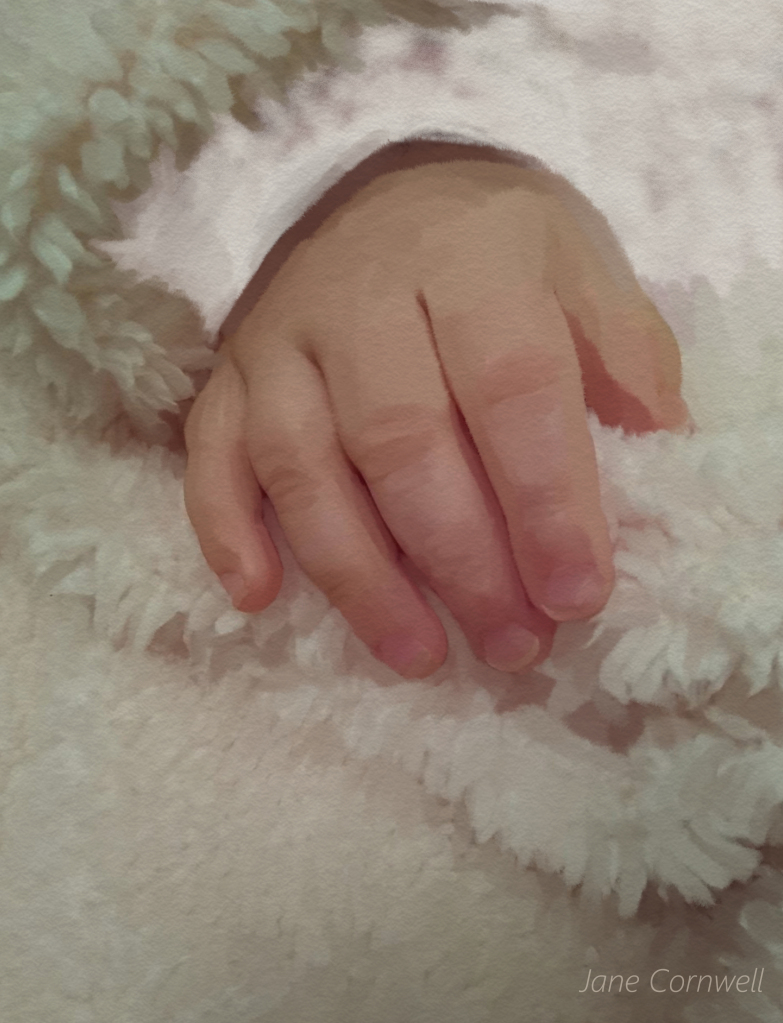
Jane Cornwell
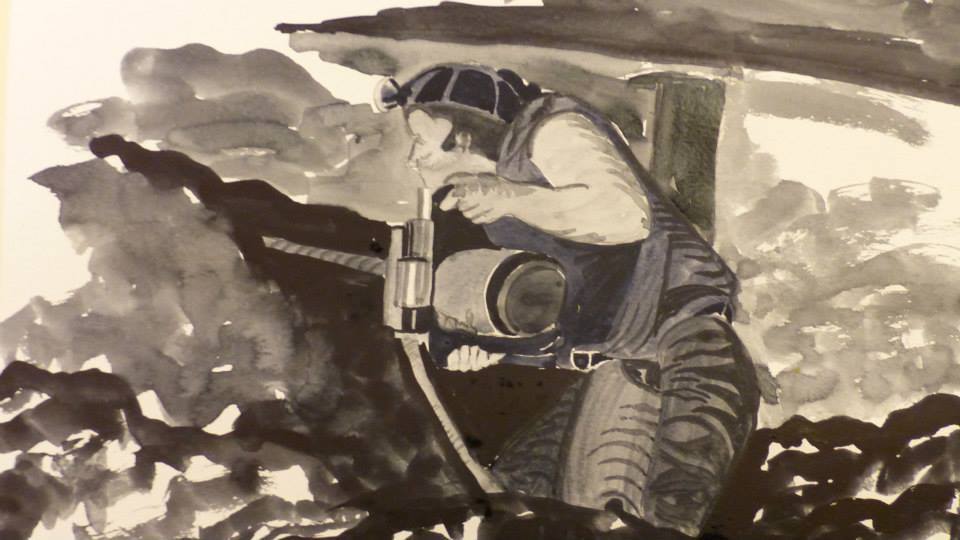
Miner -John Law
This small, soft hand, bath-cleaned of sticky treats and all the business of a summer day– mud-castle building, caterpillar catching, and treasure digging.
Like Daddy, as his pretend pick strikes the dirt.
And her heart lurched, fluttered a canary-winged warning. Not my son, his cheeks sun-glowed, his nose freckled, his deposition sunny, not life-etched grey with coal-tattooed lungs that rattled– no more,
the darkness, dirt, and danger, not for my son, the estranging underground life. He will hear the blackbird sing, and in the dappled light, he’ll dream.
A poem for Day 21 of Paul Brookes’ Ekphrastic Challenge. Today Paul is dedicating the challenge to the memory of poet Dai Fry. You can see all of the art and read the poems here.
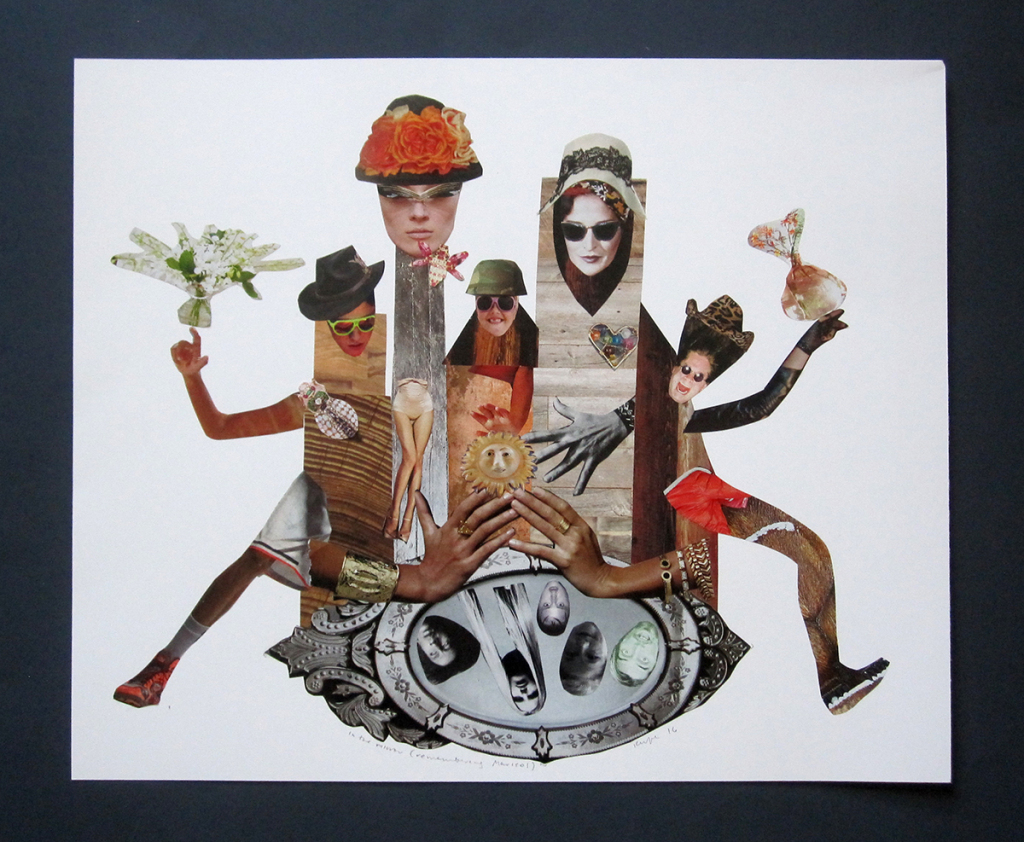
Into the Mirror (remembering Marisol) by Kerfe Roing
Women appearing perfect everywhere Painted, coiffed, pushed up and laced tight Waiting for admirers to gawk and stare Balancing on spikes as if ready for a fight
Painted, coiffed, pushed up and laced tight No trauma, scars or sorrow the mirror shows Balancing on spikes as if ready for a fight No brilliant minds or passionate hearts glows
No trauma, scars or sorrow the mirror shows Every advantage brought to the fore No brilliant minds or passionate hearts glows
Polished dolls hiding so much more
Every advantage brought to the fore Waiting for admirers to gawk and stare Polished dolls hiding so much more Women appearing perfect everywhere




![May Ekphrastic challenge white 2[78440]](https://thewombwellrainbow.com/wp-content/uploads/2020/05/may-ekphrastic-challenge-white-278440.jpg)
 The Wombwell Rainbow