As a disabled writer with spinal damage that has lead to scoliosis, nerve death, missing discs, sciatic pain and arthritis I have begun to explore the idea of the body in my writing. Sometimes you don’t realise that something is underpinning your work until you step back and evaluate it. We have had a body problem in our society for longer than we wish to even acknowledge. The body is linked with the divine and some bodies are more divine than others depending on fashions of the time.
I wonder why there is a deep seated disgust around disability, I consider whether this has to do with the idea of the divine. If the body was created in God’s image, then God has a disability and that could be seen as blasphemous, as often a disability is linked with weakness, a failing of the body and mind. I know this…
I often consider why in draft writing we try to cling to everything as writers. Backstory goes in, exposition goes in, the kitchen sink goes in. I consider the exposition in John Carpenter’s The Fog, hence the reference to the leper colony. The lepers in that story become first the monsters and then the avenging hand. We realise the monsters were the ancestors of the towns people and not the poor lepers. To make that reveal there has to be some exposition delivered by the wonderful Hal Holbrook as Father Malone who reads the exposition straight from a diary.
However, when does exposition become too much, when does telling become wearing? We are told as writers to show not tell but this an over-simplification of the idea of beats in a story, the rise and fall of tension in tale, in a scene. We have to live the beats…
Yes, a conglomeracy, A total sum A fusion, of forty years gone,
He skins rabbits, overjoyed, And I’m a poet, unemployed.
-Jared Marriott Pegler
Upon returning to Anglesey after finishing my degree (in my mid twenties by now), I took up with some old friends I knew from as far back as the village primary school – Tom Rowlands being one of them. He had just graduated as a gamekeeper, and was also looking for employment at the time. Luckily he had motorbikes and home-brew… so we were never bored, or in a hurry to work. This poem was a look back at our lives together, and the fact that we were back hanging out together as friends, but now as young adults. I remember Tom’s girlfriend of the time burst into tears when I showed it to her. It summed up everything at the time – and of course, came to me while we were out having yet another night out in a local pub! Looking back at it again now, it is still one of my favourite poems. It sealed our friendship – it is a celebration, a timestamp on those times.
Ghostlight ————-
I murmur in my wife’s ears, “Taylor and Brown gave us Positive Illusions. That was nineteen eighty-eight. Deceive our hearts. Use it, dear. Keep us lucid.”
And still, the ghost casts a peripatetic disk of light as if the sun has caught some dome shaped crystal of the wristwatch belonging to one deceased.
Our daughter chases the light. “Take her for a mosey.” Says my wife.
The street has emptied its truths to no end. The crows settle for a dozen murders on the railings of the pavements. We walk, and still, the ghostlight strolls by our side. “Tomorrow is better than the past.” I tell our daughter. The light shines like slant laughter.
-Kushal Poddar
My best poem shall always be the one I am writing; perhaps, because I am anchored to its emotion, logged in to its truths. I am into that poem, into the moment. I can feel the moment. I know why I am writing it. I am writing as a continuous report of the feelings, happenings and the news I am either receiving or interpreting.
The Five Petals of Elderflower
With the odd number five strange nature’s laws Plays many freaks nor once mistakes the cause. John Clare
I Enter through its centre of five petals past the crown of stamens like matches slide down the green stem, landing with legs either side of the junction between stalks. Now you are surrounded by flowers. Soak up the hum – you are at one with lace. Sleep now, as in fresh sheets, soothed by the sun, head in blossom, a perfumed lullaby, leaves far below to catch you if you fall. But you will not fall: the petioles enmesh. Your cheek is on your mother’s breast, the flowers are sweet milk. Rock-a-bye.
II This tree is elder. It’s safe. With the blossoms we can make elderflower champagne with the berries, elderberry wine. Put your nose into it. Yes, it’s a good scent. If it smells like cat’s pee, so will your champagne. So we don’t pick those. This tree is fine. Hold this bag open while I cut some. We don’t want to drop any – see how easily each flower head can come away. There’s lots of stories about this tree. Some say it’s Faerie, but your mum knows more about that. I say it’s very good to use. But we mustn’t take all the blooms from one tree or there’ll be no berries, neither for us nor birds.
III The smell is buzzing in my head, as we walk down the night lane, away from the heated air of the pub where friends spilled onto the car park. We whisper as we pass sleeping cottages – can’t even see the elder, just smell it, as the lane becomes a funnel of scents and fuzzy leaves. I’m giddy, stumbling; now there is no-one to see you take my hand. We cannot even see each other. The flowers smell of sex, of lust, foreign tongues to us. Too soon the lane opens out into streetlights, pavements, cars. You drop my hand. The scent is left behind, pollened on memory.
IV Elderflowers sing jazz, each petalled phrase plays another variation on the last. Its saxophone voice rises above twanged strings of cello and double bass, holding the melody as it flies high. Notes dance round our feet: we wade in sound. It’s a five bar blues, scrolls of baroque, rising like smoke, tasting champagne. White is not white, is green and cream and ivory. And it sings the blues.
V
By its five textures: the rough underside of leaves and the smooth front, the strong stem, thinner wands of stalks, and cobbly lace of blossom like slubbed silk. By its green taste, its umbrella canopy, by the cushion of blooms each with five petals. By these things, I swear to remember you.
-Angela Topping
It was the title poem of my last collection, and I still have a few copies left for sale. It’s a female version of the five ages of man. It pushed me out of my comfort zone writing it, and it won me a first prize in Buzzwords competition.
Song for the Song of the Common Starling
For Don McKay
thoughts around a wild idea they condense, all squealing their hoarse electronica, their barely contained epilepsy
clot the top of an elm
then the insane skull-tapping, the emphysemic wheezing, the saucy cor blimey pipsqueaking whistles,
as if the tree has burst into a half-cocked song
or is it a conversation – impossible to know what’s going on in that fevered bird-brain
and suddenly they’re gone, the branches still rebounding, the air beaten and stirred in their wake.
-Hugh Dunkerley
It is a favourite of mine because I struggled for ages to capture something of the starlings’ demented chatter, then this poem came quickly. It felt almost dictated by the starlings. I write a lot about birds. Their otherness fascinates me.
AS IF JAMES DEAN
As if James Dean drove through treacle, we make slow progress on this dull strip. Over and over the sun taunts us as it plunges at the precipice.
As if Batman took the bus to Gotham City, we are never there while the heels are hot and fidget awkwardly in clueless rooms, adjusting masks.
As if Love was drawn roughly on a breath steamed window, we are left constantly in cold buffets to sugar harsh coffee with endless spoons
-Tony Noon
I think it’s partly the brevity , but also it conjures a kind of film noire landscape , particularly the Batman references. I’ve always seen him as a dark character hiding behind his mask. Having to catch a bus adds an extra layer of dysfunctionality…
Ricochet
I’ve always loved the bones of it My sediment of youth Floating in the eighteen years Of rain and sea and teardrops I never meant to leave for long Just long enough to take a breath From the land that grew yet bruised me Bruised us all as it turns out Shared molecules of trauma From the ricochets and blasts Atomic shrapnel in our cells Have embedded over time and distance too A day and sea away Still the pull of heart is strong To sail touch down on solid ground Though still shaky from the past And there to stockpile arnica For the healing of the soul.
-Joy Fleming
When writing this, I hadn’t realised how much this revealed to me and of me. And I am very glad this happened. It has been healing and liberating in many ways.
Forgive
Oh to a world forgotten Of grey tinted cloud Smothered in bleak conditions Forgotten memories within a crowd
Wild nettles grow fiercely Dampened mornings succulent dew A stench of smoke rotten ash Following the sky so gloom
Less are the peoples movements As the chains weight ore Thoughts of promises soon forgotten Like a midst dissolving floor
Cry’s ring out from a far As dusk settles a tune Daylight seems like no more And ones heart bellows cocoon
Grievance of pain from within Carried through marshy thoughts Night sky darkened once more With speckles of stars that haunt
Where does the world unfold From gloomy fortress kidnap What does one’s future hold With harrowing caves of shipwreck
Suddenly daylight creeps in Another day wanting for more Looking at the world uncloaked A shivering feeling afloat
A suspended thought I skirmish For today I’m wanting to live To live without isolation or desire I choose in my heart to forgive
My favourite poem of mine is When I Walk Upon the Earth because it was the first poem I ever wrote and it is just me. I have lived and travelled throughout the world for most of my life and I feel that I leave pieces of myself wherever I go. This poem explores the idea of leaving traces of yourself with the people you meet and the lands you visit.
Meet Me
In ten years from now Come meet me at the movies Searching for our seats We will voice our certain doubts That the film will skew the facts Favouring romance Sweeping music will distract From real history With our popcorn and soda We will finally sit down Ready for disappointment No way will they get this right Not how we lived it The theater gets dark 2020 reads the screen As we nearly roll our eyes But as the big numbers fade Together we are startled By our brimming tears Because we are holding hands
-Alice Curley
I think my best poetry is about the pandemic because I wrote it to capture a moment in time we have never experienced before, help put words to it, and offer what hope I could. I think my best poem is “Meet Me” because I have so often felt like we were living in a movie, and I missed going to the movies terribly. I wrote it in the early days of the pandemic. Envisioning going to see a movie about the pandemic 10 years from now gave me a new perspective and reminder that this will not last forever. It also connected me with a great site called Inspiration in Isolation dedicated to sharing creative writing about the pandemic.
A querying I will go, a querying I will go Emailed my submission, a querying I will go It started off real slow, first page was years ago It’s finally in completion and polished with a glow
Pages I had to type, editing was the hype My book is finally complete, my writing skills are ripe Some lines I had to wipe, I complained without a gripe A rejection letter to delete and an agent I will swipe
Proposal written well, a story I have to tell I’ll spread awareness, with words I often yell Querying can be hell, making fingers swell Guidelines are for fairness, an Agents calling bell
Proofread once again, spacing lines too thin Hoping for a book show, a best seller for the win Attach files in trash bin, no writing with a pen A querying I will go, until an Agent says I’m in!
-Catherine Mellen
This is the first poem I wrote with a singing volume to it. It is called Querying and is written for Literary Agents and the writers who query one. I had a lot of fun writing this one.
Where Grace Is
In the gold case. Behind drapes and gilded gates. Under feathers and flames. In the orange-jumpsuit-clad trapped in cages or inside broken minds. In the swell of milk-drop on a mother’s breast. In ash and grease and sweat. In the rise of sun and compassion. In cafés sipping coffee over dreams. In the abandon of trust and deceit. In the brush of whiskered breath or jet engines. In cloudy film on corneas and lakes. In the wasting of potential and organic things. Where technology without faith makes light. Where metal blades extract or access what is vital. In music from a string, vibrating, or the night. In the reach of men in palaces and underhulls of ships. In soldiers armed with swords or righteousness. In children, rocked in sleep or naked bottoms squatted over gutters in the street, In the reflections of you and me as chance and morning traffic pass us by. In the string of drool or thought from midday nap or hunger. In the fury of infirmity or flight. In the fathomless black of pupiled-eyes, the opaque liquid of their cup reflecting. In the curl of smoke from thurible or cigarette. In fingers twitching on triggers or lover’s flesh. In unlit littered alleys and satin-sheeted beds. In the passion of arms outstretched in lust or rigor mortis. In the innocence of skin unblemished or shrapnel-shredded. In temples, framed by hands in prayer or wielding whips, made of matter Shaped with reverence and built or broken with a purpose. Where mobs and lonely teem within a space, trapped and held in place Like tea leaves in a bowl, cupped close and agitated. In oil thick with musky scent or color painted on a canvas or a newborn baby’s head. In fields of concrete boxes under stones, In all we do and do not reap from what is sown. Where prayer is necessary or forbidden. Where grain transforms to flesh when fed to beasts Who seek salvation or to live another day. In the hammering of rain and sacrifice. In the too-sweet press of lilies opened and forgiveness. In the blue of noon and in acceptance. In tumors or wombs where cells attach and multiply. In the struggle of first breath and surrender. In mercy and irreverence. In words that weave into belief Nothing. In denial of randomness. In the throats of those who thirst for that extracted of what’s fallen But still blessed, sanctified and pressed to life again. In the twisted limbs and minds and roots of men. In kingdoms lit with fires long ago burned out. In Hope When we gaze up at this glow, The place that fills the space of all the things we do not know But seek. -Carrie Danaher Hoyt (first published in the Amethyst Review @AmethystReview)
This is one of the first poems I published, but remains a favorite because it says (or comes closest to saying) what I feel about grace & God & Faith…
Spectrum
My daughter wears my DNA like a casualty, drifts through conversations with melodic logic.
When she speaks in the language of my ancestors I know she’s caught something with her mind¬–
a dinosaur or the swamp root of a poem. Her centre is her own. I can’t see it anymore.
She grows deep, a creature of thrum and ashes, knows she is different from others.
When she’s clumsy she giggles, like any kid, but the clay of her mind is a nerve ball.
Her school day comes violently, spinning too bright, the forcing of norms does not fit the build of her mind.
She closes her eyes and rocks, tick tock, to find a kind face, a good space. Returns home bent with hurt.
In the evening she wraps herself tight in an old breeze, wanders the playground
to feast on leftover laughter, blown kisses fallen to the ground. I find her shivering
under a tree, her courage discarded on a rock. I drink her tears, wrap her under my skin.
Life after life, she sobs. Too much. I nod and we walk away.
Alone, we watch the orange dawn of a butterfly, speak of mammal species
and why the Congo changed its name. For on the days she can inhabit
the wholeness of her verse, she soars melodic over Earth.
I don’t label myself an autism warrior. I carry guilt made of covert creatures,
wet wings stuck to their bodies. At dawn I let them out. They unfurl their wings and flee.
At night they return, watch me, cold planets in my throat.
But I will sing to my daughter as long as I live: My love, You don’t have to smile for me You can rock your body to peace You don’t have to leave to cry You can flap your hands when you need
You don’t need to say hi to respond to do anything but be.
You are the world where I live.
-Lisa Alletson (First published by the League of Canadian Poets @canadianpoet)
For a long time, I’d write short, surreal poems about a fantastical character. Last year I put the poems together into one long poem and realized I was writing about my daughter, who has autism. I had not realized how her unique perspective on the world influences my life and my writing. Spectrum is my favorite of my poems because it poured out so naturally, and represents the bond between us. My daughter loves it too. I did very few edits. When others read it, they tell me it changes their perspective and deepens their understanding of autism.
Silence
Silence stands in the hallway all night says she doesn’t need to sleep. In the morning she is in the chair waiting. Sometimes she smiles and I think she gave me the dream about meeting Dolly Parton for the soundcheck. Sometimes she is so aloof I imagine she sent me the handless mob lumbering towards me, bloodied boxing gloves where fingers should have been. She has birdsong in her; sends the call of a bittern to make me laugh after she has taken me to the darkest silence. Once she tapped me on the shoulder at 3am, handed me the car keys got in the car with me and directed me to a forest. She took me over a stile to the darkened path where we could not see our feet and the bumps and gnarls of roots sat under the mud. Before my eyes adjusted she stopped me stood with me to hear the last owl and the first blackbird. Once she wrote me a note folded it and put my name on it so she could watch me open it and read. I am your shadow, it said in a spidery hand. Her drawings tattooed the page – a tarnished axe, a holly bush, all its leaves on the ground, and a coffin.
-Sue Finch
I am sending ‘Silence’ as it was the first poem of mine to be published after I finished my first collection thus proving that I had more poetry in me. It was kindly homed by https://1handclapping.online after I wrote it during an Arvon Course in 2020 tutored by Caroline Bird and Richard Scott. I like the fact that it could possibly be the first poem in a second collection hence sending it out today as my favourite.
LoveBritain
Yeah
I love Britain I love its sun, wind, snow and rain I love its jam-packed motorways And sweaty overcrowded commuter trains Friday fish and chips Sunday roast dinners The self-deprecating way it’s uncomfortable with sporting winners While clinging tightly to former glories Yeah I love Britain And I’m proud to feature in its story
I love its wide welcoming smile I love its huge variety From pizza and egg fried rice to tapas and curry Jerk chicken, falafel Pad Thai, bagels and a Tex-Mex meal The cool complexion of so many British places The rainbow colours of so many British faces North-south divide Scottish, Welsh, Irish, English rivalry Clean, green countryside Choking but still coping cities I’m delighted it’s a destination so many tourists come to I’m happy it’s a haven that the downtrodden run to Yeah I love Britain
I rejoice that it’s free And even extremists can express opinions to the contrary Like they don’t want to live in a multicultural nation Want to stop legal immigration Prefer splendid isolation But yeah I love Britain So I’ll even fight for the right for those to voice that kind of criticism Although they fail to see That ‘the enemy’ is probably made from the same stuff as you and me There is no purity Only ever-growing diversity
Saxon, Viking, Roman French blood too Irish, Black, Asian, Gypsy Catholic, Protestant, Muslim, Jew And so much more blended into a unique British stew We eat many types of cuisine from planet humankind When we holiday, buy homes abroad or emigrate we don’t mind While enjoying music, art, fashions from all over the globe Not embracing them’s a backward step down a dangerous dark road How can we be selective? That would make our special ‘British gene’ defective
Yeah I love Britain I’m smitten With the cornucopia of all it has to offer This crazy hotchpotch is the capital and collateral in its coffers The important stuff on which we should concentrate Instead of viewing difference with mockery, suspicion and hate ‘Cause aren’t the things that some despise The actual things that make GREAT Britain great? Yeah I love Britain What about you, mate?
-Neal Zetter
Something I feel extremely strongly about so written with passion.
RealityTV
Her carcass is splayed across three Silent Witness tables – and our widescreen television, amidst repeat reports of the Iraqi war. An alien queen whom an excited marine scientist prepares to dissect and weigh and measure as if he could learn her very essence, since she met her skin’s disintegration, net-tangled beyond her depths in Ross’s ice-choked sea. He is cautious. Alive, he states, she was a predator, the biggest, most fearsome known to science. While plucking broken beaks from sperm whales’ bellies, in colour-blind dreams he swims around a tank with her, alive, intact, his mesonychoteuthis hamiltoni.* Now he calls her ‘colossal’ to convey her size and (speculated) aggressiveness. Meanwhile, back to Baghdad – seven Iraqi women and children have been shot at a check-point, killed in their vehicle for failing to stop as instructed. Witnesses state no warning shots were fired.
* colossal squid -Spangle McQueen
Because it was nominated towards Best of the Net! Which was amazing to me. But from my own perspective because I managed to juxtapose two real news items at the time which made me angry about male violence.
IMAGIST
Climate change. Not yet irreversible.
From inter-glacial to hothouse-warm. Primal forest to palm-oil monoculture.
Natural Eden to high-rise hell. The earth and us, no longer well.
Green lung to emphysema. “I remember lad, the good old days of asthma.”
Carbon sink to landfill stink. Green-washing every megalomaniac venture.
Biodiversity shrinks; global eco-policy stinks. This enables mass species extinction.
Despite fabulous wealth, our species still experiences starvation.
The Gulf stream now barely stirs. Polar ice caps melt, drowning bears.
We’re planting corpses instead of planting trees.
Global warming, it’s on repeat: this is a warning – Embrace renewables, stop fossil fuel burning.
Murdering the earth is simply self-harm. The least smart thing human beings can do.
It’s not our dumpit site, our infinite farm. It’s a living, breathing, being like you. I’m a politician. We lie. Let’s divert the public’s attention.
Blame someone for causing global contagion. Tranquilize the truth with drugs and beers.
Destroy communities with subtle poison. Exaggerate mistrust, inflate those fears.
The recipe –
Control the population. Stir in misinformation.
Agitate with xenophobic press. Draw out to elitist conclusion.
Fuck the environment We are egotist short-term profiteers.
That’s today but what of the future ?
Is this poem Imagist enough for ya ?
-John Wolf
It’s the best because it succinctly tackles the key issues without moralising, and it tells the truth. I write quite a few environmental poems usually about individual species so this is a bit different,
“One does not ask of one who suffers: What is your country and what is your religion? One merely says: You suffer; that is enough for me.”
Louis Pasteur
Refugee
I had no choice. What else could I have done?
Death falling without warning from the skies;
a life in fear of cannon, bomb and gun,
the night-times fractured by our children’s cries.
Death falling without warning from the skies;
our eldest saw her playmates killed and maimed;
the night-times fractured by our children’s cries;
our home destroyed; young women raped and shamed.
Our eldest saw her playmates killed and maimed.
We can no longer live where we belong,
our home destroyed; young women raped and shamed.
Can seeking peace and safety be so wrong?
We can no longer live where we belong.
No-one foresaw a crisis on this scale.
Can seeking peace and safety be so wrong?
You may not like my face, my faith, my veil.
No-one foresaw a crisis on this scale.
We fled in fear from cannon, bomb and gun.
You may not like my face, my faith, my veil.
I ask again. What else could I have done?
-Jenni Wyn Hyatt
Cos it’s a pantoum but also because when I read it out in an informal church meeting it made some of the other old ladies cry and I felt I’d achieved something.
The Lockdown’s End
Suddenly a door opened And the light flooded along the hall It lit up all the photographs and pictures on the wall
But these pictures were of the future The photos of what’s to come They foretold better, brighter days ahead That hadn’t yet begun
These scenes were filled with hope and fun With family and friends They promised that by the summer We’d all be free again
With luggage at arrival gates On a beach, at a resort In the pub with all our closest mates No pandemic to report
Face coverings no longer needed Grandparents can babysit Dinners out with partners Back to gyms and getting fit
The swimming pool, the cinema To simply stop and talk No longer covering faces When you go out for a walk
Shaking hands and hugging Sitting side by side When having conversation To not feel the need to hide
To actually go to work, and mingle Grab lunch with other staff On Friday afternoon Go for a drink and have a laugh
Children’s parties, and kids discos A comedy night…or just to bloody dance Cross the Euro Tunnel Stop off in Italy, Spain or France
Festival tickets to Glastonbury Take a train, a plane or bus on a cruise or take a ferry Watch a show without fear or fuss
Life shines from these future corridors From these pictures down the hall Our dark evenings will get brighter It’s just a few months away…that’s all.
So hang in there fellow human This is the last leg of the run The ‘end of tunnel’ light is now switched-on The lockdown’s end has just begun
– Dean Jones The Bard Of Buckingham
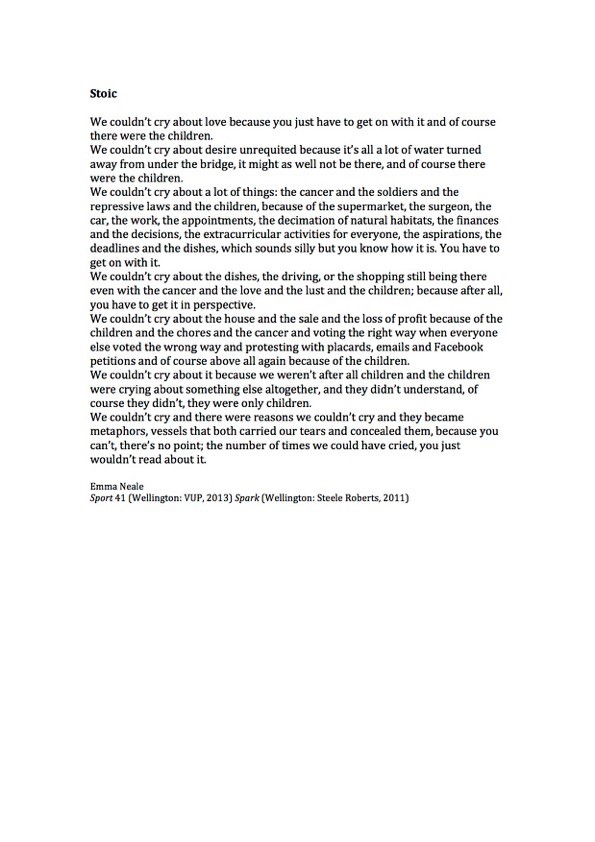
-David Wright
I loved making the poem after I’d initially encountered the form through Jamaal May’s “I Do Have a Seam” https://youtu.be/uMKYdu9_g-A
(and then reading many other contrapuntals/double exposures). The sheer technical challenge of it, needing to unfold two poems that could then be folded into one, was a thrill to attempt. It took a long time.
But also I still love the existential and emotional core of the poem, how it slings back and forth between the belly and the head, the guttering of the throat and the refining of a song. When I read it aloud, it sometimes still surprises me and feels like more than just a show-off poem, though it is also satisfyingly that, too.
-Emma Neale
When I said in my Tweet that it spoke to a specific political moment, I wrote it around the time National, a right wing party, had won a majority in the NZ parliament again…and the environment and housing issues looked dire. I guess unfortunately in a lot of ways, the piece hasn’t actually dated….
Some other links that might be useful are copied in below.
When I said in my Tweet that it spoke to a specific political moment, I wrote it around the time National, a right wing party, had won a majority in the NZ parliament again…and the environment and housing issues looked dire. I guess unfortunately in a lot of ways, the piece hasn’t actually dated…. Some other links that might be useful are copied in below.
The season turning On a reluctant day for worms The tide creeps up the edges of pools Ripples of water dance like rain As she moves Slow-quiet On the ladders of her legs Fish-searching Pale shadow on the pool’s surface The lull of the afternoon Broken only by a scrabble of linnets A butterfly’s plaited flight
-Bronwen Griffiths This poem was written in the autumn of 2019 at the Rye Poetry Workshop. This is one of my favourite unpublished poems as it captures both the beauty and quietness of the place and the egret itself.
A soap bubble…
…was blown so long ago, the wide-eyed, Wonderland-oblivious, toddler of humanity blew clumsily through the loop gripped in one chubby fist
—billions of people will die—
and the soap film hesitantly bulged out powered by bronze, steel, the horse collar, crop rotation. Sailing ships and steam engines smoothed into the fragile sphere, as were pickaxes, dynamite, production-lines… industrial farming, the Haber Process, internal combustion engines and the fractional distillation of crude oil… Fast-breeder reactors… embedded in the almost imaginary skin of this bubble we blew, this quintessentially breakable world we knew through all our lives, and implicitly assumed was real
—and billions will start to die—
when it turns out it is not. We built a civilisation on stuff we borrowed. We assumed that fossil fuel in the ground was a permanent state: a natural condition forever. We thought fertile topsoil was a given, and clean water another gift, temperate climate, fish-filled oceans, the very air…
—billions of people are starting to die—
as our assumptions start to crack along fine lines and this is a bubble in the purest economic sense because it actually worked through all the time during which it seemed to work, until one day, suddenly, boom! It’s always been a lie.
If this island earth were a spaceship: power failing, the food limited, life support pumping dodgy air; we’d get all of engineering there and have a meeting to decide who can be stuffed in lifeboats, who can be stuffed in freezers, and who —because engineers are nothing if not completely realistic— won’t reach their destination. You can try to get that one before the United Nations, good luck with that! And not to be a bore, but…
—billions of people will die—
and I don’t trust that lot to do much about it. Although, also, I, with my slightly less than human head on, —because I have one of those—I say: OK, billions will die, it is hard to overestimate the size of disaster facing us, but it’s not the end of the world, it’s just the end of the world as we know it and as long as we don’t completely blow it… and as long as we weather the change ride the tsunami take what life remains us, as and where we find it and not go end-of-days-fucking-crazy with a Mad Max style weapons stash and supercharger on everybody’s Christmas list, then…
—for the billions who by chance do not die—
there will be some loss of privileges. We won’t be eating meat; we won’t be mining bitcoin; may not be driving personal cars but we can hope still to be here in some form. We haven’t been attempting the impossible it’s not that a planet cannot support an apical species with a silly headcount. It’s just that we didn’t do our homework. We don’t have all the required tech, have not closed the carbon curve, balanced the energy budget, or worked out what happens when ageing plastics want to retire…
…not produced a society that can keep its calm on pressure-cooker starship Earth…
…but it can be done. Still, not a comfortable thought, and it’s going to take some time
—during which billions of people will die.
It’s not the end of the world, it’s just a soap bubble, it’s the end of the world as we know it: pop.
This is currently my best because, firstly I am trying to save the World (but then I am always doing that), and secondly it seems to be my poem which most inspires others, see for example what Hallam London has done with it`
I really enjoy the mixture of neo-Dadaist glossolalia and mythological subjects. It exemplifies the style and a large part of my poetry.
CancerPrayer
Dear Lord,
Please flood her nerves with sedatives and keep her strong enough to crack a smile so disbelieving friends and relatives can temporarily sustain denial.
Please smite that intern in oncology who craves approval from department heads.
Please ease her urge to vomit; let there be kind but flirtatious men in nearby beds.
Given her hair, consider amnesty for sins of vanity; make mirrors vanish.
Surround her with forgiving family and nurses not too numb to cry. Please banish trite consolations; take her in one swift and gentle motion as your final gift.
-A.M. Juster
I don’t feel that I am a particularly good judge of my own work, but this poem is clearly the one that has most connected with the public–I get more requests to read and anthologize this sonnet than any of my other poems, and it is the one that most often causes an audience member to come up and talk to me. I think it gets that reaction because it deals with a common and awful experience rarely addressed in poetry–how do you think about that awful time when a loved one is suffering and nearing death?
A doctor friend of mine has told me that he had a dying patient who kept this poem in her wallet, and I know it was used for a time at a teaching hospital in the training of oncology nurses.
I think that the sonnet form gives this poem concision and momentum that makes the final wish that much more dramatic. I have read it in public several dozen times, but I still tend to choke up a little at the end.
I have always wanted to hear a better reader of poetry read it.
World poetry day census
I filled in the census form today In the form of poetry I answered all the questions well In part with a villanelle What religion are you? Answered in haiku What’s your birthday? Replied quite rhymy Your vehicular answer? Iambic pentameter My job descript? Put down with acrostic What do you do? I wrote down as a clerihew To identify my gender I put as a sestina Is your house quite diverse? Respinded in free verse How do I identify as ethnically? Just gave them it limerickally It didn’t take long to do So I added a senryu -Simon Zec
Of all the poems I have written, this is my most rhymy and frivolous. It isn’t political it was like a jigsaw that I needed to construct.
For me, this is the most effort I have put into a poem for a long time.
It combines the two significant things happening today.
I’m not sure it’s my best, but it certainly is my most light-hearted and topical!
Rollins (1974, London) Sonny takes his sax for a stroll down Dean Street inhaling the Soho sleeze, past the bars with open invitations the private dancers, no rhythm no style, no touching, half-asleep in their undress. Their patrons, sweat glistening in the spotlight, slipping their hands down, for the sliver of a thrill. Sonny trips on, sliding by, pitch and tone caught in the chord of this Soho solo, sinking down, d flat, low and slow, Compton Street, Frith Street in smart time. Tapping out a gap toothed smile he segues into Ronnie Scott’s, hits the stand, causes a pause, until he hits the spot, sends the sound soaring, a crescendo that takes the cymbals by surprise as the bass drum kicks in. Street talk. The sound seeps out of sweat stained walls. His solo, straight, no chaser strains against the reed, slips the leash and splits. The tenor of the night, a timbre of rhyme; emotion in flight or held in check this time.
He stays inside the note, inverts the tone with a breath until he unleashes the rhythm, sets it free and loose, a leaf snatched up on a zephyr, circumscribing impossible geometric shapes until settled back down into the musical motif of a standard seeking solace. Sonny takes his sax for a stroll…
-Sean Smith (A version of this was published in Skylight 47)
This is one poem I’m particularly proud of – I was trying to capture Sonny Rollins free-wheeling style of saxophone playing and I think I got somewhat close!
What They Imply by Depicting a Vulture
…because in this race of creatures there is no male. Hieroglyphics of Horapollo
In the beginning, all was female. Bird begat bird begat bird, each impregnated by the wind, which
was also female. In the beginning, vulture was goddess. For 120 days she was pregnant & for
120 days she cared for her young & for 120 days she cared for herself, preparing to ride the wind
for the five remaining days of her year. Imagine being cradled by the breath of the world, levitating
through lovemaking, oh imagine! In the beginning we were worshipped & in the beginning we could fly
& in the beginning we were loved by the air itself. In the beginning we created & in the beginning
Sky bowed to us & in the beginning Earth reached for us & oh, in the beginning we were holy, we were
holy in the beginning & can you imagine that, in the beginning, we were holy, we were whole?
I often feel the poem I’ve just finished is the best I’ve written. That little flush of euphoria is an important trait for those investing so much time and energy on work that’s often unread, unappreciated, ignored. It keeps us going when not much else does. And it’s difficult, really, to point to a single poem as “best”—as opposed to, say, “favorite”—but the one I want to share in answer to your question is this one: “What They Imply by Depicting a Vulture.” It was published by Heartwood Literary Magazine as winner of their 2019 contest and beautifully printed as a letterpress broadside. Winning a prize doesn’t really prove anything best, though it does stroke the ego and offer something shiny to add to a c.v. To be sure, I was thrilled this was taken by the journal I thought it was perfect for, but I’m proud of this poem because it was so carefully crafted; because it spoke to the value of women at a time when we were living, in the U.S., under an administration that did not value us at all; and because I’m passionately in love with vultures, a misunderstood and vastly undervalued bird, so important to ecosystems of all kinds. Vultures, like women, are subjected to fear and superstition; they’re maligned for not being beautiful enough; enormous numbers of them have been hunted, tortured, killed. They, and we, deserve a place of honor in both human history and our relationship to the planet.
I Dream of a Place of Peace
But dreams are in vain Time and again there is pain; I was brought to a Promised Land Created with killing, insane; Where remnants of blood Traces of flood, Sensations of fear remain;
I dream of a place secure Clean colorful and pure But I am not sure As I see the flying roof of a bus As I hear the terrifying sound of a blast OH how long is it going to last? As I fear One moment in time May be so fast , before we know And thus we are……no where, no more;
I dream of a moment of hope, Of a land where I may be And I may for eternity, stay;
But now I say at the end of the day I don’t dream any more I am at peace for sure, My childhood was happy Truer than any dream and I With good grace and gratitude try to obey not to betray but to pray to the Almighty The Gracious, and The Supreme.
Born in a period of mass killings large scale displacement, at the time of the great Indian partition I saw just a short period of a happy childhood. Growing up with fear and insecurity, sounds of bomb blasts and threats of enemy occupation I felt I had to raise my voice for Peace not only for my people but also for the people of the world. My words were published and read . I hope that the message of peace is carried far.
-Anjum Wasim Dar
TheMiner
He used to take the boy for walks along rutted lanes; aside thick-grassed fields. On baked mud tracks dappled with life and colour yet close to the grey man-made towers and black hills where, in his daily work, he would ride the cage into the darkest hell. Birds identified by their song and shape; He knew the ground on which we walked and below which he toiled. He smiles, in his head the words and music of Handel. His hands, holding the boy, skilled on the trombone, tending his greenhouse plants, conducting the choir, working the coal.
In giving lives and bodies to the cause – the nation’s energy was safe in the miners’ hands yet they were so much more. Fathers, brothers, sons, granddads – Poets, singers, artists, craftsmen; Hands and hearts held in perfect time.
-Tim Fellows
My best poem – I’m a hopeless judge of my own work, so this is Ian Parks’ choice from the pamphlet. I’ve probably written good, or maybe better, ones since, but they are still “bedding in”. This one merges my personal, political and cultural background perfectly. I started writing it in a workshop but it took months to find a decent ending.
-Regine Ebner
I like the succinctness of this short piece and feel that the imagery truly captures the beauty and experience.
PARCHED
Holding your glass Full of ice is trying, When the melting Upsets you, and though meaning No disrespect, I can’t Keep my hands from warming it. In this intense heat, with no Drink, your sensitivity is stifling. And I am one with the ice, Transformed by undue Circumstances until half the size Of the original, solid squares. A puddle of indifference Gathers at the bottom of this pool. Then Father Time adds bitters, And the cup is filling up. Yet we, so desperately, Still need a splash of sweet.
-Samantha Terrell
This is an old one which never had a home, until…happily, it has now been published as a part of my collection Vision, and Other Things We Hide From. I don’t know why I think it’s one of my best, but I’ve always been proud of it and have received positive feedback from others.
Bios And Links
-Regine Ebner
is a teacher of poetry, science and history to young children, lover of the desert, proud mother and loyal friend.
-Samantha Terrell
author of Vision, and Other Things We Hide From (Potter’s Grove Press) is a widely published American poet whose work emphasizes self-awareness as a means to social awareness. Her poetry can be found in or is forthcoming from publications such as: Anti-Heroin Chic, Dissident Voice, Dove Tales, Fevers of the Mind, In Parentheses, Ink Pantry, Lucky Jefferson, Misfit Magazine, Open Journal of Arts & Letters, Poetry Quarterly and many others. Find her online at: http://SamanthaTerrell.com
-Anjum Wasir Dar
Born in Srinagar (Indian Occupied )Kashmir, Migrant Pakistani. Educated at St Anne’s Presentation Convent Rawalpindi. MA in English MA in History ( Ancient Indo-Pak Elective) CPE Cert. of Proficiency in English Cambridge UK. -Dip. TEFL AIOU Open Uni. Islamabad Pakistan. Writing poems articles and stories since 1980.Published Poet. Awarded Poet of Merit Bronze Medal 2000 USA .Worked as Creative Writer Teacher Trainer. Educational Consultant by Profession. Published http://Poet.Author of 3 Adventure Novels (Series) 7 Times Winner NANOWRIMO 2011- 2019.
-Tim Fellows
is a poet and writer from Chesterfield whose poetry is heavily influenced by his background in the Derbyshire coalfields – family, mining, politics, and that mix of industry and countryside that so many mining areas had. People can email me at timothyjfellows@gmail.com for a copy of the pamphlet or visit http://timfellows13.blogspot.com for recent poems
-Paula J Lambert (Awaiting)
-Sean Smith (Awaiting)
-Simon Zec (Awaiting) -A.M. Juster
(@amjuster on Twitter) tenth book of original poetry is Wonder and Wrath (Paul Dry Books 2020). His work has appeared in Poetry, The Hudson Review and The Paris Review, and he is the only three-time winner of the Howard Nemerov Sonnet Award.
-Rose Knapp
(she/they) is a poet and electronic producer. She has publications in Lotus-Eater, Bombay Gin, BlazeVOX, Hotel Amerika, Fence Books, Obsidian, Gargoyle, and others. She has poetry collections published with Hesterglock Press and Dostoyevsky Wannabe. She lives in Minneapolis. Find her at roseknapp.net and on Twitter @Rose_Siyaniye
-Ian Badcoe
lives in Sheffield and stands at the intersection between poetry, science, engineering, gardening, gaming and speculative fiction. Sometimes he wonders why there’s nobody else there. https://www.ianbadcoe.uk/
-Bronwen Griffiths writes flash fiction, poetry and novels. Her work has been published in print and online. She tweets poems and politics at @bronwengwriter
-Emma Neale
is a New Zealand born writer and editor.
-David Wright
teaches creative writing and American literature at Monmouth College in Central Illinois. His most recent poetry collection is Local Talent (Chicago: Purple Flag/Virtual Artists Collective, 2019). His poems and essays appear in 32 Poems, Ecotone, Anon, Image, Barren Magazine, The Academy of American Poets, and Spoon River Poetry Review, among many others. He can be found on Twitter @sweatervestboy and at http://sweatervestboy.tumblr.com/localtalent
David Wright
sweatervestboy.tumblr.com/localtalent
-Dean Jones (Awaiting)
-John Wolf
Poet and story writer, and creative writing tutor.
Former civil servant and conservationist, currently working as a gardener and in earth education with RSPB.
John’s interests are history and the environment. He writes about the wonder of nature, the spirit:earth connections; about people and their ways, with a view to encouraging them to care for the planet and to put wrongs right, such as rampant capitalism’s impact upon human health and well-being.
His first poetry collection entitled Heroes has the green light as soon as Covid-suppression alleviates. His first novel, Wildwood, A dark age actioneer-romance is the slowest moving juggernaut in the history of publishing.
John has been a member of the Read To Write fraternity of writer-poets for the past four years and delights in contributing to its varied and fascinating workshops.
His hobbies are walking, reading and cinema, particularly historical fiction, dark age fantasy and shambling zombies, many of whom he collaborated with in their management roles throughout an illustrious career.
-Spangle McQueen
is a happy grandma and hopeful poet living in Sheffield, UK. She enjoys being a small part of the twitter poetry community. Spangle is proud to have work published online and/or in print by Three Drops Press; Picaroon; Lonesome October Lit; Bonnie’s Crew; Burning House Press; Foxglove Journal; Strix; Awkward Mermaid; Sad Girl Review; I am not a Silent Poet; Icefloe Press; and The Writers’ Cafe. http://dancingtosyllables.blogspot.comhttps://thewombwellrainbow.com/2018/12/18/wombwell
-Sue Finch
lives with her wife in North Wales. Her first published poem appeared in A New Manchester Alphabet in 2015 whilst studying for her MA with Manchester Metropolitan University. Her work has also appeared in a number of online magazines including: The Interpreter’s House, Ink, Sweat and Tears, Dear Reader, One Hand Clapping and IceFloe Press. Her debut collection, ‘Magnifying Glass’, was published in October 2020 with Black Eyes Publishing UK.
is a former restaurateur who’s been jotting down recipes, lyrics & musings forever but finally decided to subject herself onto an unwilling audience. The current offerings of Poetry are mostly Heartbreak and Lost Love and the Novel / Story is a Crime Thriller. She says “I actually crack myself up though, I’m a pretty happy person..”
was born in South Africa and grew up in the UK and Canada, where she now lives. She weaves the geographic, cultural and historic features of these three lands through her imagery. Her writing has been published in the Globe and Mail, three anthologies, and literary journals including Silver Birch Press, Osmosis Press, The Bangalore Review, Dreamers, Blank Spaces, Fresh Voices, and Dodging the Rain. Several poems have been published by the League of Canadian Poets as Poem-of-the-Day.
Carrie Danaher Hoyt
is a poet/lawyer/mother/wife living outside of Boston. She has poems in several online journals, one spectacular blog (themirroruptonature.blogspot.com), & in three printed anthologies. Carrie’s poems have received Pushcart Prize & Best of Net nominations. Find her & her daily verses on Twitter @CDanaherH
-Catherine Mellen (Awaiting)
-Alice M. Curley
is a poet living in Boston, MA. She studied playwriting and theatre at Boston University, and now works at Harvard University for the Division of Continuing Education. She found herself driven to write about the experience of living during the COVID-19 pandemic.
-Jacqueline Belle
is a poet, award winning author, creator and voice artist. Her work can be found on YouTube, Spotify and Amazon. https://JBellePoems.carrd.co
-Tracy Connolly (Awaiting)
-Joy Fleming
Born in County Down, Joy has studied, mothered and worked in Scotland since 1980. Brief excursions to follow her heart, back to NI mid-1990’s and England for first round Covid-lockdown ’19, Joy is currently back living in Glasgow. Joy’s first poem was accepted as part of the C. S. Lewis themed Poetry Jukebox curation A Deeper Country in Belfast in 2019. This poem, Ricochet was published in The Poets’ Republic Issue 8 Autumn 2020. A love of reading poetry is now accompanied by sporadic writing of poetic lines which spill out as an apparent by-product of processing dark and sorrowful days.
-Tony Noon
lives in Mexborough. Poems have appeared in magazines, local and national newspapers and in anthologies since 1990. Won a Bridport Prize in 1996 . Runner up in a competition for Earlyworks Press last year , but had the honour of having the prize anthology named using a line from my poem ( This Rome Drowns Slowly). Lots of recent stuff on the AllPoetry website
-Hugh Dunkerley
has published two collections with Cinnamon Press, Hare (2010) and Kin (2019). He is particularly interested in how we relate to the ‘more-than-human’ world we are only a small part of. He also writes on literature and environment. His piece ‘Some Thoughts on Poetry and Fracking’ can be found here. https://www.littletoller.co.uk/the-clearing/thoughts-poetry-fracking-hugh-dunkerley/
-Angela Topping
is the author of eight poetry collections and four chapbooks. She is a former Writer in Residence at Gladstone’s Library. Poems have appeared in over 100 anthologies and journals including Poetry Review, The North, Stand, The Interpreter’s House, and many more.
grew up in rural Anglesey with aspirations of becoming an artist, filmaker, musician or a writer – he did flirt with all of these (as do many artists), and after completing a BTEC Nat Dip in art & design in Bangor, went on to study graphic design at the University of Central Lancs in Preston. After completing his degree, he returned home to Anglesey and started on the quest for work as a graphic designer. Many of his old friends were still around the area and he resumed friendships with some of these again. he picked up his first jobs in graphic design, printing & lecturing – with music, art and exploring the local area still in his heart. After a few moves to different jobs (and a wife, a house and the beginnings of a family), Jared made the break and became self employed as a graphic designer, and then formed a partnership with a client producing local directories all across North Wales. He still works self employed runs the the directory business with his business partner in Conwy. Music and art are still a major part of his life, as is the local area. The children are now all leading lives of their own, and he & his wife now have grandchildren & dogs.
I am honoured and privileged that the following writers local, national and international have agreed to be interviewed by me. I gave the writers two options: an emailed list of questions or a more fluid interview via messenger.
The usual ground is covered about motivation, daily routines and work ethic, but some surprises too. Some of these fiction writers you may know, others may be new to you. I hope you enjoy the experience as much as I do.
Maureen Boyle
lives in Belfast. She began writing as a child in Sion Mills, County Tyrone, winning a UNESCO medal for a book of poems in 1979 at eighteen. She studied English and History in Trinity in Dublin and did postgraduate work in UEA and UU. In 2005 she was awarded the Master’s in Creative Writing at Queen’s University Belfast. She has won various awards including the Ireland Chair of Poetry Prize in 2007; the Strokestown International Poetry Prize in the same year and in 2013 she won the Fish Short Memoir Prize. She has received support from the Arts Council of Northern Ireland in the form of Individual Arts, Aces and Travel Awards. In 2008 she was commissioned to write a poem on the Crown Bar in Belfast for a BBC documentary and some of her work has been translated into German. In 2017 she was awarded the Ireland Chair of Poetry’s Inaugural Travel Bursary for work on Anne More, the wife of John Donne. ’ In November 2018 this poem was runner-up in the Coast-to-Coast Single Poet Competition for a stitched limited edition, created by artist Maria Izakova Bennett in Liverpool. In January 2019 a long poem ‘Strabane’ was broadcast on BBC Radio 4 in ‘Conversations on a Bench’ and has just been published by Arlen House with photographs by Malachi O’ Doherty. Her debut collection, The Work of a Winter, published by Arlen House Press, Dublin in 2018 is in its second edition. She taught Creative Writing with the Open University for ten years and teaches English in St Dominic’s Grammar School in Belfast.
‘Strabane’ is currently available to hear on the
Iplayer on Radio 4 extra – for 25 more days from today and this is the
I started writing as a child around 7/8. I’ve two little poems that my parents saved – ‘Umbrellas’ and ‘Jack Frost’ – suitably decorated! But what surprises me is that they are poems – with stanzas and lines and rhymes – so I had a strong sense of what a poem was even at that age and I don’t really remember where that came from. It’s also funny to discover in these early interests that stayed – I collect umbrellas! – and I find that happens when I look through my notebooks – I can see the seeds of poems there years ago that eventually find a way into a work.
We lived outside the village of Sion Mills in County Tyrone and my father was principal of a small country primary school in a nearby village. It was a lovely place to grow up with fields and a river to explore and my father loved gadgets so I do remember him ordering us reel-to-reel tapes of nursery rhymes that he’d play to us so perhaps some of that stayed in terms of influence. He also played piano and sang things like ‘Molly Malone’ to send us to sleep. So we also had a fairly eclectic cultural mix of very RP English in the nursery rhymes and then the old Dublin song.
Because we lived in the countryside, when I was a teenager I was writing frantically and seriously. I had to travel twenty miles to school each day and back so we didn’t really go out and I loved studying so writing poetry was very much mixed up with my O and A Level studies and when I was 18 I sent a little book of poems – really just a gathering up of things I’d written at that stage – into a competition run by UNESCO on the theme of ‘The Year of the Child’ and won! This meant going to Stormont, the government seat in Northern Ireland, to collect an award from a local broadcaster called Harry Barton who said that my poems reminded him of the work of Helen Waddell. This meant little to me at the time, since I’d never heard of Waddell, who was a classicist and writer originally of Presbyterian Ulster stock, but she has become a kind of muse to me in later years and I’ve come to love her work and so that was one of those happy things that happen unbidden in writing that give you a boost or a connection. I do love that aspect of writing.
1.1. Why has Helen Waddell become ‘a kind of muse’?
I think Waddell became a kind of muse when I was much older and finally started to read her work and to read about her and there was an immediate connection with her voice – so in some sense Harry Barton had had some kind of intuitive sense when he made the comparison. The first thing I read was her Peter Abelard – her novel on the relationship between the medieval philosopher and his lover Héloïse and what I loved was the modernity of the voice despite its description of lives from such a distance in time – it was so visceral and sensual and so fresh and poetic too. And so I read her other work, The Desert Fathers and particularly her translations of early Christian Latin poetry – The Latin Lyrics and she did become a touchstone. I found out later that she lived years earlier very near where I was living in London in Primrose Hill. So when I started to write, her work, combined strangely with that of Isaac Bashevis Singer, the Yiddish writer, was a big influence since Singer too was often reimagining worlds that were gone – in his case the shtetl of Eastern European Jewry. And so my first poetry and much of it since was involved in writing historical voices particularly from the Elizabethan period because of another love which is Shakespeare and Donne.
1.2. I find Singer has an ‘otherworldly’ feel to his stories as do Donne and Shakespeare.
Yes, I think that’s it – they all take you to other worlds and also our own world – that’s the magic that it’s both strange but also the same. I first read Singer the year he won the Nobel Prize – Radio 4 serialised The Slave – that was 1978 and I was 17 and I was just entranced by it. Like the Waddell, it was so earthy, so strange but also so recognisable to a girl who was living just outside a village in Northern Ireland in a community that was both still rural and still religious. So, when Singer describes Jacob sleeping in a byre with the beasts I could smell that byre! That lead to a long journey into Yiddish literature – I went to East Anglia after Trinity planning to do a PhD on Singer. I was looking at how each of his books was modelled on an existing form of writing within Jewish history and mysticism – hence The Slave was based on the books of the Lurianic kabbalah and Satan in Goray on the shtetl community books that kept lists of the dead of the Chmielnicki massacres and so on. But I was unhappy in Norwich and part of me was still yearning to write and most of my friends were doing the Creative Writing Masters there so I moved to London and eventually left the PhD study though it still took me years to seriously come back to writing.
1.3. What do Shakespeare and Donne give you?
What Shakespeare and Donne give is access to the very beginning of modern English so it’s to a time of great richness and excitement in the language – hence all the new coinages in Shakespeare. You can see the large number of Latinate usages – meanings coming in directly from Latin. I love when you find words like ‘lucubrate’ in Donne’s letters, meaning ‘ to study by candlelight’ or in Macbeth ‘incarnadine’ – ‘ to turn the sea red’, in reference to the bloody hands. But there is also a sense of the language giving access to the time itself, to history. So, for example, when Shakespeare has Enobarbus say in Antony and Cleopatra that Antony, ‘for his ordinary, pays his heart./ For what his eyes eat only,’ and you go to the notes and discover that the ‘ordinary’ was a daily supper served late in London and was flourishing in Shakespeare’s time and a great place to pick up news and gossip. But this kind of knowledge is being lost. The Arden notes when I was studying myself were brilliant, but I find now when I order the Arden for my students that the detailed notes are now pared back and much more basic. The Arden Shakespeare used to be a kind of Talmud with the text and underneath a whole history of English critics and commentators talking to each other about meaning across the years and I loved that.
What all of this does is to create a kind of plasticity in the imagery used – probably the richest use of metaphor in the language and so it’s a good place to learn your craft as a poet – to be immersed in all of that richness.
2. How aware are and where you of the dominating presence of other poets?
I think I was very lucky as a child writer and then during the period where I was learning about poetry, in that one of those dominant writers was Seamus Heaney and so it was a very benign influence. My parents took me to hear Heaney read in a small hotel in the Waterside in Derry in 1977 so I was 16 and doing my O Levels. He was touring with Derek Mahon in a tour called ‘In Their Element’ and the Arts Council of Northern Ireland produced an accompanying booklet – which I still have somewhere – signed by both of them to me but devalued doubtless by my teenage doodling over it. But that reading was so important for me since I was just completely enchanted by Heaney especially. I remember it as a small back room- those so beloved of Ciaran Carson – and hearing the words in semi-darkness so that you became completely focused on them- which is still how I prefer to hear poetry! It was magical and it was my introduction to Heaney. I’d hear him read after that year- after- year in bigger and bigger venues in Dublin, Norwich and London and he was so important to my writing. I think I was lucky because what I heard in Heaney – and in Friel too in the plays – was my own language and my own place. He was my parents’ generation but the world he described was that of my childhood growing up in a small rural mixed village in the North during the Troubles. And so that was the gift that is so important – to see your own world as the possible subject of poetry. He stays a touchstone – if I have difficulty or lose confidence, I go back to him because his genius was the integrity of the subject matter and voice and yet the complexity of what he does with both. Despite his brilliance he always made me feel I could write!
I’ve heard many women say that they had difficulty in thinking of themselves as poets because of being women, but I have to be true to my own experience and it never occurred to me that I couldn’t be a writer. I’ve wondered about that and I think one reason is that the first books put in my hands as a small child were the Beatrix Potter books and then most of what I read as a child and teenager were women – perhaps not poetry but – Alcott, Sewell, Bronte, Ingills Wilder, Montgomery – and of course within those books there were writers like Jo March and so it seemed an entirely possible thing to do.
It was true that at school our O Level poetry book, Choice of Poets, had maybe one female poet – I think it had Bronte poems – and certainly when I became a Head of English myself one of the things that was important to me was to change the ratio of male:female writers taught, since it was in a girl’s convent school where there were almost no women taught. But I would say still that the poems in that little anthology were also really important – they were the first poems I came to know and love in detail and they stay with me. Sometimes when I go back to them I realise how important they were and how they’ve come into my own writing in different ways – poems like Eliot’s ‘Journey of the Magi’; Lawrence’s ‘Bavarian Gentians’; or Wordsworth’s ‘The World is Too Much With Us’.
When I was starting to write I found the women I needed – Paula Meehan, Nuala Ni Dhomhnaill, Kerry Hardie – these were and still are – all important to me and I can still remember the excitement of their beautiful Gallery books.
Teaching in London, black poetry, especially from the Caribbean, became important – Kwesi Johnson, Zephaniah, Nichols and especially Walcott. And American poetry has always been important thanks to courses in Trinity and to the Penguin Book of American Verse – especially Carlos Williams; Plath; Olds; Haas.
So I don’t think I experienced the dominance of certain poets as oppressive – rather I found among or beyond them the poets I needed at different times.
3. What is your daily writing routine?
If only I had a daily writing routine! I’ve worked all my life as a teacher and so writing is not something I can do every day – teaching takes so much physical and mental energy but it is also creative so it uses up a lot of that energy too. I am always thinking about writing and about whatever poem or project I’m working on – usually more than one – and I do jot things down in a notebook as ideas come but sustained writing is reserved for breaks and particularly for time away at writing retreats. I go usually a couple of times a year to Annaghmakerrig – the wonderful Tyrone Guthrie Centre in County Monaghan and then also to The River Mill – a new retreat opened in County Down by poet Paul Maddern and that’s when I get sustained work done. But it works well because the ‘saved up’ nature of it means that by the time I go to these places there is a momentum worked up and I’ll be eager to get to it.
When I am writing, the routine of the day tends to be starting with a walk in the morning and then reading. I always read my way into a poem – often reading all I can find by other writers who’ve worked on similar themes. And I’ll spend time with my beloved Oxford Dictionary. I’ve a brilliant two-volume version of it that came with the Encyclopaedia Britannica which my father bought for us as children and it’s brilliant since it is full of really arcane words and etymologies – so I’ll spend time collecting words around the subject and allowing the dictionary to lead me to new ones.
And then I’ll write! I’m a night writer – my best writing time is between 12 and 3 in the morning but unfortunately as I’ve gotten older I just can’t do that any more since it wipes out the next day but I will work until about 1.
I think there is almost nothing I enjoy more than writing – when I’m actually doing it. I love the sense of being immersed in a poem and since I tend to write long poems and often poems on historical subjects, there is a real enjoyment in having been submerged in the detail and the research and from that, starting to craft something. I read it aloud as I go along in order to hear the voice. I rarely use strictly formal devices but I almost always have a strong sense of what shape the poem wants to be in. Oh and Bach is the music I like for writing – especially the Cello Suites!
4. In “Strabane” how important was it to have the rivers running through it?
The river was always going to be important because the river runs right through the middle of the town so I knew it would be there and then the interviews for the Radio 4 programme, for which the poem was commissioned, done by the producer Anna-Scott Brown, brought that very clearly into focus because the river featured so strongly in the recollections of people from the town. There were stories of fishing, of skating, of flooding that recurred in the town’s history.
Also – when we first put in a proposal for the series ‘Conversations on a Bench’ it was a for a conversation on a bench in Belfast but since this was at the time of the whole Brexit debacle, the BBC came back and wanted something on the Irish border, hence the choice of Strabane which sits on the border between Donegal, in the Republic, and Tyrone in Northern Ireland. And it became clear that of course the rivers and all that is in them – the birds and the fish – flow freely across the borders we have artificially created and so that became a kind of motif both in the poem and the interviews. At the time I really thought it was, if any more was needed, evidence of the dangers of putting a border back where it had been actually been removed in recent years in Ireland. Of I think 13 interviews, there wasn’t a single one, no matter what the political or religious background, that thought Brexit a good idea – not of course that that made any difference in the outcome.
The river was also important since people’s stories showed the importance of the river for industry – it was the reason for the linen mill at Sion, the neighbouring village where I grew up and I’d not intended originally to include Sion but since so many people spoke of their families working in the mill, it gave me the chance to include those stories of the mill and of my Granda fishing.
5. How did you decide on the order of the poems in Strabane and The Work Of A Winter?
The ordering of The Work of a Winter was tricky since I’d waited a long time to put a first collection together and so the poems spanned a long time and had a lengthening line. My friend and poet Katie Donovan was a good reader who helped me think about ordering and it was my publisher, Alan Hayes, who suggested the rather unconventional step of starting a collection with a long sequence – going against all the advice of starting with something short and punchy. And so we bookended it with long poems and long poems that spoke to each other – the opening one telling stories of childhood acting as a kind of introduction and then images and themes in it recurring throughout and ending with a story which that first poem introduced.
The sequencing in Strabane was less complicated, since I used my own life and the stories connected to the town at various times, so it is largely chronological in structure.
6. What subjects motivates you to write?
I think history and nature are probably the predominant subjects and other subjects are also treated through them, particularly things that pertain to the life of women at different periods of history.
7. Who of today’s writers do you admire the most and why?
There are so many it is hard to know where to begin. I read a lot of prose and I love Maggie O’Farrell, Siri Hustvedt, Bernie Mc Gill, Curtis Sittenfeld, Nuala O’Connor, Sarah Dunant, Michelle Roberts, Jo Baker, Jhumpa Lahiri, Tessa Hadley and I’ve just read a wonderful first novel by Una Mannion.
In poetry I go back to Paula Meehan always and Kerry Hardie, Sharon Olds, Doireann Ni Griofa, Gillian Clarke, Peggy O’Brien and a particular favourite Martin Dyer. And there are all my friends and contemporaries – Jane Clarke, Siobhan Campbell, Katie Donovan, Maria Mc Manus, Mary O’Donnell, Sinead Morrissey, Eleanor Hooker and many more and then new poets I’m discovering and enjoying like Mícheál McCann; Emily Cooper and, Manuela Moser.
I like different writers for different things, but I admire those that are genuine, with integrity and without gimmick or ego.
I hate naming since I can’t name everyone and there are so many and I will undoubtedly have left someone important out but that gives you an idea of my reading.11. What would you say to someone who asked you “How do you become a writer?”
I do quite a lot of mentoring both formally and informally, so I am involved in this question and the main thing, as many have said before me, is to read. Read and read as much and as widely as possible. And try to find your tribe – make connections somehow. This is what the main value of writing classes is I think – just finding your place and your support. I know many people dislike social media but actually ‘Writing Twitter’ is a very supportive place and important for information.
8. Tell me about the writing projects you have on at the moment.
I have found it almost impossible to write this year, as you know Paul, given that this interview started in January 2020 I think and then had a long pause in March 2020 with the first lockdown. I just couldn’t give any energy to writing or even reading at that time. The sense of fear and dread was so strong – though there was still a lot of the attendant work around writing – so I taught a few online courses and did online readings, but I couldn’t write. In September I found I could read again and then I had my first jab in February and that seems to have given me some sense of hope and so things are opening up again. There are some good things coming up. I didn’t manage to launch Strabane in the town itself because of lockdown and composer Una Monaghan has written a beautiful piece of music to go with the poem which we will hopefully be able to launch at some stage. I do have an idea for a poem about this year which is forming and I wrote my first new poem last night for an online submission, based, appropriately enough, given our earlier discussion, on Antony and Cleopatra!
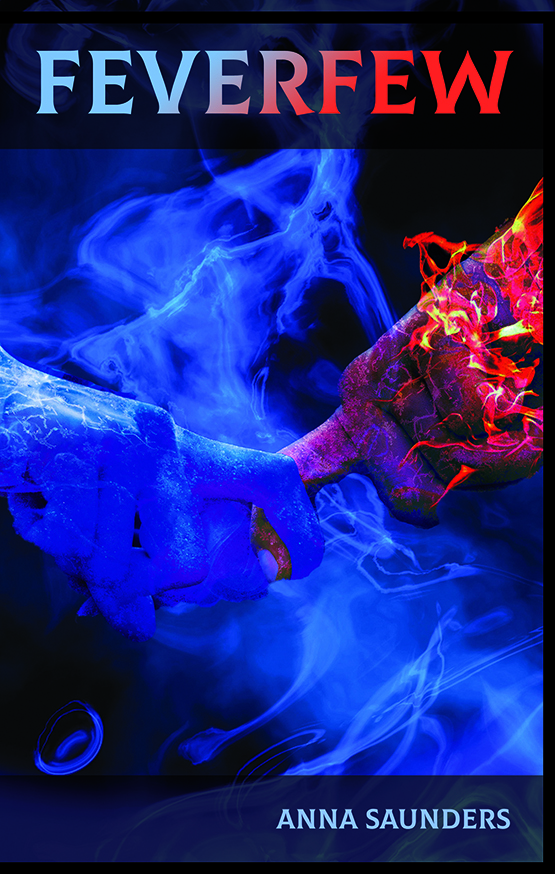
There are poets who have something profound to say and there are others poets who are highly accomplished in their art, expert technicians. Feverfew (Indigo Dreams Publishing, 2021), Anna Saunders’ latest collection, shows she is one of that rare breed of writers who can do both and having read the collection several times I can say I was truly left in awe at the quality of writing it displays.
Underpinning her work is a compassion and a belief in social justice. This is particularly evident in her political poems which convey her outrage and despair at a social and political structure that enables those in power to serve their own ends rather than the greater good. In The Wolf Speaks at the Tory Party Conference she writes: ‘Learn from us/seek out those you can overpower/break them down to that which your off-spring can digest.’ This typically visceral image of…
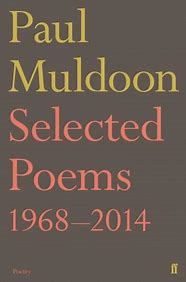
I have just read Muldoon’s Selected Poems 1968-2014.This has been a revelatory experience of a body of work that I had previously found so intimidating that I had avoided it as post-modernist whimsicality. Not that it has got any easier, and the poet continues to change shape and evade capture like the trickster Gallogly, or like the poet of negative capability it seems that he aspires to be. I don’t have the ability or years left in my life to offer any kind of sustained reading of Muldoon, but I have found it interesting to explore different versions of masculinity he offers, starting from the eponymous poem ‘Quoof’. When I first read Quoof, both the book and the title poem, I was struck by Muldoon’s exploitation of the sonnet. I even used the poem in teaching as a contemporary example of the form. A colleague (male) to whom…
Recent reading of Steve Ely, Geoffrey Hill and Basil Bunting have made me think about the male perspective in poetry and about how different aspects of masculinity are represented in contemporary poetry by men.[1] I don’t think poetry can be gender neutral, no matter how generous, inclusive or aware of the other the poet attempts to be. Nor do I think gender can be seen as binary; there must be as many versions of gender in poems as there are in the people who write them. Nevertheless, there are certain traits in poetry, as in life, which are traditionally regarded as masculine, and may include attitudes to violence and sexuality as well as specific ways of using language.
Simon Armitage
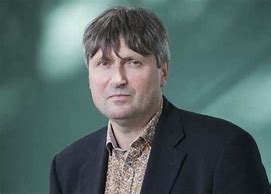
I used to be very bothered by Simon Armitage. Is it time I changed my mind?
I did not manage to attend Alice Oswald’s first lecture as Oxford Professor of Poetry but I have just listened to the podcast: http://podcasts.ox.ac.uk/art-erosion . The title of the lecture was ‘The Art of Erosion’ and in it Oswald made a distinction between poetry which builds up and that which erodes, the latter being what she is more interested in. Erosion as a metaphor captures the forces of nature and time central to her poetry. She argues that the poetry of erosion is not a construct but the uncovering or discovering of what is already there. Poets (and critics) are fond of dividing poetry into categories; this one reminds me of Charles Olson’s dictum that the poet could either make something up or be ‘equal to the real, itself’. This, in turn, reminds me of Coleridge’s distinction between imagination and fancy, and, more significantly for Oswald, of Keats’ discussion of…
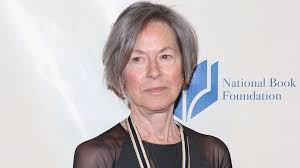
A Nobel prize winning poet, writing in English, that I had barely heard of. Shamed by my ignorance of the work o, I started to read her in bulk. I started withA Village Life,2009, which is comparatively recent, and which I will return to. I followed up withThe First Five Books(Carcanet, 1997) which includes all her work up toArarat(1990). The prevailing impression from this collection was gloomy. In fact, when I read ‘The Undertaking’ , the opening poem in ‘The Apple Trees’ which is the second section ofThe House on Marshland(1975), I was surprised by how upbeat it was.
The dark lifts, imagine, in your lifetime.
…
the sun is shining,
everywhere you turn is luck.
At the same time, I asked myself how long this sudden cheerfulness would last.
Five pages later the poem ’12.6.71’ opened and closed thus:







 The Wombwell Rainbow