Elisabeth Sennitt Clough: an informal interview

Chris Edgoose's avatarWood Bee Poet

Elizabeth-Sennitt-Clough

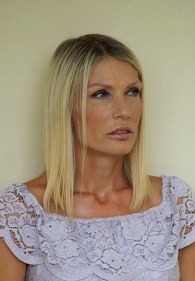
I recently met up with Elisabeth Sennitt Clough at The Cambridge Blue on Gwydir Street for a chat before her CB1 reading around the corner at The Blue Moon on Norfolk Street. She read alongside the unique and wonderful John Lyons, who I will make the subject of a separate post.
Liz has been a friend since we completed our online MAs at Manchester Metropolitan University together. She has over the last few years won and come highly placed in several competitions, been published in countless magazines and been named a Poetry Society Recommendation for the most recent of her two full collections At or Below Sea Level.
It was an informal sort of interview and I didn’t want to risk creating a stilted atmosphere by recording what we were saying. We agreed that we would just chat and I would pass my write-up by her before I…

View original post 1,279 more words

Poetry and the Educated, Liberal Middle Classes

Chris Edgoose's avatarWood Bee Poet

Nagra-Daljit

I hope plenty of people send in properly shocking and edgy poems to the Bridport Prize this year, following Daljit Nagra’s recent call for entrants to liberate themselves from feeling they should submit a ‘good, liberal poem’ to the competition. I’ve submitted one that I hope will raise eyebrows and it would be great and refreshing if the eventual winner made readers sweat a bit and take a second, third and fourth look to check that they were really reading what they thought they were reading.
Poetry competitions are at their best when the winner comes as a complete leftfield surprise, and especially when it makes you as an entrant think, ‘Ouch – that’s a beauty!’, which was the effect Dom Bury’s National Poetry Competition winner The Opened Field had on me this year. A sestina! That’s not supposed to happen – they’re too formal, too old fashioned and –…

View original post 634 more words

The Prose Poem and Radical Ambiguity

Chris Edgoose's avatarWood Bee Poet

prosepoem

The Penguin Book of the Prose Poem, edited by The Sunday Times poetry critic and Senior Lecturer at UAE Jeremy Noel-Tod, has already been reviewed several times, both positively and negatively, and I’m not going to add to them here; but I would like to pick up a few points made in those reviews – particularly the negative ones – which I find interesting for various reasons relating to my own attempts to grapple with the prose poem as a form.
Kate Kellaway in The Guardian, while her adjective choices are sometimes a little breathless (“stupendous”, ”exhilarating”), makes some good points and she notes correctly that “the prose poem has always been a liberating space”, a nice phrase that sums up the general feeling of Noel-Tod’s introduction. The Telegraph and The Times reviews are behind paywalls, but they must also be positive as they awarded the anthology five…

View original post 1,541 more words

Kim Moore’s ‘I Let a Man’

Chris Edgoose's avatarWood Bee Poet

This blogpost comes from reaction to Kim Moore’s poem ‘I Let a Man’, which was published in The New Statesman in March, and which elicited a surprisingly strong comment on Twitter from a male writer who called the poem “horrible, unpleasant”, and appeared to accuse it of objectifying men, then later of being part of a “liberal backlash against men” which “seeks to denigrate and reduce them at every turn” and which if taken to an extreme “will result in the annihilation of men”, the critic then referenced the SCUM Manifesto of radical feminist and would-be Warhol assassin Valerie Solana.

What horrors were awaiting within, I wondered as I clicked with a quivering finger on the New Statesman website. Never having read Moore’s work (I subsequently have) I didn’t really know what to expect but I had read interviews with the poet online, and I found it hard to believe…

View original post 885 more words

The Performance v Page Debate is a Red Herring

Chris Edgoose's avatarWood Bee Poet

Redherring

I only made it to two sessions at Poetry in Aldeburgh last weekend, but I was extremely glad to have seen and heard what I did. The ones I saw were ‘The National Poetry Competition at 40’ and ‘A Cambridge Quartet of First Collections’, the first of which featured readings by Dom Bury, Yvonne Reddick, Philip Gross and Liz Berry; and the second Adam Crothers, Rebecca Watts, Alex Wong and Claudine Toutoungi. I was struck by how differently all the poets read their work and how I as a listener got caught up far more in the sound of their voices and the movement of their hands, the expressions on their faces, than on the actual content of their poems.

This is what I wrote up from my notes on the poets:

Dom Bury is of the Poet Voice school of reading, leaning towards the austere and liturgical, there is…

View original post 1,425 more words

Surfacings (review: An Ocean of Static)

Chris Edgoose's avatarWood Bee Poet

binary

An Ocean of Static(Penned in the Margins) by JR Carpenter has already been ably reviewed several times (among others, by Alison Graham, Jade Cuttle, Mary Paterson, Tom Jeffreys, and Steve Spence – links to which reviews, along with some interesting interviews with the poet, can be found on Carpenter’s webpage) so I will try in this post to make some observations and connections about this very good experimental book of poetry that have not yet been made, rather than simply saying again, less well, what the above reviewers have already said.

What occurred to me first was that this is a book not about ocean depths but about ocean surfaces (there is proportionately little that happens in as opposed to on the ocean), and of course by extension it is about those scraps and fragments, partially hidden, random, and drifting, that are visible because they have floated up…

View original post 1,430 more words

Love You Uncomfortable

Chris Edgoose's avatarWood Bee Poet

bj nt 2

A good poem is a window you need to learn how to look through, and in learning how to look you may begin to discover something new about the world behind it. This is something that occurred to me several times while reading Jericho Brown’s The New Testament (Picador). Race, Nation, Sexuality and Religion are at the very centre of this collection and when writer and reviewer share none of these things it would be remiss to ignore the fact; but we don’t pick up books to have our own experience of life reflected back at us (at least not all of us, not all the time), and it is a mark of the strength of this collection for me (white, heterosexual etc. as I am) that it doesn’t say the things I might have expected it to. What it does say is said in a way that forced me…

View original post 1,055 more words

Poetry and the Search for Meaning

Chris Edgoose's avatarWood Bee Poet

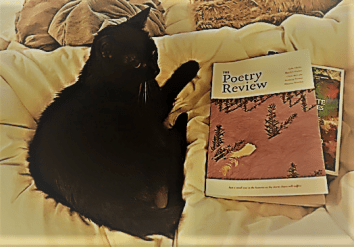
cat and poetry

I like a good grandiose blog-post title, and this is one I’ve been wanting to use for a while, so I’m pleased the opportunity has arisen. On Monday I went for the first time to the Poetry Society’s regular ‘Poetry Review Discussion’ evening (above the Poetry Café in Betterton Street, Covent Garden), where interested PS members discuss poems from the most recent Poetry Review, exchange ideas, point out literary references, offer alternative perspectives, and generally have an enjoyable poetry chat in a friendly, non-threatening, and non-judgemental atmosphere. It was during, or shortly after, this discussion that I realised I might have found a use for my portentous title. After all, what were we doing if not searching for meaning in each poem, and doesn’t every poem represent such a search on the part of the poet? I think it does.

But first, the Monday evening ‘Poetry Review Discussion’:

View original post 1,430 more words

Small Hopes: Island of Towers by Clarissa Aykroyd

Chris Edgoose's avatarWood Bee Poet

lighthouse1

There is a short poem towards the middle of Clarissa Aykroyd’s debut pamphlet Island of Towers which is called ‘Lighthouse’ and in which an island and its lighthouse are metaphors for a person sighing and sobbing in their sleep. In three brief couplets (the third separated from the first two by a couplet-sized blank space, perhaps indicating the eclipse between flashes from the lighthouse) we get a powerful impression that the sleeper is lost in their own darkness, one more profound than the dark of night or sleep. “Morning hasn’t come” we are told, as though it should be here by now but has failed to arrive. Whatever this sleeper’s darkness is, it remains despite the fact that “the lighthouse lifts so high, (and) the island / streams with light”.
This image of an island with a tower sending its searching light out into the unknown is not only towards…

View original post 832 more words