Year: 2020
How many of you with poetry collections out soon, or next year would like me to interview you about your new collections?
Please keep the requests for poetry book/pamphlet interviews about your recently published work/ to be published later, even next year coming in. I am arranging them in chronological order. Dealing with the recently published first and those due to be published next month.
Seven Leaf Sermons by Peter Larkin artwork by Rupert Loydell (Guillemot Press)

In Part I of A.N. Whitehead’s Process and Reality, the title of which suggests the connection between being and movement, the philosopher asserts that the number one ‘stands for the singularity of an entity’ and that the term ‘many’ presupposes the term ‘one’. A quarter of a century later Charles Olson was to write to Robert Creeley that the term ‘One makes Many’ had been overheard by him as being uttered by Cornelia Williams, the cook in Black Mountain College and the phrase was then adopted by Olson as an epigraph for The Maximus Poems. On similar lines Olson wrote an autobiographical note in November 1952 stating
‘that there is no such thing as duality either of the body and the soul or of the world and I, that the fact of the human universe is the discharge of the many (the multiple) by the one…’
In the…
View original post 629 more words
Tears in the Fence Festival 10-13 September 2020
The Tears in the Fence Festival this year is on 10-13th September via Zoom video conferencing.
The Festival has a long history back to the 1990s and has always attempted to showcase a range of alternative voices associated with the magazine and workshop group. Each themed event stems from the issues of the day and attempts to continue conversations from the previous Festival. The Festival consists of readings, discussions, conversations, and is a gathering of friends and an opportunity to make new friends. Previous themes have included ‘Difference and the Other’, ‘Visionaries and Outsiders’, ‘Hidden Connections’ and ‘The Politics of Engagement’. This year’s theme in the shadow of Covid-19 and Black Lives Matter is ‘Lost Connections: Light and Darkness’.
There will be sessions around migration, environmental, multilingual, power and gender dynamics, colonial issues as well as the solitudes and vicissitudes of lockdown. There will be talks, videos, conversations…
View original post 220 more words
New poem: Raining Poetry in Adelaide


One of my poems is among 20 that have been tagged on the footpaths of Adelaide’s CBD. The poems have been stencilled with invisible paint, and will only appear when it rains… a little something to brighten our downcast/overcast winter days. A map of the poems’ locations is forthcoming, but I particularly like the idea that many people will come across the poems incidentally. A big thank you to Jill Jones (who selected the poems), the Raining Poetry in Adelaideteam, and the City of Adelaide.
Wombwell Rainbow Interviews: Kate North
Wombwell Rainbow Interviews
I am honoured and privileged that the following writers local, national and international have agreed to be interviewed by me. I gave the writers two options: an emailed list of questions or a more fluid interview via messenger.
The usual ground is covered about motivation, daily routines and work ethic, but some surprises too. Some of these poets you may know, others may be new to you. I hope you enjoy the experience as much as I do.


Kate North
was born in Glasgow in 1978 and moved to her family hometown of Cardiff soon after. She studied English in Aberystwyth (BA) then Creative Writing in East Anglia (MA) and Cardiff (PhD). Kate is currently the Programme Director of the MA English Literature and Creative Writing pathways at Cardiff Metropolitan University. She has previously published a novel, Eva Shell (Cinnamon Press, 2008) and a poetry collection Bistro (Cinnamon Press, 2012).
Find out about her new short story collection, Punch
Find out about her latest poetry collection, The Way Out
@katetnorth
The Interview
1. What inspired you to write poetry?
I’ve felt a need or a compulsion to write poetry since I was child. I think it is simply quite an ingrained requirement that some people have to express and make sense of the world they experience.
2. Who introduced you to poetry?
My grandfather, reading it aloud as I sat on his knee as a child. ‘The Pied Piper of Hamlyn’ by Robert Browning was a firm favourite.
3. How aware were you of the dominating presence of older poets?
Initially, I wasn’t particularly aware, but I think I was influenced. Through the poems selected by my grandfather and then through the education system right through to University. Though I never felt excluded by their presence, I’m not sure why. Possibly because English is my mother tongue and the language of older poets is very present in English, I feel.
4. What is your daily writing routine?
I don’t have a daily routine. I work in chunks according to projects. And then I prefer to write from the morning, starting as early as possible. I write for as long as I can. Once I have stopped writing the rest of the day is for editing, reading or doing something entirely different.
5. What motivates you to write?
It is part of who I am, in terms of my work, my identity, my life. I don’t think I could change that even if I wanted to at this point.
6. What is your work ethic?
I find that a really hard question to answer. In terms of the value of my work, then it depends, as I have so many aspects to my work. I have an academic role which I think is important. I have a commitment to my students that I take seriously. In terms of my writing, I feel that I have a duty to myself and my family to publish what I am proud of.
7. How do the writers you read when you were young influence you today?
In ways that I probably don’t even understand! Those early texts snared me into the whole business of writing. And those authors, like Robert Browning and Roald Dahl, gave me rhythms, cadences and sounds that are part of my lexicon now.
8. Who of today’s writers do you admire the most and why?
Ali Smith is an amazing writer. She is utterly engaged in the world and her novels are endlessly exciting to me. He interest in the history and ecology of language is so compelling.
In terms of poetry I admire Selima Hill for her distinctiveness and her stamina as a poet. Her surreal and humorous writing often carries a stark sadness also. For consistent brilliance and powerful intellectual inquiry with deep personal insight I value Denise Riley. A recent arrival on the scene with real talent I enjoy reading is Kayo Chingonyi.
9. Why do you write, as opposed to doing anything else?
I do other things as a well. I teach, I work on community projects, I communicate ideas and I work to support the literature sector in Wales and beyond through my work as a trustee. I don’t think I would be able to write if I didn’t do other things as well.
10. What would you say to someone who asked you “How do you become a writer?”
I think you have to find your own way to become a writer. And there are many types of writers. The most important thing is to write. And keep writing.
11. Tell me about the writing projects you have on at the moment.
Well, having recently published two books I have been enjoying a break. I have started something very recently, but I don’t want to jinx it by talking about it. Watch this space!
Wombwell Rainbow Interviews: Jessica Drake-Thomas
Wombwell Rainbow Interviews
I am honoured and privileged that the following writers local, national and international have agreed to be interviewed by me. I gave the writers two options: an emailed list of questions or a more fluid interview via messenger.
The usual ground is covered about motivation, daily routines and work ethic, but some surprises too. Some of these poets you may know, others may be new to you. I hope you enjoy the experience as much as I do.
Jessica Drake-Thomas
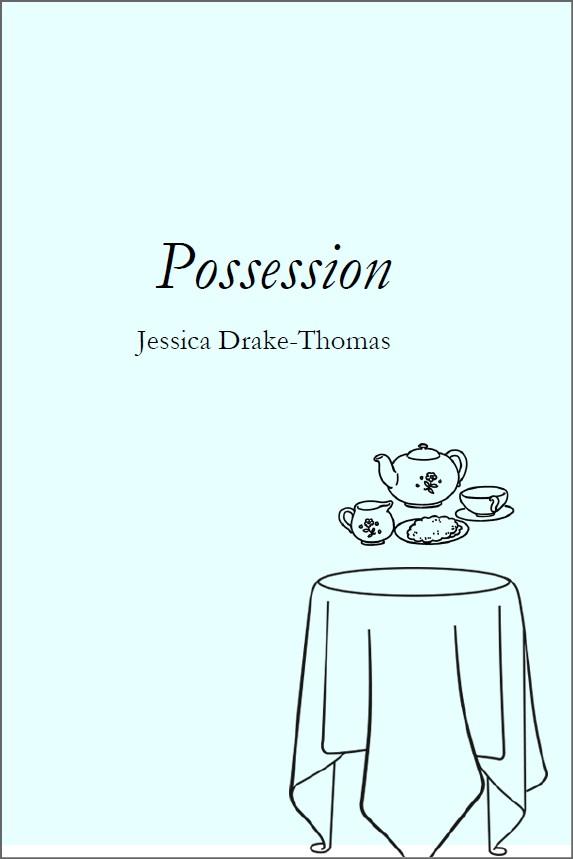
is a poet, fiction writer and blogger. She holds a B.A. in English from Tulane University, an M.F.A. in Creative Writing from Emerson College, and a Master’s in Education from the University of Arizona. She’s the author of one chapbook, Possession (dancing girl press) as well as full-length collection of poems, Burials, which is forthcoming from CLASH Books in 2020. She writes book reviews for her blog— This Week, I Read, and she is also a regular contributor at 24Hr Neon Mag, where she writes fictional obituaries. Her poems and short fiction have appeared or are forthcoming at Grimoire Magazine, Ghost City Review, Anti-Heroin Chic, X-R-A-Y Literary Magazine, Coffin Bell, and Three Drops from A Cauldron, among others.
The Interview
1. What inspired you to write poetry?
In the eighth grade, my English teacher gave us the entire class period on Fridays to write. We could work on anything that we wanted, so long as we spent the whole time writing. I wrote poems. Ever since then, I’ve not stopped writing.
2. Who introduced you to poetry?
My mom tried to get me to read Robert Frost’s Collected. I didn’t particularly like it, but it was definitely the intro for me.
3. How aware were you of the dominating presence of older poets?
I never thought their presences dominating. Rather, I found them to be kindred spirits. Even from a young age, I could identify that their thought patterns were similar to mine.
4. What is your daily writing routine?
I work on poetry during my breaks from working on freelance projects. Between 9AM and 5 or 6PM, I’ll work for an hour on a freelance project, then do thirty to forty minutes of working on poems. After 6, I might end up working on poetry until 9PM, which is when I do research and focused edits on pieces.
5. What motivates you to write?
I have a definite need to evoke certain images and feelings that come to me. I’ve always had a strong drive to complete things once I’ve started. Writing is hard work; hard work is something that I’m good at.
6. What is your work ethic?
Very focused. I get up and I work hard, every day. Lately, I’ve been even more focused than ever. It took me six years to do a chapbook, then my first collection took me about two years to complete, while my second collection has only taken ten months.
7. How do the writers you read when you were young influence you today?
I’ve always had an obsession with the macabre. When I first became interested in writing when I was about eleven or twelve, I was reading Edgar Allan Poe and sneaking Stephen King books home from the library. I’ve definitely been able to synthesize my love of poetry and my love of horror into something that’s my own.
8. Who of today’s writers do you admire the most and why?
No one writes like Chelsea Minnis does. Her work is bold, quirky, and original.
9. Why do you write, as opposed to doing anything else?
Because I love it. I love to write, even when I’m struggling with it. I’m currently writing full-time, and even on my worst days, I’m still happier than I was before.
10. What would you say to someone who asked you “How do you become a writer?”
You come up with a practice, and you stick to it. Writers write. It’s a lot of hard work and dedication, and often not for much money or praise, so if you become a writer, then you have to do it because you love writing. And, you must read, as much as you possibly can. You need to know where you fit in among literary tradition, and why, and you need to support your fellow writers. A writer is inextricably linked with their status as a reader.
11. Tell me about the writing projects you have on at the moment.
I’m doing final edits on a horror novel and my second collection of poems.
I’m doing research for and beginning to write a third collection focusing on bad omens and Norse mythology. Finally, I’m about thirty thousand words into another novel.
For #WorldBirdsOfPreyWeekend my poem “Blue Hawk”
Blue Hawk
Stream and hill follow my contours.
This beak is a high jut of rock.
I command the veer of rivers.
My black wing tips
are the storm’s edges.
My gyre makes the gust.
My white feathers, clouds.
Rain is the pelt of water
off my pinions and claws.
One of my eyes is the sun.
The other eye is the moon.
Gravity is my fall.
Death, my talons.
Sharp edge of ice,
my beak makes orphans.
The unwary, unwatchful,
unaware and weak
are morsels for my young
that turn in the world of my eye.
II
II.
I pass
. the dead
to my wife
. in
flight.
. Two rocks
. bridged
. by red sinew.
-Paul Brookes
1348 & Other Equations by Valeria Melchioretto (Eyewear Pamphlet Series)
Poems about plagues have an understandable fascination nowadays, and this one, published in 2019, was ahead of the curve. 1348 was the Western European advent of the Black Death, and the title’s ‘equation’ here appears in its root sense of ‘making equal’ – not only in the irreparable way that death does, but also in terms of social re-stratification in the plague’s aftermath. Starting from England, and travelling with the Arthurian Prince Galehaut, the poem quickly reaches Italy, for 1348 is also the year The Decameron is set, its narrators wintering out from the carnage in Florence. Events in Boccaccio’s narrative and Pasolini’s film version are alluded to, but especially their themes: fortune, sex, trickery, mercantilism, class conflict and Church corruption. The poem has a lot of fun, too, with medieval numerology, expanding (or detouring) onto the Four Horsemen of the Apocalypse and Leonardo’s Vitruvian Man.
Some readers might be…
View original post 359 more words
Wombwell Rainbow Interviews: Frank McMahon
Wombwell Rainbow Interviews
I am honoured and privileged that the following writers local, national and international have agreed to be interviewed by me. I gave the writers two options: an emailed list of questions or a more fluid interview via messenger.
The usual ground is covered about motivation, daily routines and work ethic, but some surprises too. Some of these poets you may know, others may be new to you. I hope you enjoy the experience as much as I do.

Frank McMahon
was born and raised in Birkenhead, Merseyside. After graduating he began his career in Social Work/Welfare as a practitioner and manager, working for three Local Authorities, British Red Cross and Action for Children. He also served for nine years as a school governor. His last full-time post was to set up and manage a SureStart Children’s Centre. “There is nothing like working with and for young children. They constantly teach you to look at the world with fresh eyes and be open to new experiences.” Frank is married with two children and six grandchildren. When not writing (plays, a novel, short stories and poems) he enjoys walking, (The Cotswolds are his new playground); his allotment (save for the weeds), golf, chess, travel, music, and counts himself fortunate to have some wonderful friendships. He is a member of Somewhere Else Writers Group in Cirencester, whom he thanks for their patience in reading and critiquing his work. As part of that group, he works with Corinium Radio on programmes and plays.
The Interview
1. What inspired you to write poetry?
I suppose many years back it was in response to experiencing very strong emotions but I went for years without writing anything. Then in 2017, three things suddenly got me going. The first was reading Angel Hill by Michael Longley and particularly the lyrical tone of some of it. ( I had been reading Heaney, Edward Thomas, John Burnside, Hughes but this seemed to give me permission to write some tender/ lyrical work.) Next was a trip which my wife and I made round some European cities and in two of them, Berlin and Budapest, history just confronted me full –on, the history of the Holocaust and two poems came from that. Finally, I joined a writers group here a year after moving and that gave me critique, affirmation, an echo chamber and access to the creative work of other members.
2. Who introduced you to poetry?
Teachers at school but it did not spark anything then. I recall one teacher ( as I found out later, it was the Australian writer David Malouf!), trying to take us through Christabel. It was when we looked at Eliot that I began to get intrigued.
At university, it was discovering Wilfrid Owen which helped me see the power of poetry and it resonated because it was at the time of the Vietnam War. Yeats and Dylan Thomas were coming onto my bookshelf.
I think I began to find poetry in the songs of Bob Dylan, the Beatles and Simon and Garfunkel and the classic songs sung by Sinatra and Bennett.
3. How aware were you of the dominating presence of older poets?
I guess it depends how one defines older poets.
I am not sure how much the classical poets dominated as I found it hard to enter their world. I was much more taken by Yeats and Dylan Thomas and then I came across the Penguin Modern poets series with wild stuff from Ginsberg and Ferlinghetti, alongside calmer work from Jon Silkin and Dom Moraes .
4. What is your daily writing routine?
It is more of a weekly routine to accommodate the rest of life! Usually I have ideas, a few lines, first drafts, stories to work on. I do not set aside a particular time of the day. Work is done in spurts with fallow periods.
5. What motivates you to write?
Various themes: anger at the state of the world and its injustices; the natural world; grief; memory; pleasurable experiences; musings or meditation drawn from my sketchy knowledge but strong interest in matters scientific; reflecting on aspects of my former life. I think now that I have things worth sharing with others.
6. What is your work ethic?
Conscientious, willing to labour until a work feels complete; critiquing the work of group members and encouraging them; trying to stay relaxed if no new creative idea pops up for a few days; being willing to set myself an idea to write about and/or feeding off the writing prompts from others.
Reading and studying the work of contemporary poets, especially women poets.
7. How do the writers you read when you were young influence you today?
This is really quite a mixed answer as I am really a late developer.
Eliot with rhythm, pacing and intellectual underpinning; Yeats and Thomas for emotional expression, Owen for his cold fury; Ted Hughes for the gutsiness of his work, really visceral images.
In later life, Edward Thomas and Robert Frost, for showing the richness of simple language. Elisabeth Bishop, for her powerful and stylish restraint; Robert Lowell and his at times overwhelming power.
I also need to include Anna Akhmatova particularly for her moral courage and articulation of the sufferings of millions.
Miroslav Holub springs to mind from some time back with his quirky and moving images.
RS Thomas for his beautiful austerity.
Auden and Larkin are there in the background.
8. Who of today’s writers do you admire the most and why?
Heaney and Longley: the range of subjects and their use of language in a palpable way; Alice Oswald for her amazingly fluid imagination; John Burnside for his imagery ( though some of it baffles me ). I am getting to know some of the work of Lemn Sissay and Carol Ann Duffy.
9. Why do you write, as opposed to doing anything else?
I suppose that the urge to write has always been with me but my career in Social work and raising a family means that I was trying to make the world better by getting stuck in. I suppose now that I have decided to take a step back and channel my energy into writing.
However, i do have other interests which help give me a balanced life.
10. What would you say to someone who asked you “How do you become a writer?”
Pick up a pen, get some paper, write the first line, then the next, then the next; at some time, find an honest person or group and share your work; be open, learn, go away and try to write even better. But write from the heart first.
11. Tell me about the writing projects you have on at the moment.
A first draft short story; some poems; a friend is critiquing my children’s novel; the script for a radio play; two plays to be produced for local radio. Finally, trying to get myself spots in lit and poetry festivals.
 The Wombwell Rainbow