Covid 19 Sutras by Hank Lazar (Lavender Ink, New Orleans)

tearsinthefence's avatarTears in the Fence

In writing about Hank Lazer’s 2019 collection of poems Slowly Becoming Awake (Dos Madres Press) for issue 28 of Lou Rowan’s Seattle-based magazine Golden Handcuffs Review I referred to a ‘Notebook’ entry for October 7th 2016: ‘poem radiating outward’ with its immediate follow-on, ‘landfall the page’. The strings of thought in Lazer’s new collection act in a similar fashion as the particularity of the moment is seen against a spiritual and philosophical awareness of the progress and effects of the Covid 19 virus. In a comment made by Charles Bernstein after reading these poems Hank Lazer ‘precisely notates the passing of time through pandemic and uprising’:

‘Consciousness alights on each poem “like a butterfly drawn to a bright flower,” offering luminous company in dark times.’

That luminosity is brightly evident from the opening four lines of the first poem:

‘books & blossoms
spring & all
cold morning no
wind cloud…

View original post 769 more words

Wombwell Rainbow Book Interviews: “192 Miles With Carla” by Robbie Frazer

Wombwell Rainbow Book Interviews

192 Miles with Carla front cover

Robbie Frazer describes himself:

I used to be a businessman with suits, ties and a smug look reserved for airport lounges. Don’t have much use for any of those these days. In 2015, close bereavements coupled with a peaking sense of ennui with the rat race saw me walk away from it.
I published my first collection of poems this year (192 Miles with Carla) and am currently creating films of poetic monologues to be released in the Autumn.
This year should also see the completion of a book about finding meaning and purpose in midlife.
Beside the writing, I help executives navigate transitions or, more accurately, support them through periods of inertia and feelings of meaninglessness.

https://www.dempseyandwindle.com/robbie-frazer.html#

The Interview

1. When and why did you start writing poetry?

I was a troubled 10 year old: lonely, bullied and trying to make sense of a new home with a new father. While my outer world was turbulent, my inner one was colourful and full of hope. I couldn’t paint to save myself but I discovered that I could change the way I felt by moving words around a page. I could introduce words to each other that had never met before and what happened surprised me. That’s when I started experimenting with poetry.

2. Who introduced you to poetry?

My English teacher. Mrs Shields! All the boys had a crush on her …

2.1. Who did she introduce you to?

Absolutely no idea. But it did lead me to picking up The Mersey Sound (McGough, Patten, Henry) from a bookshelf – which I loved although didn’t wholly understand.

I didn’t love the bookshelf…

2.2. What did you love about it?

I do remember being thrilled at the irreverence of it all. The poetry I’d been introduced to at school left me cold whereas the Liverpool poets’ work struck me as more liberated and fun. I was drawn to the surreal nature of some of it and immediately went off to write my first ballad – The Strawberry Moose – about an elk with skin blemished by strawberries who found love with a creature covered in fruit salad.

3. How aware are and were you of the dominating presence of older poets traditional and contemporary?

Actually, I was more aware of the dominance of men in traditional poetry. That said, we can look around the poetry scene of the 19th century and assume that it was dominated by old men with massive beards. But Tennyson was 21 when he published Claribel and Mariana, Coleridge was winning awards at 20 and Wordsworth was 23 when he published his first collection. He went on to sleep with the woman Coleridge was in love with and who, as it happens, was his own wife’s sister; not the behaviour of an old fart, I suggest. But when I first encountered these three, bored rigid in my Leeds comprehensive, I could only picture them as old statues. The only reason we see Shelley and Byron as young men today is because Shelley died in his twenties and Byron looked sexy as hell in a headscarf and didn’t get to see 40.

Merely by avoiding walking in front of buses or by sidestepping knives in bar room brawls in south London, a poet will inevitably become a member of the cultural gerontocracy. The truth is that much of the famous poets’ creative output happened in their youth but most of them had the misfortune to survive into old age. Take the Mersey Scene poets I mentioned before: today, the edgy zeitgeist of the sixties has become slippers, mint tea and Radio 4. But the work itself is still young.

If anything, I think there is a bias today toward young poets and “new” work in poetry magazines where sometimes the novelty trumps the merit.

4. What is your daily writing routine?

I don’t have one. Deadlines do force me to work which is why I avoid having them.

5. What subjects motivate you to write?

Words flow in to fill fissures when we are torn or pulled out of shape by events. So like most writers, loss and love dominate my motivations. Injustice is another. I wish I could write about football so that I could claim my wasted hours on the internet could be classed as research.

Sometimes an image pops into my head and I create a story around it. Only later do I realise where the thought came from. The images are often bizarre or starling: a penis in a jar, a feral child caught in a car’s headlights, a drop of a dying cat’s blood falling through the still water of a canal. Other times, a piece arrives into my head fully formed and all I need do is write it out. That feels a bit like cheating.

6. What is your work ethic?

I work in bursts and in phases. If I am in a transitional phase I tend to graze on the surface while the real work is bubbling away in my subconscious. But when I am in a phase of productivity, I will work intensively for an hour or so, then waste time doing something mundane like peeling vegetables or being fascinated by my feet, before returning to the focussed creation. I am not someone who can sit head down at a desk all day. I move around the house from early morning till late at night with a laptop and either coffee, tea or wine.

7. How do the writers you read when you were young influence your work today?

I did not read much when I was young. I wrote reams and lived much of my early life in my own head, trapped in an imaginary world that was more pleasant than my outer one. I’m surprised at how little I read considering how interested I was in writing despite that. Usually one begets the other.

8. Whom of today’s writers do you admire the most and why?

I have a casual disloyalty with writers. One day I can love everything about Margaret Atwood and the next eschew her for Niall Williams because he has magic coming out of his pen. Today, I like Ted Hughes (again) and Don Paterson (again) because of their lyricism; I often find myself not breathing when I read them. I need to be moved before I connect to a poem and Alice Oswald does that effortlessly. She swims through me with a scalpel. Last week I read some fabulous work by Becky Cherriman and Niall Campbell, both of whom deserve a bigger stage. There is some cracking talent out there too that is yet to step forward except in a couple of competitions: Meredi Ortega and Isabella Mead are two truly outstanding writers I’d love to read more from.

9. Why do you write, as opposed to doing anything else?

I think we all have a hard-wired need to connect with the world outside of ourselves. That’s why solitary confinement is a form of torture. Writing is doing just that but with the luxury of not needing someone to talk to. For me, what is left on the page represents most accurately the emotions and thoughts I had been experiencing – rather than the flailing approximations of discussion. The held pencil can get to just that part of your back that’s itching when nothing else can.

10. What would you say to someone who asked you “How do you become a writer?”

I would ask why? Perhaps they’re drawn to the rock and roll lifestyle, the wild orgies fuelled by booze and drugs, the all night parties in Soho private clubs or, quite simply, the heaps of cash. If so, I’d recommend they sit down and write something about whips, leather, bondage and, I don’t know, wizards. But if they have a yearning to express themselves through writing, I’d ask them why writing in particular. I think writers tend to find that their best mode of expression in the written word, as opposed to the spoken word or the painted image. Some people find the route from inside the mind to outside the body is easiest through music, others through sport or dance. If writing is the means of communication that is your best, I’d say go for it. Just start writing, about anything, but preferably about something where you can be honest and vulnerable. I don’t think you ‘become’ a writer, you simply become a better one.

11. Tell me about the writing projects you have on at the moment.

I have three. First, I am in the final straight of a manuscript of a book about finding meaning and purpose in midlife. It’s part memoir and part take-down of self-help. I talk about the hideous mistakes and horrid embarrassments of most of my business career, walk through tragedy and terrorism and then into a more self-aware phase of reflection. By the end of it I hope to know what the hell to do next.
Second, I’m releasing a short film next month. It’s a poetry monologue set in lockdown and features domestic abuse, cancer and climate catastrophe. It’s a barrel of laughs.
Third, I’m starting a Poetry Films business that creates short films featuring poems I will write for special occasions. Love, death and honour will feature heavily. There might be some laughs in that, but quite a lot of death too.

12. 12. “Crunching Bones” seems to be about a dog gnawing a bone in a kitchen, Am I close?

Actually, it’s about a teenage boy living with his mum and dad in a Yorkshire farmhouse. A Wuthering Heights kind of vibe.

I wanted to write a scene of quiet tension filled with this sudden and massive dark presence, dripping wet from the incessant rain. I pictured something claustrophobic and unrelenting so wrote it as just three sentences punctuated by the repeating sounds of the wind and rain outside.

12.1. How do you feel about it being open to many interpretations?

I’m very happy for any interpretation to be made. I think that’s one of the beauties of any creative piece – that it can appeal in different ways to different people. (Well, as long as the interpretation is not malicious, like justifying fascism or something!)/p>

Also, I think that sometimes others’ interpretations often get to the source of an inspiration more accurately than the artist can because often we create things, whether it be music, art or a piece of writing, from an emotion. But where that emotion comes from, we often don’t know. It’s like a shortcut between sensation and expression, bypassing cognition in the process. Sometimes others pinpoint that source better than the piece’s creator.

What I will correct, however, is when someone says ’this is about…’ when it is just an interpretation. ’To me, this is about…’ is more reasonable, I think.

13. How important is the use of form and rhyme in your poetry?

I use internal rhymes and chimes frequently to imbue a piece with a lyrical quality. If you listen to a poem in another language, you are lulled by the wave-like repetitions. I recently listened to poems in Farsi and Italian and was transported by them – like lying in a row boat being gently swayed by the movement. I think that musical and rhythmic aesthetic is an important element of poetry.

End rhymes go with a more ordered structure and I have used them when I want to inject pace. Like the ‘Dublin Chrissie’ ballad. I wanted it to be propulsive and the rhythm and rhyme contributed a lot to that.

I used a sestina form for ‘Eat it with skin fat’ because I wanted to trap the narrator. He is a man imprisoned in a life he hates but his only way of escaping it is by first going within – into an internal voice – and then disappearing altogether into wild fantasy. But he never manages to wriggle out of the shackles of reality – the rigidity of the form. I actually looked for the most unyielding structure and decided upon the sestina. It was hard!

Another example is the slightly pulled-about sonnet used in ‘Collapse to rain’. The man – my father – was conventional and also a Catholic. But he didn’t adhere to their structures very tightly. So I reflected that in distorting the given form of the sonnet with the ‘holy trinity’ of tercets. Probably going up my own arse with that one – too abstruse probably – but that was the thinking.

I guess I am saying that form and rhyme is important but I only use it when it lends something meaningful to the writing.

14. How did you decide the order of the poems?

Honestly, there was little strategy to it. I chose through feel.

I wanted to kick off with something short and arresting. Carla, in second, was an accessible piece with some pace which I hoped would give some momentum to the reader.

After that I tried to balance grief with hope, love and surrealism in equal measure so the middle bit was like a pie filling.

The three poems at the end are about loss: impending loss, the moment of its happening, and the aftermath. I wanted to finish with endings.

15. How important is the natural world to your poems?

It’s surprising to me that I do not write about the natural world much because I spend so much of my time in it and being enthralled by it. I think it’s because of the subject matter. The natural world evokes in me metaphors and symbols for existential subjects: meaning, purpose, time, the physical realm. Whereas most of my writing of late has focussed on more domestic issues like relationships, loss, hope and love. I suppose I find the emotional content of interpersonal connections more readily accessed than the more lofty or ambitious subjects that present themselves when I contemplate the natural world.

16. What do want to leave with after they have read the book?

When I first presented the collection of poems to the publisher, they asked me ‘what’s the theme?” to which I said that I didn’t really have one. However, what I do hope to inject into the poems is immediacy. I want to drop the reader into the middle of scenes and take them on a journey, sometimes literally like in 192 Miles With Carla or Scars to Heptonstall, but also figuratively as in The Flower-eating Girl. I would like to think that each poem is like a fair ground ride – you sit on, be jerked into a novel experience, to be let off at the end with some hairs out of place and a button undone.

I don’t have a high purpose for the book; it is not an attempt to further any particular theme or campaign. What I do hope a reader will experience, apart from a diverting read for a while, is some stillness. I like to think that there are some quiet hollows in some poems in which to rest; where those shades of meaning – like the intimate love of a stranger, the rusting of uncoiled loss, the confusion of being different, or the injustice suffered in simply being human – can be felt in that space and then fed by the words around it.

Summer—prose poem with frogs

#ReptilesAndAmphibiansWeekend poems and artwork by Michael Dickel. This excellent work needs a post by itself.

Michael Dickel's avatarMeta/ Phor(e) /Play

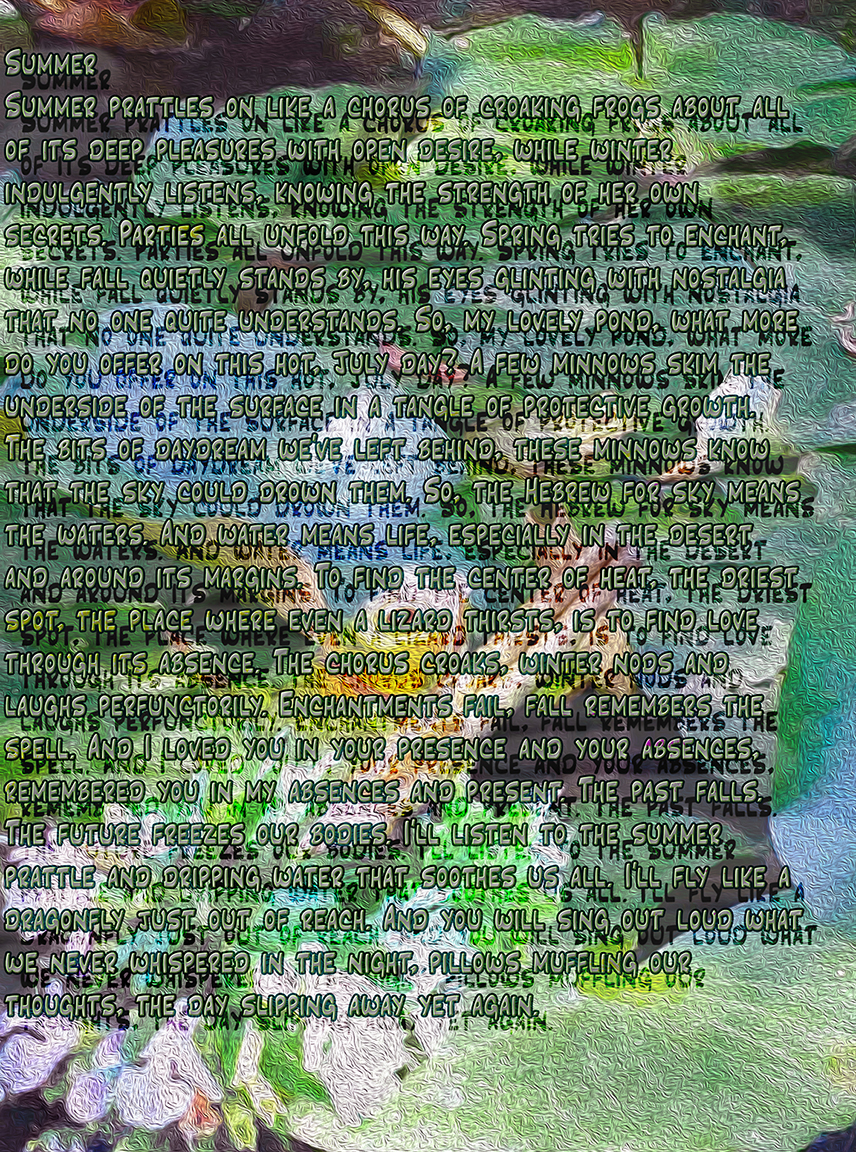
Summer, a poem by Michael Dickel Summer
poem & digital art ©2015 Michael Dickel

Summer

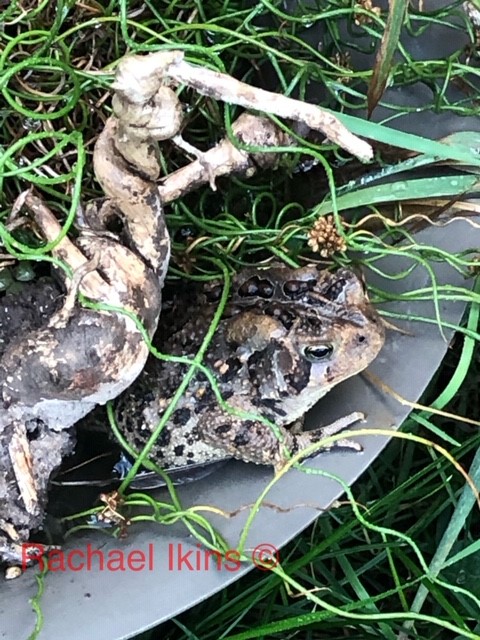
Frog by dripping water Photo ©2015 Michael Dickel Frog by dripping water
Photo ©2015 Michael Dickel

Summer prattles on like a chorus of croaking frogs about all of its deep pleasures with open desire, while winter indulgently listens, knowing the strength of her own secrets. Parties all unfold this way. Spring tries to enchant, while fall quietly stands by, his eyes glinting with nostalgia that no one quite understands. So, my lovely pond, what more do you offer on this hot, July day? A few minnows skim the underside of the surface in a tangle of protective growth. The bits of daydream we’ve left behind, these minnows know that the sky could drown them. So, the Hebrew for sky means the waters. And water means life, especially in the desert and around its margins. To find the center of heat, the driest spot, the place where even a lizard…

View original post 116 more words

#ReptilesAndAmphibiansWeekend poems and artwork challenge. Have you written about reptiles and amphibians, published/unpublished I welcome both? Have you done any artwork on these animals? Please DM me, or message me via my WordPress site “The Wombwell Rainbow”, and I will feature your contribution. First drafts are welcome. Look at the animals in the hashtags. What inspires you to describe them in art or words? Set yourself the challenge.

By OneMoreThing

When it rained, you blamed me,
and when your cattle died or
the well gave up bad water –
it was all my doing. So much so,
that now you do not speak my name,
fearing its mustard breath
will flame a pouched poison and
released, will fire and hiss if uttered.

But I have never been that mysterious.

Still, I speak in little clicks, undaunted,
mutter the meaning of each star
upon my back, upon the worm of my body.
And I swim in the murk of aquatic dreams,
sinewy, watered beneath the smell
of pinewood warmed in the sun. Here,
you ask me to put out the blaze I started

and yet, I only know the cool of wet and stone.

I think of the soft, round of my eggs,
sticky as creamy mistletoe berries and,
what if I could change my skin,
regenerate the broken parts
so that when, scales falling away,
I can reveal the white dove of my virtue,
and how then, maybe then,

you might again see the truth of me.

-Rachel Deering

The House Lizard Heralds

The house lizard huffs a message
night decrypts. I can see the town light
blink through the susurration in the wind.

Mother taught me – ‘Lizard, lizard, tell
with the bend of your tail
which choice I should avail.’

I whisper, “I cannot read you.”
A whispering here makes a thunder somewhere.
It must be a theorem in another’s name.

The house lizard disappears when I stare
again at the wall in need of a fresh coat of paint.
Its tail captures a quivering on the floor below.

There goes my choice. I stare at the wall some more.
Then into the window next to it. The town blinks.
Night works on bringing up an answer for a dream.

-Kushal Poddar

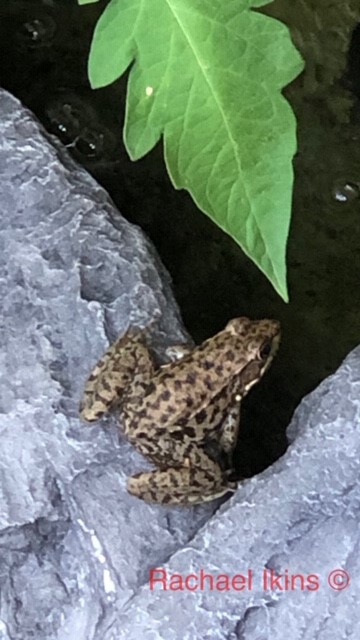
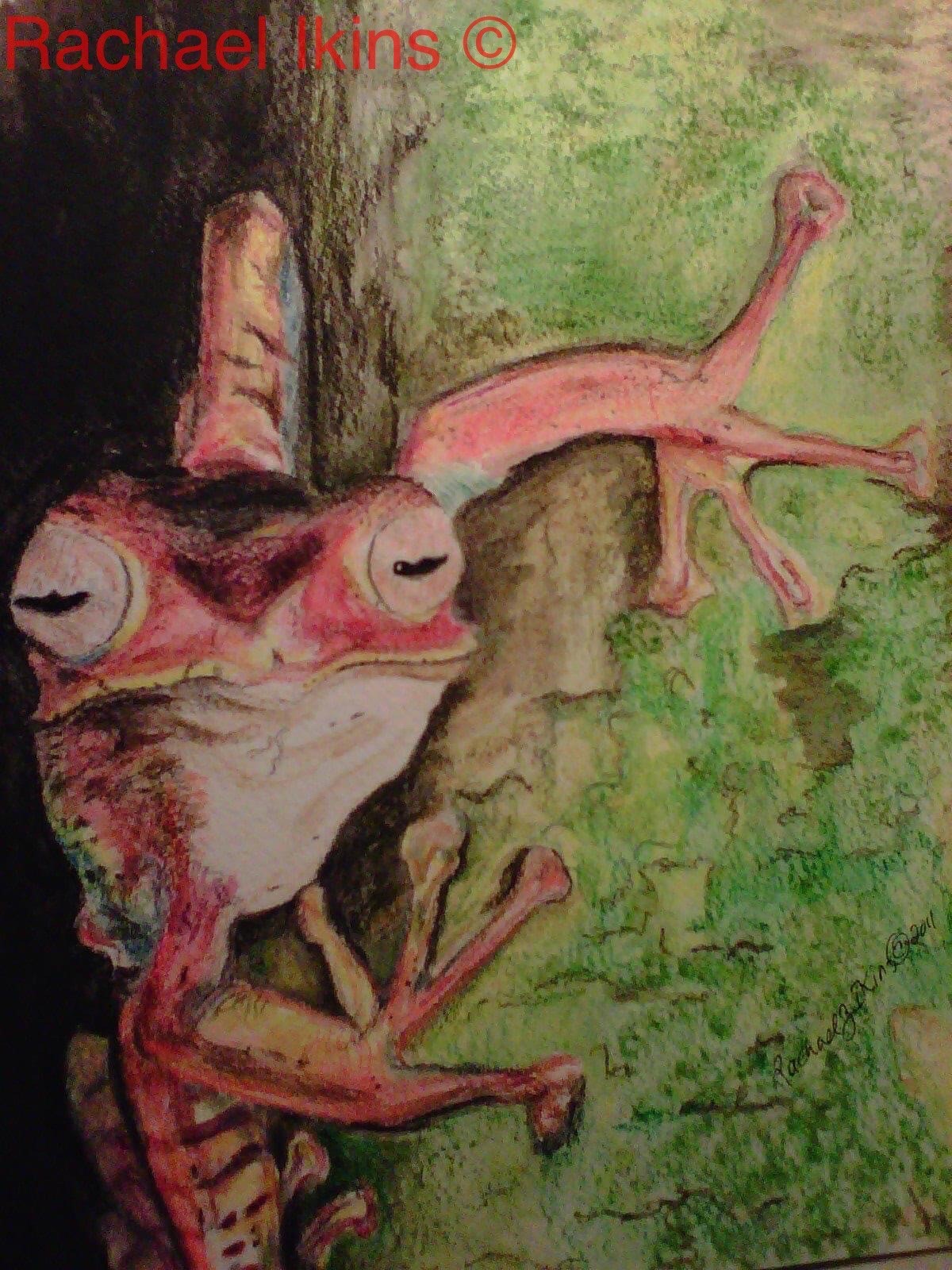
Frog 1Frog 3

Two Frog photos by Rachael Ikins

Frog Song

The tree frog trills
and no one else
is here listening,
ergo, no one else
hears it, ergo, it’s calling
to me alone, a moment
of private communion,
ergo, nothing more
or less than simple
presence alone together.

-Gregory Luce

-sbm

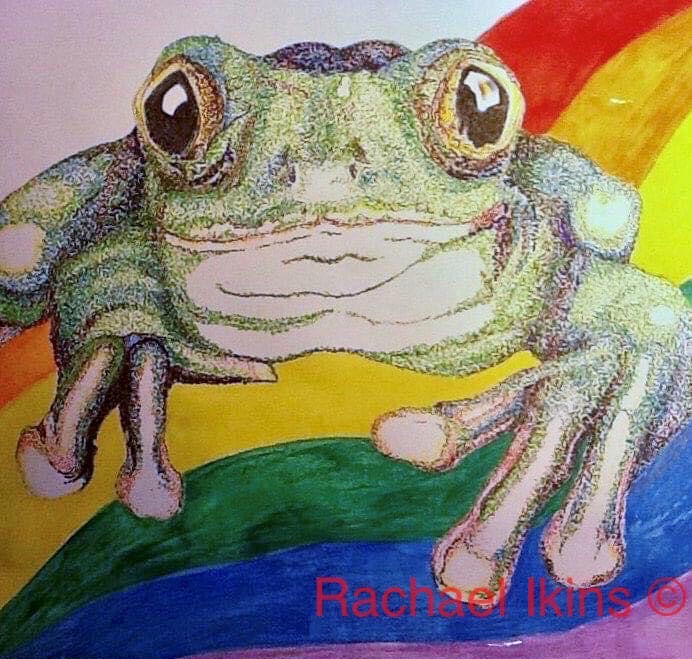
The Frog below is an artwork by Rachael Ikins. She says of it “This frog was done with inks in the pointillist method on a watercolor background. His name is “Pride”. He is available for adoption.”

A Frog Named Pride by Rachael IkinsA Fog Named Fritzi by Rachael Ikins

-Rachael Ikins  She says of this artwork: “This tree frog in watercolor pencil was on a magazine cover. The title is “Fritzi”. He also won a People’s Choice award. He is also an illustration in my fantasy novel, “Totems” currently available from me and LogCabinBooks.com

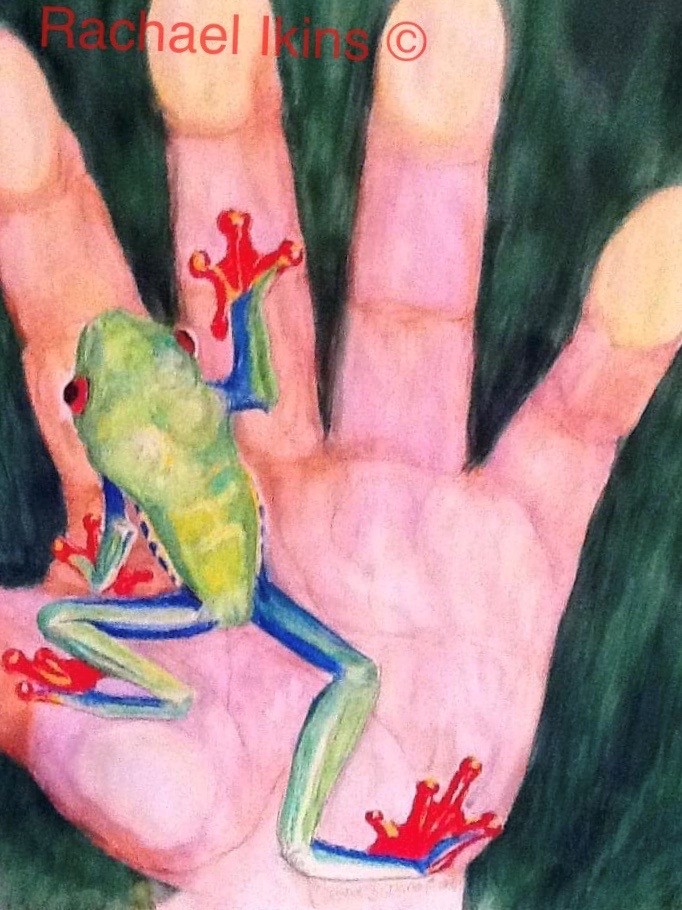
Another Frog

-Rachael Ikins says of her artwork ““Through a Glass Darkly” treefrog on one side, hand inside.”

A Fable for Our Times

There once was a warlock who lived in a city teeming with life and pollutions of air and water,
at famine’s edge.

He spied a frog in a ditch one day, scooped it into his bag.
Back home, a hovelish sort of place,
he placed the frog in a pot of water.
Though chemicals stewed, enough clean water endured to succor the frog. When the frog sang, Warlock felt sure it sang his name.

One night when the frog’s attention faded to sleep, the warlock lifted the pot to the stove and lit a fire beneath it. After awhile
Frog said, “Sir, this water is awfully warm.”
“No it isn’t,” replied Warlock into his ratty beard speckled with crumbs of countless meals. “Its the coldest water on the planet.”
The frog thought about jumping out.
Water lipped the pot’s edge. One thrust of powerful hind legs and he’d be free.

Warlock sounded so reassuring.
Frog soaked in the pot of water. He wanted to believe.

Little bubbles ticked against the sides of the pot. Frog’s skin grew tight and painful. Still, he listened to Warlock and floated
until the water
boiled.

Warlock snickered as he watched the fire beneath the pot fade to embers.
“Stupid frog! All frogs are stupid!!” he muttered as he tossed the pot into a nearby dumpster.

He grabbed his ax and his bag and left the city on winding highways until he found a patch of forest. Trees hissed at the sight of his blade. It gleamed, a wicked moon.

Warlock’s boots stomped stirring leaf mast from summers past. Trees retracted their branches stuck, rooted where they stood, chemical protections against insects, useless. His hand on bark made small things crawl away.

“Its alright,” he murmured to trembly trunks. “Fear not.” He held out his ax with both hands. Dirt- crusted fingernails stroked the oak handle. “For by this handle, my tool is your relation. We are all family.
The best family in the world.” Some wanted to believe.

Some trees fell for it,
that blade slashed
down and
down and

Branches chopped. Small nests destroyed, wood stuffed into his bag. Then, he sat on a stump to light a cigarette, toked twice and threw the smoldering stub into the brush. Yanked his smudged red hat low over his brow. “Trees are stupid!” He howled. “Stupid!”

Smoke billowed, trailed his vehicle
as he drove off
in search
of more
frogs.
-Rachael Ikins

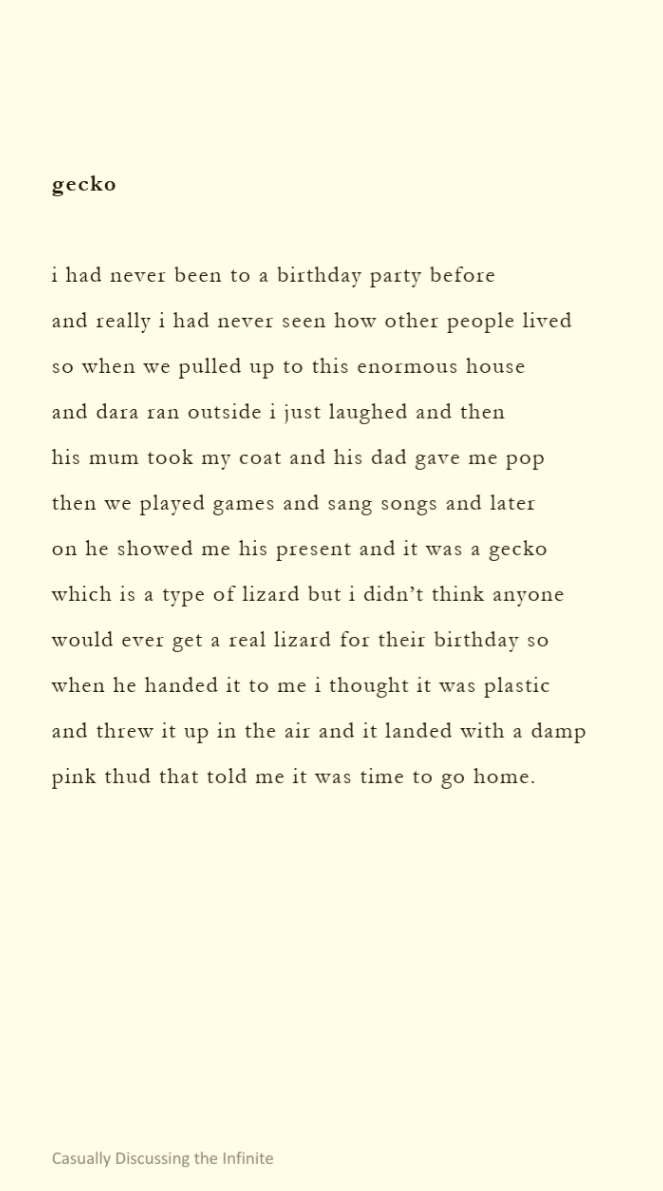
gecko by Stuart Buck

-Stuart Buck (Published in his first collection. “Casually Discussing The Infinite”

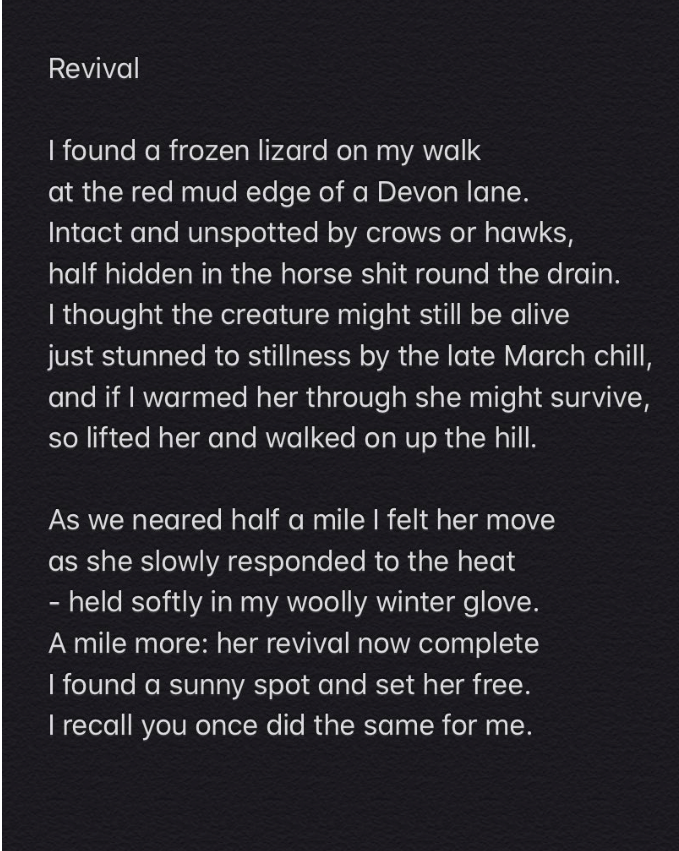
Revival By Marc Woodward

-Marc Woodward from his collection “Hide Songs”

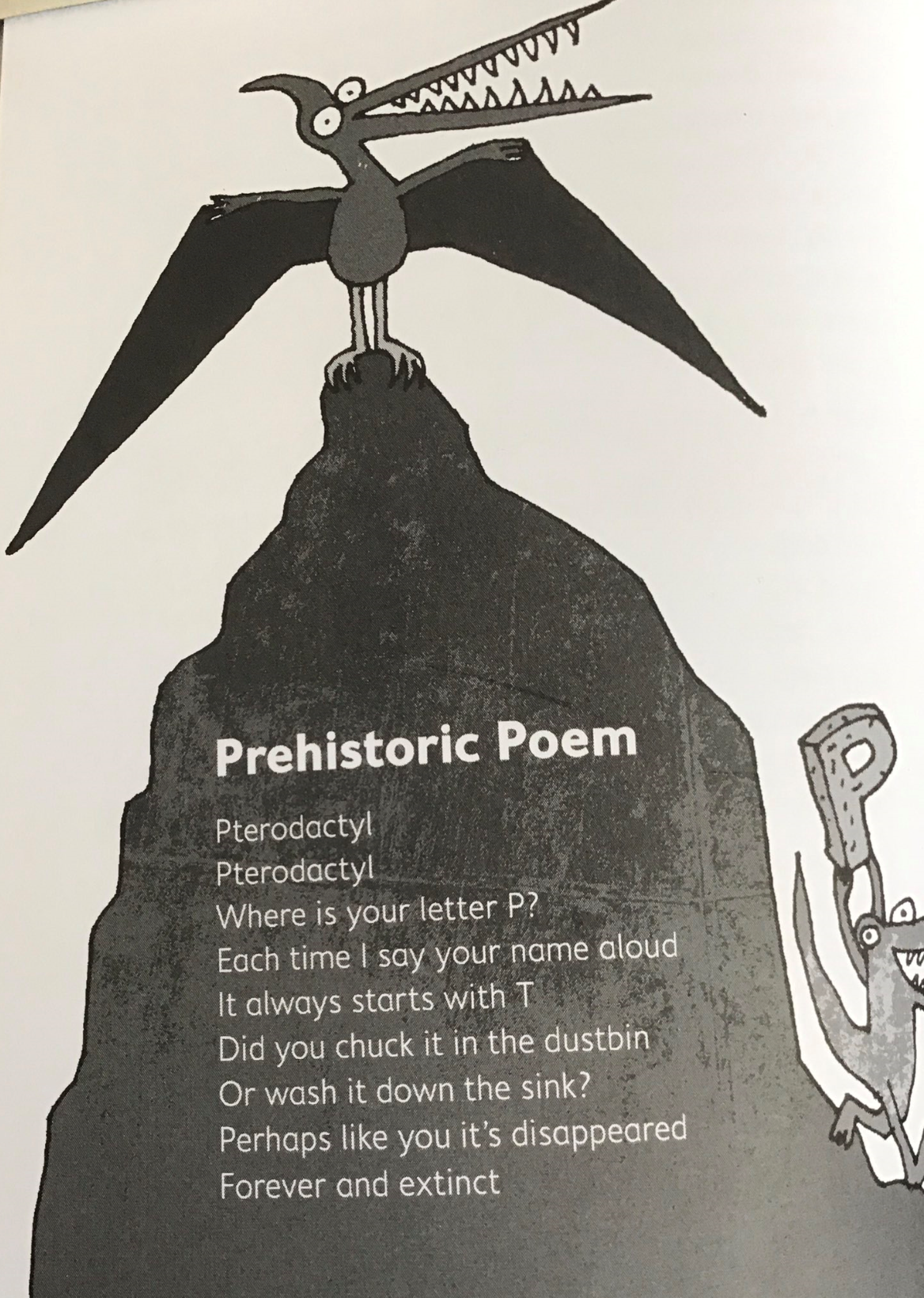
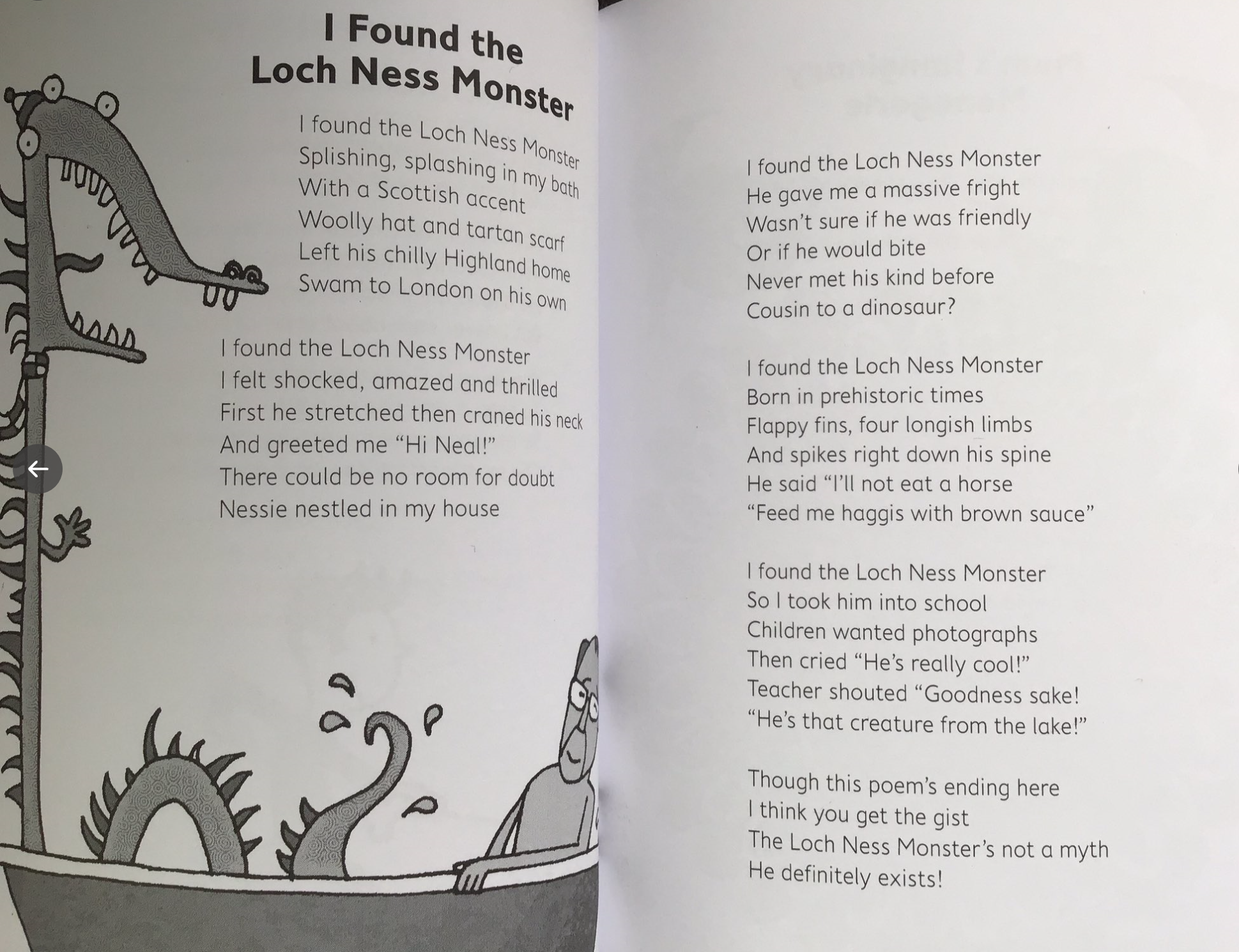
Prehistoric Poem By Neal ZetterLoch Ness Monster By Neal Zetter

-Neal Zetter

I Don’t Like Ssssssnakes

The way they feel, the way they bite

The way they curl up very tight

The way they slither ‘cross the ground

The way they slide without a sound

I don’t… Like… Ssssssnakes

The way their tongues are shaped like forks

The way they never smile or talk

The way they have no hair at all

The way they cannot kick a ball

I don’t… Like… Ssssssnakes

The way they’re still until they strike

The way they’re rubbish riding bikes

The way there’s poison in their fangs

The way they hang about in gangs

I don’t… Like… Ssssssnakes

The way they shed their scaly skins

The way they look so long and thin

The way they hide inside your bed

The way they might prefer you dead

I don’t… Like… Ssssssnakes

Cobra, rattlesnake or adder

Grass snake, python or black mamba

Boa constrictor or sidewinder

Anaconda or pit viper…

I don’t… Like… Sssssssssssssnakesssssssssssss!

-Neal Zetter

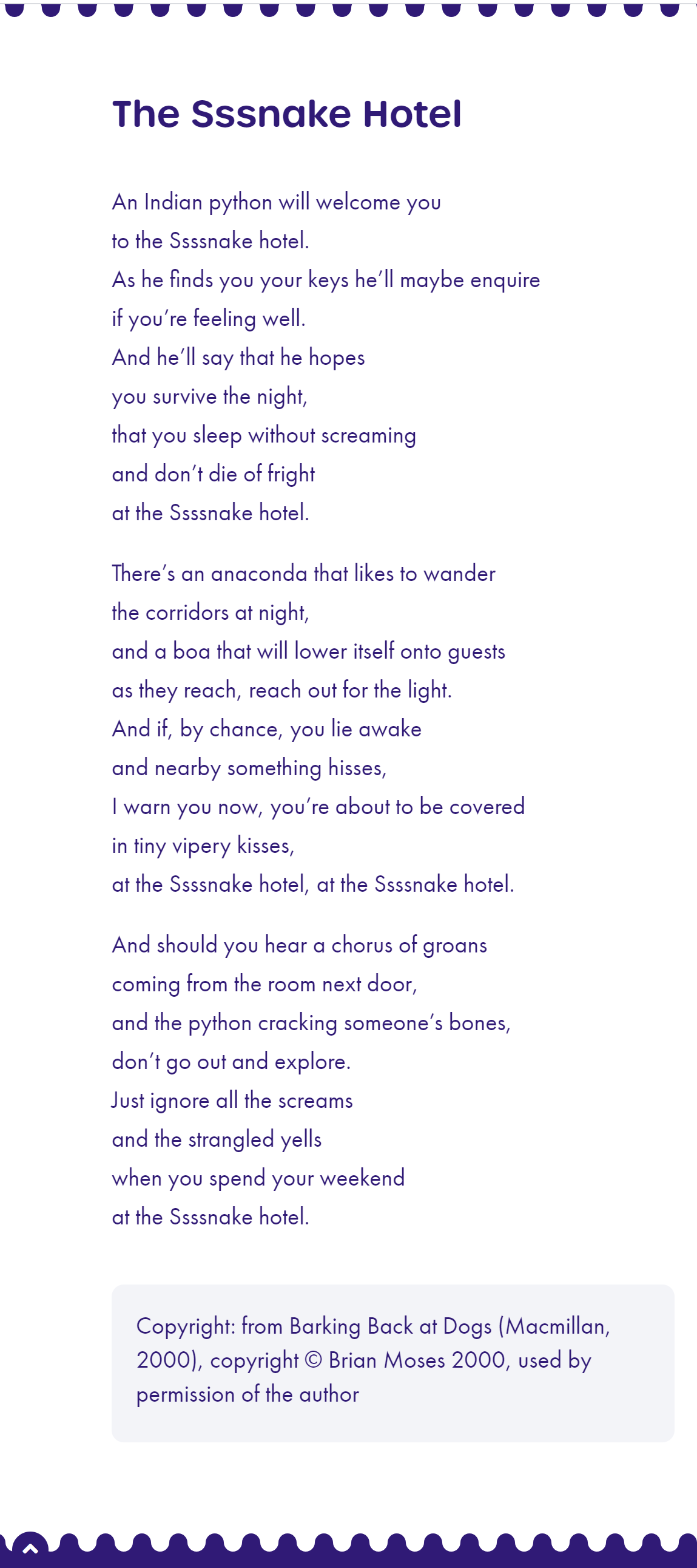
The Snake Hotel by Brian Moses

-Brian Moses

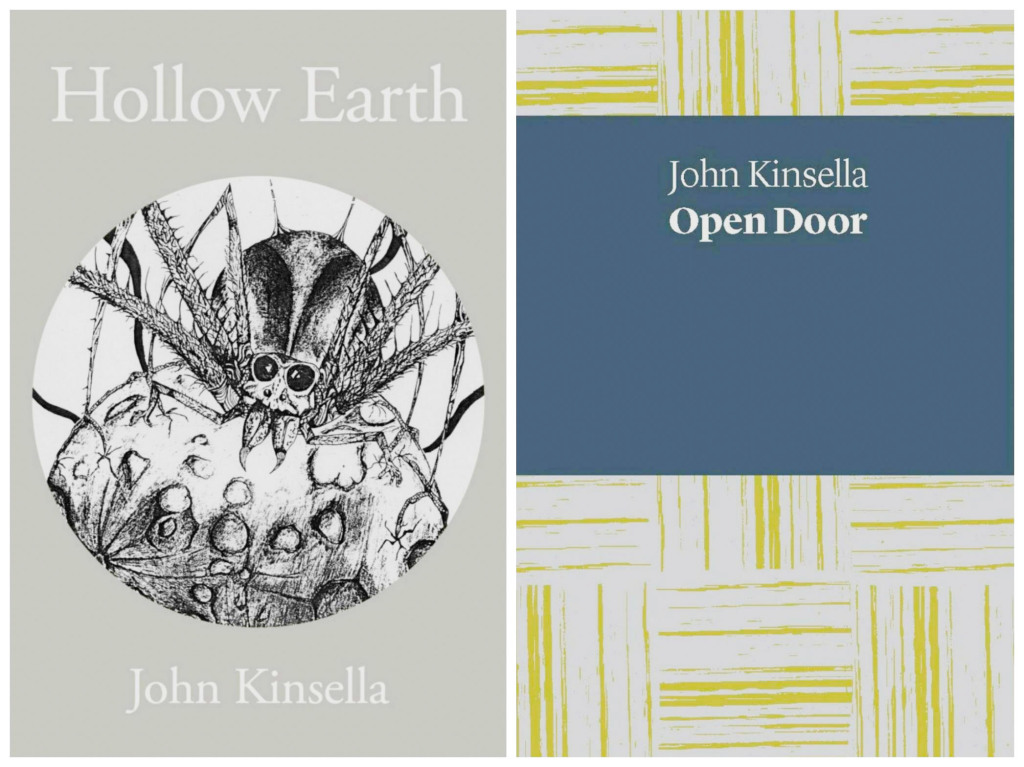
Reviews: John Kinsella’s ‘Hollow Earth’ and ‘Open Door’

Thom Sullivan's avatarThom Sullivan

I’ve had a long affinity with these words of the Russian-American poet and Nobel laureate Joseph Brodsky: ‘Every individual ought to know at least one poet from cover to cover: if not as a guide through the world, then as a yardstick for the language.’ In my early 20s, I developed a particular regard for a number of contemporary Australian poets whose work was synonymous with specific regions, among them were Robert Adamson (The Hawkesbury), Robert Gray (Mid-North Coast, NSW), John Kinsella (Western Australia’s Wheatbelt), and Les Murray (Mid-North Coast, NSW).

Through Kinsella’s work, in particular, I found permission – at a time I needed it – to write about the farming area in the Mount Lofty Ranges in which I’d grown up, and was still then living. I made a compact that Kinsella would be a poet I read – more or less – cover to cover, in the…

View original post 197 more words

Wombwell Rainbow Interviews: Matt Abbott

Wombwell Rainbow Interviews

I am honoured and privileged that the following writers local, national and international have agreed to be interviewed by me. I gave the writers three options: an emailed list of questions or a more fluid interview via messenger, or an interview about their latest book, or a combination of these.
The usual ground is covered about motivation, daily routines and work ethic, but some surprises too. Some of these poets you may know, others may be new to you. I hope you enjoy the experience as much as I do.

A Hurricane in My Head cover [1524x2339]

Matt Abbott

is a poet, educator, and activist from Wakefield and living in London. His debut one-man spoken word show Two Little Ducks earned 5* reviews at Edinburgh Fringe 2017 and on a 22-date UK theatre tour in 2018. The show’s poems were published as his debut collection by VERVE in 2018.

Matt’s debut kids’ poetry collection A Hurricane in my Head was published by Bloomsbury in 2019. It was one of National Poetry Day’s Selected Titles which led to a live appearance on Blue Peter. Matt formed indie spoken word record label Nymphs & Thugs in 2015. He fronts indie band Skint & Demoralised and is an ambassador for Eureka! The National Children’s Museum.

He’s had a series of high-profile commissions including national TV ads for Nationwide Building Society, Leeds United FC’s centenary kit launch, Jeremy Corbyn’s 2019 General Election campaign, Cancer Research UK, and the European Youth Forum.

The Interview

1. When and why did you start writing poetry?

I was 17 years old and studying at Sixth Form College. I’d always been obsessed with lyrics and storytelling in songs, but never seen it as a feasible output because I wasn’t musical in any way. Indie music was in a golden era at the time (2006/07) and I got heavily into a band called Reverend & The Makers. Their frontman, Jon McClure, used to perform short bursts of poetry before some of their songs. Through that, I got into Dr John Cooper Clarke. I felt as though this was something I could instantly have a go at, and “hit the ground running”, so to speak. Within a few months, I was compèring indie music gigs around Yorkshire, and that was where my career as a poet began.

2. Who introduced you to poetry?

I would say that Jon McClure introduced me to poetry that appealed to me. Obviously I’d studied it at GCSE, but that felt as irrelevant to me as algebra. So, Jon certainly opened my eyes to poetry, and in terms of what went on to become my career, yes – he introduced me to it.

2.1. Why did Jon McClure and Dr John Cooper Clarke feel relevant?

I suppose the main thing was the relatability. At the time, I saw this as being distinctly northern working-class. Throw in a bit of uncouth rebellion, kitchen-sink realism, articulate obscenity, politics, and humour. In hindsight, the fact that they were both heterosexual white men also would’ve played a part in that, but then that’s hardly unique in poetry, is it?

Poetry at school always felt extremely old-fashioned, abstract, academic, dull… I’d been obsessed with lyrics since a young age but never once been excited by a poem. Also, I think it’s important to note that both Jon McClure and Dr JCC performed their poetry in music venues. So it was “rock and roll”, it was unexpected, it was against the grain… and that excited me a lot.

3. How aware are and were you of the dominating presence of older poets traditional and contemporary?

At the time, my only exposure to poetry was the GCSE Anthology, which was almost exclusively by dead white people. But it wasn’t just that they were old or dead – some of my favourite writers now are old or dead – it was the subject matter and the language. As in, “ye olde garden path did shine so grandly upon thine morning” or whatever (that’s an ad-libbed example, by the way – not a quote). It didn’t feel relevant or relatable to my life in any way.

Now that I’m immersed in poetry and have been for nearly a decade, I’m well aware that older poets don’t dominate or ‘rule the roost’ any more. And in fact, in the contemporary ‘spoken word poetry’ scene, ageism is a relatively big factor. Anybody upwards of say 35 seems to struggle slightly as a result.

4. What is your daily writing routine?

I wish more than anything that I had one! I’ve been a full-time poet since late 2015 and have still always struggled to carve out writing time. Usually, I have to spot an opportunity a few days in advance and make sure that I set it aside for writing.

At the moment, I’m working on a verse-novel which involves typing at my desk. In which case, my routine would be to make myself a coffee, disable any access to social media on my laptop, turn my phone off, stick an instrumental playlist on (usually an artist on Bonobo or some chilled hip-hop instrumentals), and not look at or think about anything else for at least two hours.

When I’m writing poetry or lyrics, I tend to either go to the park and lean against a tree, or go to a pub/cafe and sit in a quiet corner. And I’d write in a notepad as opposed to typing, always with a black UniBall Fine Eye pen, and would still listen to the same kind of playlist with my headphones on. Oh and even when I’m in the pub, I don’t drink alcohol when I’m writing – I’d get a hot drink and a soft drink.

5. What subjects motivate you to write?

Predominantly social and political issues at the moment. In my early ’20s, I became obsessed with ‘kitchen sink realism’ and so storytelling and characterisation were my main inspirations for the next couple of years, but as I approached my late ’20s, social and political issues took over. In particular, working-class causes, and the human side of politics. Whether it’s the impacts of Tory oppression or the refugee crisis, I always look for the human angle.
What is your work ethic?

6. How important is form and rhyming to your poetry?

Form doesn’t play a massive role. Occasionally I use it to try and frame and structure a very loose idea, but more often than not, I’ll abandon it en route to a final draft. Rhyming is much more prominent for me, but very much depends on the primary audience and the subject matter of each specific poem. I feel as though certain poems have to rhyme, and certain poems most definitely have to not rhyme.

Also, I’m aware that for some, rhyming can ruin a poem. But I also think that when it’s done well, it can massively elevate a poem. I guess my musical influences play a huge role in this: I’d get such a buzz from hearing Eminem or Alex Turner cram a load of syllables into a few bars with clever rhyming involved and have always wanted to try and achieve that in some way.

6.1. How do you decide which “certain poems have to rhyme, and certain poems most definitely have to”?

I guess it’s firstly pace and secondly subject matter, and often the latter will dictate the former. So a gentler, more subtle, or more serious subject matter almost certainly won’t rhyme and will be a bit slower. A punchier, more forceful, or more angry poem will rhyme.

Audience-wise, if for example it’s a poem about football, or it’s political but for a wider political audience, I’ll make it rhyme. This sounds odd but if I’m writing a poem with social media in mind (i.e. for a campaign, for example), it’ll rhyme. But if it’s in a collection or a show, for example, it almost always won’t. It’s almost like writing “pop” poems and writing “art” poems, if you get me.

Also, a few of my new poems were actually lyrics for the latest Skint & Demoralised album, and I tend to always rhyme in my lyrics regardless.

7. How do the writers you read when you were young influence your work today?

I didn’t actually start reading poetry properly until my mid-20s. So, for the first section of my career (aged 17 – 25), I’d only ever listen to stuff, including poets (Dr JCC, Linton Kwesi Johnson, Gil Scott-Heron, etc.). However, in my early ’20s, I read a lot of novels and short stories which still influence me now. Mainly the British new wave of literature from the late ’50s: the ‘kitchen sink realism’ writers such as Shelagh Delaney, Alan Sillitoe, Stan Barstow, and John Braine.

Other hugely influential pieces of text were ‘Dubliners’ by James Joyce and ‘Sons & Lovers’ by DH Lawrence. The first poets to start influencing me “from the page” would be Charles Bukowski, Salena Godden, Helen Mort, and Kate Tempest. They definitely still influence me a lot now, although it’s probably not very apparent, if that makes sense.

7.1. What was it about the “kitchen sink” writers that influenced you?

They were stories that instantly felt like they reflected my world, even though they were from the late ’50s or early ’60s. Distinctly and unapologetically working-class and mostly northern English, bar Alan Sillitoe who was from the East Midlands (and so is pretty much northern English in the context of what I’m saying).

I felt like they reflected my world significantly more than anything I’d read before, which tended to be either American, or set in London (or Scotland in the case of Ian Rankin), or fantasy, or whatever.

8. Who of today’s writers do you admire the most and why?

At the moment, most of my favourite writers are female. I’ve always preferred female company and looked up to women, but growing up, I wasn’t immediately exposed to as many female writers.

Some of my favourite political poets are Salena Godden, Joelle Taylor, Kae Tempest, Sabrina Mahfouz, and Jess Green.

That said, probably my favourite contemporary novelist is Richard Milward, and I’m currently working through Irvine Welsh’s novels in chronological order.

8.1. Why are these writers your favourite political poets “Salena Godden, Joelle Taylor, Kae Tempest, Sabrina Mahfouz, and Jess Green.”?

I just think that they frame political situations, and the human impact of certain political situations, in a much more visceral and powerful way.

Plus I guess I just feel as though women’s voices need to be heard much more and that these voices in particular provide a well-needed alternative perspective on the world.

8.2. What do the novels of Richard Milward and Irvine Welsh bring to you?

I suppose they feel like the most relatable novels to me, in terms of language, social setting, subject matters, etc. The “kitchen sink” novels of the late ’50s/early ’60s really captured my imagination because they were in working-class social settings and always from a slightly rebellious, anti-establishment perspective. But with Richard Milward and Irvine Welsh, they’re (mostly) very contemporary, extremely colloquial (including dialect in the case of Welsh), and include a lot of references that excite me – be it specific locations, football, music, etc. With literature, you always like to see your own world reflected to an extent.

9. What would you say to someone who asked you “How do you become a writer?”

You can only become a writer by reading a lot. The more you read, the better your writing will be, in theory. Read things that immediately excite you but also take yourself out of your comfort zone as well.

10. Tell me about the writing projects you have on at the moment.

I’ve been working on my debut novel since August last year. It’s a slightly experimental novel which intersperses first-person prose with third-person poetry. I don’t want to give away any more than that at this stage. I’m planning on starting work on the lyrics for the 5th Skint & Demoralised very shortly, and also have a concept in mind for my second grown-up poetry collection, as well as a couple of follow-ups for kids’ poetry collections, but there’s only so much that my brain can process at once…!

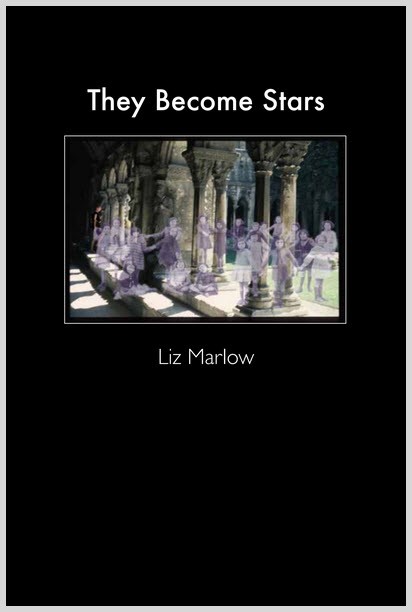
Wombwell Rainbow Book Interviews: “They Become Stars” by Liz Marlow

Wombwell Rainbow Book Interviews

I am honoured and privileged that the following writers local, national and international have agreed to be interviewed by me. I gave the writers three options: an emailed list of questions or a more fluid interview via messenger, or an interview about their latest book, or a combination of these.
The usual ground is covered about motivation, daily routines and work ethic, but some surprises too. Some of these poets you may know, others may be new to you. I hope you enjoy the experience as much as I do.

They Become Stars By Liz Marlow

Liz Marlow’s

debut chapbook, They Become Stars, was the winner of the 2019 Slapering Hol Press Chapbook Competition. Additionally, her work has appeared in The Bitter Oleander, Minnesota Review, Permafrost, Valparaiso Poetry Review, and elsewhere.

Her website is www.lizmarlow.com

on Twitter: @LizRMarlow.

The Interview

1. When and why did you start writing poetry?

The first time I wrote a poem that was not assigned by a teacher was when I was 13 years old. Shortly after that, I took my first creative writing class in high school. I loved that classroom. I loved scooting our desks into a circle every morning, scraping them against the white tile floor. Though that sound might have bothered the classes nearby, to me it signaled the beginning of intense learning and discussion—joy. Never before in my life had I taken a class where we sat in a circle and shared our ideas on the literature that we read. Never before had a teacher really listened to me as though what I thought about a text really mattered and could be applied to something that I created—my own art. Every poem that we discussed in her class had a purpose. For instance, when a student wrote a poem that described an object not well enough, she assigned Elizabeth Bishop’s “The Fish.” When someone wrote a poem about feminism, she assigned Marge Piercy’s “Barbie Doll.” Each poem that we read was part of a lesson in how to write and revise better. I started writing poetry, ultimately, because I started reading contemporary poetry. Mostly, I wrote about my experiences—my first concert, first time in Israel, and first kiss. However, I also wrote about people that I knew personally or observed from people watching.

I also enjoyed being around other poets who discussed ideas and literature. My teacher encouraged our friendships by having us cook and eat breakfast together once a week, since our class was the first of the day. Every Friday, we brought ingredients for breakfast burritos—air filling with the smell of onions, peppers, and eggs frying on an electric skillet. More importantly, though, laughter filled the air. Cooking and eating together were part of building trust so that we felt safe enough to be honest and critical with each other’s work. When I first started writing poetry, it was to be part of that community I loved and to be in a class with a teacher I truly respected.

2. How aware are and were you of the dominating presence of older poets traditional and contemporary?

Since I began writing seriously, I have been aware of the dominating presence of older poets in traditional and contemporary poetry. The first poem that I remember reading was Robert Frost’s “Stopping by Woods on a Snowy Evening,” which I had to memorize and recite in front of my class when I was eight years old. He died a little over a decade before I was born, but most of the poetry that I read in high school and college was from poets that had been dead for decades or centuries. A major part of that is simply that the classics and older living poets dominated teachers’ syllabi and the shelves of my local library and bookstore (it wasn’t until after I finished my MFA that online journals became predominant in the literary world). Because poets from the classics and older contemporary poets were who I read in those formative years of shaping my poetic voice, they still influence my work to some degree. For instance, Fernando Pessoa has influenced all of my persona poems in one way or another. Similarly, I am aware of Matsuo Basho’s voice every time that I attempt to write a haiku.

3. What is the role of the nature imagery in “They Become Stars”?

Because They Become Stars is in chronological order and about the Holocaust, a lot of the nature imagery deals with the seasons—stifling summer or deadly cold of winter. In the way that a drying plant needs water for its leaves to refresh, I needed hope about half way through the book and relied upon nature images in a poem about the Chinese Consul General of Vienna who saved lives by issuing visas to Jews for safe travel to the Shanghai Ghetto, where inhabitants were never sent to Nazi concentration camps. I thought about articles I had recently read regarding animals helping babies of other species survive and used those in the poem. Sure, we are all humans, but cultures from one country to another can be so vastly different that prejudices thrive. When I read about the Shanghai Ghetto, I enjoyed reading that anti-Semitism was essentially non-existent in the Chinese and Japanese (who occupied Shanghai during World War II) cultures and knew that needed to be included in my chapbook.

Conversely, Nazi propaganda used images of animals to dehumanize Jews in Germany and in other occupied countries. The poem that contains the most natural imagery, “Bloody Sunday Massacre of 10,000 Jews,” is in response to a Nazi propaganda poster that dehumanizes Jews. In my opinion, the widespread dehumanization in images and literature at the time (and for years leading up to the Holocaust) contributed to that event of Nazis making men dig their own graves and Nazis shooting thousands of men in their heads, which was similar to many other pogroms that occurred during the Holocaust. Since the poster is of an image of a man morphing into an insect, I used insect imagery—Conopidae (thick-headed flies) exploiting and eventually killing bumblebees—to describe the Nazis’ horrific mistreatment of Jews.

4.  What is your daily writing routine?

After my children have gone to sleep, I read a little while before I begin writing or revising. Because reading other poets often inspires me to revise or draft an entirely new poem, I usually have my laptop open even if I am reading a print journal or book of poems. I have a personal goal of writing for at least 15 minutes a day, which is not daunting and a manageable amount of time even if I am tired. Sometimes I only write a single line or revise by cutting out a stanza. However, once I start writing, I rarely pay attention to the clock.

As I write, I read lines aloud. Since I revise as I draft poems, I save some of the cut lines into a separate file. If I am inspired during the day, I jot down lines or stanzas into my phone. When I type out an entire poem on my phone, it ends up being about one of my children, since I spend the day with them. However, sometimes I will type out something on my phone that I see in the trees behind my house or on a walk in the woods. When that happens, the lines are simply images. They rarely become an entire poem.

Another goal of mine is to draft one new poem a week. If I don’t meet that goal, then I usually end up writing more than one poem the week after, particularly if I am starting a series of poems with a similar theme. For instance, when I first started writing They Become Stars, I drafted three of those poems in one week. Ultimately, it depends on the subject matter in how much I let it go through my head before I begin writing a poem. Sometimes I think about a poem for a day or two before I start drafting it.

5. How do the writers you read when you were young influence your work today?

Whenever I write a poem that uses accessible language, I am influenced by Robert Frost. When I write poems about the Jewish experience, I am influenced by Marge Piercy. The way that she unapologetically uses Hebrew words in her work, lets me know that I can use Yiddish or Hebrew words in my own poems. Additionally, when I use first person point of view in poetry (which is quite often), Walt Whitman influences me. With Whitman, his “I” is not just a personal “I,” but an American “I.” Similarly, when I write a poem using “I” from a victim’s perspective, it’s not meant to be only a single voice but also a collection of voices that perished as the result of a specific event during the Holocaust.

6. Who of today’s writers do you admire the most and why?

Mark Irwin’s ability to navigate through lyricism with brilliant metaphors inspires me. There are certain poems of his that I have read a number of times. Each time, they mean something different to me. Additionally, I love the way that Francesca Bell writes a persona poem for not holding anything back in describing gruesome events and/or people. I particularly enjoy reading Cole Swensen’s work, because she pays attention to not just the music of a poem, but also how the eye moves. Many of her poems are brilliant works of art for using space on the page to hold pauses. I love the way that Joshua Mensch describes his own personal horrific experiences, conjuring many different emotions. Many of his lines will make me laugh and cry at the same time. The courage that he brings to his work is inspiring, and the way that he uses repetition to build tension is brilliant. I love the way that Terrance Hayes takes ownership of the sonnet. Taking an old form that is used so often because of its brevity and making it his own is refreshing. Additionally, I enjoy Elizabeth Knapp’s use of pop culture in her prose poems. It is difficult to write about events that everyone knows of such as Kurt Cobain’s death in a way where the reader learns something new or sees it in a completely different way.

7. Why did you arrange the poems chronologically?

Excellent question! The first poems that I wrote for the chapbook had similar titles. To make sure that I wasn’t confusing readers and ground them in a historical context, they worked well with a date attached. As I continued to write more poems for the chapbook, I kept a timeline in mind. It just so happened that the chronological order helped establish an arc. The only poem that is not technically in chronological order is “Consul General Feng-Shan Ho and Rabbi Shimon Sholom Kalish Discuss the Jewish Question,” because I felt like there needed to be some hope about halfway into the book. I purposely left the date out of that poem, because I thought it needed to be clear that throughout the Holocaust, some non-Jews helped Jews escape.

8. The titles of the poems are very documentary like. Why did you decide that this should be so?

For some of the titles, I wanted to make sure that readers understood the historical significance without having to look at the notes. It was also important to me that my poems not be taken out of context and turned into the opposite of what I intended. As a Jew, it’s extremely important to me that my writing not come off as promoting hate speech or anti-Semitism. I got the idea of how to handle those titles from reading James Wright’s work. Many of his titles provide information that is needed to understand a poem better.

9. What would you say to someone who asked you “How do you become a writer?”

To become a writer, you need to open yourself up to inspiration. This can come from reading books and journals in your genre. However, it’s also important to read work outside of your genre—to see the world from the journalist’s, philosopher’s, novelist’s, and historian’s perspectives. Inspiration can come not just from reading a great book, poem, short story, or article; but it can also come from witnessing an event or viewing an incredible work of art. To write characters that connect with your audience, you need to have empathy. Reading about other cultures and viewing artwork helps a writer develop empathy.

To become a published writer, you need to read the journals where you want your work published and develop a thick skin. I would tell someone who wants to become a published writer to use Duotrope and sites like it to help them choose where to submit work. I wish I had known of Duotrope when I first started submitting to know what the acceptance rates were for my favorite journals. When I first started writing, I didn’t realize how much rejection would simply be part of getting my poetry published. I have learned not to take rejection or criticism of my work personally. Instead, I see it as necessary for growth and enjoy receiving criticism that helps me revise.

10. How important are the depiction of the five senses in “They Become Stars”?

The senses were very important to me as I wrote They Become Stars. I thought about sensory overload in crowded spaces and hunger in particular as I wrote many of the poems for the chapbook. Being in a crowded space causes the senses to be heightened. For instance, perfumes and body odor in an elevator intensify as more people enter, packing themselves together. Unlike the families forced to live in Nazi ghettos, packed into cattle cars, and sent to various concentration camps; I am privileged to be able to step out of an elevator and into the open air, to not sleep in a room full of eight other people (which was what conditions were like in many of the ghettos), to sleep in a quiet room all by myself if I am not feeling well. I am privileged to be able to eat whatever I want, but the hungrier I am, the more I think about flavors and the more heightened my sense of taste is when I finally eat.

11. The first poem looks at a child through the perpetrators eyes, the second is a graphc account from a child’s perspective. How important is the depiction of children in the book?

The depiction of children in They Become Stars was extremely important to me. Humans tend to show more empathy towards children than they do adults. There is an instinct to protect them or the idea of harming children horrifies people more than if a crime is committed against an adult. Knowing that the Nazis murdered over a million children is disgusting but also overwhelming. It is hard to imagine what a single face looked like, what a single life was like. As I wrote the chapbook, I tried to put faces and experiences to that overwhelming number.

12. Why did you decide to include three poems called “Chaim Rumkowski On Hunger”, two with different dates, 1938 and 1944?

Because Rumkowski was in a powerful position in the ghetto and was a horrible human being, he used food to exploit other inhabitants of the ghetto. Those three poems work together to show a progression of his appetite for power.

13. Moishe, is written like a torturer’s instruction manual.

There’s no telling how many women and children Rumkowski sexually abused. Even if he only did that to one child, he deserved any of those methods of dying mentioned in the poem. When I wrote the Moishe poem, I had been writing about Rumkowski off and on for almost a year. It honestly felt good to write that poem, since his actions had psychologically weighed on me during that time. After I finished that poem, I felt closure with him as a character in my work.

14. What is the significance of “fire” in the book?

When I used fire images in the chapbook, I was trying to describe the destruction of the Holocaust with authenticity. Since firepits and crematoria were the main methods of body disposal in Auschwitz (instead of proper burials), it was important for smoke and fire to be included in the chapbook. I wanted to show that in the midst of smelling and seeing smoke from burning bodies, Chaim Rumkowski would conjure a memory of something that brought happiness or hope to him. It seemed plausible to me that his mind would work that way, because he knew of what happened at Auschwitz and had witnessed so many inhabitants of the ghetto starve to death or die from disease. However, while he was surrounded by that destruction, he continued to believe that he was saving Jews from annihilation.

15. There are a lot of musical terms in the poems?

When I first started reading up on Chaim Rumkowski, I stumbled upon the account of a girl who inspired the Miriam poems. Even though she was a young girl, she brought her instrument with her to Rumkowski’s orphanage shortly before the war and played quite well. Since music was such an important part of her life and brought her joy, I thought a person like her would hear music in voices and nature. I thought about her a lot as I wrote the entire chapbook, so whenever I used a musical term, I was paying homage to her.

16. Tell me about the writing projects you have on at the moment.

I recently finished a full-length collection that includes some of the poems from They Become Stars, but I am still in the process of polishing it. I also recently finished a chapbook of elegies and am currently drafting a second full-length collection that will include many of them.

17. What do you want the reader of “They Become Stars” to leave with once they have read it?

I would like readers to understand that even though 11,000,000 is an overwhelming number of people to die in the Holocaust, each of those people had a name, face, and story. Some of their stories were complicated and ugly, some beautiful, but all of them were tragic. My greatest hope is that readers will be inspired to read more history books and articles that explore the Holocaust and other important events that have influenced how humans currently interact with each other politically, socially, and globally.

Thank you for allowing me to participate in an interview for The Wombwell Rainbow. It is a wonderful site, dedicated to supporting so many writers, and I am honored to be a contributor.

An Excerpt from The Tainted — a novel by Cauvery Madhavan

robertfredekenter's avatarIceFloe Press


Nandagiri, December 1920
Father Jerome would never forget that wretched day in August 1920.
He had been summoned urgently by Colonel Aylmer,
and on hearing of the unrest, had run nearly all the way across
the parade grounds and into the wet canteen that served as the
impromptu headquarters of the mutiny, only to be confronted
by that hothead Sergeant Tom Nolan.
Still panting with the exertion, Father Jerome had begun
with a straightforward appeal to good sense. ‘Tom, if you and
the men feel so strongly about the goings on back home with
the Black and Tans, there are plenty of other ways of making
your feelings known. What you’ve done is nothing short of
mutiny – you know the punishment for that.’
The priest sat down on the chair that had been pushed
forward for him and caught his breath before starting again.
‘Look here, I know Colonel…

View original post 1,389 more words

The Celestial Set-Up (Oystercatcher Press) & A Revolutionary Calendar (Shearsman Books) by Zoe Skoulding

tearsinthefence's avatarTears in the Fence

When Harriet Tarlo’s challenging and deeply rewarding anthology of ‘Radical Landscape Poetry’, The Ground Aslant, appeared in 2011 from Shearsman Books it attracted a review by Robert Macfarlane for an issue of Saturday Guardian. Referring to details of landscape providing ‘no reliable resting place for the eye or the mind’ the reviewer alerted us to the movement onwards ‘in an effortful relay of attention from speck to speck’. He also pointed to Peter Larkin’s awareness of particularity, ‘highlights in the moving light of the ordinary’, which brings to mind the ‘message from far away’ that Jeremy Prynne wrote in 2005 for the opening issue of Pearl Contents, the First Students’ English Magazine of Guangzhou University:

‘Out on the Pearl River enjoying a festive excursion I was watching the water currents slide by, flashing with lights from the banks on either side and lightning from the sky; and I…

View original post 672 more words