Wombwell Rainbow Interviews: Gabriel Rosenstock

Wombwell Rainbow Interviews

I am honoured and privileged that the following writers local, national and international have agreed to be interviewed by me. I gave the writers two options: an emailed list of questions or a more fluid interview via messenger.

The usual ground is covered about motivation, daily routines and work ethic, but some surprises too. Some of these poets you may know, others may be new to you. I hope you enjoy the experience as much as I do.

Gabriel Rosenstock,

according to Wikipedia,

 (born 1949) is an Irish writer who works chiefly in the Irish language. A member of Aosdána, he is poet, playwright, haikuist, tankaist, essayist, and author/translator of over 180 books, mostly in Irish. Born in Kilfinane, County Limerick, he currently resides in Dublin.      

Rosenstock’s father George was a doctor and writer from Schleswig-Holstein, Germany, who served as a German army doctor in World War II. His mother was a nurse from County Galway. Gabriel was the third of six children and the first born in Ireland. He was educated locally in Kilfinane, then in Mount Sackville, Co Dublin; exhibiting an early interest in anarchism he was expelled from Gormanston College, Co. Meath and exiled to Rockwell College, Co. Tipperary; then on to University College Cork.

His son Tristan Rosenstock is a member of the traditional Irish quintet Téada, and impressionist/actor Mario Rosenstock is his nephew.

Rosenstock worked for some time on the television series Anois is Arís on RTÉ, then on the weekly newspaper Anois. Until his retirement he worked with An Gúm, the publications branch of Foras na Gaeilge, the North-South body which promotes the Irish language.

Although he has worked in prose, drama and translation, Rosenstock is primarily known as a poet. He has written or translated over 180 books.

He has edited and contributed to books of haiku in Irish, English, Scots and Japanese. He is a prolific translator into Irish of international poetry (among others Ko Un, Seamus Heaney, K. Satchidanandan, Rabindranath Tagore, Muhammad Iqbal, Hilde Domin, Peter Huchel), plays (Beckett, Frisch, Yeats) and songs (Bob Dylan, Kate Bush, The Pogues, Leonard Cohen, Bob Marley, Van Morrison, Joni Mitchell). He also has singable Irish translations of Lieder and other art songs.[1]

He appears in the anthology Best European Fiction 2012, edited by Aleksandar Hemon, with a preface by Nicole Krauss (Dalkey Archive Press).[2] He gave the keynote address to Haiku Canada in 2015.

His being named as Lineage Holder of Celtic Buddhism inspired the latest title in a rich output of haiku collections: Antlered Stag of Dawn (Onslaught Press, Oxford, 2015), haiku in Irish and English with translations into Japanese and Scots Lallans.

He also writes for children, in prose and verse. Haiku Más É Do Thoil É! (An Gúm) won the Children’s Books Judges’ Special Prize in 2015.

Links:


https://en.wikipedia.org/wiki/Gabriel_Rosenstock#Biography

http://roghaghabriel.blogspot.ie/
http://www.amazon.co.uk/s/ref=nb_sb_noss?url=search-alias%3Dstripbooks&field-keywords=gabriel+rosenstock

The Interview

Q. 1. When and why did you start writing poetry?

I think the Muse came a-courting a long, long time ago, in an age before Gutenberg, an age before papyrus, when the poet was what he always is – though the role is suppressed today – a shaman.

She keeps coming – trying to possess me fully – but she knows I’m elusive, elusive as she is. We are both Spirit, pretending to be flesh, to be real. It’s a divine play, a sport, a leela as they say in India. I also write and translate for children – mainly in Irish, or Gaelic, and this is also leelai, pure and simple!

Ireland and India have so much in common. The writings of Myles Dillon and Michael Dames are good starting points for anyone interested in exploring that connection.

Ireland herself takes her name from a tripartite goddess and I dedicated a year to her in a bilingual book inspired by the devotional poetry of India, bhakti:

https://www.overdrive.com/media/796797/bliain-an-bhande-year-of-the-goddess

I mentioned the poet-shaman. There are very few courses in Creative Writing today that teach you how to be a shaman: it can’t be taught! So they teach form iinstead, how to write a sonnet or a villanelle – five tercets and a quatrain, is it? Enjambment anybody? Poets daringly continue a phrase after a line break and expect applause.

Irish poets learn your trade, sing whatever is well made. Yeats (whom I love) has a lot to answer for. Learn your trade! Poets today are tradeswomen and tradesmen for the most part. All form, no spirit, no melody that breaks the heart.

No heart. So, the great challenge today, in my book, is to reconnect with Spirit. Otherwise, forget it.

The only way to write is to write – and read, of course. Trust the inner ear – not what the manuals tell you – trust the heart, trust language. It’s not a lifeless tool in your hands, you silly tradesman. It’s alive, it’s divine. May your poetry be a sacrifice to her!

Having said all that, I occasionally teach haiku. The way I teach haiku is simply to present the works of the grandmasters of haiku, hoping that their spirit will ”catch’ and inflame the acolyte. Many believe that Basho was the grandmaster of haibun – prose speckled with haiku – and that the greatest of the haiku masters was Buson. I cobbled together new versions of Buson, in Irish and English, a volume which also contains versions in Scots by John McDonald:

https://www.amazon.com/Moon-Over-Tagoto-Selected-Haiku-ebook/dp/B00WUXQZ54 

We need more multilingual books of poetry, tanka and haiku. We need to free ourselves from the dying clutches of the Anglosphere and listen to real poetry in languages which still cherish the divine music of the spheres: one can hear that sacred music in the voice of Scots-Gaelic poet Sorley MacLean, even when he reads his masterpiece Hallaig in English translation:

https://www.youtube.com/watch?v=VzewXmgVzL4

***            ***

Haiku Enlightenment and Haiku, the Gentle Art of Disappearing are two introductions to haiku and I hope that their titles reflect the spiritual basis of haiku, something which many haikuists ignore at their peril, I regret to say;  for young readers (say, 8-12 years) there’s a book called Fluttering their Way into My Head:

https://www.amazon.com/exec/obidos/ASIN/1782010882/evertype-20

True haiku – Zen-haiku – is egoless and spontaneous and allows for ambiguity – the reader must make sense of it by drawing on her own experiences, dreams, memories and so on –  and yet it’s happening in the  Now (if there’s such a thing as the Now).. I’m fully aware of promoting a book such as Fluttering their Way into My Head and speaking at the same time about ego-lessness! But, you see, I don’t identify with ‘my’ books as ‘mine’. They are about as ‘mine’ as is the moon over Tagoto.

Q. 2.Ted Hughes would be glad you extol the shamanic. Who introduced you to the shamanic in poetry?

Does one need an introduction? I hold shamanism to be a vital part of my literary and cultural heritage.

http://www.sacred-texts.com/neu/celt/cg1/index.htm

I can identify with the world of Carmina Gadelica whilst the world of Philp Larkin is alien to me.

Interesting that you should mention Hughes. I advise aspiring poets to wean themselves from the dominance of English-language literature, especially when it expresses itself in WASPish terms. I know many American poets, some of whom I’ve met at literary festivals, others  with whom I have a friendly e-mail acquaintance. Many of them seem straitjacketed by the White Anglo-Saxon Protestant way of walking, talking, eating, drinking, dressing – and writing! I translated a volume of poems, Cuerpo en llamas, by the late Chicano poet Francisco X. Alarcon into Irish and invited him to Ireland for the launch. He turned  out to be a shaman-poet. The genuine article. We recorded the book on a cassette (built-in obsolescence?) and the opening invocation was in Nahuatl, the language of the Aztecs, the language of his grandmother. I had come across Aztec poetry before, via anthologies by the likes of Jerome Rothenberg, but didn’t realize until then that Nahuatl was a living language.

During his brief stay in Ireland, Francisco gave me an Aztec name, Xolotl. I wrote a long poem of that title –  in a kind of shamanic frenzy – and put it away, out of sight. Years later I looked at it again and it’s the longest poem in my selected poems translated from the Irish, The Flea Market in Valparaiso.  Here’s a link to the book and a review:

https://www.cic.ie/en/books/published-books/margadh-na-miol-in-valparaiso

I’ll let the review speak for itself. Expounding further on the role of the shaman poet is best left to others. But, I’ll say this much, Paul: artificial intelligence or AI has ‘advanced’ to such an extent that robots are now writing poetry – it would almost make you join the Luddites or inspire you to form your local branch of Anarcho-Primitivists!. I think we should be reading more of John Zerzan and Paul Cudenec to fully realize what kind of world we are creating for our grandchildren. Everybody says we can’t go back, we can’t stop the march of progress. Rubbish! Of course we can go back; I don’t like military metaphors but surely a wise general knows when to retreat?

Do we want poetry written by robots? Maybe it’s just science imitating life – so much poetry, especially in English, is artificial anyway. Futurologists talk of various possible disasters down the line – caused by our relentless ‘advancement’ such as shortage of energy supplies, of food and water, melting icecaps and so on and so forth. Overfishing will result in a shortage of fish. Nobody speaks of a shortage of poetry – it wouldn’t be disastrous enough, seemingly, nor would it bother mankind very much if we speeded up the death of languages, currently estimated at one language disappearing every fortnight. It’s the survival of the fittest, isn’t it?! Is it? Is that who we are, what we are?

So what if Irish dies, if Scottish Gaelic or Nahuatl dies, if Welsh dies, if Manx dies – again! If Beauty dies, so what? Who dreamed that beauty passes like a dream? Well, some of us are not willing to accept such a fatalistic scenario. The World Poetry Movement, for one, has sounded the alarm. Poets are not ‘joiners’ by nature but when the future of civilization is at stake, perhaps it’s time for all poets to become focused. Jack Hirschman, poet and social activist, describes the vision of the World Poetry Movement thus:

https://www.wpm2011.org/

‘an end to war world-wide, and the creation of a world government that shares and distributes the  wealth of the world generously and sensitively in the process of creating an equality that is nothing but the word Love in the eyes of everyone because it also recognizes E V E RY human being as a brother or sister. With no need of any wall separating an ‘I’ from a ‘You’, a ‘He’ from a ‘She’ …

This is a wise vision. Quixotic? Utopian? So what. We need to rekindle hope, we as citizens, we as poets.

I was fortunate enough in this my 69th year on earth, fortunate indeed to have a near-death  experience. After recovering from multi-organ failure, I became conscious of the love that poured in streams at my bedside from my wife Eithne, my daughters Heilean, Saffron and Eabha, my son Tristan and conscious, as well, of the wave of reciprocated love that streamed from me to them. I was conscious, too, of the love and concern that came from friends, relations and fellow scribes.

Hirschman, above, is speaking of Love, the ultimate reality. Left-wing theorists should speak more often to us of love; it would help their cause. The author of The Wretched of the Earth tells us that his criticism of the colonizer is inspired by love, not hate.

For a long while I could not read or write. Then I asked one of my daughters would she kindly order me a copy of Palgrave’s Treasury: you see, English-language poetry was my first love, before I ‘discovered’ Irish and its potential,just as the author of Decolonising the Mind decided that African literature need not be in the language of the colonizer, French, English or Portuguese. His own  outlawed language, Gikuyu, was best suited to express what he wanted to reveal. I also asked my daughter to bring me anything by my favourite author, Isaac Bashevis Singer? So, Mr Rosenstock, are you Jewish then? I used to think that my empathy for Singer’s work meant exactly that, but no, I’m not Jewish. It is the ancient art of storytelling, brought to perfection in his short stories, that makes me alive not to Jewishness as such but to humanity, in all its guises. And what of my attraction to Irish culture and to Indian philosophies, particularly Advaita and bhakti? Well, I once heard Ganesh playing Napoleon Crossing the Rhine on the uilleann pipes:

http://forums.chiffandfipple.com/viewtopic.php?t=44223

I jest. But I did have an out-of-body experience listening to piper Eoin Duignan in a pub in Dingle. Look, I don’t feel particularly Indian, German, Irish or Jewish – live Irish music and the ancient sounds of the Irish language can lift one and link one deeply to the universal spirit, the rich complexity that is the world of the senses, too; a deepening of a sense of place; a feeling for history. English carries imperial baggage with it. The scales fell from my eyes once I understood that through Irish, the literary medium of my choice, I could see and experience the world differently. Lucky Poet is a memoir by Scottish poet Hugh Mac Diarmid. It touches on some of these issues.

A year or so ago I came across an editorial in Poetry Ireland Review that mentioned at least half a dozen English poets.(I couldn’t figure out why. Was this a special edition of the review dedicated to new voices in English poetry? No.) We are still ‘looking across the pond’, i.e. to England. There is ample evidence, if you look for it, that many Anglophone Irish writers are suffering from a kind of literary Stockholm syndrome, that phenomenon described in 1973 as an extraordinary love and regard of the captured for the captor.

As an Anarchist, as an Advaitist and as an Irish-language poet, I value freedom and independence. It is the life blood of art. It may set you on a collision course against the Establishment but unless you are a Daoist poet content with herb-picking on a mountain, such a collision seems inevitable.

Q. 3. What is your daily writing routine?

I write or translate from about 10.a.m until 8pm. I suppose, ‘poet-shaman-translator’ is an accurate enough label to describe my activity. I don’t distinguish between so-called original writing, such as poetry, and translation (which I prefer to call ‘transcreation’). I see the practice of these arts as coming from the same pool of universal creative intelligence. John Minford, Emeritus Professor of Chinese, Australian National University, said something that caught my attention in Words Without Borders (Dec 7, 2018):
‘Hermits of ancient days practiced Taoist yodeling, a form of music that emulated the music of the spheres. Translation itself, the transformation of ideas and words, whereby self and the other merge into one, can be a form of Taoist practice . . .’
So, others may have ‘a daily writing routine’ as you call it I have something resembling a Taoist or Zen-Buddhist practice… maybe ‘practice’ is enough; it’s a more honest description than defining it as Taoist or Zen. It would be slightly ridiculous to call me a Taoist or anything else. I’ve admitted to being both an Anarchist and an Advaitist but really, all labels are rubbish. To paraphrase the essence of the Tao in The Taoist Way, a beautiful lecture by Alan Watts, ‘The Tao that can be labelled is not the Tao.

I translate a vast array of material for a multicultural blog:
http://roghaghabriel.blogspot.ie/
I’m something of a technical dodo and must thank Aonghus O hAlmhain, blogmeister, for his work and patience. In recent years, my ‘practice’ has focused quite a lot on ekphrastic tanka and photo-haiku. The Culturium is a blog which is devoted to the arts as ‘practice’ in the meditative sense of the word:
https://www.theculturium.com/?s=gabriel+rosenstock
I have unsubscribed to various sites recently but two that remain are The Culturium and Poetry Chaikhana.
A poet-friend, Cathal O Searcaigh, who writes mainly in Irish, gave me a volume of poems by a shaman-Taoist poet of the late Tan’g Dynasty, Li He.
I began to write Taoist-flavoured poems in Irish and English, Conversations with Li He. When I get out of hospital (I’ve been hospitalized since September 2018) I’d love to continue with this project. I see a fellow-shaman in O Searcaigh and have translated him into English quite often over the years, most recently in a book called Out of the Wilderness:
https://www.amazon.com/Out-Wilderness-Cathal-Searcaigh/dp/0995622523
It is not easy – in fact it is impossible – to convey the shamanic power of MacLean and O Searcaigh in English:

He is a lovely, lively conversationalist, as you can hear above.
He and MacLean recite their poetry as though conscious of the fact that poetry was originally chant, the ecstatic chant – the trance – of the shaman.
Alan Titley, in a discussion following the interview, joined by Frank Sewell and Art Hughes, speaks of Cathal’s work as an ‘act of reclamation’. Poetry lost its heart when it ditched chant, when the poet could no longer perform the role of shaman. Can we reclaim poetry?
In the discussion, academic Art Hughes also talks about the disaster of the ‘printed page.’ Frank Sewell finds ‘strange echoes of home’ in Cathal’s references to the East. And Hughes talks about synthesis and the vision of Unity known to mystic of all traditions. It’s what Jack Hirschman alluded to previously when we touched on the World Poetry Movement. Is Jack a mystic?! We’re all closeted mystics if you ask me . . .

Q. 4. How do the writers you read when you were young influence you today?

What’s young?! I was in my late teens when I read Speaking of Shiva, an anthology of bhakti verse edited by AK Ramanujan. I haven’t properly revisited the  titles that ravished my youth. That bhakti anthology opened my heart to the Universe.

I longed to write something in the bhakti or neo-bhakti style and when the conditions were right, it turned out to be a volume in English, Uttering Her Name, addressed to a Muse-Goddess directly: my first faltering attempts at using e-mail. English was the only language we had in common. She was a poet from Venezuela whom I met at a Kurt Schwitters festival in Germany. She was on her way to have darshan of Mother Meera. I didn’t formerly ask her, ‘Excuse me, I wonder would you kindly play the role of Muse-Goddess as I have some urgent bhakti poems to compose.’ I just went ahead and wrote them, 200 in all, eventually whittled down to half that size. It took a long time to find a publisher:

https://www.amazon.com/Uttering-Her-Name-Gabriel-Rosenstock/dp/190705619X

I don’t think Uttering Her Name would have come about without the influence of the Ramanujan anthology.

Was it he who said that he inhabited that no-man’s-land which is the hyphen in ‘Anglo-Indian!’? He wrote a very poignant poem about revisiting his home and calling out ‘Mother’ but, of course, she wasn’t there. I would have liked to have known him. Very much. He was a distinguished folklorist, among other things  and  also wrote in Kannada, one of India’s important literary languages.

I was fortunate to hear songs in Irish as a child – not at home, mind you – and the best of them are unforgettable. One could call the best of our songs folk poetry of the highest order, superior in texture and melody to much of the poetry of our time:

https://www.youtube.com/watch? behv=8JjiLoD0ldc

Muireann Nic Amhlaoibh’s voice in the opening track is very expressive, very tender and yet there’s a glorious defiance as an undercurrent to the song that says, ‘Try out your ethnic cleansing on us, again and again, your genocidal madness; we are a people of poetry and song, imperishable song.’

The second track is in Scottish Gaelic. The songs of Gaeldom are a link to a people’s struggle, songs of love (‘profane’ and divine), exile, loneliness, companionship, laments and lullabies, songs that sing the thirst for freedom. The words are music in themselves – when sung, they wrench the heart.

Q. 5. Who of today’s writers do you admire the most and why?

The most intimate form of reading is that which one does as a poet-translator. I have translated or transcreated many poets from India and all of them speak very highly of K. Satchidanandan from Kerala. He is closely involved in many festivals and last year, in Calicut, the theme was ‘No Democracy without Dissent’

https://issuu.com/gabrielrosenstock/docs/satchi_rich_text.rtf

The poet-shaman-translator in me experienced various degrees of ecstasy when transcreating the poems of the Korean genius Ko Un:

https://www.amazon.com/Ko-Rogha-Dánta-Gabriel-Rosenstock-ebook/dp/B01FRAYDX2

My love for Cathal O Searcaigh and his poetry is well known. All three are outside of the Anglosphere, if such a thing is possible. Apart from those three, the site Words without Borders can be interesting. I’m grateful to English as a global language which introduces literature in translation to us all. I like ‘aboriginal’ poetry – the more aboriginal the better.The late Michael Davitt, with whom I co-founded the journal INNTI, has a line which says, ‘Ma bheireann carbhat orm, tachtfaidh se me’ – ‘if a cravat (or tie) catches hold of me, it will choke me.’ This is Irish aboriginalism alive and kicking! It says NO to the WASP and again NO. No thanks.

Q. 6. What would you say to someone who asked you “How do you become a writer?”

Write

Q. 7. Tell me about any writing projects you’re involved in at the moment.

Current writing projects: some writers are superstitious about current projects, as though they can only breathe a sigh of relief when the book is actually printed and published. Others like to trumpet their work in progress or publish extracts here and there.

Insanely prolific as I am, I usually have a number of irons in the fire. Do you know the origin of the phrase? It alludes to a blacksmith working on several pieces of iron at the same time. I remember being in a blacksmith’s forge as a child. A magical place. Lots of superstitions associated with iron, nails, horseshoes and so on. In Tibet they speak of ‘sky iron’ and I wrote a poem once inspired by that lore when I discovered that certain Tibetan singing bowls contain material from this ‘sky iron’:

https://www.youtube.com/watch?v=kbFmtpeh9so

I posted the poem on a few YouTube sites that featured singing bowls. Scroll down a bit and you’ll find it, in Irish and English. That’s a rather roundabout way of saying I’m not going to reveal current projects. To be frank, I have a number of completed projects and I’d much prefer to see them published before embarking on fresh material, such as a volume of bilingual poems, in Irish and English, already mentioned, poems addressed to the Daoist poet-shaman Li He.


Wombwell Rainbow Interviews: Vatsala Radhakeesoon

Wombwell Rainbow Interviews

I am honoured and privileged that the following writers local, national and international have agreed to be interviewed by me. I gave the writers two options: an emailed list of questions or a more fluid interview via messenger.

The usual ground is covered about motivation, daily routines and work ethic, but some surprises too. Some of these poets you may know, others may be new to you. I hope you enjoy the experience as much as I do.

guitar of love pic

Vatsala Radhakeesoon

was born in the exotic island, Mauritius on 17 October 1977.
She started writing poems at the age of 14. In 1995, when she was 18, her poem Loneliness was published in the most prestigious and widely read local newspaper L’Express. She is the author of the poetry books When Solitude Speaks (Ministry of Arts and Culture Mauritius, 2013),
Depth of the River (Scarlet Leaf publishing House, Canada, 2017) , Hope (President’s Funds for Creative Writing, Mauritius, 2018), L’aurore de la Sagesse (Scarlet Leaf Publishing House, Canada, 2018) ,Smile Little Butterfly (Alien Budha Press, USA, 2018) , Guitar of Love (Real Vision Inc Publishing, UK, 2018). Vatsala has also co-authored Journey to Victory and Freedom ( Alien Buddha Press, USA, 2019) – a spiritual/philosophical book with Indian author
Sundeep Verma .

Vatsala Radhakeesoon is one of the representatives of Immagine and Poesia, an Italy based literary movement uniting artists and poets’ works. She has been selected as one of the poets for Guido Gozzano Poetry contest, 2016, 2017, and 2018. Vatsala currently lives at Rose-Hill, Mauritius and is a freelance literary translator, interviewer and reviewer.

Links:
Amazon author page:

https://www.amazon.com/author/vatsalaradhakeesoon1710

Blog:

Poetry and Creativity

https://vatsalaradhakeesoon.wordpress.com/?fbclid=IwAR3LlX3TtG8oO9ijRLp6iaeB0sb6Z9dHTO28w12zspmreGyyyrQxBEWz83c

The Interview

1. When and why did you begin to write poetry?

Thank you Paul Brookes for interviewing me for Wombwell Rainbow!

I started writing poetry at the age of 14 in 1992, inspired by the songs of my favourite French Canadian singer Roch Voisine. As a teenager, I was shy/ timid. So poetry was a means to express my views, dreams and fears that I couldn’t say aloud to anyone.

2. Who introduced you to poetry?

I was introduced to poetry at the age of six by my late mother who was a Hindi teacher. She mostly taught me Hindi poems. Then she also helped me to learn a poem by heart for the prize giving ceremony at school when I was in Grade 1 (1st year of primary school in Mauritius). I recited the poem on stage for the first time. This has remained as a unique childhood memory.

3. How aware were and are you of the dominating presence of older poets?

Honestly, I have been fully aware of the presence of older and great poets. I always have much respect for them. However, I consider poetry as my mission guided by God. So I keep my own voice and go on writing. I believe all poets have a place in society. The older poets have never been an intimidating source for me or I have never tried to imitate them. I never try to compete with any poet. I run my own race.

4. What is your daily writing routine?

I write during anytime of the day when I feel inspired and when I’m free. I love writing with a relaxed mind.

5. What motivates you to write?

I have always deeply felt in my heart and soul some strong energy sustaining life and everything around me. I think in this way I feel God/the Divine. So, my real motivator for my poetry-writing is God. I feel it is Him who gives me the strength to keep writing and he has blessed me with that mission.

6. What is your work ethic?

To be honest, frank, humble and a justice- fighter and not being afraid to say “No” or stand alone. Whatever happens, always face the truth and keep truth as a principle. Lies lead to nowhere.

7. How do the writers you read when you were young influence you today?

William Blake has influenced me to maintain a simple language in my poetry.   From T.S Eliot and Victor Hugo, I’ve learnt to bring depth to poetry. From Charlotte Bronte and Carol Ann Duffy, I’ve learnt to be daring and frank.

8. Who of today’s writers do you admire the most and why?

Among novelists I mostly admire Mitch Albom for his simplicity of language and depth in the content of his works. Albom’s books always teach us life’s lessons or remind us to remain humane. Among poets, I admire Scott Thomas Outlar for always being truthful to his works and simply saying things as he feels it from his soul , nothing less or more , never masked.

9. Why do you write?

To let my deeper thoughts surface to my outer world. To let go of all pain, stress and keep calm. Writing for me is also a means to stay connected to God –just as focused during a prayer or during meditation. Writing is like a cerebral exercise (exercise for the mind).

10. What would you say to someone who asked you “How do you become a writer?”

Try to develop love for reading books and appreciating the artistic world. All arts are interconnected. Develop constructive criticism while reading. Write down your own views about anything that you feel like. Briefly, Love Words!

11. Tell me about the writing projects you have on at the moment.

I’m mostly at a stage of my life where I wish to write more spiritual books, be it in prose or poetry. I don’t have any exact title for my upcoming work though but I know it will be in this line.

Wombwell Rainbow Interviews: Tara Lynn

Wombwell Rainbow Interviews

I am honoured and privileged that the following writers local, national and international have agreed to be interviewed by me. I gave the writers two options: an emailed list of questions or a more fluid interview via messenger.

The usual ground is covered about motivation, daily routines and work ethic, but some surprises too. Some of these poets you may know, others may be new to you. I hope you enjoy the experience as much as I do.

Tara Lynn

According to Smashwords

“Born in northern California, Tara has traveled and lived in Europe, the United Kingdom and the western United States. 

Her writing focuses on social and relationship issues such as isolation, loneliness, marginalization, fear, terror, love and death. She writes in a contemporary, free verse manner. Her poems have been featured in print and on numerous poetry sites including OCCULUM, Rasputin, Midnight Lane Gallery, Uut, Idle Ink, The Cabinet of Heed, Spelk, Anti-Heroin Chic, Social Justice Poetry, Spilling Cocoa on Martin Amis, Wanton Fuckery, The Poet Community, Poems and Poetry and more.

Her varied influences include the Beat Poets including Lew Welch and Ginsberg, as well as Montaigne, Rumi, Baudelaire, Sexton, William Carlos Williams, Lucretius, Shakespeare, Elliot, Wolfe, Yeats, Heaney, Patti Smith, Blake, Panayotopoulos, and Akhmatova. In addition to poetry, she writes flash fiction, humor, critique and film treatments.”

https://www.taralynnhawk.com/

The Interview

1. What inspires you to write poetry?

My work is the culmination of my thoughts, my reactions so to speak, of what is going on in both my mind and the world. The format of free verse poetry is a creative release and an affirmation of my principals and ideals as well as my dreams. All are a challenge, a puzzle, a release, an accomplishment.

Importantly I have to thank all the editors I have had contact with these past few years and the journals and sites who have accepted my poems for publication. The generosity of their Editor’s time and feedback on my work is integral to my creative process.

2. Who introduced you to poetry?

Certainly I read poems as a child and throughout my schooling. Both my parents read a lot to me and my siblings when we were children. However it really was when I hit high school and had an AP class in Great British Writers that I began my study of poems as a form. Throw in my own interest and pursuit of the great historical poets of literature and my exposure to the beat poets (as I grew up by San Francisco) and here I am!

3. How aware were you of the dominating presence of older poets?

Established poets are a constant presence and source of continual inspiration for me. I experience considerable joy and a sense of confirmation in the beauty of the human soul when I read and re-read the work of any and all poets. I especially adore Akhmatova and Lew Welch and have a affinity for Baudelaire, Heaney, Pound, Elliot, Neruda, Rilke, Sexton, Ginsburg, Kerouac and Ferlinghetti.

4. What is your daily writing routine?

In general, I tend to write best late in the evening or overnight. As I am also working towards an MFA, I tend to go back and forth between research and notes for my MFA, reading for pleasure and drafts for poems. That being said, I am not a “routine” person. At times I write profusely and in great volume. Then I can go weeks without producing anything. I always try to focus on structure, cadence and atmosphere, so I need to be in the right “mind set”. Some days I do not feel anything to write, others I write all day and night!

5. How do the writers you read when you were young influence you today?

I am always continuing my “education” in literature. That being said I can often clearly remember the emotional resonance a particular piece may have had on me when I first read it. I read at least three hours a day, often more. Everything I read can be an influence/inspiration to me. Often I begin with a topic which in turn leads to research and further reading. Current issues and affairs always influence me, as does how history is interpreted, especially historical patterns.

6. Who of today’s writers do you admire the most and why?

I try to read as much as I am able in the current poetry scene. Specifically I admire the work of Kristin Garth, Kenneth Bateman, Elizabeth Horan, Rus Khumutoff, Abigail Pearson, Nadia Gerassimenko, Greta Bellamacina and Scarlett Sabet.

7. Why do you write, as opposed to doing anything else?

I write AND do a whole bunch of “else”! I hike, horseback ride, paint, cook, sew, do beadwork, volunteer, read, journal and more. I have an interest in animal welfare issues, the slow food movement, taphophilia, art, travel, vino culture, music, gardening and environmental matters. I love being out of doors and I really enjoy my solitude.

8. What would you say to someone who asks you “How do you become a writer?”

Go get a pen and some paper and…

11. Tell me about the writing projects you have on at the moment.

I am currently working on my third chapbook, working title Savage Creatures, as well as a book of trilogy poems. I have an affinity for the three part trilogy format. One of my recent trilogy pieces, “The Disenfranchised Book of the Dead”, is in the Winter 2018/19 issue of Deracine. My “Bruges Trilogy”, inspired by the tragic Flemish poet Jotie T’Hooft, was published last year in the compilation The Unrest: The Journey From The Personal to The Political. I am also releasing soon a humorous book of poems “written” by my cats called Where Is Our Other Cat Mom?


Wombwell Rainbow Interviews: Dustin Pickering

Wombwell Rainbow Interviews

I am honoured and privileged that the following writers local, national and international have agreed to be interviewed by me. I gave the writers two options: an emailed list of questions or a more fluid interview via messenger.

The usual ground is covered about motivation, daily routines and work ethic, but some surprises too. Some of these poets you may know, others may be new to you. I hope you enjoy the experience as much as I do.

dustin p

Dustin Pickering

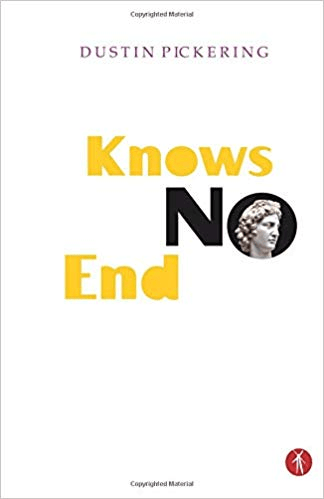
is founder of Transcendent Zero Press, the literary publisher responsible for the award nominated journal Harbinger Asylum. He is the author of eight collections of poetry, including O’Riordan: spurious conversations with Dolores, Salt and Sorrow, Knows No End (Number One bestseller in new releases of Native American poetry), and The Daunting Ephemeral. His collection on aesthetics A Matter of Degrees was published by Hawakal in Kolkata, India. He featured for Public Poetry in 2013. He has been interviewed on 90.1 KPFT and Houston Public Radio. He edited the Amazon bestseller Selfhood: Varieties of Experience with Kiriti Sengupta.

The Interview

  1. When and why did you begin to write poetry?

Poetry has always been an outlet for my despair and sense of beauty. I remember writing a poem about a girl I had a crush on in junior high. I still have the poem. It has a “Fivel American Tale” feel about two people under the same stars but living separate lives. I wrote from my yearning that could not be quenched. In high school I began to take writing seriously. I copied Sylvia Plath poems at the library and put them in my binder. I read Michelangelo and Bob Dylan. I wrote poems during class and typed them out when I got home. During this period, I discovered Leonard Cohen after hearing the song “Pennyroyal Tea” by Nirvana. In fifth grade, I won a poetry contest sponsored by the Daughters of the Revolution. I was required to enter. I won first place and got ten bucks.

  1. Who introduced you to poetry?

A teacher named Mrs. Martin shared Shel Silverstein with the class in fifth grade. We had to memorize a poem and read it to the class. In high school, my English teacher Mrs. Walls suggested I read Sylvia Plath. That sealed it for me.

  1. How aware were and are you of the dominating presence of older poets?

I have always believed a poet should study the tradition of poetry. In fact, that discouraged me at first because I didn’t know if I had the willpower to read such a vast tradition. I knew I could never write like a lot of poets out there who were already publishing.

  1. What is your daily writing routine?

It varies. Right now, I’m trying to write three poems a day. I’m working on a novel but that’s an occasional thing. I often write dozens of poems at a time. Many of my collections are poems I typed at once or in a few sittings. Salt and Sorrow was written in one sitting, two hours.

  1. What motivates you to write?

The satisfaction of having composed something. Dedication to the craft. Needing order in my life.

  1. What is your work ethic?

I believe both in inspiration and repetition. I recently circulated a story I wrote for suggestions on improving it. I don’t want to sit all day and type, but I spend a lot of time writing.

  1. How do the writers you read when you were young influence you today?

Reading Sylvia Plath taught me how to reconcile personal experience with abstract sentiment. Leonard Cohen taught me the art of using strong statements while being lyrical. Bob Dylan taught me stream-of-consciousness if nothing else. T.S. Eliot taught me how to compose narratives within poetry.

  1. Who of today’s writers do you admire the most and why?

I admire Anis Shivani for his studiousness and industry. Kiriti Sengupta embraces a wide spectrum of angles in his literature. I like Iris Orpi for her spirituality in verse. Duane Vorhees is an excellent wordsmith. I enjoy Sam Hamill for his wisdom. I like Usha Akella for her spiritual strength. I believe writers in India are going to be the future of literature as America refuses to expand from its postmodern pit. I believe the stagnation of art in America is connected to our historical and political reality. After World War II, our military success made us haughty. We severed our national identity from European roots to embrace a “new American” and the term “the ugly American” emerged. We saw ourselves as isolated in power from the rest of the world; our economic strength led us to the hubris we could satisfy all the world’s troubles. Of course, post-Vietnam the idea of exceptionalism began to wear off as American citizens discovered the folly of our government. The hippies wanted peace and happiness for all; they expunged greed and embraced art and drugs. Then Reagan came along and convinced them greed is a good thing and that led them into the temptation of abandoning their ideals for a pro-business, anti-social spending model of America. Now we see the milennials and the following generations embracing a kind of socialism that probably stuck around through those who wouldn’t sell out their ideals. The anti-establishment nature of Marxist thinking appeals to a generation that is seeing corporate greed run amok. Yet the current generation of socialists frame their understanding within the big government situation we are faced with. Marxism is a broader philosophy than that. It appeals to them because it attacks the power structure of corporations. They know these entities only want profit from them and they aren’t equipped emotionally and socially to simply jump in the pool and swim. Many come from bad family histories, like the hippies. They lack skills. Our schools have failed them. The attack on the humanities is largely because of this kind of situation I think, that many “practical” people blame the universities for teaching the arts and philosophy rather than how to build a computer. I see this in the GOP today a lot– colleges are “leftist indoctrination camps” that don’t give students tools for their futures. So the old thinking has stuck– the rebellions of the past surge from underground where political oppression thought it slaughtered them. Essentially, America has become a nation of self-chastising and underemployed cynics who would rather seek creative professions or something fulfilling to them rather than corporate slavery. Then Trump charges in, blaming immigrants for ruining the country, claiming to have every solution, bragging of his intelligence nonstop. He strikes a chord with the disaffected youth as well as the uneducated older crowd. You see, these people have blamed the education system for not being inclusive enough– for not being “practical.” They may be right that leftist and liberal thinking dominates the universities. This pattern of scapegoating appeals to the unthinking. Our country suffers from an opiod crisis– whose to blame? Let’s blame Mexico and build a wall. Drugs come in through the legal points of entry and tunnels like most immigrants, but sure, a wall. But we see a pattern here– violence against immigrants defines this country’s history. Nativists believe America belongs to Americans– the national identity is at stake when immigrants enter. The “American way of life” is threatened. What is the “American way of life?” We are trying to cling to an identity we never had– we tried to forge a new America from the ashes of World War II. The postmodern situation was never resolved. It’s a cyclical vacuum of adolescent fantasy. The truth is nowhere to be seen– it suffers in fragments, and it is our job to piece it together. Conceptual art tries to pull the truth from the actual world, to create a synthetic situation that speaks on the modern predicament. It is another aspect of the postmodern situation. However, as Trump’s administration borrows from postmodern style to subvert the nation’s conscience and will we know the postmodern situation is at a standstill. Once the establishment picks something up, it isn’t cool anymore. I hope American artists will catch this. Otherwise, we are going to continue down an endless road of conceptual art that wants to examine the nature of things by inventing empty paradigms. I call our current crisis the “postmodern eclipse.” We will have to become world players again by examining our actual role in the contemporary environment. This isn’t something we as citizens or authorities are prepared to do. We lack the resources both intellectually and economically to assert our independence as we did in the past. So countries like India are picking up the slack– their scholars are aware of English literary history, they know the postmodern tune, they have absorbed classical poetry. However, American artists are trying to win converts, they are preaching Maoism and collectivism. Contemporary American poets simply bore me. They sacrificed edge and integrity for doctrine and social justice.

  1. Why do you write?

Relief.

  1. What would you say to someone who asked you “How do you become a writer?”

Read a lot. Write a lot. Read more.

  1. Tell me about the writing projects you have on at the moment.

Restoration is a series of metaphysical speculations. Dominus Vobiscum, my novel, is a surreal battle between two visions of Satan: Dante’s and Milton’s. It’s part literary criticism and part philosophy. I also have several poetry collections in the works that are spontaneous and sort of arranging themselves.


Wombwell Rainbow Interviews: John Homan

Wombwell Rainbow Interviews

I am honoured and privileged that the following writers local, national and international have agreed to be interviewed by me. I gave the writers two options: an emailed list of questions or a more fluid interview via messenger.

The usual ground is covered about motivation, daily routines and work ethic, but some surprises too. Some of these poets you may know, others may be new to you. I hope you enjoy the experience as much as I do.

office poems cover

John Homan

 is a poet and percussionist from Bend, Oregon, he is a graduate of Indiana University and Rhema Bible College. His work has appeared in Chiron Review, Misfit Magazine, Mojave Heart Review, and Constellate Magazine among others. John is the founder and coordinator of WordPlay Open Mic Night in Elkhart, Indiana where he lives with his wife, and their two cats, Henry and Lucy.

Main Website with links to other sites.

https://about.me/john_homan

Current Bibliography with links:

Chiron Review

http://www.chironreview.com/

Print & Ebook publications-works not available on line.

Fall 2018 issue – “The Pink Warrior”

Summer 2017 issue – “Regarding the Rhinoceros”

Constellate Magazine

https://constellatemagazine.com/2018/12/31/life-hack-john-homan/

https://constellatemagazine.com/2018/11/01/lawn-maintenance-john-homan/

The Drabble

https://thedrabble.wordpress.com/?s=John+Homan

Elixir Magazine

https://theelixirmag2018.wordpress.com/2018/12/31/the-dancers/?fbclid=IwAR2fkU13D68hc-hYSMQKUqctMwYsUtxR3GR38FJcgb_myNrY-SNz_MT3UBg

Former Cactus

https://formercactus.wordpress.com/2018/11/01/unitarian-marketing-ethos-by-john-homan/

Indiana University Undergraduate Research Journal 2003

https://scholarworks.iu.edu/journals/index.php/iusburj/article/view/19752

Misfit Magazine

http://misfitmagazine.net/archive/No-25/homan.html

Mojave He[art] Review

https://mojaveheart.com/time-warp/

https://mojaveheart.com/how-to-swim-fast/

https://mojaveheart.com/sin-empieza-ni-termino-without-beginning-or-end/

https://mojaveheart.com/indefinite/

https://mojaveheart.com/clueless/

https://mojaveheart.com/high-desert-landscape/

https://mojaveheart.com/joyously-alone/

https://mojaveheart.com/the-end-of-columbia-street/

Quatrain Fish

http://quatrain.fish/

Peculiars Magazine

https://peculiarsmagazine.weebly.com/journal/poetry-of-the-week-john-homan2274822

https://peculiarsmagazine.weebly.com/journal/poetry-of-the-week-john-homan

Pulp Poet’s Press

https://pulppoetspress.com/why-i-wear-hawaiian-shirts-by-john-homan

https://pulppoetspress.com/2-poems-by-john-homan

Vamp Cat Magazine

https://www.vampcatmag.com/read/salesman-and-princess-chloe-john-homan

The Interview

  1. When and why did you begin to write poetry?

I didn’t start writing poetry until my 40’s when I returned to university to get a degree in Spanish. It was one of those things where there were a bunch of little things that led me to be interested in poetry; sitting in on a poetry slam at university, reading “On the Road” by Jack Kerouac, poetry in Spanish literature classes and simply writing again on a regular basis made me remember the joy of writing, and start considering poetry as something I could be interested in.

  1. Who introduced you to poetry?

I didn’t start writing poetry until I was in my 40’s. So I had been introduced to it before, but just didn’t think it was really that interesting as an adult. What piqued my interest in poetry later in life was the Beat Poets and other “underground” poets like Charles Bukowski. When I saw that poetry did not have to be totally opaque to real life concerns and it could be written without following rigid forms, that’s what got me interested in it.

  1. How aware were and are you of the dominating presence of older poets?

I have tried to expose myself to a lot of different poets. As I mentioned previously, Charles Bukowski is a large influence in my writing, but William Carlos Williams is another big influence. Those two and poets such as James Kavanaugh, Walt Whitman, Charles Simic, Billy Collins and others are all part of what I write. When I am writing I do find myself going between Bukowski and Williams as I write; seeking uninhibited free writing but trying to cut all of the extraneous down to the beautiful sparseness I remember reading in Paterson. So I’m aware of all the poets, essayists and writers I have read before; they are always there giving me advice how to write…sometimes I even listen.

  1. What is your daily writing routine?

Honestly, I’m not good at routines, I’m not an overly disciplined person. That may be why I’m not making a living at poetry yet. I have had good luck with writing a poem a day during the National Poetry Month here in the US during every April. I’ve also done well writing poetry during NANOWRIMO instead of a novel.

  1. What motivates you to write?

There’s a lot of different things that motivate me to write; poetry, essays and fiction comes from that everyday grist, problems, struggles and triumphs. Just like everyone else, writing is a great form of therapy to make the world make more sense. What’s been surprising is I’ve actually found a lot of things to write about from my experiences in Corporate America, which hardly seems poetic, but it is.

  1. What is your work ethic?

I work in spurts. Like I said, I’m not particularly disciplined. I’ll write a bunch, then slack off for a while. I’ll submit to ten journals in a week and then let it go and play video games. I’m clear on the fact I am not a poetic role model for the youth of America, but I also subscribe to Whitman’s advice to “…loaf and invite the soul…” Every time I get rejected, I will look at the pieces again to see if there’s something I can hone in the text for the next submission. I don’t believe that some poems are ever completely finished and am always willing to cut and trim them again and again.

  1. How do the writers you read when you were young influence you today?

When I was young I read a lot of CS Lewis, JRR Tolkien, and any kind of Science Fiction I could lay my hands on, Ray Bradbury, Isaac Asimov and the like. In my 20’s I discovered the All Creatures Great and Small books by James Herriot and I read all of them repeatedly until they were dog eared. In my late 30’s, I remember discovering George Orwell’s book 1984, and then devouring most of his essays, novels and pieces like Homage to Catalonia and Coming Up For Air. I also discovered Somerset Maugham’s lovely works The Razor’s Edge and Of Human Bondage. The things I’ve read lead me to want to write of simple beauty that pleases people to read it, whether it’s landscape, people or even food, and to never despise a concise treatment of truth in favour of obscure pretension for its own sake.

  1. Who of today’s writers do you admire the most and why?

Billy Collins is one of my favorite of today’s writers. I admire that his work has accessibility and humour and is still so popular. It gives me hope that there is still a place for that kind of work in the world and I don’t have to write something depressing and confusing to be a good poet.

  1. Why do you write?

George Orwell said the number one motivation for writing is Egoism. I’m not going to deny that as a major reason. I feel like I’ve got things to say, and want to leave some proof that I was here. The other reason I write is because writing makes a crazy world make sense. Blaise Pascal said “the heart has its reasons, of which reason knows nothing”. I’ve found writing poetry makes those vague feelings and impressions more concrete, finding a home on paper, (or Google docs). But beyond that one of my favorite reasons to write is that it is the closest thing to actual magic that exists on the earth, you can create images of complete beauty and bliss just by putting words together, and other people can see the same thing. How could you not want to do something as awesome as that if you had the ability to pull it off?

  1. What would you say to someone who asked you “How do you become a writer?”

I would tell them to start reading as much as they can; to take note of what they like and why they like it. I would encourage them to start writing, entering contests, reading at open mics and submitting anywhere possible. I would tell them if you can’t find somewhere to publish your work, publish it yourself with a computer, printer and a stapler and start selling it or even giving it away. People forget that Leaves of Grass, one of the greatest pieces of American poetry was originally self-published. Blogging is a great way to start, but be careful what you publish on a blog because many publications won’t take pieces that have been on-line in any form.

As far as my own experience, I’ve been rejected by some established publications and just kept looking for other places to send my work until I found publications with editors that liked my work. One dream journal I wanted to be published in rejected twenty-five pieces in a row of my work. So I submitted those pieces to other journals and nineteen of the twenty-five rejected pieces were picked up by other publications. We forget that editors are regular human beings like anyone else; they like certain kinds of writing. Sometimes they just aren’t that into you and you need to be ready to look elsewhere. Above all you need to be able to believe in your work and that you have a unique voice with something to say.

  1. Tell me about the writing projects you have on at the moment.

I’m trying to get my chapbook project “Office Poems” published professionally and I want to put my collection of short poems on Amazon. My goal this year is to start getting my work accepted by paying markets. I’m also recording more and more of poems and placing them on Soundcloud to help publicize my work. .


Wombwell Rainbow Interviews: Sheila Murphy

Wombwell Rainbow Interviews

I am honoured and privileged that the following writers local, national and international have agreed to be interviewed by me. I gave the writers two options: an emailed list of questions or a more fluid interview via messenger.

The usual ground is covered about motivation, daily routines and work ethic, but some surprises too. Some of these poets you may know, others may be new to you. I hope you enjoy the experience as much as I do.

sheila murphy


Sheila E. Murphy

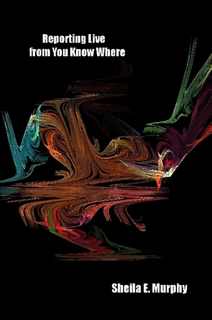
is an American poet who has been writing and publishing actively since 1978. Her book titled Reporting Live from You Know Where won the Hay(na)Ku Poetry Book Prize Competition from Meritage Press (U.S.A.) and xPress(ed) (Finland). The book appeared in 2018. Murphy is also the recipient of the Gertrude Stein Award for her book Letters to Unfinished J. (Green Integer Press, 2003). Murphy is known for working in forms including such as the ghazal, haibun, and pantoum in her individual writing. As an active collaborator, she has worked with Douglas Barbour on an extended poem called Continuations. Murphy’s visual work, both individual and collaborative, is shown in galleries and in private collections. Initially educated in instrumental and vocal music, Murphy is associated with music in poetry. She earns her living as an organizational consultant, speaker, and researcher and holds the PhD degree. She has lived in Phoenix, Arizona throughout her adult life.


The Interview

  1. Q1: When and why did you start writing poetry?I began attempting to write poetry in my teen years, based on its inherently attractive features I had gleaned from reading assigned in high school courses. I accumulated fragments galore. Later at about age 25, I met an educator who was not a poet but who intuitively understood the arts. This genius looked at a poem I had drafted and helped me shape it to fruition. The experience was life-changing. I began to submit poems for publication at that time. I had multiple acceptances, and It was a dream that began to move forward. 

    Q2: How aware are and were you of the dominating presence of older poets traditional and contemporary?

    Very aware. I have steeped myself in reading since an early age and gained formal education in literature. As with all education, attaining each degree is the beginning of taking off into a spree of further reading, deeper understanding, and many facets of application of the learning and experience.

    There is so much to read from the early writers and from people emerging now. We who love literature are lucky to have the bounty we do. Reading is a gift.  

    Q3 Whom of the older poets got to you, and why?

    Although one could go way back and pursue lateral directions encompassing all of history and the known inhabited world, I’ll narrow this to a few people. One true knockout for me is Gertrude Stein. There are other knockouts who bring life to language and language to life and meaning and joy. No one has done this more for me than Gertrude Stein. The integrity and purity of her independent mind and her fluency in language make for a stunner in reading experience for me. Originality wholly unforced and integral creates a power that resonates purely.

    I would add to the list of one so far John Ashbery and Denise Levertov. 

    Q4 What is it about John Ashbery and Denise Levertov that appeals to you?

    Ashbery has inspired a lateral musculature and freeing sense of connecting elements one would not ordinarily think to connect. It is as though a perpetual design of the brain chemistry were in process. The light touch he employed in a wide variety of ways seemed to enhance the speed of energy that propels his work and situates itself in the readers in uncountable ways.

    Levertov comes to purity by way of a plainer speech that is profound. Realizations she captures linger. I think of her hearing a person with different lengths of legs walking, and her asking whether some “blessed deafness” comes with that situation, as though to compensate for the reality.

    Q5: What is your daily writing routine?

    Originally, I had a twofold pattern: taking focused night time and writing in solitude as one way, and the second way involving the integration of writing into any number of meetings, conference activities, and such. Concurrent with other activities, I could grab ideas, formulate them, create something new.

    I have always operated from the view that every moment of experience is distinctive and will not be back. Thus, capture, do a carpe diem, if you will.

    My current pattern is to take whatever time I can to flow. Use Hindemith’s “music for use” principle and write for occasions, as I do the new year’s poem each year that I share with friends. That has been going on for decades.

    The general writing often follows a plan in which I follow a principle such as what I did with the book Teth (Chax, 1991), in which every one of 81 pages had 81 words to a page. The use of the haibun form, the pantoum, the hay(na)ku form include ways I work. See: Reporting Live from You Know Where (Meritage and xpress(ed) Presses, 2018).

    Q6: Use occasions as a motivation for your writing?

    Yes. It is just one of the approaches important one to me. Crystallizing the essence of an important occasion from one view presents an opportunity to create for impact, possibly. I wrote a book called Tommy and Neil (Sun Gemini Press, 1993) about each of my brothers on the occasion of a particular birthday. I have written wedding poems and poems on be the passing of people I have loved who have left us.

    Q7: What else motivates your writing?

    Love makes me want to write. Experience and innocence, likewise. Quiet observation, watching a bigger world around me, humbly perceiving my place in it. And of course, the sound of language and other forms of music.

    Q8: How do the writers you read when you were young influence you today?

    I’ll take relatively young and go with Chaucer in Middle English. When I was exposed to the sound of the narrative in The Canterbury Tales, and at that time taught to recite it, something came to life for me. I rehearsed the work, spoke it aloud to others with meticulous attention to detail, and discovered therein the flourish of a distinctive strength as the flow came to life. That sound stayed with me. I still relish it. The joy of a structure, the orchestration of characters, the attention to each view that each brought, held itself up to me as a beautiful system that invited my participation.

    The timing of exposure to any learning provides a first step to be renewed and recharged for me later on in successive layers. This is was true of many writers: Virginia Woolf, T.S. Eliot, Charles Olson, many others. I have found myself rediscovering, as many of us do, I think, such writers as May Sarton, whose At Seventy just found its way into my library. I am lucky to have a massive bookstore practically across the street from me. It is tremendous.

    Q9: Who of today’s writers do you admire the most and why?

    There are so many people doing worthy things these days in poetry. I’ll just answer in a straightforward manner to say that purity in the work has come to mean more to me than it did at one time. I seem to be disposed in recent months toward clarity versus what might seem clutter. Toward that end, work in shorter forms can be dazzling and resonant.  Eileen Tabios is an adventurous inventor, and her work in the hay(na)ku form of her making has spawned wonderful results from Tom Beckett, Mark Young, Tom Fink, and others.

    With the passing of Mary Oliver, there has been a good deal of mention of how she helped us love what is around us and in us. Just so, work in the spirit of Cid Corman appeals to me right now.

    Through my long-term collaborator, the poet Douglas Barbour, I have grown increasingly familiar with Canadian writers such as Phyllis Webb and Robert Kroetsch. These writers are powerful. Most of us in the United States know very well the work of Michael Ondaatje. These authors are important to me for their depth and seemingly miraculous realizations. Visual poets such as K.S. Ernst, Marton Koppany, John M. Bennett and C. M. Bennett, mIEKAL aND, Scott Helmes, Michael Basinski, Jukka-Pekka Kervinen, and others do brilliant work in this important sphere. I find discoveries aplenty when I experience their work. Peter Ganick is a master of writing and philosophy and brings a particular and strong intelligence to his writing.

    Q10: Why do you write, as opposed to doing anything else?

    When writing I am being. When writing I am doing my being, creating who I am and transcending that concurrently. Writing is life. I would rather be writing than doing almost anything. I am driven by the feeling of keyboarding, of writing by hand, of feeling the language materialize in my very core. I cannot imagine why anyone would want to do anything else, frankly. I cannot think of anything more exciting than writing as a central purpose. It is pure and infinite. It is joy.

    Q11: What would you say to who asked you “How do you become a writer?”

    The question presupposes desire. If you want to become a writer, you must first follow your own desire to learn whatever you can about what interests you. A writer is more interested than interesting. I would advise anyone who wants to write to be aware, refine awareness, learn, read, listen, and gather all the time. Becoming passionate about what is around one, both up close and at vast distances, is the secret to learning and fostering expansion of the mind and heart.

    Being a writer is a humbling, discipline-based way of life. Learning and embracing discipline for oneself is powerfully important and never ends.

    The best route to joy is in learning and being. Writing as a discipline becomes a perfect companion piece to this dual commitment.

    Q12: Tell me about the writing projects you have on at the moment. 

    I am actively working on a long-term collaborative sequence called Continuations with poet Douglas Barbour. We have two published books from this so far, both form the University of Alberta Press. We have been working on the long-poem since November 2000. K.S, Ernst and I are beginning a new collaborative book of visual poetry, following multiple book publications and physical visual art pieces we have completed over the years of working together. I frequently write collaboratively with John M. Bennett and have some current poems in process with Stacey Allam.

    I am preparing a book of my own poetry for Luna Bisonte Prods (Edited by John M. Bennett and C.M. Bennett) for possible release in 2019.

    https://en.wikipedia.org/wiki/Sheila_Murphy

Wombwell Rainbow Interviews: Jack Foley

Wombwell Rainbow Interviews

I am honoured and privileged that the following writers local, national and international have agreed to be interviewed by me. I gave the writers two options: an emailed list of questions or a more fluid interview via messenger.
The usual ground is covered about motivation, daily routines and work ethic, but some surprises too. Some of these poets you may know, others may be new to you. I hope you enjoy the experience as much as I do.

Jack Foley

has published 15 books of poetry, 5 books of criticism, a book of stories, and a two-volume, 3,000-page  “chronoencyclopedia,” Visions & Affiliations: California Poetry 1940-2005. He became well known through his multi-voiced performances with his late wife, Adelle, also a poet. Many of these are on YouTube. Since 1988 he has presented poetry on Berkeley, CA radio station KPFA. In 2010 he received a Lifetime Achievement Award from the Berkeley Poetry Festival, and June 5, 2010 was declared “Jack Foley Day” in Berkeley. In 2018 he became the recipient of the Albert Nelson Marquis Lifetime Achievement Award. His recent publications include EYES (selected poems); The Tiger & Other Tales, a book of stories; Riverrun, a book of experimental poetry; and Grief Songs, a book documenting his grief at the death of his wife. He currently performs poetry with his new life partner, Sangye Land.

Jack Foley and Sangye Land featuring at Sacred Grounds Cafe, September 2018.

Jack Foley

The Interview

When and why did you begin to write poetry?

I had come to my hometown, Port Chester, NY, in 1943; I was three years old. When I left to go to college in 1958, I understood myself to be a poet. My essay, “Home/Words,” in my book, Exiles (1996) deals with the moment at which I discovered poetry. It was 1955; I was fifteen.

Someone—probably a teacher, very likely Angela Kelley, who was Italian but who had married an Irishman—suggested that I read Thomas Gray’s 18th-Century poem, “Elegy Written in a Country Churchyard” (1751). I have no idea why the teacher thought the poem would appeal to me. Certainly I was interested in writing at that time—Thomas Wolfe’s Look Homeward, Angel was my great example—and I had written some songs (lyrics and music), but I didn’t believe I had much interest in poetry. I thought it very unlikely that I would have much interest in Gray’s poem, but I looked it up in the library and took it home:

The curfew tolls the knell of parting day,
The lowing herd wind slowly o’er the lea,
The plowman homeward plods his weary way,
And leaves the world to darkness and to me.

Wolfe’s word, “homeward” was in the very first stanza!

To begin with, the poem seemed to me the most beautiful sound I had ever heard. It affected me so deeply that I wanted it to have come out of me, not out of Thomas Gray, and I immediately sat down and wrote my own Gray’s “Elegy,” in the same stanzaic form and with the same rhyme scheme as the original:

I see the night—the restless, eager night
That spreads its shadow softly on the day,
And whispers to the sun’s red, burning light
To vanish like a dream and pass away.

I see the night—the darkened mist of night—
And feel the velvet sorrows mem’ries bring;
September’s leaves have fallen, old and bright,
And autumn’s winds have blown the dust of spring.

I think of days long past, and gone, and dead,
Of all the ancient, withered hopes I’ve had….

Etc. Unlike Gray, I took myself as the subject of my elegy. But its mournful tone—and words like “mem’ries”—was directly traceable to him. I understood the state of mind named in Gray’s “Elegy” to be the state of mind of poetry itself; and in reacting so deeply to it, I understood myself to be a poet.

It was by no means a simple state of mind. It had to do with the enormous power of words not merely to reflect but to create a “reality,” a “mood” which moved me away from the daylight world in which I ordinarily functioned and had identity: “I see the night….” In some ways Gray’s lines hinted at sexuality—surely an issue for me at that time. His rose “blushes” and, virginal, “wastes its sweetness on the desert air”; he writes of “the dark, unfathomed caves.”

Speaking the words aloud let me experience them physically, with my own breath, coming out of my own body. In this situation, mind and body seemed not to be at odds: thought seemed sensuous, sensuality seemed thoughtful. Self and other were joined here too. Thomas Gray was a long-dead poet of the 18th Century. It was his mind that was being expressed in his elegy. Yet his poem seemed to be expressing my own inmost thoughts. It was almost as if Gray’s passionate words had allowed him to be reincarnated in my body.

There was of course a “real” Thomas Gray, a man who actually existed and who did a number of things beside write poetry. The Gray I was experiencing was not that person but Gray the poet, the bard. Aspects of both our lives seemed suddenly to fall away, to be of little consequence. What did it matter who the man Thomas Gray was? What did it matter who I was—born in New Jersey, growing up in New York? My powerful reaction to Gray’s words allowed me to recognize not only who he was but who I was: I “was” a poet. And to “be” a poet meant to be transformed, to move away from the person who lived at 58 Prospect Street and who was 15 years old and who had a mother named Juana and a father named Jack. Poetry offered me another identity, that of the poet; and, in so doing, it offered me another “home”—that of words. The life I led “at home”—“in my house”—was one thing; the life of words was another: Look homeward, Angel!

Thomas Gray’s poem offered me another state of mind, a state of mind that was far more expansive and open than my ordinary state. But once the “spell” of the poem was over, it was over. How to return? It seemed to me that there were only two ways: one was to read poetry; the other was to write poetry.

Gray’s poem was a kind of baptism. It was at that moment that I discovered that I had two homes—the home of words and the home of the world. But a person with two homes can be understood as an exile.

  1. Who introduced you to poetry?

Thomas Gray (December 26, 1716-July 30, 1771).

  1. How aware were and are you of the dominating presence of older poets? 

Are you speaking of notions of Harold Bloom’s “precursor poet”? Why does “the presence of older poets” have to be “dominating”? I found older poets to be doors into areas of consciousness that I greatly desired to inhabit. Shelley? Let me see if I can get there. (Every time I mention a leaf in a poem, Shelley’s “Ode to the West Wind” is present, encouraging me.) Yeats? What brilliance! Dickinson! Whitman! I wrote this about Whitman’s great poem, “Out of the Cradle Endlessly Rocking” (1859):

I don’t think there is another poem
More unique
And, simultaneously,
More representative of
What we may call the American spirit
Than this amazing
Presentation of the making of a poet
Of the transformation of anyone
From childhood to a condition of knowledge
How do we enter the world in a deep way
It is an aria, a performance
Something Whitman saw in the opera houses,
It is a multi-voiced, multi-selved poem in which
All sorts of styles and “voices” are brought together

(Including the hissing voice of the old crone, the sea, and the voice of the bird, “my dusky demon and brother,” “the lone singer wonderful”)

It is a poem about family (the he-bird, the she-bird)
It is a poem about the stunning fact of Death the Opener
And the great representation of the sea (Melville)

(The sea is the openness of consciousness)

It is a nature poem
In which the “outsetting bard” merges with what he sees
It includes Quakers (“Ninth-month midnight”)
And Native Americans (“Paumanok”)

It is Whitman giving himself over to the sheer possibilities of music
As world becomes word (“translating”)

It is an act of marvelous empathy and compassion in the literal sense, “feeling with”

It is a poem about the body and its transformation
Even as Whitman speaks of the soul
It is a poem in which the lorn bird and the transforming boy
Move us to what Wallace Stevens called
A new representation of reality.
This, camerados, is the great mythic moment of American letters

And it takes place not at a desk but outside,
Not as writing but as brilliant spontaneous unexpected utterance.
It ushers in (under the magical multivalent moon, in the presence of the vast, talkative

sea)

Nothing less than the world as song.

“Dominating”? Who would not converse with such spirits if the opportunity presented itself? Isn’t poetry precisely a way of conversing with such spirits?

The idea of being dominated by previous poets makes sense only if one thinks of oneself as a “individual,” only if one thinks of others as possible threats to individuality, to one’s “individual voice.” But I don’t think of myself as an “individual.” The word individual is from the Latin individuus—not divided. In a political context, the notion of the individual makes sense to me: there, the rights of the individual are everywhere to be respected. But if I am trying to understand what is happening in my consciousness, then I find that I am as divided as I can be: I am not individuus, not an individual. I think of myself rather as a multiplicity, an entity of many voices. Bloom admits that his notion of the precursor poet is a version of the Oedipus complex. Bloom undoubtedly had problems with his father. Pound, on the other hand (his father was named Homer), begins the Cantos with the sudden discovery of many voices: “These many crowded about me; with shouting.” For him, those voices are at once a live tradition (others, history, the dead) and a representation of the complexities of his own consciousness, his “personae.”

  1. What is your daily writing routine? 

I am fortunate enough to be able to live fairly well on inherited income: no job. Because of that, I can write whenever I like—and I do so frequently. I have no “routine,” just the desire to write whenever those voices pull at my sleeve.

  1. What motivates you to write?

The desire to get back into that space that writing opens up for me. I want to feel that way again and—as Gray did for me—I want to find ways to allow others to feel that way too. I have no name for that space, but it is an illumination and a “higher” consciousness than I ordinarily experience. Rilke wrote, Du mußt dein Leben ändern (You must change your life). Perhaps Whitman’s term, “song” is as good a name for it as any. I wish to re-enter the condition of song.

  1. What is your work ethic?

If I had been brought up Protestant, I might feel that I ought to have a work ethic. But I was a Roman Catholic—not that I am a believer any more. As an ex Roman Catholic, I don’t think I need to have a work ethic. Do you have one? Pleasure motivates me: the experience of song is immensely pleasurable. People say, “No pain, no gain.” I would rather say, “No pleasure, no treasure.”

  1. How do the writers you read when you were young influence you today?

I discovered the “older poet” Thomas Gray in 1955. It’s 2019 and I’m still talking about him. I love that Robert Duncan referred to himself not as an “original” but as a “derivative” poet—and that the word “river” is hidden in that word “derivative.” History lives in language; everyone we have read “influences” us. James Joyce: “riverrun.”

  1. Who of today’s writers do you admire the most?

I admire many writers, many of them dead, sometimes recently dead. Would you count John Ashbery as one of “today’s writers”? I loved Carolyn Kizer’s work and knew her. The same is true of David Meltzer and Heathcote Williams. Larry Eigner was a dear friend; so was James Broughton. (I put together a Broughton reader.) I admire Michael McClure, Al Young, Dana Gioia, David Mason, Lewis Turco, Neeli Cherkovski, Jerome Rothenberg, Lucille Lang Day, Marilyn Stablein, Judy Grahn, Ishmael Reed, Maw Shein Win, Kalpna Singh-Chitnis, Robert Adamson, Jan Steckel, Janine Canan, Nina Serrano, Leza Lowitz, Nguyen Phan Que Mai, George Wallace, Amos White, Koon Woon, Helene Cardona, Tom Hanna, Jennifer Reeser, John L. Stanizzi, Marvin R. Hiemstra, Jacob Smullyan, Olchar E. Lindsann-all of whom I know personally and am constantly enriched by. The list could easily be extended. Christopher Bernard. Gregory Vincent St. Thomasino. The two writers to whom I am closest are Ivan Argüelles (who “discovered” me—I’m grateful!) and Jake Berry, both of whom constantly astonish me with the breadth and interest of their work. I have written extensively about them both and find them to be a constant inspiration. “Would to God that all the Lord’s people were prophets!”

  1. Why do you write?

There’s a moment in Waiting for Godot when one of the tramps asks the other to listen to his description of a dream he had. The other declines. The first asks, “Do you prefer this?” He gestures, indicating the Universe.

  1. What would you say to someone who asked you “How do you become a writer?”

I agree with Ivan Argüelles that “you don’t become a writer.”

It falls on you like a brick.
It falls on you like a feather.
It falls on you like a father.

  1. Tell me about the writing projects you have on at the moment.

I recently finished a book of collaborations with the wonderful photographer Wayne Sides. His photos, my texts. It’s called EKPHRAZZ: One of Them Dreams. I’m putting together a book of recent poems, probably to be published by Sagging Meniscus Press. Its working title is When Sleep Comes, though it may be called Shillelagh Law. I also plan to put together a book of my late wife’s work. Sadly, we weren’t able to work on it together. It may be called Early the Next Day. The Sagging Meniscus Press book will have many love poems addressed to my new love, Sangye Land.

DUET WITH MYSELF


The function of memory

            My name is Jack

is to soften the blow of death

            I was born

to create the illusion of a self

            far away

though it is also memory

            on the east coast

that creates

            of america

the fear of death

            in a city near the roaring sea


This is the function

           I live

of memory:

            now

to soften

            in the far, far west

the blow of death

            near

to create

           the roaring

the illusion

            of another

of self

            sea


Wombwell Rainbow Interviews: Voima Oy

Wombwell Rainbow Interviews

I am honoured and privileged that the following writers local, national and international have agreed to be interviewed by me. I gave the writers two options: an emailed list of questions or a more fluid interview via messenger.

The usual ground is covered about motivation, daily routines and work ethic, but some surprises too. Some of these poets you may know, others may be new to you. I hope you enjoy the experience as much as I do.

flashdogs anthology

Voima Oy

lives on the western rim of Chicago, near the expressway and the Blue Line trains. Her writing can be found online at VERStype, Paragraph Planet, 101 Fiction, Unbroken Journal, Vignette Review, Molotov Cocktail–Flash Worlds, Burning House Press, and The Cabinet of Heed.

Follow her on Twitter, too— @voimaoy and #vss365.

The Interview

Attached is the cover photo of the first FlashDogs anthology released in December, 2014. This book is a true labor of love and community.
Here is the link to the FlashDogs anthologies on Amazon.

1. What inspired you to write?

My brother and I used to make up rhymes and stories, inspired by cartoons and TV shows. Stories came first, writing later.

2. Who introduced you to books and poetry?

My mom and dad loved books and reading–I remember The Cat in the Hat by Dr. Seuss, and Where the Wild Things Are by Maurice Sendak. In elementary school we learned more about poetry and memorized poems, too–One of them was Robert Frost, Stopping by Woods on a Snowy Evening. One boy forgot the words and improvised. It was great!

3. How aware were you of the dominating presence of older writers?

In high school you learn about the masters, like Shakespeare and Keats, Whitman and TS Eliot. We traded copies of Rimbaud and Baudelaire. I discovered science-fiction–writers like J.G. Ballard, Samuel R. Delaney and Ursula LeGuin. In college, I felt a kinship with Dante and the surrealists. They were my teachers, too.

Years later, I joined Twitter and found other writers who were working in short forms. Twitter appealed to me for its brevity–like haiku or telegrams.

4. What is your daily writing routine?

I try to write every day. #vss365 is a good way to start the day. I also keep a journal and many spiral notebooks, nothing fancy.

5. What motivates you to write?

Writing has always been a part of my life, good times and bad. I want to keep learning and growing as an artist and a human being. All kinds of things inspire me–headlines, the weather, a conversation, stones, trees, the moon, rock music, a face on a passing train….

6. What is your work ethic?

Trust the process, and respect the work. Don’t be afraid to experiment. Always be polite and thank people for their time and trouble. Keep sending stuff out. Keep writing and creating.

7. How do the writers you read when you were young influence you today?

I am still inspired by Ray Bradbury and Rod Serling. The brevity and humanity and wonder.

8. Who of today’s writers do you admire the most and why?

I admire the writers of #vss365, the talent, the encouragement, the community.

I am inspired by Mark A. King @Making_Fiction who started #vss365, and David Shakes @TheShakes72. Both excellent writers, and founders of FlashDogs.

I will read anything by Sal Paige @SalnPage , Chris Milam @Blukris and FE Clark @feclarkart. Their writing is always wonderful. AJ Walker @Zevonesque is so talented and a generous writer, too. I love the work of Mary Frances, @maryfrancesness a poet in images and stones. Pleasant Street’s @AreYouThrilled poetry is beautiful and true.

I am in awe of the work of Sean Fraser, @TheatreSean creator of VERStype and author of Zoë. It is a symphony of language, ideas and images.

Mr.John Trefry, @trefryesque an extraordinary writer and founder of Inside the Castle Press.

David Southwell, @cultauthor wonderful writer and guide to Hookland @HooklandGuide

James Knight @badbadpoet His writing and artwork astonish me.

There are publishers and magazines–Burning House Press, Influx Press, Inside the Castle.

9. Why do you write, as opposed to doing anything else?

Writing is freedom to me. Stories are a form of resistance in a way, to imagine possibilities, and create new realities.

10. What would you say to someone who asked you “How do you become a writer?”

Just write. Twitter is a good place to start. The #vss365 community is very encouraging and supportive. You can learn from them. You can find many places to send your writing on Twitter, too.

Don’t be discouraged or intimidated. Read all kinds of things. Pay attention. Be part of the world and other people. Keep writing and creating.

11. Tell me about the writing projects you have on at the moment.

I’m doing a continuing story on #vss365 every day for over 2 years. It’s like a comic strip with a large cast of characters. Maybe I’ll collect all the different characters into Twitter Moments one of these days. I’m also working on flash fiction, and thinking about stories without word limits or deadlines. We’ll see…

Wombwell Rainbow Interviews: Kevin Ridgeway

Wombwell Rainbow Interviews

I am honoured and privileged that the following writers local, national and international have agreed to be interviewed by me. I gave the writers two options: an emailed list of questions or a more fluid interview via messenger.

The usual ground is covered about motivation, daily routines and work ethic, but some surprises too. Some of these poets you may know, others may be new to you. I hope you enjoy the experience as much as I do.

Kevin Ridgeway

lives and writes in Long Beach, CA. He is the author of six previous chapbooks, including ‘All the Rage’ (Electric Windmill), On the Burning Shore (Arroyo Seco) and Contents Under Pressure (Crisis Chronicles). He is co-author of the book, A Ludicrous Split (alongside poems by Gabriel Ricard, Alien Buddha Press). Recent work has appeared in Slipstream, Chiron Review, Nerve Cowboy, Up the River, Plainsongs, San Pedro River Review, The American Journal of Poetry, Main Street Rag, Lummox, Big Hammer, Cultural Weekly, Spillway, Hobo Camp Review and So it Goes: The Literary Journal of the Kurt Vonnegut Memorial Library, among others.

https://www.analogsubmission.com/product/smile-until-you-re-alive-enough-to-be-dead-by-kevin-ridgeway

The Interview

1. What inspired you to write poetry?

Girls and rock and roll music.

2. Who introduced you to poetry?

My older brother who studied Shakespeare and other classic poetics in his youth–he left them behind when he went to college and I found a teacher and an inspiration in those books. I also used to think “Red Wheelbarrow” by William Carlos Williams was a piece of shit and that I could do better. I was wrong, but here I am twenty years later releasing the poems I write these days out into the loud and scary world we live in, where poets are bullied on school campuses and at coffee houses everywhere. And are now grown ups in an assault of words.

3 How aware were you of the dominating presence of older poets?

I live in Long Beach, CA, and my poetry elders here are people like Dr. Gerald Locklin, Fred Voss and Joan Jobe Smith–they let themselves be known and heard. I’m fortunate to see these people read their work in person–it’s an inspiring environment to be in.

4. What is your daily writing routine?

I get up at 5 every morning to write until 8 each morning. I work on new poems, revisions, correspondences and the management of my submissions out to magazines and journals. And the end of the day–730 pm to midnight–reading and writing until sleep.

5. What motivates you to write?

My monkey brains and the poems of other poets.

6. What is your work ethic?

The harder you work at your craft and the more often that you work at it, the more likely you are to grow and thrive creatively and within the parameters of one’s chosen genre of literary craft. I am known as a prolific writer and I take great pride in that because I work hard to make my words at least work, let alone sing off the page. I consider important to keep practicing for that great gem of a poem or master work few are lucky to ever realize in a revision that’s published, read and remembered by readers. Poems like Red Wheelbarrow

7. How do the writers you read when you were young influence you today?

They are in my head, always. I absorbed them and they are like angels and demons doing a punishing dance on my shoulders.

8. Who of today’s writers do you admire the most and why?

Tony Gloeggler is the best poet around these days, for me as a reader. He writes excellent and gorgeous narrative poetry that has such great realism and brush stroke accurate attention to detail. He writes about his youth in the 60s and 70s in ways that enthrall, surprise and beat the hell out of me. Even his line breaks are the very best–I geek out on line breaks. I dig Dr. Gerald Locklin, Fred Voss, Joan Jobe Smith, Clint Margrave, Bunkong Tuon, Ted Jonathan, Alan Catlin, John Dorsey, Daniel Crocker, Rebecca Schumejda, Wendy Rainey, Curtis Hayes, Bill Gainer, William Taylor,Jr., Steve Henn, Francesca Bell and Alexis Rhone Fancher, to name just a few.

9. Why do you write, as opposed to doing anything else?

Writing is easier than painting, which I am terrible at even attempting. My doodles are good. I’m better off typing or with a pen in my hand. Not much else.

10. What would you say to someone who asked you “How do you become a writer?”

You don’t. You’re born one. Even if it lies dormant in you, you are born one. I was born to be a writer.

11. Tell me about the writing projects you have on at the moment.

Right now the hot thing on my street corner is the forthcoming publication of my debut full length book of poetry “Too Young to Know” from the great Stubborn Mule Press. It involves poems about my origins, some of my struggles and lots and lots of death thrown in for good measure. It adheres to Frank Zappa’s theory of conceptual continuity, which is important to me. I look forward to promoting it.

I have published nine chapbooks over the years. A Ludicrous Split (2018, a split with Gabriel Ricard, Alien Buddha Press) and Smile Until You’re Alive Enough to Be Dead (2018, Analog Submission Press, UK) are my two latest and greatest.

Wombwell Rainbow Interviews: Karlo Sevilla

Wombwell Rainbow Interviews

I am honoured and privileged that the following writers local, national and international have agreed to be interviewed by me. I gave the writers two options: an emailed list of questions or a more fluid interview via messenger.

The usual ground is covered about motivation, daily routines and work ethic, but some surprises too. Some of these poets you may know, others may be new to you. I hope you enjoy the experience as much as I do.

metro manila mammal

Karlo Sevilla

writes from Quezon City, Philippines and is the author of two poetry collections: “Metro Manila Mammal” (Soma Publishing, 2018) and “You” (Origami Poems Project, 2017). He has more than a hundred poems published in various literary magazines and platforms worldwide, including Philippines Graphic, Eclectica, Radius, The Ramingo’s Porch, The Broken Cassette, Poets Reading the News, Rue Scribe, and elsewhere. His literary work has earned accolades among publications and award-giving bodies in his home country and abroad. He currently studies for the Sertipika sa Panitikan at Malikhaing Pagsulat sa Filipino (Certificate in Literature and Creative Writing in Filipino) program of the Center for Creative Writing of the Polytechnic University of the Philippines, and is a member of Rat’s Ass Review’s online poetry workshop.

Book: https://www.amazon.com/Metro-Manila-Mammal-Karlo-Sevilla-ebook/dp/B07CRN1FTK

Twitter: https://twitter.com/KarloSevilla

Blog: http://karlosevillaofquezoncity.blogspot.com/2016/10/s-list-of-published-poems-all-with-links.html

Facebook: https://www.facebook.com/karlo.sevilla

The Interview

1. What inspired you to write poetry?

Three of my English teachers throughout high school, who each expressed appreciation for some of my poems. And poetry books, particularly Joe Pintauro’s “Kites at Empty Airports,“ which copy I bought one grey and lonely afternoon in the late 80s or early 90s, also way back in high school.

2. Who introduced you to poetry?

I am certain my mother’s lullabies and my first nursery books introduced me to poetry – the end-rhyme kind.

3. How aware were you of the dominating presence of older poets?

They’re always in my conscious and subconscious state of mind when I write, and their lives and words always inform, inspire and challenge.

4. What is your daily writing routine?

I have ADHD, which may be the reason that I don’t exactly have a daily writing routine. Let’s just say that most days of the week, I either complete writing a poem or come up with lines in my head that I eventually write down to use in one.

5. What motivates you to write?

Among other motivations and reasons, it’s the poetry community, as I constantly yearn to prove that I rightfully belong here. That I work on an art form and share the fruits of my labour with a worldwide community which members do the same. And in solidarity, I should be a proud and responsible member of this community.

6. What is your work ethic?

Read and write passionately as often as possible. And I really try to do these on a daily basis – with varying degrees of success.

7. How do the writers you read when you were young influence you today?

I’m not inclined to pinpoint what aspects of my poetry are influenced by the writers I read in my younger years. Perhaps if I study more on literary theory I can be more confident and articulate, and put an “academic” label on any influence on my poems, or their parts, by any particular poet. Suffice to say that I’m certain the following poets whose works I’ve read and admired in my late teens to early 20s continue to influence my writing style: Joe Pintauro, Dylan Thomas and Pablo Neruda (among others).

8. Who of today’s writers do you admire the most and why?

For now, let me mention three young Filipino poets: Kristine Ong Muslim of the enchantingly disturbing prose-like poetry, Anne Carly Abad whose poems I find bittersweet and accessible, and Henrie Diosa Jimenez who makes a personal playground of words and is an utter delight to read.

9. Why do you write?

Mortality: I think I have some beautiful things to share via the written word and I’m compelled to write as much as I can until death or incapacitating disability – whichever comes first – “kindly stops for me.”

10. What would you say to someone who asked you “How do you become a writer?”

My parents and teachers instilled in me the love of reading, then the latter encouraged me to write, and I took it from there. (For those who claim that they were never encouraged to read but want to write, then let me help with this old advice: read and write.)

11. Tell me about the writing projects you have on at the moment.

I plan to finish the longest poem I’ve ever written before this year ends. And, I’m trying to get a short collection published via any reputable poetry chapbook contest. If it doesn’t win any, then I’ll go the traditional route of approaching a prospective publisher.