Wombwell Rainbow Interviews: Dawn Marie DiMartino

Wombwell Rainbow Interviews

I am honoured and privileged that the following writers local, national and international have agreed to be interviewed by me. I gave the writers two options: an emailed list of questions or a more fluid interview via messenger.

The usual ground is covered about motivation, daily routines and work ethic, but some surprises too. Some of these poets you may know, others may be new to you. I hope you enjoy the experience as much as I do.

51obyvpxjel._sx331_bo1,204,203,200_

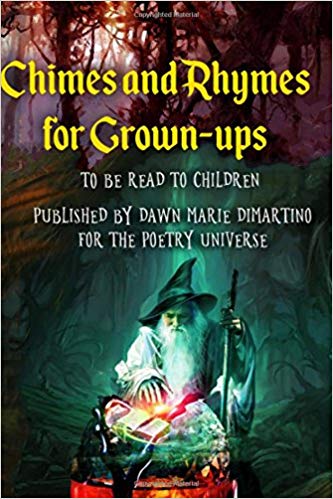
Dawn Marie DiMartino

has lived most of her youth in New York, but has been a native of Florida for over 20+ years. She is recently separated, a mother of 2 adult children and is a retired analyst. Her passion for writing and drawing started at a very early age. She has continued through her adult life taking a pen to hand and compiling her innermost thoughts, feelings and expressions on paper. Her writing and drawing keep her in a calm frame of mind when putting it all down. Some/Most of her writings can tell you about her personal story. She has published 4 poetry books, 3 children’s books, and have been involved in 4 anthologies.

The Interview

1. What inspired you to write poetry?

My father had inspired me by his writings.

2. Who introduced you to poetry?

My father and the teachers at the schools that I attended.

3. How aware were you of the dominating presence of older poets?

Very. I loved Shakespeare and Edgar Allen Poe when I was young.

4. What is your daily writing routine?

I don’t have one. I write when I feel compelled to do so.

5. What motivates you to write?

My motivation for writing is life, my own feelings, and some images and\or art works.

6. What is your work ethic?

Being retired, I work when I choose: less stressful that way.

7. How do the writers you read when you were young influence you today?

I read a book called, “Where the Sidewalk Ends” by Shel Silverstein when I was in Elementary School. I loved his style of writing and the messages in the poetic stories.
My children’s books are tailored the same way.

8. Who of today’s writers do you admire the most and why?

I love Nora Roberts’ stories, Kathy Reich’s quirky plot twists, Anne Rices’ use of past mythology, JK Rowlings’ take on young witches, and Stephen Kings’ sick mind.

9. Why do you write?

I write to express my feelings in a poetic manner. With my children’s books, the thought comes so I write.

10. What would you say to someone who asked you, “How do you become a writer?”

I don’t believe that one becomes a writer, you just are. If you feel passionate enough to put it down on paper, within the latest grammar/spelling guidelines, then you are.

11. Tell me about the writing projects you have on at the moment.

I am currently putting together two children’s books. One will be a compilation of many child orientated learning poetic stories. The other book entitled, ‘Hacksaw Jim’, I am currently waiting for my brother to finalize his drawings.It will be published through the Independent Publishing portion of Amazon. The books will be available in both the Kindle and Paperback versions.


Wombwell Rainbow Interviews: Rihan Mustapha

Wombwell Rainbow Interviews

I am honoured and privileged that the following writers local, national and international have agreed to be interviewed by me. I gave the writers two options: an emailed list of questions or a more fluid interview via messenger.

The usual ground is covered about motivation, daily routines and work ethic, but some surprises too. Some of these poets you may know, others may be new to you. I hope you enjoy the experience as much as I do.

36926776


Rihan Mustapha

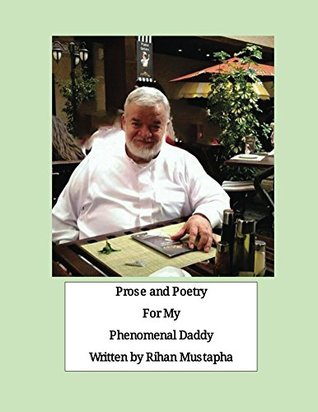
is the author of ‘For a Spectacular Friend’ and ‘Prose and Poetry for My Phenomenal Daddy.’ The former is a dedication to dear friend of hers who died suffering from cancer. The latter is a special tribute to her late father. Moreover, she has contributed to 3 poetry books for children and contributed to a book about love and New York. She holds an MA in Applied Linguistics & TESOL and a Diploma in Translation. She has been working mostly in teaching and occasionally in translation. A big fan of both self and professional development and has a passion for languages and different cultures.

My Facebook Page: https://www.facebook.com/MyWordsinPro…(less)

The Interview

1. What inspired you to write poetry?

A dear friend’s poetry inspired me to write. I was impressed by his heartfelt poems in English; I decided to start writing my own. I appreciated his writings and told him that I wanted to write poems too. Then, I started my journey of experimenting with words, phrases, stanzas and rhymes.

And here I am. With lots of friends’ help and encouragement, my sweet dream has come partially true. I am looking forward to polishing my style and trying to write various kinds of poetry.

2. Who introduced you to poetry?

We studied few poems in my native language (i.e. Arabic) back in school, but the first time I was introduced to poetry was when I visited my uncle in Lebanon. He showed me his bookcase and invited me to read whatever I like. I found loads of poetry volumes in Arabic. I took one of these books whose dominating theme was love, and I started to read one poem after the other. I enjoyed reading the poems but never thought of writing poetry at that time.

3. How aware were you of the dominating presence of older poets?

I studied about some of them in college, such as Poe, Shakespeare, John Donne, William Yeats, Emily Dickinson, Robert Frost, E.E. Cummings, Ezra Pound, to mention a few. I liked to read and to analyse lots of their works. Every and each one of them added something special to the poetry realm. I think that some of the modern poets look up to them.

4. What is your daily writing routine?

I do not have a specific daily routine as at times when I am overwhelmed by job tasks, I write nothing. I usually take a fifteen-minute break to write in the evening. If ideas flow smoothly, I continue writing. If not, I stop and do anything else I like (watching a movie, translating, learning a language, and the like).

5. What motivates you to write?

It is basically a state of emotion that drives me to compose poetry. I write when I feel sad, happy, grateful, angry, etc.

6. What is your work ethic?

I may summarize my work ethic in few points:

• being honest,
• being determined
• valuing hard work
• showing respect to my fellow poets and poetesses

7. How do the writers you read when you were young influence you today?

I was aware that every writer has his/her own writing style. I was impressed by how ‘love’ was described differently by different writers. Every description was beautiful in its own way. Therefore, I have decided to have my own distinctive touch in poetry. I am still working on finding my way through that.

8. Who of today’s writers do you admire the most and why?

Honestly, I do not have a favorite modern writer. I like what I read and feel or can relate to no matter who wrote it. I have joined some poetry groups on Facebook. It makes me smile to read the pieces that my fellow poets/poetesses write there. I appreciate their poems as they inspire me to write.

9. Why do you write?

It is amazing how transferring part of my ideas and emotions onto a piece of paper makes me feel happy. It changes my bad mood into a better one. It transfers my-already-good mood into a better one as well.

Besides, it is a unique experience, where my imagination swims in the ocean of words.

10. What would you say to someone who asked you “How do you become a writer?”

I am not sure if I can answer this question as I think people are not the same. What makes someone a writer is not necessarily the same thing that will make you a writer.

I can talk about what worked for me (when I first started):

• I tended to arrange and rearrange my words in a certain way to make them look or sound better.
• I tried writing a simple piece first. I liked it and wrote others.
• I loved it, so I made up my mind and went for it.
• I did lots of reading to discover what I did like.
• I asked close friends for feedback.

11. Tell me about the writing projects you have on at the moment.

Should not that be a secret ?

I had an outline for my new poetry book ready few months ago, but I had to put it on hold due to some circumstances. Hopefully, I will be able to complete it in 2019.

Also, I am thinking of joint poetry projects. Details will be revealed later.

* * *

Thank you very much, Paul. I wish you all the best in your future endeavours. Good day to you!

Wombwell Rainbow Interviews: Cathy Bryant

Wombwell Rainbow Interviews

I am honoured and privileged that the following writers local, national and international have agreed to be interviewed by me. I gave the writers two options: an emailed list of questions or a more fluid interview via messenger.

The usual ground is covered about motivation, daily routines and work ethic, but some surprises too. Some of these poets you may know, others may be new to you. I hope you enjoy the experience as much as I do.

51w1v8+gDhL._SX323_BO1,204,203,200_

Cathy Bryant

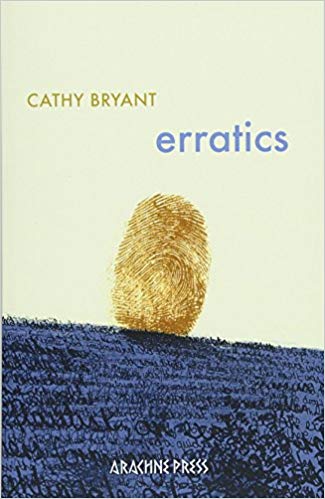
has won 27 literary awards, including the Bulwer-Lytton
Fiction Prize and the Wergle Flomp Award for Humorous Poetry. Her work
has been published all over the world in such publications as Magma, The
Andromeda Spaceways Inflight Magazine, and Stairs and Whispers. She
co-edited the anthologies Best of Manchester Poets vols. 1, 2 and 3, and
Cathy’s own books are ‘Contains Strong Language and Scenes of a Sexual
Nature’ and ‘Look at All the Women’. Cathy’s new collection is
‘Erratics’, out now. Cathy is disabled and bisexual, and lives in
Disley, UK. See more at http://www.cathybryant.co.uk

The Interview

1. When and why did you start writing poetry?

I started writing poetry as an anguished teen. Naturally no one had
ever experienced what I was going through, so my poems were obviously
going to enlighten the world as to the human condition. Yes, those poems
were as terrible as you’d expect. I’d written stories ever since I could
read and write, but poetry was for the elite, I felt, not for me – until
I was a teen and thought I knew everything (spoiler: I really, really
didn’t, and I know even less now). The sweet thing is that two of my
teen poems made it into print eventually – one in my first collection,
and one in Magma. Maybe at least a few of those early poems weren’t as
squirmy as I thought!

2. Who introduced you to poetry?

There was no poetry in the house when I was growing up, except for
either a teatowel or a mug that had Robert Herrick’s ‘The Hag’ on it. I
loved the rhythms and movement, and the drama of it. I’m still fond of
Herrick, and ‘The Vine’ is one of those rareities, a sheerly enjoyable
sex poem.
At 14 I had a very brave English teacher, Mrs Lawton. In our strict
religious school, she chose for us to study ‘Daddy’ by Sylvia Plath.
This hit me the way the nuns did, only it was more constructive. Poetry
could do this? Naturally I became a Plath acolyte.
A couple of years later, my brother bought a copy of Penguin Modern
Poets 10: The Mersey Sound, a classic collection that influenced two
generations. Again I was surprised – were poets allowed to talk about
the things that no one talked about? Poetry seemed to be a magic key to
a place where the keyholder could explore their mind and its place in
the world, and tell their truths in whatever form was right for them.

3. How aware are and were you of the dominating presence of older poets traditional and contemporary?

I wasn’t, really, except as a vaguely exclusive presence. Rather like
the Ancient Greek writers and those who were interested in them,
traditional and older poets seemed to belong to a club that people like
me (female and with no confidence whatsoever) were not allowed to join.
I lived in a tiny village – Bolton-le-Sands – and then in Morecambe, and
the idea of a poetry event or workshop or writing group never came up.
Perhaps if I had lived in the city of Lancaster I’d have found a
literary group of some sort, but I doubt that I’d have had the courage
to join it. Our ‘O’ level poetry book was ‘English Poetry 1900-1975’,
which had prescisely two women poets in it: Plath and Stevie Smith.
Jackie Kay and Ali Smith had the same book (the 1900-1965 edition) and
pointed out that between them, those two poets cover a lot of ground,
but there was obviously a gap. Were there any poets of colour in that
book at all, I wonder? The message was very much: you need to be a
clever, white, male with supreme confidence and total linguistic
knowledge, to be a Real Poet.

4. What is your daily writing routine?

It depends on my health. Some days I can’t do a damn thing. I try at
least to take notes of any interesting ideas or images that come to mind
– heavy prescription meds sometimes help with that! On a good day, I’ll
use daytime for admin – submitting, entering, logging what I’ve sent
where – and the evening and night for creative writing. One of the best
things to do with insomnia or night pain is to write a poem, I find. The
poem isn’t usually great quality, but it can be a starting point for
something better, and it’s one of very few activities that isn’t
hampered by night thoughts and experiences.

5. What motivates you to write?

I’ve always written, I think. My childhood was very unhappy – one of
those violence-and-religion ones without leavening love – and I immersed
myself in books whenever possible. One of the best things my mother did
was to take her four children to the library every week. We got four
books each, and so I had sixteen books to read every week. I loved
anthologies in particular – all those different voices. Writing was my
way of having a voice, as I didn’t have much of one in real life. The
fact that by writing a word or image you can make a picture appear in
someone else’s head – eg a mermaid sneezing and wiping her nose with
some seaweed, which now anyone who has read that phrase will be able to
see or at least think of – is to me a magical power. I also adore making
people laugh. When I won the Wergle Flomp award, I got emails from
strangers all over the world, saying that they’d laughed until they
cried. As I have depression, I know the importance of an enjoyable
distraction. The half-hour sitcom that gets you through a half-hour and
gets you to smile a couple of times – wonderful!
There’s also very little else I can do, given my health level. What a
fabulous profession, where daydreaming and gazing out of windows counts
as work (as long as you write it down at some point).

6. How do the writers you read when you were young influence you today?

That combination of imagination, voice, and technique gets branded into
you when you’re a child, I think. Robert Herrick’s rhythms, Tove
Janssen’s imagination (and rule-breaking), Plath’s force and openness
(and her technique, though I didn’t recognise this when young) all leave
imprints in my own work. Prose was my main focus when I was a child, but
fortunately the good stuff has pints of poetry in it anyway – Anne,
Emily and Charlotte; Jane Austen; Wilkie Collins; whoever wrote Gawain
and the Green Knight; Aristophanes and all. My collections have quite a
lot of Greek myth in them, as well as legends and stories from all over
the world. Being a voracious reader as a child means that all sorts of
interesting stuff gets filed away in the mind. Writing poetry tends to
open up all the odd files and lets the contents run wild.

7. Who of today’s writers do you most admire and why?

Dominic Berry for his honest poetry, his never-ending learning and for
being the nicest person on the poetry circuit; Cheryl Pearson for her
luminous poems (no one understands light better); Karen Little for her
originality and genius, her wild lyricism; Rosie Garland for everything
she writes, does and is; Gerry Potter for his strong voice and for
recording Liverpool’s working class history; ditto Sarah Miller for
Cumbria; Steve O’Connor for his uncompromising accessibility and
complete lack of pretension; Sheenagh Pugh for fierce intelligence and
for always finding the ideal form for each poem; Angela Smith for being
the Poet Laureate of the Fae World; Fiona Pitt-Kethley for being the
best current exponent of blank verse and for writing about minerals,
sex, cats and other subjects most poets eschew, and for being a fellow
comedian at times; my husband Keir for teaching me how to behave in a
professional way (he has lived from his writing since the mid 1990s).
This sounds as though I’m dishing out awards. 🙂 it’s in no particular
order! I’m influenced almost entirely by the poets of the Northwest
today, which is a great honour.

8. Why do you write, as opposed to doing anything else?

On the one hand, I can’t not write unless I’m very ill indeed. It’s part
of who I am.
On the other hand, no one will pay me for anything else. Over the course
of my life, I’ve made more money from poetry than any other job or
activity (that should tell you how poor I am). Before arthrtis and
fibromyalgia scythed me down, I had various jobs, in the civil service,
as a life model, selling shoes and looking after children, but I can’t
do any of those now. Poetry, particularly as I don’t follow the usual
British poet course*, is much more lucrative. I submit mostly to
American and Canadian litmags, and enter a lot of free competitions. I
write freely, edit carefully and submit in a wily manner.

* The usual British poet course: you have a choice of 1) writing and
performing autobiographical free verse, and publishing nothing but the
odd collection, or 2) writing Serious Poetry and submitting to the same
ten British litmags as everyone else in Britain (and hardly any of those
litmags pay). Either will get you a reputation; neither will get you money.

9. What would you say to someone who asked you “How do you become a writer?”

I get asked this all the time, partly because of the years I spent doing
Comps and Calls, a listings site of free-to-enter writing comps and
calls for submissions. The true but irritatingly unhelpful answer is,
read a lot and write a lot. I add: finish and edit poems or stories even
if you think they’ve failed – completion is part of being a writer.
Submitting and entering require a different skillset to the actual
writing, so get learning those too. Start collecting rejections, and
you’ll learn how editors work and what they want. Behave professionally
and work hard, and your writing will improve and you should start
getting published. If you proofread your work properly, and you avoid
clichés, then you’re ahead of about a third of the writers out there. Go
to local writing groups and workshops if possible. Even if they aren’t
for you, you’ll have an interesting experience and meet some other
writers. Don’t let a negative experience put you off – two rejections
were enough to persuade me that I wasn’t a writer, and shouldn’t write,
for about 25 years. Don’t let that happen to you!

10. Tell me about writing projects you’re involved in at the moment.

  • With my prose, I’m thinking of putting together a collection of my
    female-led and feminist science fiction and fantasy short stories. Now
    there’s a niche! Fortunately I have brave publishers, so I’m keeping my
    tentacles crossed.
    Re poetry, after ‘Erratics’ came out last year, I took a look at what
    I’d done so far in my collections. My first, ‘Contains Strong Language
    and Scenes of a Sexual Nature’, is chaotic and wild and patchy and fun;
    my second, ‘Look at All the Women’, is tighter, and a mix of playful and
    serious. ‘Erratics’ is more grown-up but still funny in places – and
    that’s what sets me wondering about my next collection. Should I go
    all-serious or all-comedy? A few people say that they like my serious
    side – that it yields my best work, work that matters. But most people
    love my funny stuff, and that’s what brings me fanmail and applause. As
    a depressive person, I know the value of the comic distraction – it can
    get you through the difficult hours, and remind you how to smile. But
    nobody takes it seriously! I do need to think more about the work and
    less about crowd-pleasing, perhaps. I suppose I need to sort out my own
    wishes – what do I really want to do next? Excitingly, I don’t know.


Wombwell Rainbow Interviews: Emma Purshouse

Wombwell Rainbow Interviews

I am honoured and privileged that the following writers local, national and international have agreed to be interviewed by me. I gave the writers two options: an emailed list of questions or a more fluid interview via messenger.
The usual ground is covered about motivation, daily routines and work ethic, but some surprises too. Some of these poets you may know, others may be new to you. I hope you enjoy the experience as much as I do.

close-book (2)

Emma Purshouse

was born in Wolverhampton, and is a freelance writer and performance poet.

She is a poetry slam champion and performs regularly at spoken word nights far and wide. Her appearances include, The Cheltenham Literature Festival, Ledbury Poetry Festival, Much Wenlock Poetry Festival and Solfest. She has supported the likes of John Hegley, Holly McNish and Carol Ann Duffy.

Emma has undertaken poetry residencies for Wolverhampton Libraries, The New Vic Theatre in Stoke-on-Trent and The International Festival of Glass in Stourbridge.

In 2007, Emma created her first one-woman poetry play, ‘The Professor Vyle Show’. This was a fast-moving theatre piece that included puppets, poetry and quick changes. The show entertained audiences in senior schools, colleges and studio theatres. She has since created a number of successful poetry shows including the highly acclaimed site specific piece ‘Snug’ with poet and musician Heather Wastie.

Her first novel Scratters was short-listed for the ‘Mslexia Unpublished Novel Prize’ in 2012.

Widely published in small press magazines and poetry anthologies, Emma also had a CD of her performance poetry, entitled ‘Upsetting the Apple Cart’, released by Offa’s Press in 2010.

More recently Offa’s Press has also published ‘The Nailmakers’ Daughters’, which is a collection of Black Country poetry by Emma, Marion Cockin and Iris Rhodes.

In 2016, Emma’s first collection of children’s poetry was produced by Fair Acre Press. This dyslexia-friendly book is aimed at 6 to 11 year-olds and is chock-full of fabulous illustrations by the highly talented Catherine Pascall-Moore, along with top tips and ideas from Emma, for learning and performing poetry. This book won the poetry section of the Rubery Book Award.

Emma enjoys running workshops and is an experienced facilitator.   She works with all ages and all abilities, whether it be in a school or a community setting. She has a teaching qualification and an MA in Creative Writing.

In previous existences, Emma has lived on a narrowboat, worked as a taxi base operator, a sign writer, a car valeter and a Coca-Cola mystery customer!

She has been making a living from writing and performing for the past ten years.

The Interview

1. What inspired you to write poetry?

In part, I was inspired to write poetry because my paternal granddad (who I never really knew) had a book of poetry he’d written. Other family members used to get it out and look at it with real reverence as if it was a very special thing. I loved reading bits of it, even though as a kid I didn’t really understand it. It was four line verse and he’d narrated imagined histories for our family’s ancestors.

2. Who introduced you to poetry?

Apart from the appearance of granddad’s poetry book, I remember reading Roger McGough when I was still in primary school and loving it I also remember reading poems out loud with my dad from a children’s treasury of poetry that my maternal granddad bought for me. My mum also encouraged me to send my own poems to the Brownie magazine when I was about six or seven. I had a couple of poems accepted by them and the buzz of seeing my name in print, and the idea that somebody thought what I’d done was good enough to be in a magazine was very intoxicating.

3. How aware were you of the dominating presence of older poets?

As a teenager I was only really aware of the poets that we had to study in school…so Dylan Thomas and WH Auden were the norm. It wasn’t until I went to Glastonbury in my 20s and I saw some spoken word that I realised poetry could be many different things.

4. What is your daily writing routine?

I don’t have a daily routine as I work as a self-employed writer and performance poet. There is no routine when you’re scratting about to make a living in this way. For example, one day I might be working in a school, another day on an oral history project interviewing folk. On another day in the same week I might be travelling somewhere for an evening gig. So, I fit my own writing in around facilitating other people’s work, performing and earning a crust. I often write notes on a bus or a train and then structure them into something when I can find time to sit at my laptop.

In 2018 I re-did ‘52’, which is the series of writing prompts that the poet Jo Bell came up with a few years ago for an online project. These online prompts then went on to be published in book form by Nine Arches Press. I can’t recommend it highly enough. I wrote a poem a week last year because of that book. So I’ve usually managed to find a couple of hours to sit and do that, often on a Sunday in between catching up with emails and prep for the following week.

5. What motivates you to write?

I’ve always done it. I think it’s a compulsion of sorts. I need to express things that I sometimes can’t put into actual out loud words. Although often once I’ve written something I will learn it so that it does become spoken aloud. I like to write about the world around me, and to just say it how it appears to me. I love the Black Country and its people so that too is an important source of inspiriation.

Also getting a laugh motivates me. I have written quite a bit of humorous poetry. It’s lovely when you can make people smile or give them a bit of a giggle.

6. What is your work ethic?

I don’t stop much. I’m self-employed as I said, so I can’t remember the last time I had a day without doing some sort of work. I probably even did a few emails on Christmas day if I’m honest. That isn’t a complaint, it’s just how it is when you’re working for yourself.

7. How do the writers you read when you were young influence you today?

I think all the stuff you read has an influence, not just the stuff you read when you are young.

You might see how somebody handled a particular form and you think, ‘Oh, I’d like to try one of them’. Or you might hear somebody that delivers in a conversational style, so you think ‘I’d like to try that’. You might also see something or read something that makes you think, ‘I wouldn’t do it like that’.

You learn about what you like I suppose, and perhaps try to mimic it when you’re very young. I wanted to write like Dylan Thomas when I was sixteen…and then one day I realised ‘he’s a bloke, a welsh bloke, and much as I love what he does I’m a woman and a Black Country woman at that…hmmm maybe I should write about what matters to me.’ It takes a long time and a lot of reading and exploring, to find the confidence to develop your own voice. Or voices.

8. Who of today’s writers do you admire the most and why?

I can’t effectively answer this as it changes on a day to day basis. I admire so many writers for so many different reasons. If you force me to pick one, then today I’d say Liz Berry has given permission for the Black Country accent to be used as something other than the comedic or the nostalgic, and created a sort of mythology for the region…which I love.

In a minute I’m going to read some Patience Agbabi for a workshop I’m planning, so if you asked me in an hour or so I’d probably tell you that I admire her the most because of her ability to take a voice that isn’t necessarily hers and run with it. I also love the way she uses traditional form in a very performancy way.

9. Why do you write, as opposed to doing anything else?

It gives me freedom and I meet interesting people. I can’t cope with being in a 9-5 job…I’ve tried. I tried very hard for years and it made me unhappy. I would rather live a bit hand to mouth in the way that I do and pursue my writing.

Writing is also the most democratic art form to my mind. It takes next to nothing cost wise to do it. A pen and a bit of paper and you’re away. Although getting your work published is perhaps not so democratic…nowadays social media and spoken word nights do at least give working class writers and other marginalised groups platforms on which to share their work to a wider audience which wasn’t there in the same way when I started out.

9. What would you say to someone who asked you “How do you become a writer?”

I’d say that you have to work hard. You also have to read hard. You have to develop a voice and a track record. You have to overcome fear of rejection (you will get rejections…and loads of them). You learn to take criticism, and actually want to receive it. You learn to tell the difference between useful constructive criticism and people who are trying to undermine you. You plough your own course. You network. You realise that making a living as a writer isn’t about getting published.

My advice would be to write anything you are offered. If somebody offers you the chance to write a play but you think you’re a poet don’t worry about it…just say yes and enjoy it. Don’t limit yourself to genre or style. Experiment with all the vehicles available for what you want to say.

Oh…and you have to actually sit and do the writing a bit. The ‘getting your arse on to the seat’ to actually write is the one hurdle that is sometimes the most difficult 

11. Tell me about the writing projects you have on at the moment.

At the moment I’m polishing a novel (again). It just got shortlisted for some mentoring and has had new feedback which needs to be considered.

I’ve just launched a new poetry collection called ‘Close’ (Offa’s Press) so now I have to gig and promote it. I love gigging.

I’m doing lots and lots of work with an arts collective called Poets, Prattlers, and Pandemonialists, which myself, Steve Pottinger, and Dave Pitt set up a couple of years ago. We have been touring a show that we’ve been doing, and we want to continue doing that, but also have the intention to write a new one and take it to Edinburgh again.

I’m running various workshops. I’m running various gigs. I’m promoting things for the Wolverhampton Literature Festival. I’m about to read through the final draft of an oral history book on Sikhism that I’ve been working on. I’m writing a new poem of my own. I’m about to write another funding bid to try and get some money to offer mentoring to poets. So yeah… that’s this week sorted!

Thanks for taking an interest in what I’m up to.
 

THE BEGINNING WRITER’S TOOL BOX, PART 1 – SUBMITTABLE

Necessary knowledge

Jamie Dedes's avatarJamie Dedes' THE POET BY DAY Webzine

“The impulse to write things down is a peculiarly compulsive one, inexplicable to those who do not share it, useful only accidentally, only secondarily, in the way that any compulsion tries to justify itself. I suppose that it begins or does not begin in the cradle. Although I have felt compelled to write things down since I was five years old, I doubt that my daughter ever will, for she is a singularly blessed and accepting child, delighted with life exactly as life presents itself to her, unafraid to go to sleep and unafraid to wake up. Keepers of private notebooks are a different breed altogether, lonely and resistant re-arrangers of things, anxious malcontents, children afflicted apparently at birth with some presentiment of loss.” Joan Didion, Slouching Towards Bethlehem


Well, here we are in a new year, a fresh slate, a soupçon of promise, a river of resolutions to…

View original post 733 more words

THE BEGINNING WRITER’S TOOL BOX: PART 2 – ONLINE MARKET RESOURCES FOR WRITERS, POETS AND ARTISTS

Treasure box

Jamie Dedes's avatarJamie Dedes' THE POET BY DAY Webzine

“I learned from the age of two or three that any room in our house, at any time of day, was there to read in, or be read to.” Eudora Welty, One Writer’s Beginnings [recommended}


There are quite a number of online resources for finding markets for your creative work. Some, like Submittable covered yesterday, offer the ability to conveniently track your submissions.

  • All Freelance offers a market directory with an advanced search feature.  It also posts other helpful information focused on the concerns of freelancers.
  • The Burry Man Writers Center (Scotland) serves “a worldwide community of writers” and publishes freelance job links, resources for fiction and nonfiction writers, playwrights, and screen writers.
  • CBC provides A Guide to Canadian Literary Magazines and Journals open to submissions.
  • The Christian Writers Market Guide provides 1,000 listings of publishers, periodicals, specialty markets, conferences, contests and other services including writing courses.  A month-to-month…

View original post 608 more words

THE BEGINNING WRITER’S TOOL BOX: PART 3 – MAGAZINES FOR POETS AND WRITERS

Goldmine

Jamie Dedes's avatarJamie Dedes' THE POET BY DAY Webzine

“No one says a novel has to be one thing. It can be anything it wants to be, a vaudeville show, the six o’clock news, the mumblings of wild men saddled by demons.” Ishmael Reed, Yellow Back Radio Broke-Down


Trade and professional publications for writers offer writing how-to features along with info on new directions in publishing and on the business side of writing; for example, how to submit work, how to target the right publications, how to organize your work and plan your day, and how and when to write query letters.

The Writer,  Writer’s Digest and Poets & Writers are perhaps the most well-known and credible. The Writer and Writer’s Digest provide writing tips. All three publish relevant news about writers and their books, updated market lists, and the information on the latest trends in our field. Which magazine/s will work for you? That would depend on your…

View original post 561 more words

BEGINNING WRITER’S TOOL BOX: PART 4 – EDUCATION AND TRAINING WHEN YOU CAN’T AFFORD CREATIVE WRITING PROGRAMS AND CONFERENCES

Whole series extremely well put together and useful

Jamie Dedes's avatarJamie Dedes' THE POET BY DAY Webzine

“Everyone is born creative; everyone is given a box of crayons in kindergarten. Then when you hit puberty they take the crayons away and replace them with dry, uninspiring books on algebra, history, etc. Being suddenly hit years later with the ‘creative bug’ is just a wee voice telling you, ‘I’d like my crayons back, please.”  Ignore Everybody: and 39 Other Keys to Creativity, Hugh MacLeod 


Creative writing programs – certificate, degree / residency or low-residency – available through colleges and universities are the first to come to mind, but I know these are not feasible for everyone. They’re expensive, as are conferences. You have to be able to carve time out from your day job and family responsibilities. Sometimes transportation is a challenge. You might be homebound due to illness or disability. If these are some of the barriers you face, there are lots of resources to explore…

View original post 1,784 more words

Wombwell Rainbow Interviews: Cathryn Shea

Wombwell Rainbow Interviews

I am honoured and privileged that the following writers local, national and international have agreed to be interviewed by me. I gave the writers two options: an emailed list of questions or a more fluid interview via messenger.
The usual ground is covered about motivation, daily routines and work ethic, but some surprises too. Some of these poets you may know, others may be new to you. I hope you enjoy the experience as much as I do.

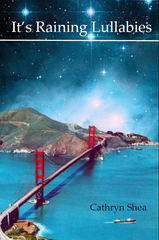
raininglull_medium

Cathryn Shea, 

Cathryn Shea’s poetry has been widely published and was nominated for Sundress Publication’s Best of the Net. Her third chapbook, “The Secrets Hidden in a Pear Tree” is forthcoming from dancing girl press in early 2019. Her second chapbook, “It’s Raining Lullabies” is also from dancing girl press (November 2017). Cathryn’s poetry has appeared recently in New Orleans Review (web feature), TypishlyAfter the PauseburntdistrictPermafrostTar River Poetry, and elsewhere.

Her first chapbook, “Snap Bean,” was released in 2014 by CC.Marimbo of Berkeley. She was a merit finalist for the Atlanta Review 2013 International Poetry Competition and in 2004, she received the Marjorie J. Wilson Award judged by Charles Simic. Cathryn is included in the 2012 anthology “Open to Interpretation: Intimate Landscape” and she has poems in 2017 anthologies, including “Luminous Echos” by Into The Void, and “The New English Verse” by Cyberwit.net(India).  Follow her on Twitter: @cathy_shea.

https://www.cathrynshea.com/

cathy.shea11@gmail.com

The Interview

  1. What inspired you to write poetry?

When I was little, my father had the complete works of Robert Burns, which he cherished and read from. That made a big impression on me and made me feel from an early age that poetry is important. We also loved Edgar Allen Poe and Walt Whitman. I discovered a few other poets like e. e. cummings and Emily Dickenson in high school, after my love affair with everything Steinbeck. I kept notebooks from a very early age, full of scribblings, observations, and drawings. I attempted poetry with the result that I was good at doggerel. But that didn’t stop me.

  1. Who introduced you to poetry?

Although my father had a big part in instilling in me the importance of poetry, I feel that finally when I was in college, my professors really got me going on poetry. Also, my cadre of friends that I hung out with. They introduced me to a disparate array of poets like Auden, Neruda, Rilke, Roethke, Plath, Bishop. The list is much longer now that I think of it; too long to list here. It’s interesting to me that the list really did not contain the most current poets. I was an English Literature major with Fine Art minor, so I as lucky to be immersed in reading and analysing and the attendant deadlines for papers and creative work of my own.

  1. How aware were you of the dominating presence of older poets?

I would say that I was very aware since, like I say, I was an English Lit. major. Therefore, I studied Chaucer, Milton, Dunne, the old English poets, and Shakespeare. I also studied some Classics, but not as much as I would have liked since my main focus was English origins of poetry and literature. I also loved Russian literature and read widely (in English, of course).

  1. What is your daily writing routine?

On a daily basis, I take my cup of coffee into a small room furnished with a couch (that folds out to a Queen bed, which I can use for guests), a TV tray for balancing books and paper on, a chair for our 20 lb. Main Coon cat, and my desktop computer and monitor. I bring my iPad and sit on the couch with a cup of strong coffee, first thing. I handwrite in a notebook; go over previous notes and freewrites; read over my manuscripts; choose poems to revise. If I am not inspired to write, then I read from an ever-present stack of poetry books. When I want to do serious work revising, I work on my desktop computer, not my iPad. I really never write using my iPad; that is just for looking things up and going to online poetry sites. I also use Duotrope almost daily to track my work and submissions, find places to check out and submit to.

I also belong to several writing groups and one poetry book study group. I belong to Marin Poetry Center, which has a reading series where we hear poets from all over. MPC also has an annual traveling show where its members read in local venues. My groups are invaluable for workshopping my poems. I meet with five or six poets every two weeks in San Francisco; up to ten poets once a month in a group led my Tom Centolella (an excellent poet and teacher); once per month with four poets; and once per month with a poetry book group. I almost forgot: I also participate in a fun freewriting group of women, typically six or so, who meet quarterly on the solstices. We each bring a poem to read aloud and a writing prompt.

I feel like working with or on poetry is a great part of my daily routine. After working many years in the computer industry as a product manager and finally as a technical writer, I now have much more time to devote to poetry. My two children are adults and my long-time marriage is humming along, for which I am grateful. I’m glad that many years ago poetry and art were ingrained in me so that as I age, I can rely especially on poetry for solace and camaraderie.

  1. What motivates you to write?

My motivations for writing have always been the expression of personal joys, sorrows, loves, grieving, along with a smidgen of sarcasm and anger. Writing has always provided me with a wonderful outlet, even if I tear up old rants. I now share a lot of what I write because it is much more polished and I seem to write much more for sharing with others.

  1. What is your work ethic?

Probably because of all my years in the workplace with severe deadlines and a heavy workload, I have a strong sense of what I set up as my own projects. I worked so much with milestones and progress reports that although I am not that hard on myself, I do have a sense of due dates that I set, and then I am also always preparing for my poetry groups and workshops. That keeps me busy. It takes some discipline and I cannot just be willy-nilly with what I want to accomplish.

  1. How do the writers you read when you were young influence you today?

I’ve always loved Grimm’s Fairy Tales and folklore, and loved being scared to death as a child. The stories and imagery were so inspiring. Language is very important to me. The roots and history of language is fascinating. I do enjoy studying and knowing about formal poetics, various forms, and all the technical stuff, even though I write mostly in free verse. I have a good collection of how-to poetry books and reference books like The New Princeton Encyclopedia of Poetry and Poetics and Brewer’s Dictionary of Phrase and Fable, to name a few.

  1. Who of today’s writers do you admire the most and why?

This is a tough question because I always have a big stack of books and I also download best sellers and books from the library to my Kindle. My list of writers seems to morph with what I find through my friends and even on Facebook and Twitter. I follow a lot of poets on social media. I also go into Duotrope and click around to find new publications that lead me to new writers. Here is a partial list of people I have laying round my table right now:

Thomas Centolella (Almost Human, Tupelo Press)

Patricia Lockwood (Motherland Fatherland Homelandsexuals, Penguin Poets)

Maggie Smith (Good Bones, Tupelo Press)

Tony Hoagland (Priest Turned Therapist Treats Fear of God, Graywolf Press)

Kristy Bowen (Salvage, Black Lawrence Press)

Wesley McNair (Lovers of the Lost, David R. Godine, Publisher)

Jack Gilbert (Refusing Heaven, Alfred A. Knopf)

George Oppen (New Collected Poems, A New Directions Book)

Kaveh Akbar (Calling a Wolf a Wolf, Alice James Books)

I admire the books of my poetry friends too: Connie Post, Francesca Bell, Kate Peper, Ann Robinson, Yvonne Canon, Rebecca Foust, Yvonne Postelle, Joe Zaccardi, Donna Emerson, Ricky Ray, Mare Leonard, Barbara Brauer and Roy Mash; this is just a partial list. I am blessed to have many poet friends in a community of poets in my vicinity and online.

  1. Why do you write?

Writing provides a tremendous force for my wellbeing and imagination. Writing connects me with a diverse community of other writers, which if I were not writing I would totally miss out on. Reading helps too, but the creative energy I put into writing really links me to other people while also nourishing my soul.

  1. What would you say to someone who asked you “How do you become a writer?”

I would say that keeping little notebooks around and jotting down thoughts and impressions is a good way to start. Just write stream of consciousness and do not be concerned with grammar or punctuation (at first anyway). Just let it flow. I do believe that reading broadly and educating yourself is extremely helpful. I cannot imagine just trying to write without also reading a wide range of authors, whether poetry or fiction. Reading book reviews and essays on writing is also a good way to get into the writing mode.

  1. Tell me about the writing projects you have on at the moment.

Currently, I’m waiting for the galley for my latest chapbook, “The Secrets Hidden in a Pear Tree,” which is due out in early 2019 by dancing girl press of Chicago. I’ve just submitted a full-length poetry manuscript (approx. 80 pages) for an evaluation to a publisher in Portland OR. I paid extra for feedback. This is a manuscript I’ve been working on in earnest for the past year. I’m hoping to find a publisher, of course. I’ve already been rejected several times and I expect to go through more submitting and rejections before it, hopefully, lands with a home. It’s quite a process getting a book accepted. I may have to work on it for another year. Who knows. Meanwhile, I have yet another poetry chapbook that I’ve put together and torn apart and put back together. It got rejected by a few places and I suspect it will morph over the next few months to a year as well. I submit regularly to what I consider to be somewhat “underground” journals. That is, I typically do not submit to the top-tier most well-known places, but to lesser-known, newer, and experimental journals that encourage a variety of nascent and well-established poets.


Wombwell Rainbow Interviews: James Knight

Wombwell Rainbow Interviews

I am honoured and privileged that the following writers local, national and international have agreed to be interviewed by me. I gave the writers two options: an emailed list of questions or a more fluid interview via messenger.

The usual ground is covered about motivation, daily routines and work ethic, but some surprises too. Some of these poets you may know, others may be new to you. I hope you enjoy the experience as much as I do.

img_0572

James Knight

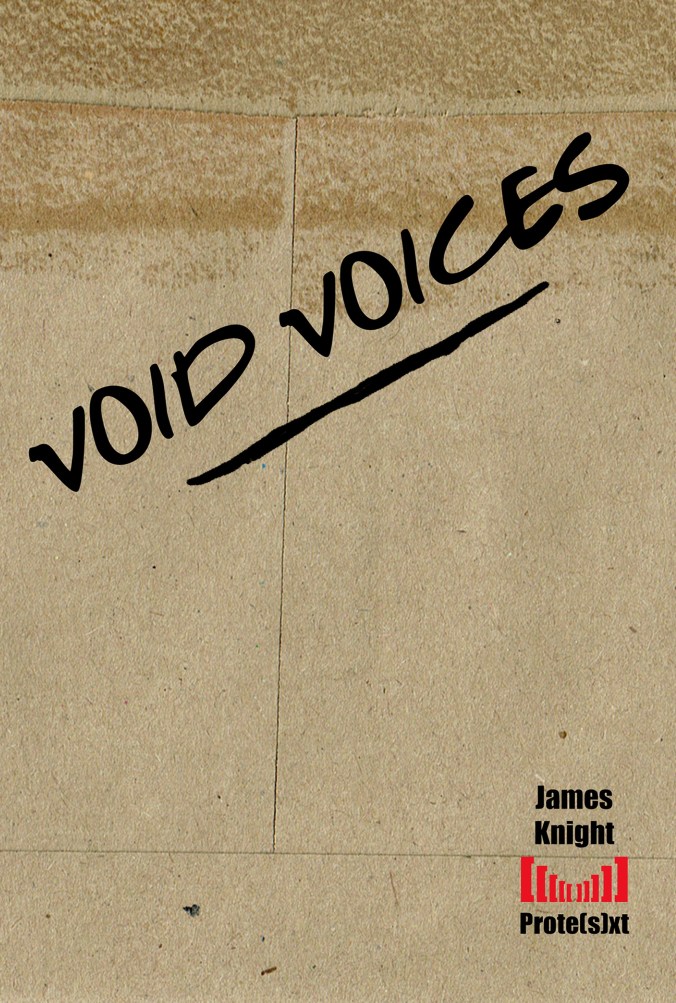
is an experimental poet and digital artist. Void Voices, a reimagining of Dante’s Inferno, is available from Hesterglock Press.

Void Voices link: http://www.hesterglock.net/p-007-james-knight.html

Website: thebirdking.com

Twitter: @badbadpoet

The Interview

  1. What inspired you to write poetry?

As a teenager, I was in a crappy rock band, for whom I wrote some embarrassingly bad lyrics. Moving on to poetry became a logical extension. I got serious about it when I was 19, writing over-wrought pieces indebted to the early modernists.

  1. Who introduced you to poetry?

Like all school children, I had been subjected to poetry at school from an early age. An anthology edited by George Macbeth still makes me shudder. It wasn’t until I was studying A level Eng Lit at a sixth form college that I started getting excited about poetry. William Blake was the first poet I loved. T S Eliot and Sylvia Plath followed swiftly. The floodgates truly opened when I bought a copy of Edward B Germain’s Surrealist Poetry in English. That book, combined with a translation of Raymond Roussel’s Impressions of Africa, began a love affair with surrealist writing that persists to this day.

  1. How aware were you of the dominating presence of older poets?

I did not become particularly aware of living poets until I started buying periodicals and submitting poems to them, in my early 20s. Those more established poets came from another world, it seemed to me. I didn’t ever expect to be one of them, and I still don’t now.

  1. What is your daily writing routine?

I don’t have a routine. My job takes up six and sometimes seven days a week, so I usually write in the evenings, on my iPad. I don’t write for a fixed amount of time or attempt word-count quotas, both of which are symptomatic of our joyless performance target culture. I write totally self-indulgently and lazily.

  1. What motivates you to write?

Some writers talk romantically about being driven to writing, as if putting words on a page is as essential an activity as eating or having a poo. I write with great enthusiasm and enjoyment, but never because I consider myself a tortured soul seeking catharsis. Generally, enthusiasm strikes if a peculiar image or phrase pops into my head. Then I let that image or phrase play out, see where it takes me.

  1. What is your work ethic?

I have no work ethic, although I feel frustrated if I haven’t written for a few days.

  1. How do the writers you read when you were young influence you today?

Surrealist writers like André Breton, Joyce Mansour and Paul Nougé made me think again about the function of language, its relationship to reality, and its potential to subvert and liberate. I still consider myself a surrealist of sorts, not stylistically, but in outlook. Eliot’s mastery of different voices and the immediacy of his imagery have been an influence since I started writing poetry; the big man even makes an appearance in my long poem, Void Voices, as my guide to Hell. Harold Pinter had a wonderful ear for spoken language, and I am conscious that several of the voices I employed in that poem owe a lot to his example.

  1. Who of today’s writers do you admire the most and why?

There are some fabulous small presses out there, publishing a myriad of exciting writers. There is an atmosphere of joyful possibility reminiscent of the early days of modernism around publishers like Hesterglock Press, Dostoyevsky Wannabe, Haverthorn and Salò Press. I’ll just name a few writers whose work I find particularly inspiring right now. Poets Astra Papachristodoulou (author of the phenomenal Astropolis) and Matthew Mahaney, fiction writers Shane Jesse Christmass and Georgina Bruce and visual poet Catherine Vidler all ask fundamental questions: What is a literary work? What language can it use? What should the reader bring to the party? What is meaning? They all have distinctive voices, they all challenge and delight, and their work conveys the illusion of effortlessness. I must also mention the subversively inventive poet/artist Paul Hawkins, Miggy Angel (Extreme Violets is nothing less than visionary) and Joanna Walsh, whose work is in a league of its own. I could easily name a dozen or more brilliant writers who are making their mark. These are exciting times to be a reader!

  1. Why do you write, as opposed to doing anything else?

I don’t know. I suppose that the childlike urge to create never left me. And I hope it never does.

  1. What would you say to someone who asked you “How do you become a writer?

For many people, you don’t qualify as a writer until you’ve had something published. That strikes me as ridiculous; if you enjoy arranging words on a page, you are a writer. Publication is another issue. I don’t think writers should be considered superior to everyone else just because they love working with words. The preciosity of #amwriting threads on Twitter makes me want to throw up. As Lautréamont wrote, “Poetry should be made by all.” Write if you want to. Enjoy it. Don’t get hung up on the persona of the “writer”.

  1. Tell me about the writing projects you have on at the moment.

My last book, Void Voices, was (by my standards) gargantuan. It was also highly chaotic. It had to be. I’m now working on a long sequence of short poems that are the exact opposite, terse and intense. I am also in the early stages of a couple of collaborations, so keep an eye out!