Wombwell Rainbow Interviews: Tom Montag

Wombwell Rainbow Interviews

I am honoured and privileged that the following writers local, national and international have agreed to be interviewed by me. I gave the writers two options: an emailed list of questions or a more fluid interview via messenger.
The usual ground is covered about motivation, daily routines and work ethic, but some surprises too. Some of these poets you may know, others may be new to you. I hope you enjoy the experience as much as I do.
COVER - IN THIS PLACE[120061]

Tom Montag

is the author of several books of poetry, including In This Place: Selected Poems 1982-2013, Imagination’s Place: The Old Poet Poems, The Miles No One Wants, The Big Book of Ben Zen, and Middle Ground, as well as several books of prose, including Curlew: Home, Kissing Poetry’s Sister, and The Idea of the Local. He teaches both creative nonfiction and poetry for The Mill: A Place for Writers in Appleton, Wisconsin. During the 1970s, he edited Margins: A Review of Little Magazines and Small Press Books and was a Founding Contributing Editor for The Pushcart Prize. He has been a featured poet at Atticus Review and Contemporary American Voices, with other poems published in a variety of literary magazines, including Blue Heron Review, Hamilton Stone Review, The Homestead Review, Little Patuxent Review, Mud Season Review, Poetry Quarterly, Provo Canyon Review, and Third Wednesday. With David Graham he is editing an anthology of poetry about small towns. His poem “Lecturing My Daughter in Her First Fall Rain” has been incorporated into the permanent design of Milwaukee’s Convention Center, along with the work of Lorine Niedecker and other Wisconsin writers.

Here is the link for my blog, The Middlewesterner: http://www.middlewesterner.com/

The Interview

1. What inspired you  to write poetry?

I think we have essential moments in our lives which shape us forever. I grew up on an Iowa farm. We had hog chores west of the grove, and towards evening I’d walk through the long shadows out to those hogs and see the sun at the edge of the western horizon. There was longing and loneliness in that moment, seeing the far horizon. I suppose wanting to touch that far horizon is what inspired me, and still inspires me, and wanting to get beyond longing and loneliness. I say this even as I had the best parents and family imaginable. I was strangely bent to feel a kind of loneliness in a home filled with love, I know, but that is how poets are formed, or at least how this poet was formed.

2. Who introduced you to poetry?

I was a poet before anyone introduced me to poetry, I think. I am self-taught. When I was in sixth grade, I suppose it was, one of my Christmas presents from my parents was a leather-bound notebook. I hadn’t really written anything yet. How did they know I needed something like that? We were studying Whittier’s “Snow-Bound” in school that winter. Then we had a terrible blizzard. I wrote a 27 page “Snow-Bound” of my own in that notebook: I have a clear memory of being up in the bedroom I shared with my brother working on the poem, the white light coming in off the snowstorm nearly blinding me. Fortunately, that poem has been lost. Yet the need to write continued. The next poem I remember, another one of those special moments which changes us, came when I was thirteen or fourteen. There was longing and loneliness, an imagined cliff, the edge of the sea below, a lone seagull, waves rolling in, the end of the world. Teen anguish, I suppose. By the time I finished high school, the people around me knew that I was a poet. My senior high school English teacher, Colin Kahl, was always supportive of the strange farm kid who thought he might be a poet and he was, perhaps,  the first to steer me along the path. The poet Sister Therese Lentfoehr helped me further along when I was in college. John Judson showed me how to be true to myself as a poet. Chris Halla put the fire back in me when I was ready to give up.

3. How aware were you of the dominating presence of older poets?

I was a sophomore or junior when Robert Bly came to read at the small college I attended, in 1968 or so. His presence was overpowering. That reading convinced me that I couldn’t read Robert Bly: if I did, I would never become my own poet, I would be a mere Bly imitator. So it wasn’t until I was in my 60s that I started to read him. Rather than overpowering me, at this point, he is more like an old Norwegian bachelor farmer you tolerate because he’s family.
The poets I took as my models were probably William Carlos Williams, Robert Creeley (and with him, a little influence from the open field poetics of Charles Olson), and Nebraska poet William Kloefkorn. I learned from all of them. I didn’t study poetry formally, but let them show me what a poem should look like. Apparently, William Carlos Williams is still an influence: not long ago I received a rejection from an editor who said he had “seen enough of little WC Williams’ poems” and didn’t need to see any more. I have to say these poets taught me that clarity and mystery can cohabit, as did Chinese and Japanese poetry when I discovered it. Ah, clarity. I also had an editor reject my poems because “we like to see more layers than this.”

4. What is your daily writing routine?

Routine? Routine? Hey, I’m a poet. What is this routine of which you speak?
I know I should be telling people they need to make time and space to write every day. Yet, now that I am retired, what I do make time and space for every day, actually, is reading poetry. Reading poetry allows me to compose myself. Sometimes, as a result, poems will come to me as I sit there, having put the book down and lifted my eyes. However, you cannot ask for grace; if it comes, it comes. You can’t force it. This is where I would disagree with William Stafford, who insisted on writing every day and lowering your standards if you had to.
And, to be truthful, my most productive time for poetry is when I am traveling. Something about movement and the motion of the car and the endless scroll of world before me allows the poems to come loose. If taken to court, I would have to say, “No, your honor, I was not writing while I was driving. I was driving while I was writing.” In May and June this past year, I spent a month on the road, heading south to New Orleans, west to Los Angeles, north to Portland, and home from there. About 6500 miles. I call it my Gypsy Poet Tour. It resulted in 579 poems, or little notes for poems. In January, 2016, I spent a couple weeks traveling in New Mexico, and that resulted in about 350 little poems. Again, you can’t force it. You can’t go out expecting a poem every 11.2 miles. You just have to let go, and they will come.
The other thing to note, perhaps, is that I might not be a good writer, but I am a terrific reviser. Many of my poems start as “notes for poems.” Many others go into my “compost heap,” to be brought out and re-worked later. And some of them, yes, never make it out of the compost heap. That’s part of the process — not being afraid to fail.

5. What motivates you to write?

Longing. Love. Loss. A need to chew the language. A need to express what the world is trying to say. This question is like asking: what motivates you to breathe. You do it if you want to live.

6. What is your work ethic?

I might be the laziest poet you’ll interview. I don’t have a work ethic. I just do what I do, and have been blessed that my lackadaisical approach works for me. I will say, however, if I go several days without writing, you’ll see me get in the car and go for a drive. There will be a red-tail hawk somewhere waiting to break loose a poem for me.
If I haven’t been writing, I tend to get a little cranky, as if the lack of poems is an irritant. Then, as I say, I go for a drive to unblock whatever is stuck in me.

7. How do the writers you read when you were young influence you today?

Because I am self-taught, the poets I chose as “models” influence that shape of how I think a poem should look. I tend to write shorter poems, rather than longer ones. I tend to write shorter lines rather than longer ones. I tend to leave in a lot of air in my poetry, a lot of light. I tend to use the “American idiom” of Williams and Creeley. I heard a nationally-recognized poet read in Milwaukee fifteen years ago, and afterwards noted to a friend that I’ve never used in my poems any of the nouns and verbs he used in his. It was such a stark contrast, and a revealing moment for me; I was not that kind of poet, and I did not want to be that kind of poet. For instance, I have never used the word “plastic” in a poem, since plastic and poetry so seldom overlap.
Basho’s poem about the frog jumping into the water has become for me a metaphor for what a poem should do: in every poem, the frog has to jump. There should be a leap. Of course, I can say that because I write lyric poetry, rather than narrative poetry, philosophical poetry, or didactic poetry.
I might use a big word like “beauty” in a poem, but it will still have its roots attached, and dirt on it. WC Williams said, “No ideas but in things,” and the Oriental poets I’ve read taught me to let the things of this world shine from within.
Some might say they write to express their feelings. I write to express not what I have to say, but what the world has to say. Some say you have to think of the reader when you write; I do not think of the reader, I think of what the poem wants.
Jack Spicer suggested that poets are radios, picking up whatever is coming across on the ether. There’s some truth in that.
I also like to tell people that if I couldn’t read upside-down, if I didn’t eavesdrop shamelessly, and if I didn’t hear voices, I would have very little to write about.
I heard Robert Creeley tell a story about a poet who gave a reading at a middlewestern college some years ago and afterwards was asked “Was that a real poem, or did you just make it up?” I write real poems; I don’t make them up. With my poem about trees marching across the hillside, I could show you those trees. My poems with Mile Markers in the titles were written at those locations. Go there, and you can see the world of which the poem speaks.

8. Who of today’s writers do you admire the most and why?

Jane Kenyon, Sharon Olds, Linda Pastan, Linda Gregg, Linda Gregerson, Jane Hirshfield, and Joan Kane, for starters. Why? Because they tell the truth.

9. Why do you write?

It should be obvious by now that I write for the same reason I breathe; it is something beyond my control.

10. What would you say to someone who asked you “How do you become a writer?”

I would say you learn to write poetry by reading poetry and writing poetry. Read ten thousand poems. Write two hundred poems. You are now ready to begin.
I would say keep putting one word after another.
I would say don’t give up.
I would say don’t let the bastards get you down.
The best predictor of which young poet will stay at it is not who is the most ambitious, nor who has the most talent. The best predictor is who is the most stubborn. There’s no money in this, and you’d be a fool to think there is, so you’re doing it because you can’t do otherwise.

How do you become a writer?

You become a writer by writing. Just do it.

11. Tell me about the writing projects you have on at the moment.

I have a collection together for publication sometime in the next year entitled Seventy at Seventy, seventy poems written at age seventy.
I am co-editing an anthology of poetry about small towns.
I have a boxful of poems in the voice of a gnarly “Old Poet” which needs to be sorted out.
I have to ask myself what I’m going to do with the 350 poems in my Notebook: New Mexico and the 579 poems in Gypsy Poet Tour. Some of these can be seen on my blog, The Middlewesterner and on my Facebook page. Some of the New Mexico poems are available as an e-book titled The Miles No One Wants.
These past years, I have been writing poems faster than I can type them up, and it is starting to be time to look at those boxes of neglected first drafts and see what I’ve got.
I have never had a writer’s residency/retreat before, and next week I will spend a week with several other writers on a ranch along the Keya Paha River in north central Nebraska. What will come of that? I don’t know.

What writing projects do I have on, you ask?

I don’t have time for writing projects. I’m busy being a poet.

Wombwell Rainbow Interviews: Penelope Shuttle

Wombwell Rainbow Interviews

I am honoured and privileged that the following writers local, national and international have agreed to be interviewed by me. I gave the writers two options: an emailed list of questions or a more fluid interview via messenger.
The usual ground is covered about motivation, daily routines and work ethic, but some surprises too. Some of these poets you may know, others may be new to you. I hope you enjoy the experience as much as I do.

51w0u4yLstL

Penelope Shuttle

has lived in Cornwall since 1970, is the widow of the poet Peter Redgrove, and has a grown-up daughter Zoe, who works at the University of Bristol. Her first collection of poems, The Orchard Upstairs (1981) was followed by six other books from Oxford University Press, The Child-Stealer (1983), The Lion from Rio (1986), Adventures with My Horse (1988), Taxing the Rain (1994), Building a City for Jamie (1996) and Selected Poems 1980-1996 (1998), and then A Leaf Out of His Book (1999) from Oxford Poets/Carcanet, and Redgrove’s Wife (2006) and Sandgrain and Hourglass (2010) from Bloodaxe Books. Redgrove’s Wife was shortlisted for both the Forward Prize and the T.S. Eliot Prize in 2006. Sandgrain and Hourglass was a Poetry Book Society Recommendation. Her retrospective, Unsent: New & Selected Poems 1980-2012 (Bloodaxe Books, 2012), drew on ten collections published over three decades plus the title-collection, Unsent. A new collection, Will You Walk a Little Faster?, was published by Bloodaxe on Penelope Shuttle’s 70th birthday in May 2017. Heath, a collaboration about Hounslow Heath with John Greening, was published by Nine Arches in 2016. First published as a novelist, her fiction includes All the Usual Hours of Sleeping (1969), Wailing Monkey Embracing a Tree (1973) and Rainsplitter in the Zodiac Garden (1977). With Peter Redgrove, she is co-author of The Wise Wound: Menstruation and Everywoman (1978) and Alchemy for Women: Personal Transformation Through Dreams and the Female Cycle (1995), as well as a collection of poems, The Hermaphrodite Album (1973), and two novels, The Terrors of Dr Treviles: A Romance (1974) and The Glass Cottage: A Nautical Romance (1976). Shuttle’s work is widely anthologised and can be heard on The Poetry Archive Website. Her poetry has been broadcast on BBC Radio 3 and 4, and her poem ‘Outgrown’ was used in a radio and television commercial. She has been a judge for many poetry competitions, is a Hawthornden Fellow, and a tutor for the Poetry School. She is current President of the Falmouth Poetry Group, one of the longest-running poetry workshops in the country.

The Interview

  1. When and why did you start to write poetry?

I started to write at a very early age, possibly in the womb.  I was drawn to print as a tiny child, and like loads of writers I spoke early and I read before I was three.  So the world was a place I encountered verbally, that was how I experienced everything, joys and pain.  But I started to write seriously when I was twelve, poetry and fiction. I always thought I was fourteen but recently in conversation with my very alert 97 years old mum she told me I was twelve.  By the age of fifteen I was sending poems out to little magazines, Melody, Poetmeat, and other poetry magazines of the 60s.  I wrote because I wrote.  And I was and am a voracious reader.

2. Did you introduce yourself to poetry?

My first love, when very young, was reading fiction, and I went to the public library a lot. I read historical fiction and the classics and the contemporary fiction of the day.
I spent a lot of time at my grandfather’s house (the house I was born in ) and my late grandmother had loved reading, and in that house I found some old poetry anthologies of hers, and I remember reading (and not understanding a word) of an extract from Keats’ ‘Hyperion’, when I was about eleven.  But what I got from that extract was a sense of a magical and tangible world, rich and sensuous, full of light and colour, and I drew from the energy of those (to me) curious lines.  It doesn’t matter if we don’t ‘understand’ the poem, it is the extent of our response and where the poem takes us that is the true reading.  After this lovely threshold reading of Keats, I found H R Munro’s Overheard on a Saltmarsh’, with its goblin, its green bead necklace, and its refrain.  It begins like this –

Nymph, nymph, what are your beads?

Green glass, goblin. Why do you stare at them?

Give them me.
No.

Give them me. Give them me.
No.

Then I will howl all night in the reeds,
Lie in the mud and howl for them.

Goblin, why do you love them so?

And again the magic, the strange otherworldliness of the lines, the sense (as I later found in reading Breton’s Surrealist Manifesto) that there is another world but it is this one, all this drew me deeper into poetry, and then I read loads, and when very young I preferred anthologies, where there was a wide range of different voices to explore.  I remember being very struck, in my early teens, by a poem by Robert Graves, published in The Listener (I think), called ‘Turn of the Moon’, which begins with an image of the full moon bringing water to the world ‘in a goatskin bag’.  So I always liked magic, positive strangeness, this world renewed by a shift in perspective taking us out of the quotidian into deeper richer places.  So I suppose in a way poetry introduced itself to me.  Hello, I’m Poetry, who are you?
In my late teens the soi-disant ‘Movement’ poets, androcentric, dull, full of the gentility principle, made me doubt that poetry was for me, though.  I was rescued from this sense of sterility by the happy discovery on a bookstall in Charing Cross Road of an early Selected Poems by Denise Levertov, and that wondrous book gave me permission to go on writing and building my own voice.  And Levertov is an abiding influence on my own writing.

3. What is your daily writing routine?

I write in the mornings, but my mornings last until 2.30 mostly, after that I don’t feel I have the edge for writing.  But  the work involves a real mix  – of new drafts, editing and revising older drafts, going back to look at poems I’ve set aside to incubate (and this can be for months or on occasion a couple of years).  My reading takes place around the edges of all this, and then in the late afternoon and evenings I’ll read.  By the evening I’ll have gone on to novel reading.  I’ll have a walk in the afternoon and I’ll be thinking about the on-going poem in an atmospheric sort of way, though sometimes a line will resolve, or a new  line will occur to me, or I can see the poem in my head and make some cuts. I always have a notebook with me, and so will scribble things down.  I’m a big believer in Frances Bacon’s ‘organised chaos’, and I’m often working on parallel projects, or old poems alongside brand-new ones.  I’ve been fortunate enough recently to be part of two collaborative projects, first on ‘Heath’ with John Greening, and now on ‘Lzrd’, poems inspired by the Lizard Peninsula in Cornwall, co-written with Alyson Hallett.  It is a very different focus, the process of collaboration, and I find it very refreshing as it gets me away from my own poems for a spell, and then I go back to that work with new eyes and new senses.  It is a hard thing to map out, though, the way in which I work, and it is more like spinning a web or weaving a tapestry in a way, stitch by stitch, and sometimes the necessary writing or weaving happens in the middle of the night, or on a train, or in a supermarket.  I think poets are always tuning in via their antennae to the world around them, and so the boundary between ‘I am working’ and ‘I am in a reverie’ is quite blurred, and productively so, for me.  Of course the later stages of editing and preparing a poem to send out to a magazine, or preparing a collection, require a forensic attention, a much-more structured approach, and that is always exciting and terrifying.  But why else do we do it?

And of course interspersed with all the above are the acres of time spent on admin, emails, organising events, travel, keeping in touch with social media, all the nuts and bolts of life. We are powering towards our third Cornwall Contemporary Poetry Festival (22/25th November, Falmouth Hotel, Falmouth) and though I do far less work than my festival committee colleagues, it still takes up time (but in a good cause, of course).

4. How do the writers you read when you were young influence you today?

I think that the writers who were Important  to me when I was young have just bedded down into my sensibilities, and influence me to this day by their abiding presence. Denise Levertov, Marianne Moore, Elizabeth Bishop, Ahkmatova, Rilke are poets I return to, and their daring, craft and emotional control and richness of range continue to give me permission to explore my own articulation.  I must also add Wallace Stevens and Pasternak.  When I was a young woman the English contemporary poets were not very interesting to me and so I was drawn to poets in translation and to US poets. I was hugely influenced by the Penguin European Poets series. In the dry UK field of poets of the very early 70s these were oases indeed.  I discovered Celan, Nellie Sachs, Yevtushenko, and so many more.

When young, the one voice in contemporary  British poetry that spoke to me significantly was Stevie Smith, her wry mode and deceptively casual address gave me a way forward in my own writing. I love her River God poem! And I now recall a little anthology called 18 European Poets, edited by Danny Abse, published by Pocket Poets, and this was my first introduction to European Poets (this must have been in around 1965).  Here I first read Lorca, ‘Green o green, I want you, green…’ This line from his Romance Sonambulo has haunted me ever since.  It was in this gem of my an anthology that I first read Celan (Black Milk), Pasternak and, I think, Tsvetaeva.  She was also a huge influence on me when Elaine Feinstein’s ground-breaking translations appeared in the 80s

5. Who of today’s writers do you admire the most and why?

I admire so many current poets and am constantly struck by the power and originality of exciting new voices alongside those who began publishing in the 90s or later. I’m  currently re-reading Esther Morgan’s tenderly elegiac and familial new collection, The Wound Register.  Many of my own contemporaries unfailingly surprise, delight and intrigue me.  Too many to name, so I am going to focus on two writers  I am currently steeped in. Firstly, States of Happiness, by Suzanne Batty. Now I have to say that I mentored Suzanne during part of the writing of this, her second Bloodaxe collection, but from the moment I chose her poems as winner of the inaugural Ann Born Prize, I have valued her poems very highly, and have learned a great deal in connection with my own writing via the energy and courage of Suzanne’s poems, her richly memoried and transactional art of writing. Such work unlocks the imaginal in my own writing. The second writer who has all my attention right now is the late Australian prose writer, Beverly Farmer.   Her writing is lyric, oceanic, gathered, compelling. I have only recently discovered her through her last work, Of Water (five connected stories). I read a lot of prose writers,  they nourish my poetry. Farmer’s work flows beyond the borders of prose or poetry, and her insights, imagery and psychological discernment are beyond praise. Finding her books has been like finding a new way of being, of living.  That is what great writing can do.

Writers I like, and why:

Gillian Allnutt, Pascale Petit, Jane Draycott, Suzanne Batty, Jo Shapcott, Jane Yeh, Alice Oswold, Sinead Morrissey,  Mark Waldron, Paula Meehan…

I love the poetry and novels of Canadian writer Anne Michaels.
I admire Mark Goodwin’s work, with its innovation and its original focus on landscape. Mark is a walker and a climber and so his engagement with the physical landscape is experienced, is up close and personal.
Why do I love the work of these writers?  Their work gives me a very necessary sense of connection with the real in all its infinite manifestations, and connects me to the tested and active purpose of the imagination.  Their work is exciting, renews my faith in language, illuminates my darker times so I can find my way through.  I learn from them, and their writing gives me pleasure and energy.
Adrienne Rich has a wonderful description of the way in which the poems communicate with us –

‘how we hear rain on the roof or music on the radio upstairs, how we meet or avoid the eye of a neighbour or a stranger…That pressure bends our angle of vision whether we recognize it or not…When poetry lays its hand on our shoulder we are, to an almost physical degree, touched and moved…’

The poets I’ve listed above, and so many more, do this!

6. Why do you write?

Why do I write?

It’s my life, it’s how I experience the world, how I try to comprehend it.;  Poems are like time-machines, they take us back to significant events and places in our life, so we can always revisit.  Writing is a way of coping with loss and bereavement.  I also write to inhabit the present and think about the future.  I write, in the words of HD, ‘to make real to myself what is most real.’  I write because I love language, its play, its stringency, its power.  I write because I can’t not write.  Writing is exciting and transformative.  D. H. Lawrence said of writing that if it isn’t fun then don’t do it.  And I love this quote from Czeslaw Milosz – The poet is like a mouse in an enormous cheese excited by how much cheese there is to eat.

7. What would you say to someone who asked you “How do you become a writer?”

Read, and read.  Read the new poetry books, but also read back through time..  Perhaps use the technique employed by Inua Ellams in his collection Afterwords (Nine Arches).  Inua Ellams was poet in residence at the Poetry Library at the Southbank Centre in London, and he drew on the library’s comprehensive book collection, following his own life story from the year of his childhood to his eighteenth year by selecting poems published during each year of his birth.  He then wrote response poems to these poems.  This is close-reading of a profound nature; anyone following this technique or finding a version of this practice will have gained a formidable structure to their reading, benefiting their own writing and knowledge of contemporary poetry over whatever time frame is chosen.

Read the canon, T S Eliot, Elizabeth Bishop, Denise Levertov,   Read the classics.  Read new and old translations of Homer, of poets outside the Anglophone sphere.  And read poems aloud, to get a fuller sense of the structure, purpose and pace of a poem.

You might try choosing a favourite poet, and reading all of her or his work, and associated reviews, essays on that poet.  This kind of close scrutiny is invaluable.  I know of one poet who chooses a different poet each week, and reads that poet intensively for that week.

You will almost inevitably be short of time, but try to ring-fence an hour, or even half an hour a day, and just write, without editing, without thinking I must write a poem that will be accepted by a magazine.  Write for the pleasure of writing, for the experience of learning by doing what it is to write.  Perhaps go online to find a series of prompts, if you are getting stuck for something to write about.  It is often productive to put poems away for a month, or three months, to allow them to incubate, and then when you return to the drafts the deadwood will fall away, and the poetry that is alive and working will reveal itself.

If there is a local Poetry Stanza within reach, or any kind of critiquing or poetry appreciation group,  join it.  This will avoid the problem of isolation, because although there are contacts and much to be gained by finding writers and writing groups online, it is still an isolation.  Real people in the real world are essential to a writer, and learning how to accept criticism of your drafts, and learning how to edit and critique by focusing on the work of other developing or established poets is vital.

Look online at what the Poetry School offer, there are courses online, and at various venues in London and through the UK.  They also have a list of poets who offer mentor sessions.

Read your own poems aloud when they are in draft form.  Is there one line you stumble over?  Ask yourself why, and work to make that line or stanza clearer, more fluid, maybe by cutting back, maybe by expanding.  In writing poetry we learn by doing, by our mistakes, by our willingness to see our work as always in progress, open to change and re-consideration.

Try to go to readings, or even to Festivals if your budget allows.

Go, if you can, to the Poetry Library at the Southbank, or to the Scottish Poetry Library.  Order books from your local library.

Go to the Poetry Archive, and listen to as many poets as you can.

Believe in your writing, believe that the page belongs to you, but accept criticism, be open.  Be aware that finding your voice as a poet is a long process, and one that is constantly shifting and renewing.

Join the Poetry Society.  If you are on a tight budget try to find a poet friend to share the subscription.

8. Tell me about any writing projects your involved in at the moment.

I’m quite prolific, I think, and often have several projects on the go, working on them turn and turn about.

Since 2015 I’ve been working on a full-length collection of poems titled Lyonesse.  I am now doing final edits on this. Several Lyonesse poems have appeared in magazines, and four are shortly to appear in a Stickleback pamphlet.

I am also working on a parallel collection, consisting of poems written from 2016 and to which I am adding new poems, titled History of The Child.  The title sequence is a set of 24 poems focusing on childhood, both personal and trans-personal, drawn from memories and mediated by the imaginal. Other poems in the book explore familial issues and include poems considering aspects of the patriarchy via the figures of Lear and Noah.  And there are also poems set outside these frameworks, exploring other themes, including poems respectively on the death of Stanley Spencer, on Rome, Wallace Stevens, Kew Gardens, and Katherine of Aragon.

In August 2016 I challenged myself to attempt the familiar system of writing a poem a day.  I was also influenced in this decision by  the practice of American poet William Stafford who said that he always wrote a poem a day and that it did not matter if it was good or bad.  This was very affirming.  I wrote a poem a day from from August 2016 to February 2017, when I pretty much hit the wall and stopped, though I have added some extra poems when over several days the mood has returned.  These poems are currently put aside in incubation mode and I shall return to them at a future date, when time has de-familiarised them.  In the opening poems of the poem-a-day process I found myself writing journal-type poems about the weather or about what I saw from my window, but as I continued the project the subjects grew deeper and darker, and the entire process was very involving, and led me to avenues I would not have discerned otherwise in my writing.

I am also writing a series of short poems on my phone. I call these ‘Phone Poems’.  I began doing this when I got a new phone this summer, and the first poems are about visiting Reykjavik.

Later this month (October) I’m publishing a collection of poems inspired by the Lizard Peninsula in Cornwall, written in collaboration with my friend and co-poet Alyson Hallett, This book is called Lzrd, and is published by Indigo Dreams Publications.  We’ll be launching it in Falmouth at the Cornwall Contemporary Poetry Festival on the 23rd November.

I’m also looking back over the various short stories I have published over the years.  This is proving a strange and interesting  process, taking me back in writing’s time machine to much earlier modes. I have not written stories for a while but my interest has re-awakened.

I have new poems appearing shortly in Poetry, Ambit, Artemis, and Magma.

And I’m reading as much poetry by a wide range of poets as I can.  As usual.  And in the field of prose writing I am, as I say, reading all the novels and short stories of Australian writer Beverley Farmer.

Wombwell Rainbow Interviews: Luke Bradford

Wombwell Rainbow Interviews

I am honoured and privileged that the following poets, local, national and international have agreed to be interviewed by me. I gave the writers two options: an emailed list of questions or a more fluid interview via messenger.
The usual ground is covered about motivation, daily routines and work ethic, but some surprises too. Some of these poets you may know, others may be new to you. I hope you enjoy the experience as much as I do.

IMG_2156

Luke Bradford

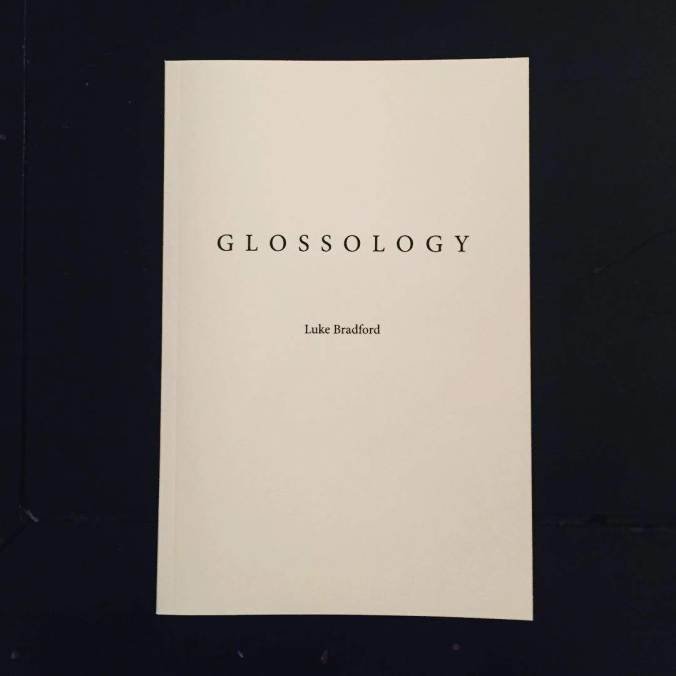
Luke Bradford is an experimental poet living in Cambridge, Massachusetts. His latest collection of constrained poetry, Glossology, is available for free download as a PDF or for purchase as a book at lukebradford.xyz/glossology. His work has been published by Spacecraft Press, Penteract Press, and Timglaset.

His website is lukebradford.xyz.

The Interview

1.  When did you start writing poetry?

A quick look through my hard drive turned up something from when I was 14. I’ve never written much by hand, so this probably really is one of the first things I produced. Naturally, I’ve churned through many different styles over the years, and my interest in constrained writing in particular has grown from a small seed into a deep passion. I’ve only been writing poetry in what I’d consider a truly serious way, making it part of my daily routine, for about two years.

1. Who introduced you to poetry?

No particular moment stands out as an introduction to poetry. I had many great English teachers and professors over the years who exposed me to poetry in various ways. I think my love of poetry grew organically out of a broader love of language — since I was very young, as early as five, I always imagined writing books.

2. What do you mean by love of language?

I’ve always been fascinated by words. When I was younger, this manifested itself in constantly playing word games like Ghost. Later, I fell in love with etymology. To me, the history of a word like ‘chartreuse’ — that the color came from the liqueur, which comes from the Carthusian monks, whose name comes from the mountains where they first lived — is one of the most beautiful facts I know. I studied Latin in high school and college, which infused English with an additional richness.

I’ve always been a reader, though not a particularly voracious one. My tendency is to get extremely attached to specific pieces of writing and return to them again and again. I read novels more than I read poetry. Mark Z. Danielewski’s House of Leaves had a huge impact on me, and showed me how thoroughly a book can demolish boundaries. Other novels I love include Annie Proulx’s The Shipping News and Donna Tartt’s The Secret History. Obviously three very different books, but each with a particular aesthetic that really took root in me.

At some point in college, I was introduced to Christian Bök’s Eunoia. Today, Bök is by far the biggest influence on my writing, and I keep copies of Crystallography (my favorite work of his), Eunoia, and The Xenotext: Book 1 within easy reach. A book like Eunoia treats language as a material to be worked, like wood or steel, in a way that is incredibly compelling to me.

Today, my love of language manifests itself mainly in writing constrained poetry. Sometimes I imagine the entire English language as a vast cloud of words and meanings hovering like dust. Working with constraints unearths the hidden seams in that cloud. This type of work is like mining, in that you’re discovering beauty that’s in some sense already there. When I find something that strikes me as perfect, like the fact that ‘canoe’ is an anagram of ‘ocean,’ I feel like the language itself is speaking to me, and that these words are speaking to each other across the universe.

I love art in general, but I think that language is the most interesting medium to work in — largely because human beings have this powerful, innate apparatus for processing language, which means that art built out of language can intrigue us and move us in such complex and subtle ways.

2.1. In what way is Bok’s language compelling

Bök’s poetry has a level of intricacy, precision, richness, and joy that I haven’t found elsewhere. Constrained writing has a mechanical quality, by nature. When done well, it’s both mechanical and organic, like a machine made of blown glass.

3. What is your daily writing routine?

Nearly every weekday, I wake up early and go to a coffee shop a very short walk from my apartment to spend an hour or two writing before work. I have the luxury of living close to my office, which essentially means I’m writing instead of commuting. I love having this time to myself to focus on my projects before anything else takes my attention. I’m often writing in other spare moments throughout the day, especially when I’m feeling excited about a particular piece, but the morning routine is the most critical part of my process.

4. What motivates you to write?

Creativity has always been extremely important to me. I love art because it’s the most human thing we have — it’s what human beings do in the absence of all need. I’m driven to try to create beautiful things and put them out into the world. I also really enjoy the process of writing, which for me is very meditative.

5. What is your work ethic?

I’m in the lucky position that my creative projects very rarely feel like work. Sometimes, especially early on in a project, they are some combination of play and relaxation. At other times, a passion to produce takes over me, and I lose myself in the work. In the rare cases when it feels like a slog, my vision of the finished product is what carries me to the end. It’s more of a need than a want.

6. How do the writers you read when you were young influence you today?

I was a Harry Potter fanatic as a kid. I designed Harry Potter board games, made exhaustive lists of spells, and read the books over and over. I love the richness of the worlds that Rowling creates, and in my writing, I strive to use description in a similar way, to build windows into a world that feels immense and detailed. I was also a big Stephen King fan as a kid and teenager. King is a master of storytelling, and books like The Gunslinger have an atmosphere all their own. The major lesson I took from his work is that writing does not need to be fancy to be effective. Simple words and images can be the most powerful, which is critical to my writing today, since constrained writing often demands simplicity.

7. Who of today’s writers do you admire the most and why?

Bök, definitely, since I love his work so much. I admire Anthony Etherin, who produces tightly constrained works like palindromes, ‘aelindromes’ (palindromes of heterogeneous units), and anagram poems, for his extraordinary craftsmanship. Other poets whose work with constraint I find compelling are Ken Hunt, Nikki Sheppy, and Lucy Dawkins, all of whom (at times) combine strict rules with a clean, subtle aesthetic sensibility.

Outside the world of constraint, I’m a fan of poets like Rosebud Ben-Oni and Douglas Kearney, who (in vastly different ways) revel in experimentation and grant each poem its own dialect. I admire the simple grace of Billy Collins and the exuberance of Jonathan van Belle. Although I should say that, especially with mainstream poetry, I’m much more likely to become attached to individual poems than to a poet’s body of work. Outside the world of poetry, I admire the intellect and imagination of Neal Stephenson and the evocative language of Annie Proulx.

8. Why do you write?

I love the process and the products of creative work. Creativity is at the core of who I am. There’s a deep satisfaction to putting art out into the world that I’m proud of, art that I think is worthwhile.

9. What would you say to someone who asked you “How do you become a writer?

Here’s what worked for me — at least, here’s how I went from toying with writing to finishing and publishing projects I’m proud of:

Take a hard look at your internet addiction, and eliminate the time you waste compulsively checking websites. Establish a routine and stick to it. Write the thing you know you want to write someday — just do it now. Only put things out into the world when you believe they cannot be improved.

10. And finally, Luke, tell me about the writing projects you have on at the moment.

You’ve caught me in the limbo period between major projects. My most recent collection, Glossology, came out just under a month ago. I have several individual poems that are nearly done, some to submit to specific places. Many, many more are in their earliest stages. Some of these are lipograms following the same rule as Glossology: definitions of a term that use only the letters in the term itself. As for a larger, longer-term project, I’m currently playing with a few possibilities: a collection of reverse lipograms; a collection of “column poems” similar to the poems “The Barn” and “Yes I’ve Loved” from my debut collection, Abacus; a loose collection of constrained poetry guided by the alphabet in various ways; and a loose collection with various numeric rules around letter counts. Of course, there’s a good chance I’ll scrap all of these when I get excited about another idea and run with it.

Wombwell Rainbow Interviews: Maria Mazzenga

Wombwell Rainbow Interviews

I am honoured and privileged that the following writers local, national and international have agreed to be interviewed by me. I gave the writers two options: an emailed list of questions or a more fluid interview via messenger.
The usual ground is covered about motivation, daily routines and work ethic, but some surprises too. Some of these poets you may know, others may be new to you. I hope you enjoy the experience as much as I do.
41SvqOA98KL._AC_US500_QL65_


Maria Mazzenga

I write poetry, fiction and historical non-fiction from my home in Arlington, Virginia. I studied journalism and broadcasting as an undergrad, then, not ready to jump into the so-called real world, I hurried into master’s and doctoral programs in U.S. History in Pennsylvania and Washington, D.C.  After receiving my doctoral degree in U.S. history, I spent the next several years teaching history, first in Richmond, Virginia, and then, with library science, in the Washington, D.C. region.  In addition, I work as an archivist, curating educational websites and exhibits using cool archival stuff.  Non-fictionally speaking, I have published a range of historical works, specifically focused on ethnicity, nationalism, and interfaith relations, as well as articles on digital curation and archival marketing. As far the fiction and poetry, I have most recently published poems and prose in Eyedrum Periodically, JUMP, The Bitchin’ Kitsch, The Amethyst Review, and Chronos.  I’ve served as poetry editor with JUMP and at the Open Arts Forum, venues for modern poetry.  With my partner Roger Doyle as artist, I have written four books of poetry, “Wrecks,” “Poems of Yellow in Gray,” “The Lot of Sisyphus,” and “At Home in the Pen.”  Additionally, I have one completed novel, “Go Lightly,” and another in the works. You can find information on publications available via Amazon in the Books section of the site, or just check out samples of my poetry and fiction at http://dropdownworks.com/

1.    What inspired you to write poetry?

I’ll call it “tiny hallucinations,” which I draw from an article I recently read on hallucination and the construction of reality.  Scientists have theorized that in our attempts to assimilate reality to systems of belief built on old information, some of us hear, see, or feel things that we experience as not our own.  In other words, some of us might lose track of how certain sounds, images, and feelings actually come from within us, and perceive these as hallucinatory.  It’s not an original concept, Julian Jaynes suggested this in a model of inner speech theory decades ago; namely that there have been circumstances in which people hear voices that are not their own, but that this can actually come from one’s own consciousness.

What interests me about this concept of “nonclinical hallucination,” as these scientists call it, is what they might mean for poetic imagination.  When I was young, like many children, I sometimes saw things that I thought others saw, until I found out they didn’t.  Like a white rabbit in the yard.  Or distinct patterns in a wall, or indeed, snippets of sounds I thought I heard but that others didn’t confirm.  Perhaps it was these subjective happenings that led me to start writing poems.  For me, poems always begin as a fleeting barely perceived thing that can seem like something else or that was in fact, nothing one could pin down in the objective world.  The perception of a rustle in some creepy bushes.  A glimpse of a nonexistent crow in a bare, thick-limbed tree.  Phantom raindrops on the skin on a cloudy day.  This seems to be training ground for willing the images poetry relies on into existence.  Today, the gait of a particular person walking down the street, morning light on a tiger lily, a radio blaring out of a car speeding by can for me turn into poems that may or may not have to do with the original image.

2.    Who introduced you to poetry?

My ninth grade teacher, Miss Keane, had our class write haiku poems after reading several.  She submitted mine to a journal called The Catskill Review in upstate New York and they published it.  From then on, I wrote and read poetry.

3.    How aware were you of the dominating presence of older poets?

In high school we read Emily Dickinson’s “I heard a Fly buzz” and I was stunned that this woman writing over a hundred years earlier could write something that could have such a mysterious and immediate effect on me in so few words.  We read others as well, but it was that poem in particular that intrigued me most because of its music, and because I thought she was so brave for imagining what it was like to be dead.  So, I was aware of her and reading her made me seek out other poetry, such as that of Poe and Frost.  It wasn’t until later that I sought out the poets of the twentieth century.

4.    What is your daily writing routine?

For me, poems come when, if you will, I brush up against the world.  That means that I generally don’t get up and start writing poems, though I do write in a journal most mornings, and occasionally a poem will evolve out of a dream I had the night before.  For the most part, poems show up when I am out walking, or traveling to work via train or car.  I write them down in my journal, then revise them later on.   Then I will usually wait a day or two and do a final revision, I don’t do a whole lot of editing after a week, as I feel I’ve lost the poem’s personality after that.

5.    What motivates you to write?

A craving to assert my own thinking and expression.  A refusal to accept what I see as a heavily programmed society.  Social injustice.  The unlikely beauty of the natural world.

6.    What is your work ethic?

I feel I have an obligation to put words to paper in my own way on a regular basis.   I am actually trained as a historian, I am an archivist and I teach U.S. History in Washington, D.C.  So in addition to writing poetry, I also research and write history.  I write fiction too.  So I am pretty much writing something all the time, which is good, because I start to feel disconnected from my own thoughts if I am not writing.

7.    How do the writers you read when you were young influence you today?

I mentioned Dickinson earlier… her clipped style and willingness to approach what I considered profound and sometimes disturbing subject matter still inspires me.  My training as a historian of the twentieth century led me to the Beat poets, particularly Allen Ginsberg, who I admired for his ability to write thematically capacious poetry that wove broad political and social themes into its lines.

8.    Who of today’s writers do you admire the most and why?

I participated in a several poetry forums, Poetrycircle, JUMP, and Open Arts Forum in the last couple of years, and I found extremely sharp and imaginative poets there: Tom Riordan, Dan Flore III, Trish Saunders, Jenn Zed, Jordan Tretheway, Paul Brookes, Wren Tuatha, Ton Romus, and many others.  What I appreciated about reading and sharing work with those poets and artists is that I could read drafts of their work and comment on them and watch the works change, or allow the poet explain why they didn’t want to change their work.  I also grew a lot just from their critiques.  Good critique accelerates development, of course.  As far as poets I don’t know, I’m partial to Louise Glück, both for her commentary on poetry and her poetry itself.  I find her poems fluid and I like her subject matter.

9.    Why do you write?

To know how I think.  To record my personal history.  I also am lucky to have a brilliant visual collaborator who happens to also be my spouse!  Roger Doyle is a visual artist and sculptor whose work easily inspires me to write, as he usually has a quirky take on whatever he approaches.  We have done four art-poetry books and one art-novel together and are working on more.

10.  What would you say to someone who asked you “How do you become a writer?”

Talk about being a writer less than you actually write!  Live a curious life.

11.  Tell me about the writing projects you have on at the moment.

I have three books of poetry with art by Roger now available at Amazon: Works of Yellow in Gray, The Lot of Sisyphus, and At Home in the Pen.  I will also have a novel called Go Lightly with illustrations by Roger available soon.  We are working currently on a book called Alien Drabbles that should be finished by late 2018.

Wombwell Rainbow Interviews: Carole Bromley

Wombwell Rainbow Interviews

I am honoured and privileged that the following writers local, national and international have agreed to be interviewed by me. I gave the writers two options: an emailed list of questions or a more fluid interview via messenger.
The usual ground is covered about motivation, daily routines and work ethic, but some surprises too. Some of these poets you may know, others may be new to you. I hope you enjoy the experience as much as I do.

41lvz+-I6UL._SX323_BO1,204,203,200_

Carole Bromley

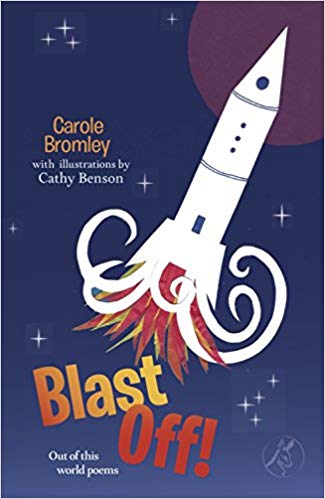
lives in York where she is the Poetry Society’s Stanza rep and runs poetry surgeries. Her background is in teaching and she ran creative writing courses at York University for fifteen years. Twice a winner in the Poetry Business Book and Pamphlet Competition, she has two pamphlets and three collections with Smith/Doorstop: A Guided Tour of the Ice House, The Stonegate Devil  and Blast Off! (for children aged 7-10) She has won a number of first prizes, including the Bridport and has performed at various festivals in Aldeburgh, Bridlington, York etc. Carole has also judged poetry competitions both locally and nationally.

http://www.carolebromleypoetry.co.uk

The Interview

1. What inspired you  to write poetry?

Like most people I had good English teachers whose enthusiasm was infectious and I enjoyed studying poetry at university but really I started in earnest when taking my sixth formers to Lumb Bank where I worked with some wonderful poets who encouraged me to take myself seriously as a poet.

2. Who introduced you to poetry?

I can’t remember really. It’s always been there. I even spent my pocket money on a poetry book when I was very young.

3. How aware were you of the dominating presence of older poets?

Do you mean dead poets or decrepit ones? I certainly had a grounding in poets of an earlier age – Keats, Coleridge, Wordsworth etc. and they seemed to inhabit a magic kingdom I wanted the key to.

4. What is your daily writing routine?

I don’t write every day. Family commitments and other work get in the way so I would say I write when I can and it works best if I have lots of time and solitude. I have just come back from a wonderful Arvon retreat where I could barely drag myself from my desk!

5. What motivates you to write?

I just love it. It makes me feel alive. Rejections, obviously, have the opposite effect but it’s the actual writing that matters.

6. What is your work ethic?

Not sure I have one unless I have inherited my ancestors’ Northern work ethic. Certainly I work hard.

7. How do the writers you read when you were young influence you today?

I think you always carry the rhythms of nursery rhymes and children’s poetry with you. Of course when I was younger I was into the Romantics. Nowadays I’m more immediately influenced by contemporary writers. On the retreat, for example, I immersed myself in Miroslav Holub, Selima Hill, David Constantine, Penelope Shuttle. I love to read whole collections or even collecteds.

8. Who of today’s writers do you admire the most and why?

So many it’s hard to say. Of my immediate contemporaries I really admire poets like Clare Shaw, Kim Moore, Mona Arshi, Carol Ann Duffy,obviously, but also I love Billy Collins and Frank O’Hara (OK not strictly contemporary!) I admire Sharon Olds too. I think I am drawn to poets who have courage, who are honest and clear. For me, that’s what poetry is. Isn’t it about honesty?

9. Why do you write?

I write because I love to write and because if I don’t for a while I start to feel quite ill actually. I need to write whether anyone reads it or not. Of course it’s better if they do!

10. What would you say to someone who asked you “How do you become a writer?”

Actually someone on the retreat did ask me that and I said I would send her a reading list! Basically you need to study what other poets are doing and have done, to notice how poems are put together and so on but also definitely go on courses, share your work with others, go to readings and festivals and just read loads.

11. Tell me about the writing projects you have on at the moment.

At the moment I have two things on the go: a second children’s collection and a short collection of poems written about my recent experience of brain surgery. At Lumb Bank I read loads of poems about illness and when it got too much I went back to play around with poems for small children which are such fun to write. It’s like being a kid again and what’s wrong with that?

Wombwell Rainbow Interviews: Maggie Mackay

Wombwell Rainbow Interviews

I am honoured and privileged that the following writers local, national and international have agreed to be interviewed by me. I gave the writers two options: an emailed list of questions or a more fluid interview via messenger.
The usual ground is covered about motivation, daily routines and work ethic, but some surprises too. Some of these poets you may know, others may be new to you. I hope you enjoy the experience as much as I do.

The Heart of the Run published

Maggie Mackay

Here’s the link to my debut pamphlet.

https://picaroonpoetry.wordpress.com/books/the-heart-of-the-run-by-maggie-mackay/

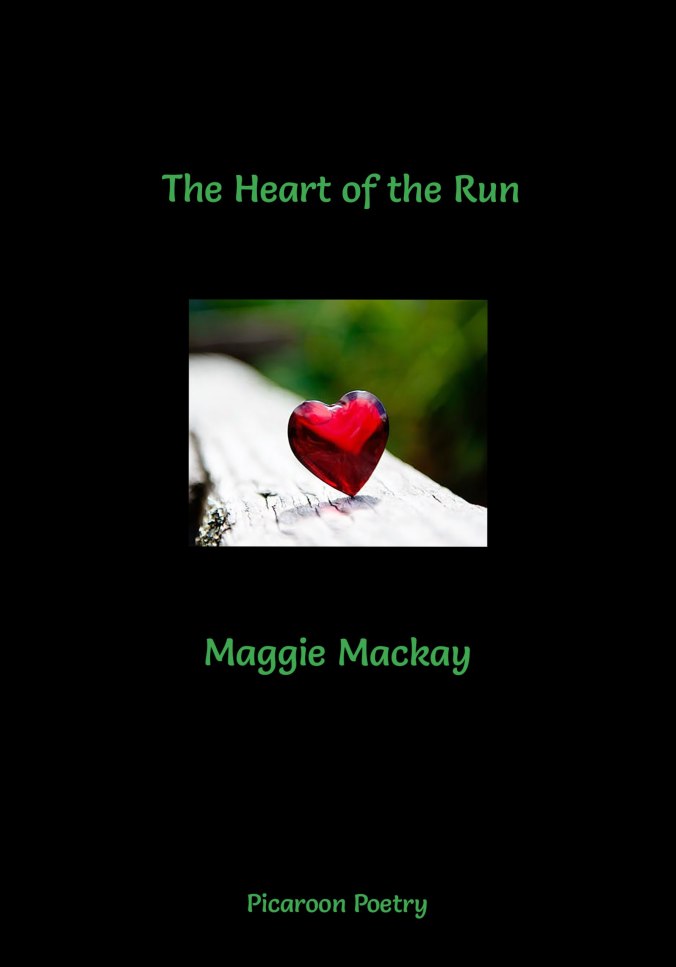
Maggie Mackay is a jazz and whisky loving MA graduate from Manchester Metropolitan University. One of her poems is included in the award-winning #MeToo anthology while others have been nominated for The Forward Prize, Best Single Poem and for the Pushcart Prize. Her pamphlet ‘The Heart of the Run’ is published by Picaroon Poetry.

The Interview

1. What inspired you to write poetry?

The way so much can be expressed in concise language and the joy of capturing a thought/memory in an image. I was in the teaching profession for a very long time. You view and experience such a rich tapestry of life in the young people and adults who make up a learning community. So much to write about and communicate.

2. Who introduced you to poetry?

My Dad who loved books. He read bedtime stories to my brother and me through our childhood and introduced me to the public libraries, the theatre and cinema.

3. How aware were you of the dominating presence of older poets?

As a Scot, I was raised with the poetry of Robert Burns and at school we learned the works of classic poets such as John Masefield, Edward Lear and R L Stevenson who remains a hero for me.

4. What is your daily writing routine?

I try to find a couple of hours each day. For me practice has to be a habit. My MMU tutors stressed how important it is to read widely so I aim to read at least one poem a day from a collection for inspiration and appreciation of craft.

5. What motivates you to write?

The fun of it, losing myself in another place, sometimes for hours and the magical buzz when the words strike gold. Rare, and so satisfying.

6. What is your work ethic?

Practise, practise. Read, and read more, including poetry I might resist. That makes for a productive learning curve.

7. How do the writers you read when you were young influence you today?

They show me how to sustain musicality and rhythm. How to write elegantly and play with language.

8. Who of today’s writers do you admire the most and why?

Several Celtic poets –   Heaney, Robin Robertson, Rita Higgins, Louis MacNeice for their lyricism and versatility. American writers too – Billy Collins, Mark Doty, Kay Ryan, Marie Howe. I admire any writer who can connect with the reader, tell a story with power and subtlety. There are poets in my community whom I admire, my editor Kate Garrett and to name but a few, Claire Askew, Lindsay MacGregor, Kim Moore, Helen Ivory, Rebecca Gethin, Brett Evans and Stephen Daniels.

9. Why do you write?

To feel complete. To flex the brain muscles. To be part of something bigger.

10. What would you say to someone who asked you “How do you become a writer?”

You read. You pick up a pen, stare at the blank page and write from the heart. Really, you can’t help yourself from writing. It’s like breathing. And there’s no point in worrying about rejection. Go to readings, workshops, hang out with like-minded folk and never listen to the negative voice at the back of your brain.

11. Tell me about the writing projects you have on at the moment.

I start a PhD in Poetry next year. I’ve a few themes bubbling up to discuss when I get going. I’m also compiling a full collection and all the time sending out poems to call outs.

Wombwell Rainbow Interviews: Joolz Denby

Wombwell Rainbow Interviews

I am honoured and privileged that the following writers local, national and international have agreed to be interviewed by me. I gave the writers two options: an emailed list of questions or a more fluid interview via messenger.
The usual ground is covered about motivation, daily routines and work ethic, but some surprises too. Some of these poets you may know, others may be new to you. I hope you enjoy the experience as much as I do.

515BsBiLmDL._AC_US500_QL65_

Joolz Denby

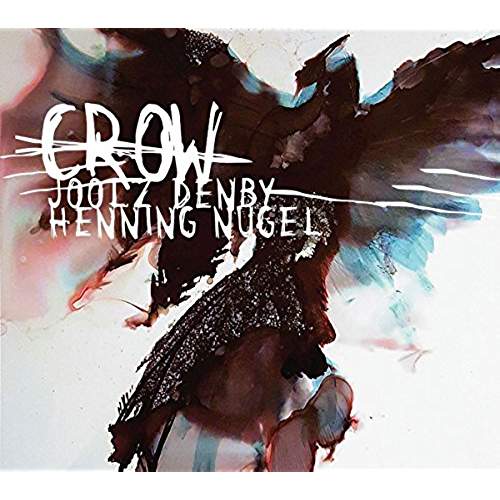
Joolz Denby has been a true underground renaissance artist since the late 1970s. As a poet, she was one of the principle figures to emerge from the post-punk generation, publishing seven collections of work and giving readings all over the World in countless different settings. As a novelist, she has published six volumes, including € Stone Baby € for which she received the New Crime-writer of the Year award in 2000 and € Billie Morgan € , which was shortlisted for the Orange Prize for Literature in 2006. As a working artist, Joolz has designed all the record covers and visuals for the band New Model Army for 36 years (as well as being a guiding hand throughout their long career). Her paintings have been shown in many galleries while her unique tattoos have adorned clients from around the globe who come to her Bradford studio. Crow will be her seventh studio album, with past collaborators including Jah Wobble, members of New Model Army, Mik Davis and many others.

The Interview

1. What inspired you  to write poetry?

*I honestly can’t remember a particular thing, as I have written poetry from my earliest years. My late father secretly kept the poetry I’d written when I was a child and I found it after his death. It wasnt that much different from what I write now in some ways. I know I was published from age eleven in the school magazine and local paper and my English teacher gave some of my work to Ted Hughes to look at and he sent a note back which was helpful to me. I write as I wrote then, in my own way about things that interest me.

2. Who introduced you to poetry?

* There were some poetry collections in my childhood home, traditional works, but again I don’t remember ever not knowing about poetry. As a child in the 70s the Mersey Poets were an inspiration as was Dylan Thomas. I was and still am an avid reader of absolutely anything. And of course song lyrics were a great influence.

3. How aware were you of the dominating presence of older poets?

* Not at all. I never paid any attention to anyone else in the sense of being dominated by any influence. I think as a teenage poet I’d have laughed at the idea of anyone telling me what to do,  though I was always aware of having a lot to learn, I was and am very resistant to be told what to do or think.

4. What is your daily writing routine?

* I try to write a little something every day, even if it’s just a note. It’s the same with my drawing, I believe you need to keep your hand in, keep practicing. Or you lose the easy touch you need so things don’t seem laboured.

5. What motivates you to write?

* I just do it. I never needed motivation because it’s as natural as breathing and I don’t get blocked. If something’s not coming I just let it alone for a while and draw instead. It comes back eventually.

6. What is your work ethic?

* I’ve worked hard at every discipline I’ve done, poetry, novels, art, tattooing. You don’t get anything without hard work, dedication and commitment. If that sounds boring then you just don’t know the incredible joy of doing something well and seeing the result of your labour. I don’t buy the pisshead poet stereotype or the druggie artist. It’s boring and tedious to witness and they’re never as good as they think they are. Dylan Thomas was the exception but if he hadn’t been an alcoholic we’d have had decades more of his brilliance.

7. How do the writers you read when you were young influence you today?

* Their influence is that they’re always with me, every day.

8. Who of today’s writers do you admire the most
and why?

* I don’t like many modern poets and I can’t stand Slam. I rate the novelist James Lee Burke as a poet and the lyrics of Justin Sullivan.

9. Why do you write?

* Because I’m alive.

10. What would you say to someone who asked you “How do you become a writer?”

* Read everything you can and keep reading and write something everyday. You have a computer in your pocket with a smartphone, use it.

11. Tell me about the writing projects you have on at the moment.

* I’ve just released an album of poetry set to music with the German composer Henning Nugel and were looking at another. I am serializing my life story on Facebook in a Group called The Memory Box, which any one is free to join. I’m writing new poetry all the time and doing the odd gig now and again. I’m planning an illustrated book of my poetry, and doing 3 Red Sky Coven gigs next February.

Wombwell Rainbow Interviews: Peter Boughton

Wombwell Rainbow Interviews

I am honoured and privileged that the following writers local, national and international have agreed to be interviewed by me. I gave the writers two options: an emailed list of questions or a more fluid interview via messenger.
The usual ground is covered about motivation, daily routines and work ethic, but some surprises too. Some of these poets you may know, others may be new to you. I hope you enjoy the experience as much as I do.

wp_ss_20181012_0001

Peter Boughton

Peter Boughton has lived in Birmingham, Sheffield and the East Midlands and currently works as a secondary school teacher in the South East. His writing featured in two anthologies published in the 1990s (Both entitled ‘Five’ together with Chris Jones, Tom Roder, Adrian Head, Matthew Clegg and Karl Hirst). More recently, his writing has appeared online in The Honest Ulsterman and Minor Literatures webzines.

The Interview

• What inspired you  to write poetry?

I was very lucky to have a very creative and encouraging mother. I must have started writing at about the age of 7 – about the same time that my family moved from Oxford to Birmingham. Naturally, for a 7 year old, this felt like the end of the world and I must have done a good impression of a pre-adolescent going through adolescent depression. My Mum gave me a pen and a notebook which I dutifully filled with dirges and she endlessly praised me, In retrospect, she was an amazing person – I can’t think of many people who’d like to read my 12-page post-Wasteland epic about a shark AND do a convincing imitation of someone enthralled by genius.

Today, inspiration – well can I put the idea to one side? I tend to write about things primarily that are right in front of me. There isn’t any inspiration. I do a lot of what I think of as ‘bending and stretching’ exercises too – just forcing myself to use a form I wouldn’t normally use. Sometimes I revise and expand on stuff and sometimes, well that’s that. I have an ongoing fascination with wild-life – especially plants and their names.

• Who introduced you to poetry?

I’m an awful reader of poetry- or at least I was. My canon before University was made up of four or five poets. I think I was introduced to poetry properly through friends at the University of Sheffield Writers’ group. Again, in retrospect I was extraordinarily lucky to be in a certain place at a certain time and meet people like Chris Jones, Matthew Clegg, Tom Roder, Adrian Head and later Brian Lewis and Karl (Andy) Hirst.  They all had very different talents, diverse interests and they all were incredibly generous with their time and criticism. I could write a thousand lines about each of them – but in short – what they opened up for me was a sense of possibility.

• How aware were you of the dominating presence of older poets?

It’s not a problem now, but it was disastrous in my mid-twenties. This is the downside of meeting people who really know poetry! I spent a good few years doing really awful pastiches of Paul Muldoon and then (and this was a low point) John Berryman. Most of my writing up until then had been in the form  of Angela Carter-ish vignettes in verse – not that I was aware of that – and its strength lay in its innocence. I wasn’t aware of what poetry should be like – and even if I lacked discipline I kind of made up for it with the risks I was willing to take. Unfortunately, I discovered that I was very good at soaking up influences  and I ended up writing very knowing but clumsy imitations. And I’d add – there are poets that are good for you as a writer  (Pound, Bunting Frost, I’d argue)- and others that are so idiosyncratic that they can be like an albatross around your neck. Berryman is wonderful – but he appeared on my horizon at exactly a moment in my life in which Berryman things were happening. Tom Roder, incidentally – did something genuinely new and hilariously funny with the Dream Songs in his ‘Henry’s Dog Poems’ which I believe you can still find fragments of floating around the internet.

• What is your daily writing routine?

I try and write something every day. It’s odd, because I’m a teacher and during term time I’m really pressed for time- but I find I’m much more creative when I’m busy in the first place. Poetry seems to be something that happens when I should be doing something else. I write lots when I’m commuting too. If I have open stretches of time on my hands (and this is rare – I have an impossibly patient wife and two impossibly impatient kids) – I need some sort of structure, and this often means walking. I might take photographs on a walk and these sometimes find their way onto the page in one way or another.

• What motivates you to write?

Ah – I’m a word junkie. There’s something very particular about the pleasure composition can give you when everything falls into place. I’m often surprised by what results as well, but the process seems more the thing to me. Of course, it’s lovely when you find an audience and people praise what you’ve done – but this wouldn’t mean very much if you didn’t believe in it in the first place. I can live with a piece not being a total success if I’ve learnt something new in writing it.

• What is your work ethic?

Not good enough in the last 12 months. I have peaks and troughs.

• How do the writers you read when you were young influence you today?
I think one of the pleasures of growing older is that you can read younger influences without that weight on your back. Once every month I get a bit grumpy and the late, great Peter Reading starts using me as a ventriloquist dummy, but aside from that, I’m easy. I’ve got a copy of Lattimore’s Illiad on my bedside table with John Clare’s Collected and Pound’s Pisan Cantos at the moment, and I dip sporadically.  I’ve loved Byron for years, but I’d never attempt to write like him – even if it feels like the age we live in could do with a Don Juan. The Graham of ‘The Nightfishing’ is there too.

• Who of today’s writers do you admire the most and why?

Oh my. I’ll have to pick Brian (Lewis) – simply because I can’t think of anyone who actually does what he does. The term ‘psychogeographer’ has become a little glib these days and I think he’s be insulted by it – he’s a map maker in the process of creating something impossible. A sort of microscopically defined picture of the vast expanses of the East of England. He’s also a man who has given his life over to poets and poetry in a way that very few can. Matt Clegg as well – Clegg is to diction what sticky toffee pudding is to the tongue – and I’m invariably green with envy at the way he sits so comfortably in a tradition of giants like Heaney, Walcott and Milosz. As I hinted at before,  I’m pretty awful when it comes to keeping up with current trends in contemporary poetry. My favourite fairly recent discoveries have all been of dead people – R F Langley, Tom Raworth. Once in a blue moon I pick up Prynne’s ‘Poems’ and spend a good few hours being alternately gobsmacked and annoyed. He’s still alive of course, but everything he does looks like a stone edifice.

• Why do you write?

This is one of those questions where you’re tempted to say that it’s your life and you’d die without it etc. Perhaps I would have said that 20 years ago. Now, it’s knitting. Some day I’m going to make a really great jumper- but in the meantime I like fiddling around with needles and wool.

• What would you say to someone who asked you “How do you become a writer?”

There are many answers to this. Get used to being skint being the most obvious one! With students at school the standards that they have to meet at GCSE or whatever are so proscriptive, but the funny thing is, even the ones that fail are writers. There are some things that seem fundamental to being a human being – narrative, sound, character, humour, pathos – whatever. So, without sounding too much like a Zen Buddhist Monk – all I’d say is, you already are one.

• Tell me about the writing projects you have on at the moment.

I continue to feed an impossible messy narrative project under the title ‘Fragment’s from Arbuthnot’s Asylum’ which you can see unfolding on Facebook. I keep saying I’m going to end it, then something pops up and it continues. Elsewhere, I’m doing bits and bobs with classical meters and occasionally a longer poem pops up. I do have a website on WordPress (DogStandard) but I’ve been very lax in maintaining it of late. I’ve had a few pieces published by the Honest Ulsterman and Minor Literatures in recent years.

Wombwell Rainbow Interviews: Dimitris Bonovas

Wombwell Rainbow Interviews

I am honoured and privileged that the following writers local, national and international have agreed to be interviewed by me. I gave the writers two options: an emailed list of questions or a more fluid interview via messenger.
The usual ground is covered about motivation, daily routines and work ethic, but some surprises too. Some of these poets you may know, others may be new to you. I hope you enjoy the experience as much as I do.

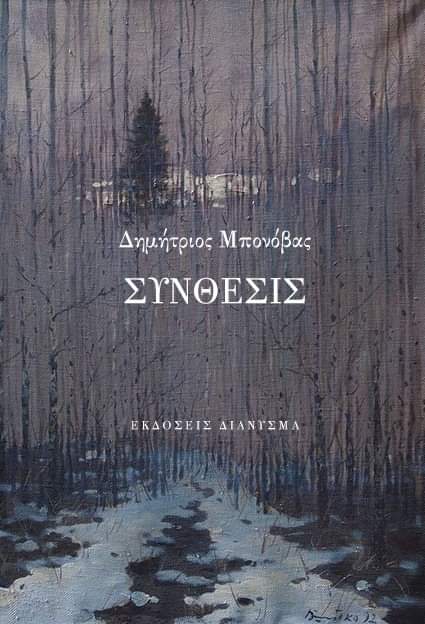
43788092_302213040598087_6487204267001118720_n

Dimitris Bonovas

Dimitris Bonovas was born on 10-9-1989 in Ioannina, Greece. He graduated from University of Western Macedonia in the field of Computer Science and Engineering.

He started writing and composing at the age of 17. He graduated from Tsakalof conservatory at Ioannina with the degree of Harmony (2009), Counterpoint (2011) and Fugue (2015) with piano experience.

He took part in 2nd, 3rd and 4th team poetry collections of “Διάνυσμα” publications (2015, 2016, 2017) and he has published a personal one in 2016.

Links :
Personal blog :

http://www.musicheaven.gr/html/modules.php?name=Blog&file=page&blogger=capoelo

stixoi.info :

http://www.stixoi.info/stixoi.php?info=Poems&sort=date&order=desc&poet_id=92083

youtube :

https://www.youtube.com/channel/UC-vMU0GXpFBhQhaxBDnyZVg

wattpad :

https://www.wattpad.com/user/dbonovas

instagram :

https://www.instagram.com/dbonovas/

The Interview

1. What inspired you  to write poetry?

D.B. : It wasn’t something specific. From the beginning, I was driven by my thoughts and emotions. I write when I’m sad, I write when I’m happy, I write when I’m in love… I write all the time!

2. Who introduced you to poetry?

D.B. : My experiences. I always wanted to find a way to express myself, to share my feelings with other people. And I found poetry.

3. How aware were you of the dominating presence of older poets?

D.B. : I was always fascinated by the work of great poets like Shakespeare, Poe, Neruda. And also Greek famous poets like Cavafy, Karyotakis and my personal favourite, Tasos Livaditis. I admire the way they had to “communicate” with others, how they did what they did.

4. What is your daily writing routine?

D.B.: I don’t have a routine. I will sit there with my pen in my hand and let my heart do the talking.

5. What motivates you to write?

D.B. : Everything. It can be a feeling, or a personal experience or even a strange person on the way home.

6. What is your work ethic?

D.B. : Just “don’t do to others what you don’t want them to do to you”.

7. How do the writers you read when you were young influence you today?

D.B. : After reading all those great poems by these extraordinary minds, I think that somehow they became a part of me. You can find a little Cavafy in me or a little Livaditis.

8. Who of today’s writers do you admire the most and why?

D.B. : I admire those writers that write for the pleasure that it gives them. Not for fame or for money.

9. Why do you write?

D.B. : For me, writing is much more than just writing. It’s the air that I breathe, the blood that runs through my veins… I think I found a way to fly.

10. What would you say to someone who asked you “How do you become a writer?”

D.B. : There’s no answer to that question because the only thing you have to “learn” is how to put one letter after the other. After that, if you have it, start writing. That’s all.

11. Tell me about the writing projects you have on at the moment.

D.B. : Right now, I have five projects on the run. Two about poetry, my personal one and one collaboration, one about prose and two about music (I am a musician also). In addition, along with some friends of mine, we are running a blog about literature (silverybooks.blogspot.com)

Wombwell Rainbow Interviews: Richard J. Cronborg

Wombwell Rainbow Interviews

I am honoured and privileged that the following writers local, national and international have agreed to be interviewed by me. I gave the writers two options: an emailed list of questions or a more fluid interview via messenger.
The usual ground is covered about motivation, daily routines and work ethic, but some surprises too. Some of these poets you may know, others may be new to you. I hope you enjoy the experience as much as I do.

41vf4TWRNKL._AC_US500_QL65_

Richard Cronborg

I have published four books…”The Journey, Memoirs of a south side Chicago kind of guy”…”A Spider in the Corner of my mind”…this is a book of short stories and poems….”Chicago Stories and other…
Public Speaker
2003 to present
Volunteer work
Local 150 International Union of Operating Engineers
Jun 1967 to Nov 2005
Ran cranes on high rises in Chicago…Participated in the Deep Tunnel Project for 12 years…Enjoyed bulldozing and loading trucks with CAT earth movers. Retired and union proud!

The Interview

1. When and why did you start writing poetry?

I started writing poetry in 2007

2. Who introduced you to poetry?

I was introduced to poetry in a high school English class, by an erudite instructor.

3. How aware are you of the dominating presence of older poets traditional and contemporary?

I first got interested in traditional poets such as Walt Whitman, but really was influenced by the work of Lawrence Ferlinghetti, Alan Ginsburg and my favorite, Charles Bukowski

4. What is your daily writing routine?

I read and write every day. I have no set routine. I wait for a word or an idea, then extrapolate on it.

5. What motivates you to write?

I wait for a word or an idea, then extrapolate on it.

6. What is your work ethic?

I have no work ethic, but rather depend on a flow of consciousness type style of writing.

7. How do the writers you read when you were young influence you today?

I had a great background in reading the classics. Moby Dick by Melville, the works of Dostoevsky, Invisible Man by Ellison, Huxley, Jack London, Hemingway, etc

8. Who of today’s writers do you admire the most and why?

My new favorite in today’s market is Karl Ove Knausgaard. He’s an excellent writer who has written the longest autobiographical novel, titled: “My Struggle”. It’s breadth is 4,500 pages. It’s a writer’s book, a fantastic work. It’s epic.

9. Why do you write?

I write because it’s an obsession. It defines me and helps me to think.

10. What would you say to someone who asked you “How do you become a writer?”

One becomes a writer by reading throughout one’s life time. Living a life full of wide and variegated experiences leads to good, solid writing. A university education in the liberal arts doesn’t hurt the process.

11. Tell me about the writing projects you have on at the moment.

I just had my 7th book published, “Thug Life”, by Alien Buddha Press. I write every day, so invariably #8 will be on its way sometime next year.

Amazon blurb on “Thug Life”

“I am a product of the 1960s. I grew up in a working class neighborhood on the south side of Chicago. Luckily, I had a university education and broke out of the mode of biased, racist and xenophobic thought that was common to my peers. This compilation of poems and mini-stories is a collection of my daily thoughts. I always felt myself to be an outsider type. I never did well in groupthink. I never saw myself as one who fits in. As a young man, I thought there might be something wrong with me. Now that I enter my 70th year on this earth, I feel pretty much whole. This is my “thug life”. We thugs lurk in the shadows, observing and thinking. The wheels always are turning in our brains.”