Wombwell Rainbow Interviews: Jake St. John

Wombwell Rainbow Interviews

I am honoured and privileged that the following writers local, national and international have agreed to be interviewed by me. I gave the writers two options: an emailed list of questions or a more fluid interview via messenger.
The usual ground is covered about motivation, daily routines and work ethic, but some surprises too. Some of these poets you may know, others may be new to you. I hope you enjoy the experience as much as I do.

JSJ Book[119348]

Jake St. John

writes out of New London, CT and is the author of several collections of poetry including Workingman’s Odyssey (Analog Submission Press, 2018), In All The Cities The Same Faces (CWP Collective, 2017) and Rotations (Night Ballet Press 2015). His poems have appeared in print and online journals around the world. He can be found wandering the streets of Coyote Territory in SoHo, New London.

Book Links:

In All the Cities the Same Faces
https://www.cwpcollectivepress.com/bookstore-1/in-all-the-cities-the-same-faces-by-jake-st-john

Rotations

http://nightballetpress.blogspot.com/2015/01/our-world-is-spinning-with-rotations-by.html

20150120_165958
Our World Is Spinning with ROTATIONS by Jake St. John!
nightballetpress.blogspot.com
NightBallet Press is an independent small press, interested in the musicality of language and the originality of expression in poetry, with a commitment to excellence.

The Interview

Wombwell Rainbow Interviews

1. What inspired you to write poetry?

I was writing song lyrics all the way back in high school.  There was a group of us that would write down lyrics together.  As I got older, Jim Morrison’s lyrics and poetry really grabbed me.  Bob Dylan too.  It all kind of started in college when I spent the day out in the woods reading a Morrison biography.  There were references to On The Road and so I went down to the used bookstore and grabbed a copy.  That’s how I found Kerouac, through Jim Morrison. From there it was all the Beats.  Kerouac, Snyder, Baraka.  I was reading everything I could get my hands on.  I loved the way Kerouac wrote.  I’d never seen anything like it.  All these poets and writers opened my eyes wide.  I started to really see the world.

2. Who introduced you to poetry?

I kind of found it on my own.  I got turned on to The Doors when I was pretty young.  Watching the Lost Boys movie, which featured a Doors cover of Riders On The Storm.  That pushed me toward The Doors and I discovered Jim Morrison.  Morrison’s words and poetry was something I was drawn to.  It was different, he was different.  Like I said, Jim’s words introduced me to Jack’s words which brought me down the highway.

3. How aware were you of the dominating presence of older poets?

I wasn’t really aware of the poetry world until I met Tom Weigel in New London back in 2004.  We met at a Sunday afternoon reading in the winter.  Tom became my mentor and my friend.  He put books of poetry in my hands at the right time.  He turned me on to Ted Berrigan, Pete Spence, Tom Clark, Bob Kaufman.  Tom introduced to me to Joel Daily in New Orleans and Dick Martin in Boston, Through Tom, I met John Landry, who has stayed a friend and mentor still.  Once I met Tom I was introduced to this world of poetry and poets that just keeps growing.  When it comes to older poets, Tom was the single greatest presence in relation to my poetry.  He pointed me in the right directions.

4. What is your daily writing routine?

I try to write a few lines every day.  It’s tough some days to get real work completed. I have two kids, a family.  I might get 3 lines down one night and the next I might get 3 poems finished.  I try to use the time I have appropriately and make the most of it when I get it.  If I’m unable to write, then I read.

5. What motivates you to write?

My motivation is getting the voices that are reciting poetry in my head to stop.  There’s a poetry reading that happens at any time.  Out of the blue.  Driving down the highway, mowing the lawn, taking a walk.  They just start.  They’re recited over and over in my head until I can get them on paper.  I write them as I hear them then I go to work editing and revising until the image is what I hear in my head.  With each poem I feel like I’ve learned something, discovered something new, connected in some way.

6. What is your work ethic?

I try to do something poetry related every day, even if that means reading a book.  When I get stuck and I’m not hearing the words, I’ll grab a book of poems and start reading and soon that poetry reading in my head starts and the words are bouncing around.  Tom Weigel always told me, “If you want to WRITE good poetry you need to READ good poetry.”  That’s the best advice that I’ve ever received when it comes to poetry. I just finished reading John D. Robinson’s new book Echoes Of Diablo (Concrete Meant Press, 2018).  That’s a book everyone should read.  It just tore me up.  Every poem, perfect.  Really moved me.

7. How do the writers you read when you were young influence you today?

I still go back to all the writers of my youth.  I’m always grabbing a Kerouac book or Gary Snyder.  Kerouac’s Dharma Bums puts me in a different world. Makes me want to get back into the woods.  Snyder’s RipRap & the Cold Mountain Poems makes me want to get back into the mountains. I never go anywhere without a book by AD Winans.  I got a copy of his North Beach Poems Revisited years back and it just changed the way I saw poetry.  Winans wrote the kind of poetry I had been looking for.  From Winans I found out about Jack Micheline. I reread Great Gatsby often.  I was in my thirties when I really discovered Bukowski.  I stayed away for years (Tom’s advice) until I was pulled in and just fell in love with his novels.  I feel like you need to reread your influences every few years and see how they speak to you.  Sometimes it’s the same message and sometimes you discover something new even though you’ve read it multiple times.

8. Who of today’s writers do you admire the most and why?

There are so many great writers out there.  Right now I have Adrian Manning, John Greiner, Victor Clevenger, John Dorsey, Todd Cirillo and Ryan Flanagan books in my heavy rotation.  Flanagan is just prolific, it’s tough to keep up with him, he’s always got something new out.  It’s great to see.  Makes me want to write more and more to keep up.  I just really dig how those guys play with language.  There is a familiarity in their works that pull you in and make you feel part of the poem.

9. Why do you write?

I write because I have to.  Like I said before I have to write to get the words out of my head.  They will stay there reciting over and over until I get them on the page.  And when the voices come they come with a whole set.  I end up with 3 or 4 poems at a time when I’m really listening.

10. What would you say to someone who asked you “How do you become a writer?”

I don’t know.  I guess to me, you either are a writer or you’re not.  It’s an innate thing.

11. Tell me about the writing projects you have on at the moment.

I haven’t made any official announcement yet but I have my first full-length poetry collection, Lost City Highway, with the editor now.  I’m real stoked for this book.  It’s about 10-15 years of poetry in one collection. Jon Dambacher for A Jabber Publication is putting it out.  Really captures my time living in New London and travelling America on the back roads.  I’ll be making an official announcement soon.  I’m really looking forward to getting this book out.  Another book I am real proud of is In All The Cities The Same Faces.  CWP Press put that out last year and it’s still available from the publisher.
Wombwell Rainbow Interviews: Alan Catlin

Wombwell Rainbow Interviews

I am honoured and privileged that the following writers local, national and international have agreed to be interviewed by me. I gave the writers two options: an emailed list of questions or a more fluid interview via messenger.
The usual ground is covered about motivation, daily routines and work ethic, but some surprises too. Some of these poets you may know, others may be new to you. I hope you enjoy the experience as much as I do.

51CPOcMZ3FL._AC_US500_QL65_

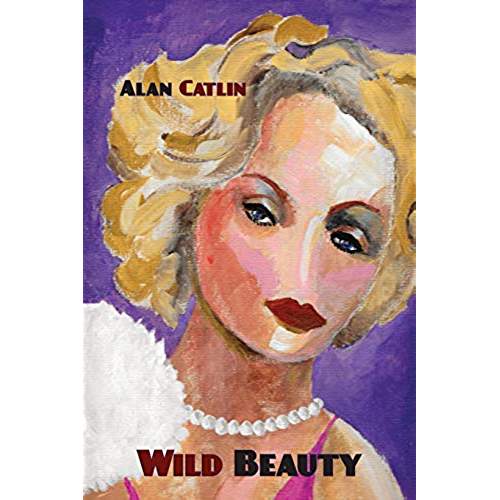
Alan Catlin

has been writing and publishing for the better part of five decades and hopes to survive long enough to make it six decades.  He has published dozens of books and chapbooks on a wide variety of topics including books such as “The Schenectady Chainsaw massacre”, “Alien Nation” and “Last Man Standing” based on his work as a barman.  His ekphrastic based arty books include ”The Effects of Sunlight on Fog”, “Our Lady of the Shipwrecks”, “Stop Making Sense”, “Self-Portrait of the Artist Afraid of His Self-Portrait” and “Three Farmers on the Way to a Dance”.  He has won a number of contests  such as the 2017 Slipstream Chapbooks Award for “Blue Velvet” and evil twin of “Hollyweird” He is finishing the eighth book in the series of movie poems now.  His quasi ekphrastic books include “American Odyssey” and “Wild beauty” He is working on a final draft of the concluding volume to be titles “Asylum Garden” He has written a memoir “Books of the Dead “ and novella “From the Waters of Oblivion.

He is the poetry editor of misfitmagazine.net

The Interview

  1. When and why did you start writing poetry?

There is so much to say and no other way to say it.

2.  Who introduced you to poetry?

I cannot remember a time without poetry so we were never properly introduced, we just always knew each other . I was an early reader. I read everything. I still do. Poetry is what moves me most.

3.  How aware are you of the dominating presence of older poets traditional and contemporary?

Extremely aware. That is what course work in poetry is all about.  Reading your predecessors, older then newer one. Then your contemporaries.

4. What is your writing routine?

I don’t have one. I used to write a poem a day which I did for three and half years and then my father died. It was impossible to do for some time after that (in 2004). Never resumed the practice. Now I write as projects evolve, stimulus inspires.  The world turns.

5.  What motivates you to write?

Without writing there is nothing.  It is what being is all about. The soul of matter. I can’t imagine not writing.  You don’t give up writing, writing gives you up. Or you die.

6. What is your work ethic?

I am generally considered prolific.  Whereas I do not write everyday now, once I am  involved in a project I can write dozens of poems at a sitting.  Have done, not so much anymore, as I don’t have the mental energy I once had.  I would say obsessive might cover my work ethic, though driven works also. I can’t stop, and won’t do so until the project feels finished. it’s why I don’t write novels.

7.  How do the writers you read when you were young influence you today?

Intimately. I can look back at poems from years ago and I can recall exactly what I reading then, as something from the reading has crept into the work,  subconsciously, or more overtly, as a quote or reference.

8.  Who of today’s writers do you admire the most and why?

I admire writers who are intellectually honest, are willing to take risks, transcend borders and eschew bullshit. They know who they are.

9. Why do you write?

It is in the blood.

10.  What would you say to someone who asked you “How do you become a writer?”
You have to work at it. Learn from your mistakes, read , read, read and read some more. What have other people been doing, what do they avoid, how can I learn to make the kind of positive decisions they do. Revise.  Rewrite.  And work harder.  Ask questions. Never give up.

  1. 11.  Tell me about the writing projects you have on at the moment.

I generally have several ongoing projects. The longest one right now is a series of dark noir poems based on movies that has a working title of Hollyweird. They are social commentary disguised as pictures on a moving screen. I guess you can consider that a natural extension of another project called Alien Nation which were political and social commentary disguised as bar poems.  Yes, there are aliens among us, Trump proved it and continues to prove it daily. We must not let them take over our culture. It’s like the movie “The Mysterians” when the general said we can’t give them an inch and they will take a mile.  Boy, was he ever right.  In the end the good guys prevail as they generally do in all those low budget sci fi movies form 50’s and early 60’s but that does not mean solutions always happen for the best . I’m also at work on a quasi-ekphrastic series of poems based on artworks of both high and low culture concentrating on photography.


Window Rainbow Interviews: Sarah James/Leavesley

Window Rainbow Interviews

I am honoured and privileged that the following writers local, national and international have agreed to be interviewed by me. I gave the writers two options: an emailed list of questions or a more fluid interview via messenger.
The usual ground is covered about motivation, daily routines and work ethic, but some surprises too. Some of these poets you may know, others may be new to you. I hope you enjoy the experience as much as I do.

Sarah James/Leavesley

(http://sarah-james.co.uk) is a prize-winning poet, fiction writer, journalist and photographer. Author of seven poetry titles, two novellas and a touring poetry-play, she’s been published by the Guardian, Financial Times and in the Blackpool Illuminations. Sarah runs The Poetry Society’s Worcestershire Stanza and V. Press poetry and flash fiction imprint (http://vpresspoetry.blogspot.com/). 2018 books: Always Another Twist (Mantle Lane Press) and How to Grow Matches (Against The Grain Press).

Wombwell Rainbow Interviews

1. What inspired you to write poetry?

Feeling intense beauty and emotions with little time (because of work or my children) to really feel or write about them in anything but the briefest snatches.

“To write songs of flight in italics
against grey skies, and dig out

the worms that dirt hides. To carry dawn
home in my silky down, spread light

across fields and town, then balance
stillness in the winter’s stark trees.”

(From ‘Fierce Love’, The Magnetic Diaries, Knives Forks And Spoons Press, 2015, collection highly commended in the Forward Prizes)

2. Who introduced you to poetry?

My mum, church, school. Poetry of one sort or another, with or without the overt music of nursery rhymes or hymns, has always been all around me. William Blake’s work, especially ‘The Tyger’(https://www.poetryfoundation.org/poems/43687/the-tyger), resonates particularly strongly in my memory from childhood – finding its way out later in some of my poems.

“I am the tiger. Stripes alight, my bright
eyes burn two holes in the night as I blaze
fearful forests with my gaze; search my self
for the slightest trace of symmetry.”

(From ‘Welcome to the Zoo’, Into the Yell,(http://www.circaidygregory.co.uk/intotheyell.htm) Circaidy Gregory Press, 2010, third prize in International Rubery Book Awards 2011)

But I think I’ve also made a fair few references to T.S. Eliot’s poems too in my own work over the years, as well as many other writers.

3. How aware were you of the dominating presence of older poets?

I’m very aware of presence and influence – it’s there in everything I read (and all I experience). But I wouldn’t describe it as dominating. It’s just there, and it’s natural that it should be there. It can be indirectly useful to me, as in re-reading Ted Hughes’s ‘Thistles’ (https://www.faber.co.uk/blog/thistles/)many times while writing ‘Endurance’ for plenty-fish (Nine Arches Press, 2015), (http://ninearchespress.com/publications/poetry-collections/plenty-fish.html) where:

“Stubborn roots draw up strength
from the land’s glacial inheritance…”

Or it can be the spring-board for a more explicitly direct response, as in ‘From His Uncoy Mistress, 2016’, where:

“Your words rise up to meet me
at the most awkward times –
now poised on a crest of surf
ready to claim the perfect wave;
only my own body to hold in balance…”

(From ‘From his Uncoy Mistress, 2016, How to Grow Matches, Against The Grain Press, 2018, shortlisted in International Rubery Book Awards 2018)

These words referred to are actually the ex-lover’s in the narrative. But the poem itself is a response to Andrew Marvell’s ‘To His Coy Mistress’. Taken on their own, my first two lines above could also apply to the writing influence process. Personally, I tend to find others’ great writing mostly inspires me to try harder, craft better, strive for something differently striking. I guess one particularly slightly daunting figure for me though, as a woman who’s written a lot, but not exclusively, on themes of womanhood, depression and mental illness is Sylvia Plath. In this case, her presence is maybe a counter-force rather than my wanting to follow in her footsteps. Her writing is totally unique. I’d aspire to that level of uniqueness more than Plath’s style.

4. What is your daily writing routine?

I don’t have a strict routine as such. There’s always too much to do for the time available, so I have prioritising systems to ease both writing and general workflow. For example, I use personal, competition and submission deadlines to focus me and make me edit. I became a reviewer for Riggwelter to allow me to prioritise some reading above other jobs. I’ve also learned the hard way to listen to my own energy levels and fit different tasks to the right time/mood, rather than battle to get something done immediately when I’m in the wrong frame of mind. What takes five hours at the wrong time can take 5 minutes in the right headspace. This is particularly true for me on a long tiring day when going to bed is likely to mean I can power away first thing the next morning rather than try to get something finished that night, fail and then wake up still exhausted. One thing I have to have in my daily routine is exercise, preferably outdoors, to balance my energy levels, generate ‘feel-good’ hormones, get a sense of greater perspective and also so my subconscious can pace out editing problems in a way that keeps the words in rhythm. I guess this might all reduce down to a guiding writing mantra that’s somewhere between the following:

“With me, without me, the clock’s hands pierce crimson wormholes…”

(From ‘Blue’, Be[yond], Knives Forks And Spoons Press, 2013)

“Rain presses its rhythms into earth skin;
our heartbeats glisten.”

(From ‘Laptop TV’, Hearth, Mothers Milk Books, 2015)

5. What motivates you to write?

Intense beauty, emotion or wonder. Trying to understand or capture something important through snapshots in words, such as:

Raindrop on a Red Leaf

His hand cupping a spider, wrist trembling;
a thin branch in the wind,

or the lurch of lungs and stomach when a plane
takes off and the world sinks away,

or the first bead of bone clearly conceived
from that scan’s black smudge.

Suspension of time itself, the moment’s
gasp of skin and lips,

when the whole future balances
on the wet leaves of two tongues.”

(From plenty-fish, Nine Arches Press, 2015, shortlisted in International Rubery Book Awards 2016)

I guess also part of this may be trying to hold onto, or guard against forgetting, important moments in life.

“Ada thinks of Babcia and what it must be
to live with no past, just a flickering now
traced in fragments on an unstill surface.

“Even the things she’d will to forget
are part of her heart’s pulse.”

(Lampshades & Glass Rivers, part XIV, Loughborough University, 2016, Overton Poetry Prize Winner 2015)

The analogy of authors in some ways being like gods in terms of their creations is one that’s been used a lot. But I think authors’ power isn’t without a darker, more devilish, side (as suggested maybe by my quoted lines in answer to the second question above). Also, when I start a new piece of writing, I often feel the inspiration and characters are as much in control of me as vice versa. Control returns to my hands more in the editing stage.

6. What is your work ethic?

“I am the cochineal beetle who bleeds
ink willingly. I’d grind my own body
to find the answers; spell them out in red
while the cactus quill spears me as I write.”

(From ‘Welcome to the Zoo’, Into the Yell, Circaidy Gregory Press, 2010, third prize in International Rubery Book Awards 2011)

Work hard, then work harder? Try, try and try again? I’ve been diabetic from the age of 6, so I have a strong striving cycle built into me, with a need to prove something – that I’m not faulty despite the disability, that I won’t be stopped from doing things because of the diabetes… Of course, in reality, my life isn’t the same as someone without diabetes, never could be. But the same is true of lots of conditions and circumstances. Overall, I get satisfaction from a job well done, and I am someone who bores easily, so I like to always be doing something. I’ve learned with age that balance and down-time are an important part of work, both for recharging energy and also because some procrastination gives creativity space to happen, allowing ideas to arise from the subconscious. These days, I try to adapt ‘work hard’ to ‘work smart’, and then smarter!

7. How do the writers you read when you were young influence you today?

All of them. I think everything I’ve experienced is part of my life and part of me in some way. Traces of this thread through this interview. One author I’ve not mentioned and ought to in terms of my fiction is Jane Austen. As a child, I felt her novels were all very similar in terms of plot but I absolutely loved her free indirect speech style. Her influence is there in many of my third-person flashes, but also my two short companion novellas from Mantle Lane Press: Kaleidoscope (2017) and Always Another Twist (2018).

“Claire stares at her life – a painted brick box, 8ft by 10ft. It’s small but at least it means she can shut out the world, almost pretend she isn’t there. Instead, she’s on a palm-tree beach, the sun on her face, a cocktail in her hand, warmth beneath her bare feet. Or she’s staring out over a clam blue ocean: seals are soft, curved and shiny on the rocks, dolphins arc through the air, spray falls in rainbows. If she’s lucky, there’s a baby in her arms. And if she’s not? Well, she’s still somewhere else, anywhere but here…” (Kaleidoscope)

“Betrayal always has a name, Julie sees that now. This name as familiar as a best friend’s or partner’s. But, once betrayal has a name: Lucy, it also has a face that can be made to cry, a heart that will bleed.
“After discovering what her boss, Lucy, has been up to, Julie’s a cauldron of anger and frustration…” (Always Another Twist)

8. Who of today’s writers do you admire the most and why?

I tend to admire writing rather than writers, and I don’t hierarch them. I have eclectic reading tastes, so what I like and admire most differs a lot, depending on what reading or writing ‘zone’ I happen to be in at any given time. All my collections have poems written ‘after’ or referencing other writers – across a broad range including contemporary writers like Lyn Hejinian, to name just one. At the moment, I’m finding a lot of writing inspiration and admiration outdoors, in nature and from poets like Lorine Niedecker, Gillian Allnutt, Mark Goodwin…

Too Modest

after Lorine Niedecker

Lone ‘plover’:
contents shaped
from marsh mud & Rock banks

That anon can
thru which cut
lines shine

A rhythm river trimmed
with reeds,
silver fish & light slivers

(From plenty-fish, Nine Arches Press, 2015, shortlisted in International Rubery Book Awards 2016)

When I won second prize and a commended in the 2018 Hippocrates Prize for Poetry and Medicine, it was an even greater delight because Mark Doty and Carol Rumens were judges.
I was also very lucky to have Michael Symmons Roberts and Jean Sprackland as portfolio supervisors on my masters – amazing to get feedback and advice from two poets whose work I really admire.

Of course, for every writer I might mention here, there are x others I’d have unintentionally missed off. There’s a lot of great and inspiring poetry out there!

9. Why do you write?

Because I can’t not write. Writing doesn’t feel like a conscious choice, more something that’s part of me, so happens whether I want to do it or not. I love the creative and inspiration part of the process but editing is a mixture of delight (when the metalwork starts to gleam) and frustration (when it refuses to shine no matter how hard I polish). On top of language’s inexactness and the almost impossible act of balancing rhythm, sound, imagery, meaning (some compromise somewhere nearly always has to be made), being a published writer comes with other anxieties. These worries include how the work will be received, if my writing actually achieves anything, if I should be doing something more useful…to the point sometimes of:

“I’ve stopped writing poetry because…

my children have eaten all the pens,
the mouse won’t click right,
my smart screen has frozen,
and the keyboard ‘e’ keeeeeps sticking;”

Full poem on Amaryllis Poetry here.

Of course, this circles right back round to the start of my answer. Though I often feel like not writing, it’s so much part of me that however long this feeling may last, I’m more likely to end up writing about this feeling than actually definitively stop writing! And this is another of the infinite number of true answers I could give to this question – a desire to create something of beauty or meaning, even out of pain, maybe especially out of pain.

10. What would you say to someone who asked you “How do you become a writer?”

Make sure that you’ve got loads of mice and your children don’t eat pens! The problem with advice is that it’s often too generic, not individual. I’d say that for myself I didn’t become a writer, writing has always been in me. In terms of working as a writer or becoming published, there are lots of website, journals and books out there that might help (such as How to be a Poet, Nine Arches Press). I’d also suggest interacting with other readers and writers, find out what’s worked (and not worked) for them, then decide what might work for you.

11. Tell me about the writing projects you have on at the moment.

I’ve two potential poetry collections and two pamphlets that I keep tinkering with now and then but haven’t done anything with yet. I also have a memoir that was longlisted in the New Welsh Writing Awards, which I’m not sure where to go next with. A lot of my time is currently taken up running V. Press poetry and flash fiction imprint though, which means my personal slots of creativity are quite short, so more at the level of individual poems or flashes.

Another thing that I’ve become increasingly interested in in our highly social mediaed world is combining poetry and photography. Two of my own haiku-influenced ‘photo-poems’ can be found below. But I also recently started an online journal to open this up to other writers. In LitWorld2, I combine others’ short poems or 100-word flashes with my photos to create Pic Pocket a Poem or Snap Up a Flash images which can be used by the writer and are shared through Instagram and other social media, as well as on the journal.

Thank you, Paul, for such thought-provoking questions!
Thank you, Paul, for such thought-provoking

Wombwell Rainbow Interviews: Sonja Benskin Mesher

Wombwell Rainbow Interviews

I am honoured and privileged that the following poets, local, national and international have agreed to be interviewed by me. I gave the writers two options: an emailed list of questions or a more fluid interview via messenger.
The usual ground is covered about motivation, daily routines and work ethic, but some surprises too. Some of these poets you may know, others may be new to you. I hope you enjoy the experience as much as I do.


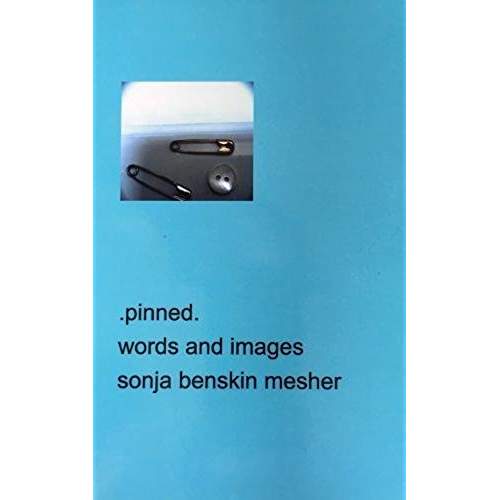
31pzq3w1tNL._AC_US500_QL65_

Sonja Benskin Mesher

Sonja lives in Dolgellau, North Wales. She is an Academician of the Royal Cambrian Academy. And has worked full-time as an artist since 1999. She explores different ways to communicate thoughts and concerns.

The Interview

by no means finished; let the conversation continue…..
1. What were the circumstances under which you began to write poetry?

i  was asked to support a blog site and the response was that what I wrote was verse

I thought

so be it.

2. Who introduced you to poetry?

not sure, possibly school with the rhyming gallopy stuff,like

‘the road was a ribbon of moonlight’

which

made pictures in my head

3. How aware were you of the dominating presence of older poets?

not at all aware

4. What is your daily writing routine?

no real routine, that may be an issue

i write when it comes

daily

mostly
5. What motivates you to write?

those  things around me, things are said, overheard and remembered

history, news

writing

it means the dust will not settle, and each small thing has importance. it gives me voice

with
a rhythm of sounds, words and all feelings

I find that when I cannot draw it, photograph it I can at least describe it

layer it
i started writing

a long time back, in my head. I started writing it on paper, perhaps 10 years now

6. Why do you write poetry?

to commemorate the times, and happenings, to let the secrets  free

7. i like glyn hughes.

8. i think you asked what advice I have for others…..

just do it really, keep doing it

your own way.

there really are no rules ( think on this)

Sonja Benskin Mesher RCA UA

information-

http://www.sonja-benskin-mesher.com
/http://sonjabenskinmesher.wordpress.com/diary/

Wombwell Rainbow Interviews: Scarlett Ward

Wombwell Rainbow Interviews

I am honoured and privileged that the following writers local, national and international have agreed to be interviewed by me. I gave the writers two options: an emailed list of questions or a more fluid interview via messenger.
The usual ground is covered about motivation, daily routines and work ethic, but some surprises too. Some of these poets you may know, others may be new to you. I hope you enjoy the experience as much as I do.

Scarlett Ward

is a 25 year old Poet, Witch and snail mama working from staffordshire, UK. She has had poetry featured in anthologies and literature journals from presses such such as Verve Poetry, Hedgehog Press and Fly On The Wall Publishing.

The Interview

1. What inspired you to write poetry?

My mom brought me up with stories of unicorns and fairies and it meant I always had a very romantic magical imagination. As I got older I used my writing as a way to process my emotions, deal with life around me and react to the universe I live in.

2. Who introduced you to poetry?

I remember the first poem I ever fell in love with was The Highway Man by Alfred Noyes when I was around 10. It was so tragically romantic it just broke my little heart. It’s still one of my favourite poems of all time! I can’t remember my teacher’s name but she sparked a love affair with poetry!

3. How aware were you of the dominating presence of older poets?

The term “older” is tricky. I am quite a young poet at 25, and there are a lot of older people within the literature world purely because they have worked at it for longer because they have existed for longer. There is a really great representation of younger poets in Birmingham, with many youthful poetry evenings targeted at younger demographics. I don’t particularly think that the presence of older poets is domineering or in any way a bad thing though, I accept all the help I can from more experienced people!

4. What is your daily writing routine?

Whilst I do make time to write I don’t think I have so much of a routine. I don’t treat it as a chore, I make sure I allow myself time to write before work and when I get free time on evenings, but my phone is filled with notes I’ve written because I’ve thought of something on the go.

5. What motivates you to write?
Whenever I read poetry that I really connect with, I feel that gut-wrenching soul ache, or I feel like I’ve been seen in a crowd, as though I’ve been recognised and I’m not alone. The idea that I can have that kind of affect on people through my writing is what drives me.

6. What is your work ethic?

The more you write the more you write. ALSO The more you read the more you write! If you’re feeling writers block the best medicine is to read!

7. How do the writers you read when you were young influence you today?

When I was younger I used to read a lot of easily-consumable poetry like Michael Faudet and Rupi Kaur. I think that was a great doorway into the world of poetry, and it definitely still influences me in that I feel poetry should have a bold statement to it, but I felt as I matured I learned to be patient with my poems and take more time to expand on points.

8. Who of today’s writers do you admire the most and why?

I really adore Cheryl Pois’ “Oysterlight” because it contains some of the most gently beautiful imagery I have come across in a long time. I have read that book over and over, lent it to girlfriends, screenshott’ed pages to send to my mom, all sorts. I really admire the way she writes such powerful poetry using such soft language. Reading her book is like being bowled over by a butterfly wing. She is also such a lovely person!

(I deleted Q9 I felt it was covered in Q5)

9. What would you say to someone who asked you “How do you become a writer?”

Just write. Hone your craft. Read as much as you can. Join writing workshops where you can discuss your work and get feedback. Go to poetry nights and make like-minded friends; that’s half the fun!

11. Tell me about the writing projects you have on at the moment.

I’m currently working on my manuscript for my own collection. I love to make little art/poetry zines by hand which I sell on my etsy shop and I also make small trinkets like bookmarks, lockets and frames. I’m going to apply for the Staffordshire Laureateship in 2019 too so it’s going to be a busy year!

Wombwell Rainbow Interviews: Kristin Garth

Wombwell Rainbow Interviews

I am honoured and privileged that the following writers local, national and international have agreed to be interviewed by me. I gave the writers two options: an emailed list of questions or a more fluid interview via messenger.
The usual ground is covered about motivation, daily routines and work ethic, but some surprises too. Some of these poets you may know, others may be new to you. I hope you enjoy the experience as much as I do.

WnIuMdPB

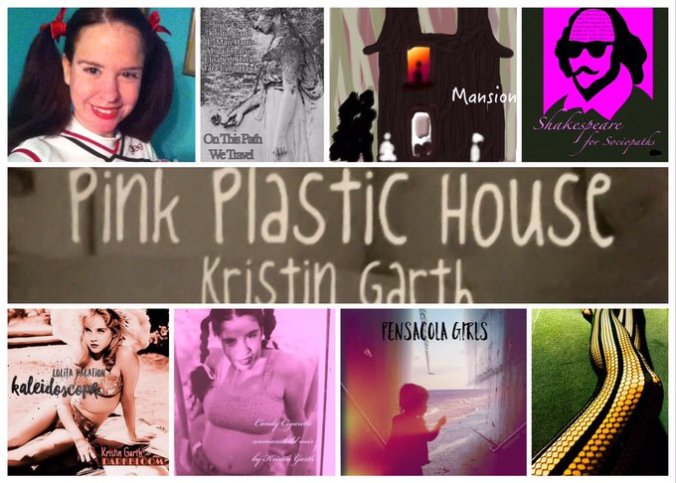
A collection of front cover images of her books heads Kristin’s website.

Kristin Garth

is a Pushcart & Best of the Net nominated sonnet stalker.  Her poetry has stalked magazines like Glass, Yes, Five:2: One, Anti-Heroin Chic, Former Cactus, Occulum, Luna Luna, & many more.  She has a chapbook Pink Plastic House (Maverick Duck Press), three forthcoming: Pensacola Girls (Bone & Ink Press, Sept 2018) and Shakespeare for Sociopaths (The Hedgehog Poetry Press Jan 2019), Puritan U (Rhythm & Bones Lit March 2019) Her full length, Candy Cigarette, is forthcoming April 2019 (The Hedgehog Poetry Press). Follow her on Twitter:  (
@lolaandjolie), her weekly poetry column (https://www.rhythmnbone.com/sonnetarium)
rhythmnbone.com/sonnetarium) and her website (http://kristingarth.wordpress.com)
kristingarth.wordpress.com).

The Interview

  1. When and why did you start to write poetry?

I started writing poetry when I was a little girl, free verse.  It was mostly to deal with abuse issues and a traumatic homelife.  I wrote my first sonnet as a high school assignment.  In college I continued doing that and got a partial creative writing scholarship based on them.  I dropped out of grad school to establish my financial independence and became a stripper.  Even in that milieu I wrote some sonnets.  I’ve always married modern themes with the form.

2. Who introduced you to poetry?

I read poetry as a child from the childish stuff Silverstein to Poe.  They had a huge effect on me but the biggest influence was a poet from the Ozarks who came to speak at my school.  He was the first living poet I met.  He read from his book, and he was from a small town like me.Even as a child I think I associated poetry as a thing people from big places did — professors and such.  It was when i realized someone from a small place could be charismatic and own a room.

2.1 When did you realise you could own a room?

I don’t think I have realized that reading in person.  I know I haven’t because I have never successfully done it.  In grad school, we were forced to do it but I couldn’t make it through my poem.  And I dropped out so I never won that battle.

I only recently started recording audios of poems. I love that, and people seem to enjoy them.  At first I was terrified and thought my voice was too babyish and quiet and not professional.  I’ve learned though there is a power in all of that.

I recently got asked to be the voice of Rhythm & Bones Lit Which records their editor’s picks of the best pieces in the magazine.  I will be recording those.  It’s crazy to me to think only a year ago I was battling my insecurity about my voice and now I’m being asked to read other people’s work.  Maybe I will conquer the public readings one day too.


3. How aware are you of the dominating presence of older poets traditional and contemporary?

Well as a girl who writes Shakespearean sonnets primarily, I am totally dominated in a sense by a 400 year old poet.  I try to follow his form though I’m a rebel and I play loosely at times.  It obviously doesn’t bother me to have buses and influences.  I feel like my content is a beast and it requires a time-tested, solid cage.  The cage frees me so I can release my rage and passion.

4. What is your daily writing routine?

Right now I’m at a Starbucks with earphones in.  I just finished a sonnet and sent it to a magazine that was expecting it.  Since it was one I wrote from an alternate POV, I sent it to a couple of female poet friends I respect to read it.  Sometimes I do that when I feel out of my comfort zone or unsure.

I write every day.  I was attempting for the first time in two years to take a week off of writing.  I just finished a chapbook on my sexual assault at a Christian college, and it was grueling.  It’s called Puritan U, and it is being published by Rhythm  & Bones Lit in March next year.  It is an important but grueling book.  And it’s my fourth solo chapbook in two years, so even for a Capricorn I though I earned a break.  I made it two whole days, and here I am back in the Starbucks, doing the thing.

5. What motivates your writing?

I am definitely motivated by my own need to extricate a poison from my body.  I write about traumas, power imbalances I have experienced or seen that shaped me.  I carry these things inside like burdens, and the physical act of putting them on paper is like an exorcism of a darkness — or at least a layer of it.

As a person who was abused, who was expected to keep secrets, to keep up appearances, owning the ugliness of life and experience is extremely empowering to me.  Putting my name to a piece of paper telling a shameful story, it says I am in a whole different world than I was as a child.  The first poem I published was a fetish poem, for example, and it’s the only one I ever used an alias because I lived at home.  I was not safe.  The act of writing provocative things and owning them is such a celebration of the free state of my soul these days.

6. What is your work ethic?

My work ethic is pretty intense.  I’m a Capricorn, and work is intrinsic to our nature.  One of my best writing friends Tianna Hansen who is the editor of Rhythm & Bones is a Capricorn too, and it’s why her magazine is such a force of nature.  Capricorns live to work.  When we take breaks, it is only for the sake of the work.

I had to have this pep talk with my self to force myself to take a week Writing break: it will make you come back so strong.  I only made it two days.  I do feel stronger though.  I live to write.  Everything in my life supports that.  That is my purpose.

7. How do the writers you read when you were young influence you today?

I feel Poe’s influence in a lot of my gothic sonnets.  On his birthday last year I wrote a sonnet that was published in Moonchild Magazine called A Geography of Loneliness.  You can read it here:
(link: https://www.moonchildmag.net/kristingarth3.html)
moonchildmag.net/kristingarth3.… — it was a tribute to Poe, using the language of horror to describe a mental landscape I felt.  I latched on to dark writing in my youth because it spoke to my troubled soul, and I think it’s ambience reflects the dim geography of my past that I carry around still in my heart.

I also read about the Salem witch trials.  I have a huge attraction to that period in American History when Puritans really controlled things, women were so constricted to very limited, rigid roles and completely without power.  Sadly, though women have a lot more rights, in our current political climate, I feel a lot of resonance with this time period.

Also having attended a Christian college in a state (Utah) where the division between church and state is maybe the most clouded of any I have ever experienced, I personally relate to this.  It’s why I named my fourth solo chapbook Puritan U.

8. Who of today’s writers do you admire the most and why?

I love so many poets like Chen Chen, Justin Karcher, Joanna Valente,  Kailey Tedesco.  I love vivid images and fearless writing.  I also love novelists like Joyce Carol Oates, Chuck Palahniuk, Caroline Kepnes, Bret Easton Ellis, Dave Eggers, I love writing that uses darkness, gothic horror themes even to illustrate power imbalances and stark truths.  I’m reading a book right now Dietland by Sarai Walker that is another awesome social commentary in a great page turner of a novel.


9.  What would you say to someone who asked you “How do you become a writer?”

I know people who went the school route to writing — as I did for part of my journey. I don’t regret it at all.  I’m very glad for my education even if I didn’t fully complete my Master’s degree.  It taught me a lot about reader reaction to my work and exposed me to so many styles of writing.

I would say to find an experience where you can workshop your work and gain critique from others.  If that is school great, if that is a website — I personally when I returned to writing used the website Scribophile.  It toughens you up as a writer to have your work critiqued by others.

Even if you don’t change things based on the critiques it causes you to sharpen things about your writing, if only to clarify your objectives.  It teaches you about your writing, even just defending it.  Sometimes you learn things too – crutches you don’t know you have.  It prepares you for the world of editors which can be intimidating and harrowing and such an education.

I personally don’t critique anymore but I use friends who are poets as sounding boards when I’m unsure.

10. Tell me more about the writing projects you are involved in.

Published Work
kristingarth.com
As I’ve stated before about writing projects, I just finished my fourth solo book, Puritan U.  It wlll come out in March.  I have a chapbook out currently available at Maverick Duck (my publisher) and my website
(link: http://kristingarth.com)
kristingarth.com.  I have another one that is all Shakespearean sonnets on sociopaths called Shakespeare for Sociopaths that will be released in January from The Hedgehog Poetry Press.  In April that press will also release my full length poetic memoir on stripping in the Deep South in pigtails and cheerleading uniforms called Candy Cigarette Womanchild Noir.  So having said all this week I am just writing poems and not thinking of the next big project.  If you interview me in a week though I’ll probably be contemplating my next big book — Capricorn problems.


Wombwell Rainbow Interviews: David Wheatley

Wombwell Rainbow Interviews

I am honoured and privileged that the following writers local, national and international have agreed to be interviewed by me. I gave the writers two options: an emailed list of questions or a more fluid interview via messenger.
The usual ground is covered about motivation, daily routines and work ethic, but some surprises too. Some of these poets you may know, others may be new to you. I hope you enjoy the experience as much as I do.

51JmnozUQuL._SX310_BO1,204,203,200_

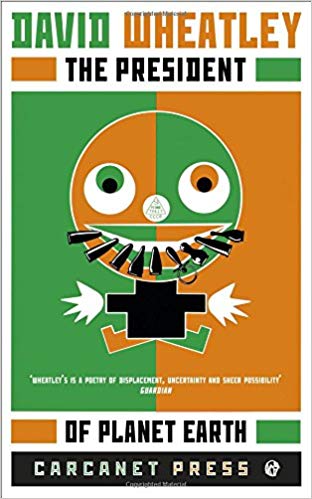
David Wheatley

Amazon tells us “David Wheatley was born in Dublin in 1970. His previous collections are ‘Thirst’ (1997; Rooney Prize for Irish Literature), ‘Misery Hill’ (2000), ‘Mocker’ (2006) and ‘A Nest on the Waves’ (2010). His work has appeared in numerous anthologies, including ‘The Penguin Book of Irish Poetry’, and has been awarded a variety of prizes, including the Vincent Buckley Poetry Prize and first prize in the Friends Provident National Poetry Competition. His critical study ‘Contemporary British Poetry’ is published by Palgrave. He lives in rural Aberdeenshire.”

The Interview

1. What inspired you to write poetry?

‘The poem is the cry of its occasion.’

2. Who introduced you to poetry?

Mine was not a literary youth. My poetic beginnings date from my time at university in Dublin, where I had not one but three very talented contemporaries to learn from. I would most likely not have amounted to anything, insofar as I have amounted to anything, without that intensely formative stage in my writing life.

3. How aware were you of the dominating presence of older poets?

Dublin is a city full of statues, at least some of which were still walking the streets when I was young. What a strange experience to find oneself falling into step on Baggot Street with Michael Hartnett and to strike up a casual conversation with him about Irish bardic poetry. There was a lot of that about.

4. What is your daily writing routine?

I have a demanding day-job and a toddler round the place, so I can’t say I have a fixed daily writing routine. I walk around with bits of paper stuffed in my pockets and scribble on them between classes or in cafes, then scrape the results together late at night. It seems to work.

5. What motivates you to write?

The usual farrago of boredom, horror, joy, gratitude, and other assorted emotional stopping-off points along that spectrum.

6. What is your work ethic?

In need of a stern talking-to.

7. How do the writers you read when you were young influence you today?

I notice Dublin bookseller price tags on the WS Graham and Marianne Moore Collected Poems I was reading just today, so the connection to the world of my student reading remains very strong, yes.

8. Who of today’s writers do you admire the most and why?

I was terribly upset by Roy Fisher’s death last year. I credit him with the great leap forward my imagination took in my thirties, which helped me move away from the callow juvenilia I’d been writing up until then. His work is a great flaming furnace moulding the genius loci of Albion into those incomparable ingots of his long poems, from City to ‘Wonders of Obligation’ and beyond.

9. Why do you write?

Can’t honestly say. Maybe best not to know. Keeps me off the streets.

10. What would you say to someone who asked you “How do you become a writer?”
Poetry is modified breathing. You’re already halfway there. On you go then.

11. Tell me about the writing projects you have on at the moment.

I am grappling with a long poem which will be mainly about channelling the buried psychic energies of the kingdom of Pictland, where I live (Aberdeenshire), via its symbol stones and stone circles, and on completion of which I expect an ancient Celtic serpent god to be reanimated and assume his place as our rightful overlord.

Wombwell Rainbow Interviews: Michael Forester

Wombwell Rainbow Interviews
I am honoured and privileged that the following writers local, national and international have agreed to be interviewed by me. I gave the writers two options: an emailed list of questions or a more fluid interview via messenger.
The usual ground is covered about motivation, daily routines and work ethic, but some surprises too. Some of these poets you may know, others may be new to you. I hope you enjoy the experience as much as I do.

Awakening

Michael Forester

“There is one journey. We commence it the moment we enter the world, and complete it the moment we leave. Its purpose is to learn, to love and to grow.” So starts Michael Forester’s latest book, One Journey: A Travelogue of Awakening.

Michael is 62 years old. He lives between the southern edge of the New Forest and the sea, with his hearing dog, Matt, for Michael is close to being profoundly deaf. He is a full time author and public speaker, travelling both in the UK and internationally, speaking inspirationally and signing his books for readers in locations as far apart as the UK, Thailand and the Philippines.

On graduating from Oxford University in 1977, Michael first taught economics, before spending over thirty years in the world of business consultancy and management.

In 2015, he made a fundamental change himself, leaving management to concentrate full time on creative writing and public speaking. He is the author of nine published books to date, on subjects as diverse as business strategy, spiritual inspiration and epic fantasy poetry.

Michael’s own journey has taken him from early years in academia into middle years in management consultancy, management training and Neuro Linguistic Programming.

It has taken him from normal hearing to near-profound deafness and, in 2004, the life-changing arrival of a hearing dog, Matt.

It has taken him through a miraculously survived suicide attempt in 2002, into a spiritual awakening.

He has travelled around the planet to over forty countries, from the Amazon Rainforest, encountering ecological devastation, to South Africa, experiencing post-Apartheid forgiveness; from a personal pilgrimage in search of the singing bowls of Nepal, to a first-hand examination of the darker side of economic modernisation in the Philippines, besides many other destinations.

His books can be found at his website, http://www.michaelforester.co.uk

Website is
michaelforester.co.uk

Link to the books is
michaelforester.co.uk/books

Amazon link for my new book is

The Interview

  1. When and why did you begin to write poetry?

I started in the millennium year. It was a reaction to an enormous emotional trauma that resulted in an emotional breakdown
1.1 How did you know poetry could help you through this?

It wasn’t that I thought poetry would help, it was that I felt driven inside as everything external felt dangerous. Writing became my whole life. My intention was to write a series of short stories at that time. One that I started simply came out in poetic form quite unexpectedly and I was left with a 3000 word fantasy poem.

I was really pleased with it, but even in a matter of days I had realised I was far from finished. I spent the rest of the summer focused on extending it and ended up with 32,000 word work of rhyming verse in 16th century English. This later became my epic fantasy poem Dragonsong

2. Who introduced you to poetry?

like everyone else I studied some poetry at school. But I have to be honest and say I don’t think I had read any more from that time until I wrote Dragonsong

Nevertheless, I remain grateful to my English literature teacher from A-level studies who introduced me to the romantics who have remained a considerable favourite of mine even now and to a teacher some years before that when I was about 12 or 13 years old who introduced me to modern poetry, modern in those days being WH Auden, Stephen Spender etc

I had a very religious upbringing! I had read the King James Bible in its entirety the age of 12 and again by the time I was 18. Language land at that age never really leaves you.
3. How aware are you of the dominating presence of older poets traditional and contemporary?

I will take my single greatest poetic influence is TS Eliot

I also read Charles Bukowski avidly.

As to the modern poetry scene, I largely avoided due to its generally in tolerant attitude to traditional form, which is where I work best

3.1. Why do you feel at home in traditional form?

It’s a very interesting question. It’s not that I do not write unstructured poetry. I have written quite a lot. However I commonly gravitate to rhyming verse with a particular emphasis on cadence which powerfully supports spoken poetry which I guess is my greatest interest. As to why that feels like home I think it’s the regularity of the metre and the structural attraction to making verse scan – so a pure linguist attraction I think

3.2 More song like? Extrapolating on your title “Dragonsong”.

Actually, I have tried to write songs but I’m not very good at it! I’m deaf and the lack of ability to hear music is probably behind that.

3.3 As a deaf person what is the appeal of spoken poetry?

I began going deaf from the age of 30.
It is not affected my speech materially. I’m regarded as a mesmeric public speaker. People particularly enjoyed the sound of my voice.

Being deaf, when I take questions from the floor I have to have someone stand next to me to tell me what those questions hour. On the stage it’s mostly me talking to an audience which removes the problem of hearing

3.4 What appeals to you about Buk’s poetry?

It’s grittiness, earthiness and unrestrained honesty Combined with a tremendously powerful use of words

4. What is your daily writing routine?

Intriguingly, I don’t have one! I’m aware of the philosophy that says one must write every day but I don’t subscribe to it. Instead, I seek inspiration by walking in The New Forest where I live. Sometimes it results in poetry, sometimes short stories, sometimes I’m working on a much larger venture. As regards poetry in particular I need to be moved emotionally to write. That could mean anything from being in love to becoming angry at developments on the world seen. I have written much political poetry in anger and abuse of one sort or another. It therefore comes when it comes and can’t be constrained to a schedule

5. How do the writers you read when you were young influence you today?

I think it soaks into the skin at an early age. When I was on tour in the Philippines last year I had cause to refer back to John Keats Ode on a Grecian Urn.
I was astonished on reading it which I had not done for 30 years or more defined have similarly expressed himself to me. It was like he was speaking to me personally across two centuries.
It became the subject of more than one seminar I delivered in universities in Manila.
6. You said earlier you’d largely avoided modern poets, so who of today’s writers do you admire the most and why?

There are several novelists I admire greatly and read regularly such as Salman Rushdie, Yann Martel, Kazuo Ishiguro. It’s harder to identify poets on the current scene who are at the same level. I find myself thinking of musicians such as Bob Dylan or Paul Simon. Apologies I don’t mean any offence to other poets. I’m just not drawn to their work.

There are several novelists I admire greatly and read regularly such as Salman Rushdie, Yann Martel, Kazuo Ishiguro. It’s harder to identify poets on the current scene who are at the same level. I find myself thinking of musicians such as Bob Dylan or Paul Simon. Apologies I don’t mean any offence to other poets. I’m just not drawn to their work

7. Why do write?

Would it be trite to say because I can’t stop?
I’ve reached the point now where I have a significant number of followers both in the UK and internationally. I believe I making a contribution based at the literary level and spiritually. Both are fundamentally important to me. As long as I believe I’m doing something useful I am highly motivated to continue.

There are several novelists I admire greatly and read regularly such as Salman Rushdie, Yann Martel, Kazuo Ishiguro. It’s harder to identify poets on the current scene who are at the same level. I find myself thinking of musicians such as Bob Dylan or Paul Simon. Apologies I don’t mean any offence to other poets. I’m just not drawn to their work

7.1 Spiritually?

I write mindbody spirit works as well as fiction and poetry.

8. What would you say to someone who asked you “How do you become a writer?”

My newest release is a book called One journey: a travel log of awakening. It explores the connection between the places to which we travel and the people we become.

It’s a question I am asked all the time on tour. I believe that authors have to find their unique authentic voice. In my opinion this can only be done by shutting out all the noise that we listen to all day long and going inside, by meditation, by walking in nature, by listening to inspirational music, and so on to find that unique voice. When you have found it, respect it. Don’t dismiss what comes to you because you think it will be rejected. It’s vital to work with it and develop what comes even if it never gets read by somebody else. This is where authenticity starts and new writers are made.

9. You spoke of your newest release tell me about the writing projects you have on at the moment.

My new book one journey has only been out a matter of days and I’m now in the promotional phase intensively. I think this will probably preoccupy me until the end of this year.
There are several places I might go next year. One is the completion of the third volume of my trilogy that starts with my book Vicious: a novel of punk rock and the second coming.
Another is another non-fiction book I’m working on to do with homelessness


Wombwell Rainbow Interviews: Phil Knight

Wombwell Rainbow Interviews

I am honoured and privileged that the following writers local, national and international have agreed to be interviewed by me. I gave the writers two options: an emailed list of questions or a more fluid interview via messenger.
The usual ground is covered about motivation, daily routines and work ethic, but some surprises too. Some of these poets you may know, others may be new to you. I hope you enjoy the experience as much as I do.

IMG_20181009_112036

Phil Knight

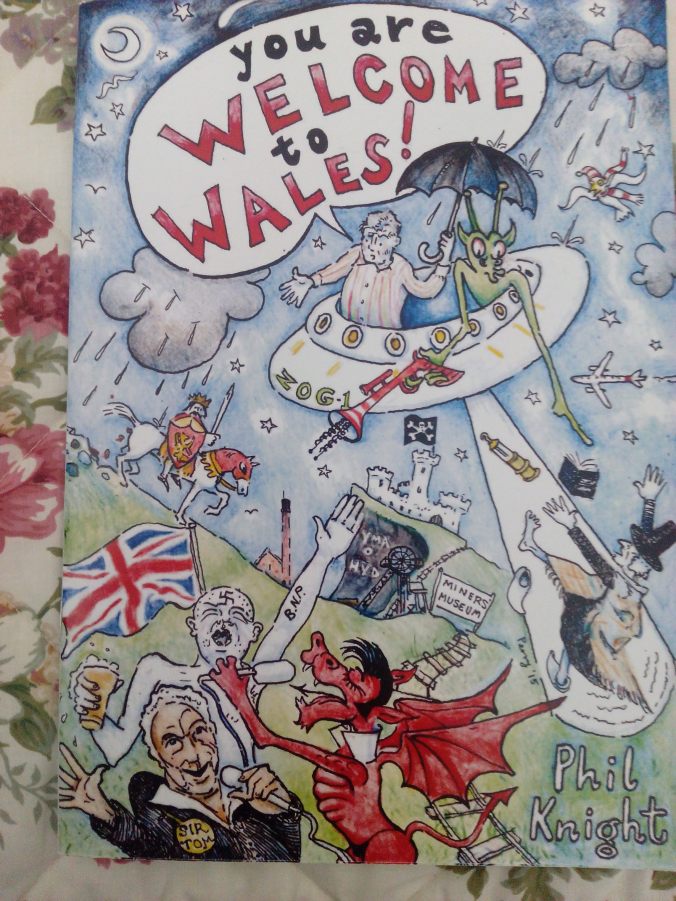
is a poet from Neath in South Wales. He has been published in ‘Red Poets’, ‘South’, ‘Earthlove’, ‘Poetry Wales’, ‘Dail 174’, ‘Planet’, ‘The Journal’ and many other publications. He has brought out three collections of poetry; ‘The Old Bolsheviks’ (Green Arrow 2011), ‘Dylanation’ (Green Arrow 2014) and ‘You  Are Welcome To Wales’ (Red Poets 2015). Phil is the Chairperson of Neath Writers Group and he is a member of the Cheval Trust which runs the Terry Hetherington Young Writers Awardhttps://chevalwriters.org.uk/index-m.html Phil is a regular reader with the Red Poets and he is MC of Neath  Poems And Pints (7:30pm first Thursday of the Month at the Cambrian Arms, Melyn, Neath) which rises funds for the Terry Hetherington Young Writers Award.

The Interview
1. What inspired you to write poetry?
I caught the poetry bug back in 1995 during the Year of Literature Festival in Swansea, I saw the amazing Adrain Mitchell reading his poems and I was blown away. It was the way he connected with his audience and he put into words what he were all feeling. That is great Poetry. That inspired me to try and write poetry.

2. Who introduced you to poetry?
I joined Neath Writers Group and I did number of courses through Swansea University’s DACE program. The poet and playwright Peter Thabit Jones was just one of the brilliant teachers I had . But I believe a poet never stops learning.

3. How aware were you of the dominating presence of older poets?
As we as Adrian Mitchell I also had the privilege of hearing two great Welsh poets read their work. Terry Hetherington and Nigel Jenkins both had wonderful deep, rich voices. I also bought their books and still read them decades later. Terry and Nigel were both very encouraging to new writers.

4. What is your daily writing routine?
Try to write something every day, even if it just a note, an email or a comment on social media, it keeps the writing muscle going. You never can tell what will grow into a poem.

5. What motivates you to write?
Injustice, war, poverty, the weather, Wales, the splendid beauty of the Vale of Neath. It can be anything. I try to be open to the universe.

6. What is your work ethic?
If I thought of writing as work I would not do it. I write because I enjoy it and makes me happy. If it was work it would make me feel a slave. I write because I want to, and sometimes because I feel I must.

7. How do the writers you read when you were young influence you today?
I love Dylan Thomas, to me he is the Master. But I hate the whole “let’s put the drunk ahead of the poet” Dylan Thomas industry and that was the subject of my second poetry collection “Dylanation”. Harri Webb, Idris Davies, Wilfred Owen, Edward Thomas and Siegfried Sassoon are among the poets I return to again and again. But the influence is more through their passion for words, and not trying to write like them. Too many poets now are over influenced by their teachers and that is why a flat American style of dull unengaged free verse is so wide spread, because that is the house style of many university courses. A poet should write in their own voice.

8. Who of today’s writers do you admire the most
and why?
Mike Jenkins, the editor of Red Poets Magazine and Tim Richards who published my first poem in “Y Fanner Goch”, have been been important influences on my own writing. In that they both write about Wales and their home towns and their set their poems against the backdrop of the real world, with its pain and passions. Among living writers I enjoy are Paul Henry, Christine Thatcher, Huw Pudner, and many others.

1. Why do you write?
Because I must.

2. What would you say to someone who asked you “How do you become a writer?”
Write for yourself, write if it wants you happy, if it does not what’s the point.

1. Tell me about the writing projects you have on at the moment.
Just take each day as it comes and write if I feel like.

Bio
Phil Knight is a poet from Neath in South Wales. He has been published in ‘Red Poets’, ‘South’, ‘Earthlove’, ‘Poetry Wales’, ‘Dail 174’, ‘Planet’, ‘The Journal’ and many other publications. He has brought out three collections of poetry; ‘The Old Bolsheviks’ (Green Arrow 2011), ‘Dylanation’ (Green Arrow 2014) and ‘You Are Welcome To Wales’ (Red Poets 2015). Phil is the Chairperson of Neath Writers Group and he is a member of the Cheval Trust which runs the Terry Hetherington Young Writers Awardhttps://chevalwriters.org.uk/index-m.html Phil is a regular reader with the Red Poets and he is MC of Neath Poems And Pints (7:30pm first Thursday of the Month at the Cambrian Arms, Melyn, Neath) which rises funds for the Terry Hetherington Young Writers Award.

The Grail Roads Launch Performance — Rob Hindle

On the centenary of the Armistice that ended the First World War, a specially prepared reading from The Grail Roads at DINA in Sheffield, supported by Matthew Clegg and Ray Hearne and presented by Brian Lewis of Longbarrow Press. DINA, 32 Cambridge Street, Sheffield, S1 4HP Sunday 11 November 2018 | 7pm – 9.30pm | […]

via The Grail Roads Launch Performance — Rob Hindle