Wombwell Rainbow Interviews: Lesley Quayle

Wombwell Rainbow Interviews

I am honoured and privileged that the following poets, local, national and international have agreed to be interviewed by me. I gave the writers two options: an emailed list of questions or a more fluid interview via messenger.
The usual ground is covered about motivation, daily routines and work ethic, but some surprises too. Some of these poets you may know, others may be new to you. I hope you enjoy the experience as much as I do.

BlackBicycle4Front[94832]

Lesley Quayle

Lesley Quayle was born in Fife and spent much of her childhood in Glasgow. She lived for thirty years in Yorkshire, with her veterinary surgeon husband and four children on a small farm where she bred Herdwick sheep and trained Border Collies. A co-editor of Leeds based poetry magazine, Aireings, for 10 years, she and her husband also ran a folk/blues club in Horsforth. She was a winner of the BBC Wildlife Magazine Poet of the Year award and the Trewithen Prize for rural poetry and she has been placed first in the Split the Lark and Envoi poetry competitions.  Her poetry, flash fiction and short stories have appeared in many magazines and journals and she has read at the West Yorkshire Playhouse and on BBC Radio 4’s Poetry Please. She has a chapbook, Songs for Lesser Gods (erbacce) and a collection, Sessions (Indigo Dreams) plus her most recent pamphlet from 4Word – Black Bicycle.

The Interview

1. What inspired you to write poetry?

Almost from the moment I learned to read, I wanted to write. It’s pretty much a compulsion and I can’t imagine not writing, particularly poetry. I have always been inspired by the natural world and indeed the first major poetry award I ever won was the BBC Wildlife Magazine Poet of the Year, with a poem about the sad demise of my ancient Herdwick ram. My poems are more often than not trailing mud in their wake and have bits of grass and leaves and the odd feather dangling from their hair.

2. Who introduced you to poetry?

My mother.  She was an avid reader and a poetry lover who not only read to us as small children, but recited favourite poems and encouraged us to read poetry. Burns and Dylan Thomas featured large in her repertoire and, for some reason, she could recite almost the whole of Francis Thompson’s The Hound of Heaven. Later, encouraged by an English teacher at my horribly staid girls’ grammar school, I ventured away from the school curriculum (Blake, Byron, Keats, Shelley, Browning etc) and discovered the Liverpool Poets. The same English teacher took a group of us to see Brian Patten and Roger McGough and, being an acquaintance of Patten, he introduced us to him, explaining that I wanted to be a poet. ‘Well be one then. Don’t let anyone tell you you can’t.’ said Patten with a smile – which was all the encouragement I needed. Life got in the way for a while, including children, but I eventually went to university in my thirties and studied Literature – only to be a little disappointed that the curriculum was still dominated by the same poets I’d studied for A Level. However, I was, via my lecturer, Cal Clothier – a well-known (sadly deceased)Yorkshire poet – introduced to the work of Hughes, Plath, Tony Harrison, Rabindranath Tagore, Anne Sexton, Ian McMillan, Anna Adams, among others, and to a group called the Pennine Poets, of which I was honoured to become a member, much later. Now, I read everything I can, although I still have a huge soft spot for all the above mentioned.

3. How aware were you of the dominating presence of older poets?

When I first joined Pennine Poets and Aireings, a Leeds based magazine I later co-edited with Linda Marshall for 9 years, I was the youngest person in the group. So, from that point of view, I was in awe of their achievements and experience. In the wider world, I was only aware of poets that I admired and writing of a standard I dreamed of attaining, by scouring bookshops and libraries. Access to other poets, of any age, was very limited due to geography and family/work/life commitments. No internet at that time, only snail-mail, and I often felt isolated from any wider poetry community that there might have been.  Now, I’m an ‘older’ poet and, oddly, I’m very aware of the dominating presence of the younger ones – probably due to social media. It’s no bad thing and I’m not complaining as I’m blown away by the standard of so much of their work and the energy needed to be a part of the current ‘scene.’

4. What is your daily writing routine?

I don’t have one. As anyone who knows me well will attest – routine and I don’t see eye to eye. I spent so much of my life shoe-horning writing into any small gap in the day not taken up by my children, the farm, my elderly parents and my husband’s job, that I have never developed the knack of routine. This means that I am an inveterate scribbler and last-minuter. Empty my bag and you will find scraps of paper, receipts and backs of envelopes scrawled with poetry and ideas for poems, along with the usual ten year old lipsticks, hairy Polo, tissues, broken penknife and bar of chocolate – just in case of a hypo!

5. What motivates you to write?

The more rushed I am, the more the poems come knocking urgently. Almost anything  can motivate me from an overheard conversation, a single word, an emotional response, a view, being outside, nature, hard work, pain and injustice.

6. What is your work ethic?

Poetry hasn’t ever felt like work to me. When you’ve been up all night in the lambing shed or hauling bales or chasing sheep in the snow, or trying to organise four children to get up, get dressed, get out and go to school (or do anything!) shopping, cooking, cleaning, driving – poetry is a blissful respite. It’s not a part of my work ethic, I guess, because I don’t consider it work.

7. How do the writers you read when you were young influence you today?

Truthfully, they probably don’t influence me these days. My reading and writing habits have moved in many directions since I first discovered them, but they underpin my literary footings so I hold them dear and return to them again and again.

8. Who of today’s writers do you admire the most and why?

Helen Mort is someone I admire enormously. Her work seems so effortlessly accomplished and never a word out of place. I love her poetry. I was delighted to be part of her Leads to Leeds project, which paired poets to write and respond to individual poems about the city. Her innovation and encouragement were in no small part responsible for the fascinating and diverse poetry that emerged from the venture. I’m also a huge fan of Liz Berry, Ian Duhig, Caroline Bird, Roddy Lumsden, Paul Henry. These are just a few who immediately spring to mind – there is a huge pool of modern poetry to be admired.

9. Why do you write?

The simple answer is because I have to. It’s a compulsion and a passion.

10. What would you say to someone who asked you “How do you become a writer?”

By writing. There’s no mystique. Just as Brian Patten once said to my 15 year old self, if you want to be a writer – be one.

11. Tell me about the writing
projects you have on at the moment.

Earlier this year, I embarked upon the 4Word Poetry Press venture with Stella Wulf. Stella and I first met on 52 – the online ‘write a poem a week’ group, devised by Jo Bell. The whole 4Word project arose as a result of a Facebook thread and our first three pamphlets were launched in May of this year. We have just launched a fourth (Girl Golem by Rachael Clyne) and are currently working on our fifth, by Mary Norton Gilonne, to be released on December 1st. And there are three others in the pipeline. (See 4Word.org for details) Exciting times.
On a personal note, I am working on a series of pieces about what I feel it’s like to be an older woman, or rather what it’s like to realise you’re not young anymore! And there are also poems which just happen upon me or trip me up in my day to day musings. I’m still submitting poems to various magazine, online and print and, to my joy, still getting accepted. And there is my novel, languishing in a file and still needing to have a final, hard, editing thrash. It’s a procrastination project – terrible when cleaning the fridge can seem more pressing, even attractive, than getting to grips with the dread task of editing.

Wombwell Rainbow Interviews: Ian McMillan

Wombwell Rainbow Interviews

I am honoured and privileged that the following poets, local, national and international have agreed to be interviewed by me. I gave the writers two options: an emailed list of questions or a more fluid interview via messenger.
The usual ground is covered about motivation, daily routines and work ethic, but some surprises too. Some of these poets you may know, others may be new to you. I hope you enjoy the experience as much as I do.

untitled (4)

Ian McMillan

Ian McMillan was born in 1956 in Darfield, a village near Barnsley, where he still lives. He always wanted to be a writer but all the books he got out of the library were written by people who lived in Surrey, not the Yorkshire Coalfield. He attended North Staffordshire Polytechnic, was a drummer in Barnsley’s first folk-rock band and worked in a tennis ball factory before finally becoming a writer. He’s been poet in residence at Barnsley Football Club, Northern Spirit Trains and Humberside Police. He’s written comedy for radio and plays for the stage. He currently presents The Verb, Radio 3’s Cabaret of The Word, and has also worked extensively for Radios 1,2,4 and Five Live as well as for Yorkshire Television and BBC2’s Newsnight Review. He’s worked in schools, theatres, arts centres, fields and front rooms.

The Interview

1. What were the circumstances under which you began to write poetry?

I started at school because I was lucky to be born into an era when the West Riding Local Education authority believed in the innate and perfectible creativity of children!

3. Who introduced you to poetry?

That would be my marvellous teachers like Mrs Hudson, Mrs Robinson, Mr Moody…

5. How aware were you of the dominating presence of older poets?

As I got older I was in the shadow of big figures like Dylan Thomas, Ted Hughes and RS Thomas.

7. What is your daily writing routine?

I get up very early and write after I’ve done my exercises and my early stroll. Mornings are best for me and in the afternoon I start to fade away, but I do try to write every day otherwise I might forget how to do it!

9. What motivates you to write?

Trying to shape language to my will, and often failing!

11. What is your work ethic?

I’ve been self employed for thirty-odd years so I’ve always believed you’re only as good as your last gig, so I try to work as hard as I can.

13. How do the writers you read when you were young influence you today?

They still pop up, I’m sure, Dylan Thomas especially.

15. Who of today’s writers do you admire the most and why?

I go back to the late Roy Fisher a lot, and I’m currently enjoying the work of Louise Gluck
I like poets who can make me think hard and also send me into meditative mode so that the words swim around in my head while I’m thinking about something else.

9. Why do you write?

I can’t think of anything else I could do!

10. What would you say to someone who asked you “How do you become a writer?”

Read a lot and read as a writer rather than as a reader; work out how the writer has dome what they do. And then just start writing!

11. Tell me about the writing projects you have on at the moment.

I’m working on lyrics for a new album with my mate Luke Carver Goss; it’s always a dance around rhythm and rhyme and syllables and stresses.


Wombwell Rainbow Interviews: Daginne Aignend

Wombwell Rainbow Interviews

I am honoured and privileged that the following poets, local, national and international have agreed to be interviewed by me. I gave the writers two options: an emailed list of questions or a more fluid interview via messenger.
The usual ground is covered about motivation, daily routines and work ethic, but some surprises too. Some of these poets you may know, others may be new to you. I hope you enjoy the experience as much as I do.

41aRkDpCzuL._SX331_BO1,204,203,200_

Daginne appears in this anthology

Daginne Aignend

According to Creative Talents Unleashed “Daginne Aignende is a pseudonym for the Dutch poetess Inge Wesdijk. She started to write English poetry four years ago and posted some of her poems on her Facebook page and on her website. She likes hardrock music, photography and fantasy books. Daginne is a vegetarian and spends a lot of time with her animals.”

She’s the Poetry Editor of Whispers.

The Interview

1. What were the circumstances under which you began to write poetry?

A teenager who noticed the changes in her life, became aware of the world around her, fell in love for the first time. A lot of questions and uncertainties, slowly growing into the responsibilities of adulthood.

2. Who introduced you to poetry?

Poetry found me but if you mean who introduced me to the world of published (online) poetry then Ken Allan Dronsfield and Michael Lee Johnson really helped me.

3. How aware were you of the dominating presence of older poets?

To be honest, I wasn’t impressed. At first, I just wanted some publications of my work, call it recognition, and since I have achieved that I just write for fun. I think older established poets and new temporary poets can easily exist together in poetry world.

4. What is your daily writing routine?

I don’t have a writing routine when I feel like writing I start a poem or story.

5. What motivates you to write?

A feeling, an article in a magazine,  the scent of a flower, a singing bird. In short: impressions.

6. What is your work ethic?

I don’t write about the adoration of brutality, violence, abuse and gross sex. Erotica can be ok when written in a subtle way. Personally, I don’t write about erotica, somehow I think it’s too private.

7. How do the writers you read when you were young influence you today?

I don’t think I’m influenced by one of them. I just write how I write.

8. Who of today’s writers do you admire the most and why?

I’m not the admiring type, I like poetry or I don’t. Of course, it’s a matter of personal taste.

9. Why do you write?

It’s an urge, I have to.

10. What would you say to someone who asked you “How do you become a writer?”

That question isn’t easy to answer. You need the skills to trust your feelings, meanings in words on the paper but I think that is logical. Perhaps for some writers, writing groups can help to get inspired and for some self-confidence. Most of all, believe in yourself and don’t get discouraged when your submissions are rejected.

11. Tell me about the writing projects you have on at the moment.

At the moment I have no plans at all due to health problems. In the future, I might like to do  some collaborations with other poets perhaps in combination with my art photography

Wombwell Rainbow Interviews: John Foggin

Wombwell Rainbow Interviews

I am honoured and privileged that the following poets, local, national and international have agreed to be interviewed by me. I gave the writers two options: an emailed list of questions or a more fluid interview via messenger.
The usual ground is covered about motivation, daily routines and work ethic, but some surprises too. Some of these poets you may know, others may be new to you. I hope you enjoy the experience as much as I do.

51XZ92-1OCL._AC_US500_QL65_

John Foggin

Amazon tells us “John Foggin s work has appeared in many journals and anthologies including The Forward Book of Poetry [2015, 2018].He publishes a poetry blog: the great fogginzo s cobweb. His poems have won first prizes in competitions judged by three different poets laureate, including the Poetry Business International Pamphlet Competition judged by Billy Collins. He is the author of six pamphlets and collections.”

The Interview

What inspired you  to write poetry?

An unnerving idea, ‘inspiration’. I don’t think I’ve ever been inspired. When people ask me why I write poetry I say I actually write poems, and that I write poems because I can’t write stories. I can’t invent characters and plots and so on, and I haven’t the stamina, anyway. I suppose I write poems because poems are short. This begs the question “Why write”. I’ve written books about teaching writing and about the need to establish the purpose and notional audience of a piece of writing of whatever kind. But it doesn’t exactly apply to poems, unless you’re writing rhetoric like Tony Harrison’s “V”, or for performing in folk clubs (got to rhyme, probably got to be funny, or no one listens), or writing for children to entertain and for them to perform (scary, funny, but lots of repetition, rhyme, rhythm).
So why do I write poems? because I like the compression, the musicality, the wordplay, the games with syntax. They let me celebrate what’s moved me in ways that prose won’t. I particularly like imagery. I have a mainly visual imaginative memory. I remember the world as images, pictures. When I was 17 it was a toss up whether I went to University to do English or to Art School. The Grammar School won that argument, and a good thing too. I was never good enough to do Art properly beyond A level.

Who introduced you to poetry?
The people who thought they were doing that, teachers, were successful in putting me off it. Poems were things you were tested on and written by posh dead people. I could jump through those hoops. No one at University ever suggested that you would read poetry for pleasure, let alone write the stuff. You wrote ABOUT it, got a badge and then got a job inflicting it on the vulnerable young. My thing was the novel…especially the 19th C/early 20th C . I didn’t realise that my exposure to poetry ran deep in the form of the hymns we sang in Chapel, and of pop(ular) music. Buddy Holly. The Everleys. The Stones, the Beatles…and then the blinding revelation of Dylan and, later, Cohen. Popular music as the oral poetry of our day….the great tradition.
If I had to pick out one moment that opened my eyes it was the publication of the school anthologies that Geoffrey Summerfield produced in the early 70’s…Voices and Junior Voices. And, especially, Worlds which introduced me to poets who were alive and wrote about themselves and why they wrote. McCaig. Charles Causley, Seamus Heaney….and of course, Ted Hughes.So that’s when I started to read more poetry, but not to write it
But the key moment was the accident that brought me to meet Tony Harrison, aboout 1975 He used to take his son to school at the same time as I took my kids. Partly because of this he came to read to my students in the College of Ed where I was teaching at the time. He read ‘National Trust’. It was still handwritten in a notebook. And he read from ‘The Loiners’. And there it was: poems as technically clever as the metaphysicals, but also passionately political. I guess that’s when I was truly hooked.

How aware were you of the dominating presence of older poets?
Until I was in my late 20s that’s essentially all there was. Poetry. Literature. I have to say I should have said earlier that I liked  Milton a lot…Paradise Lost. I liked the scale of it, much as I liked epic film. I liked the predictability of the blank verse, and I liked the narrative. And I really liked the Metaphysicals..
Marvell, Donne, especially. They were sexy and clever and arrogant. Smart-arse Grammar School boys fell for that very readily…like certain hairstyles and clothes. Later, when I developed the belief that literature was meaningless unless it it was socially engaged (by which I mean it championed the history of the dispossessed working classes of any race and gender) I was part of the English teaching movement that insisted on syllabuses/curricula that reflected our prejudice against Establishment hierarchies. What we forgot was that poetry is a living tradition.

What is your daily writing routine?
I write something everyday. Mainly rants on facebook. I write a poetry blog post every week. But I don’t write poems or drafts every day. I wouldn’t write anything unless I went to writing workshops, particularly The Poetry Business in Sheffield, and before that in Huddersfield. I have to be put in a timelimited pressure situation where I can only react and can’t think myself out of writing something. I write poems in splurges of catching up on what’s in my notebooks from these workshops. I go on residential courses too. I’m of an age where I have time and I can afford it. This gives me lots to work on. I guess I’ve written between 60 and 100 poems a year for the last 6 years. 2013 was essentially the year that something snapped or loosened and I started to write ‘for real’. I write in splurges and generally I write fast. If it doesn’t come in a rush, it probably won’t come at all, or, if it does, won’t be much good.

What motivates you to write?

What is your work ethic?
I’ll merge these two questions. All my working life I guess I had a puritan work ethic. Possibly because I can’t cope with inaction. I can’t do leisure. It’s the way I am. As a teacher the motivation was to be the best, and as far as possible to be told I was the best. So I suppose a childish need for recognition was and is my motivation. I’ve won some big poetry prizes, and that means I have a standard to keep up. It’s not a comfortable way to be, but it’s how I’m made and I’m too old to even want to change. Oh…and I set my self targets and challenges. Like choosing a poet I like who’s got a big doorstop collected works, and reading two or three or four poems a day  (aloud) for a year till it’s finished. U A Fanthorpe, Charles Causley, Norman MacCaig, David Constantine. It’s trying to learn how they do ‘it’

How do the writers you read when you were young influence you today?
Well, because I taught them for so long, I can reference them easily, and I can think in their rhythms, especially variations on blank verse. I can be allusive. I suppose the starkest example of this ‘sampling’ of the past would be ‘The Waste Land’. I think that was influential in ways I’d not anticipated

Who of today’s writers do you admire the most and why?
Clive James wrote that there’s never been a time when there’s so much poetry about and so few poems. I understand that. I can’t be bothered to try to keep up with the contemporary poetry scene. There’s too much of it, and a lot of it is dross. I get tired of all those folk on Facebook writing about how they SO want a collection. But there are the ones who absolutely inspire me…and almost always because I heard them read. I need to know their voice. They include: Kim Moore, Clare Shaw, Steve Ely, Ian Duhig and Gaia Holmes. They write poetry that matters because what they write about is passionately understood and felt.
But poets aren’t all I read. I think there are folk out there who think it’s the way to become ‘a poet’. When you write poems they need to be about something. So I read a lot of non-fiction, and whatever it is at the moment will find its way in. Writers like Robert Macfarlane, Adam Nicholson…biographies of people who do extreme things. Mountaineers. Antarctic explorers. Revisionist histories, like John Prebble’s Culloden and The Highland Clearances.

Why do you write?
Because I started and now I can’t stop. When there’s nothing that I want to discover and then say, then I’ll stop. Maybe I’ll take up painting. Or knitting
What would you say to someone who asked you “How do you become a writer?”
I’d say: what do you want to say? Do you know a lot about it? Does it bother you? Do you suspect you don’t quite understand it? Well. See if you can tell yourself about it in writing. And if you think you have the bug, go to writers’ workshops. Go to readings. Read a lot. Don’t give yourself airs. Listen. Read aloud. Surround yourself with other people who write and listen to, say, poetry. Basically, what would you say to someone who said ‘I want to play guitar. I want to be a musician’. That.

Tell me about the writing projects you have on at the moment.
There’s one on the backburner…a sequence about British mining disasters in the context of the creation of the Earth and its end. It involves the unreliability of gods. Pragmatically, I have two reviews to write and I need to give feedback to two people who sent me draft collections. Nothing excitingly urgent. When it is, I’ll know.


Wombwell Rainbow Interviews: Linda Imbler

Wombwell Rainbow Interviews

I am honoured and privileged that the following poets, local, national and international have agreed to be interviewed by me. I gave the writers two options: an emailed list of questions or a more fluid interview via messenger.
The usual ground is covered about motivation, daily routines and work ethic, but some surprises too. Some of these poets you may know, others may be new to you. I hope you enjoy the experience as much as I do.

Seassecretsongebookcover.jpg

Linda Imbler

Linda Imbler is an internationally published poet.   Her paperback poetry collections include “Big Questions, Little Sleep,” and “Lost and Found,” both available at amazon.com.   Her first e-book “The Sea’s Secret Song” can be purchased at the site:

https://www.somapublishing.com

Linda’s newest e-book “Pairings” is due out soon, also from Soma Publishing.    She is a Kansas-based Pushcart Prize Nominee for “Ensorcelled Within the Moonlit Eyes of P’aqo” (2017) and a Best of the Net Nominee for “The Value of Shadows” and “Guitar.” (2018)  Linda’s poetry and a listing of publications can be found at

lindaspoetryblog.blogspot.com.

The Interview

1. What inspired you to write poetry?

The “what-ifs.”   I have always enjoyed the challenge of taking a photographic image, a word, a quote, a philosophical statement, an experience, and imagining a what-if in response to it.    And, especially to take one of the previously listed items and use beautiful words to describe it, even if the object or subject itself is depressing, terrifying, painful, or intimidating.    Taking what has invited itself into my world and turning it into something that I no longer mind looking at or hearing about has given me a channel for some relief from sorrow, pain, grief and other negative emotions.

2. Who introduced you to poetry?

I was introduced to poetry by teachers when I was very young.   As a young girl, I used to write poetry about what I observed in nature.  Back then, everything had to rhyme.  I made my own poetry books from paper, cardboard, and shiny wrapping paper.

As I went into my teens, I began to hear poetry through music lyrics.  This is when I began to jot images and thoughts in response to what was happening around me.  This influence was huge, and this visceral response to life still continues to be the impetus for much of my poetry.  I have been influenced by the lyrics of those whom I consider to be some of the greatest songwriters ever:  Bob Dylan (I can’t stress it enough, he is my heart pirate), Gordon Lightfoot, Cat Stevens (now Yusuf Islam),  Joni Mitchell, George Harrison, John Denver, Jim Croce, Paul Simon, Jerry Jeff Walker, Willie Nelson, Robert Plant, Sam Cooke, James Taylor, Willie Dixon, Bernie Taupin, Al Green, David Bowie, Dolly Parton, Woody Guthrie, Lou Reed, Kate Bush, Van Morrison, Neil Young, Leonard Cohen, Bob Marley, and Stevie Wonder.

3.  How aware were you of the dominating presence of older poets?

I’m going to assume you are asking about the old masters, so will answer this way.   Until someone comes up with a new and brilliant untried style, or even new ideas never explored, the old masters will reign: Robert Frost, Shakespeare, Paul Dunbar, T.S. Eliot, Emily Dickinson, Sylvia Plath, Walt Whitman, W.B. Yeats, Langston Hughes, Pablo Neruda, John Donne, William Blake, Elizabeth Barrett Browning, Philip Larkin, Maya Angelou, and Li Bai.

All of these people contributed to the beauty of the world through their poetic styles.   And to me,  that is what poetry is; music, bearing rhythm but without notes, that contributes to that beauty.      Even if one writes political poetry, there should still be beauty therein.   Case in point, my poem “Year Among the Stars” was written about pro-immunization for babies and kids.   It is a beautiful poem that tells a sad story and, at the same time, gets the point across.

4. What is your daily writing routine?

I do the majority of my writing in the dead of night, so the days are merely set aside for editing, submissions, and rewrites.

How I proceed with each piece is quite standard from poem to poem:

First draft, then rewrites, as many as it takes. Finally, when I have said what I want to say in the way that I want to say it, I will take my handwritten papers to my Mac and use dictation to type out the poems.

This is most important because my poems are meant to be read, but in addition, they are meant to be spoken, and they are meant to be heard.

5. What motivates you to write?

Much of my writing is a visceral reaction to what is happening around me.  Or, it might be the result of a niggling memory that simply won’t stop tapping me on the shoulder.  In a few cases, I have written pieces because a friend or family member has commented on an event and remarked, “Linda, I think there’s a poem there.” And, they are always right!

I also enjoy writing about things that interest me.   I have a lot of interest in languages, philosophy, music, animals, geography, and spirituality.

On several occasions, I have challenged myself to write a piece with only one word as the launching point.  This happened with the word “lambent” that I saw in a crossword puzzle.  I wrote the entire poem, “Tomb” around that one word.  That poem just poured out of me.  It was one of my earliest compositions, and I am still very proud of it because it’s very circular and so complete.  (Tomb is published in ‘Big Questions, Little Sleep.)

6. What is your work ethic?

The only way I am able to get any writing done and published is because I have a strong work ethic, am extremely organized, and have a very good memory.   And, If I tell someone I’m going to do something, I do it.   I have many things to accomplish during the day.  I help my husband build classical guitars as well as play them, I practice Yoga and Tai Chi for my health, I read one book every week.   I go to live music concerts.  If one of my friends calls off the cuff and suggests we need to go have an adventure, I’m all in, unless I’m in the middle of lutherie with Mike.

I will not write about living and forget to live.

All that being said, I always have several writing projects going on and I am sometimes amazed at the huge body of work I have already created in three years.  Having that large box of scribblings collected over the years and finally sorting through those has paid off.   And, I seem to add to that box daily.

7. How do the writers you read when you were young influence you today?

Let’s just say that I use them to my advantage by studying their work.  This does not mean that I can or do write like they did.   What is it about each of these heroes that inspires?  Some of them use rhyme to such a brilliant extent, some write in gorgeous flowery language, and some have written all their poetry in a particular classical style.   I also have made it a hard and fast rule that the style must fit the poem and not the other way around.  This has required me to study different styles (Pantoum, Triolet Tanka, free verse) and to learn to appreciate the words of many different poets, as well as the ‘shape’ of those words.   So in essence, for me, poetry is a form of synthesia.

8. Who of today’s writers do you admire the most and why?

In general, all those who are not emoting hate.

Specifically:

Christopher Villiers for telling rhyming stories about the Bible in such an elegant and academic way.
Ken Allan Dronsfield for his picturesque nature poems and the fact that he is not afraid to try new styles.
J.D. Bouciquot for his hypnotic use of repetition and his interesting takes on the world.
Mark Antony Rossi for his honest world views and his marvelously succinct memories of his life experiences.
Scott Thomas Outlar for being the undisputed king of the esoteric.
Glory Sasikala for outstanding metaphor.
Robert Feldman for sharing his heritage with such glorious style.
William (Bill) P. Cushing for writing about music and memories with such joy and talent.
Christine Tabaka for using the beauty of words in Haiku and Senryu.
Ahmad Alkhatat for beautifully written poetry with a hint of sadness and nostalgia, but a large degree of hope mixed in.
Blanca Alicia Garcia for some of the finest contemporary love poems.

John Patrick Robbins for being gently irreverent without spite or malice.
Aakash Sagar Chouhan because everything about his poetry is amazing.
Asoke Kumar Mitra for the incredible romantic style and beauty of his work.
Eliza Segiet for successfully writing what can be translated well from her native Polish into English without losing the essence and gravity of the words.
Sofia Kioroglou for the same reason as Eliza, but with the Greek language.
Misty Milwee for poems written with grace and incorporating art into each piece.
Sourav Soukar for writing with such earnestness.
Margaret O’Driscoll for stunning nature poetry with true Irish lilt.
Ryan Quinn Flanagan for writing about life with such honesty and texture.
Mike Griffith for the vividness in his poetry.
Michael Lee Johnson for having such a unique voice and using multi-media so effectively to share his work.

I know I left out too many. Please forgive me and know that I still love you and your work!

9. Why do you write?

This is such an important reflective question.   I will do my best to give it the consideration it is due.  I suppose, first and foremost, it’s my way to make sense of the world and to organize memories.   It helps me from feeling transitory. In some instances, writing allows me to memorialize some person, a thing, or some event.  It doesn’t hurt to mention that it’s a terrific way to exorcise personal demons.   If I wish to be truly creative, writing also lets me see things from another’s point of view. In several instances, I have practiced writing from a different point of view, and the results were quite astonishing.

10. What would you say to someone who asked you “How do you become a writer?”

The prerequisite to becoming a writer is to be an avid reader.   Reading exposes one to styles, vocabulary, and the use of words.   Reading is the most effective way to gain insights and ideas.  These can be combined with your life experiences to form the seeds of writing.

The act of writing itself is a craft and can only be learned by doing.  So write, write, write.  Share your writing with those whom you trust to give you constructive criticism rather than just compliments.

11. Tell me about the writing projects you have on at the moment.

I have just completed my fourth poetry collection, the e-book “Pairings,” soon to be published by Soma Publishing,  I had published quite a bit of short fiction, in addition to my many poems.  I thought, why not put the two together?  All my previous collections are somehow themed.  The e-book “Pairings” is not themed, but each short fiction piece has been loosely coupled to a poem.  It was a fun and very interesting way for me to present my work.  I believe the readers will be pleased with the outcome.


I am now going through my unfinished poems and completing them for submission.   It has been several weeks since I submitted any work anywhere (ack)!   So, I need to get busy. I’m also preparing for a huge poetry reading that I will be doing next summer.   And, I am working on a PowerPoint for lessons on writing poetry that I will be teaching to some groups of 4th graders in the area.

“Inside Spica’s Frequency” will be released in late 2019.   I am creating, gathering, and organizing work for that book now.   This book will address a lot more of those what-ifs.

Thank you so much, Paul, for inviting me to share my thoughts!

Wombwell Rainbow Interviews: Ian Parks

Wombwell Rainbow Interviews

I am honoured and privileged that the following poets, local, national and international have agreed to be interviewed by me. I gave the writers two options: an emailed list of questions or a more fluid interview via messenger.
The usual ground is covered about motivation, daily routines and work ethic, but some surprises too. Some of these poets you may know, others may be new to you. I hope you enjoy the experience as much as I do.

Ian Parks

Ian Parks was born in 1959 in Mexborough, South Yorkshire. The son of a miner, he has taught creative writing at the universities of Sheffield, Leeds, Oxford, De Montfort and Hull. His many collections include Gargoyles in Winter, Shell Island, The Landing Stage, Love Poems 1979-2009, The Exile s House, The Cavafy Variations and If Possible. He is the editor of Versions of the North: Contemporary Yorkshire Poetry and runs Read to Write in Doncaster.

The Interview

1. What were the circumstances under which you began to write poetry?

I have always wanted to be a poet. I can’t remember a time when I wanted to be anything else. I started writing in my teens and began taking it seriously when I was about twenty.  My first collection, Gargoyles in Winter, came out when I was twenty-five.  I was passionate about history as a child and I recently discovered a couple of notebooks in which I’d written poems on historical themes. I’d forgotten they existed.

2. Who introduced you to poetry?

My father, inadvertently. He was a miner and there were no books in our house – let alone poetry books. But he’d learned reams of it at school: Wordsworth, Keats, Shelley, Tennyson and used to recite them when he was getting ready to go out. Poetry came in through the ear and not the eye for me at a very early age.

3. How aware were you of the dominating presence of older poets?

By ‘older poets’ do you mean poets who are living but older than me? If so Milner Place. Milner is in his eighties now and came to poetry late after living an adventurer’s life a s a sea captain. He’s a master of the long narrative poem and I recommend him to everyone. Ff you mean poets of another generation then I’d say Hardy, Auden, and Thom Gunn in the last century and, further back, Shelley.

4. What is your daily writing routine?

I don’t have one! Although I do make serious effort to write something every day. I don’t write and finish one poem at a time. I work on at least twenty all at once, moving them all on slowly. Then suddenly one of them will start screaming for attention and I’ll try to finish it. I probably save one in ten of the poems I write.

5. What motivates you to write?

Love. Romantic love but love of freedom, liberty, equality – all the great radical virtues. I think poetry should be motivated by passion. It’s not a hobby and shouldn’t be taken lightly. It’s about dedication, hard work, and the willingness to expect rejection. We live in a world that is increasingly alien to everything that poetry stands up for so the poet today has to swim against the tide. Being a poet is, and always has been, a radical act. When Shelley made his huge claim that poets are the ‘unacknowledged legislators of the world’ I think he had something like that in mind.

6. What is your work ethic?

I don’t have one. Poems call and I respond. I never wanted to be a career poet. I’m not sure that the two notions can possible co-exist. I write as honestly as I can about what moves me, what angers me, and what seduces me.

7. How do the writers you read when you were young influence you today?

Only in so far as they’ve left an atmosphere. I’m not technically influenced by any of the Romantics for instance – but the spirit of Romanticism permeates everything I try to do. I more likely to be influenced by a new collection from a young poet than by the poets I read when growing up.

8. Who of today’s writers do you admire the most and why?

I think Laura Potts is a truly remarkable poet. She incorporates the best from the poets who have influenced her – most notably Dylan Thomas – but has an instantly recognisable voice that is as impassioned as it is mellifluous, as urgent as it is passionate. She manages to convey complex emotional states in a language that is accessible, conversational almost, but leaving the reader in no doubt that what they’re encountering is poetry of the first order.  Easily the best young poet writing in English.

9. Why do you write?

To hold a mirror up to myself.

10. What would you say to someone who asked you “How do you become a writer?”

Stop worrying about it. Treat poetry as if it’s something as natural as breathing, not something to strive after and be anxious about. It’s not a competition. You won’t become a poet by watching the progress and successes of others. You need to make contact with your own voice, find it, recognise it, and explore its potential.

11. Tell me about the writing projects you have on at the moment.

I’ve recently published two collections. Citizens deals with social justice (and injustice) and tries to explore the language we use to articulate that idea – and who that language now belongs to. If Possible is a collection of thirty versions of poems by the modern Greek poet Constantine Cavafy – a poet I love. A further, companion pamphlet, Body, Remember, will come out next year with another thirty of these translations. It’s been a labour of love. My main project at the moment is putting together my selected poems. Choosing what to keep and what to discard is a sobering business – but a worthwhile one too. I must say this project of yours is timely and very worthwhile. Thanks for asking me to take part.

Wombwell Rainbow Interviews: Wren Tuatha

Wombwell Rainbow Interviews

I am honoured and privileged that the following poets, local, national and international have agreed to be interviewed by me. I gave the writers two options: an emailed list of questions or a more fluid interview via messenger.
The usual ground is covered about motivation, daily routines and work ethic, but some surprises too. Some of these poets you may know, others may be new to you. I hope you enjoy the experience as much as I do.

wp_ss_20180919_0001

Wren Tuatha

According to Califragile “Wren Tuatha was previously Artist-in-Residence at Heathcote Community and co-founded Baltimore’s Sunday Salon. She received grants from Towson University’s Women’s Center and Office of Diversity to perform her slam play, This Is How She Steps on Snakes, and other productions. She won a Young Authors Award for Poetry. Her chapbook, Thistle and Brilliant, is upcoming from Finishing Line Press.
Wren studied education at University of Louisville, and film and poetry at Towson University, where she minored in Gay and Lesbian Studies.
Wren’s poetry has appeared in The Cafe Review, Canary, Poetry Pacific, Peacock Journal, Coachella Review, Arsenic Lobster, Baltimore Review, Pirene’s Fountain, Loch Raven Review, Clover, Lavender Review, Autumn Sky Poetry Daily, and Bangalore Review, among others. Yes, she is a Best of the Net nominee; Thanks for asking! Wren and her partner, author/activist C.T. Lawrence Butler, herd skeptical goats on a mountain in California.”

The Interview

1. What were the circumstances under which you began to write poetry?

Must have been between first and second grade. That summer, I took a writing or poetry class at my neighborhood community center. I sat on a lawn and wrote something with words I could spell, like sky, trees, grass. I remember feeling transdemensional, as if I had healed all diseases by extolling the beauty of sky, trees and grass.
2. Who introduced you to poetry?

In terms of adult poetry, my much older sister gave me a well-creased, dogeared anthology. I remember landing on Robert Duncan’s Song of the Borderguard. I had no idea what it was all about, but it reminded me of Jimi Hendrix’ version of All Along the Watchtower, or what I knew of that song at eleven or so. I was hooked. I wanted to write mysterious things.

3. How aware were you of the dominating presence of older poets?

If you mean an Old Guard that sets poetic standards from dusty armchairs, I feel the dominating presence of male poets. I’m currently spending time in a couple of online poetry groups, and it’s just like the former Poetry Circle where I met you, Paul—The ratio of posts and responses is anywhere from four to ten men for every woman. When I founded Califragile and put out the first call for submission, I got eight offerings from men to every one woman submitter. I put out special calls for women and discovered some amazing poets. I do witness class and race divides in the literary world, as well.

4. What is your daily writing routine?

If I have a writing routine, it’s a slow motion one that is more monthly or yearlong. I do have a daily editing routine for Califragile, promoting the day’s posted poem on social media and having a first look at new submissions. I  prune my own works in progress between editing and tending goats. I’ll revise a particular poem for months or years.

I’m just getting back to writing after an illness of many years. My best practice has been to always, always have pen and paper with me. Writing before my infirmary, I used to have a deep commitment to being ready, stopping whatever I was doing, when the deep muse would give me something interesting. It was usually a phrase in the noise of my inner chatter. Often I would bury an idea there and only be ready to write it six months or a year later. But I would pull over in traffic, turn my stove off, whatever, to let the first draft finally come. I’ve never been a journaler or had a daily practice of exercises or prompts. I’m sure those are powerful, too.

5. What motivates you to write?

I’m not sure I’ve decided to write! I want to have some answer like the desire for justice or the urgency to shine a light on truths we must face these days. I think those are honest. But I am also a pessimist about the world. I certainly have my own selfish reasons—Words are music and art to me. I love creating and reading well crafted poetry, just as I love a painting or song.

All these questions have a before answer and an after one. About six years ago, chronic health conditions I had lived with for most of my life got much worse. My language center was effected. I had trouble forming sentences and keeping up in conversation. I stopped writing poetry, too. Not a line for five years. When I signed up for critiquing on Poetry Circle a couple of years ago, I wanted to shape up my old poems with the  hope of getting just a single volume of poems published. My health was so poor I realized I wouldn’t continue the activism and teaching my partner and I had dedicated our lives to. I thought that book of poems could be my little-read legacy. With much effort, I was able to start writing again. Critiquing, editing, reading and writing are great therapy for my brain and I’ve healed quite a bit. I just got a two book offer from Finishing Line Press—One for a book of those old poems, and the other is all new poetry I’ve written recently! That feels like a personal victory.

6. What is your work ethic?

I’m a project person. I’ve been self employed for decades, going from one long term vision to the next. I have to be hyper-focused and able to work all my waking hours on my current project, whether or not I’m being paid or certain that money will come.

I have to say that, living here in America, I see the question of work ethic used as a weapon against poor folks and non-White people. My experience is I’ve met a legion of struggling people, not sure I’ve observed truly lazy people. Then again, our current president has enough time to watch Fox News all day…
7. How do the writers you read when you were young influence you today?

Yoko Ono. Not her writing but her performance art. She taught me that the audience is the canvas. This has informed everything I do in art and education. My goal becomes to get my audience to notice themselves being hypocritical, selfish, human as they interface with my work.

I wanted to be a singer/songwriter. So my formative poets were rock songwriters—Pete Townshend, Paul Simon, Joni Mitchell, Chrissy Hynde, Elvis Costello, Cris Williamson, James Taylor, Joan Armatrading, David Byrne, and so on. They still influence me because I hear the music of language, sonics in images. I dig words for their psychedelic impact—haiku and didgeridoos; glossary, tidbit, figment, sing song, crinkle/crackle, dayglo ipswitch, Scooby Do didgeridoo, hullabaloo, Baloo. Leeloo. Irredescent hobnobbit.


8. Who of today’s writers do you admire the most and why?
Eileen Miles! Fearless. Allison Joseph, Amy King, Jericho Brown…They’re rooted in their individual truths while holding us all accountable to injustice.

Barbara Henning. She’s putting out a book of what she calls digigrams, lots of dashes between finely sliced images and scenes that are urgently personal and universal. She has distilled poetry down to its very DNA. It’s the poetic lovechild of Emily Dickinson and Gertrude Stein’s Tender Buttons. Yes, I’m auditioning for her back cover!
9. Why do you write?

I write because no one wants to hear me sing/I can’t play guitar/crazy shit happens around me perpetually/I’m right but no one listens/I don’t have plane fare to DC for protesting/I meet people/I’m human/the computer’s already fired up, so…/if I didn’t I’d have to run for office, and no one wants that.

10. What would you say to someone who asked you “How do you become a writer?”

This is a pregnant question! Sorry, but I’m just not going to stop at, “Write, write, write!” I flash to authors in Feminist Wicca who advise, “Say, ‘I’m a witch!’ three times, and you are one,” the idea being that you have the authority to label yourself without needing outside endorsement. I believe this works for writers, too. If you write, you’re a writer, more so now with the internet. There are venues for all types of work. This sounds like a great equalizer. But of course, we all know that’s not the end of the story.

More deeply, I believe the answer is tied to your goals as a writer. Maybe you’ve been writing a blog for friends, slam for the local open mic, or a newsletter for your club. The bar is low in terms of style, content and quality of craft there. If you now want to see your poetry in Prairie Schooner or Rattle, it needs to conform to what those editors love. Nothing wrong with that, in my opinion. It’s their sandbox. Or you might decide to be true to a different vision and submit elsewhere. Is it your goal to have an independent press publish your book, or do you want to self publish? The answer to “How do you become a writer,” is different for each decision. A writer with big dreams needs to have a high humility level, curiosity and discipline. These come from within. They also need available time. Life/outside forces like to play with us here.

Here’s a morsel I learned in the editing trenches: Don’t put Best of the Net nominations in your bio. This causes an editor eye-roll like you would not believe. When you win, put it in.

11. Tell me about the writing projects you have on at the moment.

I just got a two chapbook deal from Finishing Line Press. We’re working on my collection Thistle and Brilliant first. It’s about relationships and attraction in motion, from my bi/poly perspective. Then we’ll publish Skeptical Goats, about my experiences as an East Coaster transplanted to way-too-sunny-California. My long term poetry project in a book length cycle about “a sense of place,” as a way to explore our relationship to ecology and the planet, and the ways that relationship needs to change if we’re to survive. I’m also chipping away at two memoirs, Twelve if You Count the Peacock, about our small goat rescue ranch, and Vinegar, A Memoir, through the lens of housecleaning. Of course, my daily project is Califragile. We’re wrapping up our #Immigration and #Mountains themes and seeking a publisher for our #MeToo anthology.

Wombwell Rainbow Interviews: Mark Antony Rossi

Wombwell Rainbow Interviews

I am honoured and privileged that the following poets, local, national and international have agreed to be interviewed by me. I gave the writers two options: an emailed list of questions or a more fluid interview via messenger.
The usual ground is covered about motivation, daily routines and work ethic, but some surprises too. Some of these poets you may know, others may be new to you. I hope you enjoy the experience as much as I do.

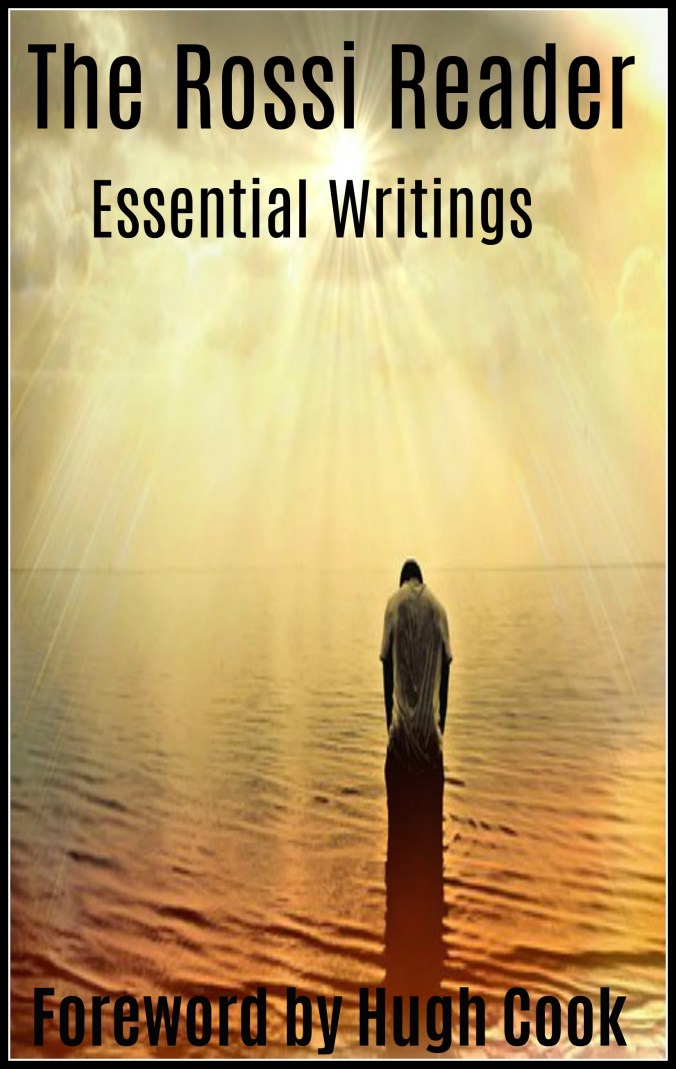
RossiReaderCov9

Mark Antony Rossi

Mark Antony Rossi is a poet, playwright and author of fifteen titles ranging from poetry to future science. His seminal book on writing “Waking the Lion: Inside Writing 1984 to 2017” is a popular ebook meant to help writers with essays on poetry, fiction, nonfiction and drama. He is the Editor in Chief of the international online literary journal Ariel Chart. Most of his writings can be purchased at the site http://www.somapublishing.com
The Interview
1. What inspired you to write poetry?

At first it was the brevity. To pack so much into so little space was enjoyable.
Later it was about rearranging language. Still further poetry become my foundation to other forms of writing. It’s not hard to notice my flash fiction style which has been called “Crash Fiction” is indebted to a poetic flow.

2. Who introduced you to poetry?

I was introduced to poetry through Edgar Allen Poe. Once I heard his “The Raven” I was hooked to something I haven’t stopped in forty-five years. Poetry, more than any form of writing, has a powerful to captivate the imagination. There are poems literally surviving the epoch of time from the days of King Tut. The Psalms from the Bible are thousands of poems meant to be sung, repeated, used as a form of healing to people moving around in search of a home.
3. How aware were you of the dominating presence of older poets?

I liked what Robert Frost, ee cummings, Alan Ginsberg, did with their work.
4. What is your daily writing routine?

My daily writing routine has changed with the times. I used to carry a pen and pad and jot down notes everywhere and then later assemble them into various forms of writing. Now as a husband and father –time is shorter and therefore I used mostly on the notes of my smartphone. I have literally written the last two years of my column “Ethical Stranger” for Indian Periodical on the iPhone. If you are careful technology can be a partner in writing. But you have to remain in control and be the writer.

5. What motivates you to write?

Disappointment with the stupidity of the world.

6. What is your work ethic?

The open secret to writing is rewriting. Sometimes rewriting several times. I once wrote a flash nonfiction piece twenty six times before I thought is was right. I average about seven times. For those who believe rewriting is too much work I say they have no work ethic because writing is work. And when I hear a writer speak about the joy of writing I know that’s a fool who won’t go far. Writing is a torturous calling meant to extract art, truth and humanity in an unappealing manner. Confession.

7. How do the writers you read when you were young influence you today?

Aldous Huxley has greatly influenced most of my futurist writings about the dangers of overreliance on technology. How it threatens human values and even the organs of democracy. Yet strangely writers of the past or present only strike me in the arena of ideas but where it concerns style or structure I’ve had to create my own way forward. Thus my innovations of “Concrete Poetry” and “Crash Fiction” are my vehicles to carry my message.

8. Who of today’s writers do you admire the most and why?

I admire a number of writers whom I have had contact with over the years such as Peter Magliocco, Linda Imbler, A.D. Hurley, Karlo Sevilla, Lailah Saafir, Wayne Russell, Mike Griffith,
Ryan Quinn Flanagan, Eva Wong Nava and John Patrick Robbins.

9. Why do you write?

I physically feel it is a calling. I see and hear things in my thoughts that start organizing for something creative to put out in the world.

10. What would you say to someone who asked you “How do you become a writer?”

I don’t believe a person can “become” a writer. You either know you are or you should look into some other field. All too often the average writer is a journalist stuck piecing together car accidents or drunk domestic violence. You can teach that to people. I am not convinced you can truly teach poetry or fiction writing to people who don’t feel anything but fame and foolishness.

11. Tell me about the writing projects you have on at the moment.

“The Rossi Reader: Essential Writings” will be released by Soma Publishing in October. It’s a selected works project curating some of my better work in poetry, fiction, nonfiction, drama, criticism and screenplay. I am blessed to have a lengthy foreword by Hugh Cook.


Wombwell Rainbow Interviews: Jess Mookherjee

Wombwell Rainbow Interviews

I am honoured and privileged that the following poets, local, national and international have agreed to be interviewed by me. I gave the writers two options: an emailed list of questions or a more fluid interview via messenger.
The usual ground is covered about motivation, daily routines and work ethic, but some surprises too. Some of these poets you may know, others may be new to you. I hope you enjoy the experience as much as I do.

41GDQF5dmcL._AC_US500_QL65_

Jess Mookherjee

Jessica Mookherjee is of Bengali heritage and grew up in South Wales. Her poetry has been widely published in journals, and in two pamphlets, The Swell (Telltale Press, 2016) and Joyride (The Black Light Engine Room Press, 2017). She was highly commended in the Forward Prize 2017 for best single poem. Jessica works in Public Health and lives in Kent. Flood is her first full collection.

The Interview

1. What were the circumstances under which you began to write poetry?

I was a child – and probably left alone for long periods, my mother taught
me to read very early so I was reading and writing before I went to school,
I wrote my first poems when I was 5 (highly derivative nature poetry) and my Primary school teacher seemed amazed by them and wrote them on enormous sheets of paper and displayed them for a whole year. That was probably the start. I then decided to be a novelist and wrote terrible historical fan fiction chapter by chapter for my school friends. Poetry was later poorly rewarded. At my comprehensive school my English teacher told me to write happier poems after I showed her my teenage surrealist ramblings. I wrote very seriously in my early twenties as I wanted by that time to be something of a cross between Charles Bukowski, Byron and TS Eliot! I wrote an epic poem and sent it to Jonathan Cape in 1989 ! I still have their lovely kind reply where they say “try Bloodaxe” – which must have just started.  Chattertonesque, I  decided poetry was not where my fortune lay and I spent the next 30 years being a scientist. When my long term relationship broke down and I moved from London to the countryside – I took up my pen again and I found teachers all around me and poetry poured back out.

2. Who introduced you to poetry?

My mother sang the Indian national anthem to me as a lullaby – and that’s Tagore. But I never knew that until a few years ago! I was given by my father – a book called “A Child’s Treasury Of Poetry” which had The Jumblies, The Raggle Taggle Gypsies and Christina Rossetti and I loved it. I used to like bible stories and the psalms really got me. Going to school in Wales – I adored the dark sound of words I didn’t know what they meant so I liked to guess. Poetry and reading aloud was a thing in Welsh schools. Also, my dad used to speak weird incantations which must have been Sanskrit poetry and I got the rhythms through listening to him. But he also had these weird penguin books by Michael Hamburger and Holub – and I thought how weird and exciting words could be. I had a next door neighbour who was a native Welsh speaker and told me Welsh poetry and read me Dylan Thomas – and RS Thomas. I loved them. Also, as I got older I started listening to music and one of my friends from the wrong side of town gave me Lou Reed’s Berlin and a book by William Boroughs – and that changed my life. At the same time another – far posher friend bought me a Smiths album and The Wasteland  by T. S. Eliot and that changed me too.

3. How aware were you of the dominating presence of older poets?

I was very aware of Ted Hughes, Dylan Thomas and RS Thomas – in fact I thought – like many people that they were all dead. I was amazed to find when I was kid Ted Hughes was alive. I was so happy to be taught his poetry in school though as I adored it. I think we studied Stevie Smith and Louie McNeice too but little other than that and John Donne. I enjoyed it all but the real world of poetry was never really taught. When I look back at how ignorant I was – I feel quite embarrassed. I did know about Indian poets though. I bought a book of Tagore’s poetry when I was 18. In my 20s I discovered modern poetry – of Carol Anne Duffy – whom I adored and Andrew Harvey and David Constantine. In terms of dominating – I didn’t feel dominated – as I sought out poets as different as Gillian Clarke and Jeremy Reed, from Joolz to T. S. Eliot.

4. What is your daily writing routine?

I’m unruly and go for days rebelling from my own routines. But when I have one it is write something as early as possible – read something inspiring. I work full time so my brain is taken up with that all day – then late at night I will start to write then redraft and redraft until I have something I’m half pleased with. Then I type it out – and tinker and go to sleep late and print it out in the morning to see what delirium has produced.

5. What motivates you to write?

Always emotion – a slow build up of something I can’t express coupled with
strange words I might hear. Also, I love challenges and commissions and the
desire to witness. People and the world they live in are so horrifically beautiful I want to capture it for a tiny fleeting moment as a witness to it and a gift to it.
I can’t write good poetry from anger – or righteousness – and I have tried – but it sounds bad when I do it. I write when I feel the burden of the worlds tragedy and some overwhelm of compassion or awe. Like most poets – I write because I must. I don’t know why.

6. What is your work ethic?

I like to be busy – even if it’s busy staring into space or being amazed at the shape of leaves or wondering who first said a particular word. I write quickly and probably over write so I enjoy the scribblingness of being industrious. For ages I was baffled by how to send things to publishers but a wise poet called Jane Clark told me to use my work brain to solve the admin problems and so that helps – to see that as a job, to help my poems live. So I like to see the publication process an extension of actually finishing the poem. I don’t think I’ve done my job if my poems are then not published somewhere.

7. How do the writers you read when you were young influence you today?

I don’t think anything really leaves you. I recently published a poem in Bare Fiction magazine called Sea Shanty  about two strange people on a little boat out to sea and I put Edward Lear’s
Jumblies in – just the reference of the sieve. The editor said he liked it for that whimsy.
Sometimes at workshops people say don’t use Soul or shard and I wonder what T. S. Eliot would do or say – and try to do that. My O’ Level readings of Ted Hughes always influence me as strange animals appear in my poems and the moon! I also remember the cosmicness and the domesticity rolled together in Tagores poetry and I like that – and use it. But I was also very
Influenced by songwriters when I was young – Howard Devoto and Frank Black and Lou Reed.
I try to give a kind of character and feeling to each poem in the way my favourite musicians and songwriters did, give enough space for the reader to sail away but not too much I hope.

8. Who of today’s writers do you admire the most and why?

I admire my friend Abigail Morley’s work very much – as she stretches language like skin and it’s so beautiful and precise and fearless.
I admire Ocean Vuong enormously – he is brave and beautiful and packs
a punch of poetry. He is extraordinary. He writes about a world I don’t know and makes me live it and care and weep. I adore Louise Gluck and Jane Hirshfield for the span of emotion they can cover in their poetry and how they mould words over ideas. I love Jan Wenger’s poetry because it’s a meditation. Another poet I admire
is Elizabeth Sennit Clough – whose pamphlet Glass ( paper swans press) was one of the most intense poetry pamphlets I’ve read and I dreamed about it! I also admire Jane Commains poetry which makes me cry. But there are so many good writers that sometimes knock me for six. Years ago I stumbled on a war veterans website and read a poem by a soldier in Iraq and that has never left me even though I cannot find it anywhere!

9. Why do you write?

I am never alone when I’m writing and yet always alone – perhaps that contrast
appeals to me and the thought that I might never know if one of my poems touches someone – or where the life of that bundle of words will end up. I had no idea that s strange conversation that I had with a girl on facebook years ago would end up in the Forward Prize Book in 2018! That makes it very magical. I write to honour things – to remember things.
Also, I write to surprise myself – sometimes stuff pours out and I have no clue how and the joy of shaping it up Into something that sounds alive is great fun. But mainly it’s so I can witness or voice Something that needs to be said – even if if it’s just for me.

10. What would you say to someone who asked you “How do you become a writer?”

It’s a terrible cliché but I would say “Start writing and don’t ever stop writing, have discipline sometimes and sometimes none. Make sure you have an exiting life, some interesting friends and a few demons in the closet  ( or at very least imagination) – and read read read. And watch watch watch. And then write it all down.”

11. Tell me about the writing projects you have on at the moment.

Right now I’m in the process of editing my second collection – it might be called Burst of it might not – I haven’t decided yet. It should be published next August. I’m working with friends on an ekphrastic project called Fractles and that’s great fun – we had an art exhibition last year. I love collaborations. I’m working with a friend on co- writing poems which is very exciting because you need absolute trust to be able to do it. I’m also starting out as a publisher along with my friends fellow poets Karen Dennison and Abigail Morley. Our new press is called Against the Grain Press and we published 4 poets in 2018 and have just selected our 4 2019 poets – it’s s labour of love. I’m also putting together a whole new collection – and there is a strange theme emerging but I can’t quite tell you about that yet. Who knows what will happen?


Wombwell Rainbow Interviews: Heath Brougher

Wombwell Rainbow Interviews

I am honoured and privileged that the following poets, local, national and international have agreed to be interviewed by me. I gave the writers two options: an emailed list of questions or a more fluid interview via messenger.
The usual ground is covered about motivation, daily routines and work ethic, but some surprises too. Some of these poets you may know, others may be new to you. I hope you enjoy the experience as much as I do.

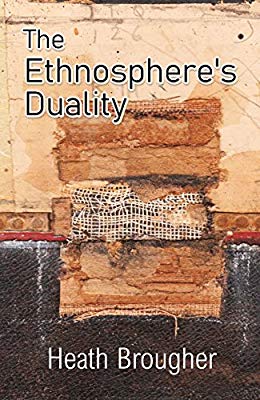
51ml0YeGRGL._AC_SY400_

Heath Brougher

writes on his Amazon profile
“I was born in York, PA and attended Temple University. I have been writing my entire life but didn’t begin to submit my life’s work of duffel bags brimming with 20 years worth of notebooks for publication until age 34 (4 years ago). Since then I have been published in over 450 various print and online journals throughout the world and have been a guest reader at many international events as well as the Featured Reader in many cities in the U.S. In July 2018 I will be dong a reading with Heller Levinson (a Pulitzer Prize Nominee) along with 5 other stellar poets. This reading will be my ultimate honor. I am the author of three chapbooks “A Curmudgeon Is Born” (Yellow Chair Press 2016), “Digging for Fire” (Stay Weird and Keep Writing Press 2016), “Your Noisy Eyes” (Stay Weird and Keep Writing Press 2017) as well as two full-length collections “About Consciousness” (Alien Buddha Press 2017) and “To Burn in Torturous Algorithms” (Weasel Press 2018), with 3 other full-length collections forthcoming. I have received multiple Pushcart Prize and Best of the Net Nominations and my work has been translated and published in 5 other languages. I am the co-poetry editor of Into the Void Magazine, which won the 2017 Saboteur Award for Best Magazine after only 4 issues–a feat no other magazine has ever accomplished before. I was the judge for Into the Void Magazine’s 2016 Poetry Competition and also edited the anthology “Luminous Echoes,” the proceeds of which will be donated to help with the prevention of suicide/self-harm.?”

The Interview

1. What were the circumstances under which you began to write poetry?

I’ve never been able to answer that question. I’ve found notebooks as far back as the 2nd grade with short stories, poetry, drawings in them. Writing was something that I have always loved to do. I suppose I’ve been writing ever since I learned how to write. Writing, in general, has just always been a part of my life.

2 Who introduced you to poetry?

I can’t really answer that concretely either. I guess I could say my grandmother, who passed away when I was less than a year old. As a little kid/teenager I remember sneaking down into a room in the basement that was filed from floor to ceiling with old books and smuggling some of them up to my room. I use the word “smuggling” because I didn’t want anyone to know I read outside of school until my early 20s, and I especially didn’t want anyone to know that I wrote, which I hid from everyone until the age of 34, if you can believe it. I remember finding Edgar Allan Poe books and various compilations of poetry in this room that I would read, although at that time (my early teens) I was more into reading the novels I found there. I did discover “Howl” in an anthology and used to have “The Raven” memorized from start to finish from one of the Poe books. The reason I say my grandmother was the one who introduced me to poetry was due to the fact that many of these books were hers and had her name written inside most of them.
3.  How aware were you of the dominating presence of older poets ?

I didn’t really have to deal with that since I didn’t begin to submit my “life’s work” of duffel bags filled with writing until a little over 4 years ago at age 34. I’m always saying that I’m 20 years late to the party. Ha!

4. What is your daily writing routine

There are times, like during a submission period for Into the Void Magazine, where I’ll switch my sleeping pattern so that I sleep 8 hours once every 3 days and nights. I know this sounds crazy and everyone gives me hell over it, but once you’ve adapted to it, it actually works really well. This whole idea that people need 8 entire hours of sleep a night is really not True, in my opinion at least. People end up sleeping their lives away like this. So, I can’t really say I have a writing “routine.” I usually reserve the nights for my own writing/copying up the uncountable poems and other writings in my plethora of notebooks.

5. What motivates you to write?

When that inspiration hits, I WILL allow the ton of other things I told people I’d do for them to fall by the wayside. That’s NOT counting reading submissions for Into the Void Magazine—that’s the one and only exception to this rule. When I feel that wave of inspiration hit, I like to ride it for as long as I possibly can

6. What is your work ethic?

I guess I kind of answered that one in the last 2 questions. For instance, right now I owe 38 people book reviews, am in the process of making the final decisions of what poems are going to make it into the next issue of Into the Void Magazine, plus a million other things—only a few of which are coming to mind right now. Not to sound pompous, but I would say I have an extremely strong work ethic.

7.  How do the writers you read when you were young influence you today?

Most likely in more ways than I give them credit for. I always liked to think I was taking my own route in my notebooks but I’m sure that writers like Kerouac and Burroughs found their way in through my subconsciousness at least some of the time.

8. Who of today’s writers do you admire the most and why?

I always say that’s a 3-way tie between Heller Levinson, Felino A. Soriano, and Alan Britt. If anyone reading this is not familiar with their work I would highly recommend checking it out.  These are the 3 contemporary poets that your grandchildren will be reading in textbooks right next to Whitman and Cummings.

9. Why do you write?

This is a question I’ve never been able to fully answer. I’ve just always had the need to write.  As I said in a previous answer, I’ve found a notebook with writing in it as far back as the 2nd grade. I do know that it’s a great catharsis for me. I guess it’s something I’ve always needed to do on some kind of subconscious level. Writing has always been a part of my life.

10. What would you say to someone who asked you “How do you become a writer?”

I would tell them that I don’t really think anyone “becomes” a writer. I would say that when you’re born you’re either a writer or you’re not a writer. There are a lot of imitative writers out there, but I can’t speak for them.

11. Tell me about the writing projects you have on at the moment.

Well, I’m currently typing up and editing 17 of the 88 books I’ve written over my life and am at various stages of completion with them. On top of that, there’s several new books that I’ve begun writing but none of them are really close to being done or fully edited. 2 of the newer books are books that have been written completely on the computer, which is something new for me. As far as forthcoming books, I have 2. “This is the Past” is due to be published by Between These Shores Books and “Tangential Dithyrambs” is due to be published by Concrete Mist Press.

Thank you for taking the time to let me spout a little bit about my life. It’s much appreciated.