Ekphrastic Challenge 2025. Day Eleven. Please join Debbie Ross, Matt Guntrip, Anish Gupta, Phil Hyde, Donna Faulkner, Francis H Powell, Judy Smith , Sheikha A, Rituparna, John Armstrong, Oormila V. Prahlad and I as we respond to the daily artworks of Sara Elizabeth Bell, Jenn Zed, and Spriha Kant. Day Eleven. April Eleventh.

SEB11

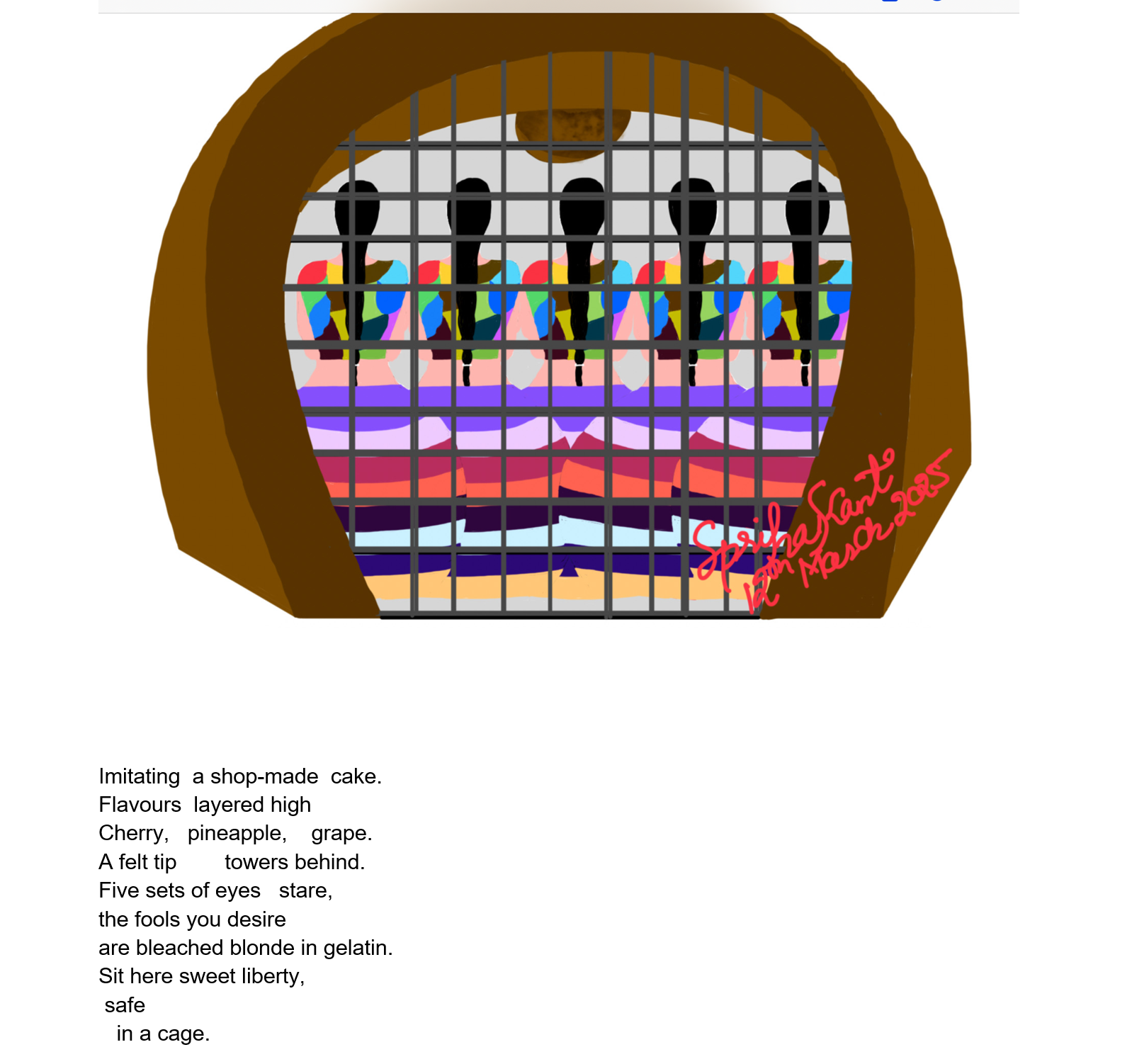
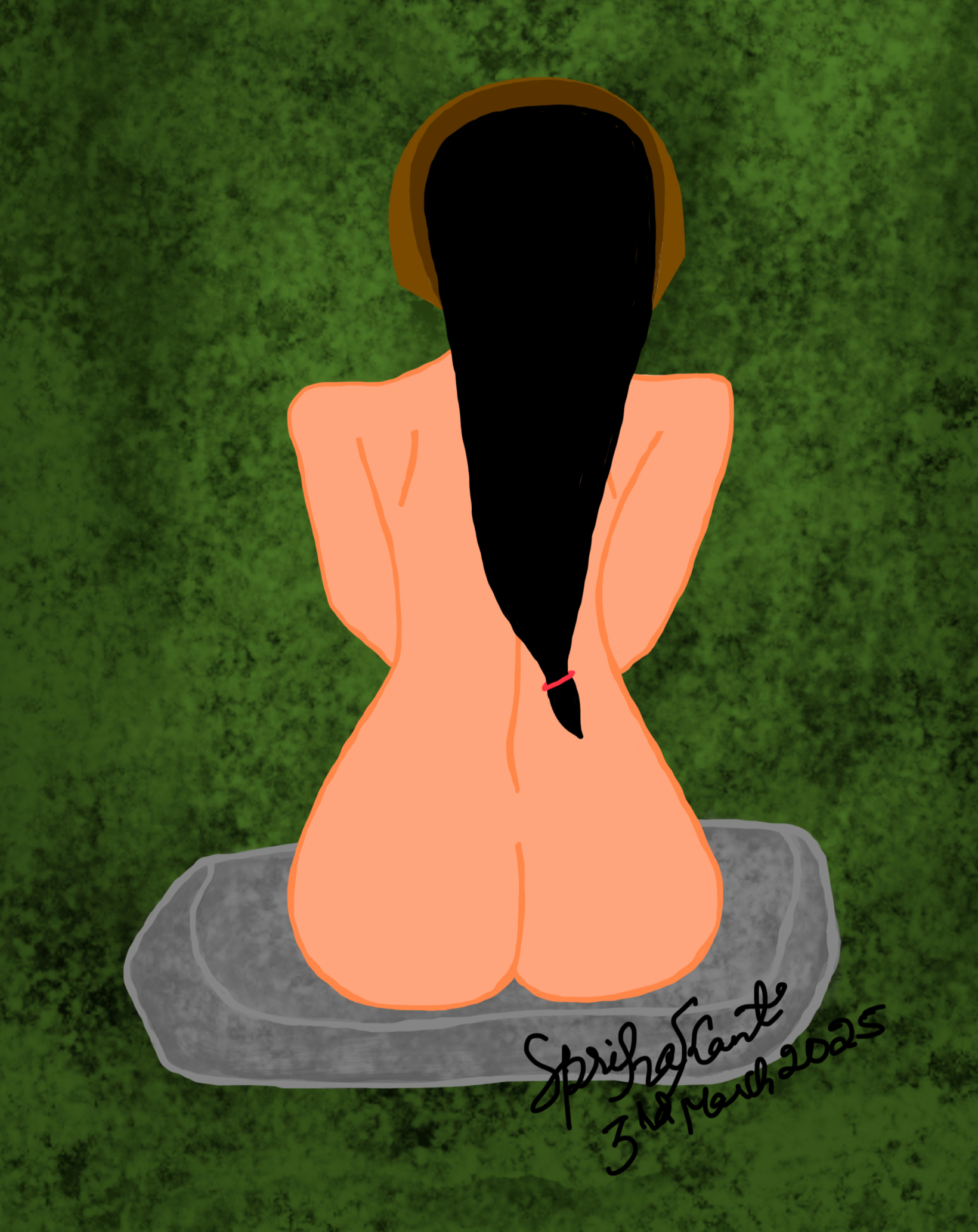
SK11

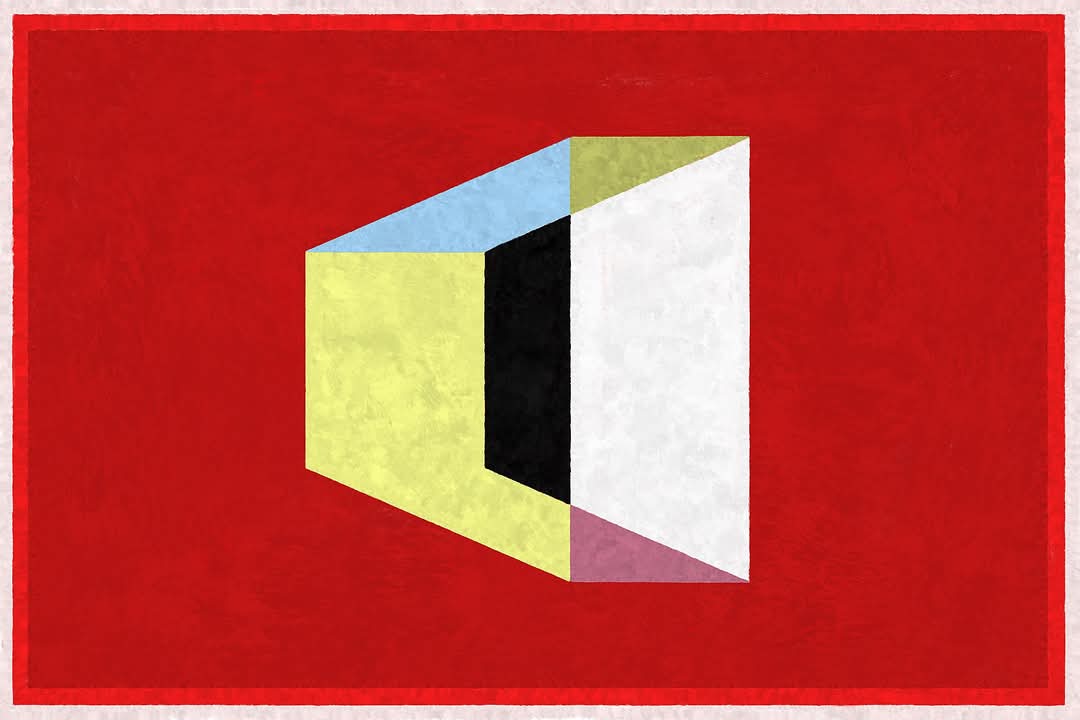
JZ11

Jz11


Evil smoulders
shows it’s face
stronger than poison
staring back at me
ominously
an imprint of darkness
as the light of the stars
goes out

-Francis H. Powell

Jz 11

The Mask Beneath the Skin

I wear a face the world can understand
but beneath it,
a storm waits without name,
aching to be seen without explanation.

My silence is not emptiness,
it is the weight of truths too heavy for sound.

There are days I look into mirrors
and find only questions
staring back with eyes that remember
what I try to forget.

Every smile I offer
is a practiced defense
against the tremble in my chest,
against the scream I buried
the first time I was told
to be strong when I was breaking.

You think you know me
because I walk steady,
but inside,
the floor is always shifting,
and I have learned
to make poetry of survival,
to carve beauty
from the bones of pain.

SEB 11

Where Light Keeps Vigil

Above the hush of sleeping hills,
a presence lingers,
not of flesh,
but of light remembered by the stars.

It watches,
not with eyes,
but with a knowing
that predates sorrow
and forgives it all the same.

The tree cradles its form,
branches sheltering what the world has forgotten, a guardian, not fallen, only hidden.

Beneath, the city glows
with dreams and forgetting.
People hurry through golden shadows,
never sensing the soft pulse above,
where love keeps vigil.

The roots glisten,
not with water,
but with grace.
Hearts, still bound to the soil,
call out without sound
and are answered.

Nothing is alone.
Not tonight.
Not ever.


SK 11

We Are the Thread

Woven in silence before breath began,
we rise from the memory of stars,
carrying the whispers of those who came before,
their laughter folded into our bones,
their longings tucked into our skin.

This shape we take
is not just flesh,
but memory sculpted into motion,
a story passed hand to hand,
heart to heart.

Each curve, a moment of becoming:
a child reaching for love,
a mother holding on too long,
a goodbye never spoken,
a promise carried across lifetimes.

We are not alone.
Even in stillness,
the pulse within us is not just ours.
It echoes with the footsteps of many
who once stood
right where we now stand.

There is no separation,
only distance imagined.
What we are
is everyone we have ever loved
and everyone we have yet to meet.

And in the quiet rise of breath,
in the curl of our becoming,
something ancient,
something holy,
remembers itself.

-Rituparna


Anatomy of Silence ( Based on Based on Artwork inspired by JZ 11)

Beneath the pallid glow of fractured moonlight,
a visage swells;
not monstrous,
but aching with the weight of withheld hungers.

Its contours blur in shadows,
half-formed desires
clutching at breathless quiet.
Eyes like bruises peer through blackened paint,
searching for some absolution in the mire.

The mouth, a cage of bone and ash,
speaks in silence,
as if truth, once uttered,
would break the fragile seams of the skin.

This is the man,
neither cruel nor kind,
but always veiled.

-Anish Gupta

Aries (stacking lineage in rows of dominoes)

in response to artwork by Spriha Kant

after Pippa Phillips

Building legacies can easily warp into sagas. Your steep climb skywards may prove a trudge and conceding is not the way of steadfastness. Worry about impressions only if they are being painted by novice hands. To be mere in the future indicates clever execution of past trivia — bird in bush given to mutability to pass over superior gene. Aplomb is a dubious axis tilting towards arrogance. Check durability of ink when delivering dictation; a word misplaced becomes a revolt. Understand control is a floor of ice wearing spikeless shoes. Walk on moss and be soundless.

-Sheikha A.

-Phil Hyde

SK11

The origin story, 
spoiler  alert. 
From primordial soup.
the full colour of life.
It is the map
the blueprint.
The way    and the how.
A stairway to heaven
The ladder of life

-Donna Faulkner

Artworker Bios

Jenn Zed
Ms. Zed is an artist, writer, and musician who lives in Bath, England, with the ghost of her cat.
She studied art, art history, and design MA at Bath and Cambridge Universities.

Sara Elizabeth Bell

Says:

I’ve always loved drawing. It’s a form of meditation for me and has now become a way for me to find peace and sanity when my world gets too overwhelming, which, as a single mom with a neuro-divergent teen, happens quite often. When it does, I follow John Muir’s quote, “Off into the woods I go to loose my mind and find my soul.”
The results of those trips are  sketches of the forests around me and photos. I work from the photos to create my watercolors and intaglio prints. I hope you enjoy them and can find a place in your home to adopt one or more.

Spriha Kant

Spriha Kant is an English poetess, book reviewer, and digital artist. She has been published in some anthologies — “Hidden in Childhood” and “We Are The Waves,” to name a few. Her poems have also been published in the seventh issue of “Reflections,” the well-known literary magazine “Prosetrics.” She has been the Guest of honor in the award-winning show “Victoria in Verse” (Bloomsbury Radio, London). Her interviews can be read at feversofthemind.com & and brokenspine.co.uk. Her quotes are published as an epigraph and a blurb in Magkasintahan Volume VI & Swiped Right [both books published by Ukiyoto Publishing, Philippines], respectively. Her artwork can be seen in a webzine called “The Starbeck Orion” and on thewombwellrainbow.com.

Writer Bios

Debbie Ross,

Debbie is a poet, author, artist, photographer, and baker. She lives 400m from the sea, in the far north Scottish Highlands, and can be mostly be found in the kitchen, at the beach, or at her writing table.

Matt Guntrip,

Matt Guntrip is a guitarist, song writer and indie musician from the UK. He has published four albums & five singles via CD Baby, available on most channels. He was a nominated solo artist on the New Music Generator Show, Cambridge 105FM.

Through creative writing he explores themes of nature, time, love, loss, rejection, injustice and hope, with a view to learning, improving and thus to writing better songs.

Matt’s writing has been published in The Belfast Review, The Broken Spine,  Fevers of The Mind, Folkheart Press Blog, GAS Poetry (YouTube), The Starbeck Orion (Substack) & The Wombwell Rainbow website.

Donna Faulkner,

Donna  Faulkner lives in a cottage in Rangiora, New Zealand with her husband , two sons and Emily, the black Labrador.  She’s been published in 300 Days of Sun, Havik, Windward Review, Havik, Fieldstone Review,  New Myths, Bacopa Literary Review and others. Her debut poetry book ‘In Silver Majesty’ was published by erbacce press(UK) 2024. 

Instagram @lady_lilith_poet/ Twitter @nee_miller. https://linktr.ee/donnafaulkner

Alan McGinn,

Anish Gupta,

Dr. Anish K. Gupta is an Indian urologist and an impassioned poet who writes mainly in English but also dabbles in Hindi and Urdu. His work seamlessly intertwines the exactitude of medical science with the subtleties of human emotion. Grounded in the complementary realms of medicine and art, his path reflects a profound quest for understanding, healing, and the expression of love and life. In the operating room or on the page, Dr. Gupta delves into the intricacies of both body and soul, approaching each with care, curiosity, and compassion. His poetry captures the subtle epiphanies of daily life, the fragility of the human condition, and the deep connections between love and existence. He goes by the #uropoet on X where his handle is @optionurol.

Phil Hyde,

GP Hyde was born on the Wirral and now lives in Grimsby. He studied art at Goldsmith’s and at the Royal Academy Schools. His fiction has been extensively published by Pure Slush. His poetry has been published by Black Bough Press, Hedgehog Press, Written Off, the Dark Poets and voidspacezine

Rituparna,

Rituparna Ghosh is an alumna of the National University of Singapore, an AI engineer, and the founder of Whizzstep. With a passion for poetry, she enjoys crafting verses, particularly in the genres of free verse and reflective poetry. A lover of nature, Rituparna finds peace in her walks by the beach, where the tranquility of the ocean inspires both her creativity and personal reflection. Coding is her profession, and she thrives on solving complex problems through technology. She also has a deep love for traveling, reading, learning new languages, and horse riding, connecting with the outdoors in a unique and fulfilling way.

Francis H Powell,

Judy Smith ,

Judy Smith lives in East Yorkshire. Retired from a career in health and education, she is an emerging poet. She has had poems published in several anthologies, including Spelt, 14, Black Bough, Artemis, High Wolds, Dreich, York Literary Review, The Starbeck Orion. She has a passion for wildlife gardening and community tree planting.

Sheikha A,

Sheikha A. is from Pakistan and United Arab Emirates. Her poems appear in a variety of literary venues both print and online, and some of them have been translated into 8 languages so far. More about her can be found at sheikha82.wordpress.com

John Armstrong,

John Armstrong is a poet whose work blends metaphysical inquiry with vivid, elemental imagery. Drawing from a deep reverence for nature, memory, and the cosmic, Armstrong’s poetry explores dualistic and trinitarian themes of love, transformation, and the spiritual texture of existence.Armstrong sees poetry not merely as a literary form but as a living, animistic force—language shaped by the earth itself. His work is a personal quest, a surrender to the unknown, finding beauty in ambiguity and meaning in the mist between words and life.

Spare time: He grows Cosmos flowers and wills them on way past the first frosts.

Saraswati Nagpal,

John Wolf

Creative writing tutor, poet, storyteller for Read To Write. Taught Beowulf, Odyssey, and Troy; Gilgamesh is coming in October. First poetry collection entitled Heroes (Glasshead Press, 2022). New collection, Historia, out summer 2025. Featured on Radio Sheffield, CAST, Little Theatre, Doncaster Ukranian Centre, Artbomb, Doncaster Foodbank Festival, Under Milk Wood and Women of Troy. 

Oormila V. Prahlad

is a widely published Indian-Australian artist and poet. She lives and works on traditional Gammergal land. Find her on Instagram @oormila_paintings

Ekphrastic Challenge 2025. Day Four. Please join Debbie Ross, Matt Guntrip,Saraswati Nagpal, Alan McGinn, Anish Gupta, Phil Hyde, Donna Faulkner, Francis H Powell, Judy Smith , Sheikha A, Rituparna, John Armstrong and I as we respond to the daily artworks of Sara Elizabeth Bell, Jenn Zed, and Spriha Kant. Day Four. April 4th.

JZ4

SEB4

SK4

Jz 4
 
Merging with Infinity
 
I step forward, but my feet do not touch the ground.
The sky presses against my skin,
folding into me, as if I have always been part of it.
 
I am unraveling, thread by thread,
veins turning to rivers, breath dissolving into wind.
My name, once heavy on my tongue,
melts into silence.
 
I reach for the past, but it slips through my fingers.
There is no body here, only motion,
only the quiet pull of something vast,
something nameless,
something that has been waiting for me
all along.
 
 
SK 4
 
Mirrors of the Soul
 
They stand behind the bars, watching, waiting,
faces blurred, neither here nor gone.
Their silence hums against the air,
not empty, but full of something unsaid.
 
The world moves beyond them, untouched,
but they remain, tethered to their own reflections,
names slipping through time like water through hands,
unclaimed, unfinished.
 
The glass does not hold them.
It only returns what it takes,
a gaze hollowed by longing,
a presence too fragile to leave a mark.
 
Are they prisoners, or are they the ones who guard?
Are they searching, or have they already surrendered?
A thousand questions press against the glass,
but no breath will ever fog its surface.
 
Step closer, and the weight of their gaze will settle on your skin.
Step closer, and you might find they have your eyes.
 
 
SEB 4
 
Nature’s Quiet Resilience
 
Ice drapes over the earth like a solemn vow,
binding movement, silencing breath.
Frozen blades of grass bow in quiet surrender,
locked in winter’s unrelenting grasp.
 
No voice rises in protest,
no plea escapes the silent stones.
Yet beneath the stillness,
life listens, life waits,
life remembers.
 
The river does not forget its hunger,
nor do roots abandon their reach.
Even the most fragile leaf,
encased in ice,
holds the fire of spring within.
 
-Rituparna
 

-Phil Hyde

Gemini (rx surfing quicksilver) 
 
in response to artwork by Spriha Kant 
 
after Pippa Phillips 
 
Tone your altar, speech of pathos is a difficult spice to digest. One of many mirrors swallows you raw especially reflective past. Projection leads to multiplying baggage when nodes tilt. Entitled lover, shackled in vows of free speech, bring yourself to a halt where the sign points to duality. Ephemeral ropes of duplicity follow your trail — Ouroboros trainer, be wary of shed skins. Juggle resolve with intent of a jester: sly quiet can save you from guillotine. 
 
-Sheikha A

Free Dreaming (SK4)

In his mind’s eye he sees sisters as they talk

around their mother’s kitchen table,

backs close, together for another celebration,

enjoying delicious food preparation;

pakoras, paratha, bombay potatoes, biryani,

nankhatai, curries to make his mouth tingle.

He imagines the odours that mingle;

oils of jasmine and tuberose that slick

long cared-for braids, strong and black,

and the delicate chains around their necks,

saris in colourful reds, blue, green, gold

catching light as they laugh and bake.

They own these customs, counter patriarchal rites

with boldness, fat with joy and freedom,

and though bars restrict his daily life

he’ll honour them, feel no shame for what he’s done.

His so-called sin of a rainbow kind-guilty

because of the man he loves. He feels stronger,

can dream of that place ahead, still unclear,

but where he can be his own future.

Judy Smith

 jz4

Translucent woman

turns her back on me

in a turquoise dreams

If I shut my eyes tight

she’ll be washed away

by the sea

-Francis Powell

-Donna Faulkner

-Anish Gupta

Avatar.   

Ocean, strata, earth, sky,
she does not reward us
with a doe-soft eye,
instead turns away

to view the future’s
diorama,
with thoughts
distant, diaphanous.

She is shadow,
light,
impression,
colour,

Avatar
we do not know
but imagine,
wish to.

The bounty grows
beyond groves of mangroves
where white sand falchions
sanctuary’s harbour.

The island
we created
from hushing breakers,
comical coconut crabs.

Taste the salt,
stroke beatific bronze,
agree that palm trees in repose,
only do what we should do.

See in soft focus,
slow –
Make memory magical,
allow, accept, flow.

A window of opportunity
rests under elbow,
cascades
into tomorrow.

-John Wolf

-Matt Guntrip

Artworker Bios

Jenn Zed
Ms. Zed is an artist, writer, and musician who lives in Bath, England, with the ghost of her cat.
She studied art, art history, and design MA at Bath and Cambridge Universities.

Sara Elizabeth Bell

Says:

I’ve always loved drawing. It’s a form of meditation for me and has now become a way for me to find peace and sanity when my world gets too overwhelming, which, as a single mom with a neuro-divergent teen, happens quite often. When it does, I follow John Muir’s quote, “Off into the woods I go to loose my mind and find my soul.”
The results of those trips are  sketches of the forests around me and photos. I work from the photos to create my watercolors and intaglio prints. I hope you enjoy them and can find a place in your home to adopt one or more.

Spriha Kant

Spriha Kant is an English poetess, book reviewer, and digital artist. She has been published in some anthologies — “Hidden in Childhood” and “We Are The Waves,” to name a few. Her poems have also been published in the seventh issue of “Reflections,” the well-known literary magazine “Prosetrics.” She has been the Guest of honor in the award-winning show “Victoria in Verse” (Bloomsbury Radio, London). Her interviews can be read at feversofthemind.com & and brokenspine.co.uk. Her quotes are published as an epigraph and a blurb in Magkasintahan Volume VI & Swiped Right [both books published by Ukiyoto Publishing, Philippines], respectively. Her artwork can be seen in a webzine called “The Starbeck Orion” and on thewombwellrainbow.com.

Writer Bios

Debbie Ross,

Debbie is a poet, author, artist, photographer, and baker. She lives 400m from the sea, in the far north Scottish Highlands, and can be mostly be found in the kitchen, at the beach, or at her writing table.

Matt Guntrip,

Matt Guntrip is a guitarist, song writer and indie musician from the UK. He has published four albums & five singles via CD Baby, available on most channels. He was a nominated solo artist on the New Music Generator Show, Cambridge 105FM.

Through creative writing he explores themes of nature, time, love, loss, rejection, injustice and hope, with a view to learning, improving and thus to writing better songs.

Matt’s writing has been published in The Belfast Review, The Broken Spine,  Fevers of The Mind, Folkheart Press Blog, GAS Poetry (YouTube), The Starbeck Orion (Substack) & The Wombwell Rainbow website.

Donna Faulkner,

Donna  Faulkner lives in a cottage in Rangiora, New Zealand with her husband , two sons and Emily, the black Labrador.  She’s been published in 300 Days of Sun, Havik, Windward Review, Havik, Fieldstone Review,  New Myths, Bacopa Literary Review and others. Her debut poetry book ‘In Silver Majesty’ was published by erbacce press(UK) 2024. 

Instagram @lady_lilith_poet/ Twitter @nee_miller. https://linktr.ee/donnafaulkner

Alan McGinn,

Anish Gupta,

Dr. Anish K. Gupta is an Indian urologist and an impassioned poet who writes mainly in English but also dabbles in Hindi and Urdu. His work seamlessly intertwines the exactitude of medical science with the subtleties of human emotion. Grounded in the complementary realms of medicine and art, his path reflects a profound quest for understanding, healing, and the expression of love and life. In the operating room or on the page, Dr. Gupta delves into the intricacies of both body and soul, approaching each with care, curiosity, and compassion. His poetry captures the subtle epiphanies of daily life, the fragility of the human condition, and the deep connections between love and existence. He goes by the #uropoet on X where his handle is @optionurol.

Phil Hyde,

GP Hyde was born on the Wirral and now lives in Grimsby. He studied art at Goldsmith’s and at the Royal Academy Schools. His fiction has been extensively published by Pure Slush. His poetry has been published by Black Bough Press, Hedgehog Press, Written Off, the Dark Poets and voidspacezine

Rituparna,

Rituparna Ghosh is an alumna of the National University of Singapore, an AI engineer, and the founder of Whizzstep. With a passion for poetry, she enjoys crafting verses, particularly in the genres of free verse and reflective poetry. A lover of nature, Rituparna finds peace in her walks by the beach, where the tranquility of the ocean inspires both her creativity and personal reflection. Coding is her profession, and she thrives on solving complex problems through technology. She also has a deep love for traveling, reading, learning new languages, and horse riding, connecting with the outdoors in a unique and fulfilling way.

Francis H Powell,

Judy Smith ,

Judy Smith lives in East Yorkshire. Retired from a career in health and education, she is an emerging poet. She has had poems published in several anthologies, including Spelt, 14, Black Bough, Artemis, High Wolds, Dreich, York Literary Review, The Starbeck Orion. She has a passion for wildlife gardening and community tree planting.

Sheikha A,

Sheikha A. is from Pakistan and United Arab Emirates. Her poems appear in a variety of literary venues both print and online, and some of them have been translated into 8 languages so far. More about her can be found at sheikha82.wordpress.com

John Armstrong,

John Armstrong is a poet whose work blends metaphysical inquiry with vivid, elemental imagery. Drawing from a deep reverence for nature, memory, and the cosmic, Armstrong’s poetry explores dualistic and trinitarian themes of love, transformation, and the spiritual texture of existence.Armstrong sees poetry not merely as a literary form but as a living, animistic force—language shaped by the earth itself. His work is a personal quest, a surrender to the unknown, finding beauty in ambiguity and meaning in the mist between words and life.

Spare time: He grows Cosmos flowers and wills them on way past the first frosts.

Saraswati Nagpal,

John Wolf

Creative writing tutor, poet, storyteller for Read To Write. Taught Beowulf, Odyssey, and Troy; Gilgamesh is coming in October. First poetry collection entitled Heroes (Glasshead Press, 2022). New collection, Historia, out summer 2025. Featured on Radio Sheffield, CAST, Little Theatre, Doncaster Ukranian Centre, Artbomb, Doncaster Foodbank Festival, Under Milk Wood and Women of Troy. 

Oormila V. Prahlad

is a widely published Indian-Australian artist and poet. She lives and works on traditional Gammergal land. Find her on Instagram @oormila_paintings


Ekphrastic Challenge 2025. Day Seven. Please join Debbie Ross, Matt Guntrip, Saraswati Nagpal, Alan McGinn, Anish Gupta, Phil Hyde, Donna Faulkner, Francis H Powell, Judy Smith , Sheikha A, Rituparna, John Armstrong, Oormila V. Prahlad and I as we respond to the daily artworks of Sara Elizabeth Bell, Jenn Zed, and Spriha Kant. Day Seven. April 7th.

JZ7

SEB7

SK7

Scorpio (lateral descendant of Pluto) 
 
in response to artwork ‘Murder at Sunset’ by Sara Bell
 
after Pippa Phillips 
 
Philosophical lego is not your tendency game; scratch your cards right. At precise hour of purple plume day break, push blue whale back into the ocean. Let soundwaves from an undiscovered planet guide your resolve — reinstate past to nocturnal realities. What comes from nowhere reaches nowhere; apply instinct to logic and proceed. Waves between clouds pronounce rumble. Watch horizon scintillate as one with auburn soil. Don’t be alarmed by blood in the sky — a murder gathers and gleans only that is left behind. Forsake. Your direction north may trigger thunder. 
 
-Sheikha A.
 

7 Jz7


Is it a look into the future

or back to past

design of perfection

or the coldness of glass

would it adorn

somebody’s wall

be cherished adored

what does it say

what does it mean

-Francis H. Powell


Call of the Unseen ( Based on Artwork Inspired by SEB7 )

A crowd gathers beneath the trees,
faces tilted toward the fading light.
Some see endings, others beginnings.
One whispers goodbye to a joy long gone.
Another clings to the warmth still lingering.
Shadows stretch, uncertain and honest.
The sky tells no one truth.
We look together, alone in our meanings.
Evening comes.
The light leaves.

We remain, wondering—
was it a crow’s call for life,
or a call for the end?

Before the Gaze (Based on Artwork inspired by SK7)

Love undressed her gently;
not of cloth,
but of fear.

She sits, spine like a vow,
on stone carved from patience.
The earth listens.
Her hair, a black waterfall,
holds the weight of wanting.

No eyes, no gaze,
just the wind’s slow kiss
on shoulder blades of becoming.

She is not waiting.
She is.
Bare as the first thought
before it learns its name. 
 
-Anish Gupta


Jz 7
 
Windows of Perception
 
We stare at form,
and pretend we understand.
 
But it does not ask to be understood.
It waits.
It absorbs.
It reflects.
 
Each surface demands something different:
compliance, curiosity, memory, grief.
The black void at its center
is not emptiness.
It is everything
we refuse to see.
 
Light does not reach it,
not because it cannot,
but because we turn away.
 
We name the shape
to feel safe.
We frame it in color
to feel alive.
But beneath that
is the ache of not knowing,
the violence of certainty,
the unbearable silence
between perception
and truth.
 
 
SEB 7
 
They Still Come
 
Even now,
they perch on the dying branches
of what we once called forever.
 
Each bird is a fragment of us,
what we said,
what we couldn’t.
 
This sunset is the color
of your last silence.
Not anger.
Not sorrow.
Just that unbearable knowing
that love could not save
what time came to claim.
 
The trees remember
how your hands trembled
before they let go.
The roots have clutched every ache
I buried beneath whispered promises.
 
You left like dusk.
Slow. Inevitable.
Turning everything tender,
then cold.
 
And still,
they gather.
Black shapes against a bruised sky.
The only ones
who never stopped
coming back.
 
 
SK 7
 
Where the Silence Still Breathes
 
She sat where the grass remembered his footsteps.
Her back, bare to the breeze, still carried the warmth of his hands.
Not a word spoken.
Only the hush of moments that once breathed between them.
 
The silence now was not peace.
It was ache.
It was memory pressing against skin,
a ghost of love that never fully left.
 
She had loved him like monsoon loves parched earth,
without asking,
without pause.
He had left like morning slips out of night,
quiet, inevitable.
 
She did not cry.
Instead, she listened.
To leaves brushing against wind.
To her breath.
To that space in her chest
where he once lived
and still does.
 
-Rituparna

-Donna Faulkner


SEB7

Case of The Scrivener’s Murdered Heart


Case notes;


Charges:

That the Scrivener did knowingly and with premeditated metaphor

murder the silence between the stars 

by committing breaths upon his unspoken soul.


Presiding Judge:

Hon. Jack Kerouac

(Unshaven, barefoot, his gavel? Many fist punched typewriter keys )


Prosecution:

The poets inner keeper of snow globed hush

An ancient crow who only sings inside.


Defense:

The Poet himself —

ink-stained soul, star stray eyes,fire word starter


Jury?

– The Reader–


I. Opening Statement (Prosecution)

All souls,Beasts and fallen ghosts of all – you the jury —

I submit this:

I murdered silence.

Stole the hush from dusk’s soft maw,

caged it on a page,

called it fire like sunset edge

The crows are complicit!

Each line a black-winged voweling out infinities. 

Kept still upon the sacred bark skins of quietude


II. The Crows Interrupt


From the groves of greengage and broken cathedral arches —

the crows rustle.

First like scratchling twigs

Then like unsheathed hymns in a storm.

Then, like untethered Kites.


They shout:

This is not murder —


You call it sacred silence,

but it was never an echo of cathedral vespers.

We carried feral fragments

from branch to wind,

from treebone to thunder sky.


Poems are not solitary prisons —

They are the dawn crack of birth

 in splintering eggshell voices


‘Order!’ shouts Judge Kerouac,

through teeth he left

on motel chairs in ’57.


III.  Statement (Defense)

But who else would speak for the silence

In my bones?

Yes, I cracked the wings of cuneiform dusks,

but only to let the wind shape the valleys of lost souls

The crows don’t care

From where they stole their caw

I’m guilty of telling joy to my heart.


IV. The Judge (Kerouac, unsmiling)

You know what I know,

when the thought is fought,

it burns like starlight

on a planet of the blind.

But when on page,

it’s in a zoo —

kicking,

poking,

dusts up the floor of heaven’s stairs

That’s your sentence ( Now,lets buy him a gallon jug of wine)

V. Final Notes 

(Court Clerk, a blind Raven cawing Poe,Poe)


The jury?


Ahh,They were already at the bar,

drunk on juiced riffling script —

and some,

high on bell jarred Sylvia Plath.

-John Armstrong


-Judy Smith


Artworker Bios

Jenn Zed
Ms. Zed is an artist, writer, and musician who lives in Bath, England, with the ghost of her cat.
She studied art, art history, and design MA at Bath and Cambridge Universities.

Sara Elizabeth Bell

Says:

I’ve always loved drawing. It’s a form of meditation for me and has now become a way for me to find peace and sanity when my world gets too overwhelming, which, as a single mom with a neuro-divergent teen, happens quite often. When it does, I follow John Muir’s quote, “Off into the woods I go to loose my mind and find my soul.”
The results of those trips are  sketches of the forests around me and photos. I work from the photos to create my watercolors and intaglio prints. I hope you enjoy them and can find a place in your home to adopt one or more.

Spriha Kant

Writer Bios

Debbie Ross,

Debbie is a poet, author, artist, photographer, and baker. She lives 400m from the sea, in the far north Scottish Highlands, and can be mostly be found in the kitchen, at the beach, or at her writing table.

Matt Guntrip,

Matt Guntrip is a guitarist, song writer and indie musician from the UK. He has published four albums & five singles via CD Baby, available on most channels. He was a nominated solo artist on the New Music Generator Show, Cambridge 105FM.

Through creative writing he explores themes of nature, time, love, loss, rejection, injustice and hope, with a view to learning, improving and thus to writing better songs.

Matt’s writing has been published in The Belfast Review, The Broken Spine,  Fevers of The Mind, Folkheart Press Blog, GAS Poetry (YouTube), The Starbeck Orion (Substack) & The Wombwell Rainbow website.

Donna Faulkner,

Donna  Faulkner lives in a cottage in Rangiora, New Zealand with her husband , two sons and Emily, the black Labrador.  She’s been published in 300 Days of Sun, Havik, Windward Review, Havik, Fieldstone Review,  New Myths, Bacopa Literary Review and others. Her debut poetry book ‘In Silver Majesty’ was published by erbacce press(UK) 2024. 

Instagram @lady_lilith_poet/ Twitter @nee_miller. https://linktr.ee/donnafaulkner

Alan McGinn,

Anish Gupta,

Dr. Anish K. Gupta is an Indian urologist and an impassioned poet who writes mainly in English but also dabbles in Hindi and Urdu. His work seamlessly intertwines the exactitude of medical science with the subtleties of human emotion. Grounded in the complementary realms of medicine and art, his path reflects a profound quest for understanding, healing, and the expression of love and life. In the operating room or on the page, Dr. Gupta delves into the intricacies of both body and soul, approaching each with care, curiosity, and compassion. His poetry captures the subtle epiphanies of daily life, the fragility of the human condition, and the deep connections between love and existence. He goes by the #uropoet on X where his handle is @optionurol.

Phil Hyde,

GP Hyde was born on the Wirral and now lives in Grimsby. He studied art at Goldsmith’s and at the Royal Academy Schools. His fiction has been extensively published by Pure Slush. His poetry has been published by Black Bough Press, Hedgehog Press, Written Off, the Dark Poets and voidspacezine

Rituparna,

Rituparna Ghosh is an alumna of the National University of Singapore, an AI engineer, and the founder of Whizzstep. With a passion for poetry, she enjoys crafting verses, particularly in the genres of free verse and reflective poetry. A lover of nature, Rituparna finds peace in her walks by the beach, where the tranquility of the ocean inspires both her creativity and personal reflection. Coding is her profession, and she thrives on solving complex problems through technology. She also has a deep love for traveling, reading, learning new languages, and horse riding, connecting with the outdoors in a unique and fulfilling way.

Francis H Powell,

Judy Smith ,

Judy Smith lives in East Yorkshire. Retired from a career in health and education, she is an emerging poet. She has had poems published in several anthologies, including Spelt, 14, Black Bough, Artemis, High Wolds, Dreich, York Literary Review, The Starbeck Orion. She has a passion for wildlife gardening and community tree planting.

Sheikha A,

Sheikha A. is from Pakistan and United Arab Emirates. Her poems appear in a variety of literary venues both print and online, and some of them have been translated into 8 languages so far. More about her can be found at sheikha82.wordpress.com

John Armstrong,

John Armstrong is a poet whose work blends metaphysical inquiry with vivid, elemental imagery. Drawing from a deep reverence for nature, memory, and the cosmic, Armstrong’s poetry explores dualistic and trinitarian themes of love, transformation, and the spiritual texture of existence.Armstrong sees poetry not merely as a literary form but as a living, animistic force—language shaped by the earth itself. His work is a personal quest, a surrender to the unknown, finding beauty in ambiguity and meaning in the mist between words and life.

Spare time: He grows Cosmos flowers and wills them on way past the first frosts.

Saraswati Nagpal,


EkphrasticChallenge2025 Day One. Please join Debbie Ross, Matt Guntrip, Saraswati Nagpal, Alan McGinn, Anish Gupta, Phil Hyde, Donna Faulkner, Francis H Powell, Judy Smith , Sheikha A, Rituparna, John Armstrong and I as we respond to the daily artworks of Sara Elizabeth Bell, Jenn Zed, and Spriha Kant. Day One. April 1st.

JZ1

SEB1

Sk1

your stresses,

SEB 1
 

Bubble away

your stresses,

take wings

in the cool, purple night

and fly.

Your roots

will keep you

earthbound,

but for this moment

you can feel free.

SEB 2

Here they shoot crows

leave nests

empty.

Black masses

mourn

on the wing.

SEB 3

I will be tree.

I will grow

your cherry blossom

smile.

Spring up

in confetti molecules,

return to dust.

-Debbie Ross

Phil Hyde 

SZ1

 
Parallel Paths 
 
I step forward, but nothing changes.
The stairs twist under my feet,
leading me nowhere, leading me back.
 
I press my hand to the wall,
it is cold, then warm, then gone.
I am not sure if I am touching it
or if it is touching me.
 
A door swings open.
Inside, a version of me waits.
She is sitting. She is breathing.
She knows things I do not.
She does not ask why I am here.
She does not need to.
 
I step away. I keep walking.
Another room, another self,
folded into corners of time I cannot remember.
Or maybe I do.
 
How many times have I come back to this place?
How many times have I left,
only to return?
 
Maybe there is no way out.
Maybe I am not supposed to leave.
Maybe I am all of it,
every path, every door, every version of myself
waiting to be found.
 
 
SEB 1
 
Whispers of the Earth
 
She landed in a world that breathed in silence,
where trees curled like thoughts half-formed.
Bubbles drifted, holding fragments of forgotten stories,
breaking softly, leaving nothing behind.
Barefoot, she traced the roots beneath her,
feeling the quiet pulse of something ancient,
as if the earth itself had been waiting.
 
Sk 1
 
I Do Not Kneel
 
It rises,
fangs bared, breath thick with control.
It calls me prey,
waits for my voice to break,
for my spine to bend.
 
But I do not break.
I do not bend.
 
I have walked through fire,
worn chains disguised as love,
stood in silence while the world decided who I should be.
 
No more.
 
Let it loom. Let it roar.
I am not afraid.
I do not kneel.
Not now. Not ever.
 
-Rituparna
 
Virgo (the transcending foliage) 
 
in response to painting ‘Pop to Let Go’ by Sara Bell
 
after Pippa Phillips
 
One by one they apparate as mystifying collectibles — hours of humming forest melodies will arrive you to a door in the depths of a dense waterfall of willows. Part curtains delicately into night, unlock with key hidden beneath a firm spell. Soil spins yarns of seedlings that may or may not bloom into sky piercing stalks. Climb carefully dissipating vines, the path is backwards where control blends into silence. Trees are rising and you are shrinking. Allow, then follow worm hole to where roots span inside earth’s maw. 
 
-Sheikha A
 
How fair is the Bubble Maid’s mind, I wonder.
Is she fair as the hope in dawn’s blush?
where cerulean sea mists,
brush the blue skin of sky
Noctilucent dreams—unsaid, adrift—from sight
Does she know the weight of words?
Ephemeral cloudy spheres,
those trembling orbs of spangled
tensions- the gap of silence and the sigh.
‘Look on my Words, ye thirsty, and inspire.’
She felt this after her wand
drank words from worlds
that ended
in those seconds of a stare.
Word is truth,words of truth
The thirst of Man ? Words
are all you need to drink.


Yet still, I wonder…

-John Armstrong

Labryinth of Ascent, Based on Artwork by JZ1

Steps stretch, fold, dissolve;

a staircase of endless riddles.

Shadowed arches swallow light,

sharp angles carve the sky.

Rise, pause, descend, repeat,

a passage sculpted in mirage.

Hope flickers on distant landings,

but the climb twists,

ever shifting;

a geometry of longing,

a puzzle of becoming.

Its All Gone, Based on Artwork by SEB1

A girl lifts her wand,

bubbles drift, silver-thin;

soft universes swelling,

waiting for the hush of surrender.

One touch;

a shiver of silence,

the weightless farewell,

a world undone without a trace.

Not all must vanish.

Some drift beyond reach,

whole, gleaming,

held by air, by time, by will.

-Anish Gupta

JZ1

Step through temptation

Follow the impossible

Hiding in the shade

SEB1

Bubbles of delight

Rooted in love of nature

Magic on command


SK1

Arachnid terror

Medusa snakes on her limbs

Pincers on her mind…

-Matt Guntrip

The Imagined (inspired by JZ1, SEB1, SK1)


four legged two faced spider badged carries you 

by your hair in its back leg over grey surfaces, impossible straight lines through

brutalist concrete, as you watch the way

of bubbles between bent tree trunks that know

only curves and the secret meetings beneath

the earth of roots that bind soil as they grow.

And see yourself dance after bubbles brief 

float through branches in a glade as your head

hair is yanked by this imagined creature whose faces look right,left, never ahead.

This abuser is also your maker

of brief luminescent globes flit in flight,

decides your dreams of dark days, and bright nights

-Paul Brookes 

 Artworker Bios

Jenn Zed
Ms. Zed is an artist, writer, and musician who lives in Bath, England, with the ghost of her cat.
She studied art, art history, and design MA at Bath and Cambridge Universities.

Sara Elizabeth Bell

Says:

I’ve always loved drawing. It’s a form of meditation for me and has now become a way for me to find peace and sanity when my world gets too overwhelming, which, as a single mom with a neuro-divergent teen, happens quite often. When it does, I follow John Muir’s quote, “Off into the woods I go to loose my mind and find my soul.”
The results of those trips are  sketches of the forests around me and photos. I work from the photos to create my watercolors and intaglio prints. I hope you enjoy them and can find a place in your home to adopt one or more.

Spriha Kant

Spriha Kant is an English poetess, book reviewer, and digital artist. She has been published in some anthologies — “Hidden in Childhood” and “We Are The Waves,” to name a few. Her poems have also been published in the seventh issue of “Reflections,” the well-known literary magazine “Prosetrics.” She has been the Guest of honor in the award-winning show “Victoria in Verse” (Bloomsbury Radio, London). Her interviews can be read at feversofthemind.com & and brokenspine.co.uk. Her quotes are published as an epigraph and a blurb in Magkasintahan Volume VI & Swiped Right [both books published by Ukiyoto Publishing, Philippines], respectively. Her artwork can be seen in a webzine called “The Starbeck Orion” and on thewombwellrainbow.com.


Writer Bios

Debbie Ross,

Debbie is a poet, author, artist, photographer, and baker. She lives 400m from the sea, in the far north Scottish Highlands, and can be mostly be found in the kitchen, at the beach, or at her writing table.

Matt Guntrip,

Matt Guntrip is a guitarist, song writer and indie musician from the UK. He has published four albums & five singles via CD Baby, available on most channels. He was a nominated solo artist on the New Music Generator Show, Cambridge 105FM.

Through creative writing he explores themes of nature, time, love, loss, rejection, injustice and hope, with a view to learning, improving and thus to writing better songs.

Matt’s writing has been published in The Belfast Review, The Broken Spine,  Fevers of The Mind, Folkheart Press Blog, GAS Poetry (YouTube), The Starbeck Orion (Substack) & The Wombwell Rainbow website.

Donna Faulkner,

Donna  Faulkner lives in a cottage in Rangiora, New Zealand with her husband , two sons and Emily, the black Labrador.  She’s been published in 300 Days of Sun, Havik, Windward Review, Havik, Fieldstone Review,  New Myths, Bacopa Literary Review and others. Her debut poetry book ‘In Silver Majesty’ was published by erbacce press(UK) 2024. 

Instagram @lady_lilith_poet/ Twitter @nee_miller. https://linktr.ee/donnafaulkner

Alan McGinn,

Anish Gupta,

Dr. Anish K. Gupta is an Indian urologist and an impassioned poet who writes mainly in English but also dabbles in Hindi and Urdu. His work seamlessly intertwines the exactitude of medical science with the subtleties of human emotion. Grounded in the complementary realms of medicine and art, his path reflects a profound quest for understanding, healing, and the expression of love and life. In the operating room or on the page, Dr. Gupta delves into the intricacies of both body and soul, approaching each with care, curiosity, and compassion. His poetry captures the subtle epiphanies of daily life, the fragility of the human condition, and the deep connections between love and existence. He goes by the #uropoet on X where his handle is @optionurol.

Phil Hyde,

GP Hyde was born on the Wirral and now lives in Grimsby. He studied art at Goldsmith’s and at the Royal Academy Schools. His fiction has been extensively published by Pure Slush. His poetry has been published by Black Bough Press, Hedgehog Press, Written Off, the Dark Poets and voidspacezine

Rituparna,

Rituparna Ghosh is an alumna of the National University of Singapore, an AI engineer, and the founder of Whizzstep. With a passion for poetry, she enjoys crafting verses, particularly in the genres of free verse and reflective poetry. A lover of nature, Rituparna finds peace in her walks by the beach, where the tranquility of the ocean inspires both her creativity and personal reflection. Coding is her profession, and she thrives on solving complex problems through technology. She also has a deep love for traveling, reading, learning new languages, and horse riding, connecting with the outdoors in a unique and fulfilling way.

Francis H Powell,

Judy Smith ,

Judy Smith lives in East Yorkshire. Retired from a career in health and education, she is an emerging poet. She has had poems published in several anthologies, including Spelt, 14, Black Bough, Artemis, High Wolds, Dreich, York Literary Review, The Starbeck Orion. She has a passion for wildlife gardening and community tree planting.

Sheikha A,

Sheikha A. is from Pakistan and United Arab Emirates. Her poems appear in a variety of literary venues both print and online, and some of them have been translated into 8 languages so far. More about her can be found at sheikha82.wordpress.com

John Armstrong,

John Armstrong is a poet whose work blends metaphysical inquiry with vivid, elemental imagery. Drawing from a deep reverence for nature, memory, and the cosmic, Armstrong’s poetry explores dualistic and trinitarian themes of love, transformation, and the spiritual texture of existence.Armstrong sees poetry not merely as a literary form but as a living, animistic force—language shaped by the earth itself. His work is a personal quest, a surrender to the unknown, finding beauty in ambiguity and meaning in the mist between words and life.

Spare time: He grows Cosmos flowers and wills them on way past the first frosts.

Saraswati Nagpal,

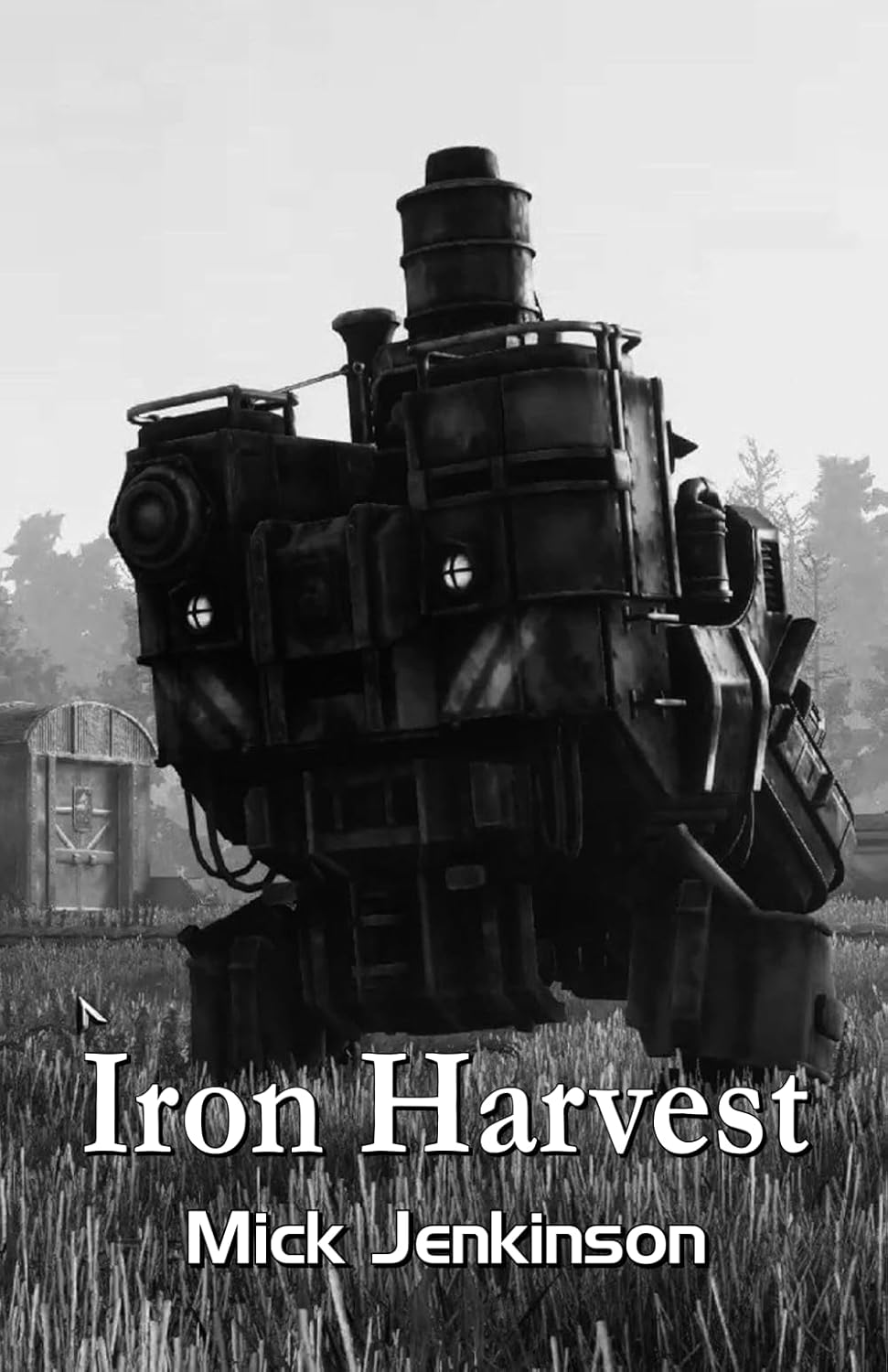
Wombwell Rainbow Book Interviews: “Iron Harvest” by Mick Jenkinson

Mick Jenkinson

is a poet, songwriter, musician & freelance arts practitioner from Doncaster. He is a member of a number of community groups whose aims are to increase arts engagement in the Doncaster region and he delivers song writing and poetry writing workshops. He was the director of Doncaster Folk Festival for 5 years and a founder member of the Ted Hughes Project in Hughes’ childhood hometown of Mexborough.
He is founder and MC of Well Spoken, a monthly poetry performance evening held at Doncaster Brewery, and a founder member of the South Yorkshire poetry collective Read 2 Write, a group mentored by Ian Parks. His first pamphlet, A Tale to Tell, was published by Glasshead Press in 2017, followed by When the Waters Rise, published by Calder Valley Poetry in 2019.
His poems have appeared in Pennine Platform, Dream Catcher, Dreich, Setu Mag, The Don and Dearne Collected Poems Vol 1, Black Bough Poetry’s Christmas & Winter Anthology Vol 1, and Christmas & Winter Anthology Vol 2, the exhibition these poets, our kin / these poems, our stories in the Frenchgate Shopping Centre, Doncaster, The Northern Poetry Library’s collaborative online work Poem of the North, and the book Tom’s Territory by Terry Chipp.
In 2017 Mick formed a songwriting partnership with the poet Ian Parks and received an Arts Council commission resulting in the album of songs and poems about their locality, Songs of Our Town. Mick has since released two further favourably reviewed solo albums, When My Ship Puts out to Sea and The Wheel Keeps on Turning. Find him at http://www.mickjenkinson.co.uk

The Interview

Q:1. How did you decide on the order of the poems in Iron Harvest?

There were a few key drivers for the order, but beyond that it evolved pretty organically, and was more to do with the indefinable feel of how it flowed as a reading experience.

Firstly, the opening and closing poems needed to be both strong, and at the same time to make some sort of statement. Although I’d no wish to create a themed collection, it’s undeniable that I write much that’s geographically rooted in some way, and more specifically, about my hometown. Opening with This River seemed quite natural as it’s a manifesto of sorts for my love of Doncaster and its landscapes, and readings have indicated that it connects with audiences very viscerally. At the other end of the book, Past Brodsworth is my most anthologised poem, it’s really been around the block and proved its worth! I see that as a sort of origin story for the town.

The second consideration was to give a flavour of the scope of the collection within the first few pages, so it was important that a variety of styles and subject matter were represented, but without it seeming disjointed.

Then, I specifically did not want the book to feel as if it was in themed sections, so other than a couple of instances where I thought a pair of poems belonged together, I was deliberate in interspersing poems that might be seen to have common subject matter.

There’s also a temptation to cluster the poems one regards as the strongest towards the front, and I did not want it to be like one of those vinyl LP’s where all the singles are on side one and no-one listens to side two! so balance throughout the collection was probably the strongest deciding factor for how it ended up.

Q:2. Why the title “Iron Harvest”?

All through the process of getting the material together for the collection, I’d used the working title This River, because I decided early on that would be the opening poem. But when it came to finalising the manuscript, there was a feeling that it was a bit too generic. I had a meeting with Ian Parks, who had really acted as de-facto editor and assisted me on every facet of the book’s production. Over a coffee and a scone at Doncaster Library we tossed around various options for a title that would be more impactful, and Iron Harvest just sort of emerged. As Ian states in his foreword, there’s a metaphor there for the poetic process of bringing to the surface what’s hidden. The icing on the cake was that the publishers, Cyberwit, came up with that beautiful cover image, which manages the difficult trick of being both enigmatic while also capturing the essence of what I was aiming at.

Q:3. How important is poetic form in this collection?

One essential element of convincing poetry, to me, is the matching of form to content, so in that respect I’d say it’s essential. I treat the formal forms of poetry as structures within which to arrange my thoughts, and I like that discipline of the framework being in place as a template or pattern. That said, a poem will usually begin more organically with an assembly of words, and at some point, it will either suggest a formal structure or it won’t. I have very rarely set out to write, for example, a sonnet or villanelle outside a workshop environment, but it gives me a sense of satisfaction when one materialises.

Q:4. How important is nature in your writing?

I suppose a cursory flick through Iron Harvest would answer that nature is
central to my subject matter, just as it is fundamental to my view of the
world. One of the reasons I write at all is to explore and discover what
spirituality means to me, and the natural world offers most to me to make
sense of that. I’ve always been an urban dweller, but easy and regular
access to countryside is essential to the way I live and it’s from those
environments that my poetry seems to arise most frequently. That’s not
deliberate, just the most forceful root of inspiration.

Q:5.  One poetic form occurs more often in this collection. What attracts
you to the villanelle?

I’m not a self-analytical poet, so it’s not easy for me to give a pat
answer. A couple of the first poems that made an impression on me when I was
young, Dylan Thomas’s Do Not Go Gentle into That Good Night and Auden’s If I
Could Tell You, were villanelles, and sometimes those early influences can
be the most potent ones. I think there is an elegance both in the way a
villanelle looks on the page and the circular nature of its repeating
structure. We often start with a significant phrase that becomes the key to
a poem, and the villanelle puts that phrase centre stage. The structure
dictates that you have a limited and finite number of stanzas and lines to
make sense of what you want to say, and an obligation to resolve it in some
fashion. I find that discipline very rewarding.

Q:6.  How has Edward Thomas influenced your poetry?

There are several aspects of Thomas’s poetry that I take as touchstones for
how I would like to be able to write. In no particular order, his insistence
on brevity and economy, the crispness of his language, his use of nature
both in literal descriptions and as a metaphoric tool, and his love of
strict poetic form (allied to the fact that he often ‘invents’ forms) and
how perfectly they reflect his subject matter.

Q:7. Once they have read your book what do you wish the reader to leave
with?

All the things we hope to get from good art, I suppose. I want to present a
view of the world that is personal and universal, and hope people can relate
and respond to it emotionally. I want people to me moved, interested,
challenged, entertained. Whatever they leave with, I would wish that people
consider it to have been a worthwhile experience.

New collection of poetry for 2025 Iron Harvest available from amzn.eu/d/2J5Xkhm

Wombwell Rainbow Book Interviews: Velvel’s Violin by Jacqueline Saphra

Jacqueline Saphra

is T.S. Eliot Prize nominated, award-winning poet, a playwright, editor, agitator, teacher and organiser. She is the author of ten stage plays, four chapbooks and five collections. Jacqueline is a keen performer and collaborator, working with composers, musicians, visual artists and other poets. She offers mentoring and teaches poetry in all kinds of settings including The Arvon Foundation and The Poetry School.

Her fifth collection Velvel’s Violin is out from Nine Arches Press.

The Interview

Q:1. How did you decide on the order of the poems in your book ?

Just like an individual poem, a book goes through many formal changes in its development. Once I had a critical mass of poems ready for the book, I laid them out on the floor and tried to make some kind of sense of them. I put them together as a single document with no breaks, looking for poems that juxtaposed, connected and bounced off one another and (unusually) shared the manuscript with my husband. It quickly became apparent to both of us that there was too much complexity in this book and somehow it needed more space. I came up with the idea of using, as headings, excerpts some of the poems I’d been reading over the previous few years that had been influential on the book. This helped me to give the sections a kind of cohesion. I tried several different groupings and once I’d arrived at something I thought was workable, I drafted in my daughter Tamar, who is, handily, a dramaturg and theatre director and has an understanding of structure and narrative. She helped me take some poems out, add some poems I’d dismissed, and make sense of the sections. Of course sections are interesting in a poetry book, because the content of many poems can cross over from one section into another. So this became an endlessly reiterated and painstaking process of shifting poems around until they found their positions. Eventually, after editorial meetings and correspondence over a period of months with Jane Commane, my editor, the book reached a point where moving any one poem to another place had a disruptive ripple effect on all the others and upset the balance. That was how I knew the book was done. Although there was a very, very late change in the final manuscript when I suddenly realised the final two poems needed to be swapped around. That was a surprise! The same kind of surprise, in fact, that you sometimes get when writing an individual poem.

Q:2. How was the book shaped by current as well as past war and conflict?

I have always liked historical narratives because however terrible the stories might be, they are over! Notwithstanding, I had always intended and understood from the early days of writing this collection, that the past and present constantly bleed into each other and we fail repeatedly to learn from past conflicts. Just as I was building momentum in the writing of the book,, the Russian  invasion of Ukraine really sharpened and focused this view. It became impossible to carry on working on ‘Velvel’s Violin’ without letting the new, devastating war in Europe become part of it. Our current geo-political disturbances, ongoing wars in many different countries and our so-called ‘migrant crisis’ are also a big presence. My own relatives were murdered in concentration camps because they were not given sanctuary in other countries; there are so many parallels with our current moment. You’ll notice that ‘Prologue’, the first poem in the book, is focused on a profound sense of temporal dislocation. During the writing process, in my dreams, my nightmares, my work and my life, I was longer located in either past or present. Time became confusing, fluid and endlessly malleable.  

Q:3. How important is music in your collection?

Well, it is called ‘Velvel’s Violin’, and there is a painting by Marc Chagall, the ‘Violiniste Vert’ from 1947 on on the cover. The title poem, is about a violin that was buried at the start of World War Two and never recovered by its owner, who was murdered by the Nazis. I’m a big fan of Sholem Aleichem, the Yiddish short story writer and playwright, who wrote some unforgettable short stories set in the Eastern European shtetls (Jewish villages) in the early part of the nineteenth century. In fact his stories of Tevye the Dairyman, unsparing in the way that they describe the grinding poverty of the everyday lives of most Jews, were the inspiration for the somewhat sanitised musical‘ Fiddler on the Roof’ (which I’ve always loved). The title of the musical was probably inspired by Chagall’s paintings of violinists. Jews in The Pale of Settlement were forbidden to take up most professions but they were allowed to become musicians – and Jewish musicians, unlike most Jews, were permitted to travel. The lucky ones (often from Odessa), if talented enough, could make a good living as violinists and of course the instrument is small and portable. I myself learned the violin as a child and as you’ll see from the poem ‘Peace be Upon You’, I wasn’t great at it, but it felt meaningful and connective in some way. Klezmer music and the mournful sound of classical violin definitely formed the soundtrack in my consciousness while I was writing the book. A long time after writing it, I understood that the burial of the violin in the title poem represents to me the many buried victims, and all those voices that were silenced by the Nazis and their collaborators.

Q:4. What is the significance of poetic form in the collection?

There are some given forms in the book – but mostly I didn’t find even the sonnet, my go-to form for dealing with hot subject matter, particularly helpful. It was as if the constraints of form couldn’t hold the immensity of the material. The poems needed their own forms and often spilled over in unexpected ways. 

Q:4.1. How did it spill “over in unexpected ways.”?

‘Remains: Berlin 1945’ is a poem based on the end of the second volume of Volker Ullrich’s biography, ‘Hitler: the Descent’ was so filled with horror it took many drafts for it to find the scattered and uneven form.

‘1939’ was a piece I couldn’t corral into a poem shape – although I tried – and became a kind of hybrid form, what I often describe as a proem: something with the distilled quality of a poem but the appearance of prose.

“Going to Bed with Hitler’ became little squares of prose poems coming one after the other – again, a way of making sense of the senseless.

Q:5. How important is food in your book?

I’d say food is and has always been a big part of Jewish life. Useful as a cultural marker for both the observant and the unobservant. We always celebrate with food (or fast) and food has vast symbolic meaning – bread, wine and the seder plate with its metaphorically laden items: the egg, the matzo (unleavened bread), the charoset (mortar for slaves to build the pyramids). ‘Yom Kippur’ is of course all about fasting and how it concentrates the mind, and ’The Trains, Again’ explores the Sephardi (as opposed to Ashkenazi) traditional foods and their place in family life. So I’d say food is not a major component in the book but there is a nod to it in various places as being significant.

Q:6. Travel, especially by train is a running theme throughout. How deliberate was this?

The trains were not a motif I particularly thought of before I wrote the book, but trains of course exist in Jewish history as very significant, especially in relation to the Holocaust so I am not surprised they keep coming up. They exist both in literal, historical terms and also in the subconscious as mostly taking Jewish people to concentration camps and death, but also as a means to escape. When I wrote ’The Trains Again’ I was recalling a friend and I discussing the almost unbelievable sight of refugees being carried into Berlin to safety rather than out of Berlin towards annihilation. I was surprised how often trains appeared and thought of using that motif in the title although the violin won out in the end.

Q:7. Once they have read your book, what do you hope the reader will leave with?

This is a difficult question to answer as I wouldn’t presume to assume or know or even hope. The poem is always in the eye of the of the beholder. But I suppose I can allow myself to dream that the reader will come away feeling galvanised to make a better, more just and peaceful world and to take some responsibility for being a part of that. As Rabbi Tarfon put it – millennia ago – in the epigraph at the start of the collection ‘You are not obligated to finish the work, but neither are you free to abandon it.’

Jacqueline’s fifth collection Velvel’s Violin is out from Nine Arches Press.

Wombwell Rainbow Book Interviews: “Elemental” by Helen Laycock

Helen Laycock

is a Pushcart-nominated poet, recipient of the David St. John Thomas Award, nominee for the Dai Fry Award and recent winner of Black Bough Poetry’s Chapbook contest. Her poetry collections include ‘FRAME’, ‘BREATHE’, RAPTURE’, ‘13’, and most recently ‘ELEMENTAL’. ‘FRAME’ has featured as Book of the Month at the East Ridge Review and a forthcoming collection will be published by Black Bough.

Her writing has appeared at Reflex Fiction, the Ekphrastic Review, the Cabinet of Heed, Visual Verse, Onslaught Press, Folkheart Press, Prattlefog and Gravelrap, The Wombwell Rainbow, Poetry Roundabout, Spilling Cocoa Over Martin Amis, Paragraph Planet, Serious Flash Fiction, Flash Flood, The Best of CafeLit, The Beach Hut, Popshot, Lucent Dreaming, Full Moon and Foxglove, The Caterpillar, The Dirigible Balloon, Literary Revelations, Black Bough, The Storms Journal, Broken Spine Arts, Fevers of the Mind and will imminently appear at The Winged Moon.

Helen also writes children’s fiction and short stories for adults.

You can buy Elemental here: https://amzn.eu/d/7serHdU

The Interview


Q:1. How did you decide on the order of the poems in your book?

First of all, thank you, Paul, for inviting me to The Wombwell Interview to talk about my collection ‘ELEMENTAL’.

As the title suggests, the theme of the poetry is ‘The Elements’ – Air, Fire, Earth and Water.

I don’t know if there is generally a favoured order in naming these, but whenever I organise anything, be it written pieces, storage, or even shopping lists, I try to find some sort of logic. In the case of the themes in the book, I used spatial positioning as my logic, imagining Air in the highest position, coming down to Fire, grounding us with Earth, then taking us to the depths of Water. These make up the four main sections of the book.

As with all my collections, I introduce the change of themes with quotations which I feel allows breathing space and prepares the reader for a shift of focus.

‘Air’ opens with three poems about birds, from a dead bird to a caged bird to a free bird, so again, there is gradual change between their states which I think works better than poems so different that they jar against each other.

I then begin to draw attention to an increase of height with a poem about an aeroplane, which we imagine at around 30 000 feet. There is also reference to death in this piece (a true story, by the way!) which, perhaps, transcends physical measurement of height if we imagine the heavenward rising of souls.

The poetry that follows focuses on what is happening in the atmosphere and space.

With nowhere else to go, this completes the section on ‘Air’.

‘Fire’ has the fewest poems, each of which is independent of the others since they all consider fire in their own way. It encompasses light as a metaphor, the physical and mythical power of the volcano (one I wrote after visiting Mt. Teide), the damage wreaked and repercussions of recklessly starting a fire, and the sun as a maternal energy.

Originally, this collection was going to be entirely water-based, but I changed it to The Elements, just because I wanted to include a favourite poem of mine, ‘Hare’, which nestles in the middle of the ‘Earth’ section.

The organisation here begins with trees and forest, widening to include a greater view of the world before spotlighting living things in the wider sense – animals, then people. ‘Scaffolding’ wraps up this section, a poem which is set below the ground in the graveyard, so taking us right back to level ground before we dive into…

‘Water’, the final section, which ebbs from the tiny stream to the lake to the sea. I have a couple of favourite poems in this section, both about whales, each of which has such an interesting backstory. Finally, I bring it back to the swimming pool and people.

There is one last poem in the collection which I feel encompasses all the themes, so it stands alone as a final piece.

Q:2.How important is form in Elemental?

Without form, I believe, poetry is only doing half the job. It’s never just about words, is it? The space is so important as a playground for them, and even the placing of a word, or words, along a line can make for a more dynamic piece.

I had a great comment from Matthew MC Smith, editor of Black Bough, in relation to my poem ‘Stunned’ (the opening poem of the collection) when he hosted Top Tweet Tuesday a few weeks ago.

He said,

This is the real-happening stopped in sequence in words. Wham!

Some of the precision of this recalls the exactitude of *Wallace Stevens.

That’s a compliment for anyone.’

*Wallace Stevens won the Pulitzer Prize for poetry in 1955. Significantly, he experimented with form and imagery in Modernist poetry. An interesting quote attributed to him is that modern poetry ‘has to be living’, and I think that clinches it. I love the form of his poem ‘Six Significant Landscapes’ where many lines consist of just two words, but how they shine when given that platform!

The word ‘STOP!’ is surrounded by white space in ‘Stunned’ which empowers it and gives it physical capacity within the poem.

Another example as to how form can earn its keep as a poetic device is in the poem ‘Whale Fall’. It is constructed to slowly pull the reader down to the bottom of the ocean along with the whale. The word ‘falling’ is repeated on consecutive lines to reproduce real life experience.

‘Sky Stir’ relies on sparsity of description as it endeavours to capture that frisson in the atmosphere just before a storm, the type that makes arm hair stand on end! I wanted the poem to suggest rather than tell the reader how to feel, so there are snatches of description.

The spaces are designed to reproduce the tension of anticipation.

Having a single word on a line draws attention to it, but also endows it with weight. Often, it is an important turning point in the poem. In ‘Conflagration’, for example, the scene that we witness is of youths starting a fire which quickly gets out of control. Once they are aware of the scope of their exploits, they ‘flee’. This word stands alone. It is the first major action in the poem, and the last we see of the group until we are told of their consciences in the aftermath. When a word hangs like that, we are invited to contemplate what might have subsequently happened. For a moment, we follow the boys until they vanish from sight…

There is a wonderful freedom to experimenting with form, and also not having to comply with the constriction of rhyme. In the poems ‘Hare’ and ‘Watergasp’, I was able to create a sense of movement by creating diagonal lines of text, which was exciting, and in ‘Abduct…Adopt… Relinquish… Abandon…’ where the sea is seen as a captor of sorts, a kind of wave.

I will tweak a poem over and over until I feel the form echoes as much of the content as it possibly can. It’s a brilliantly creative and fulfilling endeavour for me!

Q:3. What is the purpose of the quotes at the beginning of the book, and throughout?

Including quotes is something I have done with all my poetry collections, with the exception of ‘13’, so I would say it’s a bit like having a brand, or something which links the books in some way.

There are several reasons for this.

Unlike a short story collection, I think a poetry collection has visual aesthetics. When you flick through, you see shape. I once bought a book , aptly entitled ‘Wonderbook’ by Jeff Vandermeer, purely because of the pleasure of flicking through and seeing something unexpected inside. I like the idea of sprinkling pages of poetry with a different condiment which catches the eye.

Secondly, they add the dimension of approaching the subject using prose, albeit quite poetic. It’s a glimpse at the subject from a different, or shared, perspective. The opening quotation on the title page is from Frederick Douglass, one which I selected as a kind of general introduction to the book as it conveyed the power and the thrill of the elements:

It is not light that we need, but fire; it is not the gentle shower, but thunder. We need the storm, the whirlwind, and the earthquake.’

This intensity is what stirs poetry.

One more quotation follows this, before the contents page, as I felt it summed up how crucial the elements are to our wellbeing:

To find the universal elements enough; to find the air and the water exhilarating; to be refreshed by an evening walk or an evening saunter…to be thrilled by the stars at night; to be elated over a bird’s nest or a wildflower in spring – these are some of the rewards of  a simple life.’

~John Burroughs

I think this is what poetry aims to capture… the wonder in everything that surrounds us.

The quotations make a much more pleasing change of shift than a set of ellipses, or a blank page, so for each section, I have chosen one which gives a sense of anticipation as to what is about to follow. They also provide breathers, or stopping places, before the change of focus.

I particularly like the quotation by James Gates Percival which precedes ‘AIR’, as it alludes to both air and poetry; it would also have served the ‘WATER’ section well:

The world is full of poetry. The air is living with its spirit; and the waves dance to the music of its melodies, and sparkle in its brightness.’

I like how succinct Tom Robbins’ quotation is which introduces the ‘FIRE’ section –

Three of four elements are shared by all creatures, but fire was a gift to humans alone.’

but I was also drawn to the human aspect which runs through the poems in this section, particularly in how the gift of making fire is abused in the poem ‘Conflagration’.

‘EARTH’ begins with eleven simple words from Khalil Gibran, ‘Forget not that the earth delights to feel your bare feet…’ . Such a wonderfully condensed statement which closely links humankind with the world and reinforces the concept of a symbiotic relationship. Love gives love.

The final quotation which introduces ‘WATER’ gives a sense of the mystery and scope of this amazing liquid which covers most of our planet. Underwater exploration is dangerous, yet enthralling. Another world exists beneath our feet. As Loren Eiseley points out: ‘If there is magic on this planet, it is contained in water.’

Q:4. How do you use the five human senses in ELEMENTAL?

I would like to say that all poets use all the senses, whatever the theme of a poem, but I don’t actually think that’s true. If they do, undoubtedly, it’s not in equal measures. Often the concentration is on probably just two, but don’t quote me on that!

My later writing has certainly been influenced by imagism (shoutout again to Matthew MC Smith), which I think tends to lean towards the visual aspect of metaphor.

As a poet, I feel like an observer, and, while that does immediately suggest ‘seeing’, if we give more thought to it, observation actually includes taking in as much as possible via any sense available.

How the senses influence my writing, however, is not a conscious acknowledgement of mine, so, to answer this question, I shall need to revisit the poems and come back to you…

Some time later…

The results are in!

SIGHT

As I suspected, visual detail takes the centre stage of every poem. Finding metaphor for what we see is probably the easiest pursuit. There is so much on hand to compare and contrast, whether it be by characteristics of shape, colour, material, etc.

SOUND

Sound is peppered throughout the poetry of ELEMENTAL, but, interestingly, I notice how much the lack of it is alluded to:

‘I cannot sing’, ‘shushed’, ‘The birds swallow/their last crotchet’, ‘silence teeters’, ‘the hawthorn sings/a silent spiderspin melody’, and the fox in ‘Winter Flame’ ‘pads silent on blunted ground’.

In fact, ‘Snow Song’ relies entirely on a lack of sound:

‘A duet

of snowfall

and silence.

The dawn sighs

into wakefulness.

Today,

colour is

too loud.’

There are degrees of sound, however. In considering walking through the forest upon coloured debris, in ‘On Binary Comment’, I write,

‘If leaves were bells,

our feet would make music’

Music is mentioned a few times:

The ‘music in the rafters’ in ‘Scaffolding’ has ‘long slipped through the cracks’ and the fish are described as the ‘cadence/of this ethereal music’ in ‘A Raucous Gull Shrieks Goodbye’.

Birdsong is occasionally mentioned as a backdrop, but ‘What the Gull Knows’ is actually quite  a noisy poem! ‘He screams of lurching masts whining with wind-ache’ and we hear ‘sailors’ snatched shouts’.

Twice in the book we hear a ‘shot’.

TOUCH

I tried to capture that frisson, the electrifying goosebumps we feel before a storm, in ‘Sky Stir’:

‘the pewter sky is

so

low

that it tingles my hair roots.

I feel it.’

There is gentle touching throughout the collection:

‘It is still warm/still soft’, about the dead bird in the opening poem. Other examples include: ‘tap the brittle shell’, ‘weightless fruit/ripe/in my palm’ and ‘cupping the stutter/of flame’, for example, but there’s also an element of unintentional brutality in ‘Collateral’, where, in talking about wildflowers, I write:

‘I must snap

the tender spines

of those on the periphery’

TASTE

The sea is described as ‘a pendulous pulse of over-seasoned stew’ in one poem, the implication being that the ingredients are the victims of shipwreck.

Taste is used, too, as a way of implying colour, as in ‘On Binary Comment’, where ‘sun syrup and rosewater’ describe the colour of painted treetops, for instance.

The poem ‘Foraging’ details the ingestion of psilocybin, the hallucinatory constituent of magic mushrooms, where a strange being ‘draped in leaf and mothwing’ ‘extracts soft tongues’ and ‘slips them/between my lips’.

‘Whale Fall’ perhaps dwells the most on the act of eating, herself becoming a banquet as she dies.

SMELL

Smell gets little airtime, although it is prevalent in ‘Man in the Woods’:

‘the pliant earth

which exudes a dank bouquet’

Other than the reference to ‘dirty breath’ in The Waking of the Dragon, there is little other acknowledgement of smell.

What an interesting exercise!

Q:5. Human impact on the natural world seems integral to the collection. How significant was this in putting it together?

When I wrote the poems, each one evolved separately without connection to any of the others, I thought… but when I decided on the ‘elements’ theme, these all seemed to fit. Unlike my collection FRAME, the focus of which is entirely ‘people’, the poems in ELEMENTAL don’t give them centre stage, although in several of the poems their presence is implied.

There are definitely poems which shine the light on human beings as perpetrators, such as ‘Jailbird’ where a caged bird is denied the freedom nature intended.

‘Stunned’ is an example of how we inhabit the place where nature could thrive. We build in its backyard, and, therefore, are in some way responsible for birds crashing into our windows, as happens in the poem.

We hear a ‘shot’ in ‘Hare’; it’s not aimed at the hare who, incidentally, escapes the danger of a human with a gun, but we can’t help wondering what was being shot at… undoubtedly an animal enjoying its habitat.

I mentioned, too, in an earlier response, the poem ‘Conflagration’. Humans are curious, perhaps moreso before adulthood, and this poem serves as an example of how they don’t always consider the outcome of their actions. They literally are playing with fire here, the consequences of which are devastating.

A poem which I found emotional to write was ‘Communion’. For as long as I have lived in my house, there has been a huge pine tree behind the boundary of my garden. One day, I heard a chainsaw and I looked out to see a man hanging from it. Horrified, I watched chunks of it fall out of my sight until there was nothing left.

I used one of the pieces of artwork – ‘Bent Cypress’ – from Karen Pierce Gonzalez, a wonderful artist, to write the poem ‘The Sadness of the Tree Spirit’. In the poem, are the lines:

‘as the forest thins

and thins…’

which we must attribute to man, and, significantly, because there is nowhere left for them to nest, just open space, the poem ends with the lines:

‘and the sound of

distant birdsong

is probably just

the wind’

The poem which perhaps demonstrates most what we do, and are doing, to our planet, is ‘Erasure’, the title of which implies both disappearance and forgiveness. Whatever we do to our planet, it

‘pledges a clean sheet:

no grudges

over and over again,

it gives us everything,

and is all

all

we have

beneath our feet.’

There are also poems included in this collection where nature has the upper hand, as in ‘Upright/Downfall’ which suggests a drowning has occurred, and again in ‘Abduct…Adopt…Relinquish…Abandon’ where the ocean gobbles up then spits out a human being. ‘The Waking of the Dragon’, too, shows the power harnessed by our planet, and the utter carnage it can unleash on humankind.

Q:6. How did you want to use white space in your book?

All poets acknowledge that the words are not the only constituent of a poem. It has shape and form, and a whole array of poetic devices which help squeeze out the intention and meaning.

A poem needs space to breathe… Lines that span a page edge to edge can come across as claustrophobic. This approach is not typical of the way I write poetry. I tend to clip my lines as though they are feathers, preventing escape or untoward roaming.

What can be effective is not only breaking lines for emphasis, but also leaving space between lines. These prolong the journey through the poem and provide a metaphorical bench for respite or contemplation.

I like very short poems to occupy the centre of the page, to be framed like a miniature work of art. I actually circled the untitled poem beginning ‘Muskmelon Moon’ to give it presence, whereas ‘Moon in Cloud’ quietly hovers on the page.

I don’t favour centring over left-side placing; the poem dictates that to me as I’m writing.

Q:7 Once they have read ELEMENTAL what do you hope the reader will leave with?

I hope that readers will

  • take away a new experience of poetry, perhaps discovering language and metaphor never before encountered;
  • feel an urge to revisit some, or all, of the poems, and perhaps remember a favourite in time to come;
  • deepen their desire for poetry, and immerse themselves in the wealth of fabulous contemporary poetry that is out there;
  • return to, and follow, my work and perhaps read what I have written on other themes.

Thank you so much for this opportunity, Paul. I have thoroughly enjoyed analysing the subconscious decisions in putting together this collection. The academic exercise gave my brain an excellent workout!

Here is a link to an earlier interview with Helen:

#NotAdvent Day Four. Enjoy the poetry of Louise Longson. For December go against the flow with me, instead of an Advent Calendar I am having an online Disappearance poetry calendar. Thinking of Extinction events, disappearing wildlife, disappearing homes due to war, thinking of the missing during Christmas. Fourth Day.

Note: In 2016, Great Bear Rainforest in British Columbia, the home of the Kermode or Spirit Bear, finally achieved protection status for 85% of the forest after decades of deforestation. Yet, despite actions and campaigns, it is predicted that, by 2030, there may be only 10% of the world’s rainforests left. It is estimated that only 400 spirit bears now exist.

Bios and Links

Late-blooming poet Louise Longson started writing ‘with intent’ in 2020. Now aged 60, she has been widely published both in print and online. She is the author of the chapbooks Hanging Fire (Dreich Publications, 2021) and Songs from the Witch Bottle (Alien Buddha Press, 2022).  She works from her home in a small rural village on the fringes of Oxfordshire and Gloucestershire offering a listening service to people whose physical and emotional distress is caused by loneliness and historic trauma and abuse. Her poems are inspired by bringing together her personal and work experiences, often seen through the twin prisms of myth and nature.

Twitter @LouisePoetical