Storm Arwen came and stripped the cover off my rabbit enclosure. It sucked two plant pots off the small wall between the patio and the garden, and smashed them to bits. Other than that, we didn’t do too bad. Even the dilapidated fence stood surprisingly firm and I was relieved to see the very old willow at the end of the village had survived. Scarborough had a lot of trees fall and someone in Filey had their car crushed by a falling tree. It was a bad one. I woke at five to the booming wind that sounded as if it wanted to rip the room straight off. But it didn’t. The next morning it raged on, the rabbit enclosure roof finally gave way and I decided enough was enough and the rabbits would have to come in. So with one soft white body…
My own collaborative writing often relies on processes and forms. Whether writing in response to agreed themes and/or what has just been written by someone else, it involves trusting the other writer(s) but also trusting the work itself as it emerges – which is often not what is expected. Editing and shaping is of course a collaboration too, and collaborations which are simply about the juxtaposition of each other’s discrete texts are as collaborative as texts where each author has written a line and passed the work to another.
There is little written about poetic collaboration. Robert Sheppard’s essays about poetics (1999) are helpful because of his open and inclusive approach, as is his anthology of collaboratively-created imaginary authors,Twitters for a Lark(2017) and what he has written about it on hisPagesblog (and elsewhere). I have also found Dan Beachy-Quick’sOf Silence and Song(2017) and Dean…
The surveying field-course, and Malham Tarn was frozen flat and snowed on, a deep lagged mass warming for spring and breathing at its edges.
We set up tripods and pointed laser beams across the ice, derived a number called curvature of the earth, cut blocks of ice and built an igloo, warmed inside while waiting for the transit.
Months passed before I returned in early summer. The ice-shell home was soft brown lake water and a ring of snow survived in grass to puzzle walkers and feed their children summer evening snowballs.
-Cy Forrest
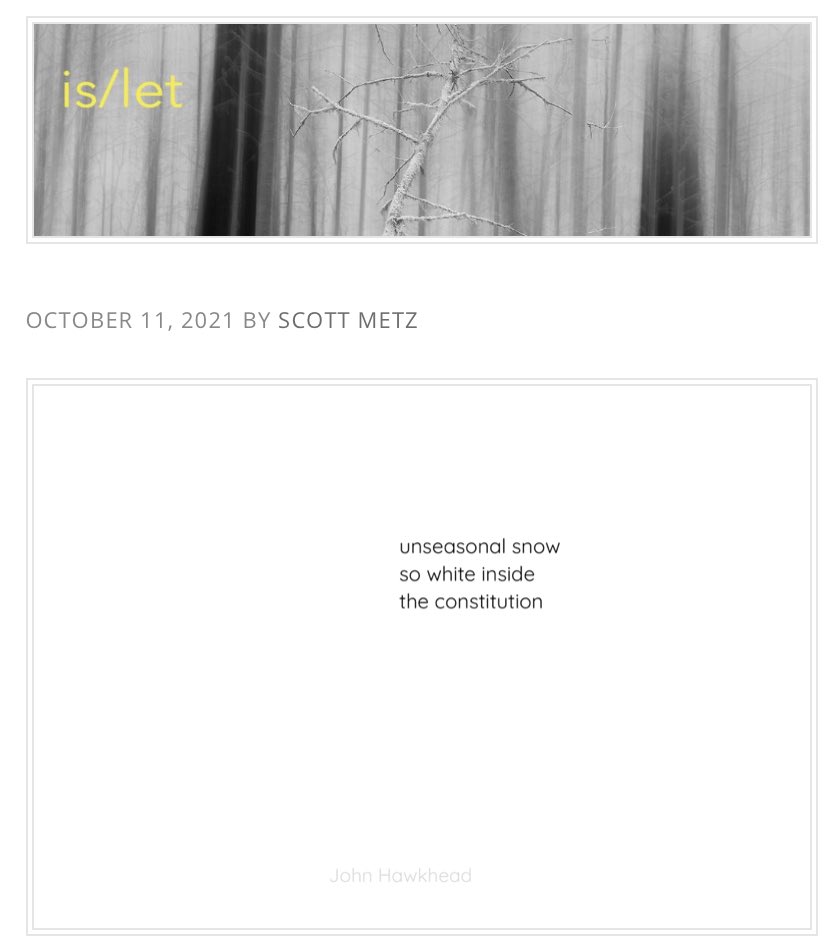
-John Hawkhead
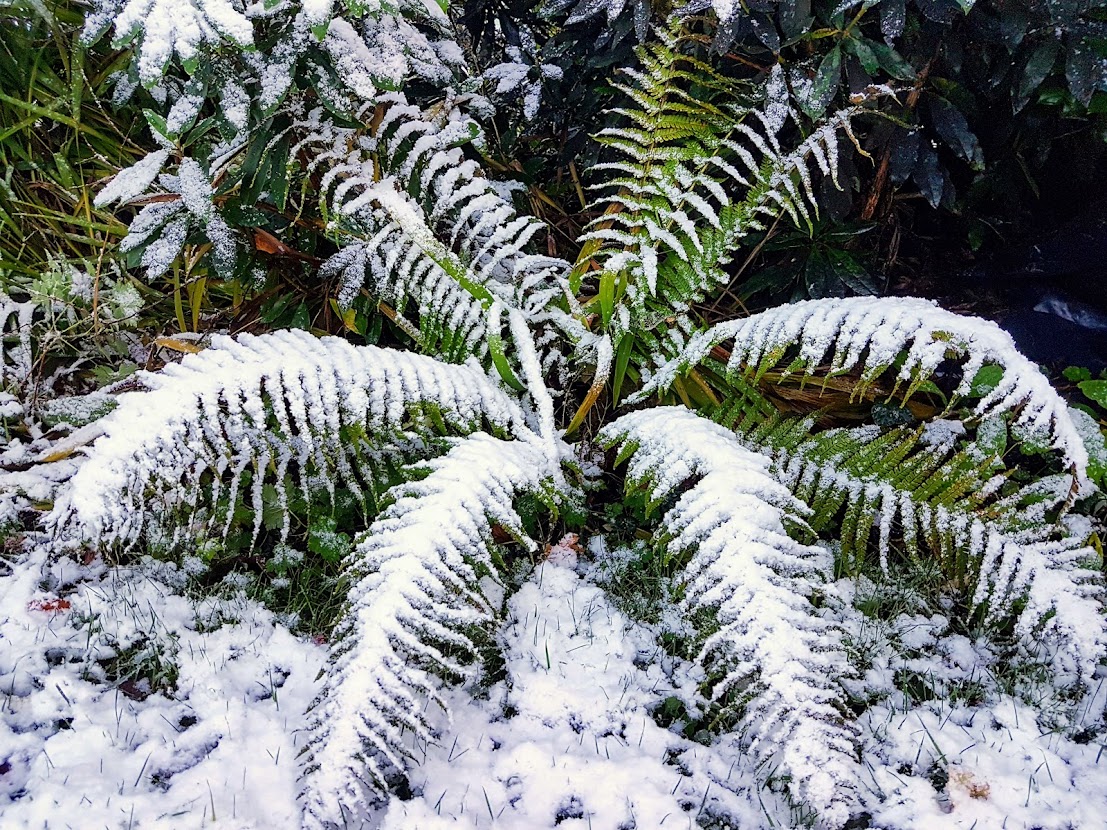
-All photos by Gaynor Kane (Clothes Pegs previously published in Bangor Literary Journal)
Half Past Autumn
It’s half past autumn, the pumpkin, the smoke and morning mist drops heavy dew Trees sag, as if those few remaining leaves hold the weight of the world
The last of the swallows have upped and gone Thoughts turn to comfort, food, warmth and gathering together for talks by the fire – feeling the pull of home
It’s time to go foraging for winter store – for plots and plans and sustenance Treasure now those snow-hardy brassicas – munitions against melancholy
This is how your heart learns to survive as the world gets older and harder Not quite winter, but a premonition – bring on the snow angels
-Mick Jenkinson
THE WINTER GARDENER
The snow glitters, lifelike. How nice to see snow, thinks the winter gardener,
after a long summer of bad luck. He throws some snow over his shoulder, because he has no salt
and watches it fall, moved by the grace of it. His pruning hooks catch the white of it,
swinging in their dark mists. The winter gardener looks long into the cold, remembering when the earth
was blood rich and clotted with veg. His winter head is a December hive, his hands almost warm and blue with bite.
-Natalie Crick
Photo credit: Lise Claire
Thanksgiving Weekend in Quebec
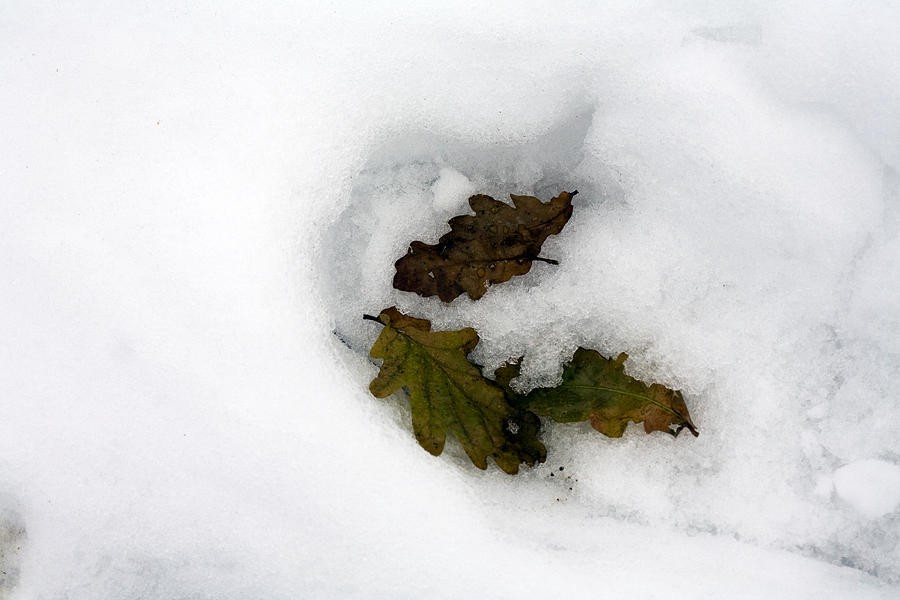
I see my daughter’s eyes, not quite brown— a shifting coppery green like the fallen oak leaves on snow—
as we trek through the Gatineau trails in a late November morning light
where shadows grow long and such reminders bring her close— as only distance can
-Lise Claire
Bios And Links
-Mick Jenkinson
is a poet, songwriter, musician, and freelance arts practitioner from Doncaster, and is an associate member of Right Up Our Street, a nationally funded organisation dedicated to improving arts participation in Doncaster. He runs Well Spoken! – a monthly open mic night held at Doncaster Brewery, and his second poetry pamphlet, When the Waters Rise, was published last year by Calder Valley Poetry.
-Natalie Crick
Natalie Crick has poems published in The Poetry Review,The Moth, New Welsh Review and elsewhere. She is studying for an MPhil in Creative Writing at Newcastle University. Last year one of Natalie’s poems was commended in the Verve Poetry Festival Competition 2020 on the theme of diversity and awarded second prize in the Newcastle Poetry Competition 2020. One of her poems received a special mention by judge Ilya Kaminsky in the Poetry London Prize 2020. This year a poem was highly commended in the Folklore Poetry Prize, highly commended in the Wales Poetry Award and she received a nomination for The Forward Prize for Best Single Poem. Natalie is co-founder / poetry editor of a small literary press based in Newcastle and Prague, Fragmented Voices.
-Gaynor Kane
lives in Belfast, Northern Ireland, where she is a part-time creative, involved in the local arts scene. She writes poetry and is an amateur photographer, and in both is looking to capture moments that might be missed otherwise. Discover more at gaynorkane.com
-Cy Forrest
is from Manchester but now living in Wiltshire. Poems in the Honest Ulsterman, IceFloe Press and The Wombwell Rainbow. Poems due to appear in Stand in 2022. Strong Men, Carrying Horses was longlisted for the Fish anthology 2021.
Brodsky, who died aged 55 in 1996, it can hardly be denied is a major Russian American poet. He took exile in the US from Russia in 1972, also translating some of his own works into English. He won the Nobel in 1987, and was US poet laureate in 1991. It is worth noting also that he has been praised for his essays includingLess Than One(1986).
Preceded by such high praise it can be difficult to an extent to form one’s own view of the poetry. This new Penguin Classics selection arranges the chosen poems near enough chronologically, but does not foreground the original collections in which they appeared, except maybe forA Part of Speech, from which the title poem is featured.
I would tend to the view that Brodsky’s writing is both fierce and unassuming. Two key figures to whom he relates are Akhmatova, of…
This week something different again. I have asked Patricia M Osborne to talk about her poetry conversation, Sherry and Sparkly(Hedgehog Poetry Press, 2021), with fellow poet, Maureen Cullen.
Thank you, Nigel, for inviting me on your feature to talk about a poem from my co-authored pamphlet Sherry & Sparkly. It’s not often you’ll find me writing narrative poetry from life experiences; however, I made an exception when Maureen Cullen and I came together in poetry conversation for Sherry & Sparkly. Here we draw on memories from childhood to the millennium.
My chosen poem is ‘First Day at Junior School’.
. I chose this one because it shows what corporal punishment was like in schools during the early sixties. Even, as in my case, if a child hadn’t actually done anything wrong. The poem recalls my class teacher when first going up to Juniors. Miss Evans (that wasn’t…
he is coming my way his breath is a train whistling down the hills where the girls plough their fields and scatter their blood and recycle their peoples stockpiling their sheds with scythes and strong scissors stirring water with their hands producing no children for years I must disappear and find these girls with strong scissors for little hands he is lashing through the trees a small man but unaware of his size like a very small dog like a Punch puppeting me with a stick but today an angry horse my bruise-horse with whips when I ride him his flanks hum the hair on them stands up I know the power in him I breathe I breathe him in he shrinks when he shouts to the smallest fairyfly so small he lives in my skin his hooves are heartbeats his heart is a black mark I cannot cannot cross it out
-Natalie Crick
A LION OF A MAN
After visiting the zoo with Tony I found a reddish hair,
marking my white jumper. I knew the hair was his;
all of him was bound in it’s taught fibres,
the brittle splits of his manifestation,
the rouge kink of his manner when angered.
I did not disturb the hair for fear it would curl and snap.
It was like being alone in a room with the sleeping lion.
-Natalie Crick
Bruised
A broken heart is not always a thousand shards of shattered glass scattered across the floor. Sometimes it’s the stomach-clenching twist and wrench of a powerful fist squeezing, crushing, gripping tightly round in a choking caress; sometimes it’s gallons of warmth gushing past the twisted blade of a stealth assault. Sometimes it’s a shy blossoming beneath the skin, ripening gloriously in the tainted sunshine of another’s gaze: slowly, in the wrappings of intimacy cultivated, the full bloom lovingly perpetuated beyond itself, insinuated into memory that throbs in the darkness for relief – but only complete when the hand that soothingly strokes and traces each petal’s outline proudly defines with rigid, gouging fingers the signing of their autograph; like pressing into the softness of a bruise on a peach.
-Wendy Humphries
Never Again
You were my prince loving and kind you caressed my body also my mind
You were my lover soul mate and friend there when I hurt ready to mend
Suddenly one day a new you appeared no longer my shining knight but one to be feared
Hands no longer caressed instead rolled up tight my body your aim as I faced my plight
My skeletal framework left stained black and blue you promised – never again but that wasn’t true
You’d kneel on the floor and weep your sorrow I believed and trusted you then re-lived – tomorrow
My abdomen swollen your feet made their aim I was your target then you wept with shame
Scalding hot water as I was flung in the bath you said you were sorry but enough was enough
It couldn’t go on I couldn’t take any more at night whilst you slept I crept out of the door
Decades have past since you lashed out that pain I vowed then that night– Never again.
– Patricia M Osborne
Ink
Like a squid I squirt ink filigreed words on virgin paper the rhubarb lips that stained with blood, salted by tears as you peeled me layer by layer till nothing was left of my core controlled, loved, abused and shaken by last the vestiges of love that you promised that I hoped for as years left their bruises pomegranate to singed brown, patterns that laced my body caged like the slave girl who dared to fall in love with a prince Anar, the Persian fruit of love, transformed to the fruit of the dead of Hades, like Persephone, the underworld beckons me.
Glossary: Anar is the Persian name for pomegranate.
-Leela Soma
Three Lions 11 July 2021
The first time in 55 years I keep the supply of beer coming cold, not cool, as he likes it
Losing puts him in a bad mood in the debris of my life sometimes I win, mostly I lose
From the kitchen, his reddening face the pile of cans, like a mini citadel grows on the coffee table
The pizza isn’t right Undercooked he says not enough pepperoni
After extra time it’s penalties he’s on the edge of his seat then it’s all over
The cans kicked off the table I hope you’re happy you Welsh bitch
The crunch of fist on cheekbone a penalty he doesn’t miss
Published in the September 2021 issue of Yggdrasill.
-Annest Gwilym
TRIGGER WARNING THIS WILL BE A DIFFICULT READ FOR SOME THAT MAY FIND THESE PIECES DISTURBING.
***** Tears Of A God
My son’s eyes are ice. I have seen this look before.
He lugs my dog Sheba by her mane, hauls her along the floor
a piece of meat, slopping over gunnels in an abattoir, blood down the drains.
Her paws scratch and scrape he dumps her at my feet.
Bite its ear! I shake my head.
If it’s done wrong, and it has bite its ear. I shake my head
mumble Done nothing wrong.
Eh! Speak up woman! It ‘aint done nothing wrong. Jack!
Fine rain falls through grey skies in the pub yard, and a yellow
fluid flows out from under the dog. Dirty bitch!
He kicks Sheba in her side. She whimpers, puts her head
pleadingly on the black shiny surface of my court shoes.
I‘ll do it then! Snatches her up
by the scruff Getting a dog
and not bringing it up right. Stupid cow!
He snaps at the silk of her ear. She yelps. I cry.
Stupid sodding cow! He slaps me hard
across my face. I feel his gold rings on my cheek.
Stop whimpering! Pushes me up against
the wet wall. His cold eyes up close make me shiver.
One hand on my throat, the other points at her. I mumble.
Not again Jack. Please. My legs have gone.
Treat the bitch right and it’ll treat you right.
Sheba inches against the wall, low and hung back like the grey clouds.
Jack lets me fall. The pub door slams Sheba, up on her legs again,
licks my face, lays down by my side puts her head on my black court shoes.
Her neck is warm. My back hurts. They call the rain the “Tears of a God”
First published in “Degenerates for Peace, Domestic Abuse edition, 2017”
Bios And Link
-Patricia M Osborne
is married with grown-up children and grandchildren. In 2019 she graduated with an MA in Creative Writing (University of Brighton).
Patricia is a published novelist, poet and short fiction writer. She has been published in various literary magazines and anthologies. Poetry pamphlets, Taxus Baccata and The Montefiore Bride were published by The Hedgehog Poetry Press in 2020 and co-authored poetry pamphlet Sherry & Sparkly to be published December 2021 by The Hedgehog Poetry Press.
She has a successful blog at Whitewingsbooks.com featuring other writers. When Patricia isn’t working on her own writing, she enjoys sharing her knowledge, acting as a mentor to fellow writers.
Author of two books of poetry: Surfacing (2018) and What the Owl Taught Me (2020), both published by Lapwing Poetry. What the Owl Taught Me was Poetry Kit’s Book of the Month in June 2020 and one of North of Oxford’s summer reading recommendations in 2020. Annest has been published in numerous literary journals and anthologies, both online and in print, and placed in several writing competitions, winning one. She was the editor of the webzine Nine Muses Poetry from 2018-2020. She is a nominee for Best of the Net 2021. Twitter: @AnnestGwilym
-Wendy Humphries
is a cat-loving wife, mother and English teacher who enjoys grappling with language and all of its glorious possibilities. She fiercely believes that words have power and should be used with care, always.
-Natalie Crick
has poems published in The Poetry Review,The Moth, New Welsh Review and elsewhere. She is studying for an MPhil in Creative Writing at Newcastle University. Last year one of Natalie’s poems was commended in the Verve Poetry Festival Competition 2020 on the theme of diversity and awarded second prize in the Newcastle Poetry Competition 2020.
One of her poems received a special mention by judge Ilya Kaminsky in the Poetry London Prize 2020. This year a poem was highly commended in the Folklore Poetry Prize, highly commended in the Wales Poetry Award and she received a nomination for The Forward Prize for Best Single Poem. Natalie is co-founder / poetry editor of a small literary press based in Newcastle and Prague, Fragmented Voices.
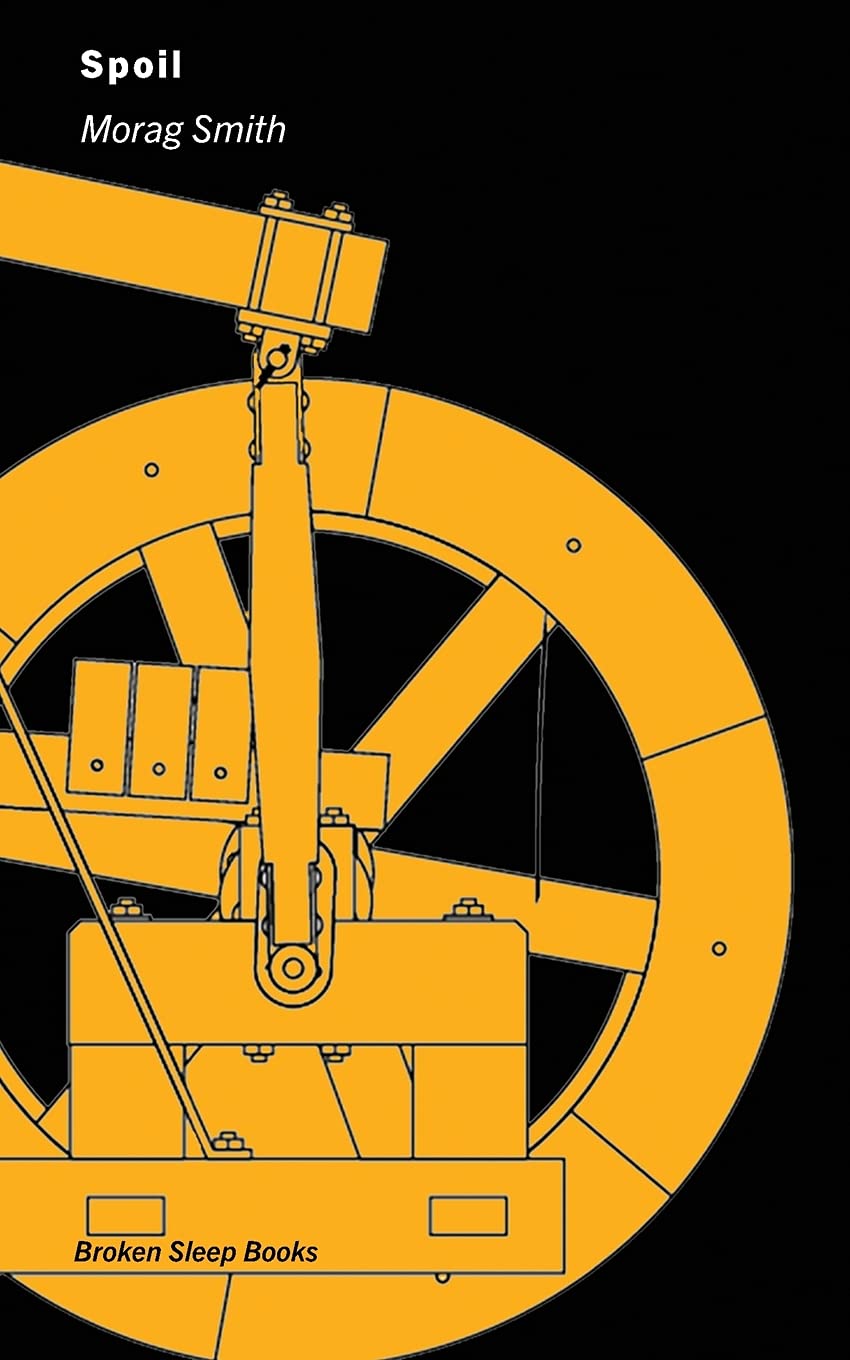
is a Cornish poet, painter, writer, and performer. She graduated in 2020 with a first in Creative Writing from Falmouth University, winning a prize for her dissertation. In 2018 she won the Cornwall Contemporary Poetry Festival,Shorelines competition. Her pamphlet, Spoil, was published by Broken Sleep Books in October 2021. Her poetry is published in various literary journals including International Times, as well as the eco-anthology, Warming! As a New Traveller she brought her children up close to nature, in trucks, caravans, and houses. She writes about her experiences, about our ravaged landscape, and bears witness to the poverty of British people. At the moment she is publishing a book of poetry about plastic pollution in our oceans, a collaboration with artist Jasmine Davies, and the Clean Ocean Sailing charity.
The Interview
Q:2. How important is geology to your writing?
Geology is structure. To see myself as separate from the earth is delusional. The rock of Cornwall, rich in minerals, is a geology exploited. The lines of quartz insulated in granite communicate. I write into the stone, histories and herstories.
The mesmerising rhythm and sense of longing of Fiona Benson’s most recent collection accompany the reader in the world of arthropods. This elegant edition published by Guillemot Press includes woodcut illustrations by Anupa Gardner that counterbalance in an essential style the rich and sensual poems. The physical description of the insects and the parallel exploration of the potentials of language offer a transcendent quality that characterises the collection in a cycle of life and death that passes through mating. As Benson remarks in the acknowledgements, the poems were commissioned by Arts and Culture at the University of Exeter for 2019–2020’s Project Urgency. The poems are also part of sound piece collaborations with sound artists Mair Bosworth and Eliza Lomas.
Compared to her previous collections,Bright Travellers(Cape Poetry 2014) andVertigo and Ghost(Cape Poetry 2019),Bioluminescent Babystill lingers on the topic of love and procreation but does not…
In Mélisande Fitzsimons’ latest publication, thirty-nine characters give us brief, tantalising glimpses into their lives through the cryptic messages they write on the back of postcards. The voices are of different ages, social backgrounds and ethnicities, from people holidaying in Britain and overseas. Each text is paired with an image of the front of the card, witty juxtapositions which are very much part of the work’s appeal.
The vagaries of British weather feature in a number of the messages: pouring rain, wind, freezing temperatures, a few days of sunshine celebrated as a rare treat. One writer, staying in Torbay, records ‘happily watching people’s tents blow away…it’s great fun’. Another, writing from Ironbridge, complains of having to buy a hot water bottle and about the lack of tea cosies at the guest house. This message is matched with an image of a satirical nineteenth-century cartoon depicting the hazards of rail travel.
Trigger WarningPEOPLE OF A SENSITIVE NATURE ARE ADVISED THAT THE FOLLOWING EXTRACTS EXPLORE FAMILY DYSFUNCTION AND ABUSE ISSUESZero Gravity
Excerpt for 23 November, 2021
<chapter> Twocontinued
“That’s enough,” Ryan said crossly. I didn’t come here to measure our dicks.”
“Not what it looked like when I walked in,” Owen shook his head with a lopsided grin and took an appreciative sip from his glass. So why did you come?” Owen asked. “And I use that verb in the most generic sense. At least I hope I do.”
Ignoring the remark, Ryan resettled himself into the leather chair and looked up at Owen. “Because I fucked up. And I need your help. You know Hilary better than anyone.”
-Gayle J. Greenlea.
YOU’RE THE DEAD TO ME
Fourth week -A Waning –
Day Two
Rode Tom Treddlehoyle’s
donkey backwards, spoke Sam Barn’s
lingo. Call me Kes.
-Paul Brookes
Bios And Links
-Gayle J. Greenlea
is an American-Australian poet and counselor for survivors of sexual and gender-related violence. Her poem, Wonderland”, received the Australian Poetry Prod Award in 2011. She shortlisted and longlisted for the Fish Poetry Prize in 2013, and debuted her first novel, Zero Gravity, at the KGB Literary Bar in Manhattan in 2016. Her work has been published in St. Julian Press, Rebelle Society, A Time to Speak, Headline Poetry and Press, The Wombwell Rainbow, Fevers of the Mind, Kalonopia and The Australian Health Review.







 Trigger Warning
PEOPLE OF A SENSITIVE NATURE ARE ADVISED THAT THE FOLLOWING EXTRACTS EXPLORE FAMILY DYSFUNCTION AND ABUSE ISSUES
Zero Gravity
Excerpt for 23 November, 2021
<chapter> Two continued
“That’s enough,” Ryan said crossly. I didn’t come here to measure our dicks.”
“Not what it looked like when I walked in,” Owen shook his head with a lopsided grin and took an appreciative sip from his glass. So why did you come?” Owen asked. “And I use that verb in the most generic sense. At least I hope I do.”
Ignoring the remark, Ryan resettled himself into the leather chair and looked up at Owen. “Because I fucked up. And I need your help. You know Hilary better than anyone.”
-Gayle J. Greenlea.
YOU’RE THE DEAD TO ME
Fourth week -A Waning –
Day Two
Rode Tom Treddlehoyle’s
donkey backwards, spoke Sam Barn’s
lingo. Call me Kes.
-Paul Brookes
Bios And Links
-Gayle J. Greenlea
is an American-Australian poet and counselor for survivors of sexual and gender-related violence. Her poem, Wonderland”, received the Australian Poetry Prod Award in 2011. She shortlisted and longlisted for the Fish Poetry Prize in 2013, and debuted her first novel, Zero Gravity, at the KGB Literary Bar in Manhattan in 2016. Her work has been published in St. Julian Press, Rebelle Society, A Time to Speak, Headline Poetry and Press, The Wombwell Rainbow, Fevers of the Mind, Kalonopia and The Australian Health Review.
Trigger Warning
PEOPLE OF A SENSITIVE NATURE ARE ADVISED THAT THE FOLLOWING EXTRACTS EXPLORE FAMILY DYSFUNCTION AND ABUSE ISSUES
Zero Gravity
Excerpt for 23 November, 2021
<chapter> Two continued
“That’s enough,” Ryan said crossly. I didn’t come here to measure our dicks.”
“Not what it looked like when I walked in,” Owen shook his head with a lopsided grin and took an appreciative sip from his glass. So why did you come?” Owen asked. “And I use that verb in the most generic sense. At least I hope I do.”
Ignoring the remark, Ryan resettled himself into the leather chair and looked up at Owen. “Because I fucked up. And I need your help. You know Hilary better than anyone.”
-Gayle J. Greenlea.
YOU’RE THE DEAD TO ME
Fourth week -A Waning –
Day Two
Rode Tom Treddlehoyle’s
donkey backwards, spoke Sam Barn’s
lingo. Call me Kes.
-Paul Brookes
Bios And Links
-Gayle J. Greenlea
is an American-Australian poet and counselor for survivors of sexual and gender-related violence. Her poem, Wonderland”, received the Australian Poetry Prod Award in 2011. She shortlisted and longlisted for the Fish Poetry Prize in 2013, and debuted her first novel, Zero Gravity, at the KGB Literary Bar in Manhattan in 2016. Her work has been published in St. Julian Press, Rebelle Society, A Time to Speak, Headline Poetry and Press, The Wombwell Rainbow, Fevers of the Mind, Kalonopia and The Australian Health Review. The Wombwell Rainbow