David Miller’s writing has always crossed boundaries: between poetry and fiction, between the confessional and poetically distant, the heartfelt and philosophical. His work has consistently used short texts – often containing quotes or intertextual allusions – in juxtaposition to other short texts to build up a patchwork effect within a text. In the ‘Notes’ toAfterword, he refers to ‘independent texts. Yet related.’ and ‘Ruins, edifices, fragmented architectures.’ Adopting a phrase fromCircle Square Trianglea reader might think of reading Miller more as ‘through & past & back’.
But it is never a puzzle to be solved, or a jigsaw that makes a picture with straight edges and is complete. Miller’s work is often more like an archaeological tesserae, the remains of a mosaic that has slowly been revealed by digging and then patient brush work. The quotations and allusions, be they from neglected authors, obscure religious texts…
View original post 515 more words
Invincibility
Your eyes confirm my heart’s free fall. My ears
heard right. Cancer. Enemy feared since childhood
Two classmates dead before their fifth birthday
Sister of my adulthood struck down at 35
Now you sit across the room from me
stoic on the mattress where we make love
I see the tsunami breaching your shore
pooling ‘round sandbags positioned for my benefit
My guts coil, jellyfish drying in sun’s glare
This light an X-ray aimed at the offending lymph node
swelling in your belly, taking on water like a sinking ship
Your blood, sacred as Eucharist, white with leukocytes
I bleed for you, marrow of my marrow, bone of my bone
We are in this together
-Gayle J Greenlea

-John Hawkhead
Inside These Bones
know this December light
know this December cold
And Angus pulls on his lead.
A white Highland terrier.
Your bedside companion
until that December
I take him for a walk.
Inside these bones
know this December gust.
The surface of my eyes
gather so much gritstone.
My December vigil
your bedside, Mam. Your breath
irregular as gust.
Go to Dad about it.
I tell Dad about it.
“Take Angus for a walk“
And gust blows grit.
And Angus pulls his lead.
Home half hour later ask
where you were. Ambulance
has taken you away.
I’ve never seen you since.
Gust is ghost breath and still
brings water to these eyes.
Inside these bones
Know this December cold.
-Paul Brookes
Bios And Links
-Gayle J. Greenlea
is an American-Australian writer and poet and counselor for survivors of
sexual and gender-related violence. Her poem, “Wonderland”, received the Australian Poetry
Prod Award in 2011. She shortlisted and longlisted for the Fish Poetry Prize in 2013, and
debuted her novel, Zero Gravity, at the KGB Literary Bar in Manhattan in 2016. Her work has
been published in St. Julian Press, Rebelle Society, A Time to Speak, Headline Poetry and Press,
The Wombwell Rainbow, Stanford University Life in Quarantine, Fevers of the Mind,
Kalonopia, Australian Health Review, and (soon) San Antonio Review.
-John Hawkhead
has been composing haiku, senryu, haibun, and haiga for over 20 years and he recently won the Grand Prix 2021 Setouchi Matsuyama Haiku Contest. His book, Small Shadows, was released in 2016. With more than a thousand published poems, he has been listed on “The European Top 100 most creative haiku authors” for the past ten years .Since then I’ve also won this year’s Porad contest (this haiku) and I was a finalist in the Trailblazer contest.


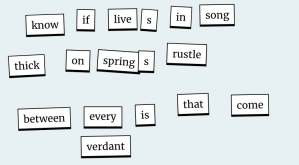
Know if lives in nature’s song—
thick on spring’s rustle
between every breath that comes
verdant and sublime, there was
an almost,
never rooted,
a moon-rose, eggshell fragile—
but ask, ask, ask, she says–
for dreams,
a dance on a long bee-path,
soft blooms of dusk,
a shadow-fiddle
like a lullaby as night’s blanket rests.
Watch, as frost-lichens bloom,
and then color, stone to berry-warm
reflections in ancient rivers–
a murmur, a laugh,
the embrace of sky,
rippling secrets, there and gone.
The Oracle really wanted me to ask today. Every set I looked at gave me that word. Then these lines came, and the poem fell into place.

This week I welcome reviewer and poet, Gerry McGrath, to reflect on his wonderful chapbook, Love All the People.
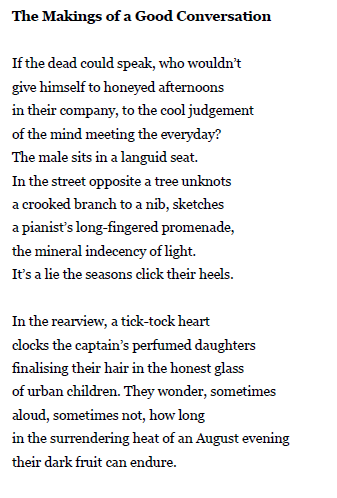
The Makings of a Good Conversation – ends & beginnings
Poetry can stop the heart, if not time.
Recently I was in correspondence by email with a friend. We’ve both been doing the poetry thing for a long time and trust each other’s instincts and responses. Anyway he said something I’m sure he won’t mind me reproducing here. It’s about getting your body into the right angle. The reason I like this so much is that it uses ordinary straightforward language in order to say something quite captivating. That’s not as easy as it sounds. Not at all. How do you begin to talk about how poetry begins?
The more I look at it, the more I think The Makings of a Good Conversation is about ‘voice’. Voice has its…
View original post 685 more words
Roy Fisher’sCitywas one of the first poetry books I remember reading as a teenager (others would beCrow, andThe Waste Land, as well as Adrian Mitchell’s and Brian Patten’s work). My friend the poet Brian Louis Pearce lent me his 1961 Migrant Press copy to encourage me to use the actual world around me in my poetry; around the same time a school friend showed me Edwin Morgan’sInstamataticPoems. Both books were full of physical description, mood, history, clearsighted observation, and what we might now call psychogeography: the feel and mood of a place, dependent upon its history and use. Both felt quite distanced and disengaged from their subjects yet were involving and innovative reads.
Whilst I knew that Fisher had revisedCityfor future editions, I was unaware – like many others, I am sure – that it had been assembled from…
View original post 304 more words
Alan Price lives in London. He is a poet, scriptwriter, short story writer, film critic for filmuforia.co.uk and blogger at alanprice69.wordpress.com . His short story collection The Other Side of the Mirror, an alternative take on vampirism, was published by Citron Press in 1999. A TV film A Box of Swan was broadcast on BBC2 In 1990. Alan has scripted five short films. The last one Pack of Pain (2010) won four international film festival awards. His debut collection of poetry Outfoxing Hyenas was published by Indigo Dreams in 2012. A pamphlet of prose poems Angels at the Edge (Tuba Press) appeared in 2016. The poetry
chapbook Mahler’s Hut was published in 2017 by Original Plus Books. The High Window published his collection Wardrobe Blues for a Japanese Lady in 2018. In October 2019 Ebionvale Press published a collection of stories and flash fiction called The Illiterate Ghost. His…
View original post 938 more words
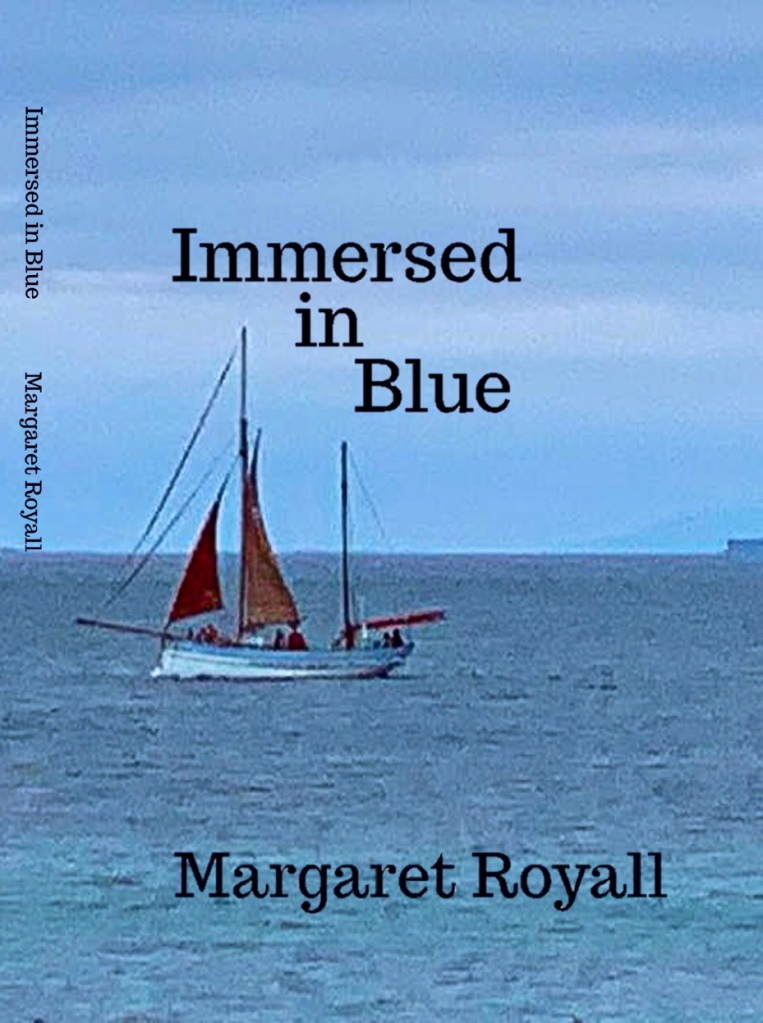
It’s my pleasure to start 2022’s programme by reviewing the newest collection of a poet friend with whom I became acquainted during the early days of Hedgehog Poetry, Margaret Royall. This work is an unusual collection of poetry and prose entitled, Immersed in Blue and it is published by Steve Cawte at Impspired, as part of his new programme of individual collections, following the success of his wonderfully eclectic Impspired Magazine series. Immersed in Blue is a reflection on Royall’s experiences of the Scottish Isle of Iona over a nine year period, starting in 2012.
Anyone who is familiar with Royall’s poetry will know she has the ability to capture natural environments vividly and she deploys this talent to telling effect in this collection. What emerges most strongly is Royall’s sense of awe and wonder at the place that captivates her, having visited it annually for almost a decade. Her…
View original post 1,017 more words
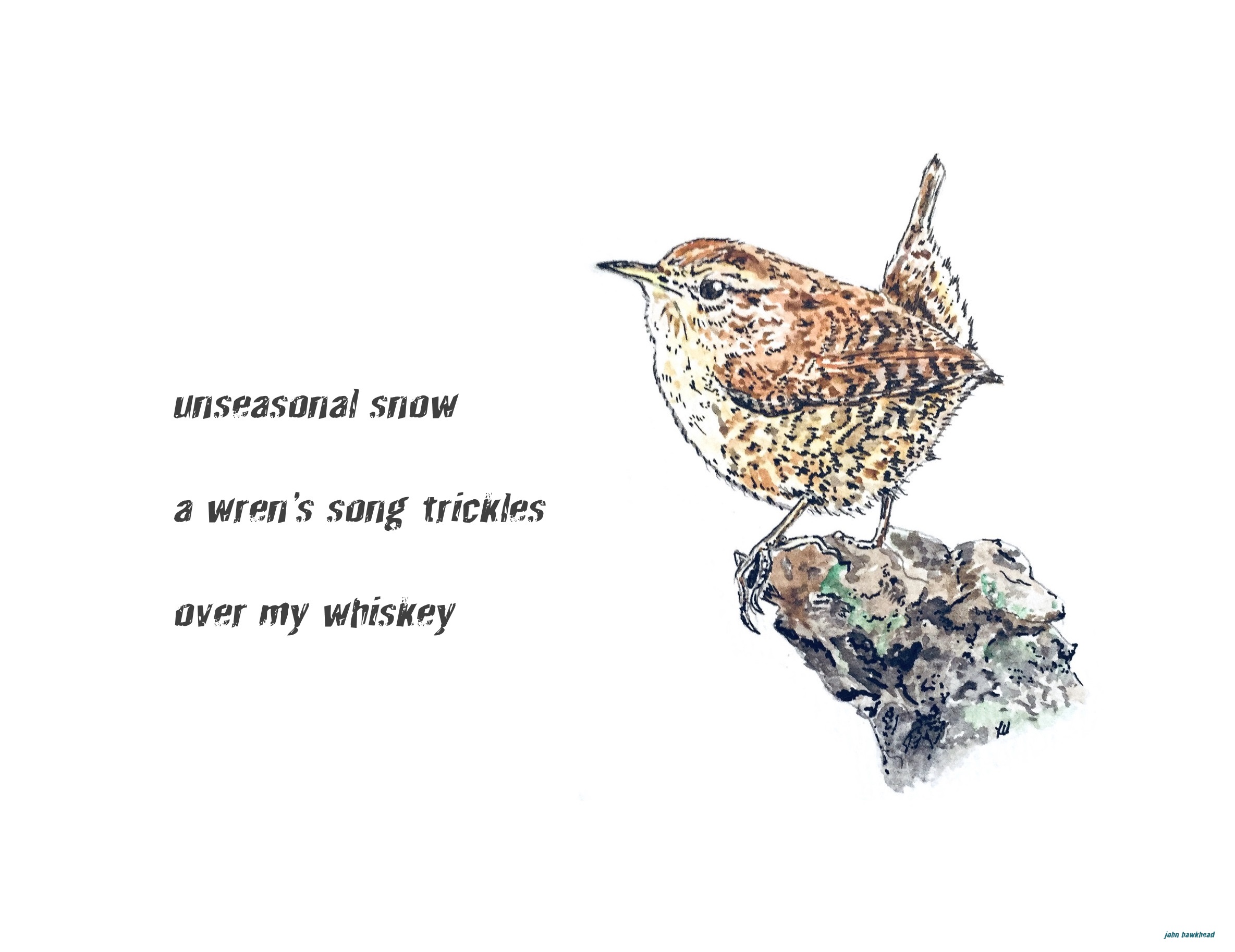
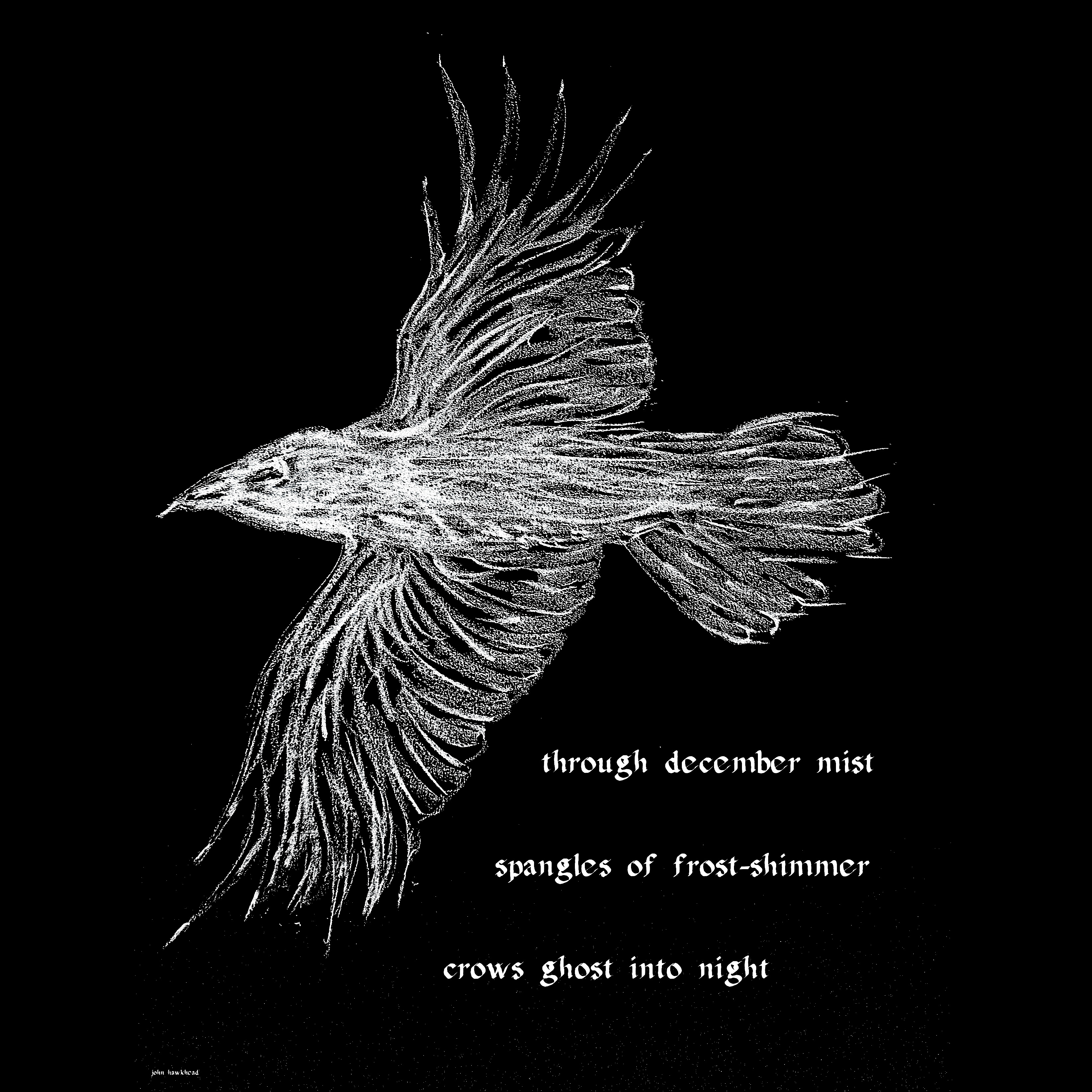
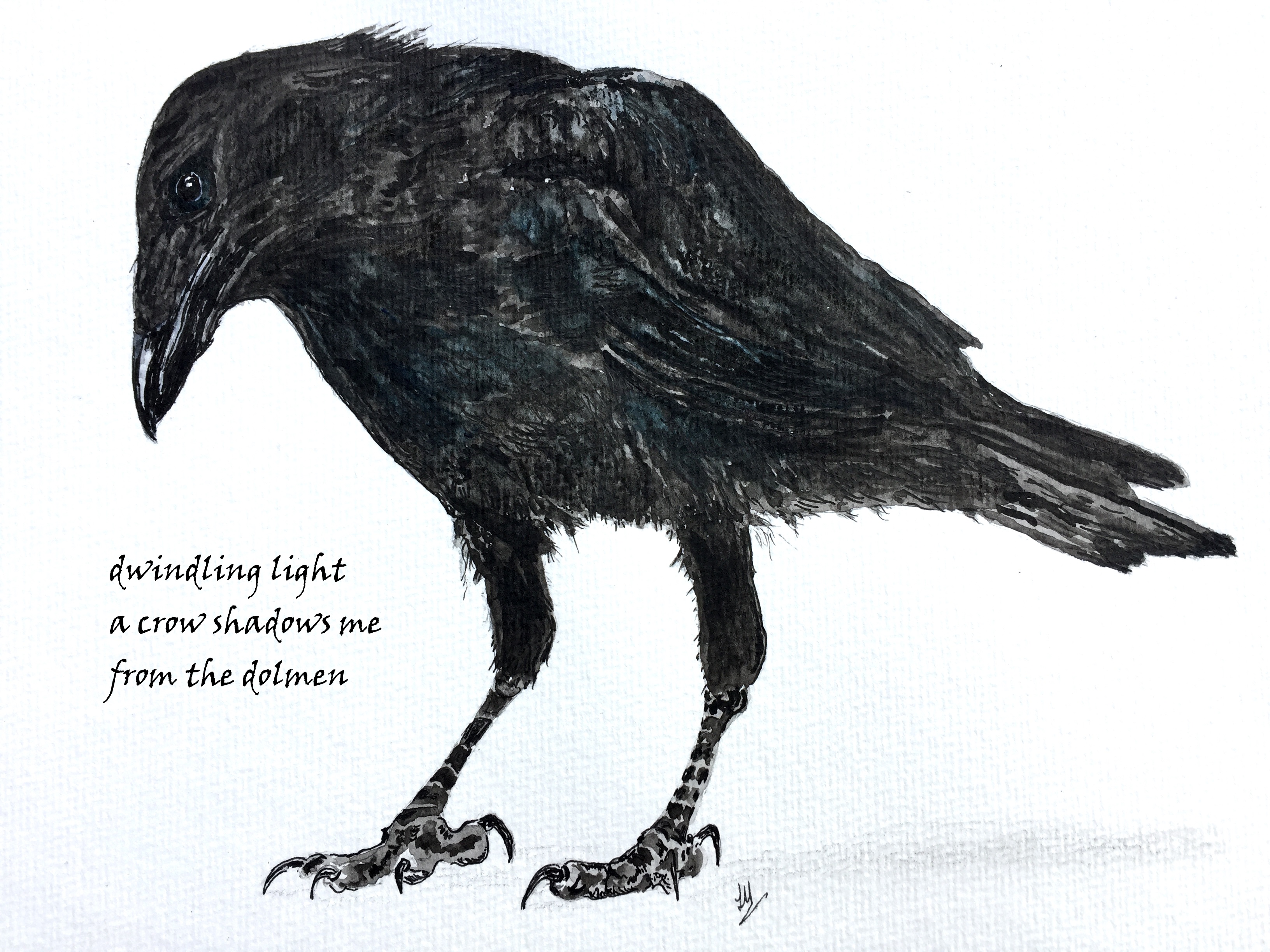
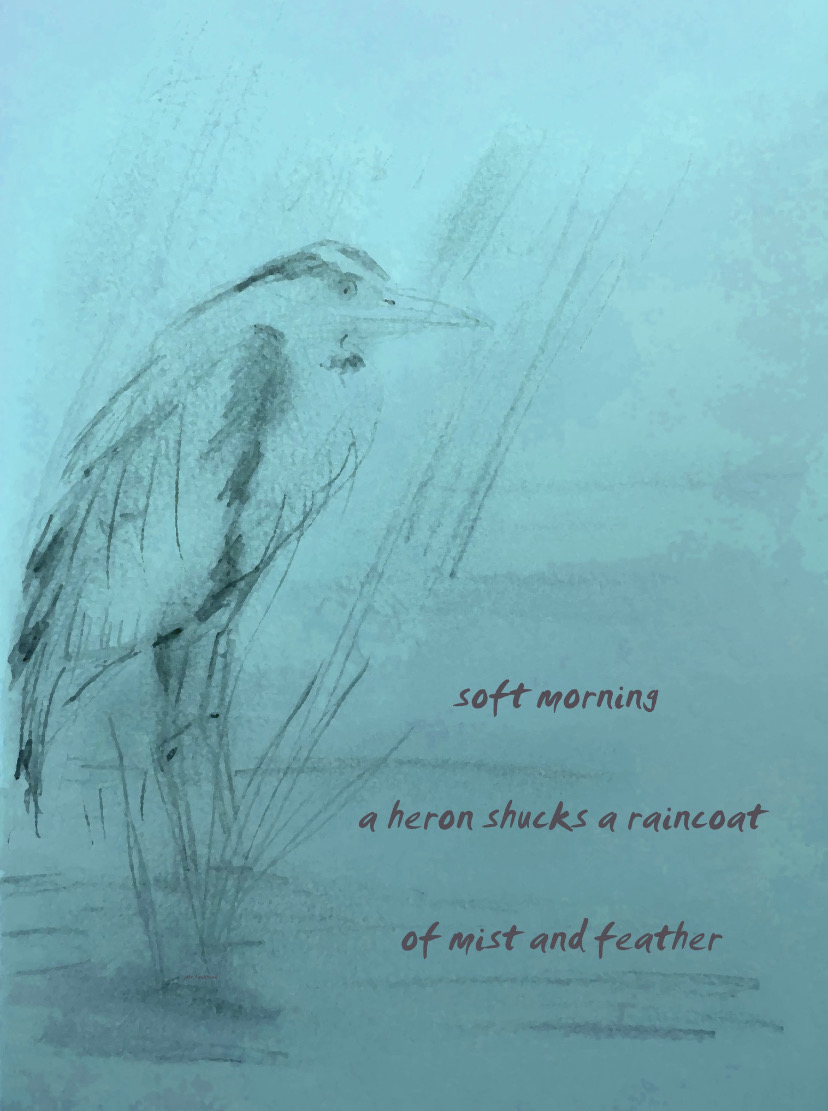
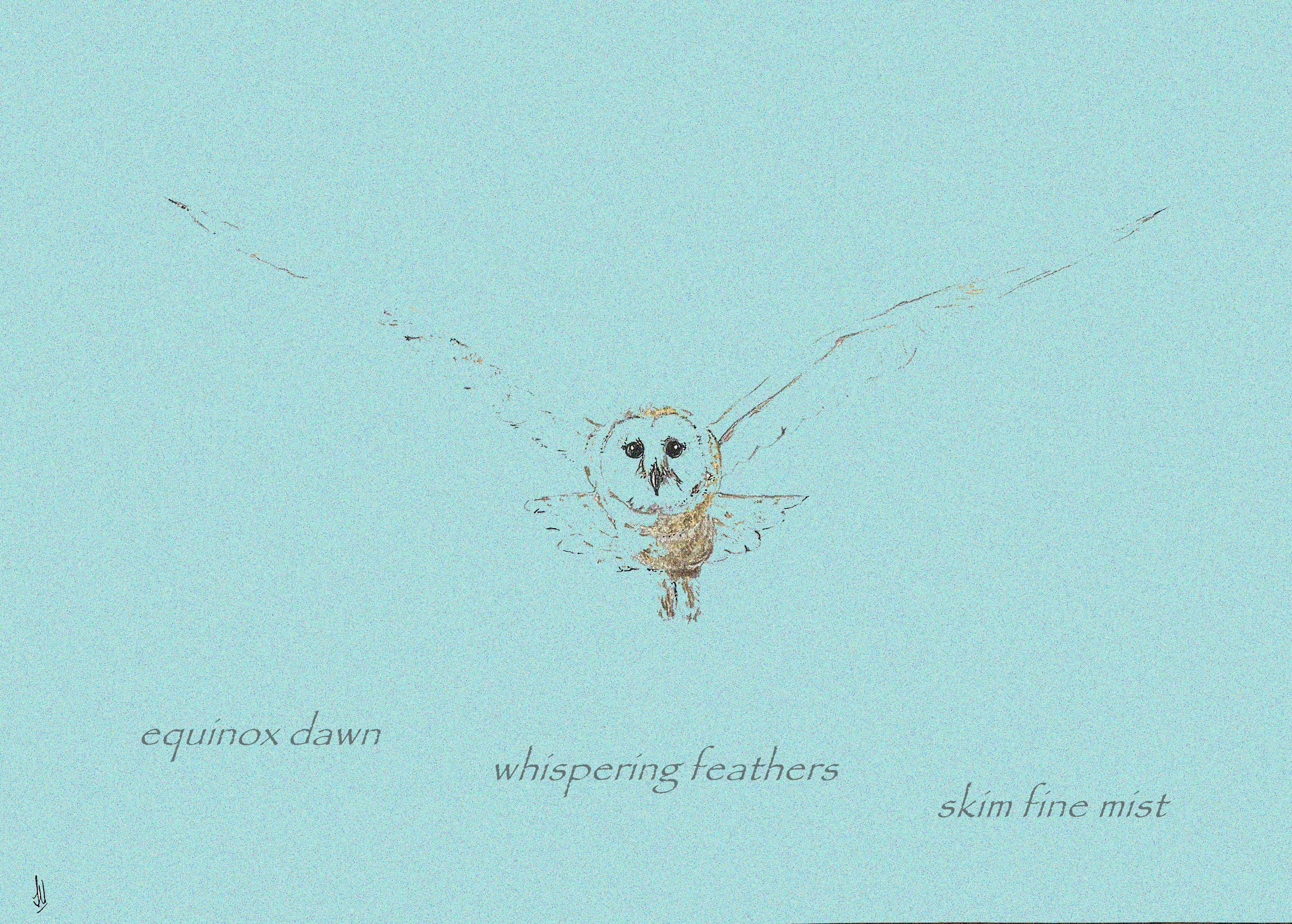
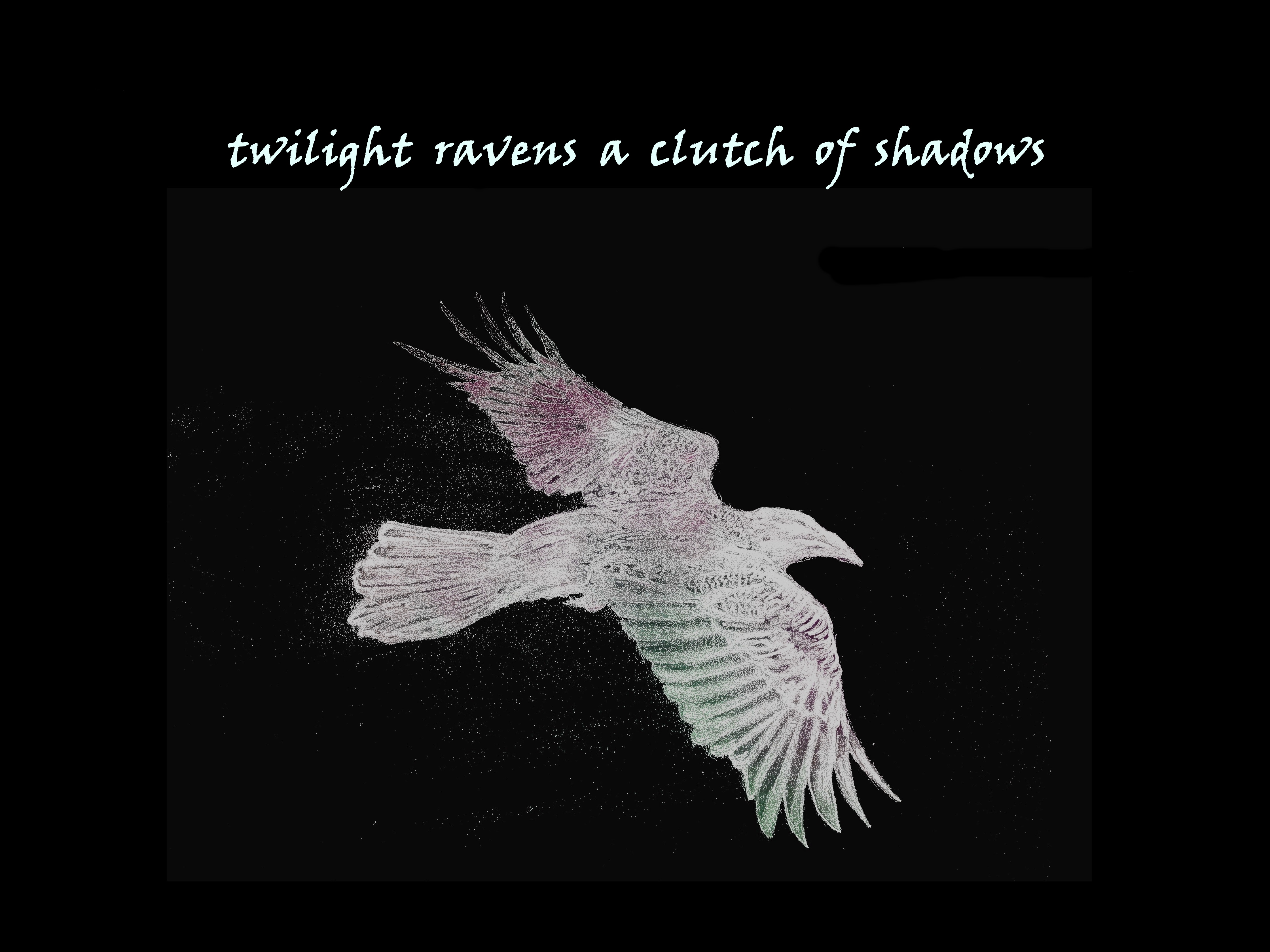
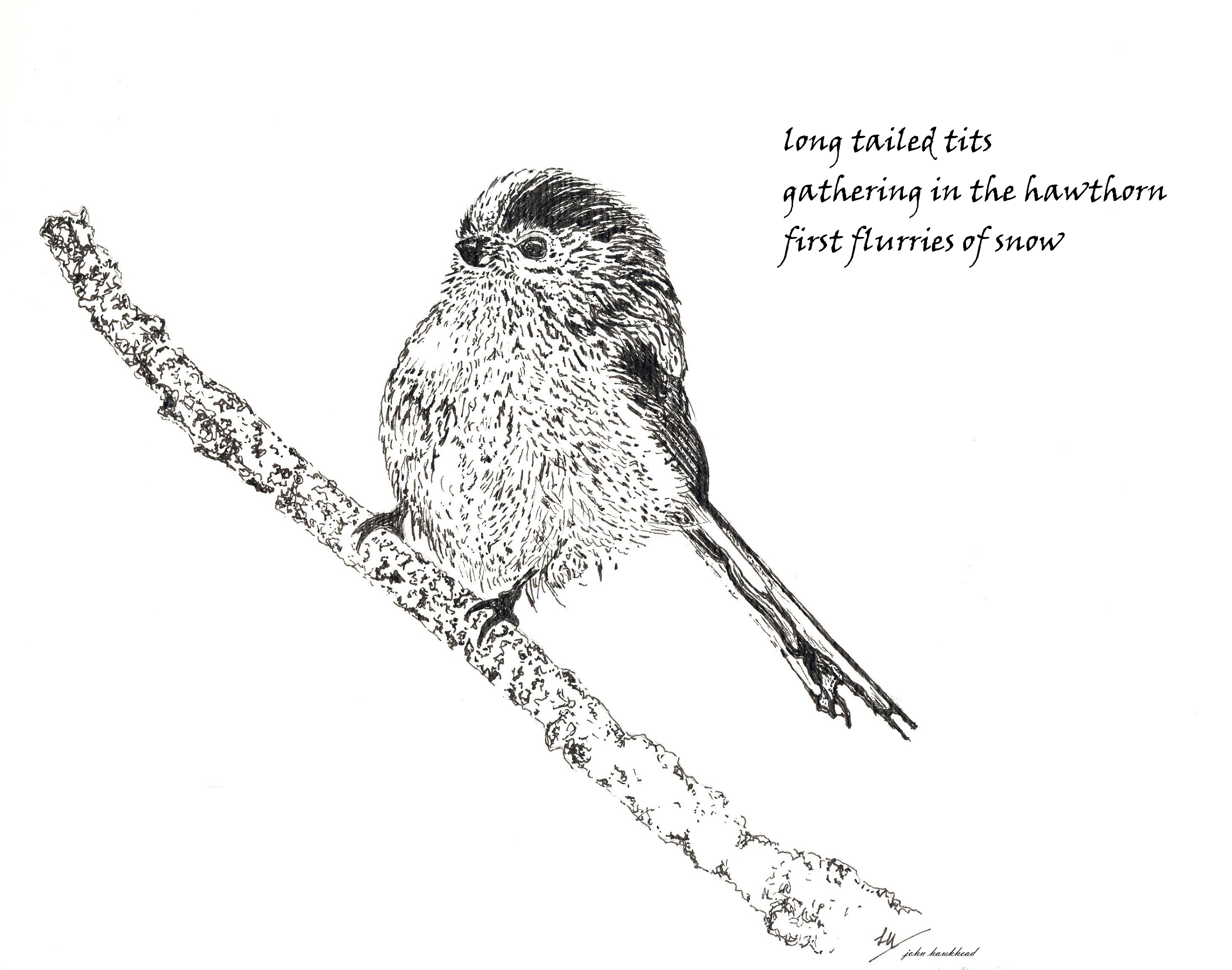
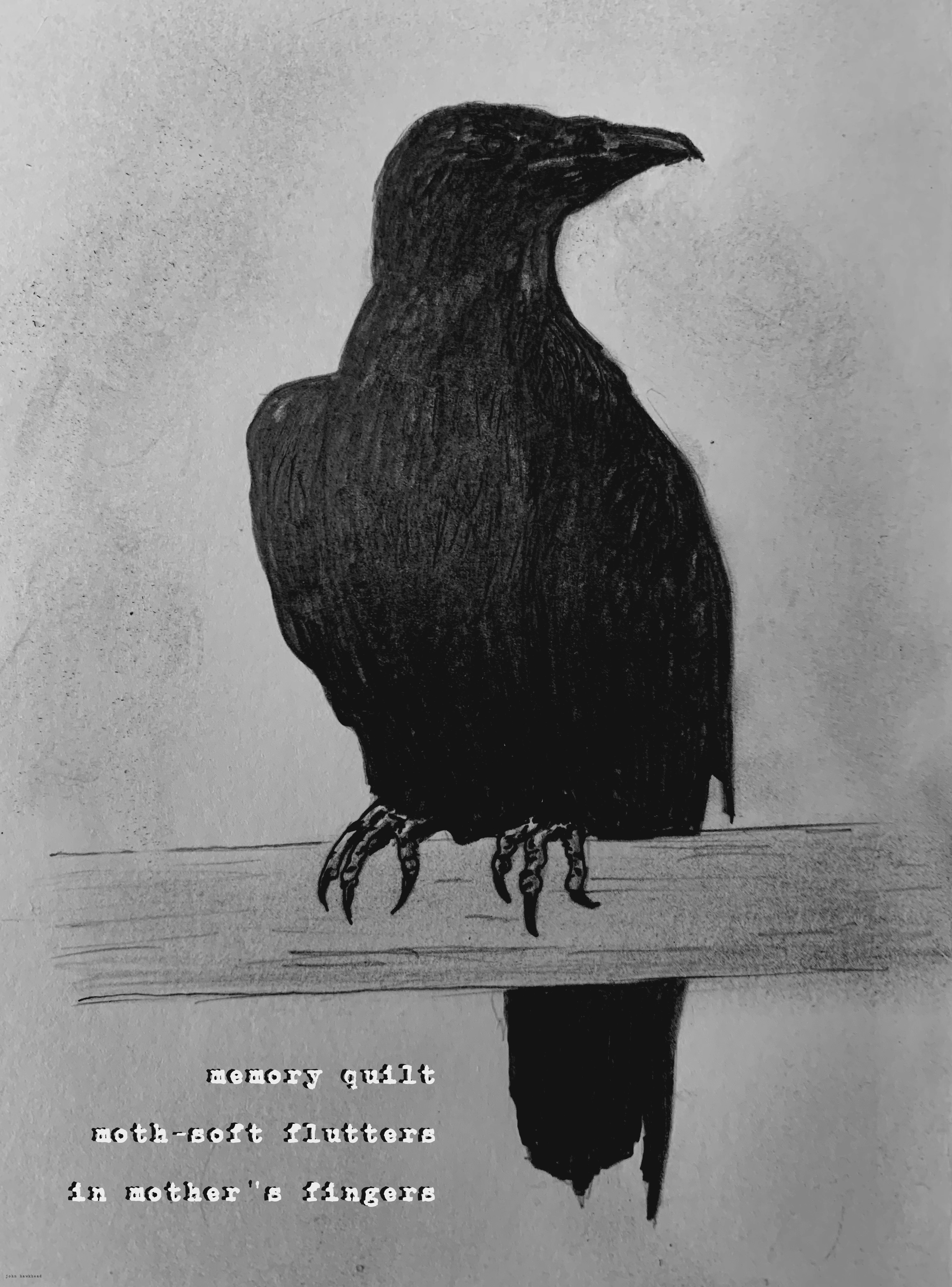
“Heron” is a haiga I created using a sketch with a haiku published in Seashores
“Dwindling light” is a haiga I created using an ink drawing with a haiku published in Seashores
“Crownights_mist” is from Daily Haiga
“Long Tailed Tit” is unpublished (apart from ‘twitter’)
“Memory-raven” was in Contemporary Haibun Online (cho)
“Wren-song” was ‘Highly Commended’ in the Jane Reichhold 2018 haiga contest
“Owl in mist” and “twilight ravens” are both in the Wales Haiku Journal haiga gallery.
-John Hawkhead
Eggs
I hold you up to see the eggs,
five of them, blue as April sky.
You cling on with your toddler legs,
observing them so solemnly.
Five of them, blue as April sky,
each one a fragile, freckled womb;
observing them so solemnly,
we hope that they will make it through –
each one a fragile, freckled womb,
holding an ugly, hairless thing.
we hope that they will make it through,
and in July, we’ll hear them sing.
Holding an ugly, hairless thing,
in need of food, and warmth, and love,
and in July we’ll hear them sing
of earth below, and sky above.
In need of food, and warmth, and love,
I watch you grow and learn new things
of earth below, and sky above,
and start to spread your fledgling wings.
I watch you grow and learn new things;
you cling on with your toddler legs,
and start to spread your fledgling wings:
I hold you up, to see the eggs.
Bios And Links
-John Hawkhead
http://www.albapublishing.com/#9781910185537
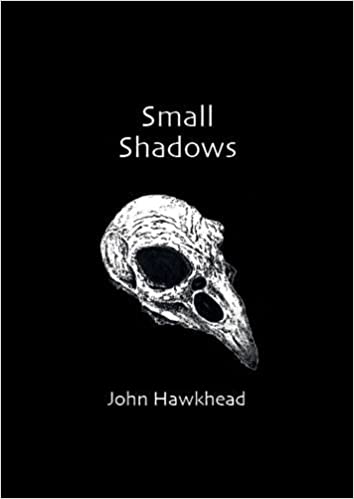
is a writer and illustrator whose short-form poetry has been published all over the world and has won many competitions. His book of haiku and senryu ‘Small Shadows’ is available directly from him or Alba Publishing.
–Sarah Connor
lives in Devon, writes for fun and sanity, grows apples, keeps going.
This massive book (580 pages) is a collection of ‘essays on the poet’s novel’, which takes a look at contemporaneous and (mostly 20th Century) historical prose works written by poets. Most are written by poets, so we have an anthology of poet’s critical prose about other poets’ fiction.
I can’t pretend I know all of the critics or the authors and texts under discussion; even the many names I do know, I often haven’t read the works being considered. Yet these essays are open, inclusive and discursive enough to not only encourage me to find and read many of these works, but also to offer themselves as both experimental writing and as informed and more generalised contextualisation and discussion.
That is these essays are informed by and embedded within a sense of poetry and its playfulness, liquidity and experiment, with a particular focus on the works poets have chosen to…
View original post 246 more words


