Today = No Guest Feature

Patricia M Osborne's avatarPatricia M Osborne

Due to unforeseen circumstances, there is no guest feature today. However, I thought I’d take this opportunity to fill you in with some news.

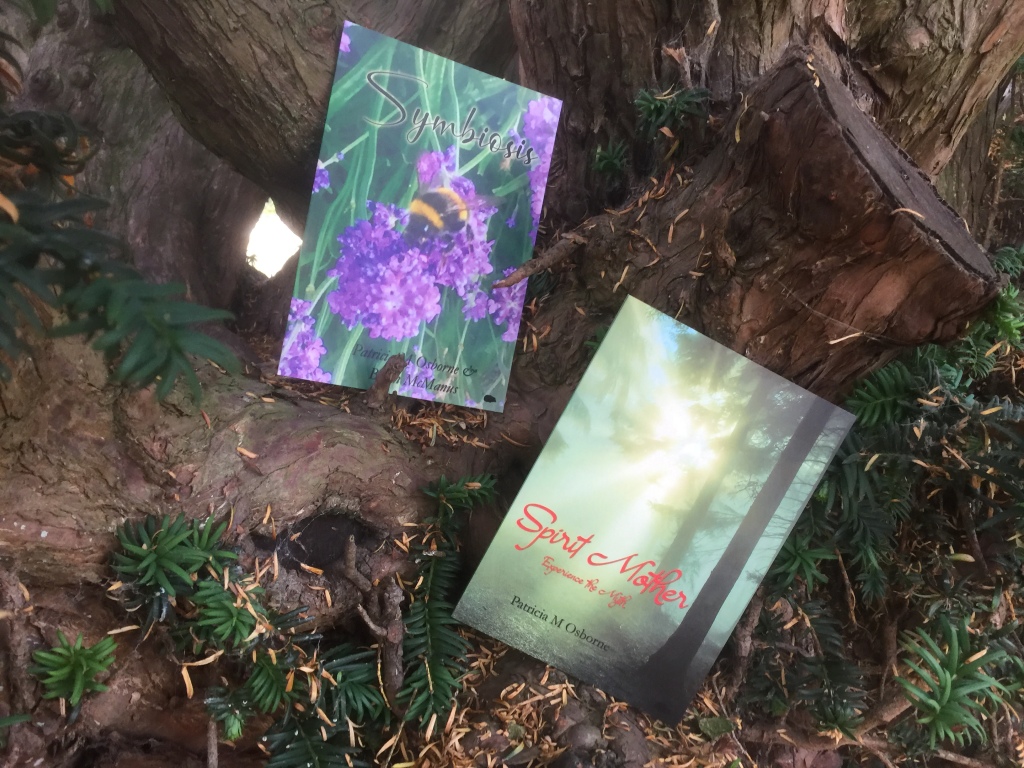
Symbiosis and Spirit Mother are now both live and you can purchase limited edition copies from my website shop HERE scroll down for the relevant book and correct postage.

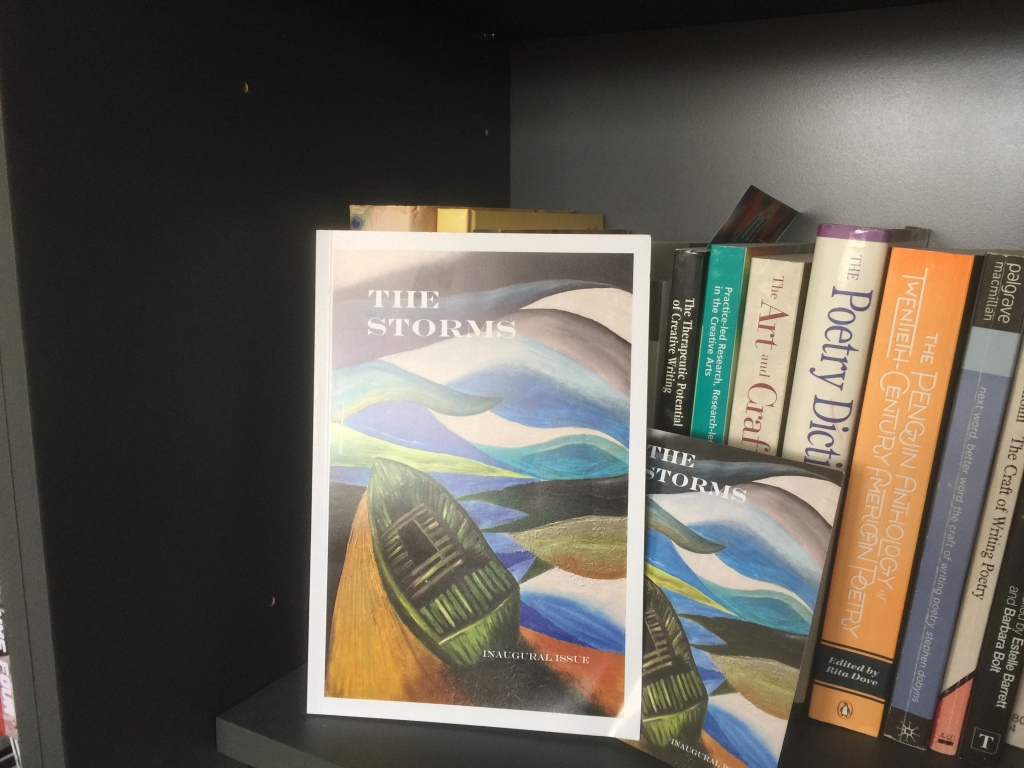
Damien B Donnelly along, with with sub-editor, Gaynor Kane, (for the inaugural issue), launched The Storms last Sunday. If you pop over HERE you can see how the launch went, along with some fantastic photos. The journal is a must to buy and I’m honoured to have my poem Squalls included in this fantastic issue. If you fancy buying a copy (worldwide) then go HERE.

Damien B Donnelly is my guest next week when he blogs about his brand new collection Enough. Make sure you don’t miss it! If you missed Gaynor Kane‘s…

View original post 180 more words

Mark #internationaldayfortheremembranceoftheslavetradeanditsabolition. Please join Tim Fellows and I to mark this day with your own work. I will feature your published/unpublished poetry/short prose/artworks about slavery. Please include a short third person bio.

slavery

Wind and waves

We say the waves are calm now,
their voices stilled, the echoing voices
from wooden holds,

but restless still,
waves take their toll of human flesh—
slavers have a multitude of faces.

Listen to the wind that blows
into ears deaf to the cries
of other people’s children,

the wind that stirs the veils,
the shadows in the corner,
and brings the sound of chinking coins,

the chinking coins still changing hands,
and the child behind the veil sold,
flesh, hers too.

The waves’ lament lingers
and the wind’s, the unheard voices,
still crying.

-Jane Dougherty

Slavery

There’s something visceral about
seeing a human in chains;
hunger in their belly,
desolation in their eyes;
watching as coins are passed
from hand to hand
and their ownership from one
to another;

That smashes through
the basic revulsion that the
concept of slavery
should engender within.
Where any shred of
human decency would
demand a call to arms
to banish it forever.

To raise the sharpest axe
and bring it crashing
onto and through the manacles
and scream “Enough!”
No-one should stand by and watch
as a human being
is sold down the River.

-Tim Fellows 

Life Should Be Meaningless

A full life is false and worthless.

Slavery

is good for you. All folk
Should be chained,

Manacled to a mortgage,
To work, to an employer

a partner. Freedom denies
your human rights. Slavery

Teaches you the meaning of life.
Demands you act properly

Constrains you to common sense,
sets out a wild world of imagination

creativity and invention. Freedom
is too wishy washy. Lock

and load your chains. Don’t let
loose and free your mind. Freedom

Is heavy, restricts, denies movement
of blood, bone and brain.

Become a slave and see our world
with new eyes, fresh perspectives.

-Paul Brookes (from my “A World Where 2”, as yet unpublished)

Bios and Links

-Jane Dougherty

was brought up in the West Riding but lives and works in southwest France. Her poems and stories have been published in magazines and journals including Ogham Stone, the Ekphrastic Review, Black Bough Poetry, ink sweat and tears, Gleam, Nightingale & Sparrow, Green Ink and Brilliant Flash Fiction. She blogs at https://janedougherty.wordpress.com/ Her poetry chapbooks, thicker than water and birds and other feathers were published in October and November 2020

-Tim Fellows

is a writer from Chesterfield, Derbyshire. His pamphlet, ‘Heritage’, was published in 2019 by Glass Head Press.

Celebrate #beanangelday. Please Join Fidel Hogan Walsh and I with your own work. I will feature your published/unpublished poetry/short prose/artworks about/including acts of #Kindness. Please include a short third person bio.

Be An Angel Day

In Plain Sight Fidel angel poem

-Fidel Hogan Walsh

Bios and Links

Fidel Hogan Walsh’s 

work has appeared in Poethead, Pendanic, UCD Archives, Poetry Ireland – Poetry Town Pocket Poems booklet and The Irish Times, Thrice Remembered  and The Storms. Fidel’s first collection of poems Living with Love launched in 2020. Her second collection of poetry in collaboration with photographer, Julie Corcoran, launched Culture Night 2020. Time is the fruit of a lockdown project undertaken between March and June 2020. The fifteen poems and sixteen images reflect on the human condition during unprecedented times. Time was named in the top 10 non-fiction of 2020 by Dublin City Libraries.

Omar Sabbagh on Patricia McCarthy’s ‘Hand in Hand’

The High Window Review's avatarThe High Window

hand in hand latest cropped 2

*****

EssayPoems

*****

The Long-Lived Love of Longing
on Patricia McCarthy’s  Hand in Hand


‘Touch me – in order to be lost in
the angelic silences Brendan preferred
after the white bird’s singing, restoring
apocalypses of the untranslatable word.’

xxxxxxxxxxxxxxxxxxxxxxxxxxxxx‘Harp Song’

‘… fingers crossed
religiously…

I was left with no clothes befitting a wife
and myself on my hands, as afraid of staying
with you as of drawing apart….’

xxxxxxxxxxxxxxxxxxxxxxxxxxxx‘Breaking Up’


Patricia McCarthy’s latest book, Hand in Hand, a collection-long sequence versioning the mythos of Tristan and Iseult, is a rich storehouse of legend and lore, myth, history and religion, among other telltale things.  The book, we learn early on, has been in the works for over four decades; so, it’s no wonder that this collection should be so earthed and grounded in research (worn lightly though) and long-lived consideration; and…

View original post 3,265 more words

Completing the New Collection

wendycatpratt's avatarWendy Pratt

Photo by Min An on Pexels.com

A couple of weeks ago I put all the poems I’d been working towards for the new collection together – the good, the bad and the ugly. I scythed a few out, teased a couple of others in, and decided that, as a first draft, it was just about done. Then my dad died and I ended up writing a few poems about him, about loss, about the strangeness of death. They tie in well with the rest of the collection and feel like a good fit.

There is no one size fits all approach when you’re putting a collection together. Even to the same poet the process may change between collections. When I Think of My Body as a Horse took years to write. The poems in that collection were mainly natural, organic poems that were written in powerful emotional splurges, and then…

View original post 955 more words

Drop in by Sanjeev Sethi

Nigel Kent's avatarNigel Kent - Poet and Reviewer

It is generally the practice in this blog to invite poets to reflect on their debut collections. Just occasionally, however, I have invited more established poets whose work has been recognised nationally. Today, however, I am honoured to invite a poet with an international reputation, the remarkable, Sanjeev Sethi to reflect upon his latest publication, Wrappings in Bespoke (Hedgehog Poetry Press, 2022)

Let me begin by thanking Nigel Kent, the stellar poet, for this opportunity. In our global village, we have much to thank for technology and its subsidiary: Socmed. Nigel and I ‘met’ on Twitter, which is the genesis of my being on this blog.

Wrappings in Bespoke is my seventh book of poems. It was launched on August 14, 2022, by the Hedgehog Poetry Press, UK.  Mark Davidson, as all of you reading this know, is the brain and bazooka behind Hedgehog. I participated in the Full Fat…

View original post 575 more words

Celebrate #WorldPhotographyDay. Join Gaynor Kane and I. I will feature your photography/published/unpublished poetry/short prose/artworks about photography, or ekphrastic work inspired by a photo. Please include a short third person bio.

20220514130044_IMG_124120220514131827_IMG_130320220514140222_IMG_146720220514140714_IMG_147820220514142449_IMG_154120220514144328_IMG_1609

-photos by Gaynor Kane

Instamatic

Apple cake wedges and currant buns
downed with ambrosia from brown chequered flasks.
Only chipped cups with blue and white stripes
made it outdoors –
alfresco dining saving the hay,
inhaling the musty black and white square.

-Marie Studer ©2022

WP_20170807_20_55_56_ProWP_20171130_19_47_49_Pro

Two photos by Paul Brookes

Bio and Links

Gaynor Kane

is from Belfast and dabbles in writing, painting and photography. Her latest poetry pamphlet examines love in all it’s forms. More info at www.gaynorkane.com 

-Marie Studer

is a past winter of the Trocáire Poetry Ireland Competition, twice winner of the Bangor Ekphrastic Poetry Challenge and shortlisted in the Northwest Words Poetry Competition. Recently published in The Stony Thursday Book, Drawn to the Light Press, Bangor Literary Magazine, Spilling Cocoa Over Martin Amis, The Storms, Not the Time To Be Silent Anthology.

Poem featured in Raining Poetry in Adelaide

Thom Sullivan's avatarThom Sullivan

One of my poems is among 20 that have been tagged on the footpaths of Adelaide’s CBD, using invisible paint that appears only when it rains. My poem (‘To remember that a tree / is aired in sky as much / as it’s grounded in earth.’) can be found near the corner of Union and Grenfell Streets, opposite the Crown & Anchor Hotel. Many thanks to the Raining Poetry in Adelaide team, the JM Coetzee Centre for Creative Practice, and the City of Adelaide.

View original post

Wombwell Rainbow Book Interviews: “The Ruin of Eleanor Marx” by Mark A. Murphy

Murphy Eleanor Marx Cover_VA01[1857] crop

-Mark A. Murphy

Mark A. Murphy has had work published in 18 countries. He is a 3 time Pushcart Nominee, and has published eight books of poetry to date.. German publisher ‘Moloko Print’ published his latest collection, ‘The Ruin of Eleanor Marx’ in the summer of 2022.

He states: I have always thought that poetry can change lives, and still do. I believe artists have a responsibility to step up to the mark, and say the things, others, perhaps less privileged, would like to, or are unable to say. If humanity is to survive the current and impending ecological disaster beyond the next generation, we must learn new ways of living together.

His book may be purchased here http://www.molokoplusrecords.de/finder.php?folder=Print

The Interview

1. How did you decide the order of the poems in your book?

The poems wrote themselves. I was only the conduit for ‘divine’ inspiration, so the book fell together quite organically. However, there is a beginning, middle and end, and the poems do have a loose chronological unity. The book starts with Eleanor’s birth under the ‘mocking eaves of Dean Street’ and ends with her death, and then the death of Eleanor’s middle sister, Laura (the last surviving Marx sibling) and her husband Paul Lafargue.

Moreover, the book reads like a potted biography, discussing everything from Marx’s  own obsessive love sickness for Eleanor, to Eleanor’s obsessive love sickness for her    common law husband, Dr Aveling.

2. The poems are full of historical details about life at that time. How did you assemble this knowledge?

Some of the historical background I was already familiar with. However, I did a lot of research, reading books and letters and studying numerous online essays and articles about Eleanor’s life.

One document in particular, ‘Tussy’s Great Delusion – Eleanor Marx’s Death Revisited,’ (a letter from Maria Mendelson to Vera Zasulich) had laid buried in the archives for over 120 years, detailing Aveling’s boasts and sex crimes. This document proved invaluable, revealing Aveling as a serial rapist, not least of all, against Eleanor herself, whom he used to drug with chloroform before raping.  

3. How important was it for the historical details to appeal to all the five sense of the reader?

Certainly, in setting the scene for Victoria’s London, this was a consideration. I guess some poems work better than others in this respect. ‘Night Soil’ might best exemplify this aspect of the writing, with the Baroness left hanging in Leicester Square greeted by ‘halos of sulphuric gas,’ ‘manure, cesspools, hand shakes.’ Then ‘black rain,’ ‘cats, dogs,’ ‘ rancid mutton,’ ‘consumptive gin joints,’ and ‘human excrement.’ A veritable merry-go-round for the senses.

4. Why are some words in capital letters?

I borrowed the idea from Frank Bidart. Sometimes, capitalisation is used as a red herring, quite meaningless. Other times, it is essentially polemic. It’s up to the READER to decide. In terms of how the text looks aesthetically (on the page) it unifies or integrates disparate elements. A stylistic device that engages the eye more rigorously.

5. How important is the white space in your poetry?

Again, it really depends on the poem. If you take a poem like ‘Human Shaped Emptiness,’ the white space becomes all important.  The white space is concrete, and is a metaphor, in and of itself, for the ‘abyss.’ Some of the poems appear as fragments, divided by the white space of several blank lines, which allows the various clauses to breathe. I’m a big fan of white space, but one has to get the balance right for it to make a difference to the form. I’m quite obsessive about how the poem translates into an image on the page. A poem has a way of greeting you just at a fleeting glance. The ‘picture’ a poems paints in silhouette on the page affects the overall unity of form and content. Get it right, and it’s a joy to look at, as well as read.

6. Why did you choose to use the very Victorian weighted word “ruin” in the title? 

The Ruin of Eleanor Marx, has a certain assonance about it, which I liked. It also covers all bases, regarding the course of her life. The ruin starts early on for Eleanor. She is born into a patriarchal society, to a father who has an ‘obsessive love sickness’ for her. Four of her siblings die in infancy, further complicating her sense of self and feelings of injustice at the world, which she is powerless to ameliorate.

Her relationships take on the same ‘obsessive’ character. Her teenage engagement to the Communard, Lissagaray (a man twice her age) proves ill fated, given in part to her disapproving father, and her own inability to cut the apron strings. Her common law marriage to Aveling, a man she cannot save, despite her infatuation with doing so. Ruin is on the cards at every turn. Abject poverty, anorexia nervosa, death in the family, unrealistic expectations, bitter disappointment, all play their part. The disunity of ideas and practice unravel into a picture of ruin that is impossible to escape.

‘Ruin’ is the watchword in the Shakespearian tragedy that proves to be the primary focus of her experience. ‘Ruin’ is the only experience for the vast majority in Victoria’s Britain. Finally, Dr Aveling’s promise: ‘utter ruin… down to the last penny,’ (that would’ve put the entire movement, and everything Eleanor was fighting for, in jeopardy) roots Eleanor’s story in everything that would eventually prove fatal to her.

7. How hard was it to avoid slipping into “melodrama” that was often the genre of Victorian England?

One tries to avoid the pitfalls of spectacle and soap opera but that’s really for the reader to decide.

8. What is the purpose of repetition of phrases in your poetry? I am thinking particularly of “The Emigre Philosopher”.

Repetition acts as a refrain, concentrating the mind of the reader on what is being proposed. In this instance: ‘Where is the man of the moment,’ acts ironically, to pull the chain of Herr Marx, the man of action and ideas. The refrain acts as a veiled criticism of praxis. ‘The man of the moment’ is a phrase that frames Marx in the context of history. In some sense, even history has its expectations of him. ‘The man of the moment’ is a conduit for the struggle. He acts as the historical agent of change, and at the same time, is acted upon by the very machinery of cruelty he seeks to overturn.

9. There seems to be an omniscient narrator who expresses opinions and descriptions throughout the book. How deliberate is this?

The omniscient narrator is a reflection of the collective consciousness. The ‘I, me, my’ of the default poem is replaced by ‘we, us, our,’ in an attempt to put the reader at the centre of the narrative. Opinions and descriptions come from the universal mind as opposed to one all knowing mind. In ‘Song for Tussy’ for example: ‘We choose to love you as a poet/

for in poetry we find no preconceptions…’ the narrator is the people. The universal appropriates the particular, making love the common expression of the people’s will.

10. In “Time Travel” you write “we scribble with no intention of making sense.” What does this comment on the poems you have written?

It is not the job of the poet to make sense, per se. Moreover, no matter what we write, the past can’t be undone. Time can never be conquered, as Auden had said.  The dead can’t be restored to life, which ultimately turns any attempts at rehabilitation into an absurdity. It is up to the reader to make sense, or not, of what is written.

11. Once they have read your book what do you want the reader to leave with?

It would be nice to think that the poetry might facilitate further interest in Eleanor Marx, and her ideas. Namely, that human nature isn’t fixed, or intrinsically bad. But that people can change their outlook, and make a difference, in a world that is heading towards the destruction of organised human life on this planet.

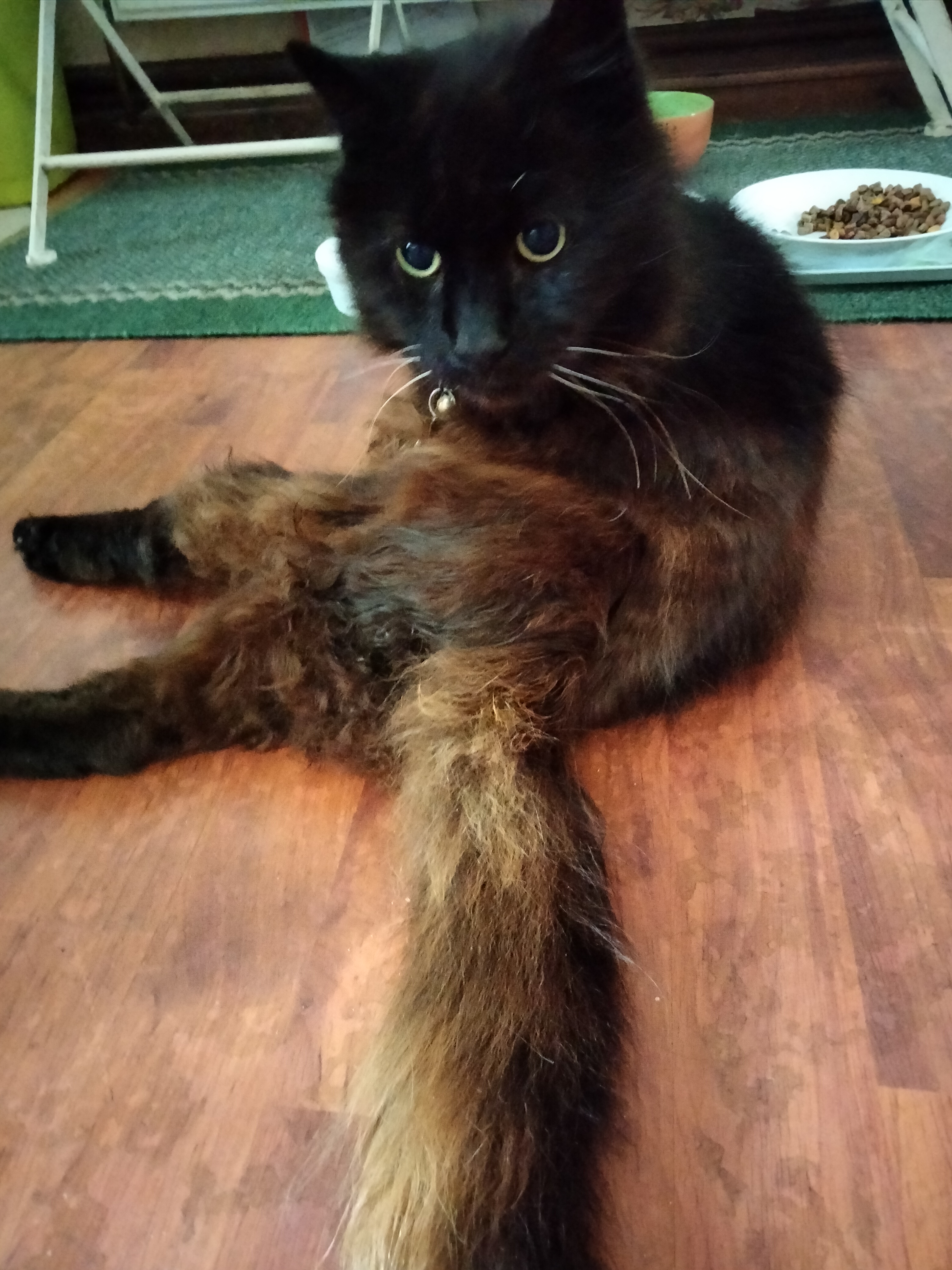
Celebrate #BlackCatAppreciationDay. You are very welcome to join Valerie Bence and I. I will feature your published/unpublished poetry/short prose/artworks about/mentioning black cats. Please include a short third person bio.

pilchCat        feline anorexia        draft


Before
‘’Please eat’’ I said as in that remembered time,
to a child, but yellow eyes blink
he turns his head away from food, all food, any food.
I watch his life leak away.

He moves less and less, a fading black line
a kitten curve of spine and hips,
just scaffolding below stretched skin;
had there been snow
he would barely have made a dint.

No more meeting me at the door after work
his call not a meow, more a weakening
duck-like half-quack.
He would perch on my shoulder,
parrot to my pirate, balancing

light as a feather on the birds he watches
no energy for anything but purring.
Back at the vets he was well-behaved, compliant –
wise he seemed, as we discussed life and death;
a week of treats and love, sleeping on my bed

after
then, a single needle in cool black coat,
between one breath and another he left afloat
on dreams of owl prowls. The tiny tinny bell I still hear
would tell of ins and outs in dark and light
and all the gifts brought in from night.

After, I look up and notice a bundle of balloons
caught high in the aspen over the road,
they deflate slowly one by one.
I loved enough to do it. Watching the trapped balloons
I hope someone loves me enough to do the same.

-Valerie Bence

Bios and Links

-Valerie Bence

After a university career, Valerie completed a poetry MA at MMU in 2018. She is an ekphrastic poet encompassing artworks, truth, memory, place and time. Her first collection was Falling in love with a dead man (Cinnamon Press 2019) and second Overlap (the Emma Press 2022). She was shortlisted for the Poetry School/Nine Arches Primers 4 (2018), Fish Poetry prize (2019), longlisted for the Ginkgo Prize (2019) and has poems in several anthologies. She has worked with the British Museum and the Scott Polar Research Institute in Cambridge. She is a Mum and a Nonna and lives in Bucks.