
Oh, the ache of memory
Mnemonic scallops
The night you came to me as an orphan the clouds were the also,
Except moonlit
so you were that and thus with us
a decade and more
Su Zi
Oh, the ache of memory
Mnemonic scallops
The night you came to me as an orphan the clouds were the also,
Except moonlit
so you were that and thus with us
a decade and more
Su Zi
*****
Iris Ann Lewis: Poem

THE BELLS OF LÜBECK
Plango
I ring.
Incantation
I
scatter the winds,
disperse the clouds,
break the thunder,
shatter lightening,
warn of fire,
drive out plague.
My voice is the slayer of demons
Marienkirche
Vivos voco, mortuos plango
High up in the belfry
they swung free,
called the living,
mourned the dead.
A moonlit night,
the bells were still,
the town slept.
Out of darkness
bombers flew.
Fire blazed.
The bells rang out a warning
as they were falling,
falling.
They lie broken on the floor.
But though these iron tongues are mute,
still they hum a muffled tolling.
Plango mortuos plango mortuos plango mortuos plango…
Weight
What is the weight of peace?
This bell is freighted with it.
Three tons of bronze
to balance out war’s hate.
So heavy it can barely swing.
Its slow momentum gathers pace.
Its…
View original post 223 more words
 invented by Charles A. Stone: The rules are
1. Trimeric has 4 stanzas
2. The first stanza has 4 lines
3. The other three stanzas have 3 lines each
4. The first line of each stanza is a refrain of the corresponding line in the first stanza (so 2nd stanza starts with the second line, third stanza starts with the third line, etc.)
USEFUL LINKS
https://dversepoets.com/2021/06/17/poetry-form-trimeric/
https://www.writersdigest.com/write-better-poetry/trimeric-poetic-form
I love Carson Pytell’s work. It reminds me of Charles Bukowski and Fredrich Exley. It reminds me of Kevin Ridgeway and John Fante. It reminds me of the kind of fiction that a lot of us were trying to do when I lived and worked in Long Beach. So many of us who studied under Gerry Locklin and Ray Zepeda were going after a kind of gritty realism, and some of us accomplished the spirit and tone. Others did not. I never did to the degree that I wanted to, and so I shifted to different kinds of writing. Pytell, however, is a kind of master of this type of writing, and his fiction collection,Willoughby, New Yorkis powerful work, the kind that I was reaching for back in those days. His chapbook reaches the kind of humanity most of these writers are striving for as he often focuses…
View original post 445 more words
I’m delighted to have poet, Regine Ebner all the way from Arizona, kick of the Tuesday Guest Feature on Patricia’s Pen for 2023. Regine is a favourite poet of mine and one of great inspiration with her wonderful imagery. She has come along to blog about her writing life so without further ado, let’s go over to Regine.
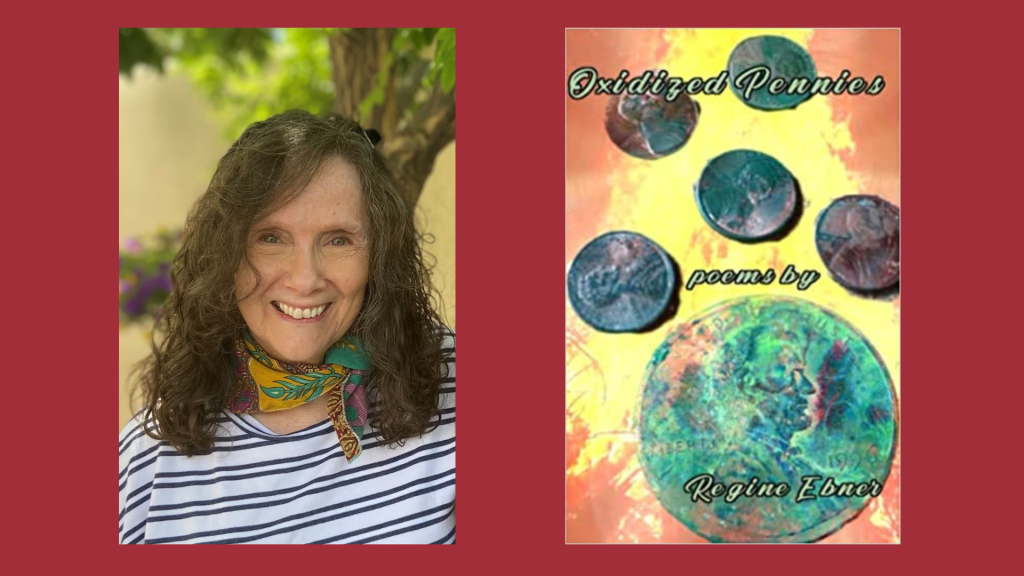
Regine Ebner
Ever since my third grade teacher asked me to write the Thanksgiving class play, I was expected to be a writer. I went on to study creative writing in college and won awards. I co-authored a stage play, Minor Details, which was produced to be a sell-out to laughing crowds in Tucson. Later I wrote a screenplay and, although never produced, it won a couple of awards.
However, something was missing. I had long gaps between articles and journal chapters and, most of all, I…
View original post 330 more words
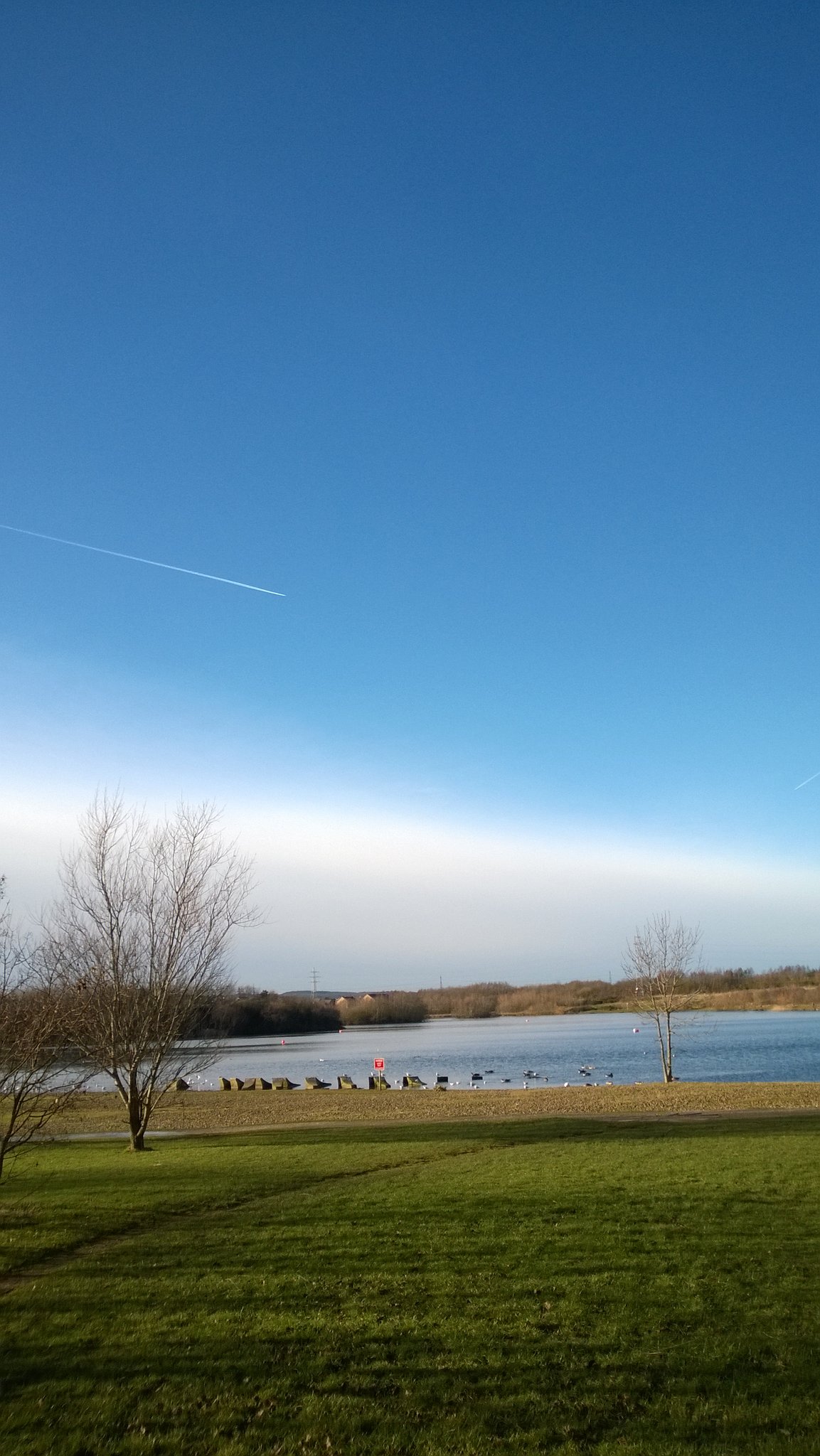
Shooting through the sky.
Like an arrow shot from heaven above
Or just a mundane plane
on it’s way to some tourist destination
Summer is in full flow
and emptiness abounds
a scene from a park
before all goes dark
Francis H Powell
Bios and Links
Francis H Powell
Born in 1961, in Reading, England attended Art Schools, receiving a degree in painting and an MA in printmaking. He has had different books published and compiled Together Behind Four Walls, a book raising money for Marie Curie Nurses.
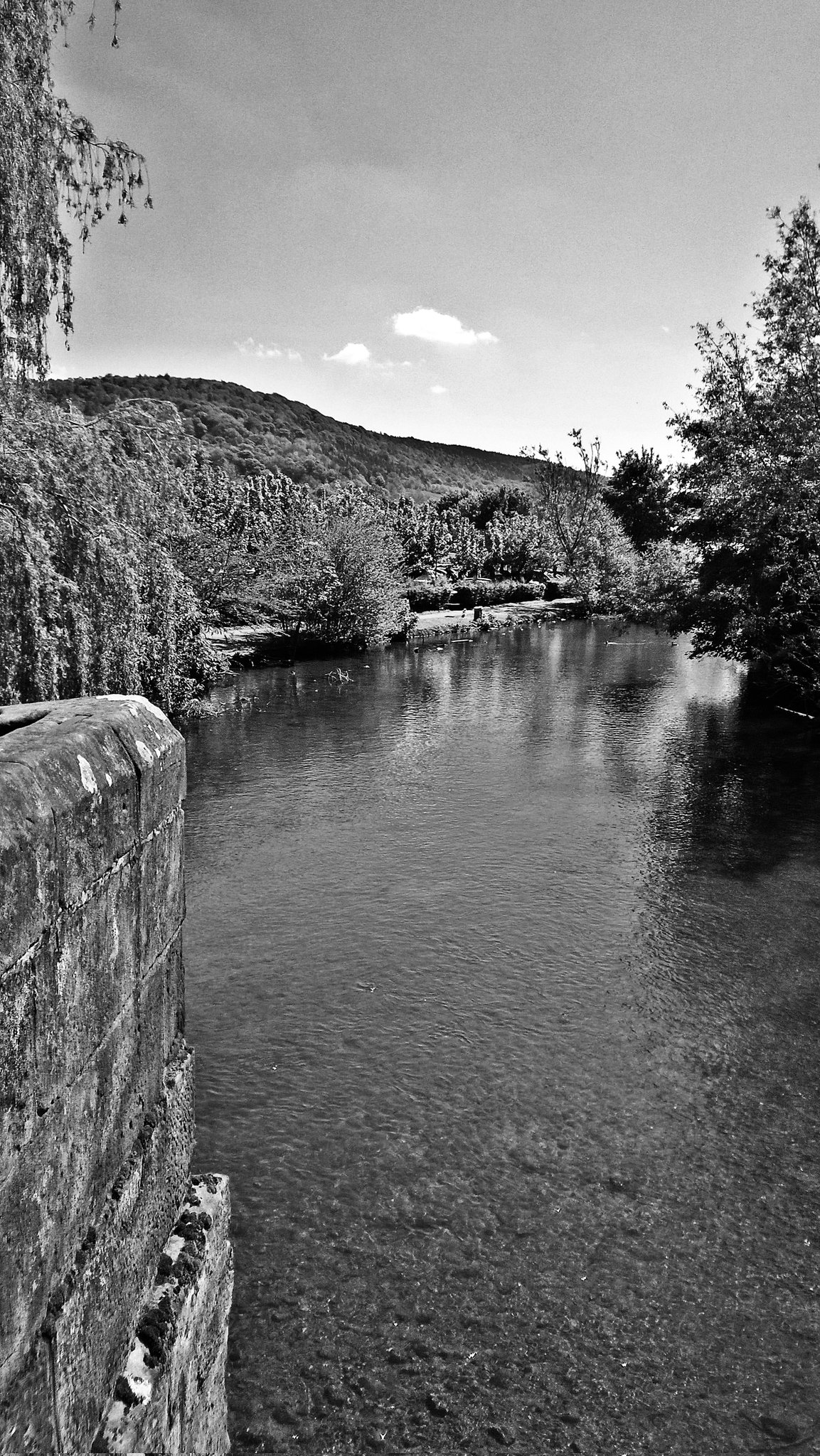
The cold stone wall
eyes the river
as it gently ambles on
There’s a gentle breeze
but all is immersed in
a deep repose
Francis H Powell
Bio and Links
Born in 1961, in Reading, England attended Art Schools, receiving a degree in painting and an MA in printmaking. He has had different books published and compiled Together Behind Four Walls, a book raising money for Marie Curie Nurses.

Etched in craggy wood
A life full of history
and days gone by
Eternally there
for ever
but ignored by all passers by
Francis H Powell
Bio and Links
Francis H Powell
Born in 1961, in Reading, England attended Art Schools, receiving a degree in painting and an MA in printmaking. He has had different books published and compiled Together Behind Four Walls, a book raising money for Marie Curie Nurses.
This was last week’s poetry form chosen by Paul Brookes. You can read the contributions here.
I almost didn’t attempt this one, a complicated Irish form with rules I didn’t understand at first reading. I let it simmer overnight and woke with a first line and an idea of the first stanza. When I wrote it down, it turned out not to work, but I thought I could see how to fix it.
First, I wrote down what I knew about the form in simple terms: quatrains, lines of six syllables, rhyme scheme abcb, end rhymes bi-syllable words, consonance in lots of places, alliteration in every line, and it ends with a dunedh (opening line or word ends the poem).
Constructing the poem was like putting together a jigsaw puzzle. I started at the end, picked a two-syllable word that could both open and close the poem, then wrote a…
View original post 210 more words

1.
I watch the tide turning:
waves gather, churn, repeat
like memories, fleeting.
I yearn to press delete.
2.
Listen to them calling –
tawny owls, in fading
autumn light. Leaves falling
like tears, these woods mourning.
Hunter’s Moon has risen.
Silver light beams glisten
through trees. In the distance
an owl still calls. Listen.
How did it go?
There seem to be several variations of the rinnard so I’ve written two versions. It took me a while to connect with the movement of this form and to sense its rhythm and music. The most challenging aspect for me was the constraint of di-syllabic words at the end of every line.
Marian Christie
Talking to a Raven
Small talk on nonsense day.
A bric-a-brac sunshine.
Come taste new spring delight.
Forget today’s waistline.
We fled Red Robin Road.
I had a heartache, son.
What’s coming next, who know —
The weight of life – a ton.
——
The Struggle
Talking down from the trees
Squirrels and chipmunks chase
Raven drops from its perch
Can’t look you in the face
Garbage goes up the hill.
Walk a trail till midnight.
On the lake float dead fish.
Rainbow in rain’s flashlight.
How did it go?
The Rinnard is an Irish quatrain form, using abcb end-rhymes. They can be one stanza or more. I settled on two quatrains for each piece. I think in the end, I wrote two gentle irreverent rural poems, revenants from the past, glimpses of contained moments that emerged somehow out of the history and contemporary eliding in the forest I’m very fortunate to be able to visit, at times, in the summer months. I enjoyed playing with the Rinnard form; the setting seemed to inform where I went, the poems as if writing themselves, like a player-piano. I kept changing words around however, from common 1-2 syllable words, to try other words to give the poems a bit more of an oblong narrative slant, both specifically, and in the hope to entertain the magic of something unexpected.
Robert Frede Kenter
When will winter
Water, wild wind again,
gun-grey this cold dawning,
such a damp, dull refrain,
no frost, mournful morning.
Pure snow should be falling,
thick the fast flakes flying,
cover with cold fingers,
fields of green grass dying.
Fill, ice ferns, the meadow,
summer’s snow-white daughter,
teeming spring’s sharp shadow,
whose breath stills well water.
Spring a-coming
Flowing fast the stream now,
drowning dead leaves, swelling
buds. Bird tongues sip sweetly,
their spring stories telling.
Beneath brown leaves billowed,
piled pillows, so lightly
tossed, brisk wind-turned, burgeon
spring spears, budded tightly.
In the hedge, blackbirds furze-
fuss, fierce wind still blowing,
but briar-bound hare sits,
sniffing spring air flowing.
How did it go?
I almost didn’t attempt this one, a complicated Irish form with rules I didn’t understand at first reading. I let it simmer overnight and woke with a first line and an idea of the first stanza. When I wrote it down, it turned out not to work, but I thought I could see how to fix it.
First, I wrote down what I knew about the form in simple terms: quatrains, lines of six syllables, rhyme scheme abcb, end rhymes bi-syllable words, consonance in lots of places, alliteration in every line, and it ends with a dunedh (opening line or word ends the poem).
Constructing the poem was like putting together a jigsaw puzzle. I started at the end, picked a two-syllable word that could both open and close the poem, then wrote a six-syllable first line. Second line needed a two-syllable end word that would rhyme with the fourth line, so I chose two words, filled in the second line with alliteration, wrote the fourth line with its rhyme, consonance and alliteration, and finally filled in the third line.
The third stanza had to end on the opening word, so that was the end-rhyme sorted out. Alliteration and consonance are easy to play with so it ended up not being the monster I had anticipated. I even enjoyed writing this and have written a couple more.
Jane Dougherty
Cold Wind Howling
A cold wind is howling
across a bleak country
where lean wolves are growling
and hungry for vengeance.
But where are the people
who pray in our churches?
Look to God in steeples
and don’t see the paupers.
Let’s treasure the homeless
and feed all the migrants
reject all the soulless
and welcome all humans.
For doctors, for nurses,
for drivers, and porters;
dip into your purses
and thank them for kindness.
So come all ye faithful
and gather, you pagans;
reach out and be grateful
for all of your riches.
How did it go?
I struggled with this at first and wondered if I’d manage even two stanzas, but once the first line came to me and I matched the first rhyme the rest of it flowed out. I think the majority of people in the UK are decent people and want to be kind and generous to the less fortunate. Probably true in the US too. However there’s a large and vocal minority who make our country a difficult place to like at times. Stanza four is an obvious and specific UK reference to the problems with the underfunding of the health service and the demonising of people who literally put their lives on the line during the pandemic.
Thanks to Ian Parks for the title and Tracy Dawson for the improvements.
Tim Fellows
Bios and Links
Marian Christie
was born in Zimbabwe and travelled widely before moving to her current home in Kent, southeast England. Publications include a chapbook, Fractal Poems (Penteract Press), and a collection of essays, From Fibs to Fractals: exploring mathematical forms in poetry (Beir Bua Press). Her new collection, Triangles, is forthcoming from Penteract Press in April.
Marian blogs at http://www.marianchristiepoetry.net and is on Twitter @marian_v_o.
Robert Frede Kenter,
writer & visual artist, publisher of Ice Floe Press http://www.icefloepress.net, author of EDEN and other works.


 The Wombwell Rainbow