Wombwell Rainbow Interviews: Nolcha Fox


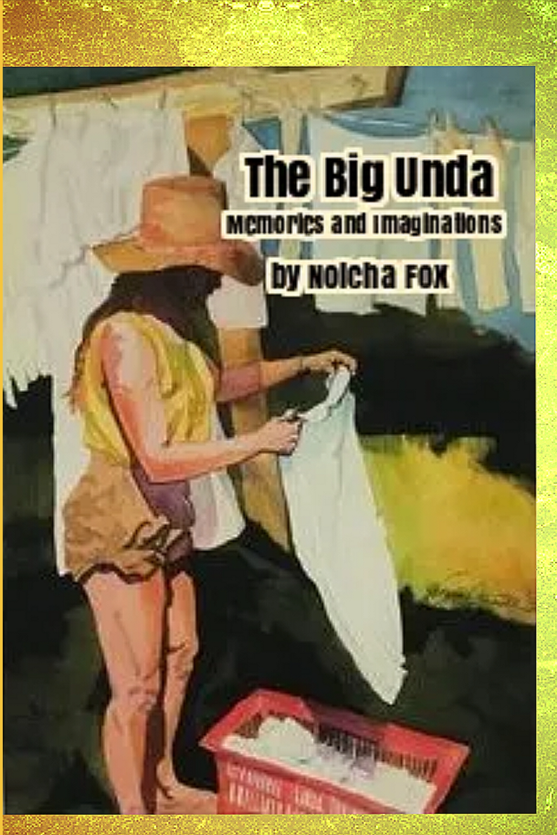
Nolcha Fox

Nolcha’s poems have been published in Lothlorien Poetry Journal, Alien Buddha Zine, Medusa’s Kitchen, and others. Her poetry books are available on Amazon. Nominee for 2023 Best of The Net. Editor for Open Arts Forum. Accidental interviewer/reviewer. Faker of fake news.

Website: https://bit.ly/3bT9tYu

The Interview

1. When and why did you start writing poetry?

I wrote some ghastly poetry when I was journalling in my 30s. I tossed all my journals in a trash bin (years and years of writing), and thought I was done with it. Unfortunately, I gave my mother copies of some of the poems. She sent them to me recently. I was so appalled, I wanted to blast out of the universe.

I started writing poetry seriously a little over a year ago, and was astonished that editors wanted to publish it. One of my dear friends (an incredibly talented poet herself) suggested that I try it because it wouldn’t strain my very soggy brain. I was recovering from 7 years of migraines and the medication that only made me feel worse, and I simply didn’t have the focus to go back to short story writing.

2. Who introduced you to poetry?

I don’t remember when or how it happened, but as a child, I fell in love with the rhythm/rhyme and pure silly fun of Dr. Seuss books. I graduated to Alice in Wonderland, and was enchanted by its poetry, some of which I can still recite by heart decades later.

3. How aware are and were you of the dominating presence of older poets traditional and contemporary?

I am aware enough of traditional poets, but I’m not much attracted to their work. Considering how much I loved the singsong rhymes in my childhood, it amazes me how difficult it is for me to read through much of it.

However, I love Edgar Allen Poe’s poems (I have a streak of dark in me) and Robert Frost poems. I don’t know if you’d call them traditional or contemporary. My sense of time is fractured, and I’m not at all scholarly about poetry.

I’m still discovering contemporary poets. I run across them in workshops and writing groups. First things every morning, I read works from other poets. Some motivate me to write a response poem.

4. What is your daily writing routine?

I usually write in the early morning. But it’s not unusual for me to write early evening and to get out of bed around midnight and write some more.

5. What subjects motivate you to write?

I prefer to write from prompts. Prompts can be images, a phrase, a word, another poet’s poem, or something that happened during the day. I can write about almost any subject, including dust bunnies, vampires, Big Foot, and penguins.

I’m a big fan of Medusa’s Kitchen, and I publish there at least twice a week. Kathy Kieth, the editor, has a great list of prompts. She also posts a new phrase or word prompt on Tuesdays, and an ekphrastic challenge on Fridays.

I always participate in the April NaPoWriMo (National Poetry Writing Month). Several sites post a new prompt every day in April.

In November, Writers Digest holding a Poem A Day challenge, posting a new prompt every day. At the end of the month, poets can submit a 10-poem chapbook to Writers Digest, culled from the poems written during the month. I’m so on it!

6. What is your work ethic?

I write like my hair is on fire. My poems are typically short, and once I get going on a poem, I can typically finish it within 10 minutes.

If a poem is truly bad but I might be able to salvage something from it, I put it aside. If it’s irredeemable, it goes bye-bye.

I do hit a slump sometimes, where no poem wants to associate with me and flees to another continent. Occasionally, writing about not being able to write gets me excited. Usually, I slump around and moan that I’ll never write again until the day the muse smacks me on the cheek, and I go back to poeming.

7. How do the writers you read when you were young influence your work today?

Seuss and Poe and Carroll burned rhythm into my bones. Most of my poetry, if read out loud, tastes like a heartbeat or a train clattering down a track.

8. Whom of today’s writers do you admire the most and why?

I don’t have a favorite writer, probably because I’m leery of writing exactly the same as that person (it’s easy for me to become a mimic). It’s taken me most of my life to write like me.

9. Why do you write, as opposed to doing anything else?

Writing is an obsession. I’ve written all my life. Even when I pretended writing wasn’t important, I was obsessed with it.

10. What would you say to someone who asked you “How do you become a writer?”

I would tell that person to just sit down and write. And write. And write.

11. Tell me about the writing projects you have on at the moment.

I’m currently collaborating with Ken Tomaro, and collaborating on and off with a previous co-worker who now is painting in watercolor. As I receive requests, I interview literary magazine editors, authors, and artists. I also have to work on more fake news flashes for The Gorko Gazette.

12. How did you decide on the order of the poems in the book?

Don’t laugh, I’m making life as easy as possible for my crazy brain – they’re in alphabetical order. Easier to keep track of.

13. How did you choose the photos for “How To Get Me Up In The Morning” or was that a collaborative effort?

My collaborator chose photos based on the poems. Jill typically gave me 1-3 photos to chose from.

13.1.  What ideas did you use to make the choice?

I chose the best photo based on how it related to the poem. I also considered colors and composition. And humor.

14. Why did you decide to use figures like Icarus from old myths and legends in this book?

I wanted to submit to Lothlorien Poetry Journal. My first read of the site was that Strider was looking for poetry with a classical theme, so I decided to work up some poems around myths and legends. At about the same time, a poetry prompt wandered across my computer screen, having to do with Icarus. Wings. Birds. Ah, Alfred Hitchcock’s “The Birds.” That’s how “Flight School” came about.

15. How important is white space to your poetry?

I see white space as breathing space, a frame of possibilities around the words.

When I read poetry that doesn’t have much white space, including prose, I have a physical reaction of claustrophobia, and I struggle to breathe as I read.

15.1.  White space as a reason for your preference for short form poetry?

White space is an important factor. My aim is to present one thought, one focus, using words that will make my readers think. Or at least laugh.

15.2. One thought, one focus, rather than an exploration of that thought or focus?

I leave it up to the reader to explore that thought or focus. I’ve been amazed at the varied responses to my poetry. People have considered things that didn’t cross my mind.

15.3. What appeals to you about this epigrammatic form?

It’s fun to write, and hopefully fun to read. Sometimes I can even wrap something important in the humor.

15.4. Why is it fun to write?

I love putting word images together in new (and often humorous) ways.

15.5. What is important about including humour?

As my husband says, we take ourselves too seriously. The world is so full of gloom and doom and conflict, why add more to the world? A smile is so much more pleasant.

16. After having read your book what do you wish the reader to leave with?

I want the reader to read it again. And again. Some of my readers contact me and tell me that’s what they do.

For people who don’t eat poetry with breakfast, I want them to lick their lips and say, “That tasted good!” and eat another poetry book. Perhaps one of my other books (shameless advertising). Perhaps a book by another poet.

Guest Feature – Alan Parry

Patricia M Osborne's avatarPatricia M Osborne

I’m delighted today to introduce poet, Alan Parry to Patricia’s Pen. Alan is also the editor of poetry press, The Broken Spine. Today Alan blogs about his own writing.

My Writing

Alan Parry

Writing about my own writing is something I often find challenging. But when Patricia offered me an opportunity to discuss my work, I figured I ought to give it my best.

Anybody who has followed my writing career, such as it is, may have heard me discussing my need to write before today as being born out of an inability to create anything of any worth in any other medium. What I’d give to be a talented singer-songwriter or painter! I write because I cannot do these things. What is more, I write poems because I cannot write good comedy. I have fallen into writing poetry, because I wanted to, no I needed to create…

View original post 433 more words

Poetry Showcase: Stephen Kingsnorth

davidlonan1's avatarFevers of the Mind

Shadowlands

With sunset on some silver, see, clear shadow lines across the way, sharp bars confine and would restrict, prevention, falls, the common plea, ‘we want to keep you safe my dear’, for patient bed would cost too dear. Is there a strand of sand beneath, calm ripples of receding tide, waves’ gentle lapping on the shore - but surely there was space for more? I think her face, expectant, raised, the last of warmth from dying sun, a wistful stare from wispy hair, but his is down, contemplative. Here unities of time and space, their daily pace suspended, hear. This stretch of land, brief marked, their prints, that blanche a whiter shade of pale - yet far beyond the vanish point, perspective dreams horizon sight. It is all screened in black and white, palette retired to monochrome, for those who know life’s not like that; but soon they’ll go…

View original post 1,073 more words

#TheWombwellRainbow #PoeticFormsChallenge. It is weekly. Week Twenty-Five is #IdiomaticPoetry. I will post the challenge to create a first draft of a poetic form by the following late Sunday. Please email your first draft to me, including an updated short, third person bio and a short prose piece about the challenges you faced and how you overcame them. Except when I’m working at the supermarket I am always ready to help those that get stuck. I will blog my progress throughout the week. Hopefully it may help the stumped. Also below please find links to helpful websites.


Idiom poems are poems that contain idioms. Idioms are phrases that are commonly used and have a figurative meaning, which means they have another meaning than what the words typically mean. Idiom poems can rhyme or not rhyme, be short or long, and can be written about anything.


Helpful Links

Idioms in Poetry

https://learningenglish.voanews.com/a/words-and-their-stories-american-versus-british-english/3397694.html


#TheWombwellRainbow #PoeticFormsChallenge. It is weekly. Week Twenty-fifth form is #Idiomaticpoetry. I will post the challenge to create a first draft of a poetic form by the following late Sunday. Please email your first draft to me, including an updated short, third person bio and a short prose piece about the challenges you faced and how you overcame them. Except when I’m working at the supermarket I am always ready to help those that get stuck. I will blog my progress throughout the week. Hopefully it may help the stumped. Also below please find links to helpful websites.


Idiom poems are poems that contain idioms. Idioms are phrases that are commonly used and have a figurative meaning, which means they have another meaning than what the words typically mean. Idiom poems can rhyme or not rhyme, be short or long, and can be written about anything.


Helpful Links

Idioms in Poetry

https://learningenglish.voanews.com/a/words-and-their-stories-american-versus-british-english/3397694.html


On The Found by Mike Ferguson (Gazebo Gravy Press)

tearsinthefence's avatarTears in the Fence

Mike Ferguson hits the found runningin the sweet spot between traditional and digital culture, offering 68 witty and creative poems he has constructed or extracted from a tentative canon of the American novel. No waiting on the muse or bullshit about inspiration: Ferguson rolls his sleeves up and fills the bowl with text, mixes it up, adds something random, then abandons the recipe and shapes his work with the mind’s own cookie cutters.

Leave something behind on a recent trip? Fill out the lost property form to report what was lost and we’ll see if someone has turned it in. Make sure you have printed off leaflets and knocked on all the doors in your road, then make sure you’re certain that your original text was just that, not simply a rearrangement of other people’s words or phrases. I mean you can’t complain about losing what wasn’t yours in the…

View original post 596 more words

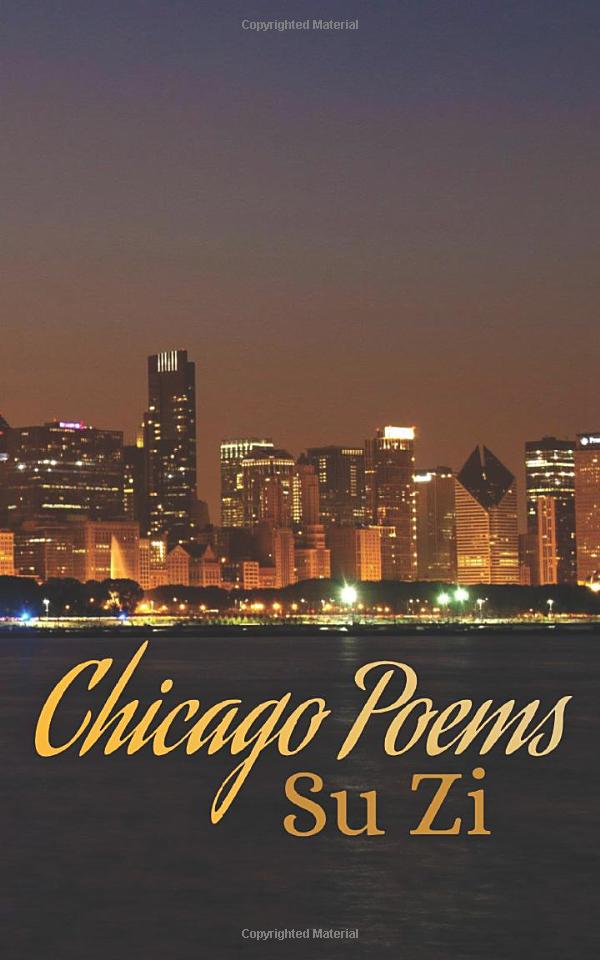
Wombwell Rainbow Book Reviews: Chicago Poems by Su Zi

https://amzn.eu/d/g9aoTCw

Su Zi @xsuzi00
is a poet/writer, artist and editor of Red Mare, a poetry chapbook series; reviews have recently appeared in Handy Uncapped Pen and Rockers For Life. Art offerings are on Etsy (etsy.com/shop/suzi00), which is the only online point of sale for Red Mare, and various other of her work.

The Review

Topped and tailed by epistolic poems this is a fine collection of poems that take unexpected and revelatory detours. The first poem begins “Dear Mom”, the last poem is titled “dear d (August 1983). There is an intense evocation of place and physicality of touch and smell and surreality:

my skin is a desert/complete with a bleached arching bone/ a sticky tongue” (fine point)

Imagism plays a prominent part in her poetry. Personal and urban are intertwined.
How is the city described? Often the colour of the sky occurs:

man, you stand in the street all day and sweat/ and you watch the Pontiac’s go by/and you watch the Chinese mother’s in their pants suits/and you watch the sky get pale and distant/until the night sudzes it over and/darkness pushes you to crumbling cement/corners. (how to)

and then there is the beach of concrete/which is cracked and stony and ends in a great blue lake/or a great steaming parking lot/ (still life)

All the titles are lower case. Narrator recalls her “Gramma”:

Gramma lives in the apartment of beautiful skin/but even so, her second husband is being sucked/out by disease (april eleven)

Her mom and pop:

the smell of Daddy’s shirt collar/and my mother with her black hair slicked back/from her/face, scowling, always ready with her voice/(untitled)

Poem blends into poem. The sense of what the other person is doing:

always there is night/and if I sing hand over your skin/as you watch the shadows of trees like deafness/ from the fields of your breathing/will come iridescence/and the pleasures of hot water…/tumbled not like a shower of rhinestones/but like half remembered vacations/ (magnesium)

there’s the coffee you make/for the feeling of the steam on your face/when the sky is that carnivorous dawn color/and the streetlights are not yet off (choke)

It is a wonderful read, full of magical surprises in language and perspective. Highly recommended.

Poetry Showcase: Victoria Leigh Bennett

davidlonan1's avatarFevers of the Mind

photo from pixabay

Hymn for Committed Lovers 
                                             (A Pantoume) Though love is ever constant in the universe, Yet changes it its dwelling place on rapid feet, Some go from good to bad, others from bad to worse, While some are lucky, seem to keep it for their lives complete. But even then, its dwelling place on rapid feet It may attenuate its steps towards and slow down; While some are lucky, seem to keep it for their lives complete They may still work their way to it with solemn frown. To some, it may attenuate its steps, slow down, And they reproach the fates, the stars, their mates, fell chance; They may still work their way to it with solemn frown Because no longer does it spell to them “romance.” And they reproach the fates, the stars, their mates, fell chance, Unwitting that, they having it, avoid a curse Though…

View original post 1,809 more words

Five Poems – Joshua Merchant

rfredekenter's avatarIceFloe Press

Alt Music to 2007


when it wasn’t my brother and I
it was just me and when it wasn’t

the blunt I knew I couldn’t be or
the smoke I ran away from, spindled

within the confines of my bedsheets,
it was the ragtag bunch pre awkward

and black boom- picture silicon valley,
gentrification extracted; not quite displaced

on purpose, loud sometimes, ashy sometimes,
over it often. I was the goofball. just for them

though. there was no pecking order.
vultures can only spell names when they’re

spoiled and I didn’t speak possum. none of us did.
in my peripheral there’s some guy- chiseled

or something of a brush stroke- and I turn
my head to see my friend making the most

hilarious noise I’ve heard all week and I think
to myself how lucky I am to discretely kiki

with a tribe that pushes me to click
the spine…

View original post 1,093 more words