2021 – My Year in Review- Best Books, Best People, Best Moments, Best Foot Forward

wendycatpratt's avatarWendy Pratt

Photo by Aaron Burden on Pexels.com

A Round Up of 2021

How is it almost New Year’s Eve 2021? This year seems to have zipped by in a flash. For once, it genuinely feels like I have made real, solid progress towards my big life goals. Buckle up for my yearly rambling round up.

Health and Wellbeing

Mainly, the year has been about dealing with the emotional fall out from Chris’s stroke. For many reasons, recovery for Chris has been easier than acceptance of the future as someone who has had a stroke. What do I mean by that? Chris is a very positive person, very stoic. Chris is also very goal motivated, he was very fit before the stroke and when he came home from hospital in July last year, he set himself a series of goals to get him back to health, back to the gym, back to…

View original post 2,858 more words

Poem published in Social Alternatives

Thom Sullivan's avatarThom Sullivan

My poem ‘Kinesis, Kenosis’ has been published in Social Alternatives’ ‘Poetry to the Rescue: Special Poetry Issue’, volume 40.3. Many thanks to the Poetry Editor, Aidan Coleman.

View original post

New Pamphlet Announced

grbed's avatarSamuel Tongue

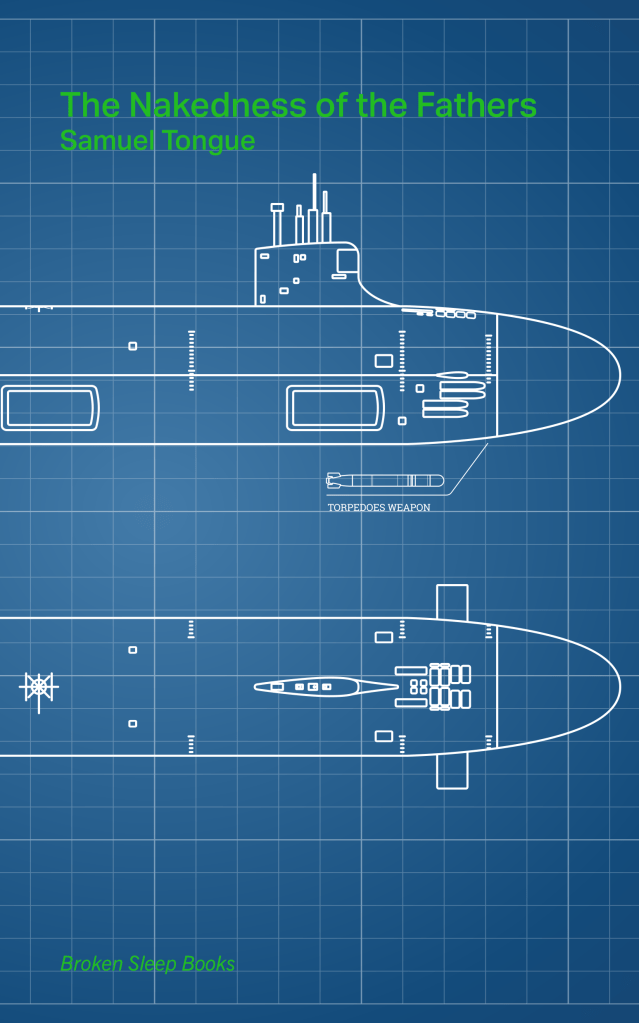
I am very pleased to say that my new pamphlet The Nakedness of the Fathers will be published by Broken Sleep in February 2022. There will be more launch details closer to the date but here is a wee preview of the cover to get you in the mood.

View original post

Overdue Book Review #1: Elizabeth Gauffreau, Grief Songs

merrildsmith's avatarYesterday and today: Merril's historical musings

Grief Songs: Poems of Love & Remembrance

Elizabeth Gauffeau’s Grief Songs is a short book that leaves a long, lingering presence. The book is a collection of personal photographs paired with mostly tanka poems. (A tanka is a 5-line poem typically written as syllabic lines of 5-7-5-7-7). This means that each poem is a sharp distillation of a moment, an event, or even the history of a relationship between parents, between her and her parents, or between her and her brother.

Because the poems are brief, the book can be read very quickly. However, a reader who lingers over words and photos will be rewarded. The poems and the feelings behind them grow with repeated readings. I must say that sometimes I was left wondering what happened. This is not a criticism of the poems, but rather, my own curiosity about people. “Youth Group Picnic,” for example, gives us a…

View original post 351 more words

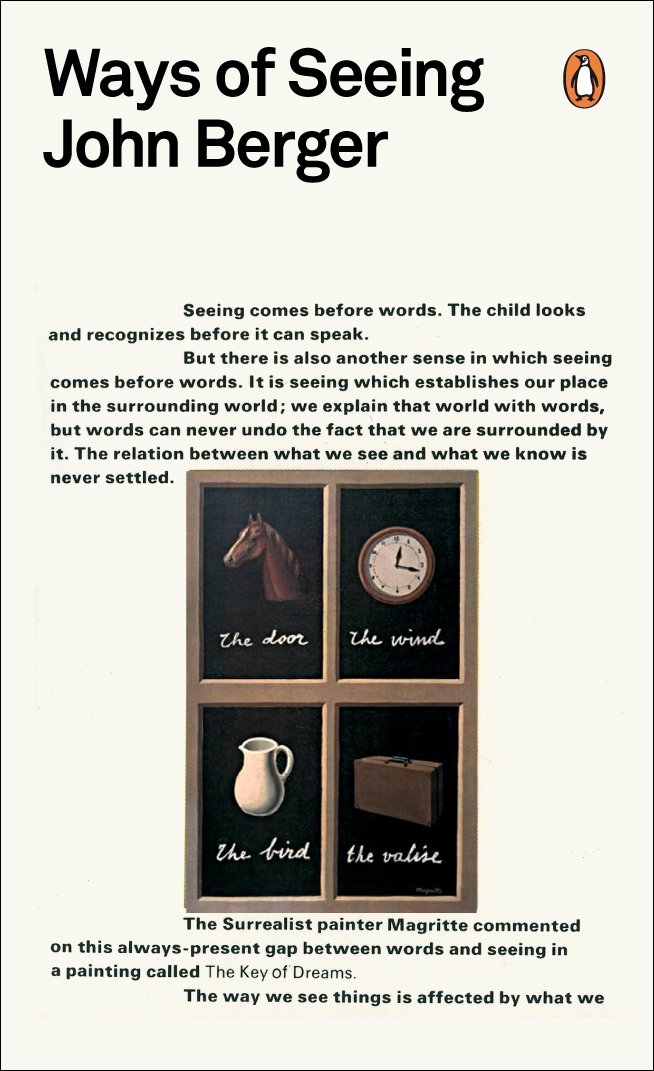
In celebration of fifty years since John Berger’s “Ways Of Seeing” was broadcast in January 1972, I welcome you writers and artworkers to join me in a week long look at what he had to say, and how we might ekphrastically comment on the artworks he looked at, particularly painting and photography. It would be ideal if you could read the book beforehand, but not necessary. The challenge will run from January 9th-15th, and use the artworks he used as a prompt for each day. The first day features Magritte’s “The Key Of Dreams”. See below.

WOS front coverWos first page, John Berger

The Night We Were Dylan Thomas by Mara Bergman (Arc Publications)

tearsinthefence's avatarTears in the Fence

The opening poem of Mara Bergman’s well-structured second full collection looks back to her first, with that book’s many pieces about or inspired by museums, galleries, photography and childhood. Subsequently, though, it stays largely with personal events, first in New York (city, upstate and Long Island) and then in England, with visits and phone-calls keeping the poet in contact with her mother back in the US. We witness her mother’s increasing infirmity, her move to a home, and her death and its psychological aftermath. The mood eases with holidays (Greece, Andorra, Norfolk) and day-to-day life in Kent, before it reprises the theme of infirmity, now in the poet’s own body. There are several poems, smiling through the pain, about how an injured body-part can make itself a constant focus of attention. This time, however, there’s a reasonably happy conclusion as the injury recedes but leaves as a psychic residue the…

View original post 375 more words

Wombwell Rainbow Ongoing Book Interview: “Spoil” by Morag Smith. Question 7.

this  is the link

https://www.brokensleepbooks.com/product-page/morag-smith-spoil?fbclid=IwAR0aMNZOoIKgql0pIKtSrsE1Y50rfuERQ7IT1s_HsEeMXtikCapNBzv5ero

-Morag Smith

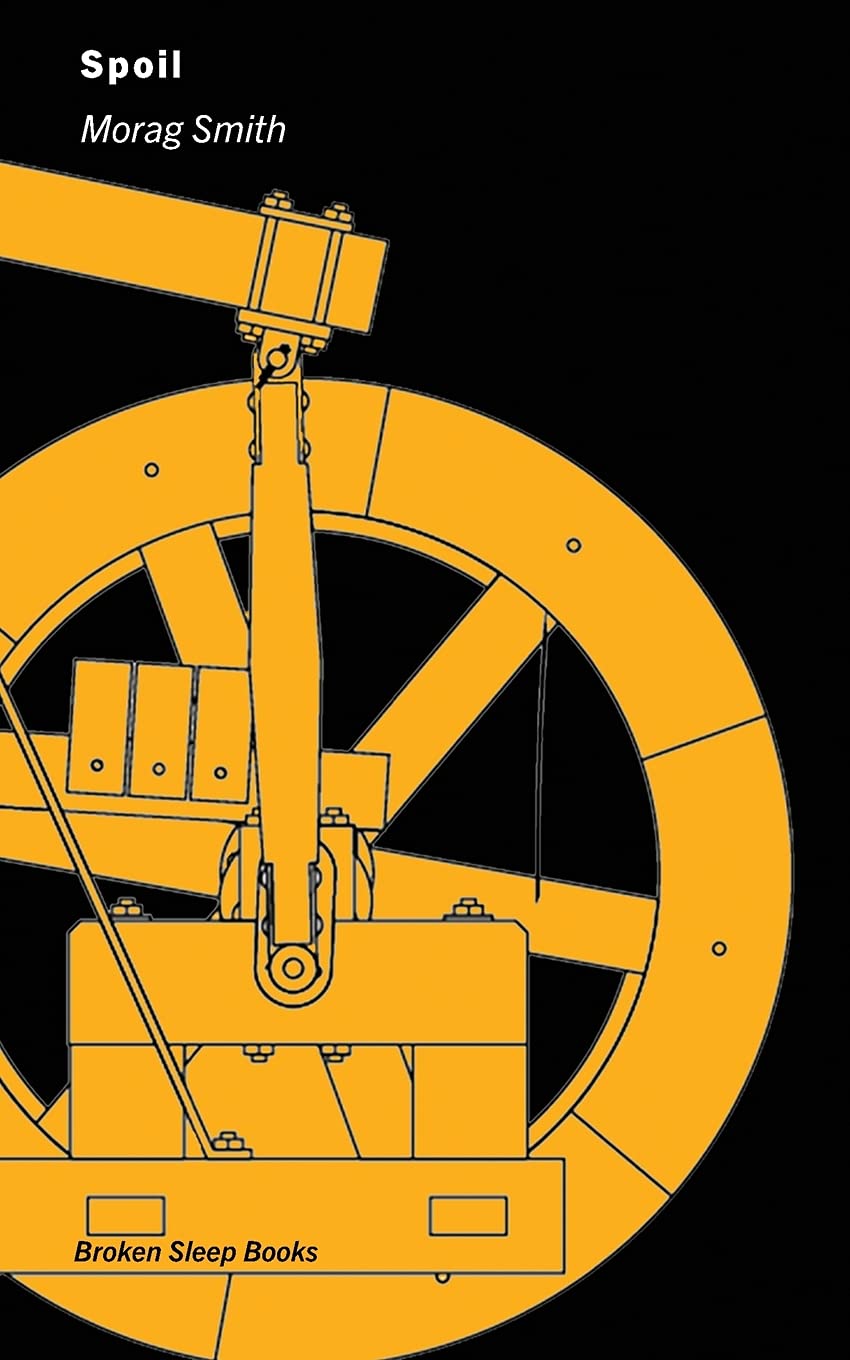
is a Cornish poet, painter, writer, and performer. She graduated in 2020 with a first in Creative Writing from Falmouth University, winning a prize for her dissertation. In 2018 she won the Cornwall Contemporary Poetry Festival, Shorelines competition. Her pamphlet, Spoil, was published by Broken Sleep Books in October 2021. Her poetry is published in various literary journals including International Times, as well as the eco-anthology, Warming! As a New Traveller she brought her children up close to nature, in trucks, caravans, and houses. She writes about her experiences, about our ravaged landscape, and bears witness to the poverty of British people. At the moment she is publishing a book of poetry about plastic pollution in our oceans, a collaboration with artist Jasmine Davies, and the Clean Ocean Sailing charity.

The Interview

Q.7: Once they have read the book what do you hope the reader will leave with?

There is so much misunderstanding and derogatory media rhetoric concerning New Travellers, an almost entirely negatively biased reportage. In my experience this is unfounded and New Travellers are for the most part environmentally minded, anti-capitalist, humanitarians. By bringing the reader into my world for a while, I hope to demystify the culture, building bridges that enable house dwellers to approach with a more open mind. That the reader might understand better the practical, ecological choices that are made because one lives close to the earth, identifying with the pain she suffers as a result of human abuse and complacency. In Spoil I empathise with the post-mining landscape and the damaged earth, I want the reader to leave feeling that relationship within their own body. I want them to feel more open hearted and responsible towards Travellers and the planet.

*******

Wombwell Rainbow Ongoing Book Interview: “Spoil” by Morag Smith. Question 5.

this  is the link

https://www.brokensleepbooks.com/product-page/morag-smith-spoil?fbclid=IwAR0aMNZOoIKgql0pIKtSrsE1Y50rfuERQ7IT1s_HsEeMXtikCapNBzv5ero

-Morag Smith

is a Cornish poet, painter, writer, and performer. She graduated in 2020 with a first in Creative Writing from Falmouth University, winning a prize for her dissertation. In 2018 she won the Cornwall Contemporary Poetry Festival, Shorelines competition. Her pamphlet, Spoil, was published by Broken Sleep Books in October 2021. Her poetry is published in various literary journals including International Times, as well as the eco-anthology, Warming! As a New Traveller she brought her children up close to nature, in trucks, caravans, and houses. She writes about her experiences, about our ravaged landscape, and bears witness to the poverty of British people. At the moment she is publishing a book of poetry about plastic pollution in our oceans, a collaboration with artist Jasmine Davies, and the Clean Ocean Sailing charity.

The Interview

Q.5: As a visual artist, how do you use the white space on the page?

The white of the page is like the hub of a wheel or the space inside a cup, it gives meaning and function to form. Inside an atom is mostly space, it is the dominant feature of the universe, form and emptiness are essentially one as they cannot exist without each other. Space enables the poem to be, so I craft it with equal care.

*******

More answers to follow.

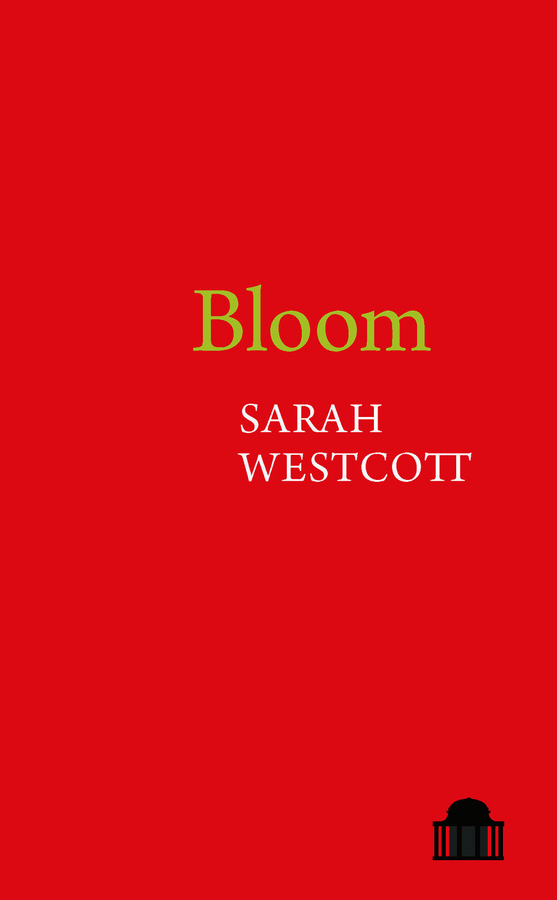
Wombwell Rainbow Ongoing Book Interview: “Bloom” by Sarah Westcott. Question 3.

Bloom

-Sarah Westcott

grew up in north Devon and lives on the edge of London. Her first pamphlet, Inklings, was a Poetry Book Society pamphlet choice and Slant Light (Pavilion Poetry, 2016), was highly commended in the Forward Prize. Her second collection, Bloom, also with Pavilion Poetry, was published this year. Sarah was a news journalist for twenty years and now works as a freelance tutor and writer. Work has appeared on beermats, billboards and buses, baked into sourdough bread and installed in a nature reserve, triggered by footsteps.

Q:3. How important is nature in your poetry?

Nature is around and within us; language is nature too. The poem is a kind of sensory organ that noses about, a tool to filter the non-human world through language; a way of reaching or rooting into that vexed space between human and non-human that we innately recognise as part of us.

There is a beautiful quote from John Clare in which he says ‘I found the poems in the fields, and only wrote them down’. I don’t mean to say I wander around in fields collecting poems like butterflies (although that does sound quite idyllic) but I find inspiration where we live on the edge of London. It is quite a traffic-heavy environment but it is also where the city begins to unravel into something less tightly packed and built-upon. I can look out of the window and see the Dartford Crossing and also the office blocks of London. I went purposefully and a bit self-consciously to encounter Nature in the North Kent marshes and was amazed to hear nightingales singing in the middle of the day. But in the poems, as in my own experience, the beyond-human comes in as a protagonist itself, more than a setting.I think it has seeped into me and is the poem as much as I am, if that makes sense.

Our garden, the skies over it, and the small river that runs near, the patch of ancient woodland, Greenwich Park, the roadside verges with lizards and vetch, all these places are in me, and in the poems. A lot of the time, in the first lockdown last Spring, I looked out of the window at the beauty of the world, especially in the early evening. I was behind glass but I could feel and smell the intensity, the conditional fragility of the trees, pear blossom, bird song, sirens.

*******

The best place to buy a signed copy is to contact her directly (send a DM on twitter) or email Sarah.westcott@tiscali.co.uk

*******

More answers tomorrow.

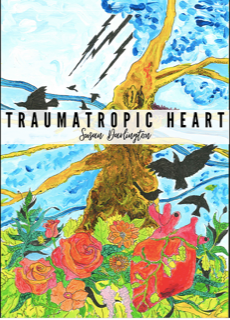
Review of ‘Traumatropic Heart’ by Susan Darlington

Nigel Kent's avatarNigel Kent - Poet and Reviewer

I think it’s rather appropriate that I close this year of drop ins and reviews with Susan Darlington’s Traumatropic Heart (Selcouth Station Press, 2021). Whilst this is her second publication it is typical of the exciting new talent that I hoped this blog would celebrate and publicise. The title is the perfect signpost for the collection. The word, ‘traumatropic,’ was a new one to me. Just in case it’s the same for you, let me explain. I believe it describes the regeneration or regrowth of a tree or plant as a result of some earlier catastrophic damage. Not only does this word flag up the characteristic natural imagery that permeates this chapbook, it signals the narrative line of the poems around which they are structured, taking us through trauma, survival and then regeneration.

Let’s start by looking at some of the earlier poems that develop the signpost of the title…

View original post 934 more words