
Andrew Ray Williams reading his poetry
-Andrew Ray Williams
is a poet living in Pennsylvania, USA. His work has been featured at Ink, Swear & Tears, Red Eft Review, The BeZine Quarterly, among others.
Poetry Website: andrewraywill.wordpress.com
General: andrewraywilliams.com
The Interview
When and why did you start writing poetry?
I began reading and writing poetry a few years ago as I was nearing the completion of my PhD at Bangor University (Wales). Prior to this, I would enjoy reading fiction and non-fiction, but I had never seriously engaged in poetry. In high school, I was introduced to the likes of Wordsworth, Dickinson, Frost, among others. However, at the time, I mistakenly assumed that poetry was nothing more than a hunt for meaning. In my mind, poetry seemed like a reader’s Rubik’s cube. It was not until I was an adult that I discovered my initial impressions were crudely mistaken.
In addition to teaching Christian theology, I also serve as a pastor of a church in Pennsylvania, USA. Oddly enough, my perspective on poetry began to change as I started to do more preaching on the Psalms in my local church. Reading and reflecting on these ancient poems drew me in, not only spiritually but literarily. How was I to expound on the Psalms with such little knowledge of poetics? This led me to read poetry.
Who introduced you to poetry?
As my story reveals, I really fumbled my way into poetry. But as soon as I became interested in it, I began reading voraciously. I soon realized that poetry was a gift I had been missing out on for far too long. I read William Shakespeare to William Blake to Walt Whitman. If I remember correctly, I believe it was Billy Collins’ popular anthology Poetry 180 that introduced me to contemporary poetry.
How aware are and were you of the dominating presence of older poets traditional and contemporary?
Poetry, like any other kind of literature, allows you to converse with the dead. One is not doing their due diligence if they are not becoming acquainted with at least some of the towering figures throughout history. Though I write almost exclusively in free verse, I very much enjoy reading older poets who utilize meter and rhyme. Writing poetry, I think, puts you in the company of many people who have come before you and will inevitably come after you.
What is your daily routine?
I wish I had a daily routine. Amid work and family life, I often must carve out time within a week to sit down, quiet myself, and write. I am not good at writing “on the go”. I need quiet and focused time. However, at the beginning of each week, between my personal and work schedules, I will always pencil in time to write. But, since I am currently contracted to write a non-fiction book, my poetry writing has slowed. However, next week I have already put a block of time in my week to focus on poetry.
What motivates you to write?
A few things. Many of my poems are birthed out of ordinary times with my wife and daughters. Even if they do not find their way into a poem, I am often inspired to write when I am with my family. Also, since I preach in a church setting and teach in a university setting, I find poetry helps relieve me of didactic communication. I find the form is not only beautiful but useful in expressing things I fail to know how to express otherwise. Finally, I write because I love the challenge. Poetic writing can be a great challenge. I enjoy wrestling with words, ideas, emotion, and ink.
What is your work ethic?
I am a self-starter and easily motivated, especially when it comes to writing. I write every week, with the only exceptions being when I am on vacation (and sometimes I will still write a poem). Even if I only have an hour in the week to write, I make sure I do it.
How do the writers you read when you were young influence your work today?
I grew up in “the south”—Texas, USA. However, now I live in Pennsylvania, USA, which is much farther north. People here tell me I have somewhat of a “southern-accent”, though I would never know it. I think writing works in a similar way. I know that my writing voice has been shaped by early influences, but I have little perception of how and to what degree.
Who of today’s writers do you admire the most and why?
Jane Kenyon was the first poet that I really adored. She often wrote brief lyrical poems that centered around place and ordinary life. I appreciate that her poems seem to always have perfect line breaks and I get the impression that no single word could be eliminated. Her husband, Donald Hall, who was also a poet has influenced me, though in other ways. His preoccupation with nature, countryside, loss, and death are themes I find compelling. Early on, he taught me that poetry need not be overly sentimental, though it certainly can be on occasion. Billy Collins taught me the art of being whimsical and talking directly to the reader. Lucille Clifton challenged me to say more with fewer words. Lately, I have been enjoying Philip Larkin (especially his whit) and have also delighted in reading R.S. Thomas’ work. Finally, I must also give credit to my mentor, Matthew M.C. Smith. He has and continues to help me become a better poet.
Why do you write, as opposed to doing anything else?
I love words like I used to love Legos. I enjoy building things out of them.
What would you say to someone who asked you “How do you become a writer?”
Read … A lot (2) Start writing (3) Seek out honest feedback (4) Keep reading
Tell me about the writing projects you have on at the moment.
At the moment I am publishing individual poems in an effort to build a bigger body of work. Once I can accomplish that, I aim to publish a small collection of poems. As I mentioned earlier, I am also currently I am writing a non-fiction book tentatively entitled, Reconstructing Prayer: Navigating the Complexity of Faith Through the Simplicity of Prayer. It should be released in early 2023 with Cascade Books.
Thank you for this opportunity to talk, Paul.











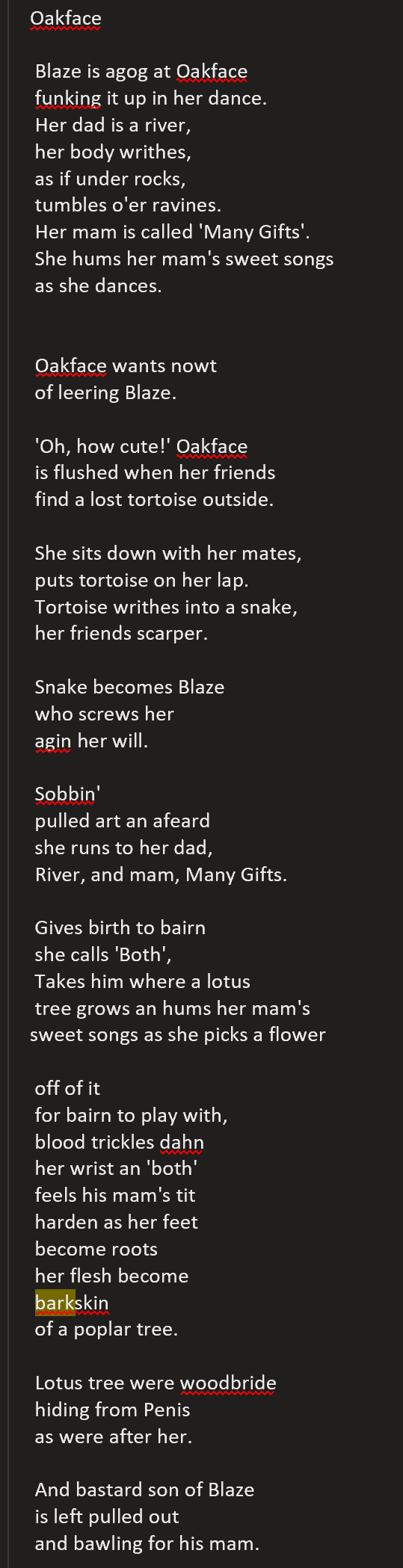 -Paul Brookes (Another dialect retelling of a Classical myth from my out of print “The Headpoke And Firewedding).
Bios And Links
-Paul Brookes (Another dialect retelling of a Classical myth from my out of print “The Headpoke And Firewedding).
Bios And Links

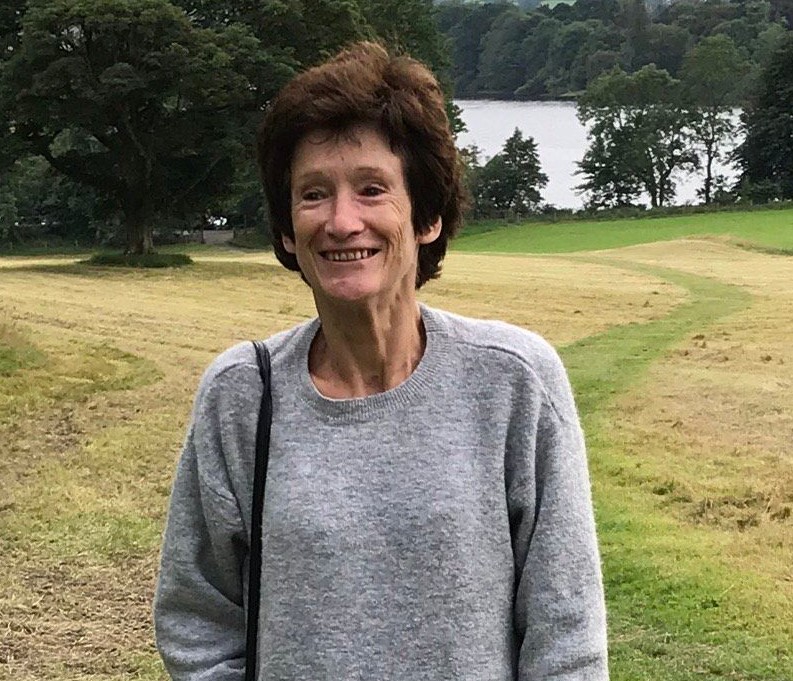
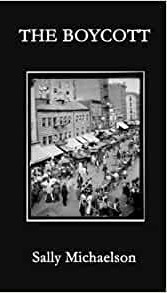

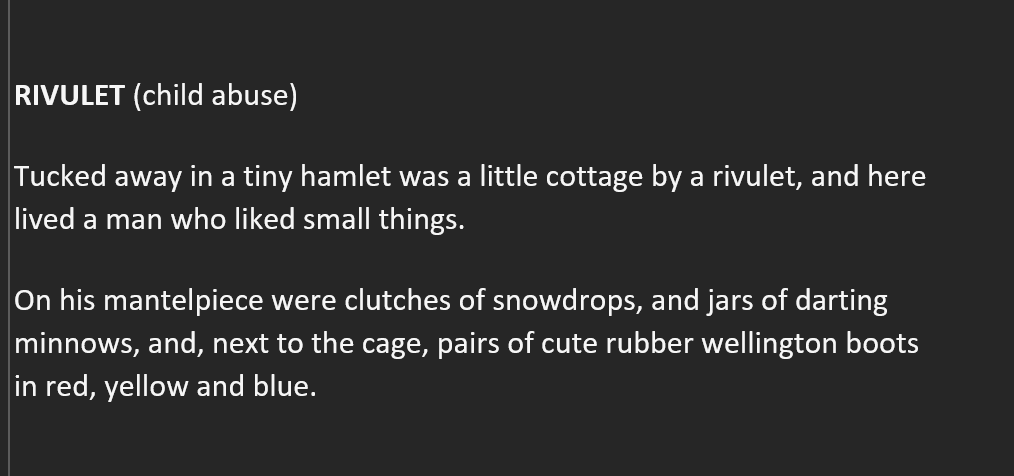
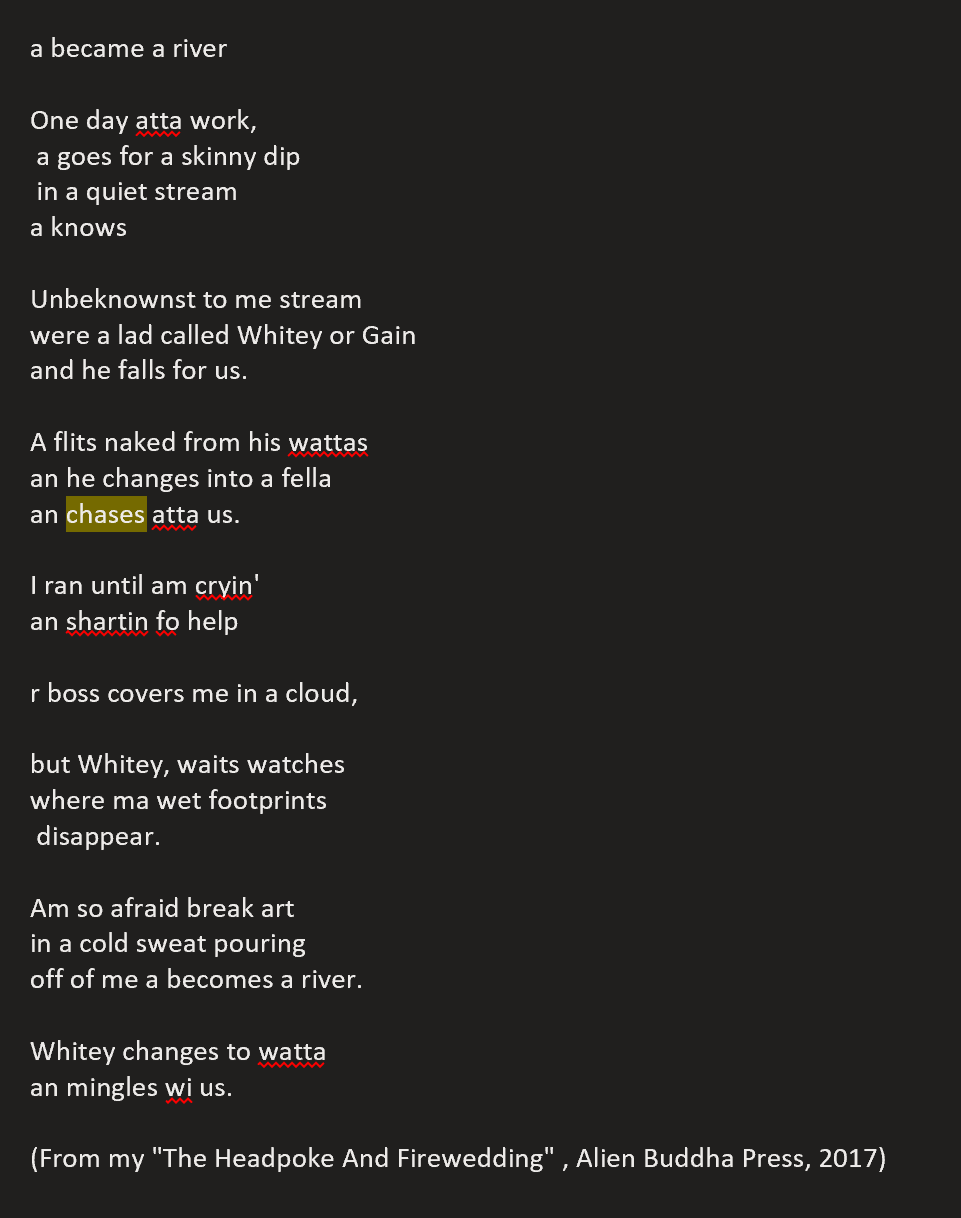
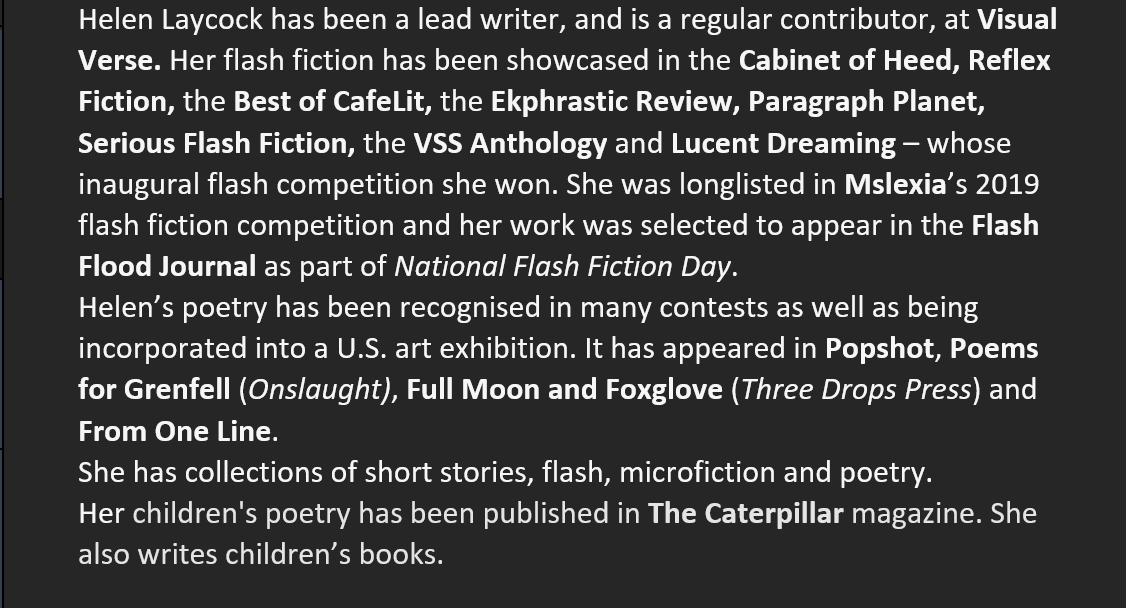
 -Helen Laycock
 -Helen Laycock.
A Tongue
Once a lass craved by a lad.
He lusts after her.
She is cold.
He forces himself on her,
He cuts out her tongue,
to stop her gab.
Sliced by his blade, he holds it with pincers.
Her tongue’s root quivers,
the rest lies on dark soil, writhes
and trembles, searches
for some sign of her.
She weaves the fact in purple design
on a white background, so her boss
sees what her mutilater has done
and moved by her rape
molds her into a feathered thing,
warm brown back, pale front, speckled
with lines of dark arrows that point to her head,
a tinge of golden brown on her breast,
belly almost white with a few small dark spots,
a bird who embroiders the fact of her pain
in the cup of her nest,
twigs, grass and moss, cemented
thickly lined with mud, dung, rotten wood,
mixed with leaves.
At the start she can only
call his name, nothing else
in short bursts twice,
clear and flute-like.
She is a dirsh, thrusher,
thirstle, throggle.
Come icy ground she smashes
the shells of snails
against a favourite stone,
picks at the foot,
as at a swollen tongue,
swallows the meat.
-Paul Brookes
Bios And Links
-Helen Laycock.
A Tongue
Once a lass craved by a lad.
He lusts after her.
She is cold.
He forces himself on her,
He cuts out her tongue,
to stop her gab.
Sliced by his blade, he holds it with pincers.
Her tongue’s root quivers,
the rest lies on dark soil, writhes
and trembles, searches
for some sign of her.
She weaves the fact in purple design
on a white background, so her boss
sees what her mutilater has done
and moved by her rape
molds her into a feathered thing,
warm brown back, pale front, speckled
with lines of dark arrows that point to her head,
a tinge of golden brown on her breast,
belly almost white with a few small dark spots,
a bird who embroiders the fact of her pain
in the cup of her nest,
twigs, grass and moss, cemented
thickly lined with mud, dung, rotten wood,
mixed with leaves.
At the start she can only
call his name, nothing else
in short bursts twice,
clear and flute-like.
She is a dirsh, thrusher,
thirstle, throggle.
Come icy ground she smashes
the shells of snails
against a favourite stone,
picks at the foot,
as at a swollen tongue,
swallows the meat.
-Paul Brookes
Bios And Links
 The Wombwell Rainbow