Celebrate #NationalMarineWeek 23rd July to 7th August 2022. Day Fourteen of Fourteen Due To Tides. Join Larissa Reid, and I. A challenge for you. Write or design a response to the imagistic daily poetry about the marine written by Larissa Reid. Send me your own responses to her work or your own responses to the marine theme via poetry/artworks/short prose. Please contact me with your work, plus a short third person bio.

Pinned

The distant hum of storm’s fret
In an anonymity of sea.
Low slow sound as long years strain
Through oak beams and bone rings.
Vessel pinned, hearts hemmed in,
To this scrolled embroidery of wind.

-Larissa Reid

door to the Pacific 

when you stroll along
the wet cold sand

shifted by el nino’s hand
the door opens

shallow waters of matador
beach pools reflect two lovers

stars tingle with rain mists
look down where the undertow

churns the little float parade
there’s this palace of flat stones

just out of the stars next kiss
beads of stars caught in ocean

tears
roll back into deep black amber flashes of sunset

jealous fog thick thunder
angry at lightning gone by

footprint histories suddenly
erased eaten by a small child

hungry to return to memories
snow ice on thin strip of

Matador beach
we all belong
here

barefoot
when the sun’s

warms the flat stone
shoes
ocean sprays
the kneeling rocks

waiting to be
knighted again
fin


Bios And Links

Larissa Reid

A freelance science writer by trade, Larissa has written poetry and prose regularly since 2016. Notable publications include Northwords Now, Silk & Smoke, Green Ink Poetry, Fenacular, Black Bough Poetry Anthologies, and the Beyond the Swelkie Anthology. She had a poem shortlisted for the Janet Coats Memorial Prize 2020. Larissa is intrigued by visible and invisible boundary lines in landscapes – geological faultlines, myth and reality, edge-lines of land and sea. Based on Scotland’s east coast, she balances her writing life with bringing up her daughters. Larissa is a founder member of the Edinburgh-based writing group, Twisted::Colon.

-Keith Antar Mason

was told by Miss Bell , his fifth grade teacher, that he should be a writer one that one special day when a child needs to have his or hers secret dream needs to be encouraged. Keith went on to have his performance done on Broadway.

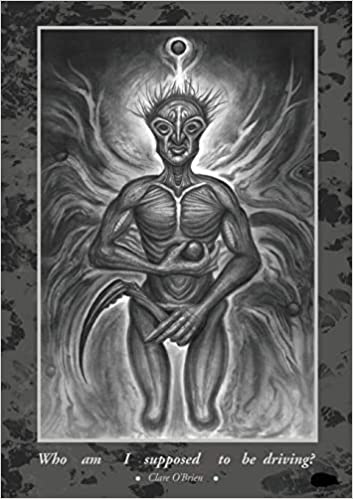
Wombwell Rainbow Book Interviews: “Who Am I Supposed To Be Driving” by Clare O’Brien

driving by clare o brien

Clare O’Brien (Bio courtesy of Amazon)

has worked as a schoolteacher, a journalist, PR to a Scottish politician and PA to an American rock star. Originally a Londoner, she now lives beside a sea-loch in Scotland, which suits her much better. Her poetry has appeared in anthologies including Heather: An Anthology of Scottish Writing and Art (Alice Louise Lannon, 2022) The Sea Is Here (Unimpatient, 2020), The Anthology Of Contemporary Gothic Verse (Emma Press, 2019), Songs To Learn And Sing (Hedgehog Poetry Press, 2018), The Powers Of Nature (White Craw Publishing 2017) and in journals such as Mslexia, Northwords Now, Lunate and The Ekphrastic Review. A new phase poet, she also writes short fiction and is working on an experimental novel entitled Light Switch.

The Interview

1. How did you decide on the order of the poems in your book?

That was easy – its the chronological order of the albums I chose to be the subjects for the 13 poems. The collection was a response to a call from Hedgehog Poetry for a “baker’s dozen” of linked poems on a single theme. I chose to make them ekphrastic poems in response to 13 of David Bowie’s albums.

2. Why Bowie?

Because he was the first musician I ever saw play live, back in 1973 when I was 15, and like so many other weird kids at the time, I was changed and in some measure, saved by it. 

Because I grew up a few miles down the road from where he grew up in south London and my friend’s big sister once babysat for him. 

Because he’d been an artistic influence, a sort of ghost friend in my head, all my life, on and off. And in some obscure way, I wanted to give something back.

3. How were you saved by his live performance?

I was one of the weird kids in my year at school. Introverted, a bit rebellious, with a vivid imagination.  I’d been playing the “Ziggy Stardust” album over and over, and seeing that show – it was my first ever rock show, and on Bowie’s home turf in south London – made me feel that it was OK to be different, to be a bit of a freak compared to the sociable and sporty types I was at school with.  It made me feel better about myself, and it kind of gave me permission to experiment with life a bit.

4. How important is the theme of dancing that weaves its way through your poetry?

I’d not been conscious of the way images of dance recur in this collection, but you;re abolutely right.  Tanks for pointing it out!    In the first poem, Your Face In Mine, the “dancing girl” is the ballet dancer Hermione Farthingale who dumped Bowie in 1969 for a role in a film, ‘Song Of Norway’.  He was still little known, and the end of the affair inspired several early songs.  He revisited that episode much later in his life by weaing a ‘Song Of Norway’ Tshirt in the video for ‘Where Are We Now’.  

In Standing Cinema, the word’s playful. On ‘Hunky Dory’, he’s itching for a change, ducking and diving as he tries to caper his way through to success.  But he’s being followed by ghosts. Hence “the past infects your dance”.

Cutting a Zero is assembled from cut-ups.  I thought I owed it to Bowie to try using that method at least once for this collection.  But one line which resulted,  ‘the dance of capital illness’, semed particularly relevant to the subject  of the album ‘1. Outside’.  Murder and mutilation sold as fine art.  It evoked some of the modern relationship between music, art, and money.  And all three have been i mportant to Bowie in his life and career.

Then, of course, the poem Get Things Done is a response to Bowie’s album ‘Let’s Dance’: it’s an ironic title for me, though, because the whole album is created with militaristic precision and a kind of haughty display.  Hence, ‘locked in cockstep’.  It’s almost armour-plated, that album. It dares you to defy it.

5. How important is the use of the second person “you” in the first poem?

Most of them are second-person, directly addressed, I suppose, to Bowie.  Those that aren’t are the ones where I felt more disconnected, more like an observer than half of an imaginary conversation. In the first poem I’m talking to a past version of Bowie, one who’s just beginning, just about to invent Major Tom.

6. How important was it to define inner and outer space?

I had to really think hard about this one!  Very important, I think, because the whole Major Tom metaphor – and its variant personae, such as Ziggy, Spaceboy and the dead astronaut in the ‘Blackstar’ video – all seemed to me to be about the secret space inside the artist’s mind, turned inside out and projected out into the wider universe.  It’s lonely out there floating round your tin can, just as it can be inside your head when you’re writing.  And Major Tom and his fictional friends may be about addiction too, but creating can be in itself addictive.

7. What made you pick the title of your book?

Given that every poem in the collection is titled with a phrase from one of the songs on the album in question, I wanted something special for the title of the whole collection. 

It’s from an outtake, or perhaps a dry run, for Bowie’s album 1.Outside – what’s known among fans as the “Leon Suites”.   If you#d like to head down that particular rabbit hole, there’s all kinds of info about it here: https://facingthestranger.wordpress.com/2020/01/22/inside-outside-an-extended-stay-at-the-leon-suites/

The part I quoted is a spoken word passage – Bowie’s adopting multiple personae, really acting his socks off, and then says “I mean, who am I supposed to be driving?  I thought it was apt considering how many personae David Jones, aka Bowie,  has “driven” in his career.

8. What do you find appealing about Bowie’s mercurial onstage presence?

The fact that whatever he’s doing – and I’ve never expected to love every genre of music he’s experimented with – he’s never, ever bored me for so much as a second.  He’s a thrilling performer.

9. What did you discover when using Bowie’s cut up method for writing songs for writing some of the poems?

I only used the technique for one of the poems, ‘Cutting A Zero’.  I’d never written that way before, and I’d always wondered how Bowie managed to be so expressive when he used the technique.  What surprised me the most was how well it worked.  It’s like collage would be if you were making visual art.  Using found materials to make a new piece of work. You just need to manipulate them in the right way and do a bit of editing, to paper over the cracks and make everything interact smoothly.

10. How did his art of blending different genres affect these poems?

I knew I was dealing with a chameleon.  His work was always changing, and even now it’s a finite body of work – now we know there won’t be any more – I find the songs have different effects on me depending on the angle from which I approach them, what mood I’m in, what I’m thinking.  It’s as though they change depending on how the light hits them, like  jewels that have ben skilfully cut and polished. He put so much in them, his art was such a synthesis of different elements, that he still has the power to surprise me.  I wanted to get some of that shifting perspective into the poems.

11. Once the reader has read this collection what do you want them to leave with?

A desire to go away and listen to the music!  Whether they’re revisiting it or discovering it for the first time. 

Wombwell Rainbow Serial Book Interview: “Spirit Mother” by Patricia M Osborne. Question Five.

-Patricia M Osborne

Screenshot_2022-08-06-11-41-54-96_e307a3f9df9f380ebaf106e1dc980bb6

Spirit Mother can be purchased here: https://whitewingsbooks.com/shop/

The Interview

5. How do you become the tree or the bird? I suppose its just like anything else in writing. You get to know your character and become them

More questions and answers to follow.

Wombwell Rainbow Serial Book Interview: “Spirit Mother” by Patricia M Osborne. Question Four.

-Patricia M Osborne

Screenshot_2022-08-06-11-41-54-96_e307a3f9df9f380ebaf106e1dc980bb6

Spirit Mother can be purchased here: https://whitewingsbooks.com/shop/

The Interview

Screenshot_2022-08-06-19-05-06-21_e307a3f9df9f380ebaf106e1dc980bb6

Wombwell Rainbow Serial Book Interview: “Spirit Mother” by Patricia M Osborne. Question Three.

-Patricia M Osborne

Screenshot_2022-08-06-11-41-54-96_e307a3f9df9f380ebaf106e1dc980bb6

Spirit Mother can be purchased here: https://whitewingsbooks.com/shop/

The Interview

Screenshot_2022-08-06-18-00-05-24_e307a3f9df9f380ebaf106e1dc980bb6

More questions and answers to follow.

Wombwell Rainbow Serial Book Interview: “Spirit Mother” by Patricia M Osborne. Question Two.

-Patricia M Osborne

Screenshot_2022-08-06-11-41-54-96_e307a3f9df9f380ebaf106e1dc980bb6

Spirit Mother can be purchased here: https://whitewingsbooks.com/shop/

The Interview

Screenshot_2022-08-06-15-57-45-78_e307a3f9df9f380ebaf106e1dc980bb6

More questions and answers to follow.

Wombwell Rainbow Serial Book Interview: “Spirit Mother” by Patricia M Osborne. Question One.

-Patricia M Osborne

Screenshot_2022-08-06-11-41-54-96_e307a3f9df9f380ebaf106e1dc980bb6

Spirit Mother can be purchased here: https://whitewingsbooks.com/shop/

The Interview

Screenshot_2022-08-06-11-46-33-98_e307a3f9df9f380ebaf106e1dc980bb6

More questions and answers in next post.

Cafferty’s Truck by Robin Thomas (Dempsey & Windle)

tearsinthefence's avatarTears in the Fence

Robin Thomas’ two earlier collections, both from Cinnamon, are miscellanies in various styles inspired by paintings, reading, childhood, music and trains; common subjects approached with a trying-things-out feel but all done with an uncommon level of playfulness and geniality. This more interlaced book, hot on the heels ofA Distant Hum, has a slim twenty-four pages of work, with poems averaging about ten short lines each. Here’s one of them (‘The Meeting’):

The truck labours
along the long road up.
The van, spick and span,
speeds by on the other side,
wafts by with hardly a sigh.

The minimalist approach relies on the way humans will construct narratives from the thinnest series of clues. But the overall story is straightforward enough. In fact, we’re told it at the end of the first poem:

Byrne, in his trim red van,
respectfully following, follows
Cafferty’s yesterdays with his tomorrows.

Cafferty’s business…

View original post 389 more words

Drop in by Barbara Cumbers

Nigel Kent's avatarNigel Kent - Poet and Reviewer

Thank you, Nigel, for this invitation. It’s hard to know what to say, or which poem to choose out of a long sequence of poems about Shetland. I was on the islands for several weeks in the summers of several years both as a geologist and on holiday, and then for a whole month in winter on a creative writing residency. I suppose that, because the winter month was so much more intense for writing, and as I was by myself, the poems that stem from that month are much more poignant for me. In that month I became acquainted with two or three of the active writing groups on Shetland, and feel myself very definitely an outsider when writing about the islands, but it may be that that adds something to the sequence. I hope so anyway.

Unlike my earlier collection A gap in the rain (Indigo Dreams, 2016)…

View original post 675 more words

Celebrate #NationalMarineWeek 23rd July to 7th August 2022. Day Thirteen of Fourteen Due To Tides. Join Larissa Reid and I. A challenge for you. Write or design a response to the imagistic daily poetry about the marine written by Larissa Reid. Send me your own responses to her work or your own responses to the marine theme via poetry/artworks/short prose. Please contact me with your work, plus a short third person bio.

Ink on water

That wide clear eye of the sea
A gaze complete, assured,
One that draws tears in its wake
Or sucks a scream from your lips
Or empties lugworm holes with a soft pop.
One that swirls sand in its mouth
Or holds a shell to your ear
And whispers through salt and liquid air
In its typography of tides.

-Larissa Reid

Bios And Links

-Larissa Reid

A freelance science writer by trade, Larissa has written poetry and prose regularly since 2016. Notable publications include Northwords Now, Silk & Smoke, Green Ink Poetry, Fenacular, Black Bough Poetry Anthologies, and the Beyond the Swelkie Anthology. She had a poem shortlisted for the Janet Coats Memorial Prize 2020. Larissa is intrigued by visible and invisible boundary lines in landscapes – geological faultlines, myth and reality, edge-lines of land and sea. Based on Scotland’s east coast, she balances her writing life with bringing up her daughters. Larissa is a founder member of the Edinburgh-based writing group, Twisted::Colon.