Spaces by Clive Gresswell (erbacce-press)

tearsinthefence's avatarTears in the Fence

This is a neatly produced chapbook from erbacce-press which is nicely laid-out and has a cover design incorporating (I think) a photograph of the author which has been adapted into a double-image by Alan Corkish.

There are 21 poems, each titled and each taking up a page. The overall title relates to the layouts of the texts which are split mainly into phrases, single words and occasionally longer pieces, halfway towards sentences, which suggest narrative structures but are fragmented and full of what I can only call texture. For me this is the most interesting of Gresswell’s recent chapbooks as there’s something almost Shakespearean about his use of language, where a variety of dictions interplay and resonate to great effect. There’s certainly a lyrical element to this work but it’s mixed with a dark foreboding quality which talks of ‘our times’ and has a sort of apocalyptic quality throughout. Take…

View original post 322 more words

The Traces: An Essay by Mairead Small Staid (Deep Vellum / A Strange Object)

tearsinthefence's avatarTears in the Fence

Mairead Small Staid’s book is the kind of writing the term ‘Creative Non-Fiction’ was invented for. It is a travelogue, a memoir, a romance, critical literary exposition, art history, and a quest, all in one. It meanders, branches, follows its own diversions, conversing amiably with the reader as it reflects on time, memory and place, looking for and considering the nature of that most elusive of human conditions, happiness.

Staid’s book is ostensibly about a period of time spent studying in Florence, her friends there (one, Z, who she lusts after, flirts with and eventually beds), Italian art, architecture and culture, and trips from there to elsewhere in Europe, Venice and Paris included. It is also a commentary on Renaissance painting, and books, especially Italo Calvino’sInvisible Cities, the novel where Marco Polo invents or describes cities that turn out to be variations on Venice itself. Sappho, Anne Carson…

View original post 596 more words

Agri culture by Mike Ferguson (Gazebo Gravy Press)

tearsinthefence's avatarTears in the Fence

Before Mike Ferguson became an English teacher (he’s now retired), he tried his hand at farm work, imbued with the back-to-the-land enthusiasm of the 1960s and 70s counterculture. Having emigrated from the USA, Ferguson took a job for three years near Ipswich, and then lived and worked part-time in the Chiltern Hills whilst he studied at Oxford.

Although perhaps the reality of labouring, even within agriculture, hit home, and Ferguson followed his degree by training as a teacher, eventually moving to Devon, and then engaging with the Devon reading and publishing literati, especially in the context of readings, workshops and magazine & booklet production within education, Ferguson still goes slightly dewy-eyed and nostalgic about farming, as evidenced by this beautifully produced, austere pamphlet.

Much of Ferguson’s current writing is process-driven: he uses erasure, pattern, word-shapes,Humument-type explorations and collage to write through and from writing both old and new…

View original post 583 more words

The 3-D Clock by Stephen Claughton (Dempsey & Windle)

tearsinthefence's avatarTears in the Fence

Stephen Claughton’s latest short collection focuses on his dearest mother’s journey into the forgetfulness of dementia that changed her physical and mental state but also opened up different, unexpected horizons. Her son tries to help her by mentioning people she knew and things that happened in her past, but the deterioration of her memory seems unstoppable. At a certain point he offers her a 3-D clock, that is, a digital dementia day-clock; it shows her the day of the week and the period of the day. When he goes to visit her again, she has already disposed of it with the excuse that ‘it’s worse than one that ticks.’ She prefers staying in the dark, the son remarks, but it is a darkness that she chooses, a kind of ‘unawareness’, as if she were too tired to be engaged in any kind of conversation or activity.

In his previous pamphlet,

View original post 634 more words

Wind and waves

Jane Dougherty's avatarJane Dougherty Writes

Today, Paul Brookes is posting poetry on the theme of the abolition of slavery. This is one I sent. A reminder that it’s never over till it’s over.

Wind and waves

We say the waves are calm now,
their voices stilled, the echoing voices
from wooden holds,

but restless still,
waves take their toll of human flesh,
slavers have a multitude of faces.

Listen to the wind that blows
into ears deaf to the cries
of other people’s children,

the wind that stirs the veils,
the shadows in the corner,
and brings the sound of chinking coins,

the chinking coins still changing hands,
and the child behind the veil sold,
flesh, hers too.

The waves’ lament lingers
and the wind’s, the unheard voices,
still crying.

View original post

Today = No Guest Feature

Patricia M Osborne's avatarPatricia M Osborne

Due to unforeseen circumstances, there is no guest feature today. However, I thought I’d take this opportunity to fill you in with some news.

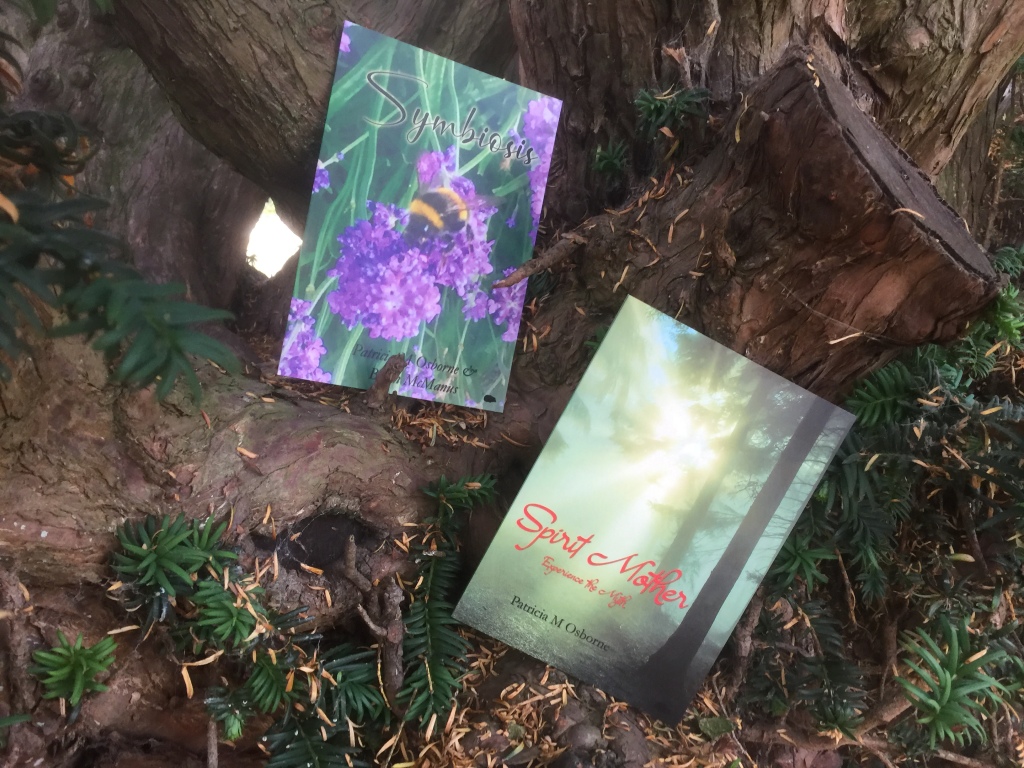
Symbiosis and Spirit Mother are now both live and you can purchase limited edition copies from my website shop HERE scroll down for the relevant book and correct postage.

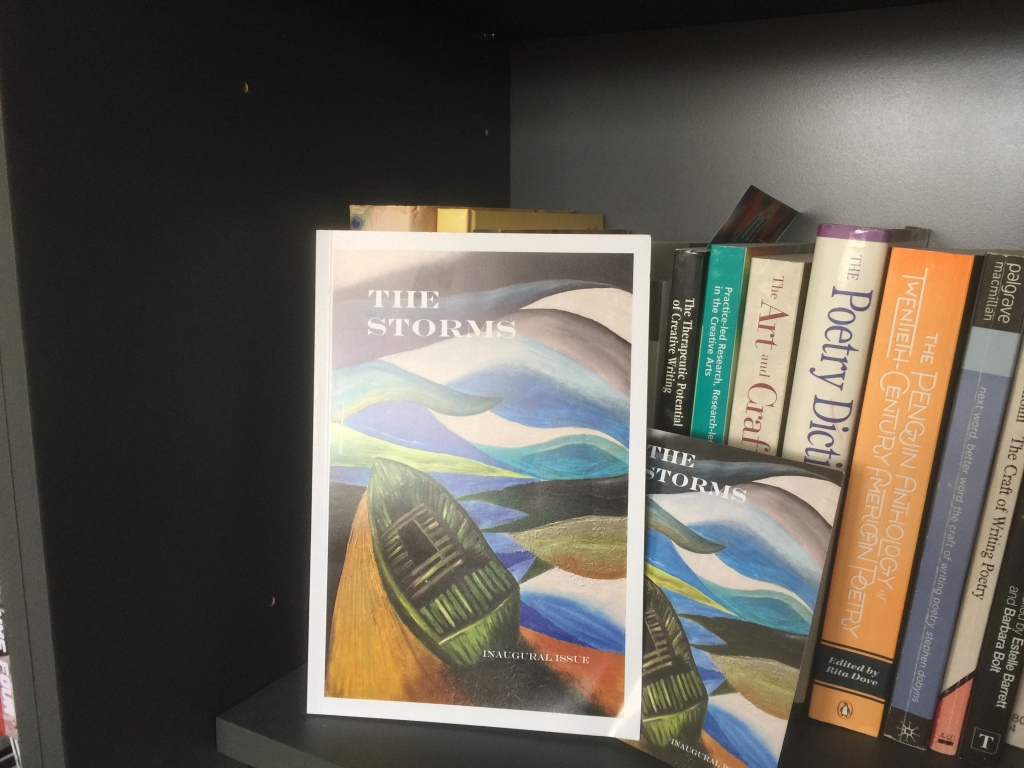
Damien B Donnelly along, with with sub-editor, Gaynor Kane, (for the inaugural issue), launched The Storms last Sunday. If you pop over HERE you can see how the launch went, along with some fantastic photos. The journal is a must to buy and I’m honoured to have my poem Squalls included in this fantastic issue. If you fancy buying a copy (worldwide) then go HERE.

Damien B Donnelly is my guest next week when he blogs about his brand new collection Enough. Make sure you don’t miss it! If you missed Gaynor Kane‘s…

View original post 180 more words

Mark #internationaldayfortheremembranceoftheslavetradeanditsabolition. Please join Tim Fellows and I to mark this day with your own work. I will feature your published/unpublished poetry/short prose/artworks about slavery. Please include a short third person bio.

slavery

Wind and waves

We say the waves are calm now,
their voices stilled, the echoing voices
from wooden holds,

but restless still,
waves take their toll of human flesh—
slavers have a multitude of faces.

Listen to the wind that blows
into ears deaf to the cries
of other people’s children,

the wind that stirs the veils,
the shadows in the corner,
and brings the sound of chinking coins,

the chinking coins still changing hands,
and the child behind the veil sold,
flesh, hers too.

The waves’ lament lingers
and the wind’s, the unheard voices,
still crying.

-Jane Dougherty

Slavery

There’s something visceral about
seeing a human in chains;
hunger in their belly,
desolation in their eyes;
watching as coins are passed
from hand to hand
and their ownership from one
to another;

That smashes through
the basic revulsion that the
concept of slavery
should engender within.
Where any shred of
human decency would
demand a call to arms
to banish it forever.

To raise the sharpest axe
and bring it crashing
onto and through the manacles
and scream “Enough!”
No-one should stand by and watch
as a human being
is sold down the River.

-Tim Fellows 

Life Should Be Meaningless

A full life is false and worthless.

Slavery

is good for you. All folk
Should be chained,

Manacled to a mortgage,
To work, to an employer

a partner. Freedom denies
your human rights. Slavery

Teaches you the meaning of life.
Demands you act properly

Constrains you to common sense,
sets out a wild world of imagination

creativity and invention. Freedom
is too wishy washy. Lock

and load your chains. Don’t let
loose and free your mind. Freedom

Is heavy, restricts, denies movement
of blood, bone and brain.

Become a slave and see our world
with new eyes, fresh perspectives.

-Paul Brookes (from my “A World Where 2”, as yet unpublished)

Bios and Links

-Jane Dougherty

was brought up in the West Riding but lives and works in southwest France. Her poems and stories have been published in magazines and journals including Ogham Stone, the Ekphrastic Review, Black Bough Poetry, ink sweat and tears, Gleam, Nightingale & Sparrow, Green Ink and Brilliant Flash Fiction. She blogs at https://janedougherty.wordpress.com/ Her poetry chapbooks, thicker than water and birds and other feathers were published in October and November 2020

-Tim Fellows

is a writer from Chesterfield, Derbyshire. His pamphlet, ‘Heritage’, was published in 2019 by Glass Head Press.

Celebrate #beanangelday. Please Join Fidel Hogan Walsh and I with your own work. I will feature your published/unpublished poetry/short prose/artworks about/including acts of #Kindness. Please include a short third person bio.

Be An Angel Day

In Plain Sight Fidel angel poem

-Fidel Hogan Walsh

Bios and Links

Fidel Hogan Walsh’s 

work has appeared in Poethead, Pendanic, UCD Archives, Poetry Ireland – Poetry Town Pocket Poems booklet and The Irish Times, Thrice Remembered  and The Storms. Fidel’s first collection of poems Living with Love launched in 2020. Her second collection of poetry in collaboration with photographer, Julie Corcoran, launched Culture Night 2020. Time is the fruit of a lockdown project undertaken between March and June 2020. The fifteen poems and sixteen images reflect on the human condition during unprecedented times. Time was named in the top 10 non-fiction of 2020 by Dublin City Libraries.

Omar Sabbagh on Patricia McCarthy’s ‘Hand in Hand’

The High Window Review's avatarThe High Window

hand in hand latest cropped 2

*****

EssayPoems

*****

The Long-Lived Love of Longing
on Patricia McCarthy’s  Hand in Hand


‘Touch me – in order to be lost in
the angelic silences Brendan preferred
after the white bird’s singing, restoring
apocalypses of the untranslatable word.’

xxxxxxxxxxxxxxxxxxxxxxxxxxxxx‘Harp Song’

‘… fingers crossed
religiously…

I was left with no clothes befitting a wife
and myself on my hands, as afraid of staying
with you as of drawing apart….’

xxxxxxxxxxxxxxxxxxxxxxxxxxxx‘Breaking Up’


Patricia McCarthy’s latest book, Hand in Hand, a collection-long sequence versioning the mythos of Tristan and Iseult, is a rich storehouse of legend and lore, myth, history and religion, among other telltale things.  The book, we learn early on, has been in the works for over four decades; so, it’s no wonder that this collection should be so earthed and grounded in research (worn lightly though) and long-lived consideration; and…

View original post 3,265 more words

Completing the New Collection

wendycatpratt's avatarWendy Pratt

Photo by Min An on Pexels.com

A couple of weeks ago I put all the poems I’d been working towards for the new collection together – the good, the bad and the ugly. I scythed a few out, teased a couple of others in, and decided that, as a first draft, it was just about done. Then my dad died and I ended up writing a few poems about him, about loss, about the strangeness of death. They tie in well with the rest of the collection and feel like a good fit.

There is no one size fits all approach when you’re putting a collection together. Even to the same poet the process may change between collections. When I Think of My Body as a Horse took years to write. The poems in that collection were mainly natural, organic poems that were written in powerful emotional splurges, and then…

View original post 955 more words