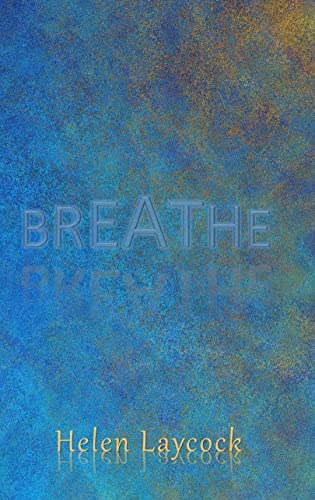
The sagacious poetess “Helen Laycock” needs no introduction. She has shown varied phizzogs in her writings, all influential to make the readers submerge deeply in them.
In this book, the poetess has filled her certain set of poetries in a cell, and each cell is followed by a quote.
The poetess in this book has expressed different feelings and has stated different circumstances through nature using personifications, metaphors, and similes.
It is always said, “Beauty lies in the eyes of the beholder.” Some poetries describing beauties of others unfurl the magnificent beauty lying in the eyes of the poetess, showing a few glimpses seen by the beautiful eyes of this poetess from one of the poetries “Dragonfly” below:
“you share
your iridescence
when you alight
on the fence,
flashing bright
your oiled magic”
“wings silver-strutted veils”
The poetess has created some poetries as frames, each inserting a picture of death, some pictures are of tragic death that can strike the hearts of sensible readers to bloody tears, one such tragic death can be seen in her poetry “Wisdom,” in one of the frames, the death in the picture is a ravenous vampire standing on the threshold, this picturization is in her poetry “Wolf.”
Quoting below a few stanzas from the poetry “Wisdom”:
“Once white under
a bright moon,
ghost of dusk,
the love-faced barn owl,
will soon be a husk,
its flight forever silent,
its round light shuttered,
strewn.
You fired, you goon.”
The poetess is the light in the darkness in some of her poems. This can be cited from the following stanza from her poetry “Virus” in which she acted as a pearl diver by taking out positive aspects from all the negativities of the world:
“Two still worlds
hugging quiet
as nature unfurls
on the peopleless stage.
Softly, it heals,
waiting for the creep
of gentle feet
and the whisper
of heartfelt promises
now we understand.”
Apart from acting as a pearl diver, she has also acted as a live painter by painting beautiful poetries based on her keen observations. Showing below one of the live paintings “Pinked” drawn by the poetess:
“In the shimmer of sunset on rippling lakes
a flamboyance of flamingos
are blushing lilies.”
The poetess in some of her poetries has also worked as a boatwoman by propelling personifications in her rivery-poetries. The words of the poetess Gabriela Marie Milton “A banquet of candles floods the streets” from her poetry “Professions” in her book “Woman: Splendor and Sorrow: Love Poems and Poetic Prose” fits to be used as a metaphor for the beauty of these rivery poetries.
Quoting below a few stanzas from a few rivery poetries:
“The light begins to slumber,
and the rosy windows kindle,
and the water strokes the barge
with soothing calm.”
“Gulping its way down the valley
of her slanted palm,
a tawny brush sweeps and drags,
sags between finger and thumb,
for inspection and settlement.”
“Little glinting messengers,
marooned”
“Wind breathes fragile waves
into saffron dunes”
However, the poetess has also swelled a few rivery poetries with pride by hoisting the flag of the glorious victory. This swelling is influential to motivate the readers to remain optimistic proving that the poetess is a light in the darkness. Showing the swelling in the following stanza from the poetry “Focus”:
“Grey armour succumbs,
curls into a shot pellet,
rolls into the treasure trove”
The poetess has also worked as an intimacy director in her poetries “Tomorrow’s Bonfire” and “Moon Eyes.”
The poetry “Tomorrow’s Bonfire” shows physical intimacy. Her direction to her words is influential enough to make the readers visualize as if they are watching an erotic movie, showing the teaser of this erotic movie below:
“She bends her neck and gazes through the dark.
Her curling tongue begins its careful sweep,
maps contours, sampling the bond.
The slippery mass, inert, lies in a pool,
as limp as his discarded sodden shirt.”
The poetry “Moon Eyes” depicts emotional intimacy, quoting the following words glittering with emotional intimacy:
“we were together,
faces lit,
little moons
in our eyes
like lucky pennies
glowing
in the darkness”
The poetess has also worked as a tailor by beautifully sewing the metaphors and similes in her poetries like a sequin on a cloth. Showing a few sequins below:
“blanch wintry night”
“diluted sun”
“frail as moon-thrown lemon-barley light”
“as chrome
breaks a hole
in the chalky sky,
they are lit
like tinder.”
“fleeting furrows
falling like chiffon festoons”
“Bats
wrap up in overlapped, buttonless macs,
peering over their collars like spies.
Some are the discarded gloves of thieves,
balled-up leather in untidy pairs.
They drape: grey, collapsed umbrellas
broken by the windy commute
and flung onto pegs.”
The poetess, on the one hand, has urged her readers to embrace the beauty of nature and interact with nature in a few poetries and has also paid tribute to nature in her poetry “Earth Mother” while on the other hand has shown nature’s inhospitable attitude in the poetry “Pines” which is commendable.
This is a mesmerizing book for those wise poetic souls who are nature lovers and have beautiful hearts with a good sensibility as well as sensitivity.
Bios (Helen Laycock and Spriha Kant):
Helen Laycock
Poetess and storyteller, Helen Laycock’s writing encompasses poetry, microfiction, flash fiction, short stories, plays, and children’s novels.
Former recipient of the David St. John Thomas Award, and nominee for the Dai Fry Award, Helen Laycock has been a competition judge and a lead writer at Visual Verse. Her poetry has been incorporated into a U.S. art exhibition and her collection Frame was featured as Book of the Month by the East Ridge Review in 2022.
Most recent publications are in Sun-Tipped Pillars of Our Heart and Afterfeather, both published by Black Bough.
Her poetry appears online and in numerous writing magazines and anthologies such as Popshot, The Caterpillar, Writing Magazine, Poems for Grenfell (Onslaught), Full Moon and Foxglove (Three Drops Press), Silver Lining (Baer Books Press) and From One Line (Kobayaashi Studios).
Imminent publications are The Storms Journal, Issue Two and Hidden in Childhood (Literary Revelations).
Current poetry collections available are Frame, Breathe and 13 (poems written in just thirteen words); she is also in the process of compiling several more themed collections.
Many of her poems can be purchased as postcards at Pillar Box Poetry.
Her website Conjuring Marble into Cloud showcases some of her work.
Laycock’s flash fiction has featured in several editions of The Best of CafeLit. Pieces also appear in the Cabinet of Heed, Reflex Fiction, The Beach Hut, the Ekphrastic Review, Serious Flash Fiction, Paragraph Planet, An Earthless Melting Pot (Quinn) and Lucent Dreaming – whose inaugural flash competition she won. She was longlisted in Mslexia’s 2019 flash fiction competition and her work has several times appeared in the Flash Flood as part of National Flash Fiction Day.
She is currently compiling a second volume of microfiction, Ink Spills, to complement Wind Blown, a collection which came about because of the Twitter #vss365 challenge.
She has also written several short story collections as a result of competition success.
These fall distinctly into one or other of the categories, Dark or Light…
Dark:
The Darkening
Minor Discord
Peace and Disquiet
Light:
Wingin’ It… Tall Tales of (Fully-Grown) Fairies with Issues
Confessions
Light Bites
More of her short stories and flash can be found at her website Fiction in a Flash
Formerly a teacher and a writer of educational text, Helen’s children’s fiction is suitable for readers of 8+ The stories are mainly mysteries, but a bit of humour has crept in, too, with a new book about to make an appearance shortly.
You can find out more on her children’s website.
You can follow Helen at Facebook or
at Twitter
All her books are available on Amazon.
Spriha Kant
Spriha Kant is a poetess and a book reviewer.
Spriha’s poetry “The Seashell” was published online at Imaginary Land Stories.
The poetries of Spriha have been published in four anthologies, including, “Sing, Do The Birds of Spring”, “A Whisper Of Your Love”, “Hard Rain Poetry: Forever Dylan”, and “Bare Bones Writing Issue 1: Fevers of the mind”.
Spriha has done five book reviews, including, “The Keeper of Aeons” by Matthew MC Smith, “Nature Speaks of Love and Sorrow” by Jeff Flesch, “Washed Away: A Collection of Fragments” by Shiksha Dheda, “Spaces” by Clive Gresswell, and “Silence From the Shadows” by Stuart Matthews.
Spriha has collaborated on the poetry “The Doorsteps Series” with David L O’ Nan.
Spriha has been a part of the events celebrating the launches of the books “Nature Speaks of Love and Sorrow” by Jeff Flesch and “As FolkTaleTeller.”
Spriha has been featured in interviews, including, “Quick-9 Interview” on feversofthemind.com and “#BrokenAsides with Spriha Kant” on thebrokenspine.co.uk.
Spriha has been featured in “Creative Achievements in 2022” on thewombwellrainbow.com.
The links to the features of Spriha Kant are:
https://feversofthemind.com/2022/09/13/a-fevers-of-the-mind-quick-9-interview-with-poetess-spriha-kant/
https://thebrokenspine.co.uk/2022/12/07/brokenasides-with-spriha-kant/
#CelebrateYourCreativeAchievementsOf2022 Calling all poets/short prose writers/artworkers between 26-31st December I want to celebrate your creativity over the last year. Please email me a list, plus bio, links and so on. Soon as possible. Today we celebrate the achievements in 2022 of Spriha Kant




 Tempo, Excursions in 21st-Century Italian Poetry edited by Luca Paci.