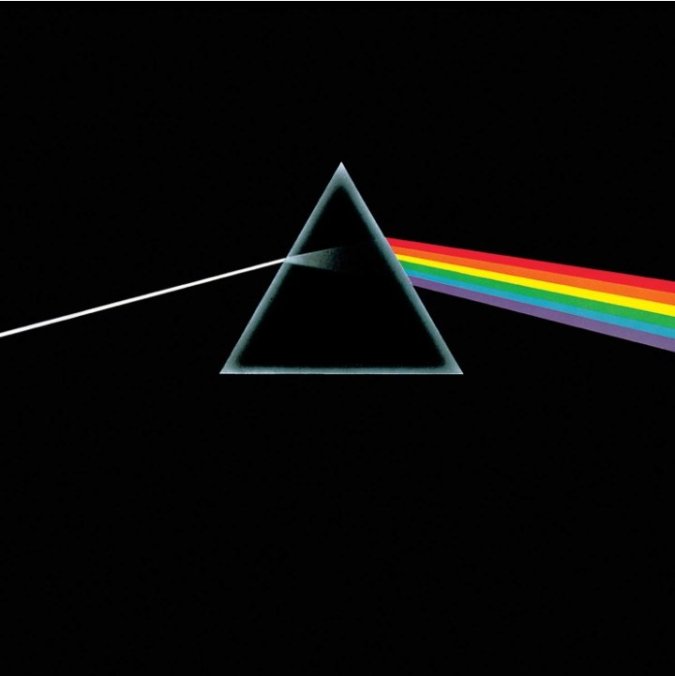
Dark Side of the Moon Chapter
This short chapter is from the as-yet-unpublished book on the lyrics of Roger Waters. I’ve included an abstract of the book first; it should be noted that this is chapter three, so there are some references to earlier points.
ABSTRACT
On July 6, 1977, Roger Waters, singer and songwriter of the immensely popular band Pink Floyd, spat on a fan at the band’s last show of its concert tour in support of the album Animals. Waters’ descent into alienation that led to this event is emblematic of rock’n’roll’s repudiation of its ideals through its actions. When he spat on that fan, he was also spitting on himself and his generation, a generation that had once apparently espoused radical ideals and that had once apparently demanded authentic experience or, what Karl Marx had called, “life-activity.” Rock and the Baby Boomer generation’s embrace of capitalism and the celebrity culture of the media had created an alienated culture. With no connection to his labor, his music, his audience, or himself, Waters became as he wrote in his song “Wish You Were Here”: “just another lost soul swimming in a fishbowl year after year.” Waters’ response was more mediation. Many critics see a fatalism in his work, but even early in his career, Waters was obsessed with authentic experience. After the spitting incident Waters wrote The Wall about how he and his generation had gotten to this point. Waters is not fatalistic in his lyrics; rather, he demands authenticity from himself and our culture, a search for a shared humanity.
Chapter Three
“New Car, Caviar, Four Star Day Dream”
Success and the Dark Side
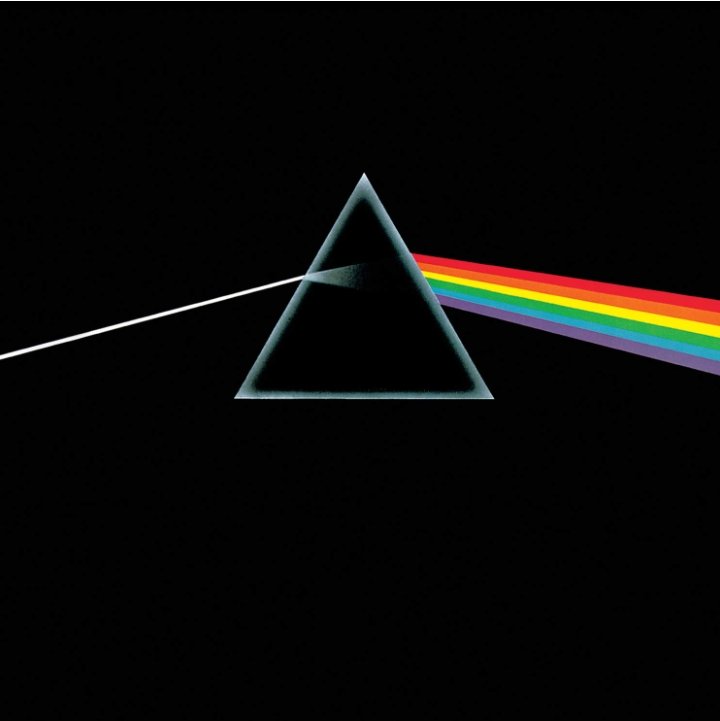
Waters continued to write about connections on 1973’s Dark Side of the Moon. The song “Us and Them,” about as emblematic a song as there could be, for the theme of empathy versus alientation is about the imaginary differences we place on each other— “Us and them / And after all we’re only ordinary men” —and where those differences lead us. When we lose empathy for our fellow man, when we raise barriers between us, when we alienate each other, we end up with a heartless world of haves and have-nots, a situation detrimental to both. It’s interesting, however, in this song, that some entities—such as governments and corporations—create these differences on purpose, so as to use the common man for mercenary or economic purposes. This alienation is created, then, consciously. “Me and you,” writes Waters to the listener, attempting to connect us again, “And after all it’s not what we would choose to do.” But we do it anyway because of mechanistic, militaristic and markets forces. Waters, here, assumes the listener feels the same way he does, an assumption grounded in his nostalgic view of his days performing at the UFO Club.
If there is no “us” and no “them,” then what are we fighting for? Waters argues that we’re fighting due to arbitrary differences, alienation consciously fostered by those in control (who he would later in his career refer to as “The Powers That Be”) maintain hegemonic power and to gain even more power and wealth. That is, in a capitalist society, those in power can recognize the alienating effect of their economic force over others. The powerful thrust alienation upon the powerless. “Forward he cried / From the rear / And the front rank died / And the general sat / And the lines on the map / Moved from side to side.” The differences created by the “general” are just as arbitrary as those “lines on the map.” And it’s our own greed that drives us in this case to accept this alienation from each other: “With / Without / And who’ll deny that’s what the fighting’s all about?” Thus, the alienation takes on a Marxian tone as we are taught to want more than the next person—who, we are taught, doesn’t deserve as much. These divisions have long-reaching effects that go beyond their “uses,” which is why we can be so unfeeling about “them”—because we’ve got “ours.” “Get out of the way, it’s a busy day / I’ve got things on my mind / For want of the price of tea and a slice / The old man died.” If the “old man” were one of “us,” it would be far more difficult to allow him to suffer. But, because of the arbitrary divisions we create, because we view him as one of “them,” we can. And do. And in the end, the alienation means that we are all “Down and out / It can’t be helped that there’s a lot of it about.” There is no more agency to alter our condition; the alienation becomes a given (“It can’t be helped . . . ”). This disconnection, in which we deny the humanity of the “other,” is a loss of humanity both for us and them.
Ironically, given the Marxian views expressed on Dark Side and “Us and Them” in particular, the album’s success would drive Waters to distance himself from those Marxian ideals. The album, mainly on the strength of FM DJs playing the song “Money,” shot to number one in America and, eventually, became one of the best-selling albums of all time. As of 1998, the album had sold over sixteen million copies (Fitch, Pink Floyd Encyclopedia 78). There is of course more irony in this, as Waters was decrying the demonstrations of ostentatious wealth in the song. “New car, caviar, four-star-daydream /. Think I’ll buy me a football team.” However, many fans, through the lens of celebrity culture (“alienated fame”) saw the song as a rock star celebration of monetary debauchery. It became what theorist Linda Hutcheon might call a complicitous critique, a piece of work designed to critique a system that instead leads people to celebrate that system[1]. That “Us and Them” follows directly on the album suggests that the two were of a piece. One (a glorification of money) leads inevitably to the other (a loss of humanity and empathy). On the radio, however, the song stands alone. Regardless, suddenly Pink Floyd were superstars and millionaires.
Still, the band did make conscious attempts to avoid celebrity (as opposed to fame). Like Ted Williams, in Joseph Epstein’s earlier example, the band—and particularly Waters—gave few interviews and refused to cultivate their celebrity. Blake calls this “Floyd’s refusal to play the media game” (217). The band remained anonymous, even to their fans. “[O]ne beneficial aspect of the press ban would be the shielding of their individual personalities from the public eye, facilitating a degree of privacy that few other rock superstars have ever enjoyed,” writes Nicolas Schaffner (193). The band had earned fame but preferred a lack of actual celebrity. However, it would be naïve to assume that nothing had changed, and it’s here that Waters seemed to distance himself from his ideals. Blake quotes Waters on the sudden transition: “’I have to accept that, at that point, I became a capitalist,’ admitted Waters in 2004. ‘I could no longer pretend that I was a true Socialist.’ He salved his left-wing conscience by eventually siphoning a percentage of his earnings into a charitable trust” (Blake 212). Schaffner quotes Waters on this subject as well: “You go through this thing where you think of all the good you could do by giving [the money] away. But, in the end, you decide to keep it!” (Schaffner 190). In a way, Waters here can be seen as a symbol of the whole of rock’n’roll as musicians were no longer the voice of revolution. They had allowed themselves to be commodified. Marc Eliot writes about rock music in the early 1970s:
Rock and roll had done a 360 degree turn [sic] to become the leading voice of the commercial mainstream. All that rock had originally represented—social integration, teenage rebellion, the value of the working class—had been transmogrified by the calculated manipulation of the corporate machine. Rock stars no longer symbolized the counterculture. They were, instead, the very icons of material extravagance; their self-indulgent music, dress and style of living in marked contrast to the mass audience they no longer cared to represent (183).
As such, Waters’ (retrospective) realization of his disavowal of his idealistic and rebellious roots could also serve to represent a generation who, a mere decade after espousing a denunciation of capitalism would soon elect, by wide margins, both Ronald Reagan and Margaret Thatcher, in part because of their promises to do away with the welfare state. As we shall see, Waters’ unconscious guilt over this disavowal would drive him even further into a state of alienation.
There is a different sort of alienation, however, in Dark Side’s “Brain Damage,” wherein Waters gets more personal about severed connections. When he sings in the 2nd person, “And if the cloud bursts, thunder in your ear / You shout, and no one seems to hear / And if the band you’re in starts playing different tunes / I’ll see you on the dark side of the moon,” he’s referring to himself, Barrett, and the listener. In terms of Barrett, the line hearkens back to when the band was connected to each other, jamming on stage in those early days. That the band sings “different tunes” seems to suggest that it’s Floyd, not Barrett, who changed. But when speaking to the audience, Waters is also celebrating those early moments when he felt that connection to that audience, a bond that is becoming more and more tenuous. He’s desperately trying to rediscover that connection—that authenticity—that has somehow been lost, in an effort to reaffirm his own humanity as well as the humanity of his listeners. “The line ‘I’ll see you on the dark side of the moon’ is me speaking to the listener, saying ‘I know you have these bad feelings and impulses, because I do too; and one of the ways I can make direct contact with you is to share the fact that I feel bad sometimes,” revealed Waters (qtd. in MacDonald, 194). Therefore, in an almost ironic way, Waters uses the despair that he feels, his sense of isolation, his fears, to try to make a bond that, in his earlier work, had been taken for granted. In other words, Waters attempts to use our shared alienation to bring us back together.
ABOUT THE AUTHOR
Jim Speese is a writer and instructor of English at Albright College, and the lead singer and songwriter of the band Cloud Party with which he’s released five albums. He holds a PhD in post-World War II American literature from Lehigh University.
His fiction is published in Brushfire, Pennsylvania Literary Journal, Potato Soup Journal, Umbrella Factory Magazine, Voices de la Luna, and Wrath-Bearing Tree. His short story “The Confession of Monsignor Vorges” was published in Potato Soup Journal’s Best of 2021 anthology. His short story “The Unfinished Works of James Conlan” was included in the book The Anthology of Babel, published by Punctum books in 2021.
He has also taught at Lehigh University, Drew University, Desales College, Penn State University. He lived in and worked for Yellowstone National Park for four years and spent three months hiking the Appalachian Trail. He plays and coaches volleyball, and is working on a novel. He lives in a cabin in the mountains of Pennsylvania.
http://www.cloudpartymusic.com
[1] I have used Hutcheon’s brilliant concept of a complicitous critique throughout my work. To understand the concept, one only has to watch a segment on Fox News on how media sexualizes everything, while it shows sexually charged images. One segment criticized “spring break” in Miami, while showing images of wet t-shirt contests and half naked women. Another example is the film The Wolf of Wall Street, which also, like “Money,” critiques ostentatious wealth. But often my film students who love the movie admit that it makes them feel like they want to be rich, regardless of the “message.”











 Whitby Abbey at Sunset, by Ackers72 (Own work) [