
“I see all the things we write and publish as markers in time.”
Follow this link to my Substack page to find out what’s happening: Substack
“I see all the things we write and publish as markers in time.”
Follow this link to my Substack page to find out what’s happening: Substack

side to side
You sent me a tape Three, four… Five states away. I listened Flipping it side to side In the old boombox, Drinking in the songs Like a drowning man Lost at sea. We spoke little in those days Before we didn't speak at all. You sent letters written in lyrics, A code for me to decipher. Flipping side to side, Searching for hidden truths And some answer to the question I could never bring myself To ask out loud. You fancied yourself a punk But the ribbons were filled With acoustic and folk - Lush guitars, Poems spoken and sung. I played them Until the tapes Were dirty and worn, Always flipping side to side. So many moons and Junes Have passed, Years of your silence While I tried to crack the code, Flipping side to side. I think that final letter Always said it all; The…
View original post 96 more words

photo from pixabay (dimitrisvetsikas1969)
Bio: Victoria Bennett, (she/her). Greater Boston, MA area, born WV. Ph.D., English/Theater. Website: creative-shadows.com. In-Print: “Poems from the Northeast,” 2021; OOP but free to read on website: “Scenes de la Vie Americaine (en Paris),” [in English], 2022. Between Fall 2021-Summer 2023, Victoria will have published at least 35 times with: Fevers of the Mind Poetry & Art, Roi Faineant Literary Press, The Hooghly Review, The Unconventional Courier, Discretionary Love, Amphora Magazine, Barzakh Magazine, The Madrigal Press, Alien Buddha Press, Olympia Publishers, Winning Writers, Cult of Clio. She has been accepted with 4 poems for the November 2023 issue of Dreich Magazine. Victoria writes Fiction/Flash/Poetry/CNF/Essays. She is the organizer behind the poets’ collective @PoetsonThursday on Twitter, along with Alex Guenther and Dave Garbutt. Twitter: @vicklbennett & @PoetsonThursday; Mastodon: @vickileigh@mstdn.social & @vickileigh@writing.exchange. Victoria is ocularly and emotionally disabled.
The Storehouse
“Come up, some time, for tea.” A…
View original post 2,166 more words
The poem I wrote for Paul Brookes’ challenge and wasn’t able to post.
Wolf,
where are you?
I know you’re there, lying low.
Not in these quiet meadows
and wooded slopes perhaps,
but along Garonne’s broad reaches
harried by flood waters,
where farm buildings sink beneath the weight of ivy,
wooden planking falls like flakes of slate.
Wolf, where are you?
Down there amid the forest-tangle,
the woodland left untended,
plantations abandoned?
Where sounders of boar roam uncontested?
Where deer multiply undisturbed?
The hunters know, and they won’t tell,
won’t give you away,
they want your souls for their private tally.
I would know, would love to find a sign,
not to pry, your paths are your own,
to put your secret beneath protecting wings,
so, wolf, if you roam among these tangled trees
If you slip from shade to shade along the wild paths,
you may roam in silent…
View original post 9 more words
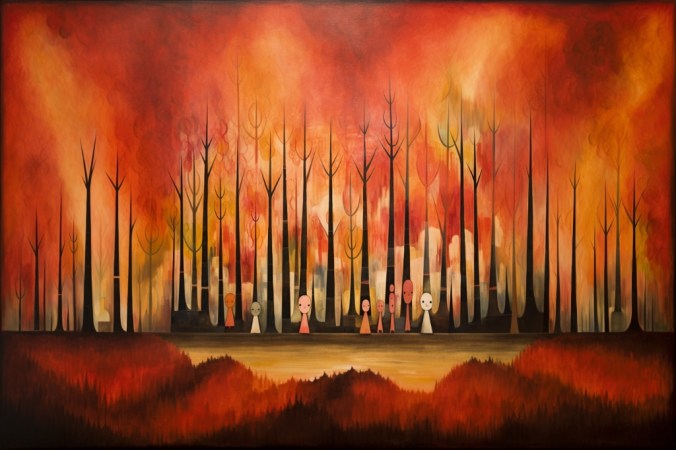
Day 28. Write a poem celebrating the resilience of nature, even in the face of human challenges.
Forest Fire
Fire is reigning here alone
Trees in flames of glowing stars
Ash, page after page, falling like snow
Two branches fall to earth below
Saplings see a broadening sky
Poem form: Gogyōka (Japanese: 五行歌) is a five-line, untitled, Japanese poetic form. Unlike tanka (5.7.5.7.7 syllables), it has no restrictions on length. Any rhyming is by pure accident. Artwork is created using Midjourney. Imagery and poems ©Misky 2023.
I’ve missed a lot, even my Saturday visit to the Oracle. I’ll start to catch up tomorrow. Meanwhile, this is last week’s form, chosen by Paul Brookes.
I enjoy these very short, imagistic poems without the constraint of counting syllables. Looking on Wikipedia for examples, my browser took me to the French Wikipédia and it struck me that this form, like many short, imagist forms, is very much suited to the French language. I tried the form in English, both English and French, and in French. First attempts tended to be longer, possibly trying to add too much detail, and later poems much sparser, which is arguably more in the Japanese spirit.
Gogyohka
1.
rain falls and falls from grey oceans
sky colour of gulls and pigeons
laps shorelines of golden grasses
where kestrels hang
banners of long red wings
2.
mornings
grey as twilit cats
ripple into song
as…
View original post 67 more words
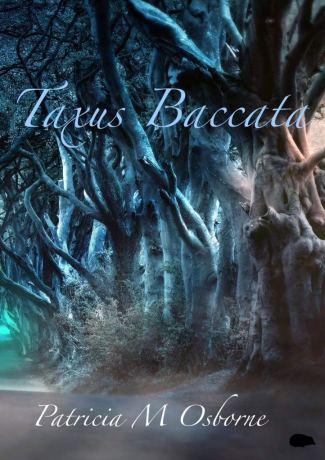
Bio:
Patricia has a successful blog at Whitewingsbooks.com featuring other writers. When Patricia isn’t working on her own writing, she enjoys sharing her knowledge, acting as a mentor to fellow writers.
Twitter https://twitter.com/PMOsborneWriter
Website: https://whitewingsbooks.com/
Facebook: https://www.facebook.com/triciaosbornewriter
Little Green Suit
I cried at bath time, not wanting to go to bed, but Mum perched me on the counter, told me I was going out instead. She dressed me in a little green suit, two straps held the green-fleck pleated skirt in…
View original post 596 more words
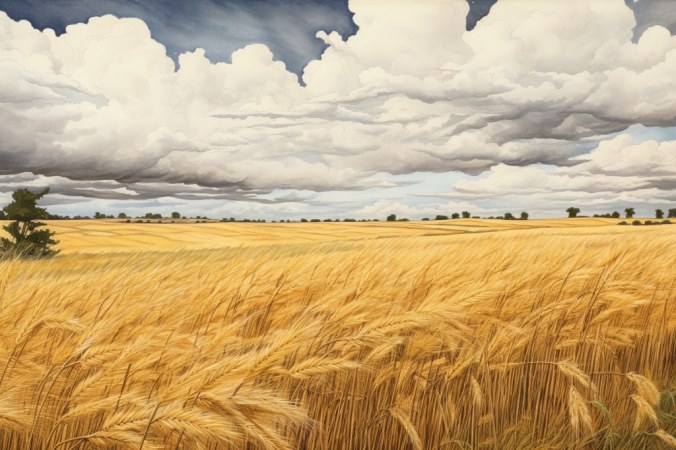
Day 27: Imagine you are a character in a wildlife-themed adventure novel. Describe the perilous situation you find yourself in and how you escape.
Cherry Pickin’ Crows
There’s no writing yourself out of this one. Think. And don’t panic. It doesn’t help. Nor does shouting. Your pipes will go hoarse.
I often talk to myself like this. I lost my voice once, and didn’t even realise until Mum asked me a question. I was all croaky sounding. You don’t need a voice when you’re doing all your talking inside your head.
I’m 6. I’d tell you my name, but your knowing it doesn’t change anything. I’m healthy, happy, and a bit short of 6-years in height, and I’ve walked into a field of tall wheat – forgetting to notice where I came from, well … I mean, I know where I came from – a little village with a deep-flowing…
View original post 416 more words

Feather photo by Paul Brookes
Gogyohka
1.
rain falls and falls from grey oceans
sky colour of gulls and pigeons
laps shorelines of golden grasses
where kestrels hang
banners of long red wings
2.
mornings
grey as twilit cats
ripple into song
as the first nightingale
draws breath
3.
donne-moi ta main
let’s run where the blackbird sings
et le ruisseau rou-cou coule
night is over
le rossignol s’est tu
4.
pluie fine comme cheveux de loutre
brumeuse comme l’entre-deux-lumières
ou perle des profondeurs
s’étale en entrelacs sinueux
et je sens l’odeur du lointain embrumé
5.
loriot
dans les peupliers
fait frémir l’été
avec sa voix clarinette
boisée et fruitée
How did it go?
I enjoy these very short, imagistic poems without the constraint of counting syllables. Looking on Wikipedia for examples, my browser took me to the French Wikipédia and it struck me that this form, like many short, imagist forms, is very much suited to the French language. I tried the form in English, both English and French, and in French. First attempts tended to be longer, possibly trying to add too much detail, and later poems much sparser, which is arguably more in the Japanese spirit.
Jane Dougherty
Three Gogyohka
Shadow Study #33
Without any regret
Walking towards a shadow
Horizontal space across a wall
Stepping back
A vertical clothespin lengthens
Lake
Peeled bark fronds
Leaves and stones
A loon lands
Dives for fish
More ripples still
3am
Come towards to mirror
Tears and anguish
Sleeping waking
Pacing a room
Perhaps music will help
How Did It Go?
A miniature form created by Enta Kusakabe in Japan in the late 1950s, this five-line poem, a freeing of Tanka rules, contains narrative, a crunch, and absurdist humour, from what I’ve read. I like the meditative simplicity of forming a simple setting for five phrases, attempting through it, to add some odd element that twists it away from a simple snapshot towards irony and paradox. This was another enjoyable new form for me – it took time to shift voice from description alone to modern/post-modern consciousness & observation.
Robert Frede Kenter
Thunder rain falls in drops
so big
you can see each one
before their cloud-cold
stings your skin.
How Did It Go?
I found this one quite easy as it’s haiku-like without the restrictions.
Tim Fellows
Bios And Links
Robert Frede Kenter
is a writer, visual artist, editor, and the EIC/publisher of Ice Floe Press (www.icefloepress.net). Published widely Robert’s work includes books, journals, on-line and in print, incl. The Storms Journal, Best of Blood and Aphorisms (Gutter Press), Talking about strawberries all the time, Northward Journal, New Quarterly, Olney Magazine, Streetcake Magazine and many others. Work forthcoming in anthologies: Glisk and Glimmer, (Sídhe Press), Speaking in Tongues (Steel Incisors). A visual poem collection, EDEN, is available at Rare Swan Press.
Jane Dougherty
lives and works in southwest France. A Pushcart Prize nominee, her poems and stories have been published in magazines and journals including Ogham Stone, the Ekphrastic Review, Black Bough Poetry, ink sweat and tears, Gleam, Nightingale & Sparrow, Green Ink and Brilliant Flash Fiction. She blogs at https://janedougherty.wordpress.com/ Her poetry chapbooks, thicker than water and birds and other feathers were published in October and November 2020.
Tim Fellows
is a writer from Chesterfield in Derbyshire whose ideas are heavily influenced by his background in the local coalfields, where industry and nature lived side by side. His first pamphlet “Heritage” was published in 2019. His poetic influences range from Blake to Owen, Causley to Cooper-Clarke and more recently the idea of imagistic poetry and the work of Spanish poet Miguel Hernandez.
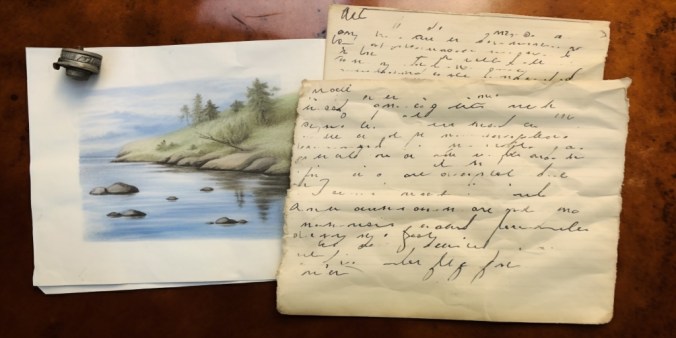
Note: I wrote this to my “younger self”. I’m old – the glass is a bit more than half empty. Day 26. Write a letter to a future self, reflecting on the impact of the challenge on your relationship with nature.
To my younger self:
preferable mid-20s because I’m apt to think this is from a crank otherwise.
Go down to the creek. Cup your hands, and drink. Taste its clarity. Remember its flavour. Think of words to describe it. Bright as sunshine. Cold as snowy rain. That’s how I remember it. Is it still like that?
By the time your first grandchild is placed in your arms, this creek will be silt. A slow trickle, except when the storms come, when water flashes against the tree roots and over-tops the brim. There will be plastic bottles floating in it. Nobody will think to remove the shopping trolley that clogs…
View original post 121 more words


 The Wombwell Rainbow