Learning to Climb the Mountain https://amzn.eu/d/im4yusd
Learning to Climb the Mountain https://amzn.eu/d/im4yusd
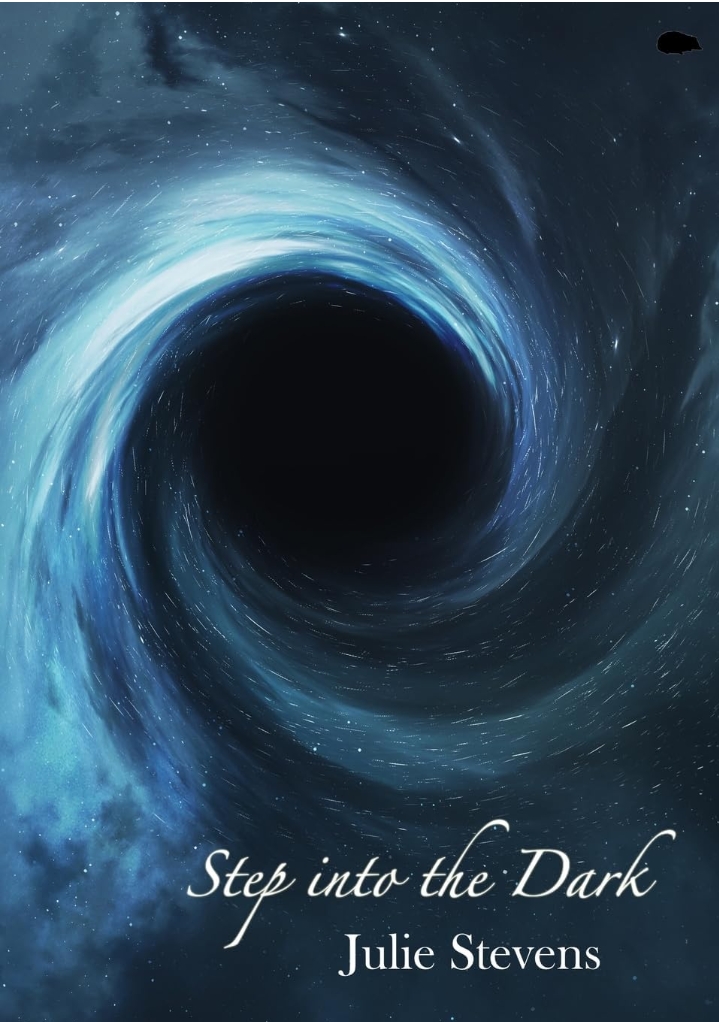
Julie Stevens
https://www.jumpingjulespoetry.com/book-shop
The Interview
Q:1. When and why did you start writing poetry?
I started writing poetry when I was at university. A friend and myself would sit in her room after lectures, nothing else to do and write. It was her idea, but I really enjoyed it. We ended up writing for the university magazine. Later I started teaching and the writing stopped due to other commitments, but in the past 5 years I’ve started to write every day. When my Quicksand pamphlet was published by Dreich in 2020, it gave me so much confidence, I could do this. There’s no stopping me now.
Q:2. Who introduced you to poetry?
I can remember borrowing a poetry book from my grandad to learn a poem for a drama audition. I used it so many times, he ended up giving the book to me. That was when I was at school, so I guess he introduced me to poetry. Also, I absolutely loved English lessons, so those teachers too.
Q:3. How aware are and were you of the dominating presence of older poets traditional and contemporary?
At school we were given poems by John Donne and William Shakespeare that I can remember and also learnt Ted Hughes poems, plus others from grandad’s book.
Q:4. What is your daily writing routine?
I’m a morning person when my energy levels are high. I tend to choose a few poems from poetry books and read those, then start writing. I like to just write, write, write and go back later to edit into a poem.
Q:5. What motivates you to write?
Usually, a poem I’ve recently read or when something happens and I think, now that would make a good poem.
Q:6. What is your work ethic?
I go with whatever my day brings.
Q:7. How do the writers you read when you were young influence your work today?
I don’t think they do, but my love for reading and writing was always there, so I think something from my younger self must still be with me.
Q:8. Who of today’s writers do you admire the most and why?
It’s the contemporary writers I find today that influence me the most: Ilse Pedlar, Clare Shaw, Imtiaz Dharker, Ocean Vuong, Kim Moore, Caroline Bird to name a few. They use the same themes as me: relationships, illness, loss, you name it!
Q:9. Why do you write, as opposed to doing anything else?
Writing is very relaxing. As a disabled person, I am limited as to what to choose to participate in and so writing is something I can do without any barriers. It gives me a great deal of satisfaction and enjoyment. I miss it when I can’t write.
Q:10. What would you say to someone who asked you “How do you become a writer?”
I would say don’t compare yourself to others. Just find a quiet space and put your thoughts down. Keep going and try not to think too much about how good it is. Then go back and read what you’ve written and change anything you are not happy with/can say better.
Q:11. Tell me about the writing projects you have on at the moment.
I’m in the process of submitting a full collection and more pamphlets. I continue to look for open mic/guest poet opportunities so I can share my poems with others. As my third pamphlet, Step into the Dark, has just been published by The Hedgehog Poetry Press, I am concentrating on that. I also have a children’s poetry collection I am trying to find a home for.

Please Do Not Touch The Exhibits
This is a typical 18th century kitchen,
The labels are informative,
but not exhaustively so,
and I’m afraid the aprons
are reproductions from China.
The bread shovel is small:
The loaves are small,
as valuable things often are.
Some were hanged for stealing bread.
Please do not touch the exhibits.
Ewan Lawrie
Bios and Links
Ewan Lawrie
lives in the Calder Valley, after half a lifetime that has taken in living in Cold War Berlin for ten years and flying over all five continents in a 40-y.o. aeroplane for the following twelve. Andalucia was his home for fourteen years thereafter. He has published The Moffat Trilogy – originally via Unbound – two further novels, and a poetry collection “Last Night I Met John Adcock”. He is one of a small team of editors at the writers’ site
 The Wombwell Rainbow