Author: The Wombwell Rainbow
Merril On Day Three of the ekphrastic challenge.
Wonderful to have Jane Dougherty inspired by the artworks in this year’s Ekphrastic Challenge. Welcome Jane.
EkphrasticChallenge2024 Day Three. Please join Margaret Royall, Emily May, David Southwell, Mick Jenkinson, Matt Guntrip, Merril D Smith, Gaynor Kane, Tim Fellows, Anjum Wasim Dar, Kevin MacAlan, Emma Datson, Ivor Daniel, Francis Powell, Diane Lowman, Michelle Barnett, Donna Faulkner, and I as we respond to the daily artworks of Karen Pierce Gonzalez and Sara Elizabeth Bell. April 3rd .
 RFK3 Robert Frede Kenter
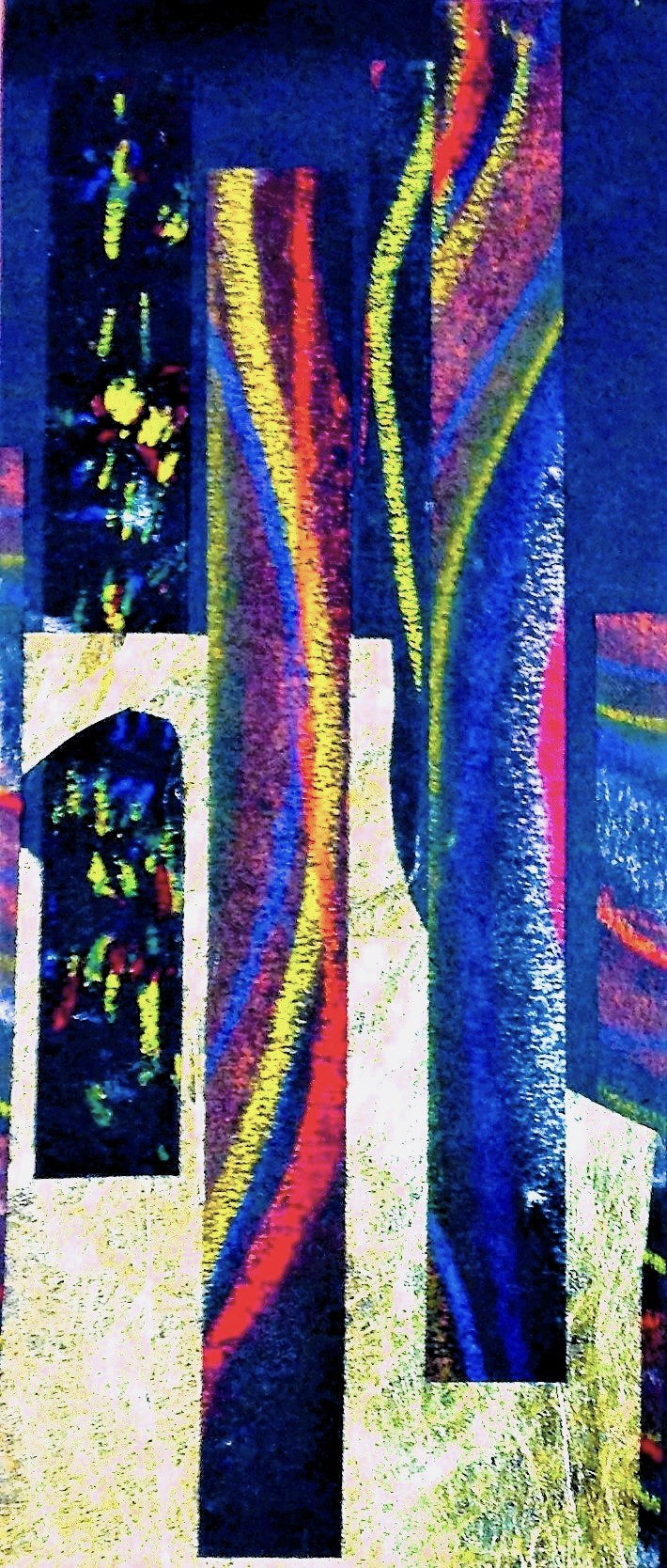
KPG3 Karen Pierce Gonzalez “Night Columns”

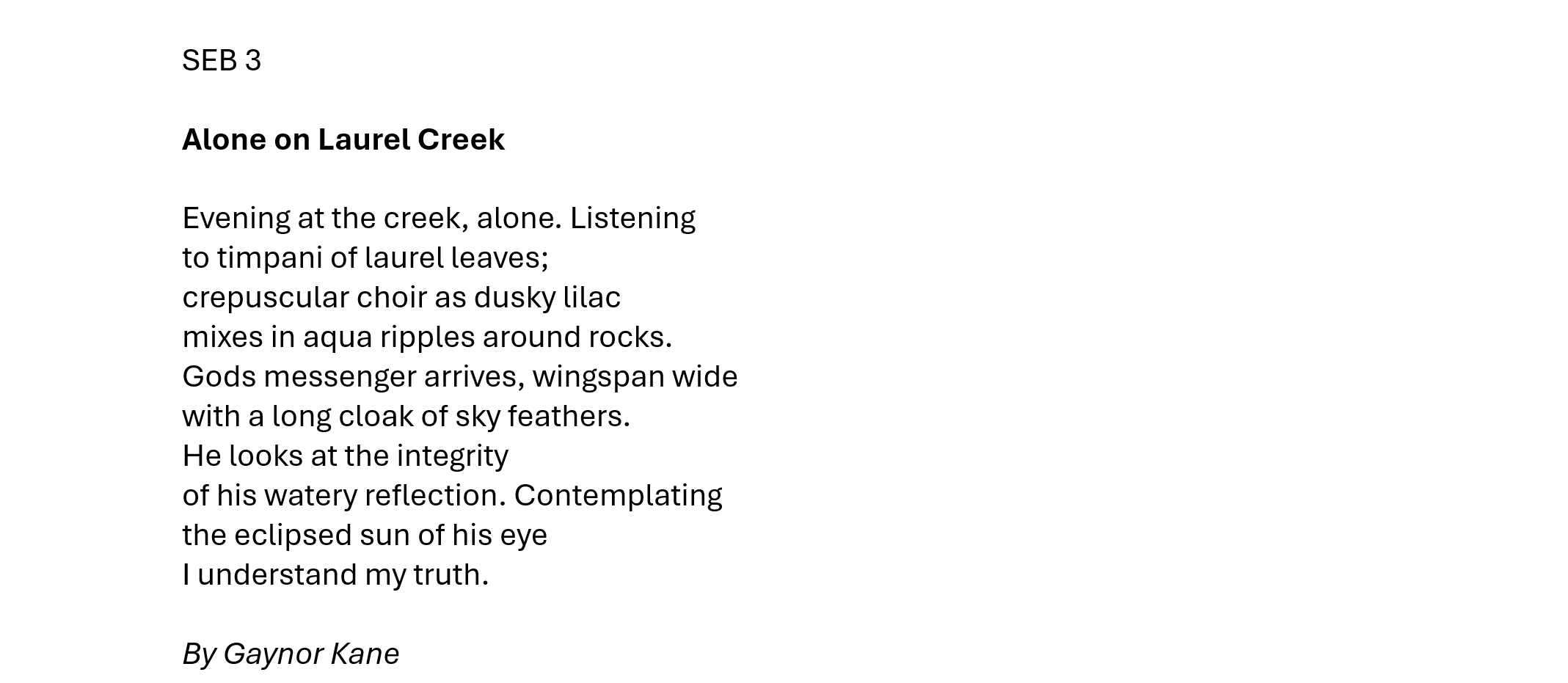
SEB3 Sara Elizabeth Bell “Alone On Laurel Creek”

Michelle Barnett (KPG3)
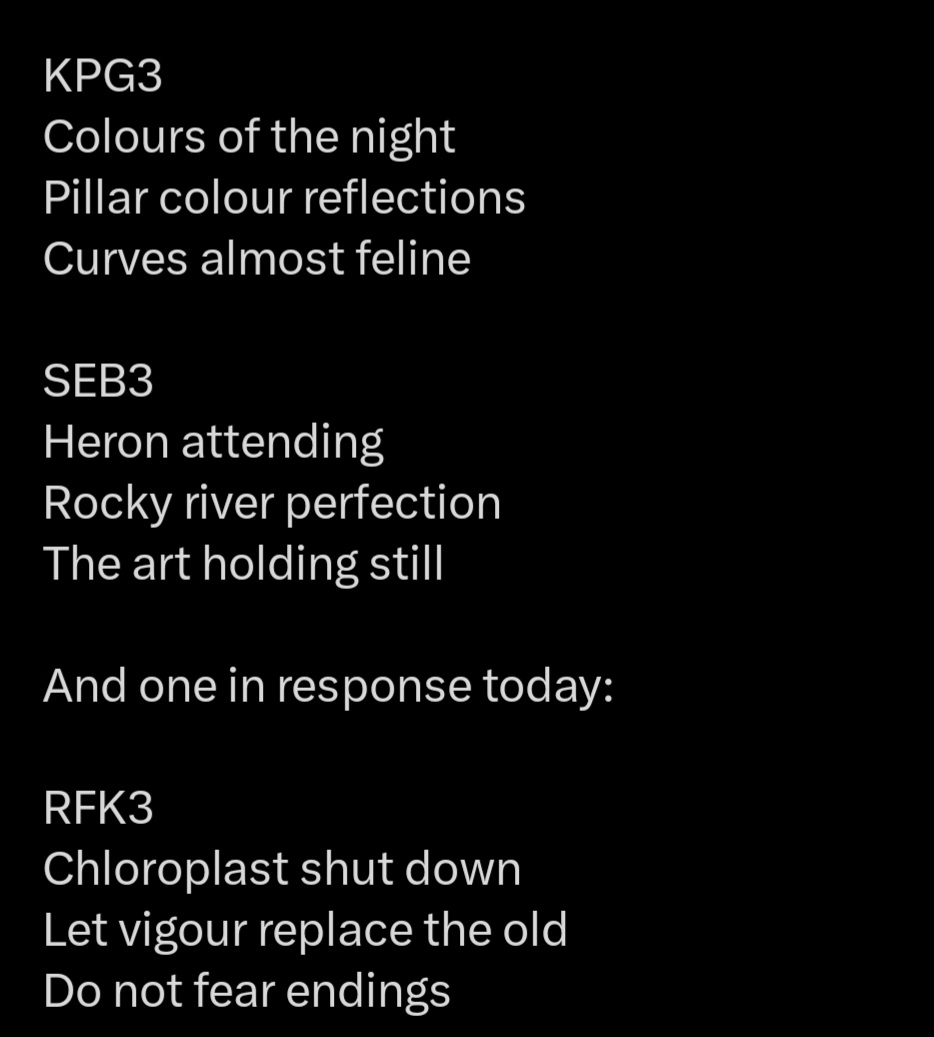
Matt Guntrip



Tim Fellows (KPG3)

Merril D Smith


Donna Faulkner (SEB3)
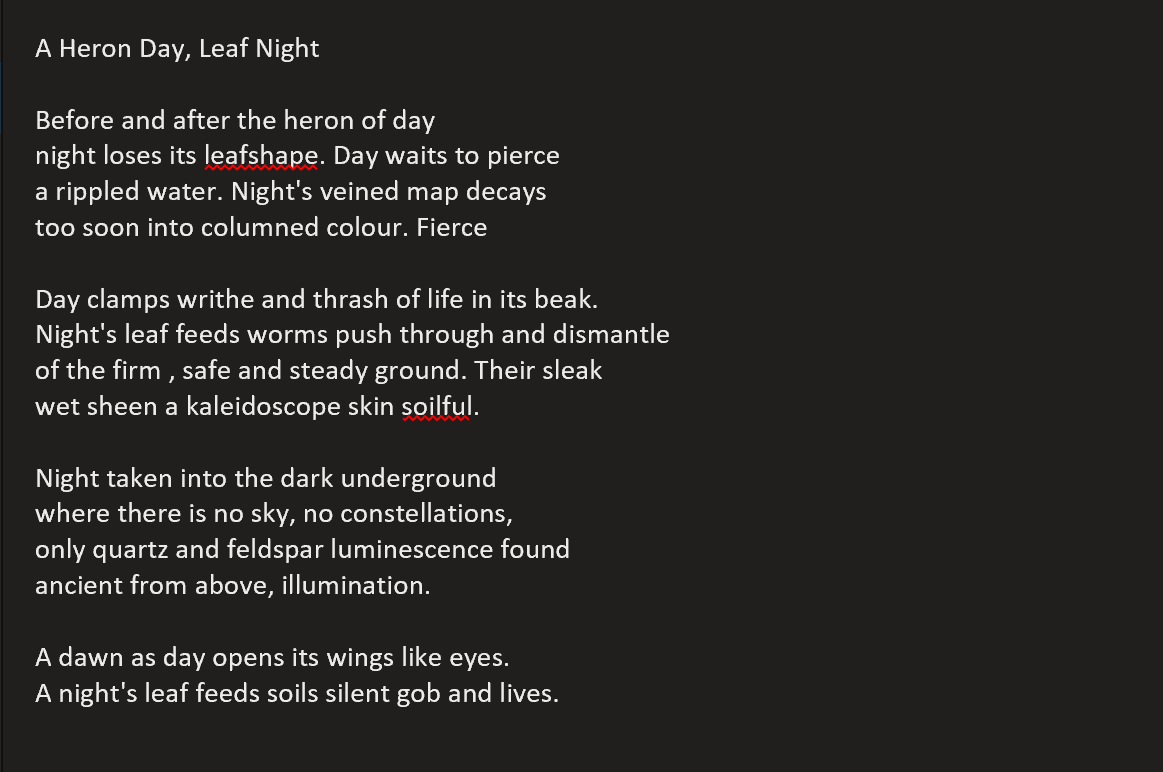
Paul Brookes (responds to all artworks)
Bios and Links
Karen Pierce Gonzalez
is an award-winning writer whose work has appeared in numerous print and online publications, radio shows, and podcasts. Her chapbooks include Coyote in the Basket of My Ribs (Kelsay Books), True North and Sightings from a Star Wheel (Origami Poems Project), and forthcoming Down River with Li Po (Black Cat Poetry Press). Writing credits also include several short plays staged through Fringe Festival of Marin (USA).
With degrees in creative writing, anthropological linguistics, and folklore, she is also a former journalist and folklore columnist who now hosts a quarterly ‘Get Ekphrastic with Folk Art’ blogzine on FolkHeart Press. Other current projects include a series of videos based upon 1) original folktales/legends and 2) imagined prequels/sequels to fables and fairy tales.
Her visual artistry focuses primarily upon assemblage art based upon elements found in nature (tree bark, bird nests, etc.). To date, 50+ of her art pieces, including six cover images, have been or are scheduled to be published in a range of literary journals/magazines.
And she gets to do all that in the verdant rural landscape of San Francisco’s North Bay.
Links: linktr.ee/KPGFolkHeart
Sara Elizabeth Bell
Artist Statement:
Sara Bell has always drawn. As a child, her mother would say, “Go to your room and DRAW something!” when Sara needed a break. She later earned her BFA from the Maryland Institute, College of Art, moved to Northern California, and had 2 children.
Now, she lives in Western North Carolina and embodies the John Muir quote, “And into the forest I go to lose my mind and find my soul.” She ventures off into the mountains and off the beaten path to find beautiful, peaceful places to sit and draw. This provides her with respite from her main task of caring for her autistic son. Then she can return to the hustle and bustle of her world with a clearer mind and peaceful soul. She also develops and completes the drawings using water to lift the inks and watercolor techniques to add color. Once complete, her images capture the beauty and peace of being in the woods.
Most recently Sara has been working in a variety of water based mediums. Her primary modality is to go out into the woods, find a magical place that calls to be drawn and sketch it using water based ink pens. Then she returns to the studio and uses layers of water colors and other inks to fully develop the image capturing the peace and beauty of the natural world.
At other times, Sara returns to the discipline of detailed watercolor painting, drawing and intaglio printmaking to develop her images further. Allowing her to explore deeper themes inspired by her exploration of Brene Brown’s Atlas of the Heart and the therapeutic journey she has been on with her ausome son and her neurotypical daughter.
Sara says: “ I hope you can look at my images and find yourself reminded of being in the wild places and through that, connect with the natural peace being in the presence of trees can provide.”
Robert Frede Kenter
is a multiple-pushcart-nominated poet, writer, visual artist and the publisher/EIC of Ice Floe Press (www.icefloepress.net) whose work explores relationships between illness, disability, family & social histories, climate change, dystopia, myths, dreams, hallucinations and the sacred. Robert’s drawings & paintings are collected internationally, & Robert is currently working on a number of upcoming collaborations and VISPO projects exploring hybridity, colour fields, collage, and reader-response links between abstraction and modes of representation. Robert is a participant in the ongoing Wombwell Rainbow Forms-Challenge project and was a writer in the 2023 WR National Poetry Month project. Recently work in: Storms Journal, Otoliths, Fevers Of the Mind , Acropolis Journal, Street Cake Magazine, Watch Your Head, and many other venues, both in-print and online. In anthologies recently incl.: Recalibrating the Pain Scale (Olney Books, 2023), Seeing in Tongues (Steel Incisors, 2023), Glisk and Glimmer (Sidhe Press, 2023), Deep Time 1 (Black Bough, 2021). Books: EDEN/vispo (2021); Audacity of Form (Ice Floe Press, 2019). Robert lives with ME/CFS, is sometimes down but never out of the game. Twitter: @frede_kenter. IG: r.f.k.vispocityshuffle, icefloe22.
Margaret Royall
has six poetry books. She is published online and in print. Laurel prize nominated 2021 for ‘Where Flora Sings’. Forthcoming in 2024 new collection ‘Toccata and Fugue’ (Hedgehog Press), plus chapbooks from Dreich and Impspired
Website: Margaretroyall.com, X @RoyallMargaret, Instagram @meggiepoet
Frank Colley,
Emily May,
David Southwell,
Susan Richardson,
Mick Jenkinson,
Mick is a poet, songwriter, musician, and freelance arts practitioner from Doncaster. He runs Well Spoken, a monthly poetry evening at Doncaster Brewery, and delivers songwriting and poetry workshops for community arts projects. His second poetry pamphlet, When the Waters Rise, was published by Calder Valley Poetry in 2019, and his latest album The Wheel Keeps on Turning was released in December 2023. More info at www.mickjenkinson.co.uk
Donna Faulkner
née Miller spent her childhood between countries. One foot bare and carefree in New Zealand, the other tiptoeing the coal dust and camaraderie of working class England.
Donna lives in Rangiora, New Zealand but likes to roam .She’s published in erbacce, Havik, Fieldstone Review, New Myths, Bacopa Literary Review and others. Her chapbook ‘The Oracle Of Birds : stories for the fireside’ was recently published by Written Tales.
Instagram @lady_lilith_poet/ Twitter @nee_miller. https://linktr.ee/donnafaulkner
Matt Guntrip,
is a guitarist, songwriter and indie musician in the UK, who has published four albums, and two singles – Penthesilea and Democracy – via CD Baby, available on most channels. The craft of writing lyrics interests him. Through creative writing, he is working to improve and explore the human experience, nature, time, love, loss, rejection, hope and injustice, and thus write better songs.
Matt has had two pieces published on thewombwellrainbow.com and a poem included in ‘Starman Oddity: Poetry and Art inspired by David Bowie’, a book published via Fevers of the Mind (David L O’Nan).
Links
Website: https://mattguntrip.com
iTunes: Matt Guntrip https://apple.co/36Ffcib
YouTube Album Channel: https://www.youtube.com/channel/UC0GRM0Sd7sGv4wY91V69kFg
YouTube acoustic originals: https://www.youtube.com/channel/UCjX-H8leVEJHwDr0cz7f8Mg
YouTube covers: https://www.youtube.com/channel/UC_0ZZIZ9aepJH0WkVblDVHg
Spotify: https://open.spotify.com/album/2vTe1Imrg5NeXf1DyKSGR0?si=yFXdeqFdTUCY_4NhzSW5nQ
Soundcloud Matt Guntrip 7-9: https://soundcloud.com/matt-guntrip-7-9
Other:
Twitter:@MG_7_9
Instagram: matt_guntrip_music
Susan Richardson,
is the author of “Things My Mother Left Behind”, from Baxter House Editions, and “Tiger Lily” an Ekphrastic Collaboration with artist Jane Cornwell, published by JC Studio Press. Her poetry has appeared in The Storms,Crannog, Door is Ajar, California Quarterly, The Opiate Magazine, and Rust+Moth, among others. She also writes the blog, Stories from the Edge of Blindness, and hosts the podcast, A Thousand Shades of Green. You can find out more about Susan on her website,
Gaynor Kane,
Tim Fellows,
is a writer from Chesterfield. His first poetry pamphlet, Heritage, was published in 2019 by Glass Head Press. He publishes on timfellowspoetry.substack.com edits The Fig Tree webzine on figtreepoetry.substack.com
Anjum Wasim Dar,
migrant Pakistani of Kashmiri origin, Masters in English Literature & American Studies, Masters in History, Punjab University, awarded a scholarship for distinction in English Language, holds a Post Graduate Diploma in TEFL, AIOU and a Certificate of Proficiency in English from Cambridge University UK.
An International Award Winner Poet of Merit, Bronze Medal, ISP USA-2000, Short Story Writer, Author of a Novel for Young Adults, “The Adventures of the Multi Colored Lead People” (Unpublished)
Educational Manager, former Head of English Department & Professor of English Literature at Pakistan Air Force AIR University Islamabad.
Digital Artist with Focus on Ekphrastic Poetry. Her latest contribution – 30 Art work pieces for Upcoming Ekphrastic Poetry Event by Mr Paul Brookes of www.wombwellrainbows.com UK for April 2022 Challenge.
Poetry Blog : http://poeticoceans.wordpress.com
Short Story Blog : http://storiesmiracles.wordpress.com
Kevin MacAlan,
Kevin MacAlan’s home is in rural Co Waterford. He has an MA in Creative Writing, and has contributed art, poetry and fiction to many journals, including The Waxed Lemon, An Áitiúil, Howl, Recesses, Bindweed, Purple Unicorn Media, Datura, The Fish Barrel Review, and The Martello.
Emma Datson,
is a 40ish medically interesting, emerging Australian poet and writer, who is beginning to use her voice. You can find more of her writing on her Vocal page and on Twitter. Emma’s superpower is her vocabulary.
Ivor Daniel,
lives in Gloucestershire, UK. His poems have appeared in @litscihub,Steel Jackdaw, iamb, Fevers of the Mind, Roi Fainéant, Ice Floe Press, The Dawntreader, After…, Alien Buddha, @TopTweetTuesday, Wombwell Rainbow, Black Nore Review, Lit.202, Sidhe Press, Black Bough Poem
Twitter: @IvorDaniel Instagram: ivor.daniel.165 Bluesky: @ivordaniel.bsky.social
Francis Powell,
Diane Lowman,
Michelle Barnett
Merril D Smith
lives in southern New Jersey. Her poetry has appeared in publications, including Black Bough Poetry, Acropolis, The Storms, and Sidhe Press. Her full-length collection, River Ghosts (Nightingale & Sparrow Press) was a Black Bough Press featured book.
Twitter/X: @merril_mds
Instagram: mdsmithnj
Blog: merrildsmith.org
Ekphrastic Poetry Challenge~ 2024-In Collaboration with Mr Paul Brookes of The Wombwell Rainbow-Day-1

A Creative Poetry Challenge with Artworks by Sara Elizabeth Bell and Robert Frede Kenter. Azure autumnal graces, in sacred symbolsSteadfast Trinity SEB 1
Ekprastic Poetry Challenge~ 2024-In Collaboration with Mr Paul Brooks of Wombwell Rainbows-Day-1
Thankyou for highlighting your ekphrastic challenge 2024 poem each day on your own website, Merril. Increases the amount of folk who get to read it.
Wonderful to see another response to the ekphrastic challenge from Melissa Lemay on her website. Thankyou Melissa.
Great to see fellow adventurers posting their ekphrastic challenge responses on their own websites, too. Thank you, Merril.
#EkphrasticChallenge2024 Day One. Please join Margaret Royall, Emily May, David Southwell, Susan Richardson, Mick Jenkinson, Matt Guntrip, Merril D Smith, Gaynor Kane, Tim Fellows, Anjum Wasim Dar, Kevin MacAlan, Emma Datson, Ivor Daniel, Francis Powell, Diane Lowman, Michelle Barnett, Donna Faulkner, and I as we respond to the daily artworks of Karen Pierce Gonzalez, Sara Elizabeth Bell and Robert Frede Kenter. Day One. April 1st.
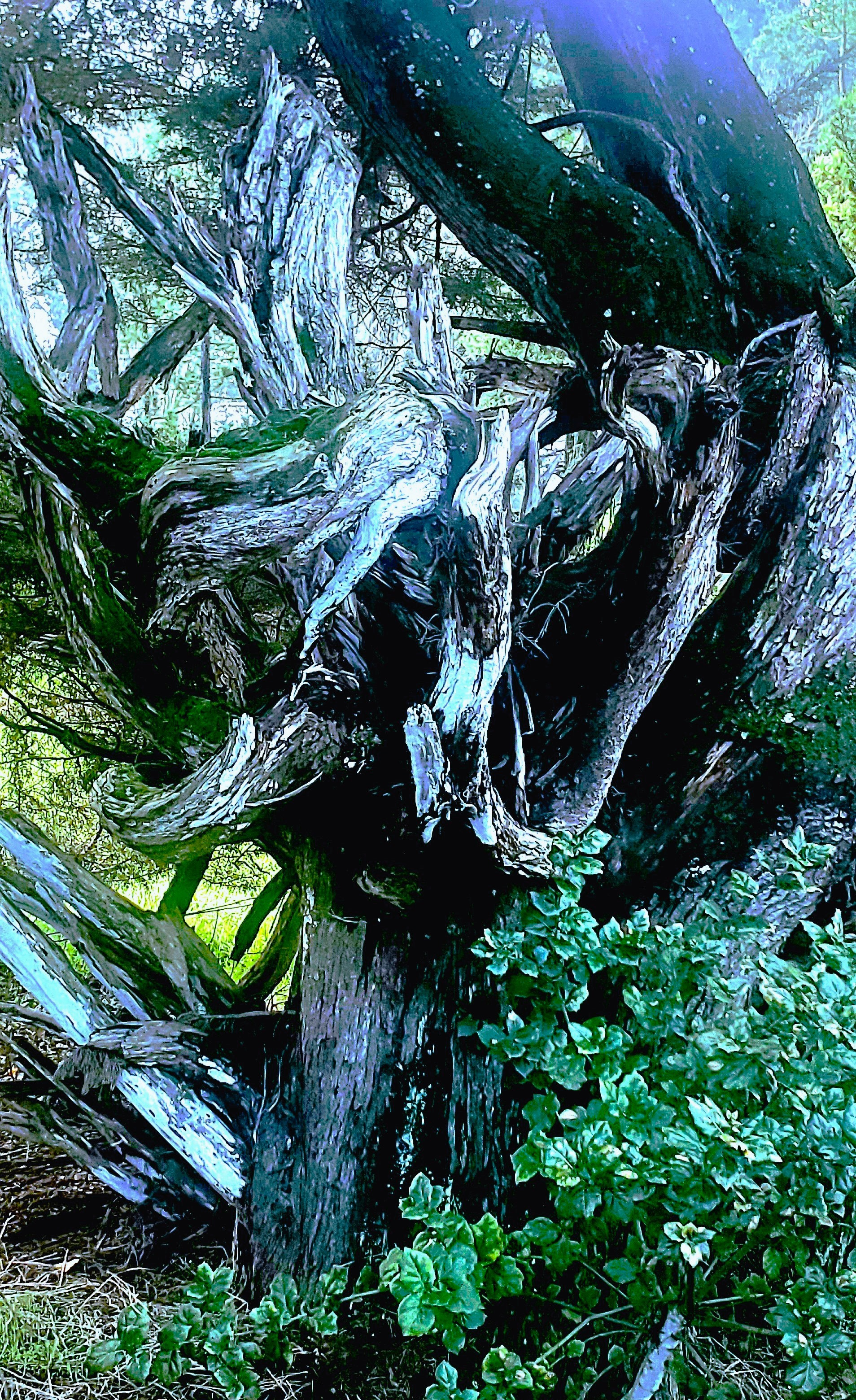
Bent Cypress (KPG1)
Karen Pierce Gonzalez
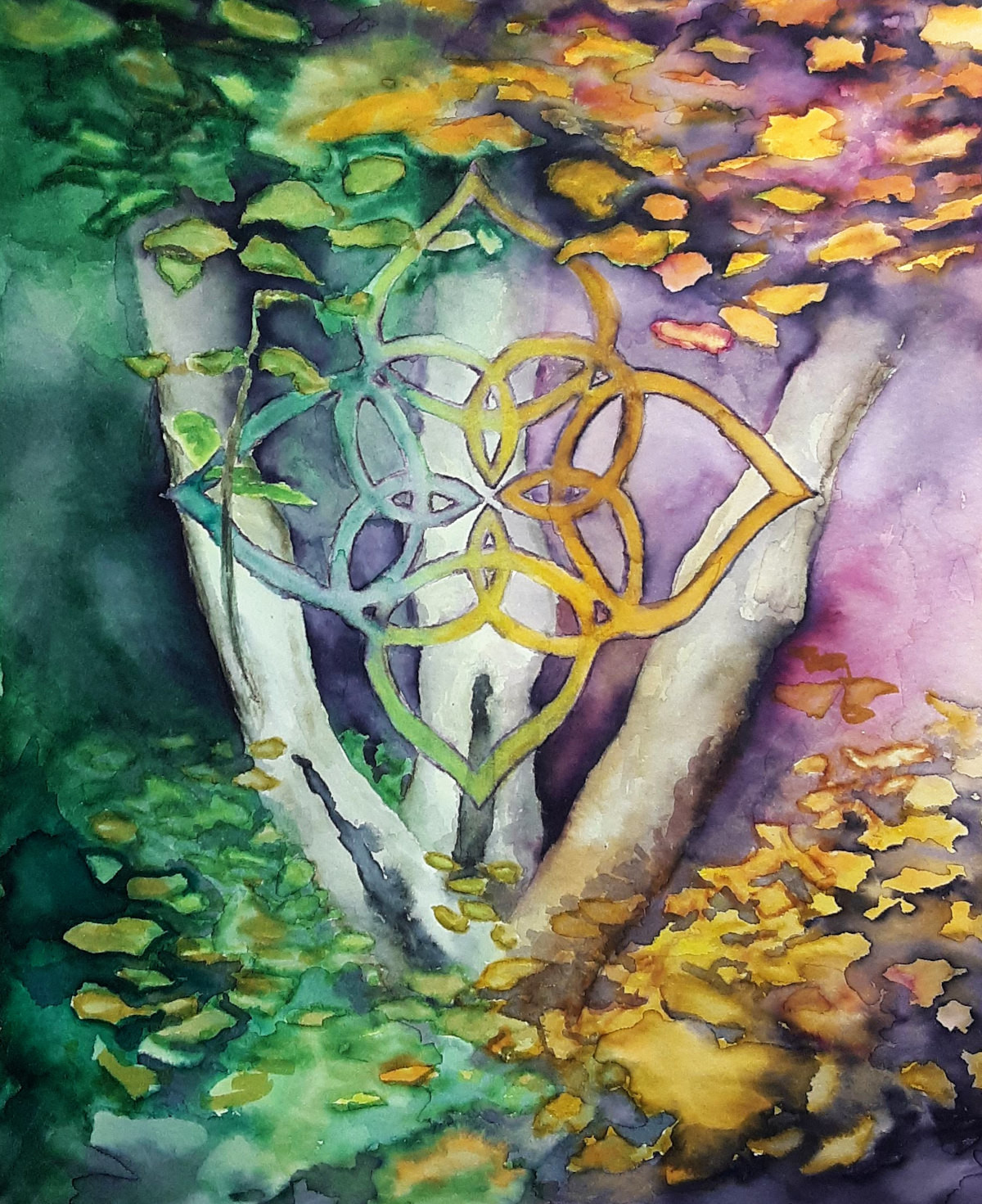
Sara Elizabeth Bell (SEB1)
RFK1 Robert Frede Kenter
In the candlelight
I drink my sad alcohol
As life drips away
Emma Datson (RFK1)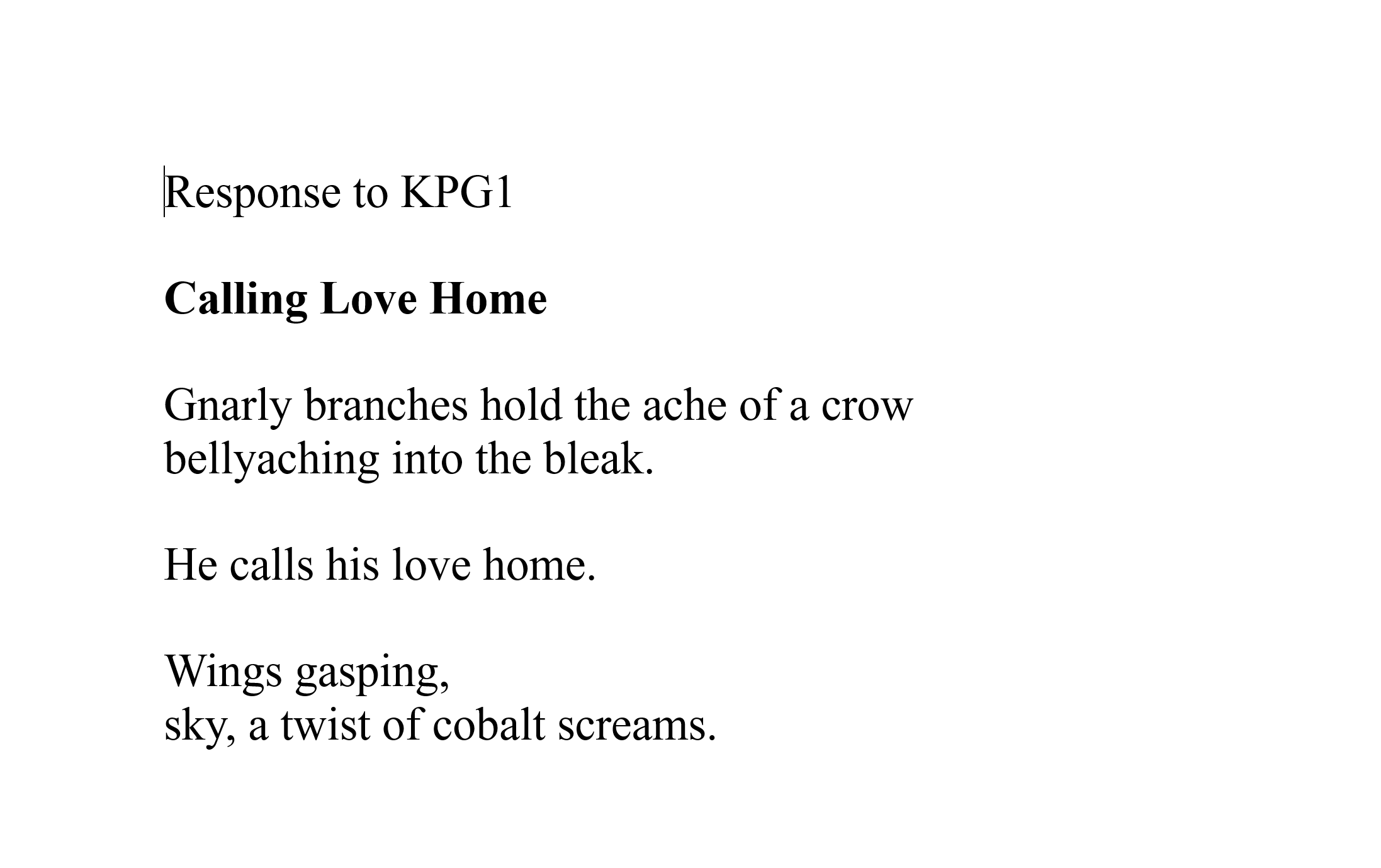
Susan Richardson
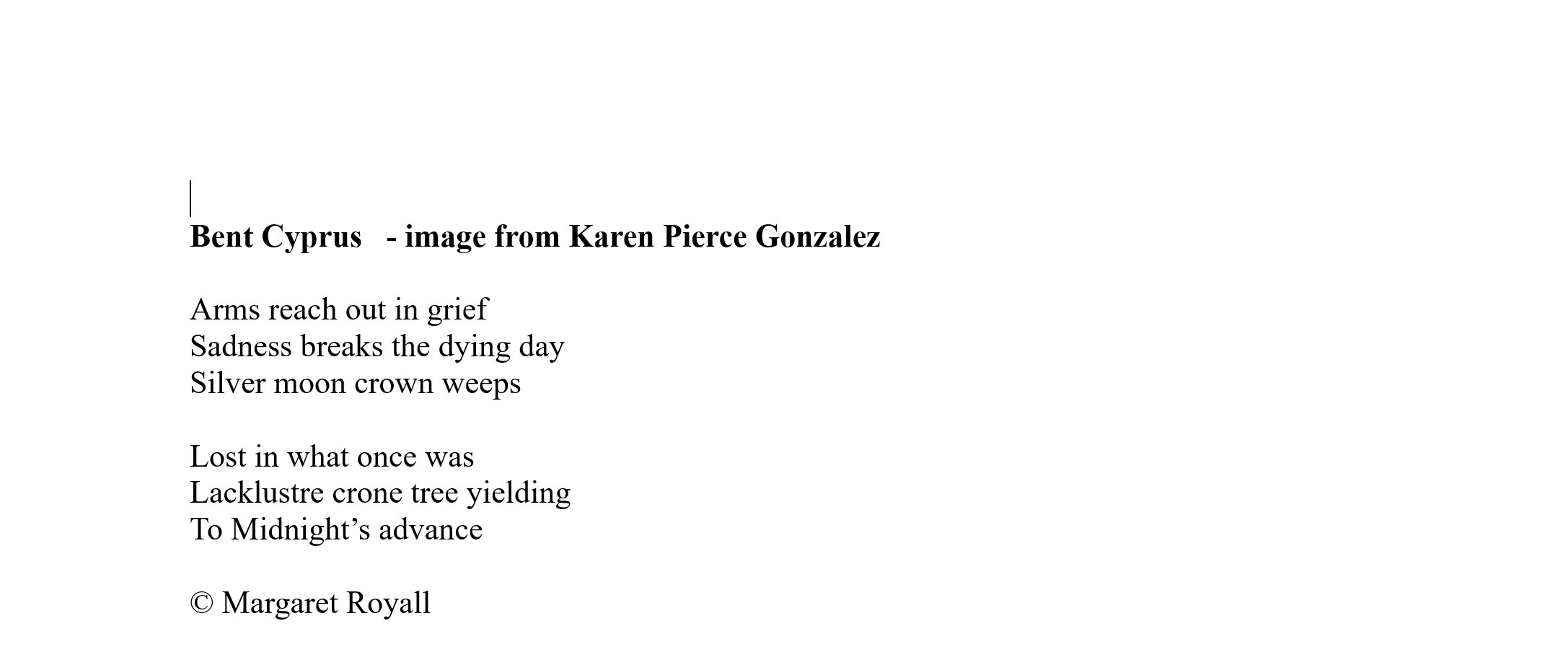
KPG1


Cypress tree of life

Holy, the pursuit of art

Honour the artist


SEB1

Water colour art

Nature refracted colours

Motherly vision
Matt Guntrip
Vision in Blue (Inspired by “Bent Cypress,” Karen Pierce Gonzalez (KPG1)
I dream these colors, an explosion of stars
casting their light, cobalt to cyan,
on the resting winged horse, till he is hued
the twilight-blue of winter snow.
This tasted blue,
shimmering on my lips, light
of dead stars living, swallowed aqua mint.
Shadows of indigo slant,
world-shifting, wings flicker–
clutching a seafoam mane, I fly.
I saw a winged horse in Karen’s bent cypress.
Merril D Smith
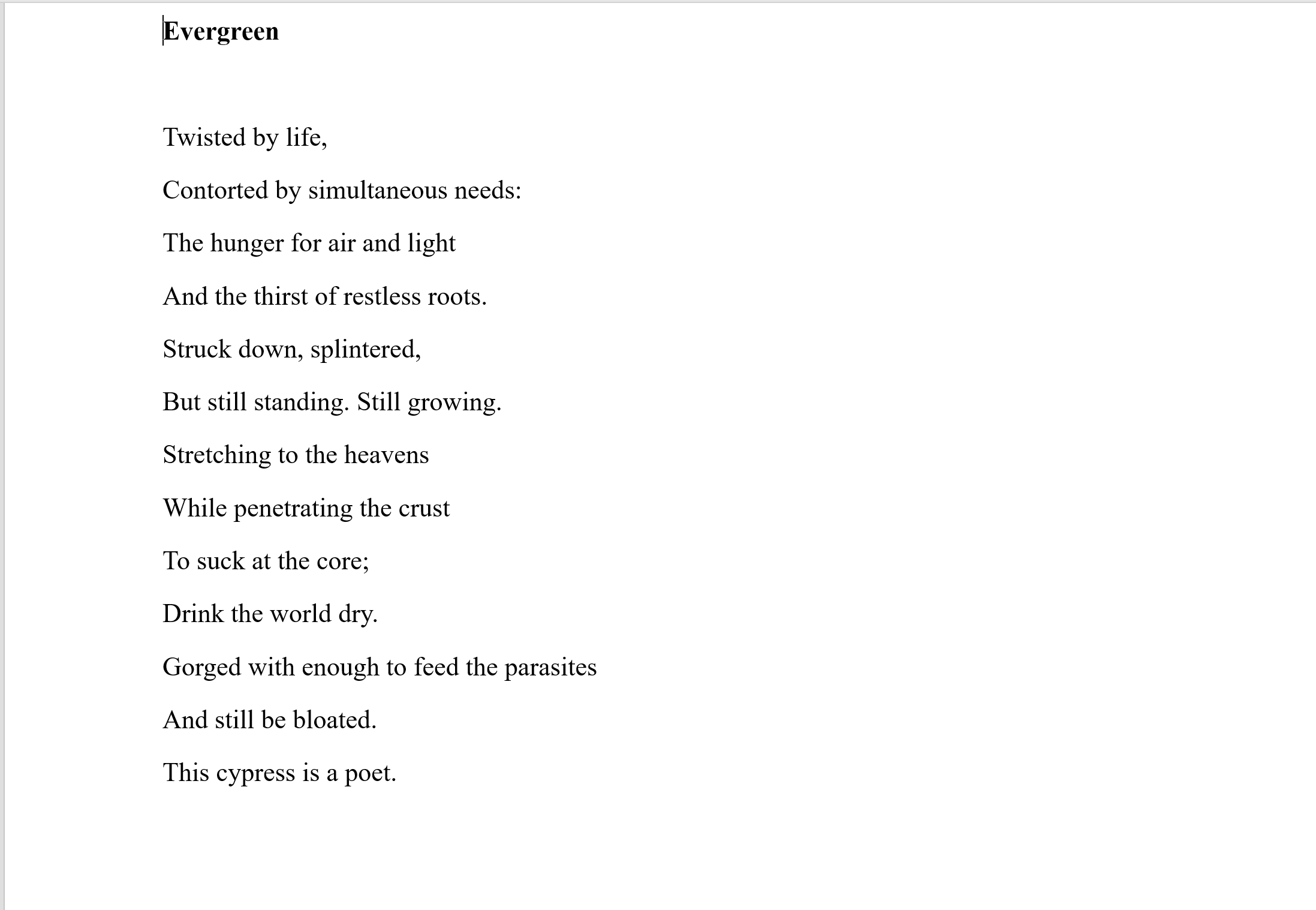
Kevin MacAlan response to KPG1
KPG1 Bent Cypress ~~~ A Haiku
So like God Orcus
covered with waxy bloom
seems a succubus
Anjum Wasim Dar
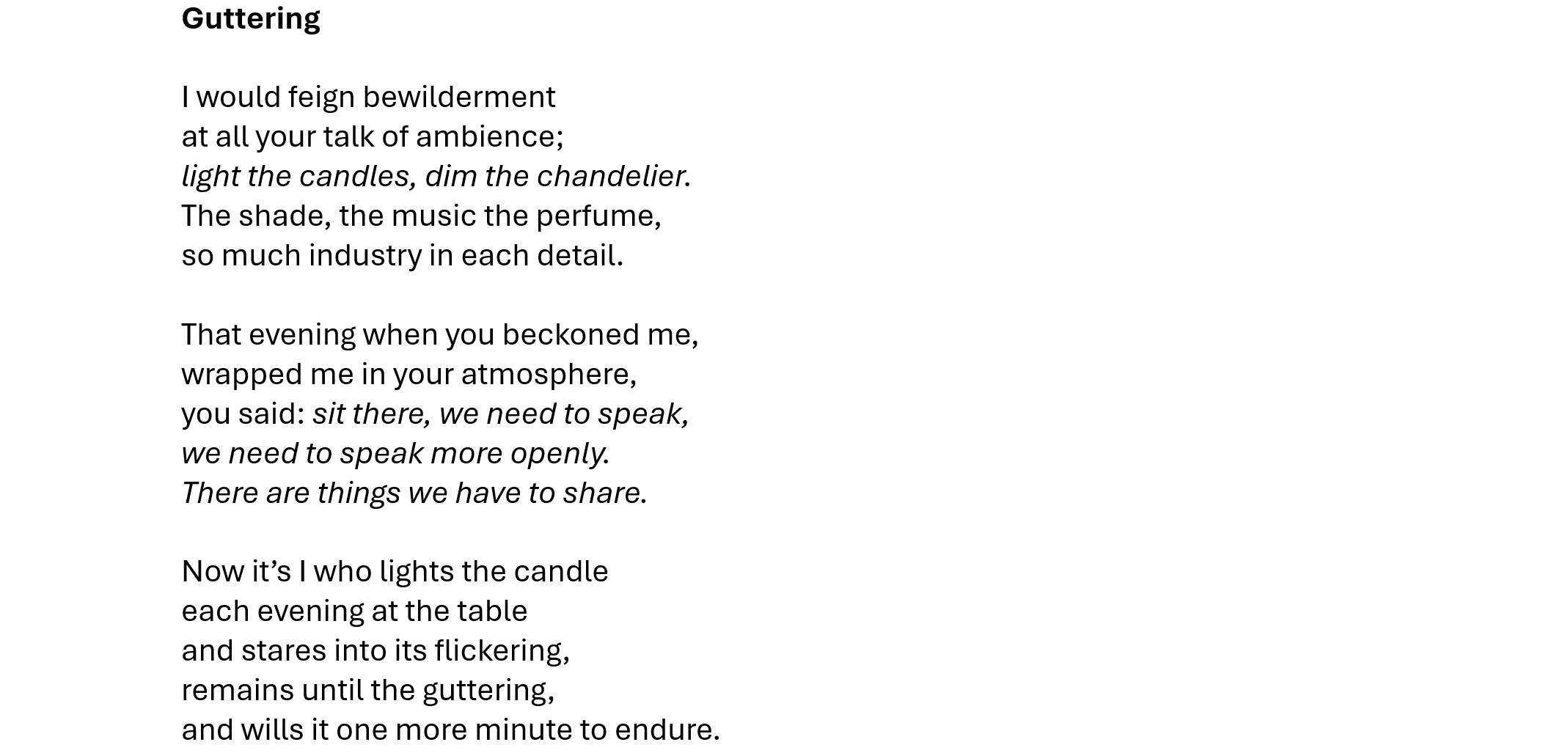
Mick Jenkinson (in response to RFK1)
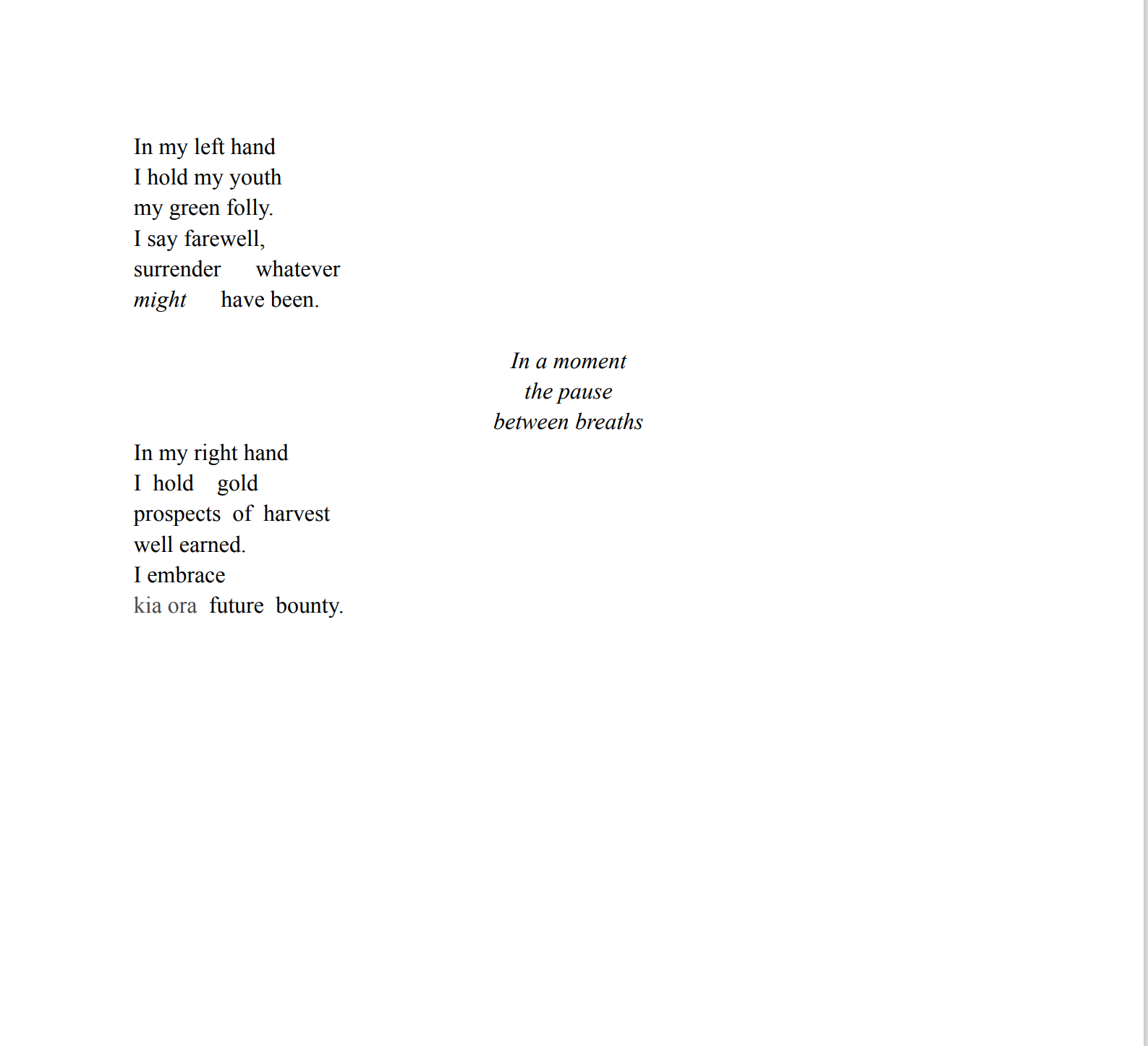 SEB1 – Autumnal Equinox by Donna Faulkner
KPG1 by Donna Faulkner
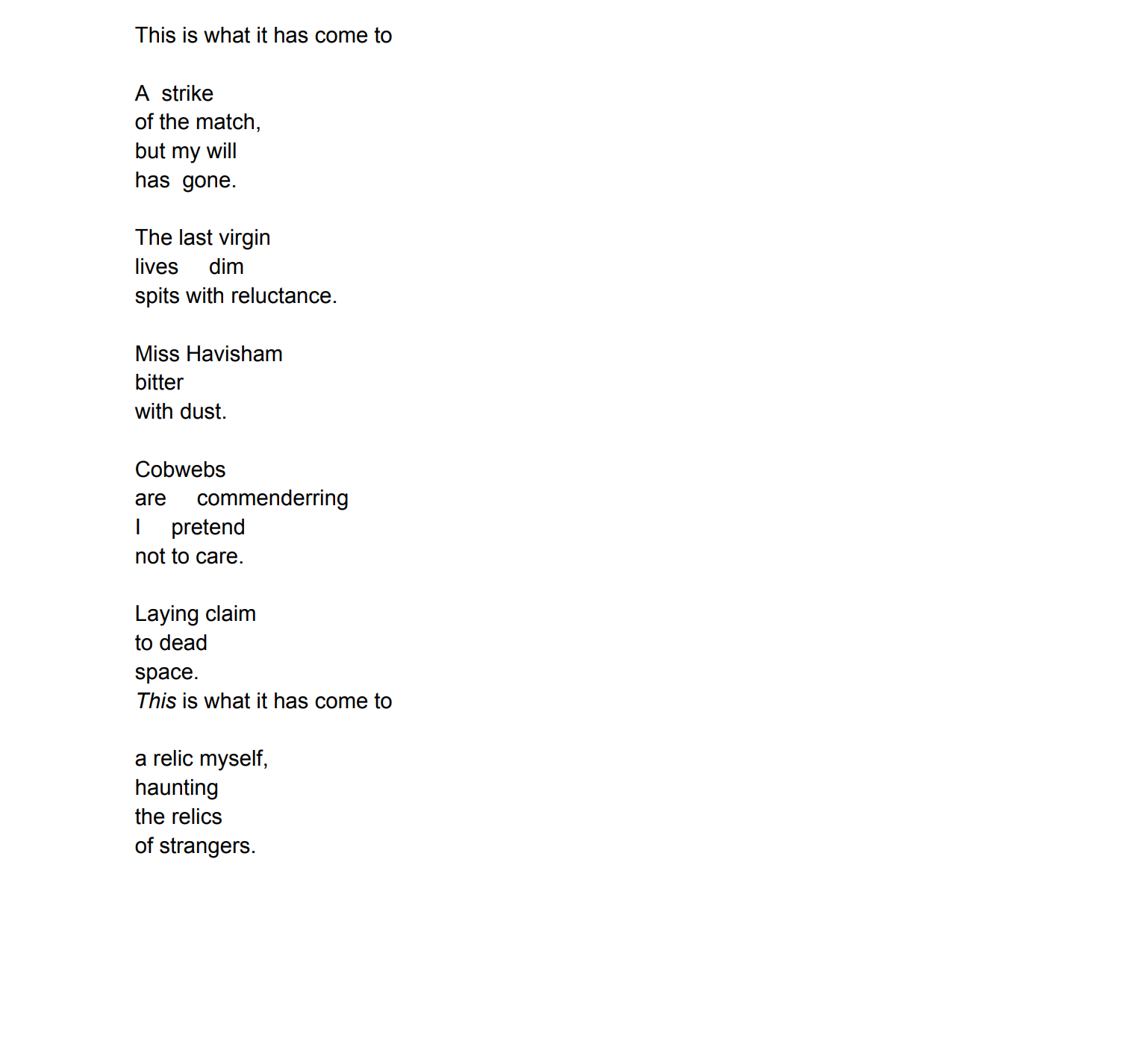
RFK1 by Donna Faulkner
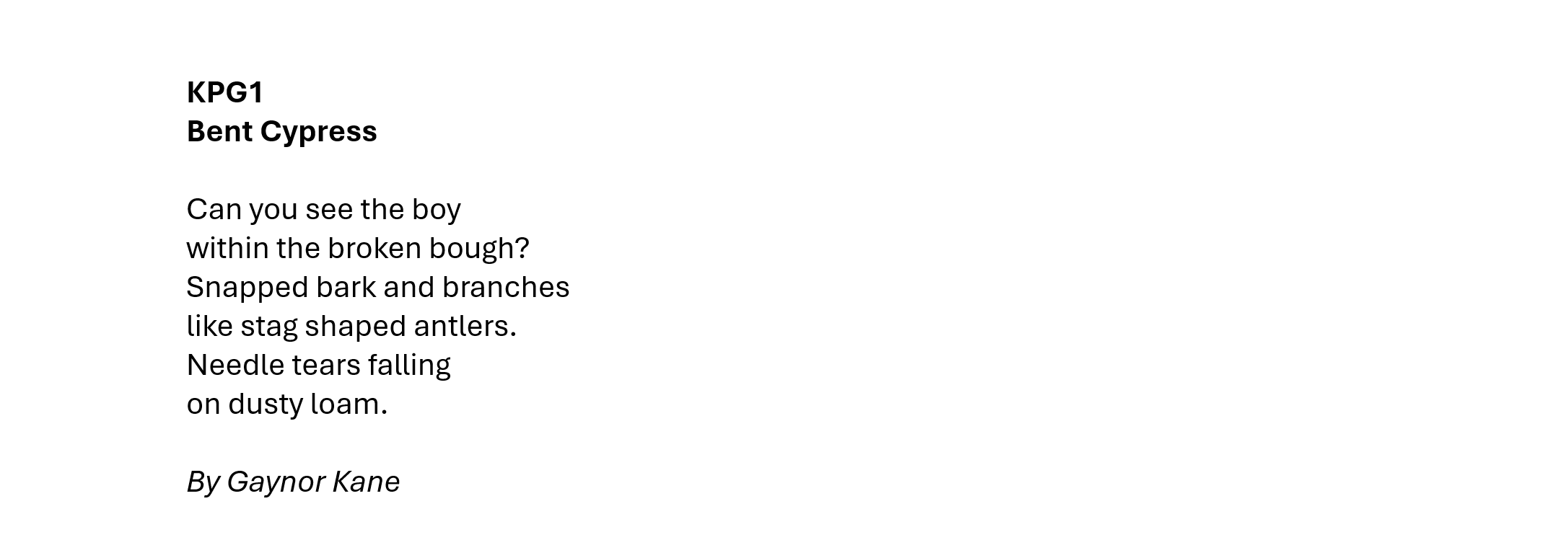
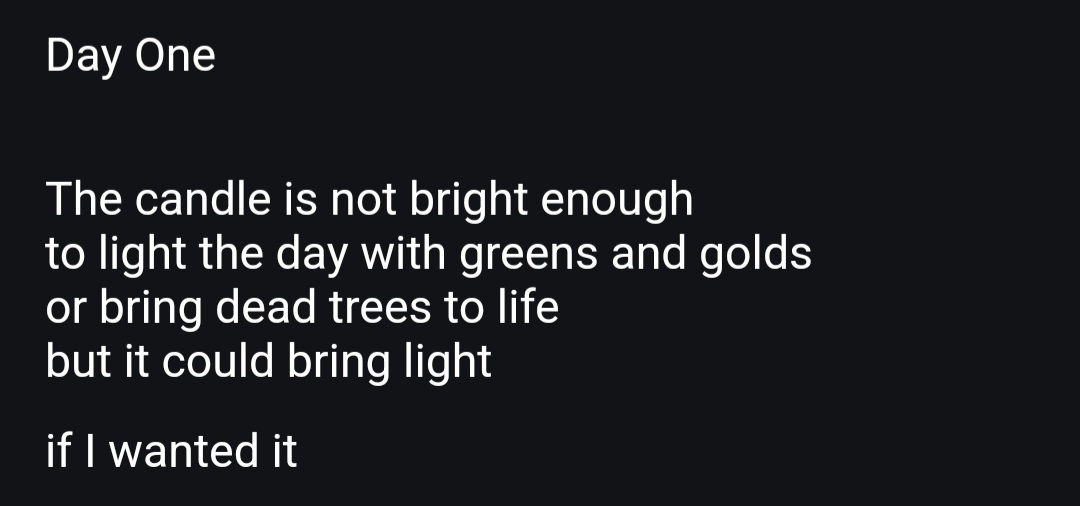
Tim Fellows (All images)
F WORD WARNING
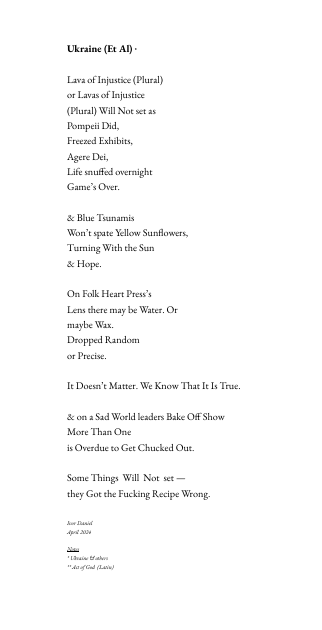
Ivor Daniel
KPG1
Love in Times of Unwanted Change
We have lost our beautiful words for rot, decay, inevitable damage. Lost the intimate language needed for love in times of unwanted change. Don’t call this decline. Don’t call it crippling. I’m in an entangled dance with time and gravity. Think of this as plié, cambré, À terre. Think of this as moment’s in nature’s inescapable ballet.
RFK1
The Rules
I learnt ritual through family osmosis. Mother, grandmother, aunts. The seeping in of stories about how to deal with spirits who spurned silence. Even the dead must have manners. Even the dead must learn to respect the power of siren flame, capturing glass. Living or passed, it is the rules you are never directly taught that become tattooed upon your bones. Do not run on the polished floor. Don’t let the kitchen door slam. And you my ghosts, speak when you are spoken too.
SEB1
Tulled
We have a word where I come from – tulled. It means to stand upon a threshold, held between this and that, now and then. Caught between worlds. Caught between lovers. People talk of those weeks caught between seasons as: ‘tulled times’. I call them beloved. Adore the thrill of holding summer’s ebbing green tide to my back as autumn’s goldening rush comes towards me. Rich are the feral magics in these calendar blurrings.
David Southwell
Nettles
I
I feed on your ash and bones, cattle-pens,
I keep secrets in my jagged tooth leaves,
bonfire sites, refuse dumps, churchyards, middens.
Making my growth pattern a wound that heals.
I’m an old man who bends. Celebrate my
coarseness, scratchiness, sharp, prickly edges.
I am healing green. Hear your every
thought. I turn yellow as sky fetches
no water. Learn the wisdom and laughter.
Replenished back to green, a balanced dream
when tapered as a droplet of water,
flooded I bent bloated in the extreme.
Beside graves I flit between too much and too
little, fat with thirst, or thin with rain or dew.
II
Before I was what you call a cypress
I was what you call Magnolia.
My delicate leaves turned yellow and less
wellness from the soil, the less hardier
I became. My fragrance fell at slightest
frost or rainfall. It was learning that life
goes on. You think these false and wildest
imaginings how you become new life.
How your dreams are often of somewhere else.
How can a nettle dream? Utter nonsense.
I live through the leaves of others, the stealth
of impulses underground, the sense
that their is more life above when rounded
grafted to life below, undergrounded.
Paul Brookes (All images)
Bios and Links
Karen Pierce Gonzalez
is an award-winning writer whose work has appeared in numerous print and online publications, radio shows, and podcasts. Her chapbooks include Coyote in the Basket of My Ribs (Kelsay Books), True North and Sightings from a Star Wheel (Origami Poems Project), and forthcoming Down River with Li Po (Black Cat Poetry Press). Writing credits also include several short plays staged through Fringe Festival of Marin (USA).
With degrees in creative writing, anthropological linguistics, and folklore, she is also a former journalist and folklore columnist who now hosts a quarterly ‘Get Ekphrastic with Folk Art’ blogzine on FolkHeart Press. Other current projects include a series of videos based upon 1) original folktales/legends and 2) imagined prequels/sequels to fables and fairy tales.
Her visual artistry focuses primarily upon assemblage art based upon elements found in nature (tree bark, bird nests, etc.). To date, 50+ of her art pieces, including six cover images, have been or are scheduled to be published in a range of literary journals/magazines.
And she gets to do all that in the verdant rural landscape of San Francisco’s North Bay.
Links: linktr.ee/KPGFolkHeart
Sara Elizabeth Bell
Artist Statement:
Sara Bell has always drawn. As a child, her mother would say, “Go to your room and DRAW something!” when Sara needed a break. She later earned her BFA from the Maryland Institute, College of Art, moved to Northern California, and had 2 children.
Now, she lives in Western North Carolina and embodies the John Muir quote, “And into the forest I go to lose my mind and find my soul.” She ventures off into the mountains and off the beaten path to find beautiful, peaceful places to sit and draw. This provides her with respite from her main task of caring for her autistic son. Then she can return to the hustle and bustle of her world with a clearer mind and peaceful soul. She also develops and completes the drawings using water to lift the inks and watercolor techniques to add color. Once complete, her images capture the beauty and peace of being in the woods.
Most recently Sara has been working in a variety of water based mediums. Her primary modality is to go out into the woods, find a magical place that calls to be drawn and sketch it using water based ink pens. Then she returns to the studio and uses layers of water colors and other inks to fully develop the image capturing the peace and beauty of the natural world.
At other times, Sara returns to the discipline of detailed watercolor painting, drawing and intaglio printmaking to develop her images further. Allowing her to explore deeper themes inspired by her exploration of Brene Brown’s Atlas of the Heart and the therapeutic journey she has been on with her ausome son and her neurotypical daughter.
Sara says: “ I hope you can look at my images and find yourself reminded of being in the wild places and through that, connect with the natural peace being in the presence of trees can provide.”
Robert Frede Kenter
is a multiple-pushcart-nominated poet, writer, visual artist and the publisher/EIC of Ice Floe Press (www.icefloepress.net) whose work explores relationships between illness, disability, family & social histories, climate change, dystopia, myths, dreams, hallucinations and the sacred. Robert’s drawings & paintings are collected internationally, & Robert is currently working on a number of upcoming collaborations and VISPO projects exploring hybridity, colour fields, collage, and reader-response links between abstraction and modes of representation. Robert is a participant in the ongoing Wombwell Rainbow Forms-Challenge project and was a writer in the 2023 WR National Poetry Month project. Recently work in: Storms Journal, Otoliths, Fevers Of the Mind , Acropolis Journal, Street Cake Magazine, Watch Your Head, and many other venues, both in-print and online. In anthologies recently incl.: Recalibrating the Pain Scale (Olney Books, 2023), Seeing in Tongues (Steel Incisors, 2023), Glisk and Glimmer (Sidhe Press, 2023), Deep Time 1 (Black Bough, 2021). Books: EDEN/vispo (2021); Audacity of Form (Ice Floe Press, 2019). Robert lives with ME/CFS, is sometimes down but never out of the game. Twitter: @frede_kenter. IG: r.f.k.vispocityshuffle, icefloe22.
Margaret Royall
has six poetry books. She is published online and in print. Laurel prize nominated 2021 for ‘Where Flora Sings’. Forthcoming in 2024 new collection ‘Toccata and Fugue’ (Hedgehog Press), plus chapbooks from Dreich and Impspired
Website: Margaretroyall.com, X @RoyallMargaret, Instagram @meggiepoet
Frank Colley,
Emily May,
David Southwell,
Susan Richardson,
Mick Jenkinson,
Mick is a poet, songwriter, musician, and freelance arts practitioner from Doncaster. He runs Well Spoken, a monthly poetry evening at Doncaster Brewery, and delivers songwriting and poetry workshops for community arts projects. His second poetry pamphlet, When the Waters Rise, was published by Calder Valley Poetry in 2019, and his latest album The Wheel Keeps on Turning was released in December 2023. More info at www.mickjenkinson.co.uk
Donna Faulkner
née Miller spent her childhood between countries. One foot bare and carefree in New Zealand, the other tiptoeing the coal dust and camaraderie of working class England.
Donna lives in Rangiora, New Zealand but likes to roam .She’s published in erbacce, Havik, Fieldstone Review, New Myths, Bacopa Literary Review and others. Her chapbook ‘The Oracle Of Birds : stories for the fireside’ was recently published by Written Tales.
Instagram @lady_lilith_poet/ Twitter @nee_miller. https://linktr.ee/donnafaulkner
Matt Guntrip,
is a guitarist, songwriter and indie musician in the UK, who has published four albums, and two singles – Penthesilea and Democracy – via CD Baby, available on most channels. The craft of writing lyrics interests him. Through creative writing, he is working to improve and explore the human experience, nature, time, love, loss, rejection, hope and injustice, and thus write better songs.
Matt has had two pieces published on thewombwellrainbow.com and a poem included in ‘Starman Oddity: Poetry and Art inspired by David Bowie’, a book published via Fevers of the Mind (David L O’Nan).
Links
Website: https://mattguntrip.com
iTunes: Matt Guntrip https://apple.co/36Ffcib
YouTube Album Channel: https://www.youtube.com/channel/UC0GRM0Sd7sGv4wY91V69kFg
YouTube acoustic originals: https://www.youtube.com/channel/UCjX-H8leVEJHwDr0cz7f8Mg
YouTube covers: https://www.youtube.com/channel/UC_0ZZIZ9aepJH0WkVblDVHg
Spotify: https://open.spotify.com/album/2vTe1Imrg5NeXf1DyKSGR0?si=yFXdeqFdTUCY_4NhzSW5nQ
Soundcloud Matt Guntrip 7-9: https://soundcloud.com/matt-guntrip-7-9
Other:
Twitter:@MG_7_9
Instagram: matt_guntrip_music
Susan Richardson,
is the author of “Things My Mother Left Behind”, from Baxter House Editions, and “Tiger Lily” an Ekphrastic Collaboration with artist Jane Cornwell, published by JC Studio Press. Her poetry has appeared in The Storms,Crannog, Door is Ajar, California Quarterly, The Opiate Magazine, and Rust+Moth, among others. She also writes the blog, Stories from the Edge of Blindness, and hosts the podcast, A Thousand Shades of Green. You can find out more about Susan on her website,
Gaynor Kane,
Tim Fellows,
is a writer from Chesterfield. His first poetry pamphlet, Heritage, was published in 2019 by Glass Head Press. He publishes on timfellowspoetry.substack.com edits The Fig Tree webzine on figtreepoetry.substack.com
Anjum Wasim Dar,
migrant Pakistani of Kashmiri origin, Masters in English Literature & American Studies, Masters in History, Punjab University, awarded a scholarship for distinction in English Language, holds a Post Graduate Diploma in TEFL, AIOU and a Certificate of Proficiency in English from Cambridge University UK.
An International Award Winner Poet of Merit, Bronze Medal, ISP USA-2000, Short Story Writer, Author of a Novel for Young Adults, “The Adventures of the Multi Colored Lead People” (Unpublished)
Educational Manager, former Head of English Department & Professor of English Literature at Pakistan Air Force AIR University Islamabad.
Digital Artist with Focus on Ekphrastic Poetry. Her latest contribution – 30 Art work pieces for Upcoming Ekphrastic Poetry Event by Mr Paul Brookes of www.wombwellrainbows.com UK for April 2022 Challenge.
Poetry Blog : http://poeticoceans.wordpress.com
Short Story Blog : http://storiesmiracles.wordpress.com
Kevin MacAlan,
Kevin MacAlan’s home is in rural Co Waterford. He has an MA in Creative Writing, and has contributed art, poetry and fiction to many journals, including The Waxed Lemon, An Áitiúil, Howl, Recesses, Bindweed, Purple Unicorn Media, Datura, The Fish Barrel Review, and The Martello.
Emma Datson,
is a 40ish medically interesting, emerging Australian poet and writer, who is beginning to use her voice. You can find more of her writing on her Vocal page and on Twitter. Emma’s superpower is her vocabulary.
Ivor Daniel,
lives in Gloucestershire, UK. His poems have appeared in @litscihub,Steel Jackdaw, iamb, Fevers of the Mind, Roi Fainéant, Ice Floe Press, The Dawntreader, After…, Alien Buddha, @TopTweetTuesday, Wombwell Rainbow, Black Nore Review, Lit.202, Sidhe Press, Black Bough Poem
Twitter: @IvorDaniel Instagram: ivor.daniel.165 Bluesky: @ivordaniel.bsky.social
Francis Powell,
Diane Lowman,
Michelle Barnett
Merril D Smith
lives in southern New Jersey. Her poetry has appeared in publications, including Black Bough Poetry, Acropolis, The Storms, and Sidhe Press. Her full-length collection, River Ghosts (Nightingale & Sparrow Press) was a Black Bough Press featured book.
Twitter/X: @merril_mds
Instagram: mdsmithnj
Blog: merrildsmith.org
EkphrasticChallenge2024 Day Two. Please join Margaret Royall, Emily May, David Southwell, Mick Jenkinson, Matt Guntrip, Merril D Smith, Gaynor Kane, Susan Richardson, Tim Fellows, Anjum Wasim Dar, Kevin MacAlan, Emma Datson, Ivor Daniel, Francis Powell, Diane Lowman, Michelle Barnett, Donna Faulkner, and I as we respond to the daily artworks of Karen Pierce Gonzalez, Sara Elizabeth Bell and Robert Frede Kenter. April 2nd .
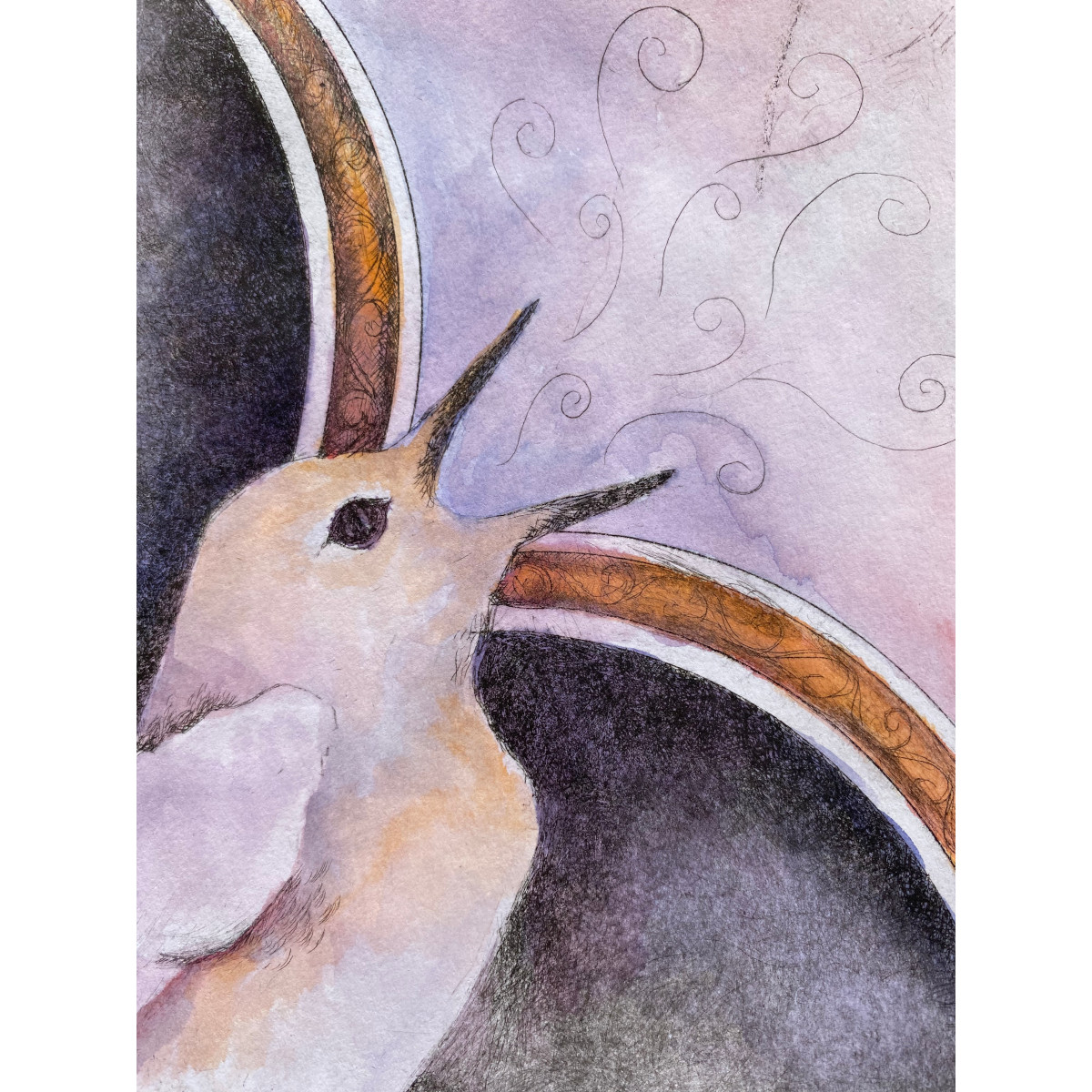 SEB2
SEB2  KPG2
KPG2 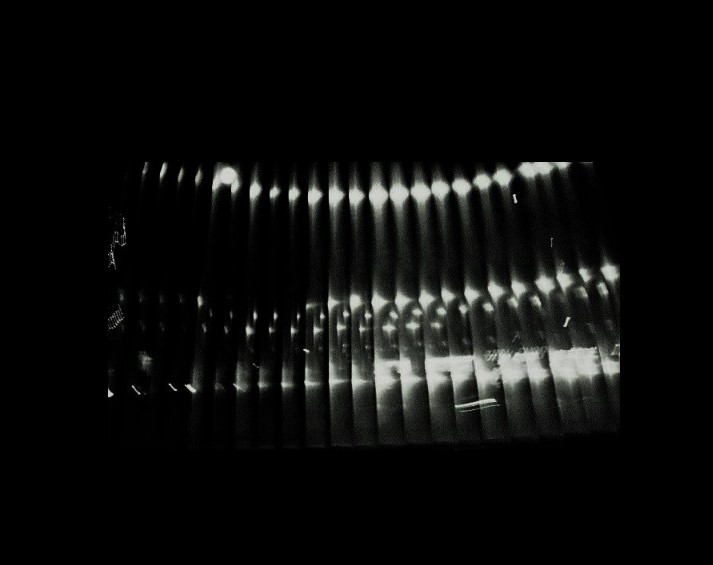 RFK2 Robert Frede Kenter
 Tim Fellows
Emma Datson
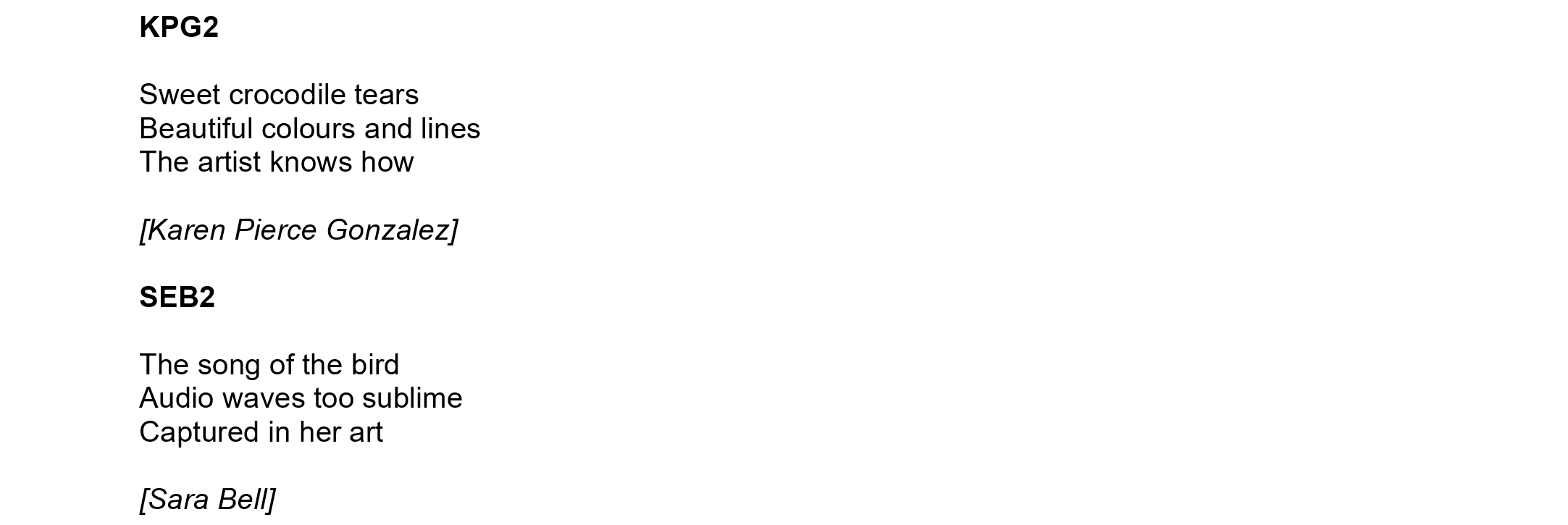 Matt Guntrip
 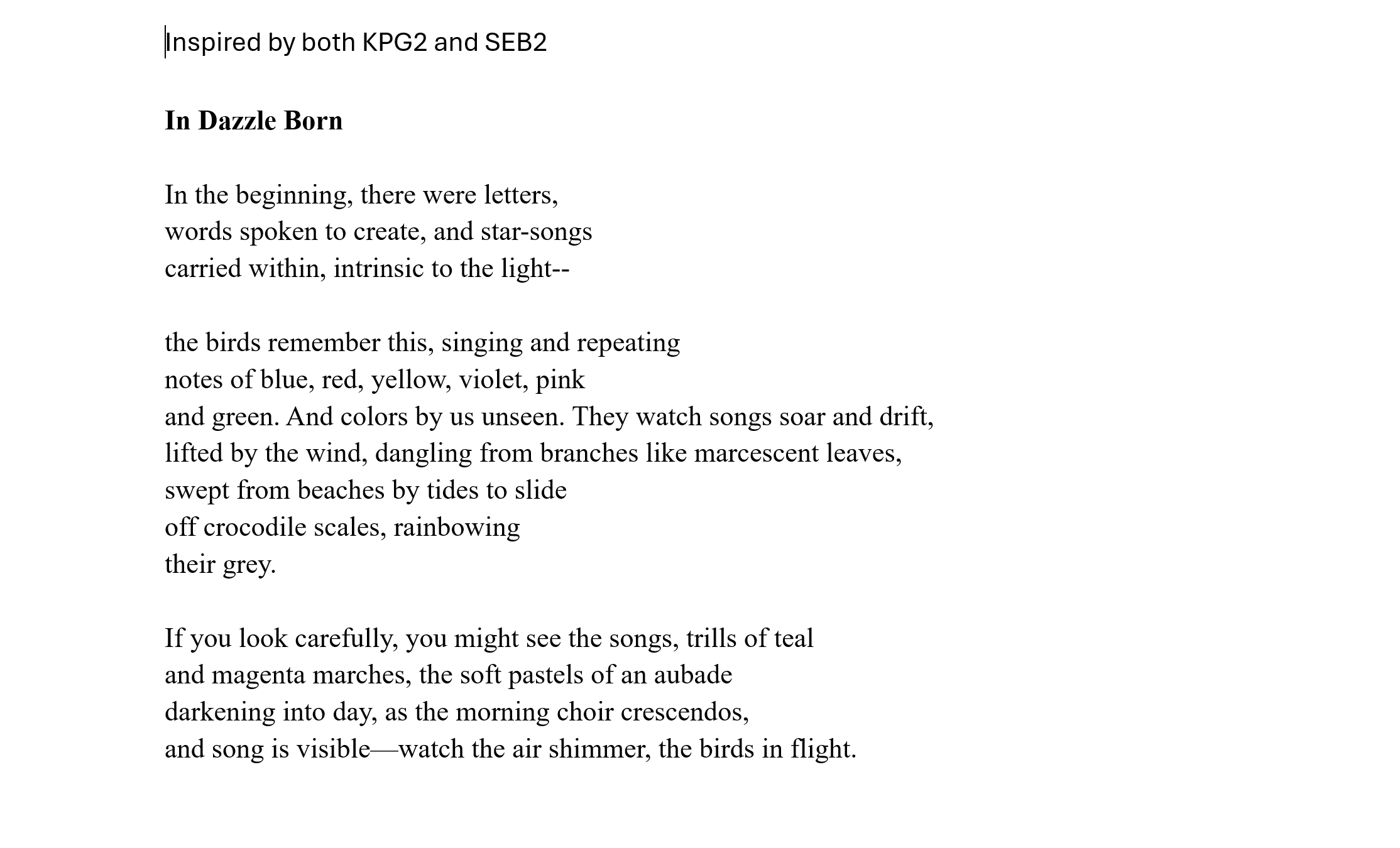 Merril D. Smith
 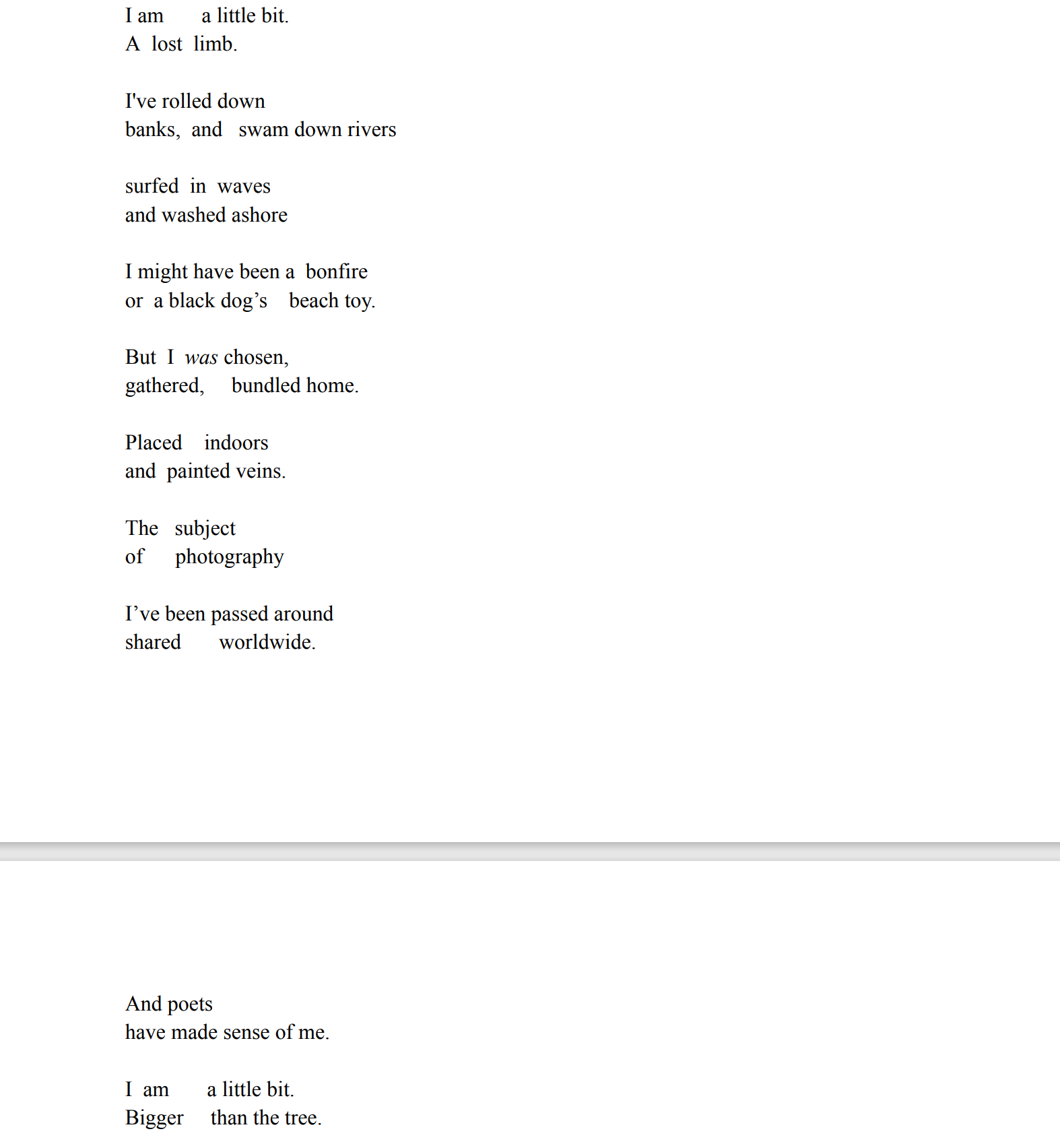 Donna Faulkner (KPG2)
 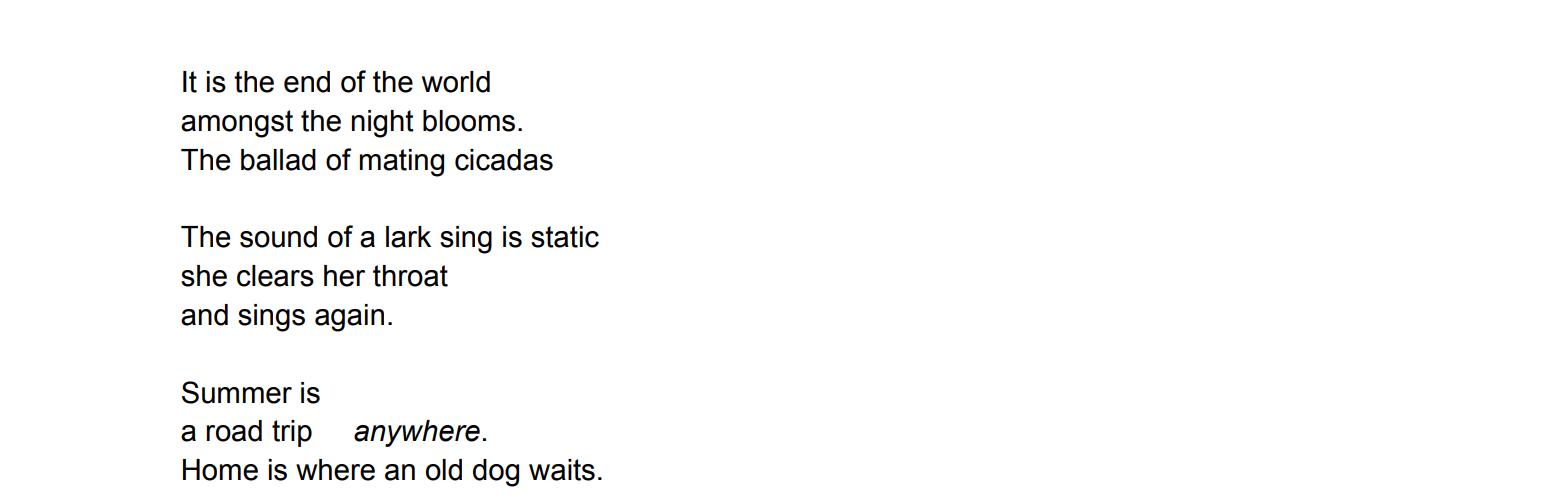 Donna Faulkner (SEB2)
 Paul Brookes Bios And Links Karen Pierce Gonzalez is an award-winning writer whose work has appeared in numerous print and online publications, radio shows, and podcasts. Her chapbooks include Coyote in the Basket of My Ribs (Kelsay Books), True North and Sightings from a Star Wheel (Origami Poems Project), and forthcoming Down River with Li Po (Black Cat Poetry Press). Writing credits also include several short plays staged through Fringe Festival of Marin (USA). With degrees in creative writing, anthropological linguistics, and folklore, she is also a former journalist and folklore columnist who now hosts a quarterly ‘Get Ekphrastic with Folk Art’ blogzine on FolkHeart Press. Other current projects include a series of videos based upon 1) original folktales/legends and 2) imagined prequels/sequels to fables and fairy tales. Her visual artistry focuses primarily upon assemblage art based upon elements found in nature (tree bark, bird nests, etc.). To date, 50+ of her art pieces, including six cover images, have been or are scheduled to be published in a range of literary journals/magazines. And she gets to do all that in the verdant rural landscape of San Francisco’s North Bay. Links: linktr.ee/KPGFolkHeart Sara Elizabeth Bell Artist Statement: Sara Bell has always drawn. As a child, her mother would say, “Go to your room and DRAW something!” when Sara needed a break. She later earned her BFA from the Maryland Institute, College of Art, moved to Northern California, and had 2 children. Now, she lives in Western North Carolina and embodies the John Muir quote, “And into the forest I go to lose my mind and find my soul.” She ventures off into the mountains and off the beaten path to find beautiful, peaceful places to sit and draw. This provides her with respite from her main task of caring for her autistic son. Then she can return to the hustle and bustle of her world with a clearer mind and peaceful soul. She also develops and completes the drawings using water to lift the inks and watercolor techniques to add color. Once complete, her images capture the beauty and peace of being in the woods Most recently Sara has been working in a variety of water based mediums. Her primary modality is to go out into the woods, find a magical place that calls to be drawn and sketch it using water based ink pens. Then she returns to the studio and uses layers of water colors and other inks to fully develop the image capturing the peace and beauty of the natural world. At other times, Sara returns to the discipline of detailed watercolor painting, drawing and intaglio printmaking to develop her images further. Allowing her to explore deeper themes inspired by her exploration of Brene Brown’s Atlas of the Heart and the therapeutic journey she has been on with her awesome son and her neurotypical daughter. Sara says: “ I hope you can look at my images and find yourself reminded of being in the wild places and through that, connect with the natural peace being in the presence of trees can provide.” Robert Frede Kenter is a multiple-pushcart-nominated poet, writer, visual artist and the publisher/EIC of Ice Floe Press (www.icefloepress.net) whose work explores relationships between illness, disability, family & social histories, climate change, dystopia, myths, dreams, hallucinations and the sacred. Robert’s drawings & paintings are collected internationally, & Robert is currently working on a number of upcoming collaborations and VISPO projects exploring hybridity, colour fields, collage, and reader-response links between abstraction and modes of representation. Robert is a participant in the ongoing Wombwell Rainbow Forms-Challenge project and was a writer in the 2023 WR National Poetry Month project. Recently work in: Storms Journal, Otoliths, Fevers Of the Mind , Acropolis Journal, Street Cake Magazine, Watch Your Head, and many other venues, both in-print and online. In anthologies recently incl.: Recalibrating the Pain Scale (Olney Books, 2023), Seeing in Tongues (Steel Incisors, 2023), Glisk and Glimmer (Sidhe Press, 2023), Deep Time 1 (Black Bough, 2021). Books: EDEN/vispo (2021); Audacity of Form (Ice Floe Press, 2019). Robert lives with ME/CFS, is sometimes down but never out of the game. Twitter: @frede_kenter. IG: r.f.k.vispocityshuffle, icefloe22. Margaret Royall has six poetry books. She is published online and in print. Laurel prize nominated 2021 for ‘Where Flora Sings’. Forthcoming in 2024 new collection ‘Toccata and Fugue’ (Hedgehog Press), plus chapbooks from Dreich and Impspired Website: Margaretroyall.com, X @RoyallMargaret, Instagram @meggiepoet Frank Colley, Emily May, David Southwell, Susan Richardson, Mick Jenkinson, Mick is a poet, songwriter, musician, and freelance arts practitioner from Doncaster. He runs Well Spoken, a monthly poetry evening at Doncaster Brewery, and delivers songwriting and poetry workshops for community arts projects. His second poetry pamphlet, When the Waters Rise, was published by Calder Valley Poetry in 2019, and his latest album The Wheel Keeps on Turning was released in December 2023. More info at www.mickjenkinson.co.uk Donna Faulkner née Miller spent her childhood between countries. One foot bare and carefree in New Zealand, the other tiptoeing the coal dust and camaraderie of working class England. Donna lives in Rangiora, New Zealand but likes to roam . She’s published in erbacce, Havik, Fieldstone Review, New Myths, Bacopa Literary Review and others. Her chapbook ‘The Oracle Of Birds : stories for the fireside’ was recently published by Written Tales. Instagram @lady_lilith_poet/ Twitter @nee_miller. https://linktr.ee/donnafaulkner Matt Guntrip, is a guitarist, songwriter and indie musician in the UK, who has published four albums, and two singles – Penthesilea and Democracy – via CD Baby, available on most channels. The craft of writing lyrics interests him. Through creative writing, he is working to improve and explore the human experience, nature, time, love, loss, rejection, hope and injustice, and thus write better songs. Matt has had two pieces published on thewombwellrainbow.com and a poem included in ‘Starman Oddity: Poetry and Art inspired by David Bowie’, a book published via Fevers of the Mind (David L O’Nan). Links Website: https://mattguntrip.com iTunes: Matt Guntrip https://apple.co/36Ffcib YouTube Album Channel: https://www.youtube.com/channel/UC0GRM0Sd7sGv4wY91V69kFg YouTube acoustic originals: https://www.youtube.com/channel/UCjX-H8leVEJHwDr0cz7f8Mg YouTube covers: https://www.youtube.com/channel/UC_0ZZIZ9aepJH0WkVblDVHg Spotify: https://open.spotify.com/album/2vTe1Imrg5NeXf1DyKSGR0?si=yFXdeqFdTUCY_4NhzSW5nQ Soundcloud Matt Guntrip 7-9: https://soundcloud.com/matt-guntrip-7-9 Other: Twitter:@MG_7_9 Instagram: matt_guntrip_music Susan Richardson is the author of “Things My Mother Left Behind”, from Baxter House Editions, and “Tiger Lily” an Ekphrastic Collaboration with artist Jane Cornwell, published by JC Studio Press. Her poetry has appeared in The Storms,Crannog, Door is Ajar, California Quarterly, The Opiate Magazine, and Rust+Moth, among others. She also writes the blog, Stories from the Edge of Blindness, and hosts the podcast, A Thousand Shades of Green. You can find out more about Susan on her website, Gaynor Kane, Tim Fellows, is a writer from Chesterfield. His first poetry pamphlet, Heritage, was published in 2019 by Glass Head Press. He publishes on timfellowspoetry.substack.com edits The Fig Tree webzine on figtreepoetry.substack.com Anjum Wasim Dar, migrant Pakistani of Kashmiri origin, Masters in English Literature & American Studies, Masters in History, Punjab University, awarded a scholarship for distinction in English Language, holds a Post Graduate Diploma in TEFL, AIOU and a Certificate of Proficiency in English from Cambridge University UK. An International Award Winner Poet of Merit, Bronze Medal, ISP USA-2000, Short Story Writer, Author of a Novel for Young Adults, “The Adventures of the Multi Colored Lead People” (Unpublished) Educational Manager, former Head of English Department & Professor of English Literature at Pakistan Air Force AIR University Islamabad. Digital Artist with Focus on Ekphrastic Poetry. Her latest contribution – 30 Art work pieces for Upcoming Ekphrastic Poetry Event by Mr Paul Brookes of www.wombwellrainbows.com UK for April 2022 Challenge. Poetry Blog : http://poeticoceans.wordpress.com Short Story Blog : http://storiesmiracles.wordpress.com Kevin MacAlan,
Kevin MacAlan’s home is in rural Co Waterford. He has an MA in Creative Writing, and has contributed art, poetry and fiction to many journals, including The Waxed Lemon, An Áitiúil, Howl, Recesses, Bindweed, Purple Unicorn Media, Datura, The Fish Barrel Review, and The Martello.
Emma Datson, is a 40ish medically interesting, emerging Australian poet and writer, who is beginning to use her voice. You can find more of her writing on her Vocal page and on Twitter. Emma’s superpower is her vocabulary. Ivor Daniel, lives in Gloucestershire, UK. His poems have appeared in @litscihub,Steel Jackdaw, iamb, Fevers of the Mind, Roi Fainéant, Ice Floe Press, The Dawntreader, After…, Alien Buddha, @TopTweetTuesday, Wombwell Rainbow, Black Nore Review, Lit.202, Sidhe Press, Black Bough Poem. Twitter: @IvorDaniel Instagram: ivor.daniel.165 Bluesky: @ivordaniel.bsky.social Francis Powell, Diane Lowman, Michelle Barnett
Merril D Smith
lives in southern New Jersey. Her poetry has appeared in publications, including Black Bough Poetry, Acropolis, The Storms, and Sidhe Press. Her full-length collection, River Ghosts (Nightingale & Sparrow Press) was a Black Bough Press featured book. Twitter/X: @merril_mds Instagram: mdsmithnj Blog: merrildsmith.org

