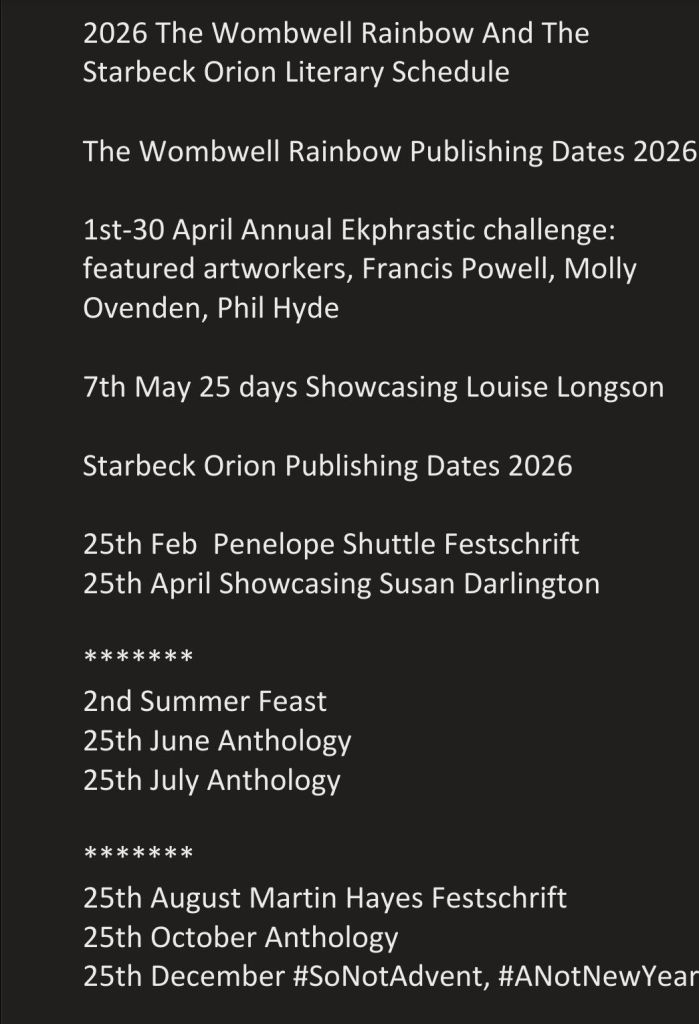
Dates for your new diary:
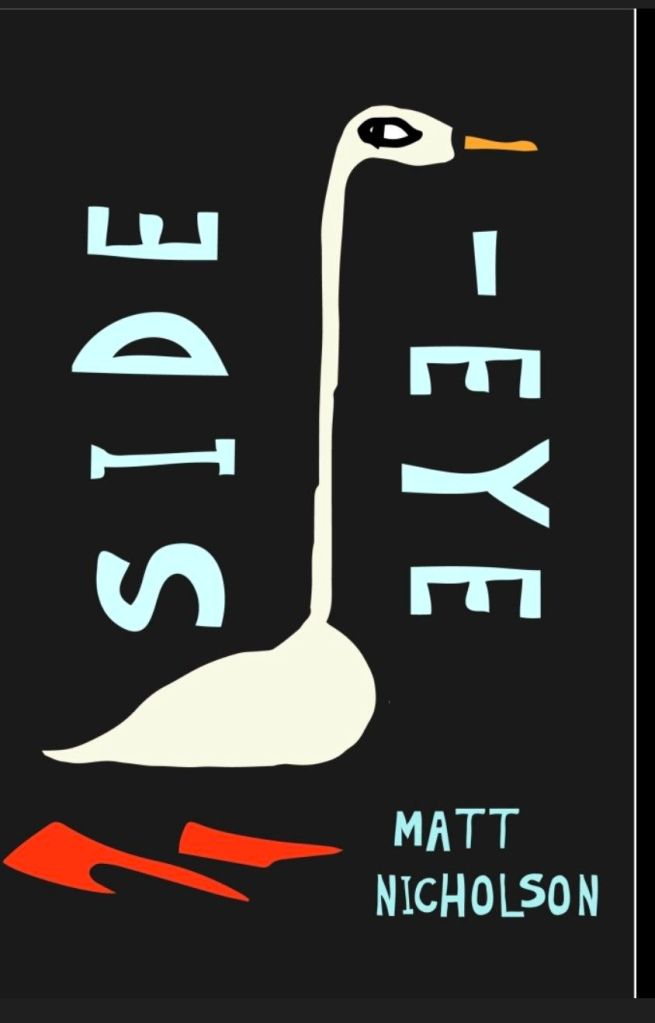
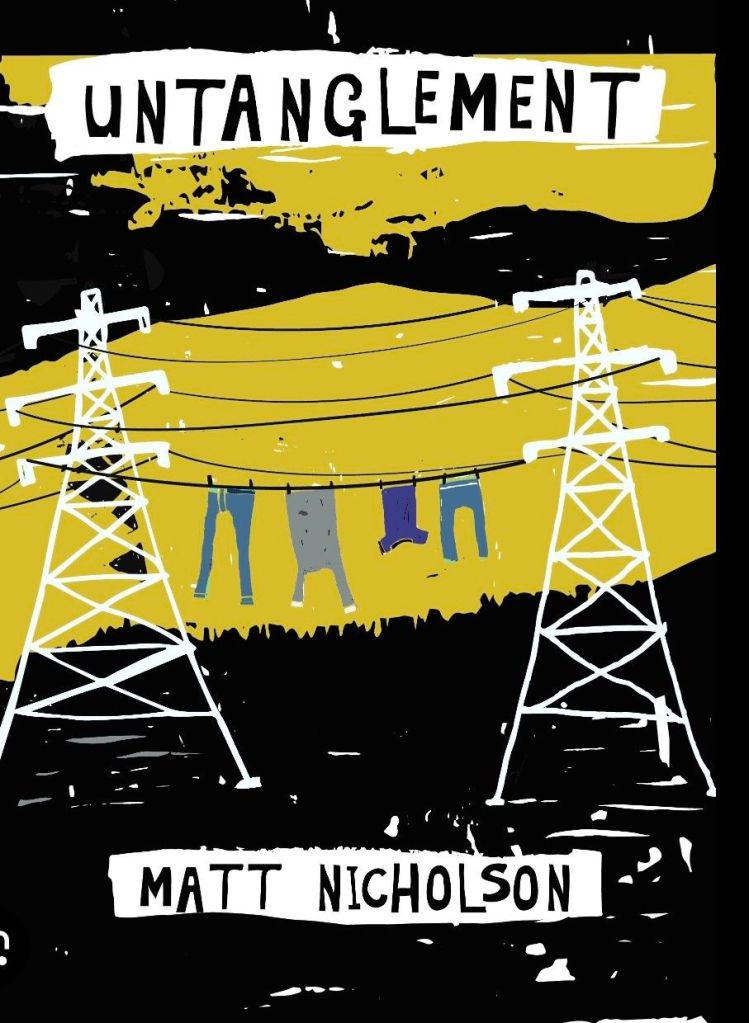
Matt Nicholson is a poet and performer from East Yorkshire. He published his fifth collection, Side-eye, on Yaffle Press, in the summer of 2025. He often performs with 3 other Hull poets as “The 4 Johns”. His work is sometimes dark and visceral, but also sensitive and heart-wrenchingly honest, and even sometimes funny, leading Helen Mort to describe his poems as “capable of breaking your heart and mending it again”. He has toured all around mainland Britain and loves performing to new audiences. For books and more information please visit http://www.mattpoet.com.
The Interview (Originally begun in 2023, updated by Matt in 2025)
Q1 (2023): I last interviewed you in 2020. Please tell me what you’ve been up to since then?
A1(2023): The big project that filled my writing time in 2020 and 2021 was writing and editing the poems that became my fourth poetry collection, “Untanglement”, and because it was very important to me that the poems stood up on the page as well as out loud, I attended many classes and workshops, including those run by Gill and Mark Connors at Yaffle, and mentoring sessions with Helen Mort. I also upped my reading of other people’s poems, pamphlets and collections by way of further ongoing poetry education. “Untanglement” was published by Yaffle Press in the Spring of 2022 and I took it around as many poetry events as I could. In the second half of 2022 I began working with three other poets from my part of the country – Peter Knaggs, Jim Higo, and Mike Watts – and calling ourselves “the 4 Johns”, we did a number of readings, shows and workshops together, and went on to write a Theatre/Spoken Word show, “All we’ve got time for” which premiered in the summer of 2023 and went on, via several theatre performances, to be part of The Morecambe Poetry Festival in that September.
Q2 (2023): How did you decide on the order of the poems in “Untanglement”?
A2(2025): The simple answer, for Untanglement, is that I had help. I think it’s important where poems sit in terms of an order and in relation to one another. I think poems can speak to one another in a collection but also, if you put the big important pieces too close to one another, they can make things imbalanced. As such one would be foolish not to take advice from those with more experience in such matters, and I sort guidance from the editorial team at Yaffle and from Helen Mort to help me get it right. I would like to add to this answer by saying that this is one of the hardest things to be sure about, and there do not seem to be any hard and fast scientific methods for it.
Q3 (2023/2025): How important is narrative in your poetry?
A3 (2025): Narrative has become more important to me during the writing of the last two collections. I wanted to tell more stories alongside the more lyrical poems that I continue to write. I felt able to be more open and honest with the reader by writing more narrative poems such as “Said big me to little me” and “I met him at a counter-demonstration” in “Untanglement”, and I felt that improved all my writing because of this more open, honest approach, and I hope that trend has and will continue.
Q3.1 (2023): How is opening the poem up, making them more story based important for live performance?
A3.1 (2023): I think you need to engage with an audience during a live performance / reading. It is likely, to me, that the poems you are sharing with an audience will engage them more if there is variety in terms of style and also intensity, and if some pieces are easier to engage with than others.
Q4 (2023): How important is form in your poetry?
A4 (2023): Because of the way an idea develops into one of my poems, starting off with how a line sounds to me out loud, and then getting the subsequent lines to develop from that beginning, and often in relation to that original rhythm, there probably aren’t many of my poems that adhere strictly to any classical forms. I do enjoy reading “form” poetry and have tried to write villanelles, sonnets and other forms in workshops etc. but they haven’t been the ones that I have had published, so as yet, it is not a strength I can claim. I think, because my poems all tend to start life orally, they do have elements of conversational/everyday speech in them and so there are bits of naturally occurring/accidental iambic pentameter, and some bits might resemble other elements of form too. And when the words make it onto the page, I find the shape of poems is becoming more interesting to me, but then I’m not sure that’s exactly what you mean by “form” in your question.
Q4.1 (2023): Why is it important that elements of conversation occur in your poetry? I am thinking particularly of Yorkshire dialect?
A4.1 (2023): I think it’s important for characters in poems (as in any literature) to be authentic and relatable, to use vocabulary and sentence structure that adds dimension to them for the reader. How a person speaks is often an immediate way to steer the reader to understand that character and to flesh out their world.
Q5 (2023): What do you think about the idea that a poem’s meaning should always be elusive?
A5 (2025): Over time, I have come to the conclusion that the problem with this notion is the “always” in the question. There are usually reasons why a poet does things in a poem the way they do and decides how to present their words and meanings. If it makes sense to the writer to keep the meaning of a poem elusive, be it for reasons of subject, sensitivity, to influence how a subject is thought about by a reader, or to create some kind of literary enigma for whatever reason, that is just as valid, assuming it’s done well, as it would be if the writer had been explicit and open about the meaning of a poem, as long as that is also done equally as well.
Q6(2025): How did you decide on the order of the poems in your latest book?
A6(2025): Side-eye was written over three years, from the end of 2022 onwards, and it resulted in approximately 350 poems being written for the final 60 to be chosen from. As a result of so many pieces hanging around and coming and going , they were initially separated into eight groups, to make them more manageable and to group poems into subsets by subject matter. As time went on, and as before, following conversations with Helen Mort and Mark Connors, those eight groups were whittled down to 4 by means of merging and rethinking their definitions, and the 350 poems were gradually reduced to about 120. Then as the title of the collection and the tone and themes began to present themselves from that 120, I was able to, with advice, get the number to 60 and to choose the order of the poems and, very late in proceedings, exactly what order those sections would appear in the book.
Q7(2025): What projects are you working on at the moment?
A7(2025): I am a little nervous to say too much about my current focus in case doing so were to jinx it, but I will tell you that it involves writing lots of poems about different fears and phobias, submitting those poems to relevant people and places, and then potentially creating a workshop format that will be based on the same subject matter. I am also looking out for some poets to mentor, who I can pass on all I’ve learned from so many great people over the last ten years or so as a poet myself.
The Interview
Q:1. How did you decide on the order of the poems in your book?
The poems are grouped by theme so that one flows on from the last. At some stages there is a complete change of theme but I try to keep a link between each poem and the one that went before it wherever possible.
Q:2. How do you think that your poetry has moved on from your previous collection?
I think I have given up trying to use forms such as rhyme, sonnets etc. though a few rhyming couplets do work their way in occasionally. Certainly none of the poems in this book were ever written intending to be rhymed or take any other form. Even though this collection is shorter than my last and indeed my first, there are fewer poems that I have felt unsure about, worrying that they were little more than chopped up prose. There are a couple I think that about, at least partly. There are a lot of the same themes, places and people featured here that appeared in my previous two collections. In some ways the book has been more inspired by more recent events, which is I suppose inevitable, though the distant past remains a feature of my work, which is also inevitable as other memories have come back to me since I wrote my last two books. I am definitely more aware of myself having aged and aging since I began writing, and I think this is reflected in my poems.
Q:2.1. How has aging affected this collection?
It contains a lot of poems about my childhood, which is something that I am aware of slipping further an further into the past each day, and a lot of poems about death – though not my own, which – without wanting to sound too depressing, is something I am aware of getting closer to each day. When I wrote the poem ‘Forty’ which is in my last book, I sounded quite optimistic. I still do, or try to, but I think I shall be writing quite a different sort of poem when I get to fifty. There are one or two poems about books and authors, and up until a couple of years ago I spent a lot of my reading time re-reading fiction. I re-read poetry now but every novel I have read this year and I think last year has been one I haven’t read before. I am aware that time is no longer standing still, and there are things I have to read while I am still able. This leads me on to one of the many physical signs of aging I have gradually begun to notice. I don’t think I will be able to cope without reading glasses for much longer.
Q:2.1.1. How has the awareness of time slipping by ever faster effected the writing of the poems?
It has reminded me that I can’t keep saying I have got lots of time left to write many more poems, though I hope that is the case. For too long I said I wasn’t writing anything at the moment but always meant or hoped to take it up again one day, when I found the inspiration. It has made me prioritise writing the next poem.
Q:2.1.1.1. How has this sense of urgency manifested itself in how and what you write?
It hasn’t made me feel that I must write something every day, even if it’s just a draft, or set aside a particular time each day or even each week for writing, just to make sure I produce something. I do that with reading but not writing. Though I do say to myself, just because I wrote a poem yesterday doesn’t mean I can’t write one today as well. I have been known on rare occasions to write more than one on the same say. In terms of what I write, there are some things and people I have felt I can’t write about while those people are still alive, but if I wait for them to no longer be here then the poem may never get written, not only because they could outlive me but I may forget the idea. Once I get an idea for a poem in my head I have to at least try and write it then.
Q:3. How did you decide on the title?
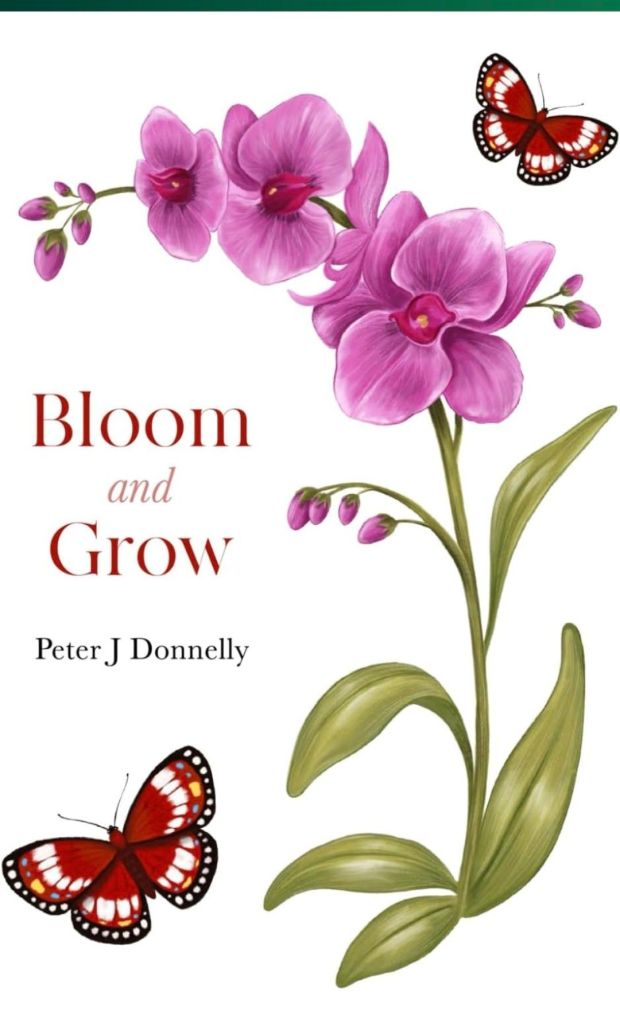
As always, I used the title of one of the poems in the book. I am not sure that ‘Bloom and Grow’ is the best one in the collection, but it is linked to many of the others by theme, not just the people mentioned in it. There are not really any poems about plants here but there are ones that mention flowers – tulips and dandelions. There are poems about fruit – wild raspberries in particular, and one called ‘Growing Fruit’ although it isn’t about growing real fruit at all but makes mention of marzipan fruits and my first memories of them which brings me back to my grandmother who features in a few of the poems.
Q:4 Your poetry is very interrogative, asking questions of the person’s featured. Intentional?
To an extent I think it is intentional. There are lots of things I have asked in a poem that I would never really ask the person in the poem, whether they are still alive or not. Many of the questions are rhetorical, asking things we can never know.
Q:4.1. How much do you think this reveals about N’s personality?
I presume you mean ‘N’ mentioned in the poem ‘Bloom and Grow’. I suppose that there were many things I didn’t know about him and couldn’t ask as neither of us felt comfortable discussing them. Though he wasn’t a blood relation, I did and do feel a lot like him, though in many ways we couldn’t have been more different. I would rather not list the characteristics as it may sound like self-praise.
(Sorry, Peter. N is a technical abbreviation for Narrator. Editor)
To an extent I think it is intentional. There are lots of things I have asked in a poem that I would never really ask the person in the poem, whether they are still alive or not. Many of the questions are rhetorical, asking things we can never know.
Q:5. Why do you think you are moving away from rhyming poetry?
One of the first things I was told about poems as a child was that they do not have to rhyme, and yet I don’t remember reading one that didn’t rhyme until I was in my late teens. Back then I wasn’t able to distinguish between verse and poetry, couldn’t always see internal rhyme or half-rhymes. I think I came to believe that you could write anything and so long as it looked like a poem on the page you could call it one. But poetry is meant to be spoken and heard as well as read. I now see that chopped up prose is not poetry just as rhyming verse often is not. Sometimes it is a good idea to work to a form and within the constraints required, but it doesn’t come naturally to me. I believe the use of similes, metaphors and alliteration, if used well and they don’t sound contrived, is more effective than rhyme or iambic pentameter.
Q:6. How far do you think the title “Bloom And Grow” refers to your own development as a poet?
It wasn’t intended to refer to my flourishing as a poet, but I don’t mind if it is interpreted that way. I wouldn’t say that my third book is my best one yet. As with all of them, I think some of the poems in it are better than others. It is the shortest, perhaps ironically. I hope it means that my development is an ongoing process, one that obviously will end one day as everything does, but hopefully not for a very long time.
Q:7. Once having read the collection what do you hope the reader will leave with?
I hope they will have a desire to read more of my work, including my first two books if they haven’t already done so. If they have read the others I hope they will see that my writing style has developed in the two years since my first one was published, and that they will look forward to my next book, whenever that will appear.
*******
You can buy this collection here:
 The Wombwell Rainbow