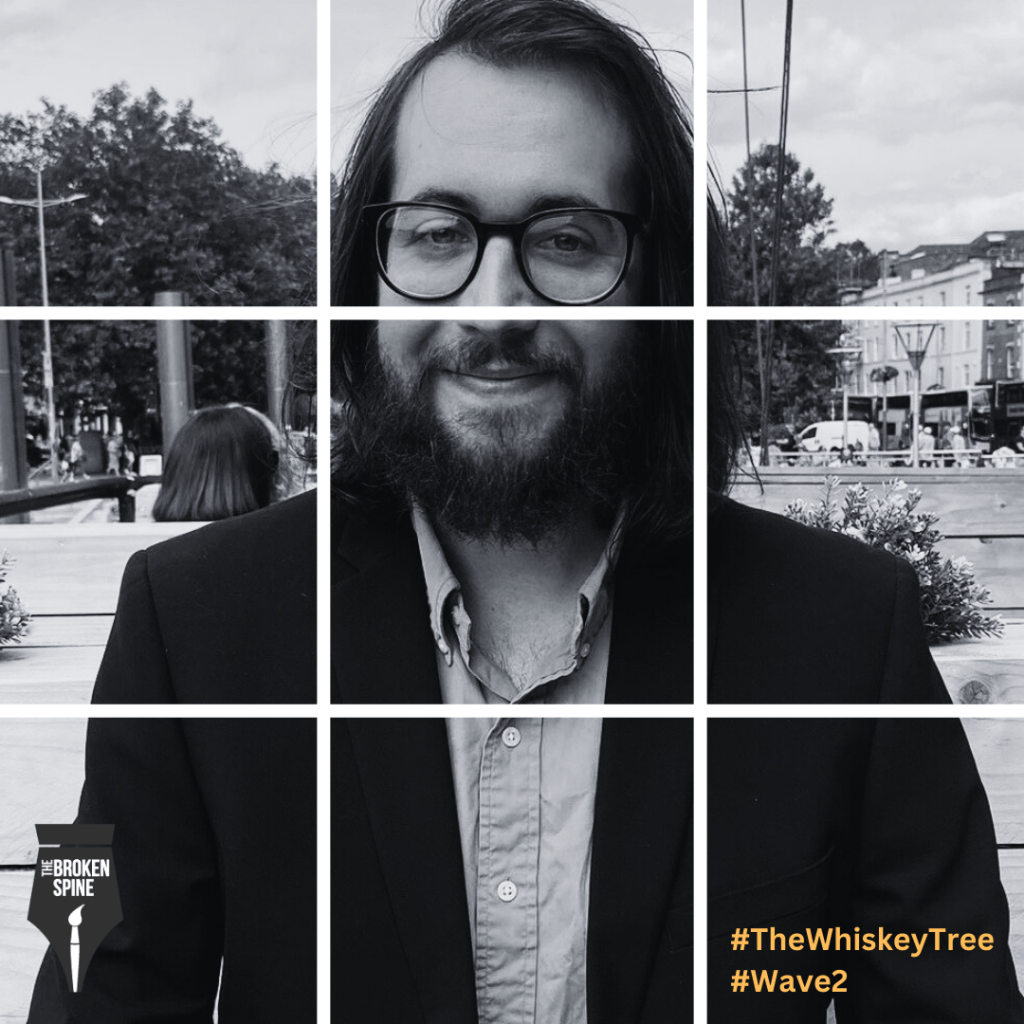
is a Welsh writer. He has published two collections, Empty Trains (Broken Sleep Books) and Nights Travel at the Right Speed (Infinity Books).
The Interview
1 How did you decide on what poems to send?
I started a couple of coastal poems – I grew up in South Pembrokeshire and spent a lot of time growing up enjoying the savagery of those cliffs, the walk to Barafundle, the roaring waves around St Govan’s chapel. But eventually the sink hole poem had to win through – they’re terrifying, truly nature untamed.
2 What poetic form did it take, and why?
I’m a regular user of free verse so initially chose it in order to, well, get into my comfort zone. But then I decided to break down that comfort from within – to take the ‘I’ out of it and emphasise the destruction.
3 How did you use the whiteness of the page in your poem?
Carefully! The ends of each verse are chosen with purpose – the first ends on ‘dancing to death’, the second on ‘cold and raw’ – to create cliffhangers.
4 How did you decide on the title of your poem?
The title was difficult as titles always are – I decided to look at how sink holes are formed in cliffs and then present it as a ‘gift’.
5 Imagery, or narrative. Which was more important to you in writing the poem?
Imagery for this one – the coast is so rich with it. I like it!
6 What do you think of where your poem is placed in the collection?
Nice to be on stage early – means you can relax for everyone else’s set, so to speak.
7 Once they have read your poem, what do you hope the reader will leave with?
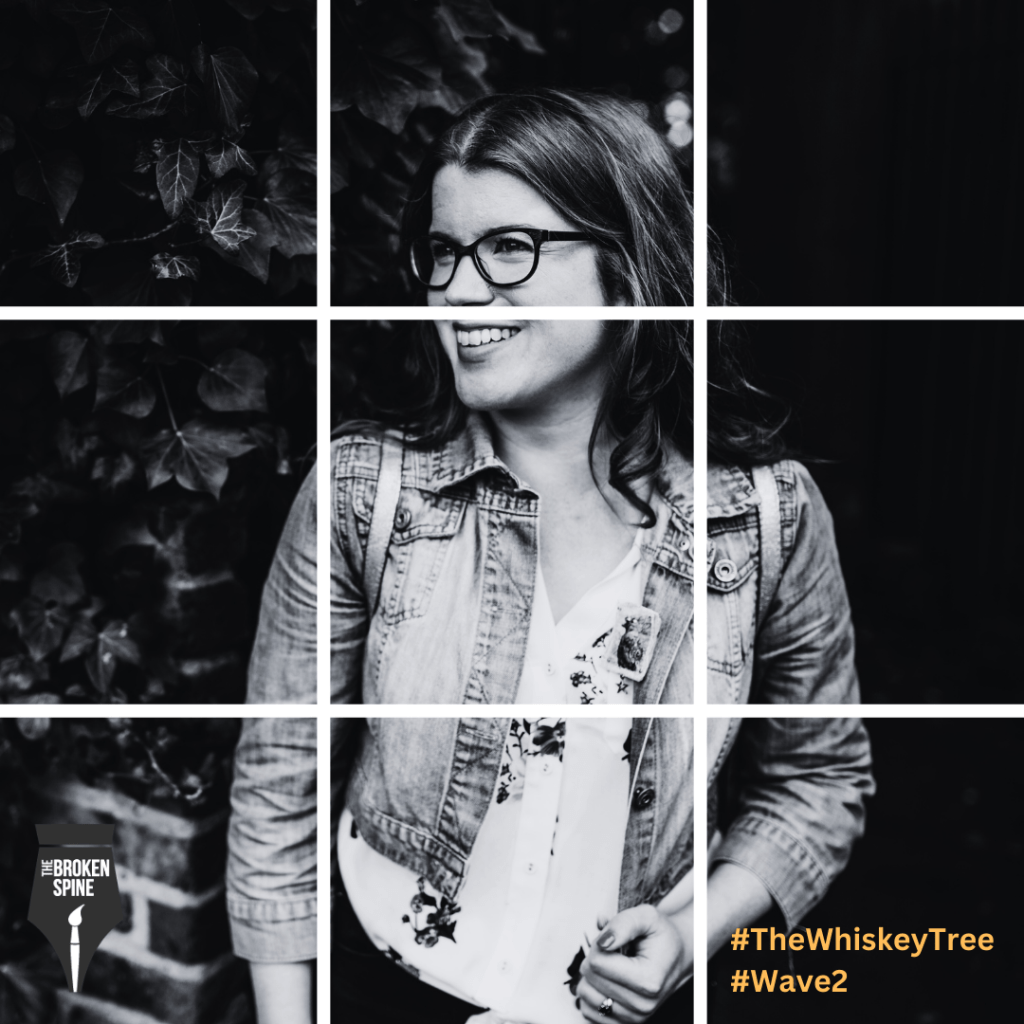
is a non-binary Canadian poet who focuses on the mundanity of existence through a lens of empathetic consideration. Bringing attention to the extraordinary nature of life and pain, they juxtapose the beautiful and the deformed, the congruent and the discordant, and the comfortable and the anxious. @sunshinedaisybaby (Instagram)
The Interview
1 How did you decide on what poems to send?
I wrote each poem specifically for these collections. I took time to think about the themes and wrote around the ideas that came out of that.
2 What poetic form did it take, and why?
Delineated free verse because that’s what I’m used to and I’m lazy
3 How did you use the whiteness of the page in your poem?
I did not (or at least not intentionally)
4 How did you decide on the title of your poem?
Threw spaghetti at the wall until something stuck.
5 Imagery, or narrative. Which was more important to you in writing the poem?
Imagery tends to be the central focus of my poems, and letting the space between and among the images create a scaffolding for the reader to assign their own narrative meaning
6 What do you think of where your poem is placed in the collection?
I haven’t thought about it very hard
7 Once they have read your poem, what do you hope the reader will leave with?
A bit of existential dread and maybe some new ideas
lives by the sea in Essex. Her work has appeared in publications including Under the Radar, Butcher’s Dog, Magma, Okay Donkey, Berlin Lit, And Other Poems and Black Iris. She won the 2024 Poetry Business International Book and Pamphlet Competition and her pamphlet, Tiny Bright Thorns, was published by Nine Pens in 2024. She likes cold water swimming, turquoise things, and cheese you can eat with a spoon. Instagram: @jenferoze x:@jenlareine
The Interview
1 How did you decide on what poems to send?
The ‘Untamed’ brief took me to a place of folklore and wildness. I wanted something that felt ageless, and allowed me to write from the perspective of inhabiting something in nature.
The Corn Dolly and the traditions around it seemed to fit the bill beautifully, with that mix of the bucolic and the slightly sinister.
2 What poetic form did it take, and why?
Free verse – as most of my work is. But I wanted to keep the lines fairly short and staccato, and I played around with the line breaks a lot to get the pace I wanted and the feel of the speaker of the poem being something otherworldly.
3 How did you use the whiteness of the page in your poem?
The last three lines use the white space to mimic the scattering of the Corn Dolly after its burning.
4 How did you decide on the title of your poem?
For once I didn’t overthink it! I’m often someone who tries umpteen titles to see what fits, but here I went clear and simple
5 Imagery, or narrative. Which was more important to you in writing the poem?
I knew I needed to take us from the end of the harvest through to the following spring, so narrative probably came first. But I always find it hard to dissociate one from the other, to be honest, I need both!
6 What do you think of where your poem is placed in the collection?
I love this question but my answer would be the same regardless of where the poem was placed: I trust Alan and his editorial skills to build a collection that has just the right ebb and flow and rhythm and punch in the way the poems come together.
7 Once they have read your poem, what do you hope the reader will leave with?
A gentle wistfulness for the corn dolly speaker of the poem.
is the poet / librettist in the ‘Andy Bell is Torsten’ theatre-poetry collective. He narrates his own verse on ‘Downes Braide Association’ albums. He has poetry internationally published in a range of cult poetry journals, and his recent books include ‘Café Kaput!’ (Broken Sleep, 2020) and ‘Cul-de-Sacrilege!’ (Polari Press. 2022).
Facebook : Barney Ashton-Bullock
X : @barney_poet
Instagram : barneyashtonbullock
Threads : barneyashtonbullock
The Interview
1 How did you decide on what poems to send?
Nature was the theme and I chose works about the forest and the sea. My formative years were either in seaside towns of living on the Dorset Coast Path.
2. What poetic form did it take, and why?
The freeform of the poem selected, ‘Channel Light Vassals’, resulted from the sound it made when read aloud. There was a definite flow to my ears and much tinkering to achieve the through-force.
3. How did you use the whiteness of the page in your poem?
As the poem gains momentum, the syllabic count and line lengths in the centre of the poem increase. It gives, I think, a momentum and ultimately the pointed shape of the poem evidences this ‘tension’ and ‘release’.
4. How did you decide on the title of your poem?
Through a play on the word ‘Vessels’ – a Channel Light Vessel being, in short, lighthouse mounted on a boat to guide shipping – notably Second World War ‘convoys’ – I thought of the word ‘vassals’ being empty spaces, perhaps empty hearts adrift on the sea-lanes of love and lust.
5. Imagery, or narrative. Which was more important to you in writing the poem?
I think in that particular work, imagery and narrative meld equally. I am, though, also acutely aware of the sound of the words, which is, perhaps, an equal consideration in my work.
6. What do you think of where your poem is placed in the collection?
The position of my poem in the collection is great. The whole collection has these gear changes between differing styles of poetry and different takes on ‘nature’.
7. Once they have read your poem, what do you hope the reader will leave with?
A kind of resolve to grab at the fleeting moments of happiness that alight upon us, sometimes by chance, and a realisation that though one may, from time to time, ‘make do’ – it is best to have one’s sights on the horizon and to re-orientate / re-motivate as needs must.
is a teacher and poet based in Leicester, UK. Her work has appeared or is forthcoming in Poetry Wales, The Rialto, bath magg, Atrium, and Honest Ulsterman. Walrussey, her debut pamphlet, is published by The Black Cat Poetry Press.
Twitter: @PoetBex Instagram: @poet.bex Blue Sky: @poetbex.bsky.social
The Interview
1. How did you decide on what poems to send?
I’m an ecopoet at heart and will never get tired of writing about our natural world – so I had an awful lot of poems to choose from! In the end, I picked three poems about the more obscure species inhabiting our planet, one of them being the northern stargazer.
2. What poetic form did it take, and why?
Like with the vast majority of my poetry, this one is free verse with a healthy dose of enjambment. ‘A sense of contrasts, the juxtaposition between predatory nature and beauty, and how even the most unusual, sand bed-locked creature can have a touch of the celestial.
3. How did you use the whiteness of the page in your poem?
Northern Stargazer’ has uneven stanza and line lengths, mimicking the flow of waves and water as they wash over this ambush predator.
4. How did you decide on the title of your poem?
As with many of my nature poems, I feel you can’t go wrong with naming the poem after the animal in question, keeping it simple, a clear ode.
5. Imagery, or narrative. Which was more important to you in writing the poem?
This poem captures one moment in the northern stargazer’s life, so I think imagery was more important here.
6. What do you think of where your poem is placed in the collection?
I’m honoured to see my little poem sandwiched between two brilliant poets!
7. Once they have read your poem, what do you hope the reader will leave with?
Being in the second half of the collection, I hope it strikes a positive, whimsical note that will linger with readers.
is the author of digital-first poetry project Subruria. He’s also the creator, curator and driving force behind two popular and successful online poetry journals: the quarterly poet library that is iamb, and the ekphrastically focused After…
The Interview
1. How did you decide on what poems to send?
Alan asked us to take the gloves off – to write or select poems we felt our usual readers might not expect from us. Poems which perhaps we wouldn’t even consider publishing at all: not because we worry about the quality of those poems, but because we fear how they (and we) might be perceived upon publication. At least, that’s what I took away from Alan’s injunction. It made me choose a trio of poems that aren’t typical of me: poems which take a bigger risk. More specifically, for this first volume of wave two of The Whiskey Tree, my decision was settled once I remembered I had a poem that took a slant view of something quintessentially British: the weather. More exactly still, rain. This could have been a somewhat prosaic, unpromising topic for a poem intended to be ‘untamed’. What stopped it from being so was the fact that the rain which inspired the poem came laden with pinkish Saharan sand, owing to a freak weather event in southern England a few years ago.
2. What poetic form did it take, and why?
As ever, my three poems each took one of my nine self-created syllabic forms. I wasn’t prepared to go THAT left-field for this project!
3. How did you use the whiteness of the page in your poem?
All of my poems rest on invisible lilos in pools of white space. This is how I like to write my poetry. And if I’m being completely honest, it’s also how I like the poetry of others to be written.
4. How did you decide on the title of your poem?
It was about as literal as I could make it – which was deliberate for two reasons. The first is that I knew the title could be misread: a hurried reader perhaps thinking this was a piece about it raining IN the Sahara. The second reason was that I knew right away that every line beneath the title was going to have to work hard – obliquely yet lyrically – to leave the reader satisfied that the promise of the poem’s title has been fulfilled.
5. Imagery, or narrative. Which was more important to you in writing the poem?
Narratively speaking, I had a vague idea from the off that I was trying to tell the story of this peculiar weather event in a sort of linear way. But I rightly trusted my intuition as the poem unfolded. Its main driver became its lyricism: image begetting story the way character begets plot.
6. What do you think of where your poem is placed in the collection?
It’s near the beginning … so obviously, I’m thrilled! However sensitive we poets are, however understanding, we still have egos as swollen as whales! They need feeding – and something as simple as where our work appears in an anthology makes for a lovely appetiser.
7. Once they have read your poem, what do you hope the reader will leave with?
I guess the answer to this is the same as the answer I’d give if you asked me this question about almost any of my poems: I want the reader to leave feeling differently. Thinking differently too, of course, but if I can implant a feeling as a result of something I’ve written, I can be fairly certain my work – in whole or in part – will have made a genuine impression. A lasting one too, I hope.





 The Wombwell Rainbow