TWT Wave 2 may be purchased here: https://shorturl.at/ezFNn
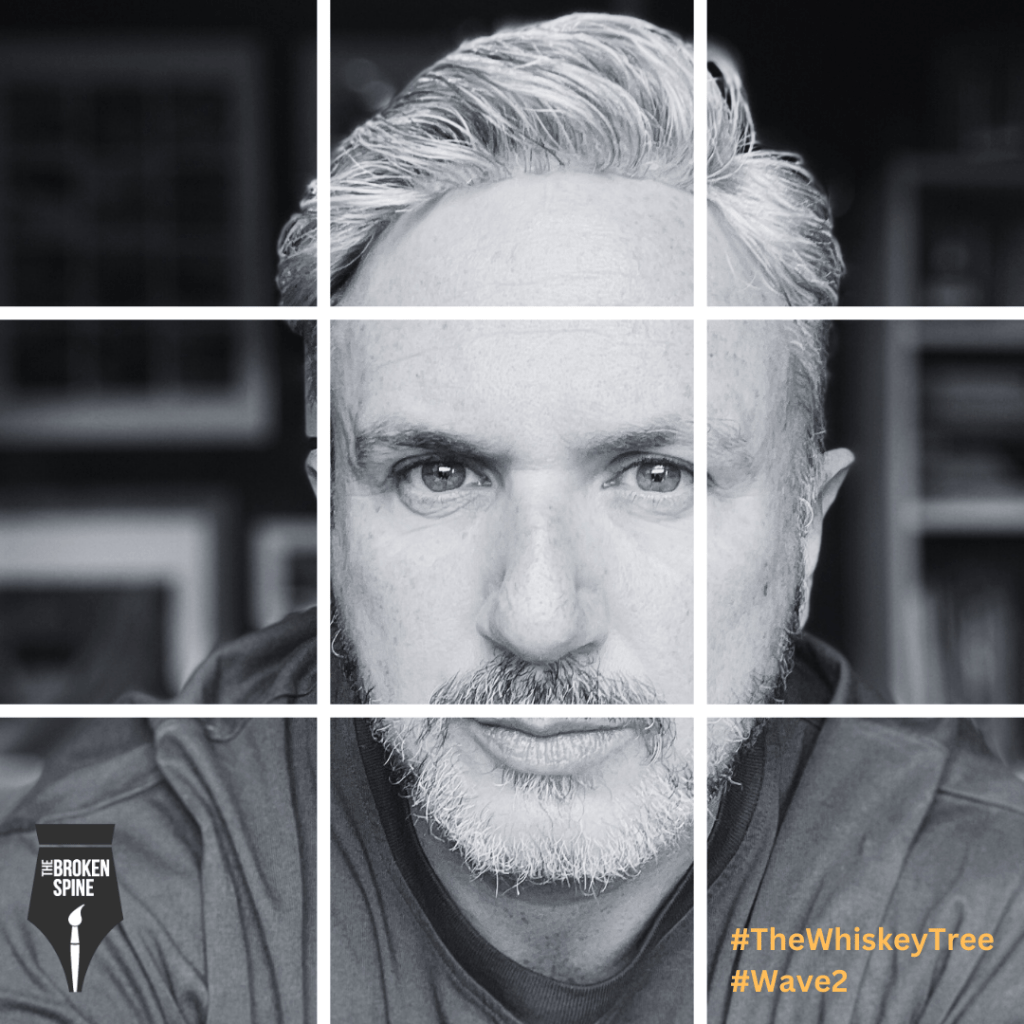
Damien B. Donnelly
is the author of 2 pamphlets, a micro-collection and full collection, Enough! published by Hedgehog. He’s the host/producer of Eat the Storms, poetry podcast, and editor-in-chief of The Storms journal. His work appears in various anthologies. His 2nd collection was published in 2024 with Turas Press.
X @deuxiemepeau Bluesky @eatthestorms.com Instagram @damiboy
The Interview
1 How did you decide on what poems to send?
I picked the ones that challenged me the most to write. The ask was to be untamed, in both content and creation. This wasn’t a process of flow, it was a journey into the dig, digging into the theme and digging into how I write. I wanted to push myself into a place of discomfort, a place unfamiliar and see how I could write my way through it.
2 What poetic form did it take, and why?
It was free form and it had to be. The poem is, in its essence, beyond restraint, a chorus of coincidence instead of curated notes. It is based on an actual walk through a wood in County Monaghan, in Ireland, in November. It was a place where sound betrayed logic, I heard the sea in the rustle of leaves still holding on, snakes hissed under the rusting of fallen leaves, crisp under foot but I was nowhere near the sea and far from a single snake, thanks to St. Patrick! There was a lake, a shimmer of light in place of sound, hotel-sheet still, and I wanted some of the lines to have that quality, pulled so tight while others felt cracked, submerged. I wanted it to feel as random as the wild.
3 How did you use the whiteness of the page in your poem?
I hope the whiteness allows the poem to spread itself snake-like across the page, it twists at its own will, it has breaks, things missing, broken bits nature had already digested and other spaces to regurgitate them later. The white spaces also become the route the wind takes through the words. You can look down on the page itself as if you are looking down on the wood from above, lines of trees next to open spaces where others have been felled, have fallen, have refused to grown to man’s plan. You can plant the seed but the wood is forever unwilling to be tamed. I wanted it to be something big, heavy, clunky.
4 How did you decide on the title of your poem?
The poem is a song of the wild, a song of a wild thing so there is nothing gentle to the title, it has its own crunch but there is also a playfulness to it as it falls from the tongue with its use of alliteration while I hope the onomatopoeia in the poem itself brings to life the sound of the wind, its snake-like hissing. It was an orchestration of both, though the conductor, nature itself, carved the narrative.
5 Imagery, or narrative. Which was more important to you in writing the poem?
The poem is loaded with images but I realise, however detailed I become with the image, the reader will make their own visions, that’s the journey into a poem or a story, when the author hands over the ownership and the reader builds their own scenes in which it all takes place. As the writer, I see it, but it is my vision. A piece of writing, when read by many, finds itself forming its own world in the minds of many consciousnesses and none of these worlds are truly alike.
6 What do you think of where your poem is placed in the collection?
I am in awe of all my fellow contributors as much as I was in awe of all who made Wave 1 so remarkable. To be anywhere in here, with these names, with these writers, is an honour. The curation tells a story from beginning to end, it is an anthology but it has its threads and I love how Jen’s ‘trees whisper’ into mine and how the final ‘Fall’ of my poem blends seamlessly into the ‘washed greens’ of the next, how the crunch of mine rubs against the ‘brutal cleave of salt’ of Lesley’s Earth’s Gift.
7 Once they have read your poem, what do you hope the reader will leave with?
To go out and listen, to hear nature, to fall into its harmonies and tremble at the breath of its roar. The world, even when sleeping, is never silent, even the lake, at point of freezing, can be heard almost shuffling itself into solid structure, as if it never knew the flow of liquid. And we are losing it, every day, more and more. This is not the place of permanence we once imagined. Catch it before it falls from grasp.
 The Wombwell Rainbow