
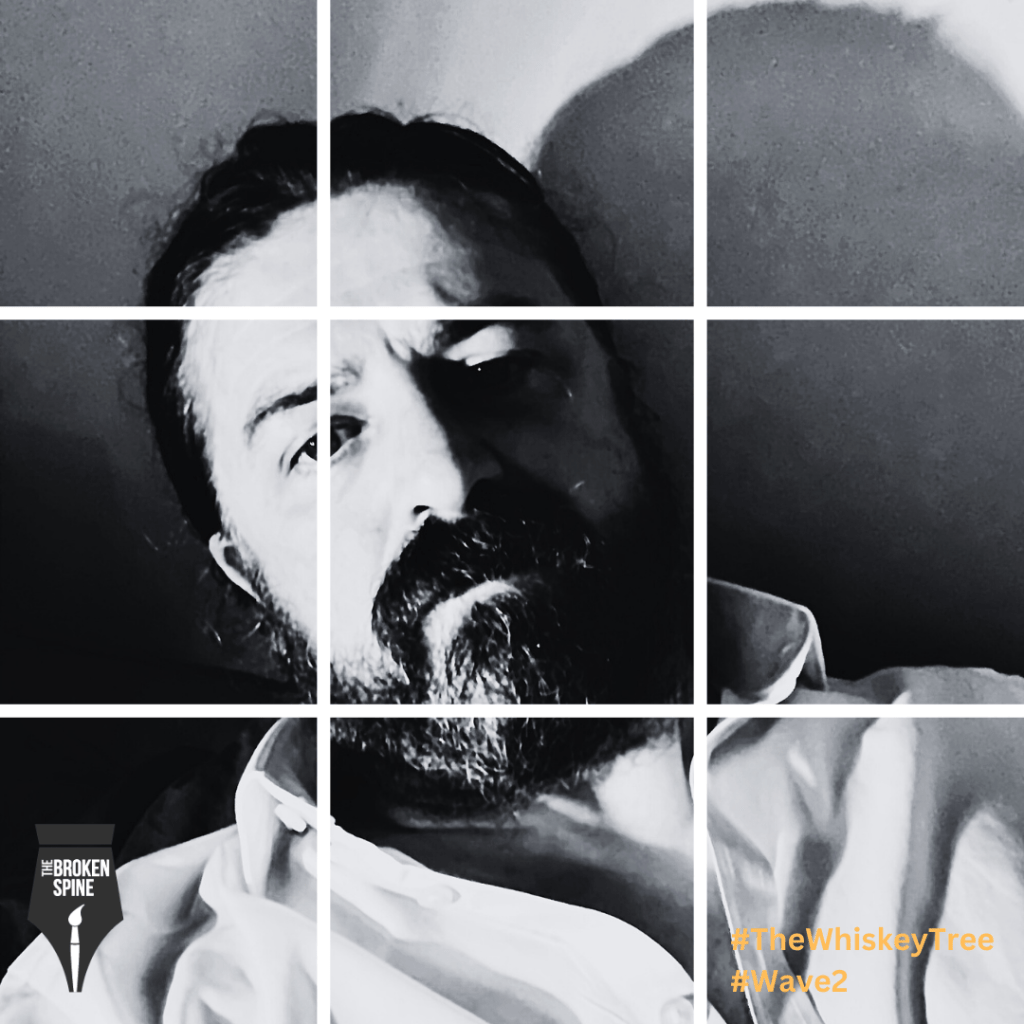
Barney Ashton-Bullock
is the poet / librettist in the ‘Andy Bell is Torsten’ theatre-poetry collective. He narrates his own verse on ‘Downes Braide Association’ albums. He has poetry internationally published in a range of cult poetry journals, and his recent books include ‘Café Kaput!’ (Broken Sleep, 2020) and ‘Cul-de-Sacrilege!’ (Polari Press. 2022).
Facebook : Barney Ashton-Bullock
X : @barney_poet
Instagram : barneyashtonbullock
Threads : barneyashtonbullock
The Interview
1 How did you decide on what poems to send?
Nature was the theme and I chose works about the forest and the sea. My formative years were either in seaside towns of living on the Dorset Coast Path.
2. What poetic form did it take, and why?
The freeform of the poem selected, ‘Channel Light Vassals’, resulted from the sound it made when read aloud. There was a definite flow to my ears and much tinkering to achieve the through-force.
3. How did you use the whiteness of the page in your poem?
As the poem gains momentum, the syllabic count and line lengths in the centre of the poem increase. It gives, I think, a momentum and ultimately the pointed shape of the poem evidences this ‘tension’ and ‘release’.
4. How did you decide on the title of your poem?
Through a play on the word ‘Vessels’ – a Channel Light Vessel being, in short, lighthouse mounted on a boat to guide shipping – notably Second World War ‘convoys’ – I thought of the word ‘vassals’ being empty spaces, perhaps empty hearts adrift on the sea-lanes of love and lust.
5. Imagery, or narrative. Which was more important to you in writing the poem?
I think in that particular work, imagery and narrative meld equally. I am, though, also acutely aware of the sound of the words, which is, perhaps, an equal consideration in my work.
6. What do you think of where your poem is placed in the collection?
The position of my poem in the collection is great. The whole collection has these gear changes between differing styles of poetry and different takes on ‘nature’.
7. Once they have read your poem, what do you hope the reader will leave with?
A kind of resolve to grab at the fleeting moments of happiness that alight upon us, sometimes by chance, and a realisation that though one may, from time to time, ‘make do’ – it is best to have one’s sights on the horizon and to re-orientate / re-motivate as needs must.
 The Wombwell Rainbow