
Q:1. How did you decide on what poems to send?
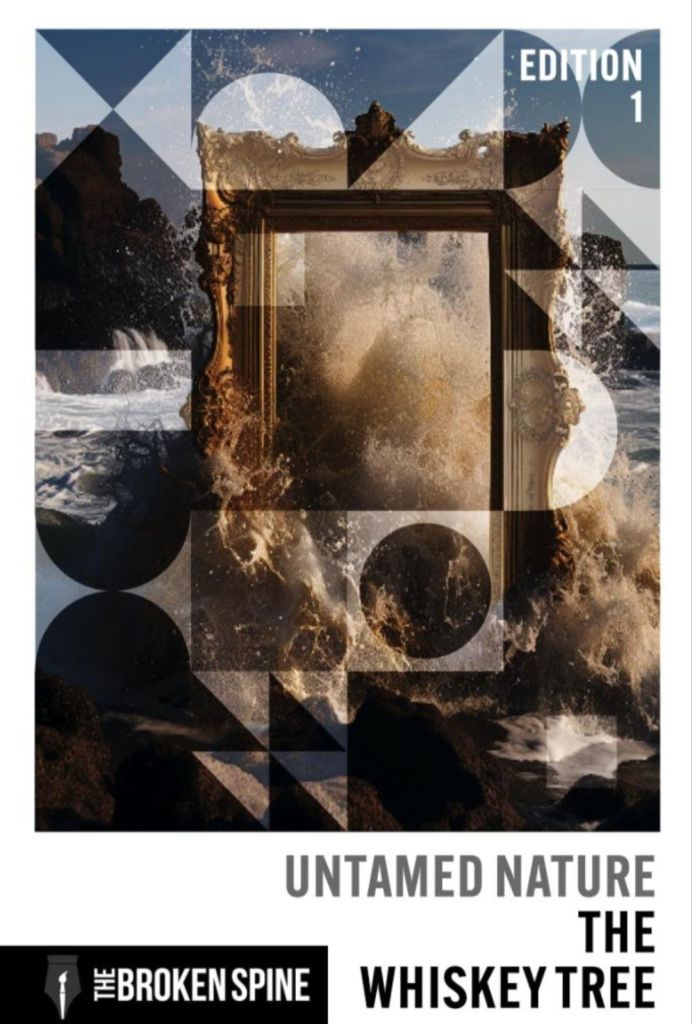
Having spent the past six months researching the Scottish Witchcraft Act of 1563 – 1736 and the thousands of women executed as a result, my poetry focus of late has been on the mistreatment of women. My submission to Untamed Nature was penned specifically for the project.
Q:2. What poetic form did it take, and why?
I chose sonnet form because I wanted the character in the poem, your young mother, to discover a love for herself and make a stand against the violence of her life. The volta arrives on line nine.
Q:3. How did you use the whiteness of the page in your poem?
I wanted to keep my poem contained within 14 lines to enhance the sense of confinement. After the initial violence, the white space of the first stanza break is necessary relief. The gathering of energy in the second stanza insists on a pause for reflection. In this space, I imagine the central character slowing her breath, squaring her shoulders, and standing up. The white spaces are places of safety and strength.
Q:4. How did you decide on the title of your poem?
Oh, that’s a bit more difficult to answer. Given the energy in my poem, shorter titles I tried seemed weak. Birch trees are strong and beautiful, they have a willfulness to grow where other trees struggle. I learned that they prefer the shaded north-east side of buildings. That gave me my title.
Q:5. Imagery, or narrative. Which was more important to you in writing the poem?
Great question. I may have to fence-sit and say a 50/50 split. The narrative came first but, without imagery, may have passed unheard. When writing the poem, the sky was a slow drag of persistent gunmetal. Clouds of grey mohair gave me nimbostratus bruises plume under woollen cuffs. The imagery and narrative are co-dependent.
Q:6. What do you think of where your poem is placed in the collection?
l am bookended by two very muscular poems. Karen Pierce Gonzalez offers a firm hand in her closing stanza, I will help you out of the muck, while Vikki C promises I will be made new outside this skin in her opening line. The positioning of my poem in this collection is perfect.
Q:7. Once they have read your poem, what do you hope the reader will leave with?
Each time I read this poem, I feel courageous. It reminds me to trust in my ability to bend with the wind, not break. Even in bleak straits, it is possible to keep an eye on the wider view. I hope the reader feels something similar.
Bio and Links
Morag Anderson
is a Scottish poet. Her debut chapbook, Sin Is Due to Open in a Room Above Kitty’s is published by Fly on the Wall Press (2021) and her second chapbook, And I Will Make of You a Vowel Sound, will be published in May 2024.
Her poetry has appeared in literary journals and anthologies including Butcher’s Dog, Finished Creatures, Gutter, The Scotsman, The Broken Spine, Popshot Quarterly, Beyond the Swelkie, Cruinneachadh, and Best Scottish Poems 2021. The Scottish Poetry Library has commissioned several pieces of work.
She won the Aryamati Poetry Chapbook Prize 2023, was placed in the Oxford Brookes International Poetry Competition 2021, the Edwin Morgan Trust Competition 2021, and has been twice shortlisted for the Bridport Poetry Prize
In 2023, Morag was the Makar of the Federation of Writers (Scotland) and poet-in-residence for the Birnam Book Festival. She was featured poet at the 2022 Emily Dickinson Museum Phosphorescence Poetry Reading Series.
X: @morag_caimbeul
Publisher: Fly on the Wall Press
Scottish Poetry Library
 The Wombwell Rainbow