The Wombwell Rainbow Book Interviews: Arboreal by Corinna Board


Corinna Board


teaches English as an additional language in Oxford. She grew up on a farm, and her writing is often inspired by the rural environment. She particularly enjoys exploring our connection to the more-than-human. Her work has appeared in various journals, and she was recently commended in the Verve Eco-poetry competition. Arboreal, her debut pamphlet, was published in January. Find her on Instagram

@parole_de_reveuse or

X/Twitter @CorinnaBoard.


Link to book:


https://www.blackcatpress.co.uk/product-page/arboreal


The Interview


Q:1. When and why did you start writing poetry?


I started writing poetry in my late teens, probably around the age of 17/18. At the time, it was a way of processing difficult emotions, and I never intended for anyone to read them.


Q:2. Who introduced you to poetry?


The way poetry is taught in schools is often criticised, but that was where I first learnt about poetry. I remember studying Phillip Larkin and, later on, Sylvia Plath. Her poems were a bit like locked boxes – I didn’t completely understand them, but I was intrigued and wanted to read more.


Q:3. How did you decide on the order of the poems in Arboreal?


It was a lengthy process! The final manuscript is very different to the one I originally put together in 2022. Poems have been swapped around, taken out, put back in, then taken out again! (Sometimes at the last minute… I have a very understanding publisher!) The final order of the poems came over time; l’d look for words or themes that linked particular poems. I put the ones about childhood and the family farm together, one poem about birds or death would interlock with another, etc.


Q:4. How aware are and were you of the dominating presence of older poets traditional and contemporary?


That’s an interesting question, and something I don’t really pay much attention to when I’m reading poetry – either I like it or I don’t! Perhaps the traditional poetry scene was more dominated by older male poets, but the contemporary poetry I read is written by poets of all ages, and I think that’s a good thing!


Q:5. What is your daily writing routine?


I wish I had one! I’ve tried getting up early to write before work, as I have a lot more creative energy in the morning, but that doesn’t really help… I just end up spending more time doing other stuff! A lot of my inspiration comes in little bursts when I’m walking or reading, so I’ll jot down snippets, or thoughts in a little notebook or on my phone notes app. I then tend to let them “cook” for a while in my mind before attempting to draft anything (I often draft poems at the weekend or whenever I have more time on my hands).


Q:6. Why the title, “Arboreal”?


Arboreal means ‘of or living in trees.’ I really love the word and chose it as a title quite early on in the process of putting the pamphlet together. I think it conveys a sense of symbiosis between trees and the humans and more-than-humans that live in and around them.


Q:7. How do the writers you read when you were young influence your work today?


Reading Sylvia Plath as a teen has definitely influenced the way I write today. I was fascinated by the darkness in her writing, and her work also taught me that it’s OK to not understand everything in a poem – that, in fact, it’s important to leave some things open to interpretation, ambiguous or unsaid so, as readers, we can find what we need within a poem’s lines.


Q:7.1. How do you think the “darkness” comes through in Arboreal?


There are quite a few references to death in Arboreal. As I get older, it’s something that preoccupies me more and more. Perhaps writing about it is a way of accepting that nothing’s permanent, which is also probably the biggest lesson we can learn from Nature.


Q:8. Who of today’s writers do you admire the most and why?


That’s a really difficult question haha. There are too many to pick just one! Pascale Petit, because her imagery is astounding, and I love the way she weaves the natural world into her poems. Jane Burn, because she has such a unique voice, and she writes brilliantly about the more-than-human; her recent pamphlet ‘A thousand Miles from the Sea’ is breathtaking. Jane Lovell, because she writes the kind of ecopoetry I wish I could write. Kathryn Bevis, Caroline Bird… I could go on and on and on! I enjoy reading poetry as much as I enjoy writing it.


Q:9. How do you want the white space to work on the pages in Arboreal?


It varies from one poem to another. A poem like ‘The Shed’ is very compact with little white space to reflect the heavy nature of the subject.  I enjoy playing with line breaks, and the space between couplets can be a useful tool for creating a sense of anticipation or surprise. In ‘Genesis’, the lines are arranged to look a bit like a sapling.


Q:10. What would you say to someone who asked you “How do you become a writer?”


I’m still learning myself! I’d say reading as much, if not more, than you write would be a good starting point. Also, write what you want to write, not what you think people want to read. Finally, don’t give up!


Q:11. What does mythology and folklore give to your poetry in Arboreal?


I’m a massive fan of Norse mythology, the poem ‘Embla’ was inspired directly by this. The forest is a highly symbolic place in folklore and fairytales – wolves, witches, the Green Man… all of these can be found lurking in the pages of Arboreal in some form or other.


Q:12. How do you cope with the irony that a book is made from a forest?


It might seem hypocritical to love trees so much, then bring out a pamphlet made from them…  I try to do as much as I can to give back what I take from the planet, and I also buy a lot of second-hand books, read ebooks or borrow from the local library. Loving books and trees in equal measures is a bit tricky!


Q:13. What did trees bring to your childhood?


I grew up on my grandparents’ farm and feel really lucky to have been surrounded by animals and nature throughout childhood. Trees were places to climb, hide or shelter. I’d often go on trips to the local woods with my Nan, always with a bag to pick up anything interesting: pinecones, feathers, acorns… it’s something I still do! One of my most prized treasures is a tiny jay feather found on the forest floor.


Q:14. With adulthood how do you see trees, differently?


I’ve learnt much more about what trees do for the planet and just how important they are. One book that taught me a lot was ‘The Treeline’ by Ben Rawlence. It’s a beautiful and heartbreaking read.


Q.15. Once they have read your book what do you want the reader to leave with?


I hope they get some enjoyment from reading the poems, that it makes them want to go outside for a walk or visit a local forest, perhaps even plant a tree!


Q:16. Tell me about the writing projects you have on at the moment.


I’m writing a lot about the rural environment where I grew up – the fields, meadows and wildlife. I’ve also been writing some poems about my father, who was totally absent from my life until he died. Not sure if those two themes can somehow be woven together, we’ll see!
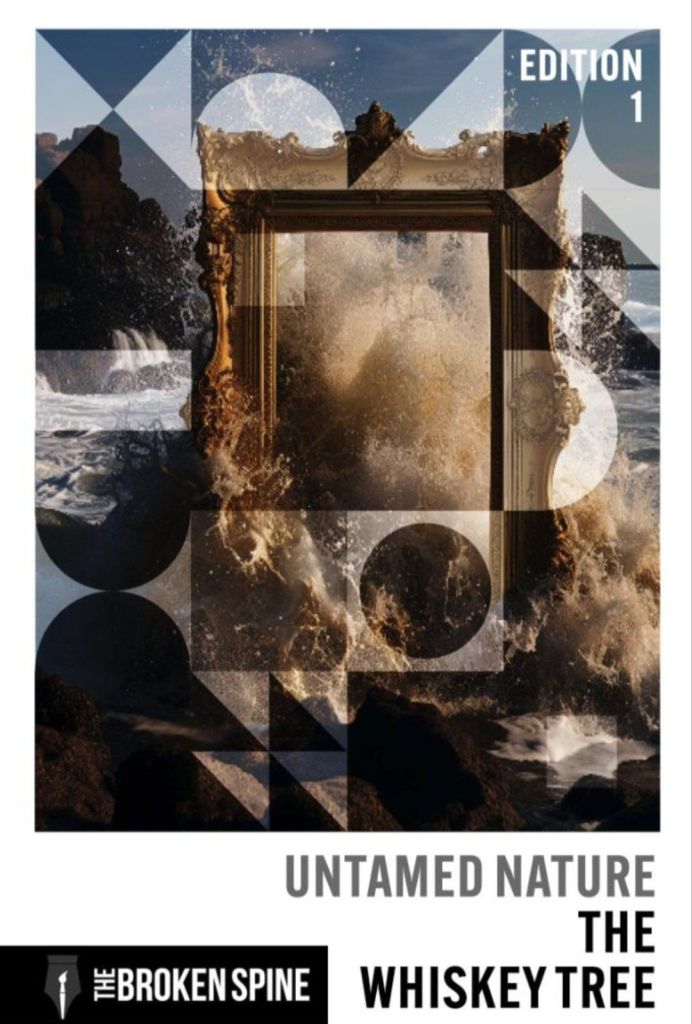
The Wombwell Rainbow Presents The Whiskey Tree Interviews: Matthew MC Smith

Q:1. How did you decide on what poems to send?


I sent a batch of poems to Alan Parry with a nature theme. My poem ‘Now and Forever’ was selected. It deals with a memory of driving away from a psychiatric unit where my grandfather was resident. The poem focuses on my grandfather’s brain and his failing memory. I focus on nature breaking down within the walls of the hospital in his honeycombed mind.


Q:2. What poetic form did it take, and why?


‘Now and Forever’ is in free verse. I mainly use free verse because I don’t like too much restriction in the words I choose in poetry. There’s no syllabic pattern or regular rhythm, following the irregular patterns of thought.


Q:3. How did you use the whiteness of the page in your poem?


I would say that line breaks are important to me. A well placed line break can slow the reading down, allowing for a longer pause and more impact on a part phrase on the next line. It makes poetry less dense to read and break down.
The stanza form allows the longer pause and a shift to the next section and can mean a significant break from the previous one.
My use of white space is centred on readability and aiding different length pauses; also signifying a shift in ideas.


Q:4. How did you decide on the title of your poem?


‘Now and Forever’ is a pretty simple, not exactly innovative title, but it sums up the sentiment of the poem – the hope that my grandfather will be released from the prison of his mind and the hospital and will
Be free in nature; it also signifies the bond between us in the present and the powerful feeling that this will continue forever.


Q:5. Imagery, or narrative. Which was more important to you in writing the poem?

In the poem, there’s a dominance of imagery. A story is told in a series of snapshots, but overall I want strong pictures and sequences conjured in the reader or listener’s mind. A kind of cinematic sequence with an emotional undertow of fear and sadness.


Q:6. What do you think of where your poem is placed in the collection?


I like the different shifts in this collection. All of the poems feel different, a fresh approach on the theme of nature. The poems could have been placed in any order, I feel, as there’s a real sense of individuality and creative flair in each piece.


Q:7. Once they have read your poem what do you hope the reader will leave with?


I would like the reader to feel a striking sense of fear and loss and the contrast between confinement, the suggestion of freedom outside the walls of the hospital and the feelings of loss and confusion from a grandson. I would like the imagery and phrasing to strike an emotional chord with readers.

Bio and Links

Matthew MC Smith

is a writer from Swansea with work in Poetry Wales, Arachne Press, and lamb. He is the editor of Black Bough Poetry. The Keeper of Aeons is published with Broken Spine. Twitter: @MatthewMCSmith

The Wombwell Rainbow Presents The Whiskey Tree Interviews: Paul Robert Mullen

Q:1. How did you decide on what poems to send?


I’ve been out of the poetry scene for a few years for a variety of reasons, so I didn’t have appropriately themed poems to submit for this. Alan was very keen that I get involved, so I wrote specifically to the prompt, which was obviously surrounding the theme of nature.


Q:2. What poetic form did it take, and why?


It’s a narrative poem with elements of abstract. This is my usual style, and an approach that I am most comfortable and familiar with. It’s also a form that I love most because it passes the buck to the reader and challenges them with their perceptions and assertions.


Q:3. How did you use the whiteness of the page in your poem?


All of my poems use shape and form to impact meaning and challenge the reader to perceive the words and phrases in different ways. My formatting is often jagged and somewhat of a sideways Manhattan structure on the page. I also incorporate space too, because space often says so much. I’ve utilised all of the above in my poem “night theatre”, which is in this inaugural edition of The Whiskey Tree.


Q:4. How did you decide on the title of your poem?


I loved the idea that the stillness of night could be theatrical in its own way … hence night theatre.


Q:5. Imagery, or narrative. Which was more important to you in writing the poem?


Imagery is always important in my work. I love to craft images that are unexpected or out-of-the-box. Narrative is always important too. In ‘night theatre’ the pervading narrative is one of leaving and the wilderness that it brings.


Q:6. What do you think of where your poem is placed in the collection?


I love the fact that it is last. I feel the last poem carries a weight of responsibility because it is the final impression that the reader gets of the collection, but I think it’s fitting since the very last line is ‘our wilderness’.


Q:7. Once they have read your poem, what do you hope the reader will leave with?


I would hope my poem would spark curiosity of some sort, however that manifests itself within the reader. I just hope that my writing stimulates thought and reflection in some way.

Bios and Links

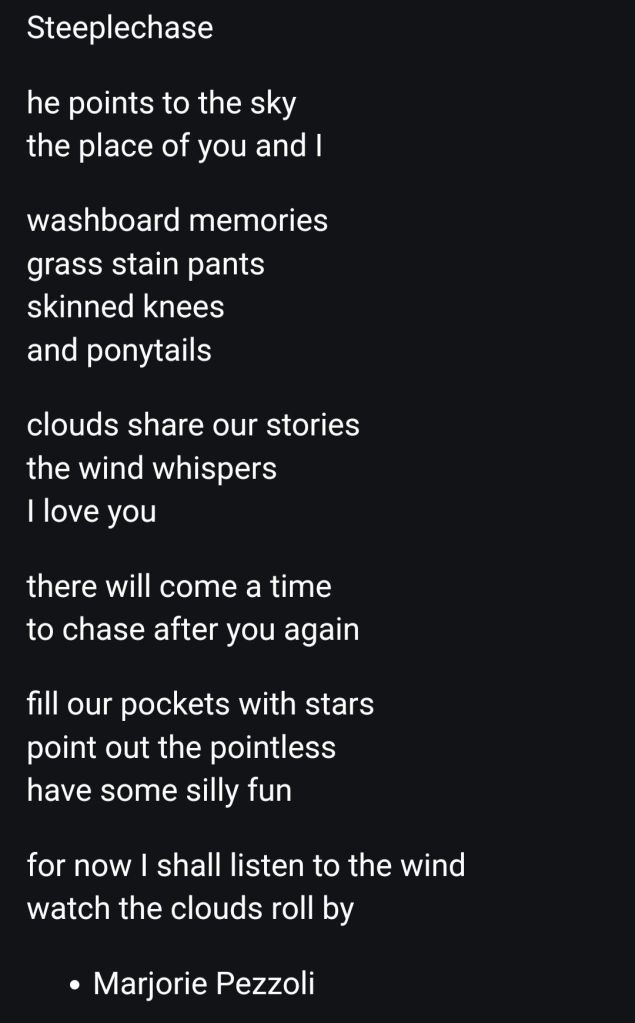
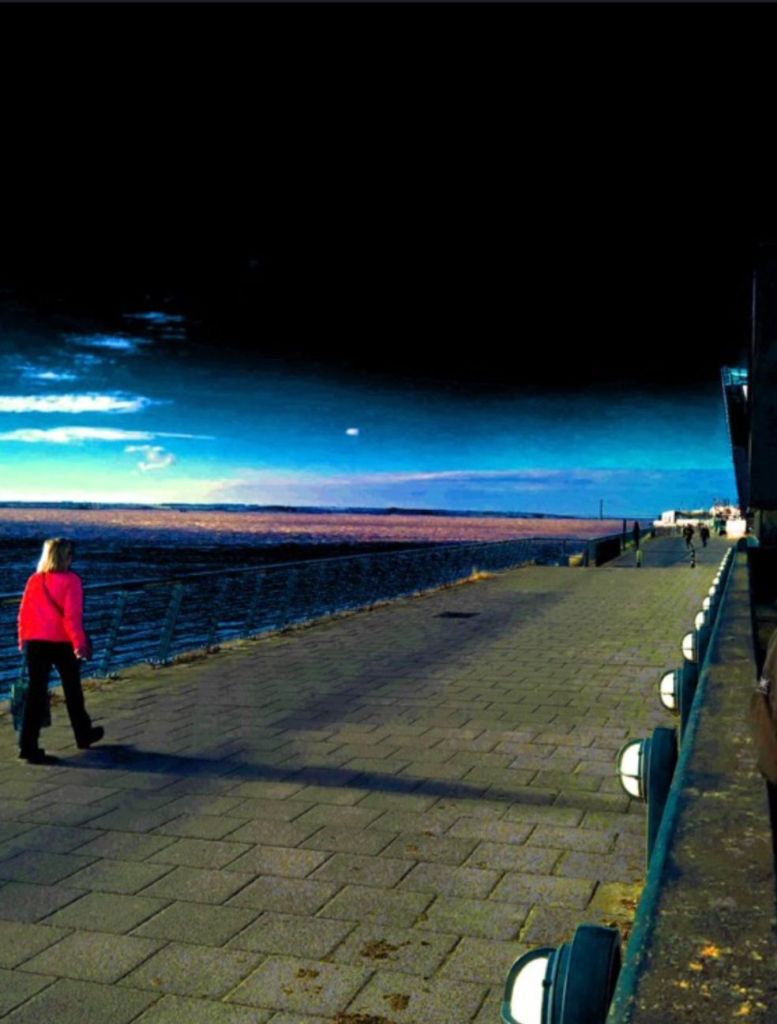
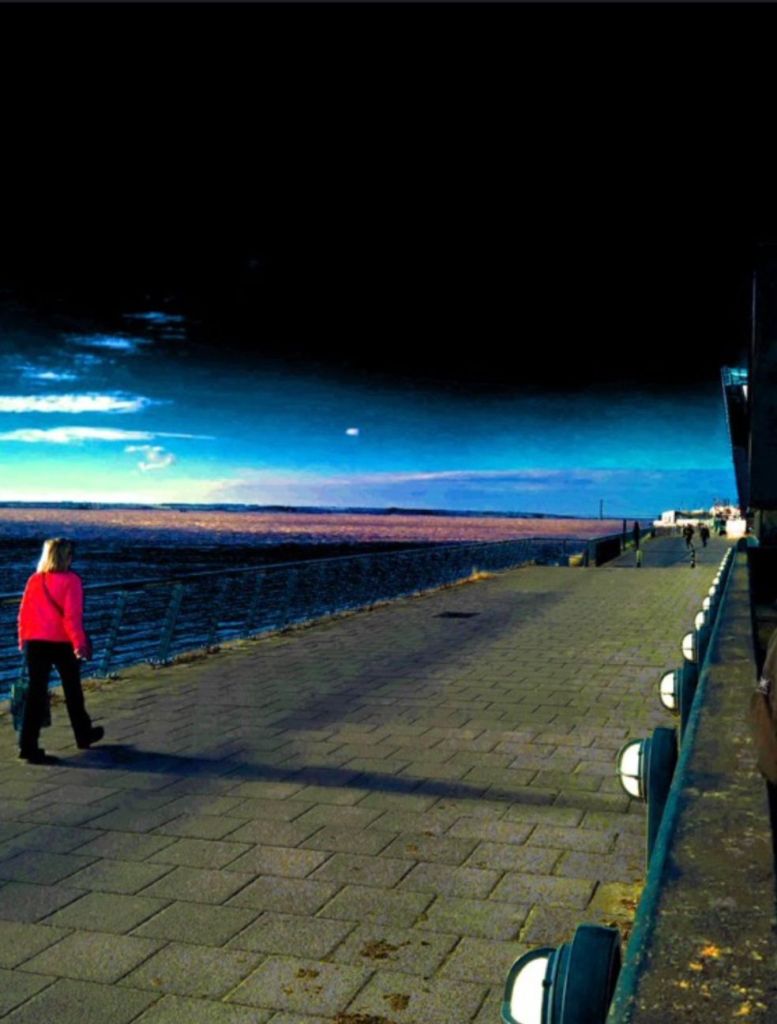
“Created Responses To This Day” Marjorie Pezzoli responds to one of my This Day images. I would love to feature your responses, too.

“Created Responses To This Day” Elizabeth Cusack responds to one of my This Day images. I would love to feature your responses, too.

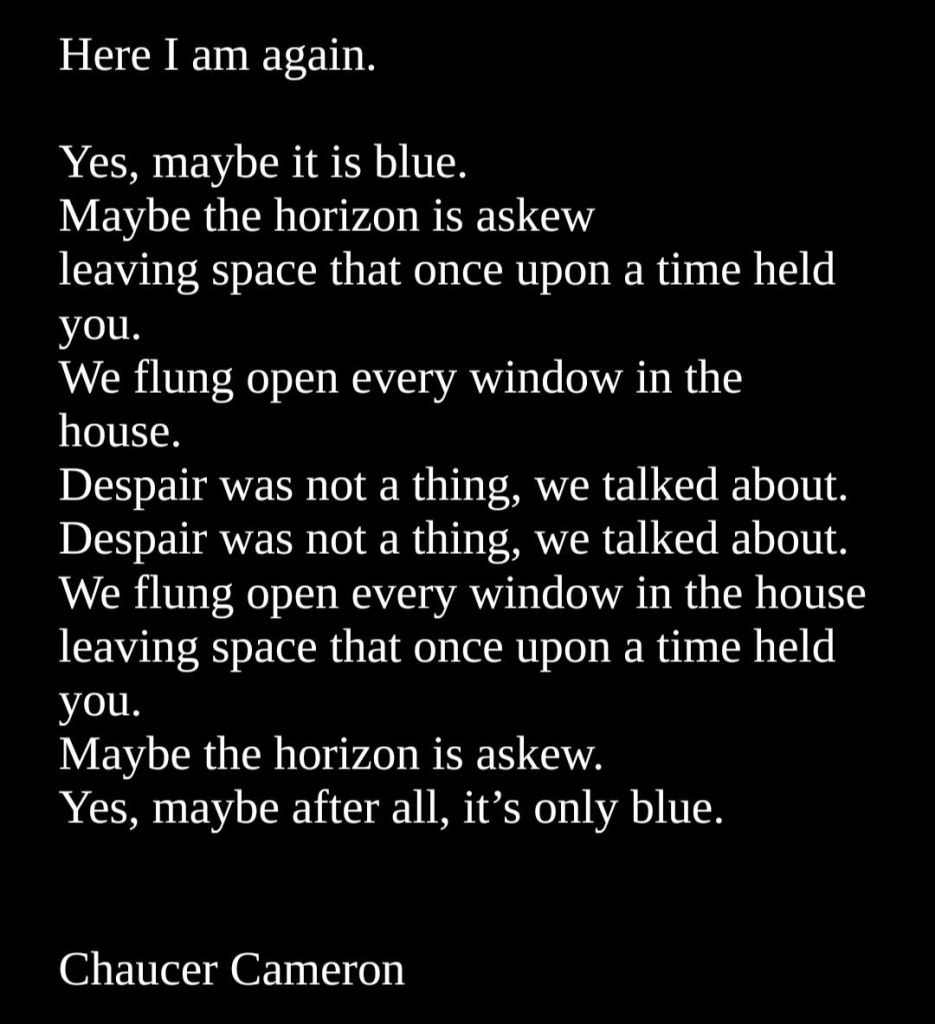
“Created Responses To This Day” Matt Guntrip responds to one of my This Day images. I would love to feature your responses too.

Bio

Matt Guntrip

is a guitarist, songwriter and indie musician in the UK. He has published four albums, and two singles – Penthesilea and Democracy – via CD Baby, available on most channels. The craft of writing lyrics interests him. Through creative writing, he is working to improve and explore the human experience, nature, time, love, loss, rejection, hope and injustice, and thus write better songs.

Wombwell Rainbow Book Interviews: “High Nowhere” by Jean Atkin

Jean Atkin

Jean Atkin’s third full collection ‘High Nowhere’ was published by IDP in late 2023, and is her ninth poetry publication. Previous books include ‘How Time is in Fields’ (IDP), ‘The Bicycles of Ice and Salt’ (IDP) and ‘Fan-peckled’ (Fair Acre Press). Her poetry has won competitions, been commissioned, anthologised, and featured on BBC Radio 4. She has been BBC National Poetry Day Poet for Shropshire and Troubadour of the Hills for Ledbury Poetry Festival. She has worked as a poet in education and community since 2010.


http://www.jeanatkin.com @wordsparks on X jean.atkin on Instagram and Threads Jean Atkin on FB

The Interview

Q:1. How did you decide on the order of the poems in High Nowhere?

The order of the poems in High Nowhere fell gradually into place for me over the three years I’ve been writing this collection. I knew I wanted to write a book which expressed how I felt about living at this time, and through these years. I began with my deep concerns and grief over the loss of biodiversity that’s everywhere, the steady rollcall of extinctions. And these still sit at the start of the book, under the title ‘Brink’.
At the same time the idea for ‘High Nowhere’ itself appeared to me (while plodding up a big ascent in the Welsh borders!). I think of it as a placename which could be whatever place we are looking at with attention. So I started writing High Nowhere poems in a variety of different locations. They slowly assumed their own form, so they all begin – ‘In High Nowhere now’, are 6 lines long in paired couplets, and have sound patterning that links the final couplets together.
I also wanted to write about my perception of the climate crisis, and with this in mind, I also wrote a section called ‘Source’ about energy.
I became very interested in seeing Iceland, where the glaciers are melting. Iceland has a culture based on living with what much of the world would perceive as especially challenging conditions – even before the climate crisis. A volcanic island with ferocious weather conditions, it now suffers storms of even greater intensity, and even less predictability.
Then came the pandemic, which (with difficulty as a freelance poet and educator) I worked through, and wrote through. These are the poems in the section called ‘Spread’.
And between the long spring lockdown of 2021 and the covid spikes of winter 2021-22 – I got my chance and was lucky enough to visit Iceland, accompanied by an Icelandic geologist. This section formed the core of the book – and I called this part ‘High Nowhere’ – for if anywhere is High Nowhere, Iceland is.
The following section is called ‘Fable’, and is about the way we humans try to understand a changing world: these poems are imaginings, new myths, and dreams.
And finally, the poems in this book have to confront the anxieties of living ‘now’. But I am actually a hopeful person, and I wanted to reflect, at the end of the book, how full of wonder I find the world. So the final section is called ‘Path’.


Q:2. How important is poetic form to you in this book?


It’s fair to say that in this book I used poetic form in response to what each poem seemed to need. The exception, see above, is the group of High Nowhere poems, which are scattered throughout the book, and for which I consciously kept to a created form that I devised.
Most of the other poems are written in quite tight stanzas, with only a little full rhyme. There are a couple of prose poems. I like my poems to feel tight, rather than baggy; and I do firmly believe that less is more.


Q:3. What did the geologist provide for the section “High Nowhere”?


My geologist friend organised me into seeing so much! She drove us into the interior on the ash roads, and talked about the conditions there, the fierce rivers, the phenomenon of glacial outburst flooding. She took us to Landmannalaugar and walked us around the lava fields, the hot springs and the extraordinary Blahnúkúr, the Blue Mountain. She supervised the hiring of basic camper vans, and we set off to see glaciers, icebergs, museums and turf churches. She even organised my opportunity to ride an Icelandic horse across a glacial river.
I asked her streams of questions, about the geology, about the language, about the folklore, all of which she bore with patience and humour. She made an enormous difference.


Q:3.1. Intriguing. How did the folklore influence your writing on climate change?

Some of the Icelandic folklore has echoes of Scottish folklore – for example the selkie story. And some of it is more specifically Icelandic, I think, such as the story about the red-headed whale at the huge Glymur waterfalls. All these stories are very tightly tied to place, which always interests me, and they speak to an understanding of and familiarity with place and climate, that today’s more urban, more alienated populations often have much less access to. I felt these stories were important to explore in a book about place, climate, and awareness. I found myself reaching for story again in the section I called ‘Fable’, too. Story is how we understand the world, and perhaps ourselves.

Q:4. What was it about the Icelandic language that appealed to you?


It felt to me very much the language of moss and lava fields! A sinewy, vigorous, outdoor tongue – with placenames like Haifoss (which is the front cover photo) and volcanoes Hekla and Katla. I was intrigued by the connections of this old Norse language to the dialects of north-west England, where I grew up. Nei, for no, rendered nay in Cumbria. And Icelandic still makes use of what elsewhere in Scandinavia are now archaic symbols, thorn (hard ‘th’) and eth (soft ‘th’) – which I used in the short poem ‘Listening in Icelandic’ –


þ
thorn is sharper, distinct at its tip
holds a raindrop pricked onto each
sound that cannot be extended while
ð
eth whispers like its own ghost
trailing a cloud behind it as if you
brushed by softly through the reeds

Q:5. How did you choose the photographs, and where they should go?

I take photographs when I’m out walking, just with a phone, and I have very few technical skills. But when I ‘see’ an image, I want to catch it. When I began to piece the book together, I imagined it with photographs, in the ‘Rings of Saturn’ manner – so not as literal, illustrative photographs, but images that sit a little to one side, or that might suggest the deepening of a mood, or the passage of a different thought, or a moment. I also like finding text in photographs, and once or twice I felt they landed just right, like the photo at the start of SPREAD. Which I’m sure originally did not say what I read into it.

Looking through the book to answer this question I see that in every case, the poem came first although there is some cross-fertilisation when sometimes what was in the photo transferred to the poem (‘Blahnúkúr 2’). So choosing where to place the photos was sometimes straightforward, like deciding I wanted a photograph of an Icelandic horse to put near to ‘Icelandic’. But for example the photo of the stag beetle is not alongside ‘Cerf-volant, two-star municipal, heatwave’, because these marvellous insects are becoming rare, and so I placed it to introduce the section called BRINK. And I was amazed to find, after writing ‘Grandmothers’, that I had a photo I’d taken ten years ago of our younger son tossing a snowball into the air, and that it was just right.


The photo that introduces the final section PATH is of a bus stop sign near my house. It is very battered, and just says: ‘And Opposite’ – which I take to be exactly the alternate direction I wanted that section to go in.


Q:6. Why is the idea of “place” so important to you?


This is a hard question to answer. I do see that over the years my poetry has been very closely related to my sense of place. I think it’s because place is necessarily limited by the physical planet. And so place contains all time, from geological layers and ice ages to the layers of myriad cultures, stories and societies. And because of that, place is a link to other people, all those who went before us, and those who’ll come later. I am curious about place, and what it can tell me, and I like to walk or cycle, for preference, to have that close sense of the ground shifting and changing as I go. That element of change is very interesting too, as often in recent centuries, we can’t go back to the places we knew as children, and find them unchanged, as many generations would largely have been able to in earlier times. Change is very challenging, so it too is a subject for poetry. High Nowhere is also about how we cope with change, and how we experience and describe it.


Q:7. Once they have read High Nowhere, what do you want the reader to leave with?

I hope the journey through High Nowhere will leave its readers feeling that their fears for the planet, for ourselves and our children are shared. High Nowhere is in some respects the closest I’ve come to political poetry – I do believe there are real villains involved in climate denial and exploitation, and that for the sake of the planet and future generations they must be resisted. I also hope High Nowhere will encourage storytelling about our lives, our plight, our hopes and our futures. And not least, that great joy in the everyday is some of the time still possible, and in itself, is powerful and hopeful.

High Nowhere is available from Indigo Dreams Publishing or from Jean Atkin.

Jean Atkin
http://www.jeanatkin.com

The Wombwell Rainbow Presents The Whiskey Tree Interviews: James Jackson

Q:1. How did you decide on what poems to send?


Well, when Alan (The Broken Spine) approached me, I was on a 7 month-or-so long hiatus. Alan messaged me around the time I was looking at getting back into writing and performing etc, so I didn’t really have a poem to ‘pick’. Instead it motivated me to sit down and actually do some writing. I have a chapbook out, called Pools, with Written Off (formerly Bent Key) publishing and my work focuses on nature, occultism, folklore and esoteric knowledge, so for me writing a poem that hit the themes was natural, even if I am a bit rusty. The piece I’ve written was created for the purpose of The Whiskey Tree and I had the brief in mind the whole time. There was only ever one poem to pick from for me.


Q:2. What poetic form did it take, and why?


The same form most of my poems take. I tend to write narrative driven pieces, using lots of intense metaphors and symbolism. Although I dabble, rigid structure and forms aren’t my usual go to. My pieces are layered and I can assure you that every word, every line, every detail is selected for a reason, that is to tell the story that I envision. The symbology and metaphors leave it open to interpretation, so I have my own meaning, but I love seeing other people take their own meaning from my work and assign their own feelings and stories to it.


Q:3. How did you use the whiteness of the page in your poem?


I think the best answer to that is I don’t. Often, when I write, it’s just on my phone. Yeah, that sounds so superficial in this day and age and of course I have journals and notebooks as well, but sometimes the idea just hits and I’m often out and about. When I write, I am fully engrossed to the point of visualisation, the ‘whiteness of the paper’ doesn’t exist. I don’t see it as stream-of-conciousness by the way, because I’m fully aware of the narrative unfolding before me. To some extent it is stream-of-conciousness, the narrative may try to guide me in a certain direction, down a certain path so to speak, but the overall control remains with me. I seek counsel in the unfolding narrative but I can and will change the direction whole heartedly if I feel strongly about specific metaphors, story arcs and symbolism. The paper becomes an extension of the self, a map, guiding me. It’s just sometimes I want to take the scenic route.


Q:4. How did you decide on the title of your poem?


Bloody hell, that’s a good question. In this instance the title came to me after writing. Sometimes I pick the name and write, other times I have working titles, sometimes I leave them untitled. The title, in my opinion is very important, it’s the genesis of ideas for the reader. It’s the sown seed, the poem being the harvest. I finished this piece and the title presented itself to me. I don’t know how, or why or from which recesses of my mind, but it just came forth. It fit the narrative, it fit the themes of nature, vulnerability, folklore, and the theme of wandering. The title is an extension of the piece in the case, the title ‘I am the Lamb that Roams the Land’ is almost akin to an opening line really.


Q:5. Imagery, or narrative. Which was more important to you in writing the poem?


Both are equally as important. There is a delicate equilibrium between the two for me that just seems to work. Of course, imagery is important, if it was any less so I’d focus more of prose writing, not to say there is no imagery in that, on the contrary, but poetry needs imagery, its foundations are steeped in it. Narrative though, is extremely important to me, every piece I write is a story unto itself, some are so layered and rich there are multiple narratives fused together in myriad unfolding plot lines. It’s a strange dance, but it works for me, both need attention, nurturing, development.


Q:6. What do you think of where your poem is placed in the collection?


I’m neither here nor there on it. When I released my chapbook, every meticulous detail was carefully ironed out, including what I call the ‘tracklisting’ haha, however for an anthology, it is not for me to decide. You have to trust the editor to make the best call, you also have to understand this is as much the editors, and every other contributing writers, project as well. My piece was deemed good enough to go in the Anthology. I have faith in my work, you’ve got to, even if sometimes I do get a case of the Imposter syndrome! In doing so, I have faith in the editor, and I have faith in every other piece of writing in the collection. This isn’t an individualistic endeavour, it’s a piece of this great sprawling narrative some strangers (and some friends) got together to create. Isn’t that beautiful.


Q:7. Once they have read your poem, what do you hope the reader will leave with?


Their own meaning. It’s immensely important to me, and rewarding, to see people assign their own thoughts, feelings, memories, experiences, to a piece of writing I’ve created. It’s a connection to the reader. The reader is the final, and always the most important piece of the artwork. Through strong symbology and rich, layered metaphors we create a weaving work of art that transcends my own meaning. It’s fucking brilliant! Once the piece is out there, it’s no longer exclusively my work. I merely provide the tools to help the reader visualise their own stories, Of course I have my own personal interpretations, but hearing others interpret my work helps form a bond between myself anf the reader, which further strengthens the emotional connection they have with the piece.

The Wombwell Rainbow Presents The Whiskey Tree Interviews: Cáit O’Neill McCullagh

Q:1. How did you decide on what poems to send?


I wrote ‘Allochory’ especially in response to Alan’s call for poems. Or rather, when that invitation came I found that a poem, which had been circling around in my thoughts, had found its purpose.
I live in the Highlands of Scotland above the Cromarty firth, at the foot of a mountain, and so the closeness; the beauty and the fierceness of climate and environment are part of everyday living for me. If the first rule of finding a subject in poetry is to look out your window, I’m off to a flying start. But more than that, this place also calls out a kind of gathering behaviour in me. I’m alert to the opportunities that might kiss themselves to me as poems, be it watching the way a blackbird fanflicks its tail when landing on the fence in front of my house; or spotting the still wet warm hollow left by a deer’s hoof in the woodlands beside us. All of this happens alongside my awareness of the news of the rest of the world; and knowing that it can be challenging for people, and all life, in the other places that share this planet.
Having become fascinated recently by the activity of trees in their persistence in sustainment, including innovating ways to spread their seeds, I felt that a poem, which spoke to that idea of nature both as a wilful force and a collaborative prophecy of possibility, refuting all that would deaden life (all that ruin and decay that we name as natural, so often aided by our own alien actions, but which is only part of nature’s cycle, which also includes resurgence and regeneration) would be good for this moment. I felt the poem brought a necessary story, that these wonder birds, the jays, making their need for seed food a gift, becoming a cooperation with oak trees; taking up and storing their acorns, then forgetting just enough of them, leaving them buried to grow into new woodlands. All the light in it.


Q:2. What poetic form did it take, and why?


For me, even before I start drafting a poem, the form it might take starts suggesting itself. This may change, and often does as I write. I write fast for the initial draft, and in the case of this poem the free verse format became evident as I spilled its words onto the page. The whole notion of allochory; a force of hopeful regeneration propelled by flight and then ‘grounding’, echoed in a narrative voice that transgresses linear time, required freedom. This was intensified as I edited that first scatter of the poem, which I did as I usually do, by reading the poem out to myself; listening for that all important quality in every poem – breath.


Q:3. How did you use the whiteness of the page in your poem?


The poem parries between a formal arrangement of three-line stanzas and darting lines where I hoped to intimate the to and fro movements of the jays who are the agents of allochory – seed scatter – flitting between the feet of the oaks (where the acorns they seek are found), and their hoarding sites. In inviting readers to follow these movements as they read I’d also imagined introducing some sensation of the poem’s voice, it’s ease with transgressing linear time, connoting a bridge of memories that we might recognise, but which also cannot be ours, because they are deeper in time than us. All of this suggested information – not written directly in the poem, at all – requires space and breath in order for it to emerge. Leaving that space on the page is all a poet can do, really, printing an impression of thoughts distilled into the words of each line


Q:4. How did you decide on the title of your poem?


I decided to call the poem ‘Allochory’ because it is a striking word. Being the scientific term for dispersal of seeds by animals or birds, it is derived from Greek and so also, I felt, offered that sense of an ‘outganger’ word, uncanny and perhaps mythological. In this respect, the action of assisting seed dispersal becomes something more; enters into the arena of metaphor. I felt this ‘outwith’ present paradigms quality enhanced the tone of the poem as a narrative of care, and as a prophecy of hope and possibility.


Q:5. Imagery, or narrative. Which was more important to you in writing the poem?


I think the composition of this poem is led by the alignment between these two elements. The part of the Highlands of Scotland where I live sits at the confluence of several important watery navigation routes, and this has supported the coming together of a rich linguistic legacy. This local languaging is rich in compound words and words that act as imagistic routeways across linguistic boundaries. This marries with a time-deep oral tradition of sharing news and information in stories. Still, today, you will hear people in coffee shops and on buses sharing the pleasure of furnishing time spent together with stories. It’s a kind of social grooming; sustaining the bonds of fortitude for life lived through northern winters. I think my poem is borne out of this Ross-shire voicing; referencing the innovation in both describing the material and the abstract, and in sharing a narrative that brings traditional framing to present-day concerns – how our ecologies are being threatened by our own seduction into economies of extractivism and exploitation; how this takes us from sustainment (leaving us with parched imaginations), and an idea of how we might refute this, choosing more collaborative, hopeful possibilities.


Q:6. What do you think of where your poem is placed in the collection?


It’s uncanny isn’t it how these individual poems, drafted in all the airts and pairts of this wide world have become such evident companions. That’s the gift of having an excellent editor! I really appreciate the rhythm of the collection travelling the intimated routeways from the sea to the inland fraying of watercourses, or their absence, over terrains that we imagine as loamful or desert. There is a journey here, and a kind of terrible hardness of beauty too – always in balance with the truth of what we are living today, queasy with the knowledge of our impact on all the life that we are given to share this above all natural world with. The pacing of the shorter incantations and observations alongside longer poems is so beautifully executed. I am particularly pleased that ‘Allochory’ is bookended by the brilliantly upending of the sustained yet succinctly executed metaphor of Paul Brookes’ ‘Sup a Well Earned’ – inviting us to drench ourselves in the groundtruth of our relationship with nature, and the warning in it – and Matthew M C Smith’s deeply relational narrative ache; an entreaty, pleading the healing of the ‘humming trails of the flower field’, ‘the unstoppering of water’. Each poem feel like an empathetic friend alongside my own poem’s intimations.


Q:7. Once they have read your poem what do you hope the reader will leave with?


While Allochory might evoke some stark thoughts concerning our surrender to recognising our own smallness, ultimately, in front of the innovative persistence of life apart from, indeed, in spite of the consequences of our human failings to recognise that we cannot tame nature, I hope that it also assembles its words into imagining ourselves collaborators for more possible futures; planting oaks like jays.

Bios and Links

Cait O’Neil McCullagh

A Highland-Irish archaeologist and anthropologist, and child of migrants (with a pen thirsty for words about place and people, and becoming into belonging), Cáit has been writing poetry, at home in Ross-shire, since December 2020. Since that time more than 70 of her poems have been published widely in print and online. She also writes essays and articles, and her work has been stowed into anthologies alongside pieces by A L Kennedy, Irvine Welsh, Kathleen Jamie, and others whose works have populated her own reading for more than a few years. Cáit enjoys being invited to perform her ework at festivals and other literary gatherings, both in-person and virtually. A Co-winner of Dreich Press’ ‘Classic Chapbook 2022’, In 2023, she received a Saboteur Award, and was longlisted for the Bridport Prize. Her first full-length poetry collection, invited by Drunk Muse Press, will be published in June 2024. She continues to outrun cancer, first diagnosed in the spring of 2022.