Q:1. What was the origin of the idea for the anthology?
The Whiskey Tree (TWT) marks a significant milestone for The Broken Spine (TBS), as it is not just another anthology in our catalogue, but a distinctive project that is the first to be entirely shaped in my image from its inception to its final manifestation. This anthology stands as a personal and professional triumph, as I have been intimately involved in every facet of its creation, from design to production, ensuring that every inch reflects a vision that is uniquely mine, yet resonant with the values and aesthetics of TBS.
The concept behind TWT at TBS stems from our enduring fascination with a ‘sense of place,’ yet it ventures beyond traditional boundaries. TBS, known for its edge, finds in TWT an embodiment of this spirit. The anthology delves into the natural world, but through a lens that uncovers its more intriguing and less explored aspects. The poets, responding to my brief, sought to create a collection that, while slim in volume, is dense with power and impact.
Each poet featured in TWT is a testament to the extraordinary talent we aim to cultivate and showcase at TBS. Their response to the brief I gave them has been both varied and profound, offering work that is edgy, captivating, and showcases immense talent and craftsmanship. This anthology is not just a collection of poetry; it’s a harbinger of what each of these writers, with their exceptional abilities, could potentially achieve, possibly leading to their own future collections under the TBS banner.
In essence, TWT is more than an anthology; it’s a reflection of a deeply personal vision, a manifestation of what TBS stands for – innovation and quality, all intertwined with a commitment to pushing the boundaries of conventional storytelling.
Q.2. Why the title, The Whiskey Tree?
The Whiskey Tree is a title that reflects the TBS approach to indie publishing. In creating a new title, there’s excitement in crafting something unique, both visually and conceptually. This process is more than just naming; it’s about capturing our press’s spirit.
The name was inspired by the many unique and unusual names that already exist in indie publishing. I’m looking at you Atomic Bohemian, Bath Magg, and Butcher’s Dog Publishing. I felt it was important to choose a name that was intriguing and mirrored our ethos. More, the spelling of ‘whiskey’ was chosen for its visual appeal, how it looks on the page.
Q:3. How did you choose the poets for TWT?
This project? It started as a bit of a challenge to myself – could I pull off curating and editing this collection on my own? It’s been a busy few months, a real deep dive into the nitty-gritty of putting it all together.
I reached out to poets I’ve been following for years and the ones I knew had the right touch for our theme. It’s all about trust, isn’t it? Our lineup is a mix of familiar faces we’ve published at TBS and some new ones who’ve been turning heads with their work on our socials. Their work isn’t just good, it stays with you.
Not everyone we invited could make it. Some were still working on their pieces, and others were just too swamped, especially in the lead up to Christmas. That’s just how it goes sometimes.
Really, this was about seeing if I could bring together a diverse group of talented writers, all focused on one theme. I kept things tight, manageable, with thoughts of maybe doing it all over again with a new group of writers. The best part? We’ve built this amazing little community. Writers who’ve never met are now connecting and collaborating. We’re all excited about what we’ve put together – it’s meaningful, it’s accessible, and we’re hoping it hits the mark with our readers just as much as it has with us.
Q:.4. How did you come up with the theme?
Well, when we run our user-generated content initiatives, particularly #PoemsAbout, it’s the natural prompts that tend to resonate the most. There’s a vast amount of potential in them, almost overwhelmingly so. I did feel the need to refine that to narrow our focus down to something that aligns more closely with the ethos of our press.
We’ve conducted market research on various themes in the past. However, the thought of an entire anthology dedicated to a single element like water didn’t really appeal to me – it might become a bit monotonous. That’s why I opted for wildness. It’s succinct, yet expansive enough to spark creativity.
The goal was to strike a balance – offering something that appeals to our readership while providing a stimulating prompt for our writers. All the while ensuring it reflects our unique approach: focused, streamlined, yet rich in content.
Q:5. What poetic forms were acceptable, what weren’t, and why?
In my role at TBS, especially for the TWT project, I’m drawn to narrative, imagistic, and free verse poetry. The work can be terse or sprawl pages, that’s not a concern. But the lack of form is, it resonates with me because it offers a kind of freedom and authenticity that traditional structures might inhibit. TWT was about capturing wildness, just for a fleeting moment, and the poems had to showcase a free-flowing attitude and creativity. There could be no constraints.
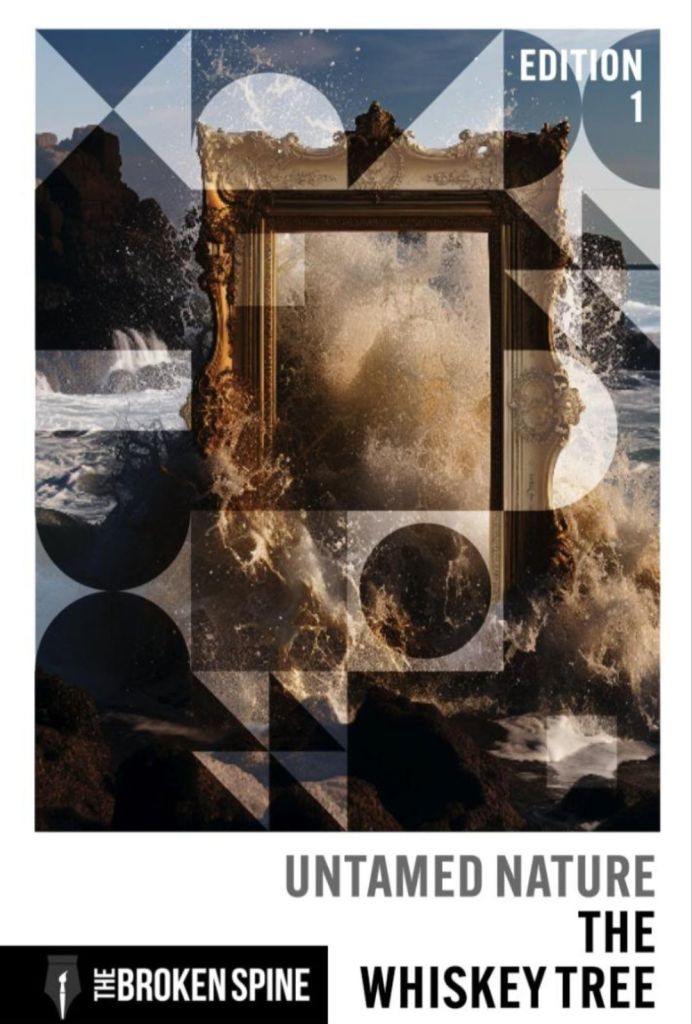
The cover of TWT’s first edition, depicting the ocean breaking through a picture frame, perfectly symbolises my vison for this project. I want poetry to be like those waves – uncontained and powerful. Traditional forms like sonnets and haikus, while they have their place, often feel too rigid for the kind of expression I’m seeking for TWT.
For TWT, it’s all about capturing the essence of experiences and emotions in a way that’s as real and unfiltered as possible. Unfettered. That’s the heart of this project – it offers a platform to voices that are bold, raw, and unafraid to break the mould.
Q:6. How did you decide on the order of the poems?
Deciding on the order of the poems in a collection like this cannot just about the pieces themselves. It’s quite a meticulous task. I must make sure the poems fit the pages exactly how I envision them. In a compact collection, presentation is just as crucial as the flow of the content.
The layout is key. For instance, I’m adamant about that we do not needlessly include a page turn mid poem. If a reader must turn the page to finish a poem, it should only be for longer pieces that extend to a third page or more. This is a primary concern for me, it impacts how I consume what I’m reading.
Then there’s the balance of gender representation in the order of the poems. I’m careful to avoid having a gender-heavy concentration at either the beginning or the end of the collection. It’s these behind-the-scenes, somewhat unglamorous details that are vital. I’m lifting the lid here. I talk a lot about inclusivity. It really does impact everything I do.
Of course, I think about pacing and mood – that’s a given. But that usually comes into play once the more mechanical aspects of the collection are sorted. It’s about getting that foundation right first, then building the emotional and thematic journey from there.
Being an editor is great, truly, but it’s not always the most fun. It’s a role filled with these intricate, often unseen tasks that make all the difference in the final product.
Q:7. Once they have read it, what do you hope the reader will leave with?
I really hope readers come away with a sense of awe, the same kind our poets felt when they saw the whole thing pieced together. This alliance of poets, if I may call it that, has poured their individual talents, experiences, and literary backgrounds into crafting this document that captures the essence of the wild and untamed.
Nature, in this collection, isn’t always blatant. Sometimes it’s hinted at through surreal, oblique references. The aim is to stir something in the readers, to make them view the world from a fresh perspective, see things in a new light. This anthology is an invitation to view the world differently.
I want readers to feel that they’ve stumbled upon something extraordinary. I envision them recommending it to friends, gifting copies, sparking conversations. Discussions could range from the intricate links between women and water to the rugged landscapes of Northern Ireland, or how the metaphor of the natural world can offer insights into the experience of loss.
I’m excited for readers to get their hands on this work. There’s a real buzz in thinking about the impact it could have, the discussions it could start, and the new perspectives it might offer. This isn’t just a collection of poems; it’s a conversation starter, a new lens to look at the world, and a testament to the power of words in capturing the untamed aspects of nature and life.
Bio and Links
Alan Parry is a Merseyside-based writer, editor, and lecturer. His writing embraces gritty realism, open-ended narratives, and the musical stylings of 60s girl groups. Published by esteemed platforms like Dream Noir, Streetcake Magazine, and Ghost City Press, Alan’s work showcases his talent for evocative prose and poetry. Inspired by Alan Bennett, James Baldwin, and Stan Barstow, he crafts compelling stories that resonate deeply. His debut poetry collection, Neon Ghosts (2020), and subsequent works like Belisama (2021) and Echoes (2022) demonstrate his creative prowess. Alan’s latest collection, Twenty Seven, was published in December 2023. In summer of 2023, he performed his debut spoken word poetry and prose show, Noir, at the Morecambe Fringe Festival. With an expanding repertoire and a distinct voice, Alan Parry is an emerging force in literature and performance.
SOCIALS:
Twitter / X: @AlanParry83 / @BrokenSpineArts
 The Wombwell Rainbow