I seldom succumb to superlatives, nor any other short-cut. I am, however, as a lesser or common word wrestler, moved to try to find the right ones… The Wolf Eye is the moon, Paul Brookes tells me; a lens through which he regards his native Wombwell. You could knock on doors anywhere and eventually meet a poet. But there is something about this region, this Brigante borderland, that draws out the terse, livid descriptor in any scrivener. It can make for obscure or dense text, and Wolf Eye is no exception, which the author accepts. Being somewhat surreal if not cryptic myself – has perhaps been a barrier against a fair and rational review, but that said, we can only hold up our own mirror to this intense, if evasive light. Inasmuch as readers know me not, I am a motorcyclist who likes to make his own journeys, therefore I identify with the wolf as loner – a position Brookes had found himself in – but enjoys rather than endures.
Wolf Eye the first in this collection is almost a walk with a wolf – the soul of the author, watching his native world, perhaps evading engagement with all but the landscape. Imagery, description – the scene is set in an experienced hand. Perhaps so familiar with it, a kind of shorthand creeps in – to this place where clouds are made of wood. Further into the collection, there is a sense of broken town community, robbed of its raison d’etre, and nature sneaks in where neglect takes hold.
A bleak almost Peake-like bone-searching proceeds through a black pantomime of resurrection, percussion and lightning. It shuffles rather than acts through a reality of dreams, in the torture of post-strike food parcels that are unable to salve the real (government-imposed) hurt. If I may quote Don Dokken “…still these broken bones within my soul remain…”. How else might poetry emerge from an inescapable poverty trap?
The mood changes to Zen with “My Mop Bucket”. Cleaning floors with calligraphic flourishes, the same floors again and again – yet every stroke of the mop different. And each clean of the same space is different. The art of mop is more important than cleaning. Yet in this heady place, reality and simile are perhaps choice if not clear.
One eye the sun, another the moon – is it Escher’s plan for how a drawing is going to be? The power of alliteration and repetition harness a spell, wide-eyed, bright-eyed push and pull of distant planets – that draw us into a Dali-scape of the universe under a giant boot. Connected with all this, the trees are calendars out-reaching our lives. Yet they too are but glimpses of the tireless universe. Even so, the natural world cannot explain it’s mysteries and all is paradox. There are likely as not issues I’ve not touched, but that shouldn’t surprise anyone, Paul Brookes included. Just as his water mirrors the scenes he sets, so too readership will mirror back his words, changed. Having known a world where you’re cold and cannot get warm, despite others being warm – that irony turns up the heat of the cold burn – of the experiential writer.
His last work in this collection, casts feathers, water, and the hymns of sheep in a ragged paper reflection of what has gone before. It is the place I began this review, full of word-hungry minds, who ride the same buses, drink the same beer, duffled up against the elements, yet naked in a landscape that is prehistoric and present in the same tense. Thusly, there is no clever knot to tie this off with; the question burns bright as any answer we find, so we look and look again.
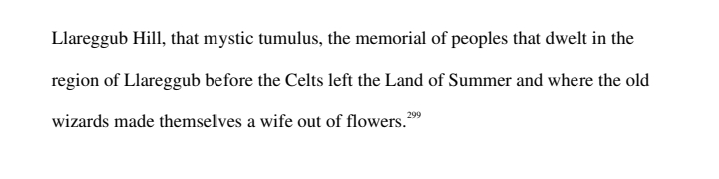
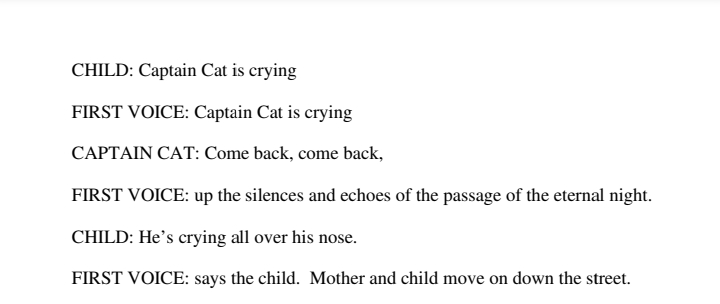
Wolf Eye is a Wolf Moon. Is about the place where I have lived and worked for over twenty years. A little town called Wombwell, in the district of Barnsley in South Yorkshire. Born in North Yorkshire the move South as a child was a culture shock. As a ten year old I loved the idea of wolves and eagles and dragons. Ways of seeing. An incomer, an outsider navigating dialect and class. There is an outsider in all of us. A wolf, eagle, dragon in us all. It is good to look at things differently. Wombwell is an ex mining town, reimagined by politicians into industrial estates, uprooted communities, changing shop fronts, “change of use.” It has always had big skies and cloudscapes. It is not William Blake’s London or Dylan Thomas’ Llareggub. These were the lenses I was gifted as a child to see through. These are not stories, narrative tales. They are images. The mop and bucket is the one I use to clean floors in the shop I work in. In these days of cameras everywhere even the stars and planets become surveillance cameras.
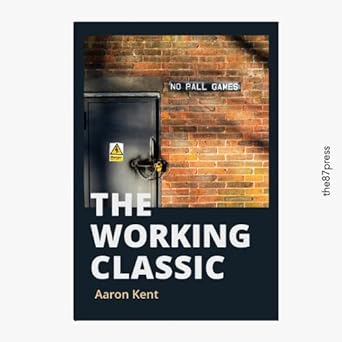
is a working-class writer, stroke survivor, and insomniac from Cornwall. His 2nd collection, The Working Classic, is available from the87press. He has read his poetry for The BBC, The Shakespeare Birthplace Trust, and Stroke Association, had work published in various journals, and is an Arvon tutor. His poetry has been translated into languages including French, Hungarian, German, Cymraeg, and Kernewek, and has been set to music.
Here is a link to buy The Working Classic:
The Interview
Q:1. How did you decide on the order of the pieces in your book?
The idea was to ensure the poems connected to the following interview/essay/review. So, the first interview concerns my own lack of faith in my work, and also my frustration at authors who write of inconsequential things when there are children starving, forests burning, streets alight with white phosphorus. So the poems preceding that were to pursue that framing; such as the ‘MAXIMUM HEADROOM’ poem, which is both about my PE teacher rewarding a class of 8 year olds by whipping his shirt off and watching us applaud his dancing pecs, but is also about poets who endeavour to flex their poetic muscle without any depth, without any consideration of the world outside of their pretty metaphor about flowers.
Q:2. Talking about childhood, perhaps. When and why did you start writing poetry?
There’s kind of two answers to this. One is that I was 16 years old and had a crush on a girl in my school, her boyfriend had written her a poem and she shared it with everybody. So, I decided that I would write her a poem. Three days later she returned the poem with her boyfriend’s editorial notes on it, ways to improve etc. It didn’t work, but I discovered writing the poem was healing for me, so I just kept writing. The other answer is that I fought a lot in school, and generally dicked about like an idiot. I was restless, had no outlet, and generally felt completely aimless, but I was always good at poetry writing tasks in school, so when I wrote that poem and discovered I liked it, it became a way to ensure I could focus on something. As I grew up I realised poetry was not kind to those of low socio-economic status like myself, those who grew up broke and didn’t have the cash or connections to break into the industry, so I thought I’d tear down the gates and try to bring everybody else in with me.
Q:3. Who introduced you to poetry?
I didn’t really have anybody introduce it to me in person, instead I discovered it through various online routes I suppose. I got into spoken word artists like Shane Koyczan, Scroobius Pip, Levi the Poet, and Andrea Gibson, so began doing that sort of genre. After a review in which the critic suggested my poetry was almost bad enough to make people cry, I realised I didn’t have the gift for spoken word and began writing more lyric poetry, to no success. The problem was, I wasn’t reading poetry, I was writing an idea of what I thought poetry was, and my field of reference was non-existent. Once I began expanding my reading, I began expanding my writing. I read things I loved and things I hated, and that taught me what and how I wanted to write. Even now, when I find myself a little uninspired I seek out new poetry and find myself inspired once more.
Q:4. How is writing “healing” for you?
I don’t know if it is, or if I want it to be. Actually, that’s not entirely true either, I guess I don’t go into writing in the hope of it healing, or providing self-care, I do it because I like it. If I discover something about myself along the way then that’s good, but it’s not my main reason for doing the work. I think of it like a cake, and if I enjoy making the cake, putting down the words, then it’s a success. If I find something healing, or cathartic, or get more out of it beyond that enjoyment, then that’s a plus, I’ve iced the cake, happy days. But the cake tastes great, regardless of whether it’s iced or not, that’s merely a bonus.
Q:5. In what way is “poetry…not kind to those of low socio-economic status’? How is poetry “cash” and “connections”?
I guess I mean avenues into poetry aren’t kind to people of low socio-economic status. To get into the literary bubble, there are pre-existing conditions that help immensely. I didn’t have people in the industry who could give me some of that sweet nepotism, I didn’t have the funds to go to London (mostly) to take part in readings and awards and get to know people, and I didn’t have the time outside of work to search up submissions, competitions, and opportunities. I think ekphrastic poetry is a good example of this, in that you need to have the money to visit art galleries, be geographically situated somewhere that has those places, and have the time and privilege to access them. So a call for ekphrastic poetry typically tends to be geared towards the middle and upper classes, because they’re the people who have experience of the sort of things ekphrastic poetry is inspired by. Also, I didn’t say poetry is cash and connections, I said people who don’t have those things are at a disadvantage. I was writing poems on the till at Cafe Nero when I figured out how to install Notepad onto it and print poems off on the receipt machine. So if there was a lull in work I could quickly type something off and print it out in the hopes I could revisit it later. When you’ve got cash you don’t need to find some breaks in work, when you’ve got connections they’ll make sure your poetry is read and considered by the people who turn the gears. So I’ve made it part of my ethos to try to dismantle a system that too often privileges people based on who they know and how much money they have. This isn’t exclusive to poetry either, these nepotistic values are widespread throughout the creative arts.
Q:6. What is your daily writing routine?
I don’t actually have a routine. I mean, I wake at about 0530 and inevitably keep our 3 year old son entertained, then our 6 year old daughter wakes up and my wife, Emma, and I get the kids ready for school. We do the school run and I work on Broken Sleep until the return portion of the school run. Then I hang out with the family, we have dinner, we put the kids to bed and read them stories, and then I’ll chill with Emma until she falls asleep. This then gives me until like 0100 to myself because I have chronic insomnia. Sometimes I might write a bit then, other times I’ll read or listen to music. I don’t put any emphasis on forcing myself to write at certain times, instead I just have the stuff around me for if I do. Things like the notes app on my phone, my Remarkable tablet, or Word open on my laptop. I think I’ve found that enforcing my writing, with poetry, leads to poetry I’m not happy with. Though with prose writing I tend to try to make myself write. I have discovered that I tend to come up with ideas or fragments when walking the dog, so have spent a little more time with Enys recently.
Q:7. What motivates you to write?
This is an interesting question, and not one I’ve put much thought into before, so I guess I have an innate impulse to write? It’s like this thing that says you haven’t written for a few days and then I become aware of the fact and that leads to me being more conscious of ideas. But, it’s important for me to go where my impulse leads me, whether that’s writing or painting or working out. What I mean by this, is that I do these things because I enjoy doing them, if there is something positive that comes out of it, then that’s fantastic, but if the only positive thing I get from it is my own fulfilment then that’ll do. I do, however, feel motivated to write when there’s a project that can help others. I’m working with Stroke Association and MIND at the moment to create new mental health provisions for stroke survivors. As a stroke survivor myself this is something I feel incredibly passionate about, and I’ll be presenting these initiatives to the Welsh government in January, as part of telling my story and the stories of others. I’m motivated there.
Q:8. How much of your poetry is about the act of writing poetry?
Obliquely, not a lot. My feeling is that we learn about the act of writing poetry by writing and reading poetry, its structure, its form, its language. So I don’t want to present a poem-as-sermon. That said, I do write poems that lean towards criticising poetic subjects; I figure there’s a whole world of issues, of people struggling, of causes that can be brought to the fore, that when somebody merely writes about inane subjects I become frustrated. But, the problem is that those subject are where the awards and acclaim come from. I’m not getting an award for poetry about growing up in poverty, so you kinda have to decide whether you’re writing to get some critic to pat you on the back and in the hopes a bunch of creatives might sit behind closed doors and decide to give you a 3 minutes acceptance speech and a cheque, or whether you write because there’s shit that needs to be written.
Q:9. How do the writers you read when you were young influence your work today?
I think everybody who writes is influenced by what they’ve read, whether that’s knowing what you love or knowing what you hate. It all feeds into our art. I read as much fiction and non-fiction as I do poetry, and that seeps into my work in all forms of writing. Similarly, I listen to a lot of different music and that feeds in too. I didn’t read a lot until I was 16 or so, but music was my life, and OutKast, Bjork, Aphex Twin, Mötley Crüe, Every Time I Die all worked their way into my writing.
Q.10. Who or whom of today’s writers do you admire the most and why?
I adore Ross Gay, A Catalog of Unabashed Gratitude is the closest thing I’ve found to prayer. I’ve always loved Claudia Rankine, Zachary Schomburg, Ishion Hutchinson, and Roger Robinson. There are also some brilliant poets I’m honoured to call a friend, such as Stuart McPherson, Dean Rhetoric, Martha Sprackland, Andrew McMillan, Azad Ashim Sharma, Fran Lock, Antony Owen, and James Byrne. But I also admire, greatly, the lyrics of Adam Duritz, MF DOOM, Scott Hutchison, Lorde, and Bon Ivor. And, I still turn to Walt Whitman, to R. S. Thomas, to Langston Hughes.
Q:10.1. Why have you “always loved Claudia Rankine, Zachary Schomburg, Ishion Hutchinson, and Roger Robinson” and what makes “ Stuart McPherson, Dean Rhetoric, Martha Sprackland, Andrew McMillan, Azad Ashim Sharma, Fran Lock, Antony Owen, and James Byrne” brilliant poets in your eyes?
I guess the only way to answer this question would be to break down the values I admire in every name mentioned there, but everything is subjective and my opinion only holds as much weight as anybody else’s. I think Claudia Rakine’s use of space and form is remarkable. Zachary Schomburg is brilliantly unsettling. Ishion Hutchinson is a master at both long and short poems. Roger Robinson speaks for the disenfranchised in beautiful and necessary ways. Stuart McPherson astounds me with his unique way of creating imagery. Dean Rhetoric is the most underrated poet currently writing. Martha Sprackland makes me see the world with fresh eyes. Andrew McMillan writes the body better than anybody. Azad Ashin Sharma is one of the most vital voices today. Fran Lock is the working class voice we need, and the poet I wish I was. Antony Owen understands the horror of war better than most. And James Byrne has a better ear for poetry than anybody I’ve ever known.
Q:11. What would you say to someone who asked you “How do you become a writer?”
Can I be cliché and just say ‘write’? There’s such a difference between being a writer, and trying to achieve status. So many people judge the artistic endeavour of others on whether some tabloid, broadsheet, or journal has reviewed their work, or some nepotistic prize has given them a pat on the back. It’s all just noise, the whole thing is just static. Just write and enjoy writing and if other things fall into place then you’re golden, but if they don’t then as long as you enjoyed the act you’re good. When I was a submariner we used to hear a lot of shrimp noise on Sonar, because shrimp are noisy and click a lot, it almost sounds like a standing ovation. But, you’re listening for the things that matter, and the shrimp is just idle applause that gets in the way. So, ignore the shrimp noise and do what matters.
Q:11. What was it like beating yourself up in the interview satires?
Mostly fine, really. It’s all genuine things I feel about myself, or genuine ways I actually perceive my own work. I’m not my biggest fan, so to play the role of somebody who doesn’t like me isn’t a stretch.
Q:11.1. How do you think it pre-empted the comments you are getting anyway?
If people are gonna slag you off they’re gonna slag you off, the least you can do is give them a helping hand. It’s all geared towards the way authors who aren’t working-class are given awards and praise for being ‘real’ because they’ve appropriated working-class culture. So, of course they don’t like it when you celebrate and sing the song of yourself.
Q:12. How did you decide on the title?
Originally I had titled it Working Class Lack as a nod to Lacan’s Theory of Lack, but the manuscript moved away from being solely about desire and ‘being’, so I changed it to Working Class Scum, as a way to present the same ideas the interviews do. I wanted to call myself scum from the off so I could own that title. But it didn’t quite work. I also considered Lads Lads Lads because I thought it was just a banger of a title. But in the end, the genius that is Azad Ashim Sharma messaged me and told me I should call it The Working Classic, and I was sold.
Q.12: Why were you sold with that title?
I mean, just read it Paul, the title is The Working Classic, which is bloody stellar. Fantastic work. Azad nailed it. It situates the core theme of class, gives it the article at the beginning with ‘the’ reading as making it a definitive canonical text, and then tops it with calling it a classic which is also a nifty pun. Ten out of ten. No notes.
Q:13. Why did you decide to put a quote by John MacLean at the beginning of your book?
It entirely sums up the premise of the book, and my ethos for life, in that the aim isn’t to be better than those around you but to be better with those around you.
Q:14. You start the book with a humorous poem and end it on a poem about grief. How deliberate was this?
Kind of, in so much that the poems also work differently. The first one is intentionally humorous, but my PE teacher is also a stand-in for poets who write pretty lines with no depth, who are all show and no layers. The sort of poetry that paints a pretty picture of the world it really doesn’t give a shit about. So, that sets the tone for the collection, for the critique of authors who care only for themselves and their own grandeur. And the final poem looks at how there’s this desperation to keep returning to work that has been written, to focus upon things you can’t change – why has nobody reviewed it? Why has it not won a prize? Why aren’t people celebrating it? – and it instead suggests you let the things that have been finished go. Once you’ve written it, it’s done, let it go, write something new. So I wanted to start critiquing the focus on work that has been sent out into the world, and end by suggesting a new avenue. But yes, intentionally did so with humour and the polar opposite.
Q:15. After they have read your book what do you hope the reader will leave with?
I just hope people care less about the machinery that churns artists up and spits them out.
Q:16. Tell me about the writing projects you have on at the moment.
I’m currently working with STROKE and MIND to create new mental health provisions for stroke survivors. I’m the lived experience storyteller for the project and am presenting it to the government in January. I’m also starting a non-fiction book about strokes and the brain, and how to survive after you’ve survived. I also decided my next poetry book was shite, so I’ve torn the whole thing up and am re-writing it.





 The Wombwell Rainbow